Bara
बरा
Thick, savory lentil patties — also called 'Wo' — fried golden and served plain, with egg, or with minced meat, a Newari breakfast staple.
Region
Newari (Kathmandu Valley)
Type
Snack
Spice Level
🌶️ (1/5)
Diet
Non-vegetarian
Where to Try
Local bhattis in Asan, Mangalbazar (Patan), and Bhaktapur's old town. Honacha in Kirtipur. Newa Lahana in Kirtipur. Early morning is the best time — many bhattis sell out by noon.
Bara — known as 'Wo' in Newari language — is one of those foods that Newari households have been making for so long that nobody remembers a time before it. Black lentils (maas) are soaked overnight, ground into a thick paste, seasoned with ginger, cumin, and a little turmeric, then fried on a flat griddle into dense, protein-packed patties about the size of your palm.
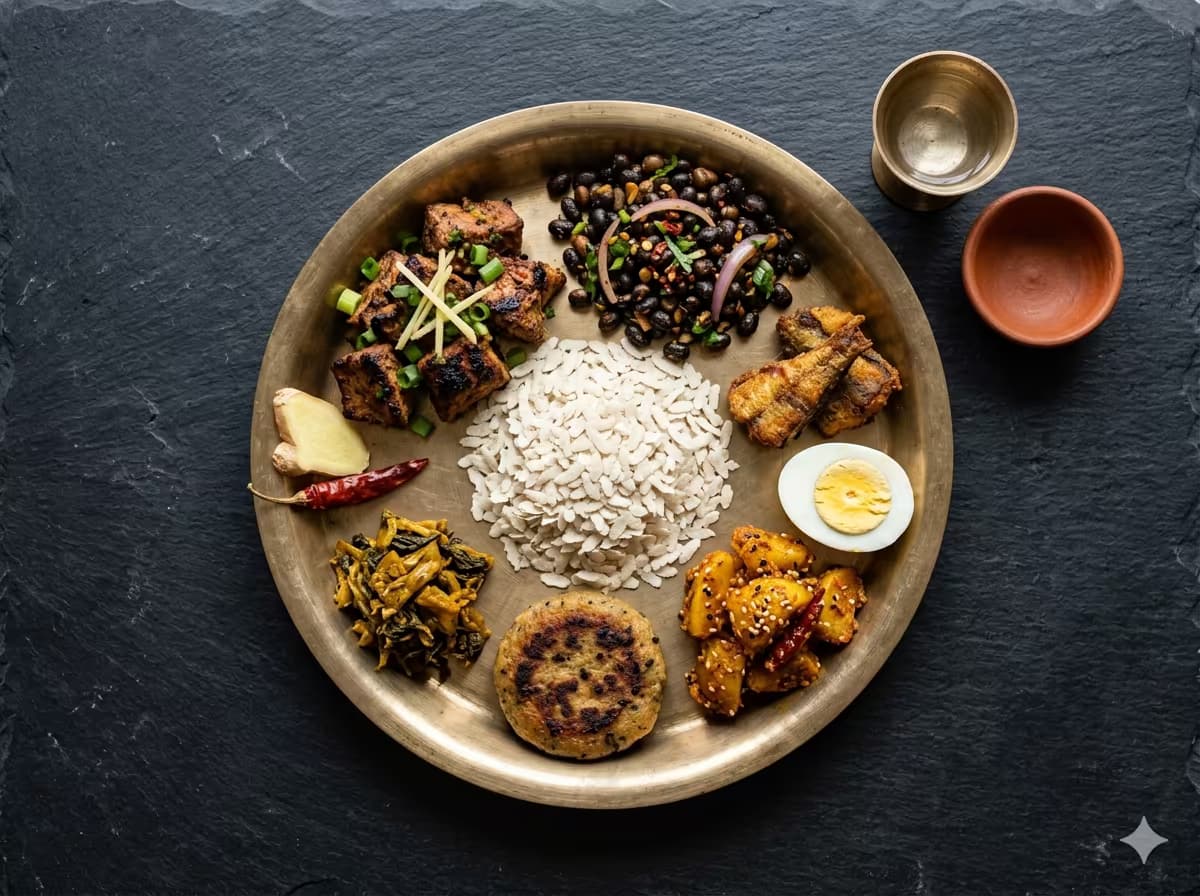
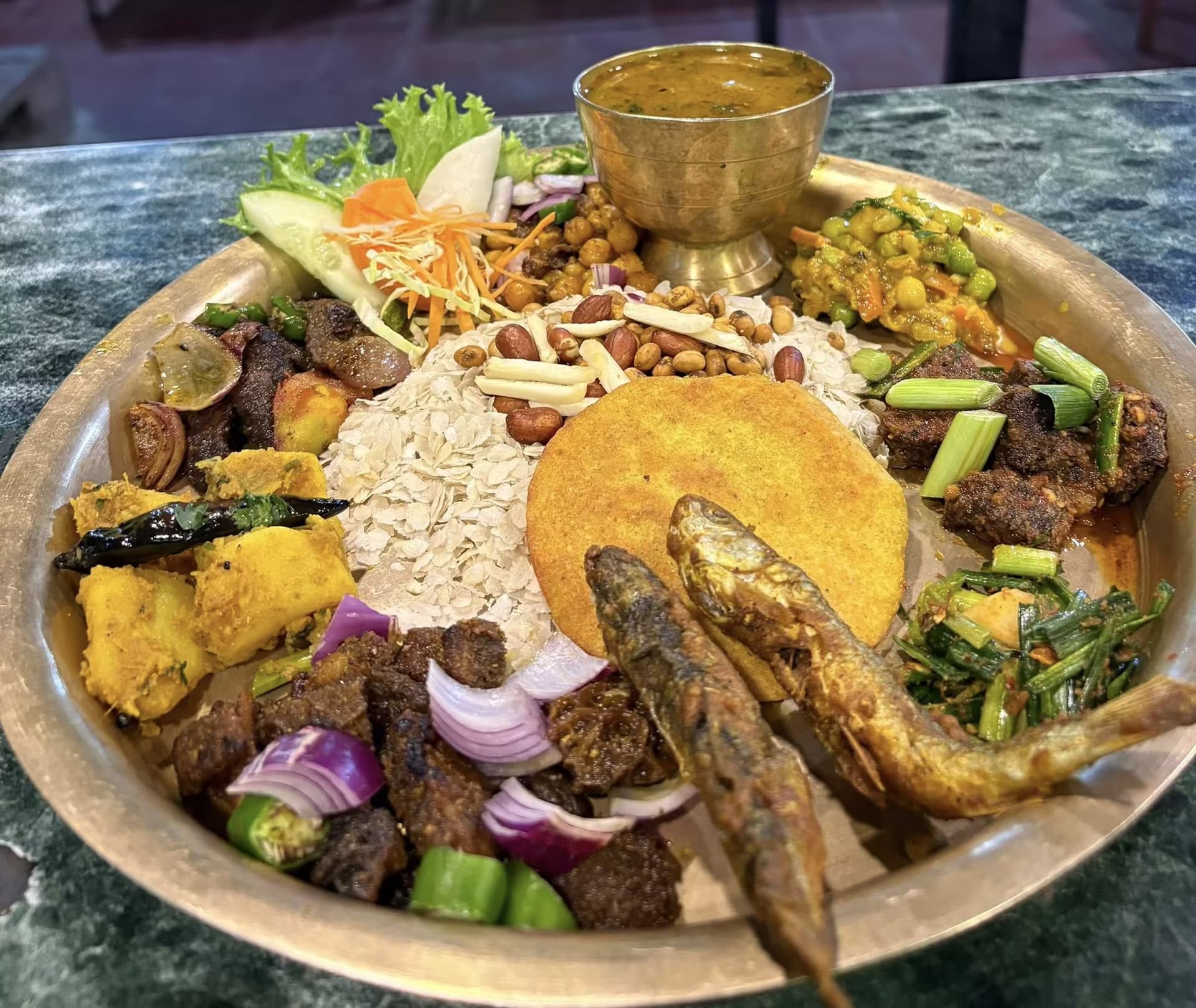
The basic bara is plain and satisfying on its own, but the variations are where it gets interesting. Anda bara has an egg cracked on top while the patty cooks — the egg sets into the lentil, creating a two-layered disc that's crispy on the bottom and rich on top. Keema bara is topped with spiced minced buff. And the vegetarian version stays pure, just lentil and spice. Don't confuse bara with chatamari — they're different animals from the same Newari kitchen.
In Newari households, bara is breakfast. It's what you eat with a cup of chiya before the day starts. Walk through Asan or the backstreets of Patan at 7 AM and you'll hear the sizzle of bara on griddles, the smell pulling you toward whatever local bhatti (small eatery) is open. These bhattis don't have signs or menus. You sit, you get bara, you eat, you leave.
Bara is also ceremonial. During Newari festivals and family gatherings, plates of bara are prepared in large quantities and served as part of the elaborate samay baji feast platter.
Elsewhere in this region
Help us get it right
Know Bara better than we do?
We write from research and reporting, and the ground changes faster than we can keep up. If something here is out of date, or you have been and would tell it differently, we would rather hear it.