Indra Jatra
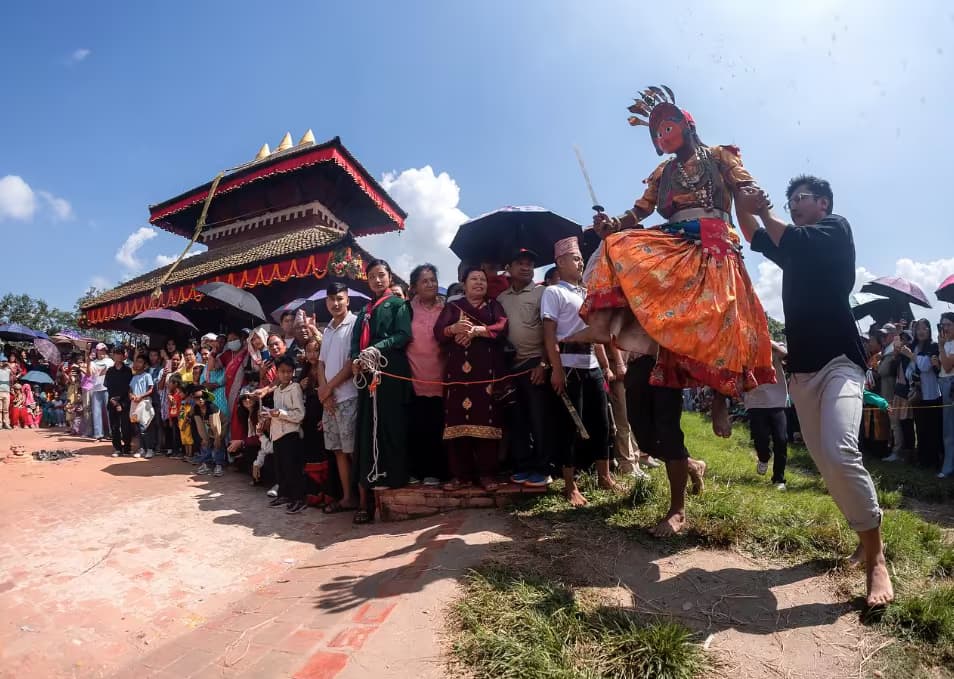
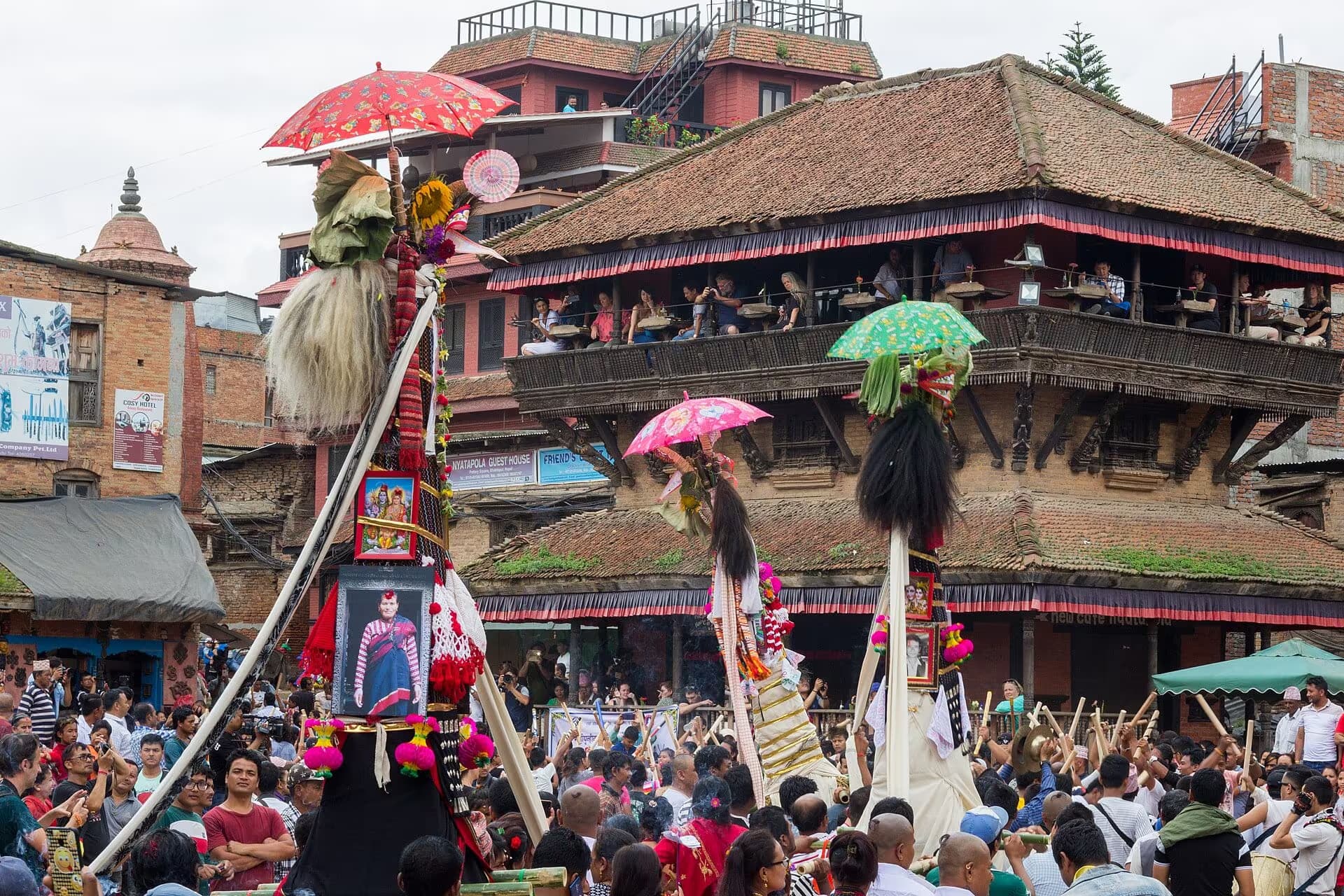
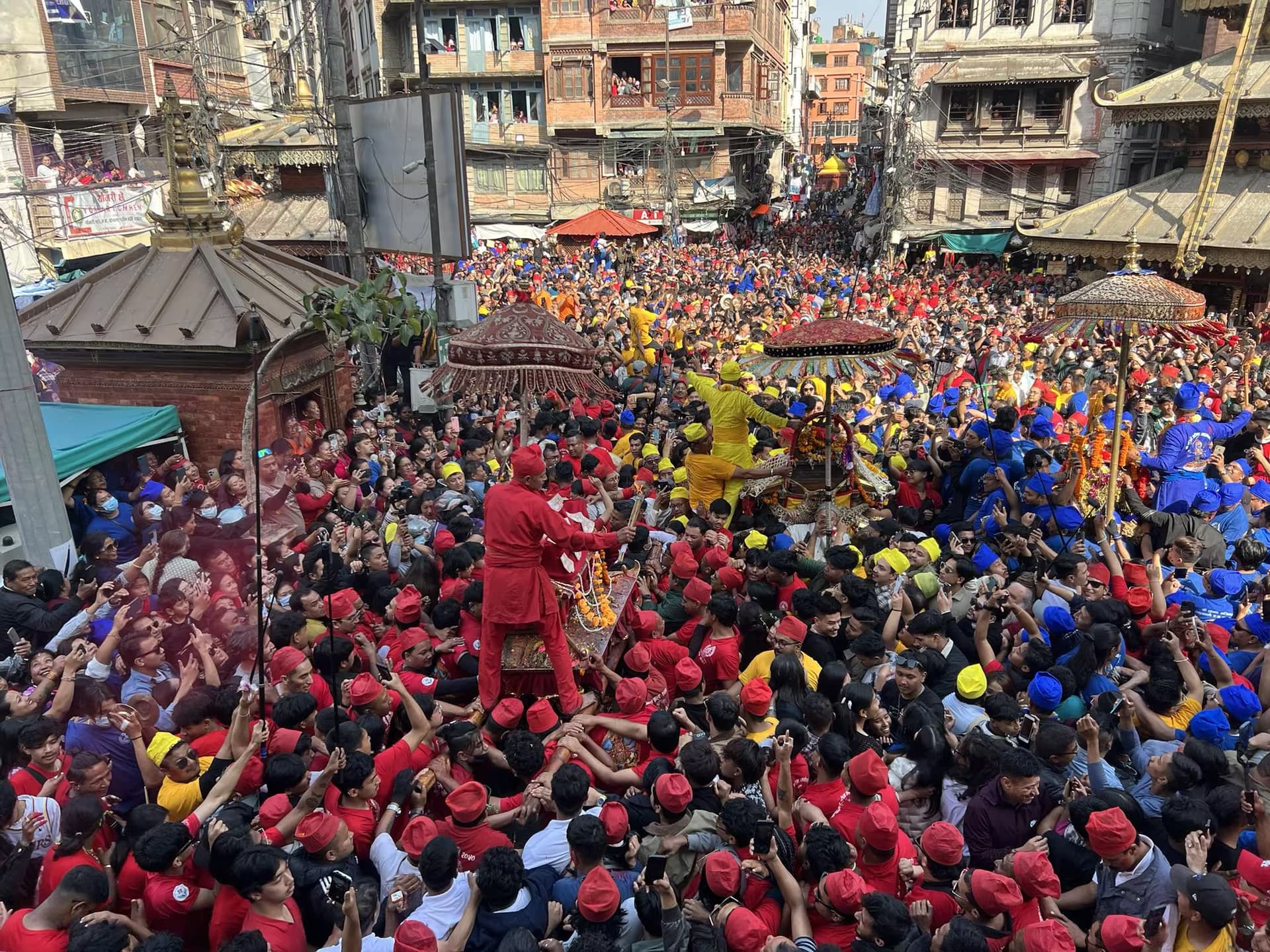
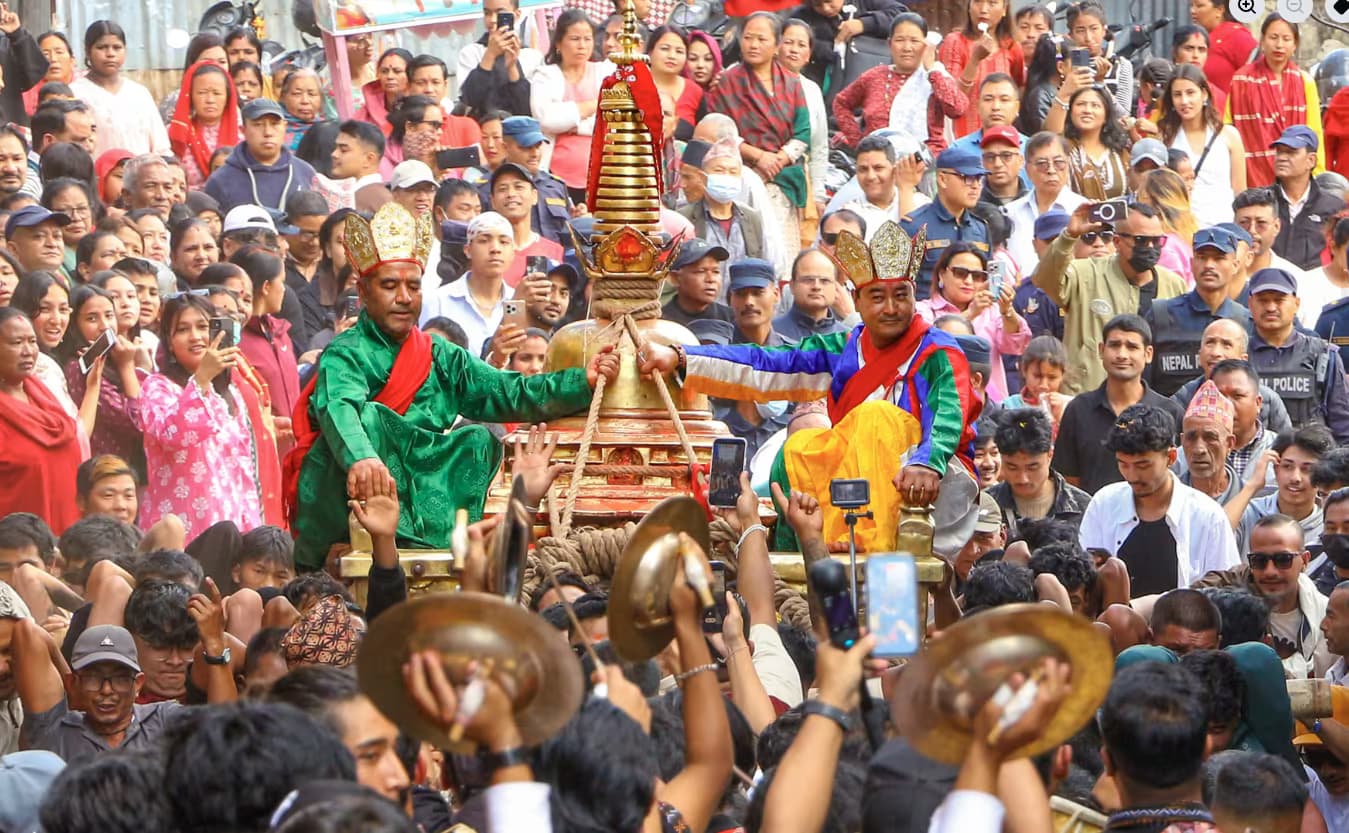
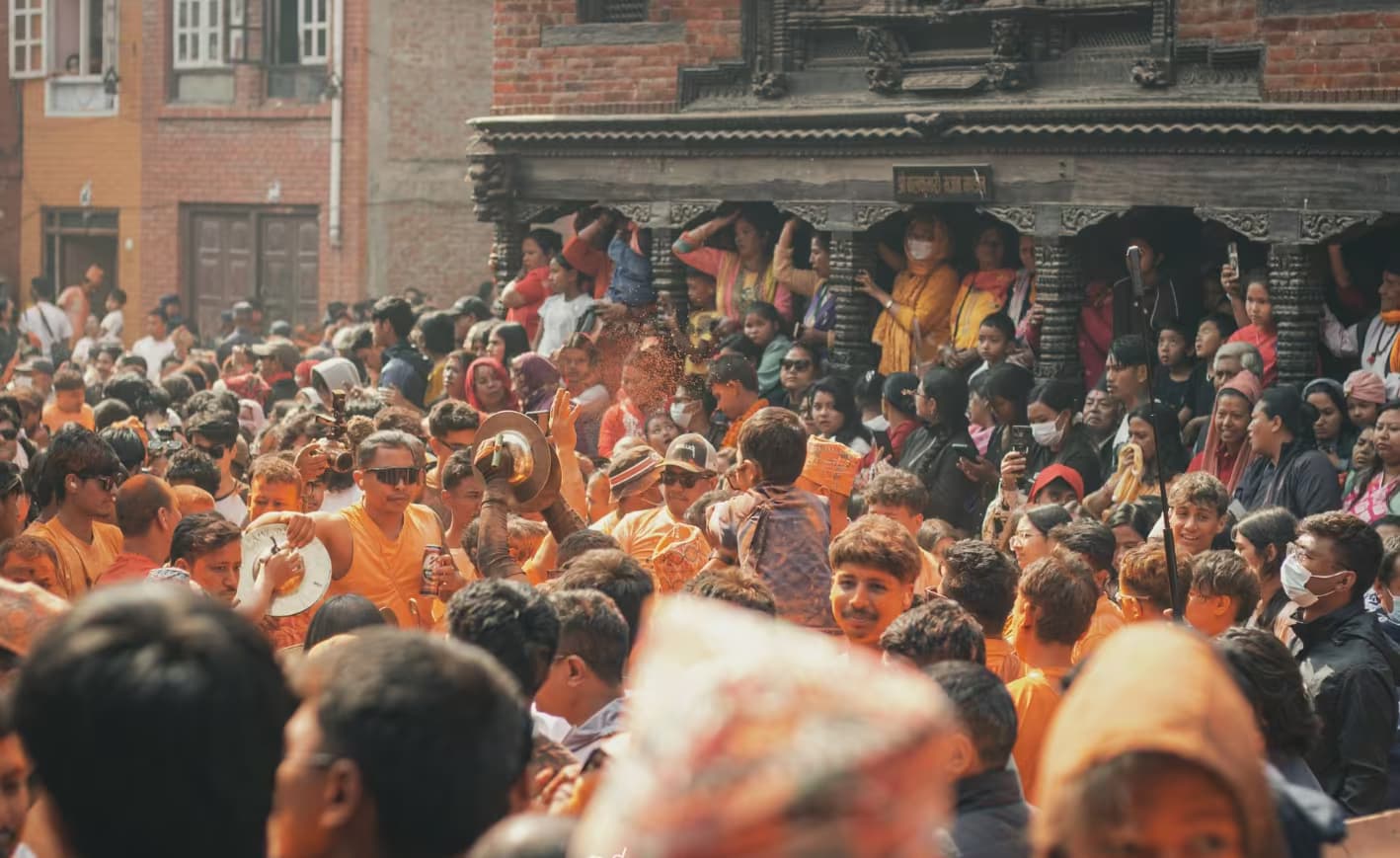
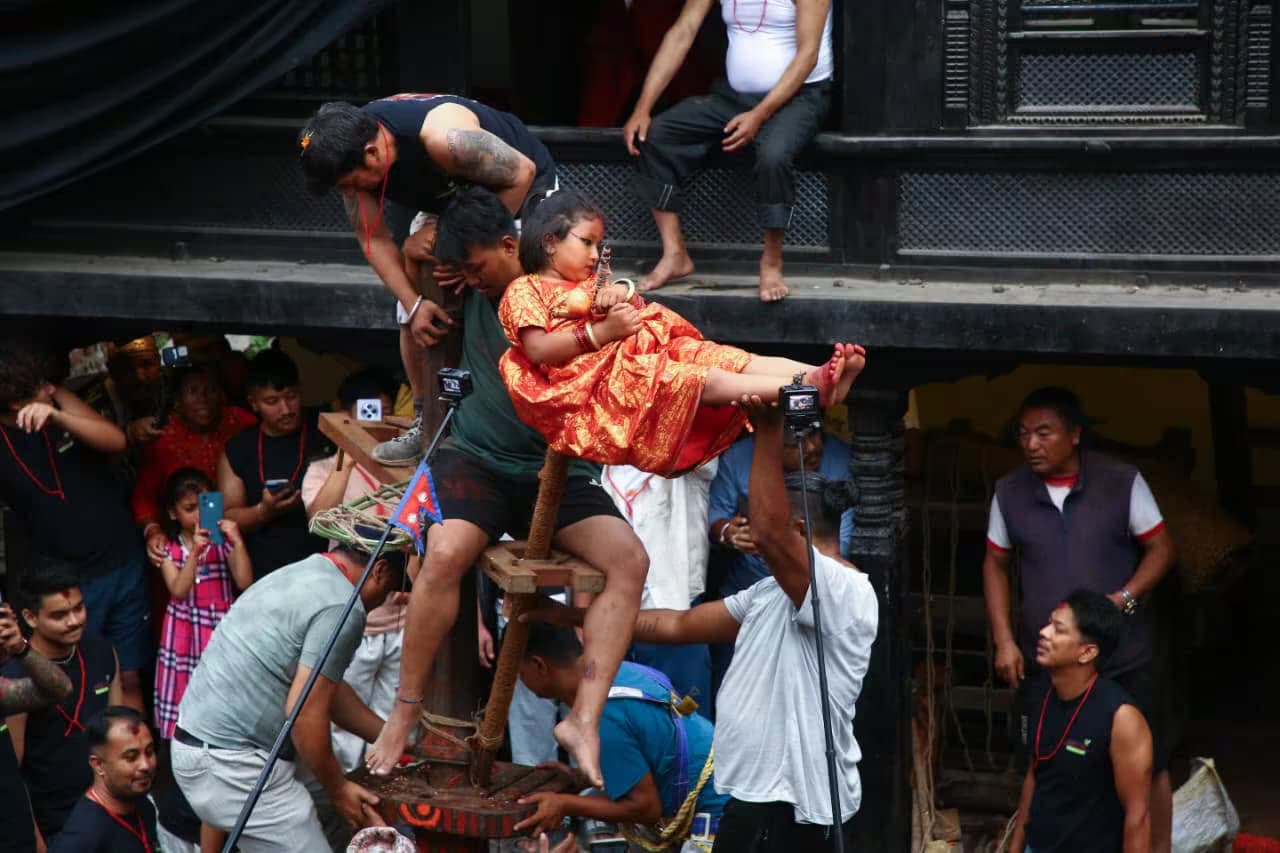
Kathmandu's most spectacular street festival celebrating the god Indra, featuring the living goddess Kumari's chariot procession.
September 25, 2026 — October 2, 2026
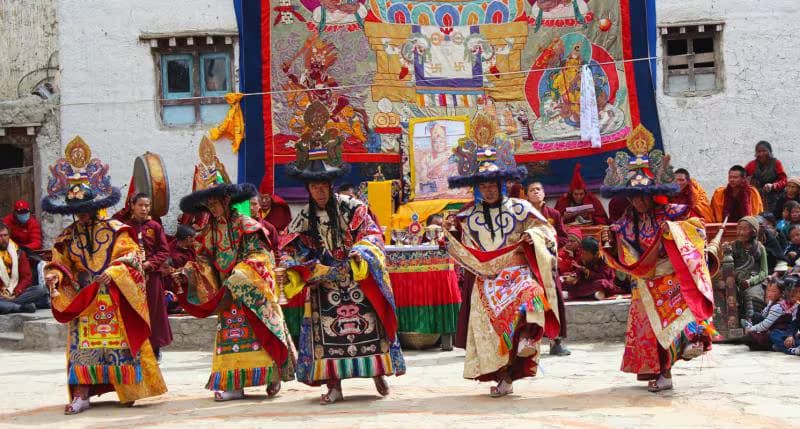
Kathmandu's most spectacular street festival celebrating the god Indra, featuring the living goddess Kumari's chariot procession.
September 25, 2026 — October 2, 2026

Nepal's longest and most auspicious festival spanning 15 days, celebrating the victory of goddess Durga over the demon Mahishasur.

Nepal's five-day festival of lights honoring crows, dogs, cows, oxen, and siblings — a uniquely Nepali take on Diwali.

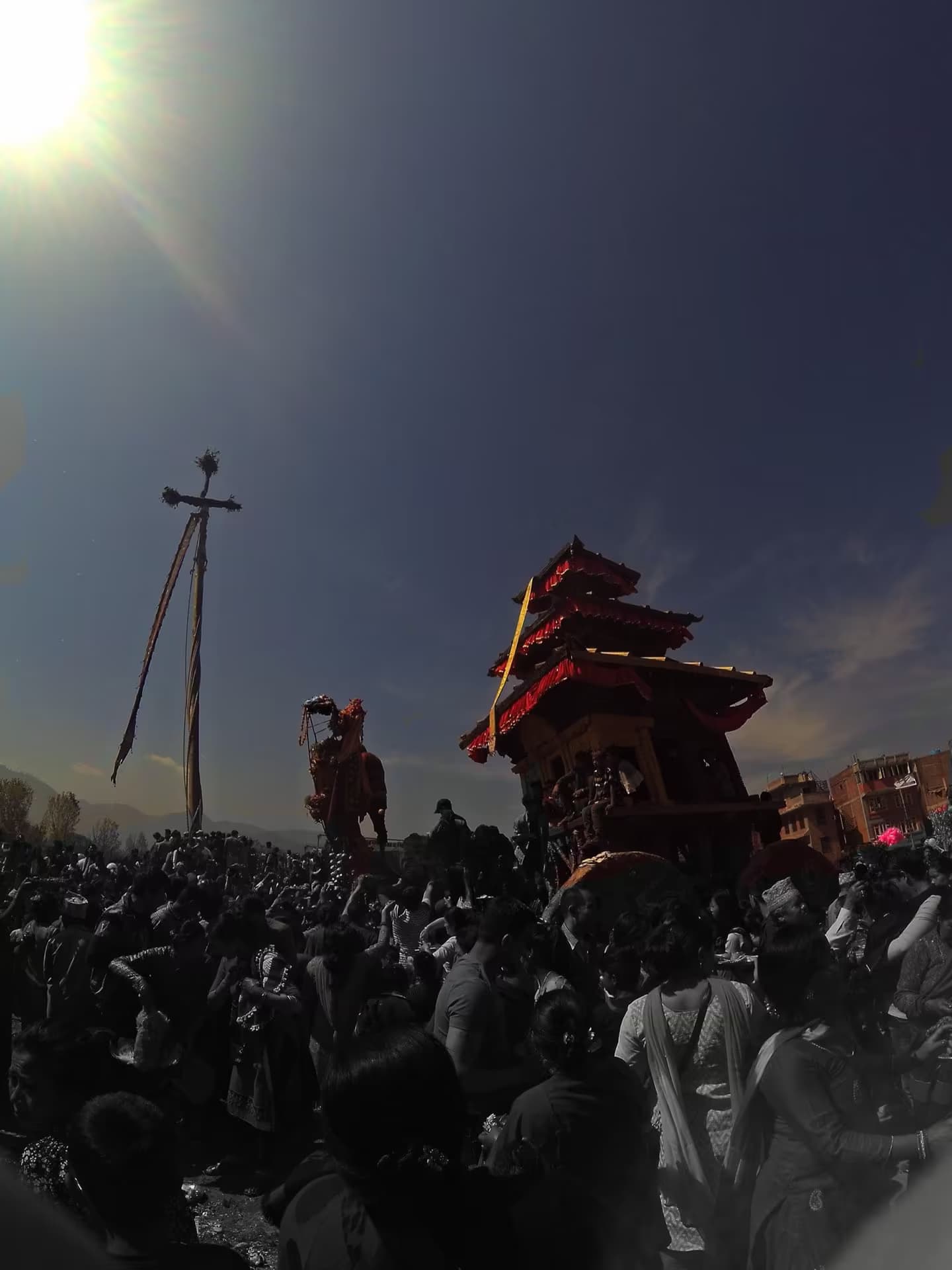
Bhaktapur's thrilling New Year chariot festival with a dramatic tug-of-war pulling massive chariots through narrow medieval streets.

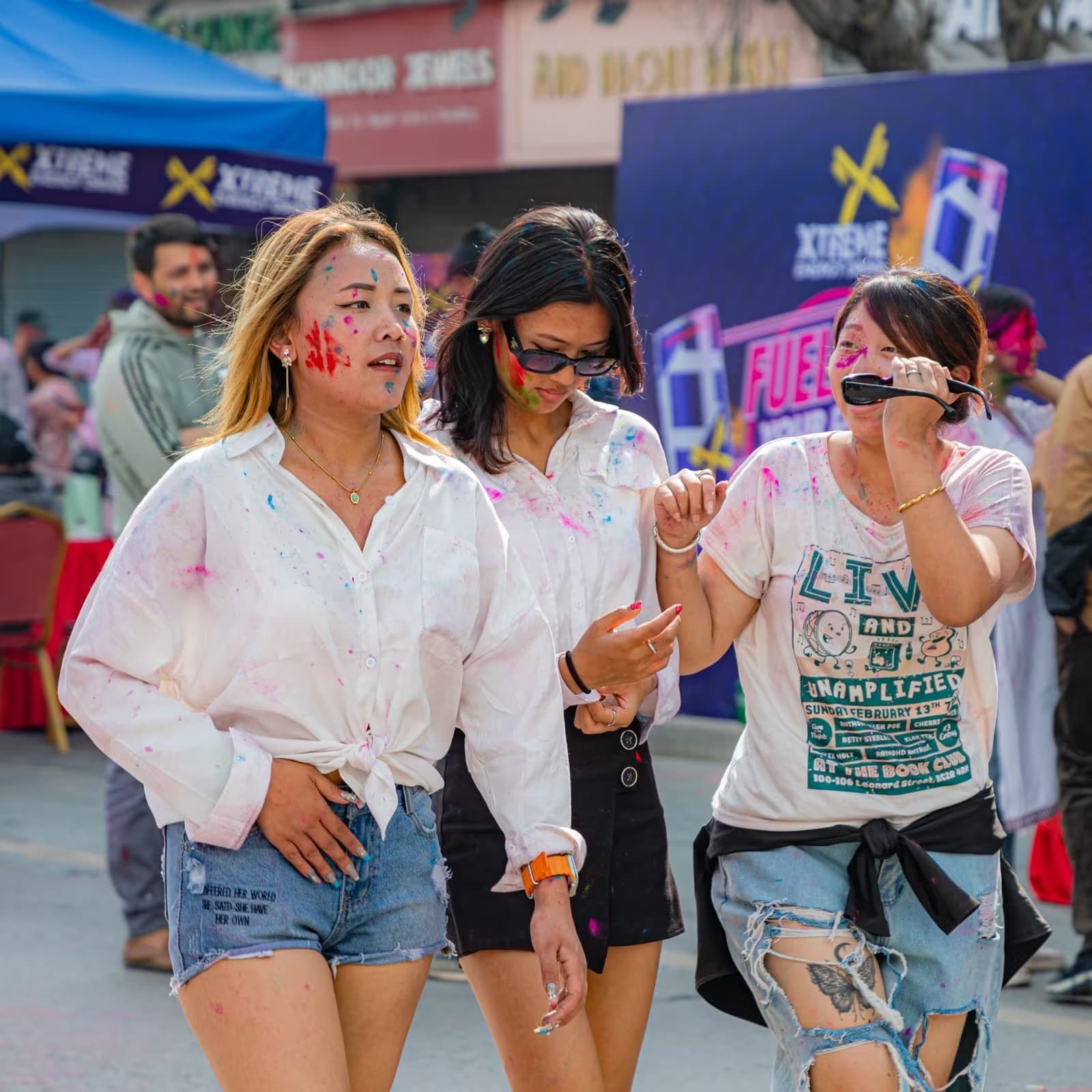
The vibrant festival of colors where people drench each other with colored water and powder, celebrating the arrival of spring.

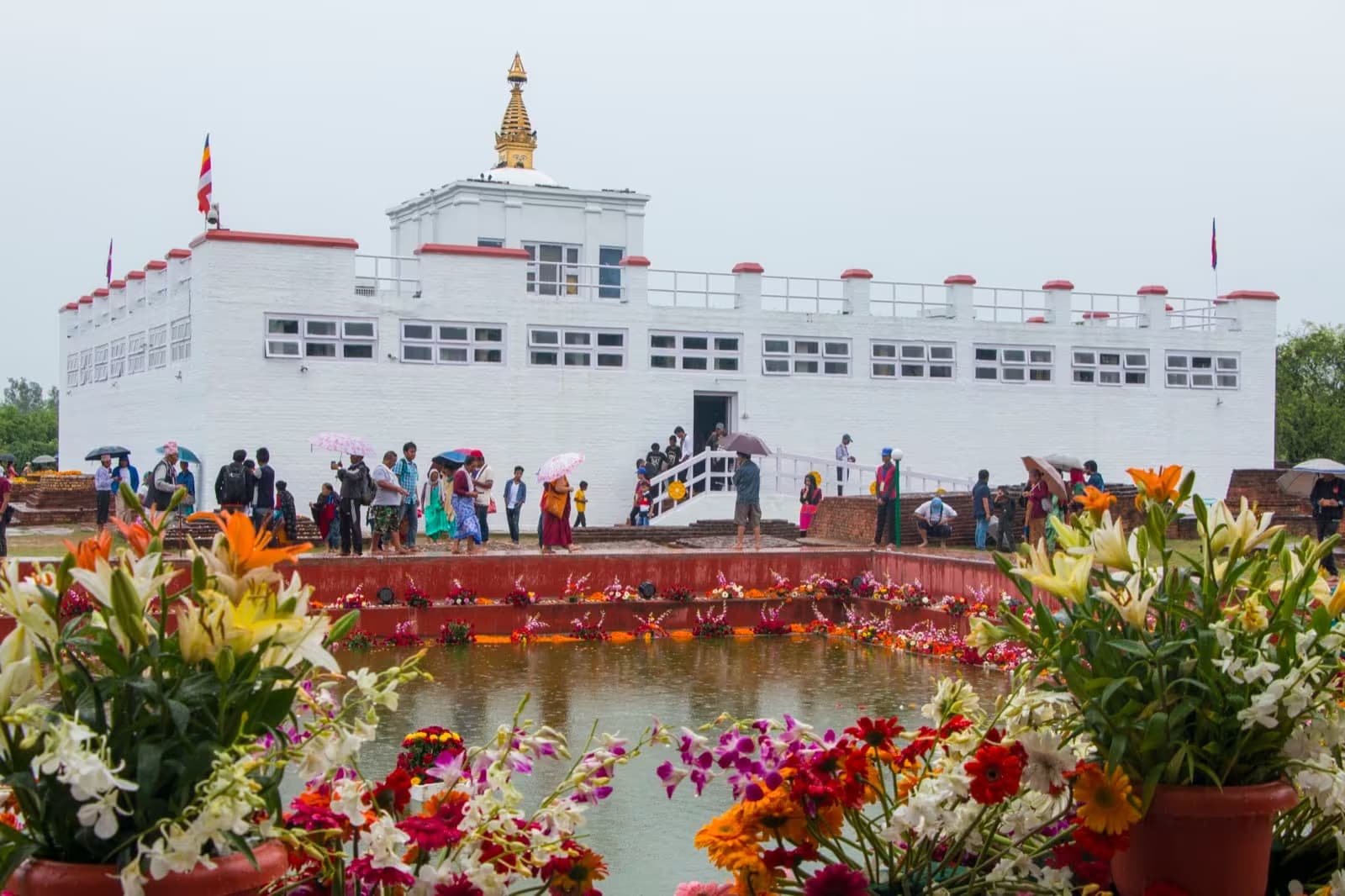
Celebration of the birth, enlightenment, and death of Siddhartha Gautama, centered on Lumbini and Buddhist sites across Nepal.

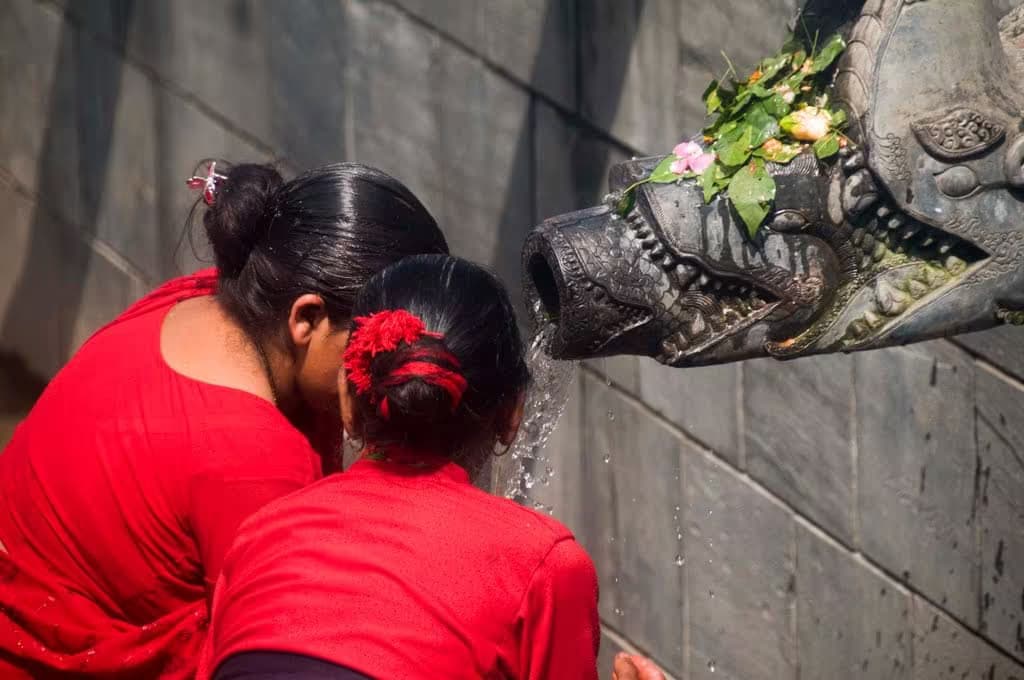
Nepal's women's festival — three days of fasting, feasting, dancing in red saris, and praying for marital bliss at Pashupatinath.

A spectacular three-day Sherpa Buddhist festival at Tengboche Monastery with masked dances against the backdrop of Everest and Ama Dablam.

The Great Night of Shiva draws hundreds of thousands of devotees and sadhus to Pashupatinath Temple for an all-night vigil of prayer, fasting, and bonfires.

An ancient Vedic sun-worship festival observed along rivers and ponds in the Terai, featuring 36-hour fasting, holy bathing, and offerings to the setting and rising sun.

Nepal's longest chariot festival — a month-long procession pulling the towering chariot of Rato Machhindranath through the streets of Patan, culminating in the dramatic Bhoto Jatra showing of the sacred vest.

A three-day chariot procession of White Machhindranath through the old streets of Kathmandu, one of the city's most important Newar Buddhist festivals.

Sa Paru — the Kathmandu Valley's most unique festival, a procession honouring everyone who died in the past year, which turns from mourning into comedy and satire by the afternoon.

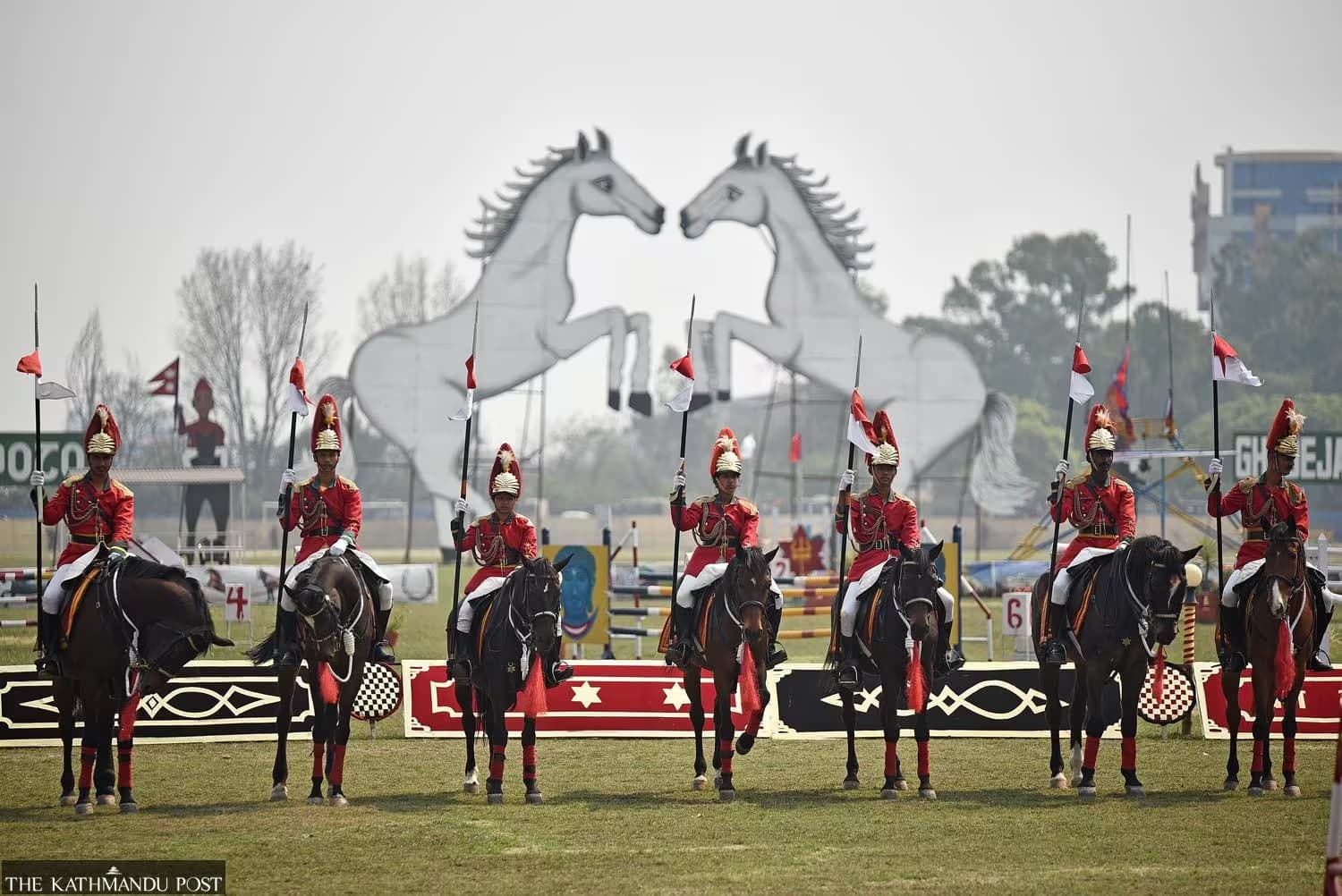
Kathmandu's dramatic horse racing festival at Tundikhel, where galloping horses and military displays are believed to trample the demon Gurumapa and keep evil at bay.

A month-long religious observance where devotees — especially women — fast and listen to the 31 chapters of the Swasthani story read nightly, with holy bathing at sacred rivers.

An all-night vigil at Pashupatinath where devotees scatter seven types of seeds through the sacred Sleshmantak forest to honor departed souls.

The birthday celebration of Lord Krishna centered at the magnificent Krishna Mandir in Patan Durbar Square, with all-night devotional singing and thousands of oil lamps.

The beloved Newar harvest festival celebrating the new rice crop by making yomari — steamed rice-flour dumplings filled with chaku molasses or sweet khuwa.

The holy month of Newar Buddhism, when devotees make daily dawn processions to stupas and bahals, filling the valley with the sound of traditional gunla bajan music.

Patan's day-long Buddhist pilgrimage on foot — the day after Gai Jatra, thousands of walkers carry lamps and offerings past every Buddhist shrine in the city, from dawn until well after dark.

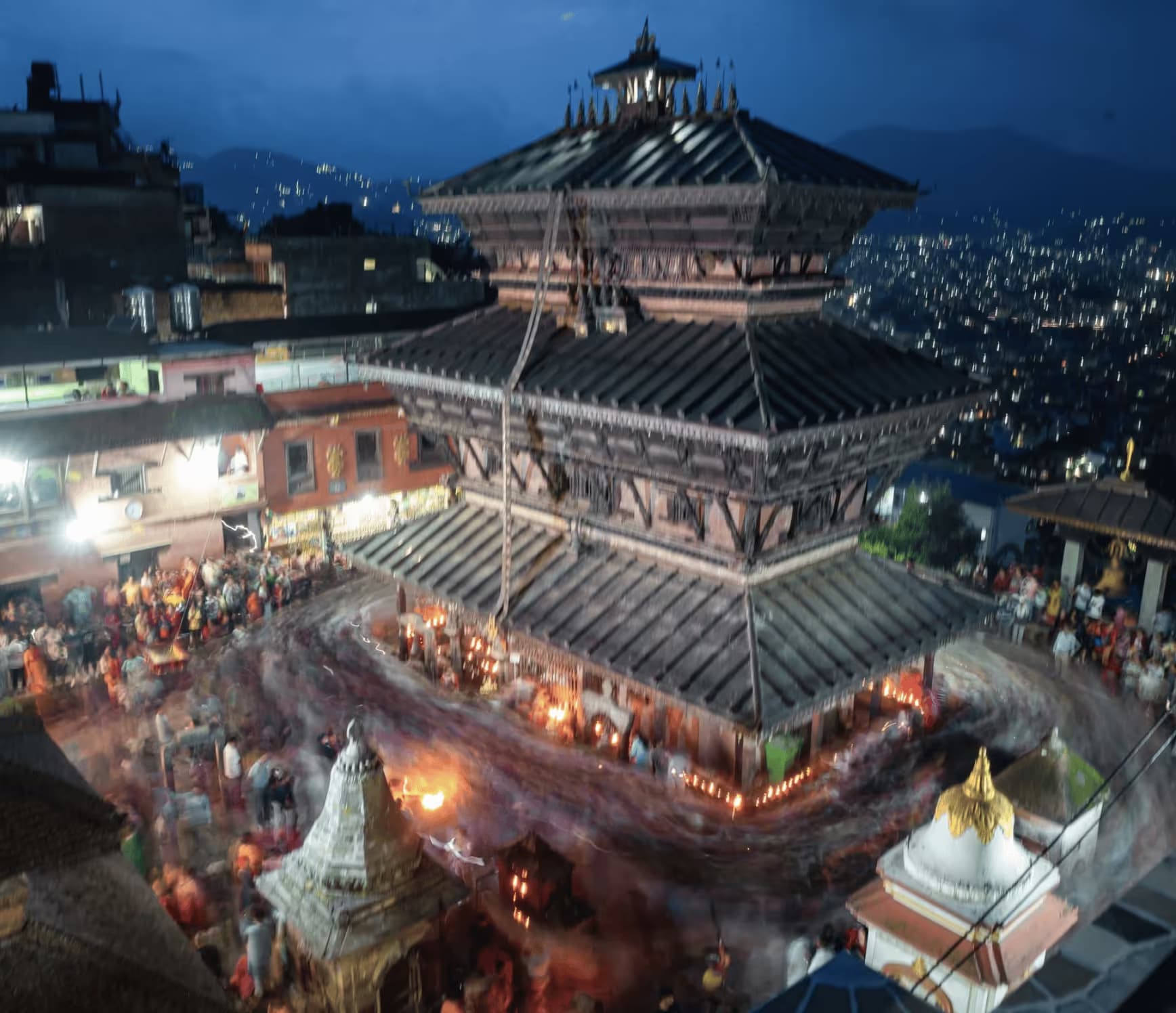
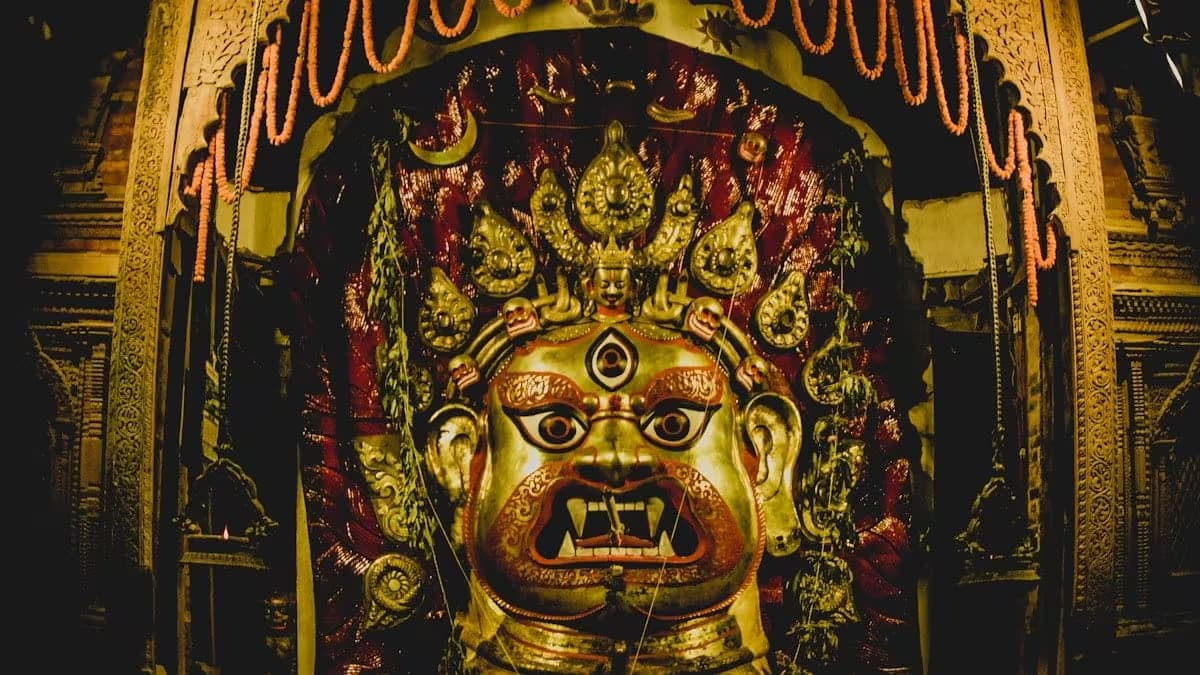
A dramatic night-time chariot procession of Pachali Bhairav through south Kathmandu, accompanied by tantric rituals, animal sacrifice, and a flaming torch procession.

A grand Buddhist festival held once every five years in Patan, where Dipankara Buddha statues from bahals across the city are gathered in a single magnificent display.

The Newar festival of water source purification, marking Kumar Shashthi with the annual cleaning of wells, stone spouts, and irrigation channels before the monsoon.

A fierce rain-invoking procession through old Kathmandu with sword-bearing men, historically a martial display tied to the protection of the city.

Banepa's most important festival celebrating Goddess Chandeshwori's victory over the demon Chandasur, featuring a grand chariot procession.

Sankhu's oldest jatra, when the goddess Bajrayogini is carried down from her hilltop temple into the ancient town in a major Newar-Tamang celebration.

Khokana's alternative to Dashain, a multi-day village festival dedicated to the goddess Shikali or Rudrayani with masked dances, processions, and tantric ritual.

Balambu's grand 'Laa Tii Mar' festival following Nepal Era New Year, where Ganesh and Mahalaxmi chariots are danced through the streets by nine Guthis in bare feet.

Panauti's major monsoon jatra, held around the full moon of Jestha, when the town's protective deities are taken out in procession before the farming season intensifies.

Thimi's vivid vermilion festival on Baisakh 2, when palanquins of local deities circle Balkumari amid music, torchlight, and clouds of sindur.

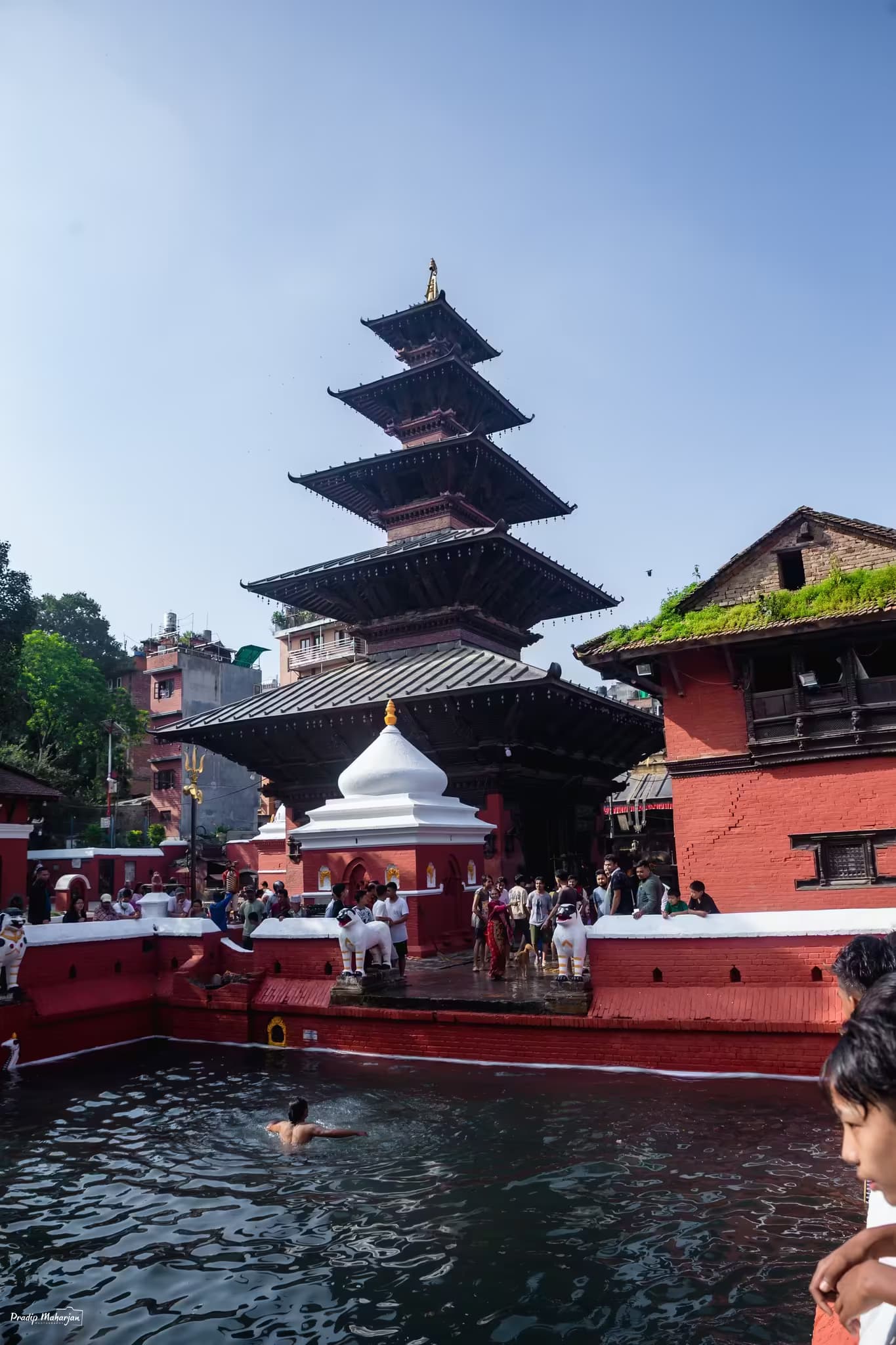
The full moon of Shrawan, when men who wear the janai renew it, everyone else is tied a protective doro on the wrist, and Newar households eat kwati — centred on the sacred Kumbheshwar lake in Patan.

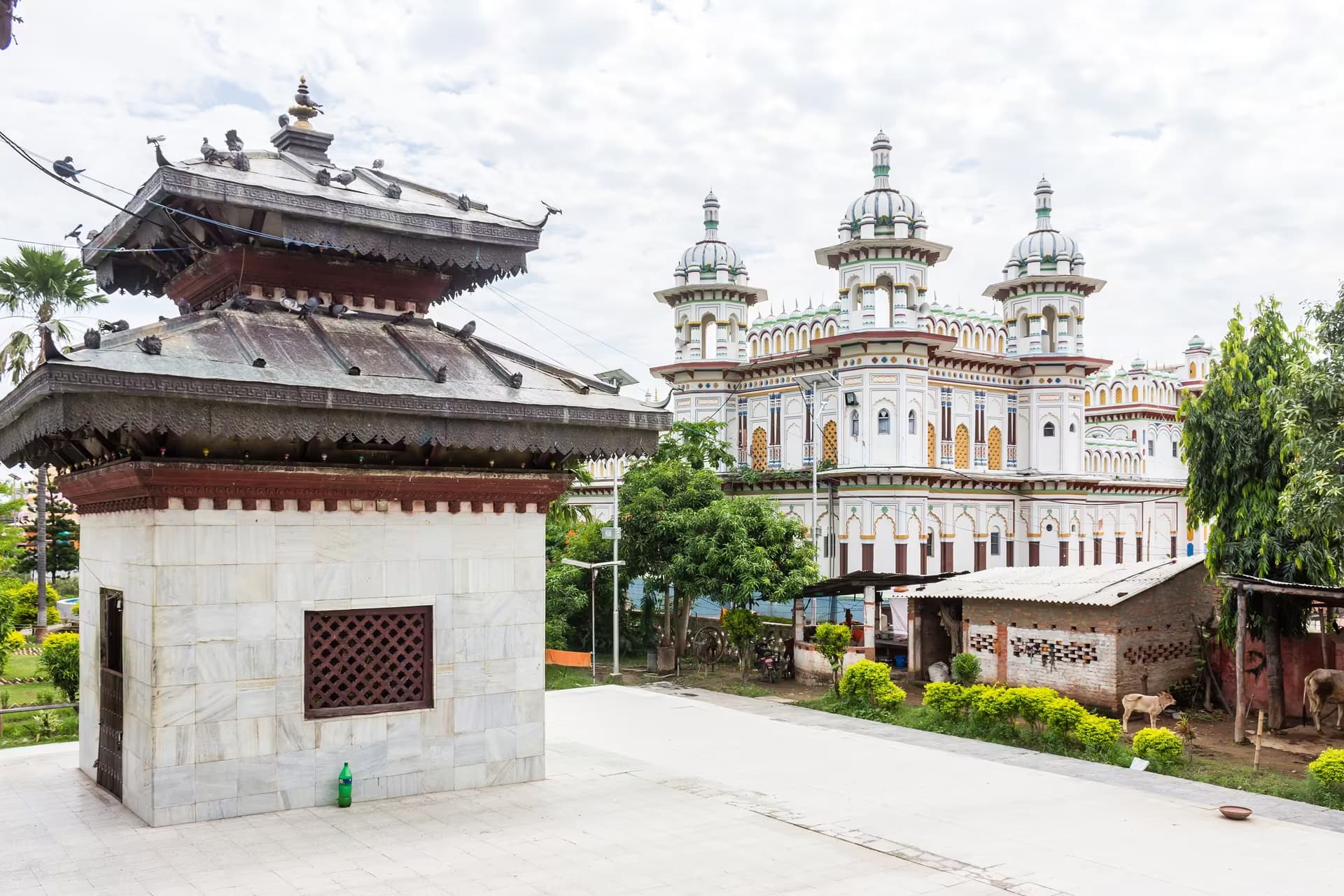
Janakpur's major Sita-Rama wedding festival, when the divine marriage is reenacted with processions around Janaki Mandir and the Vivah Mandap.

An ancient one-evening jatra of the Newar community of Deupatan (Gwal:dey), in the Pashupati area of Kathmandu. Also called Trishul Jatra, it carries nine child gods and goddesses on nine tantric chariots in circuit around Ishaneshwar Mahadev, keeping alive legends of children saved from demons and a priest who lost his own son.

Kirtipur's own one-day jatra on the first day of Bhadra, when an image of Bagh Bhairav, the tiger form of Bhairav and the town's presiding deity, is bathed, worshipped and carried through the old streets with bands, bhajans and Lakhe dance.

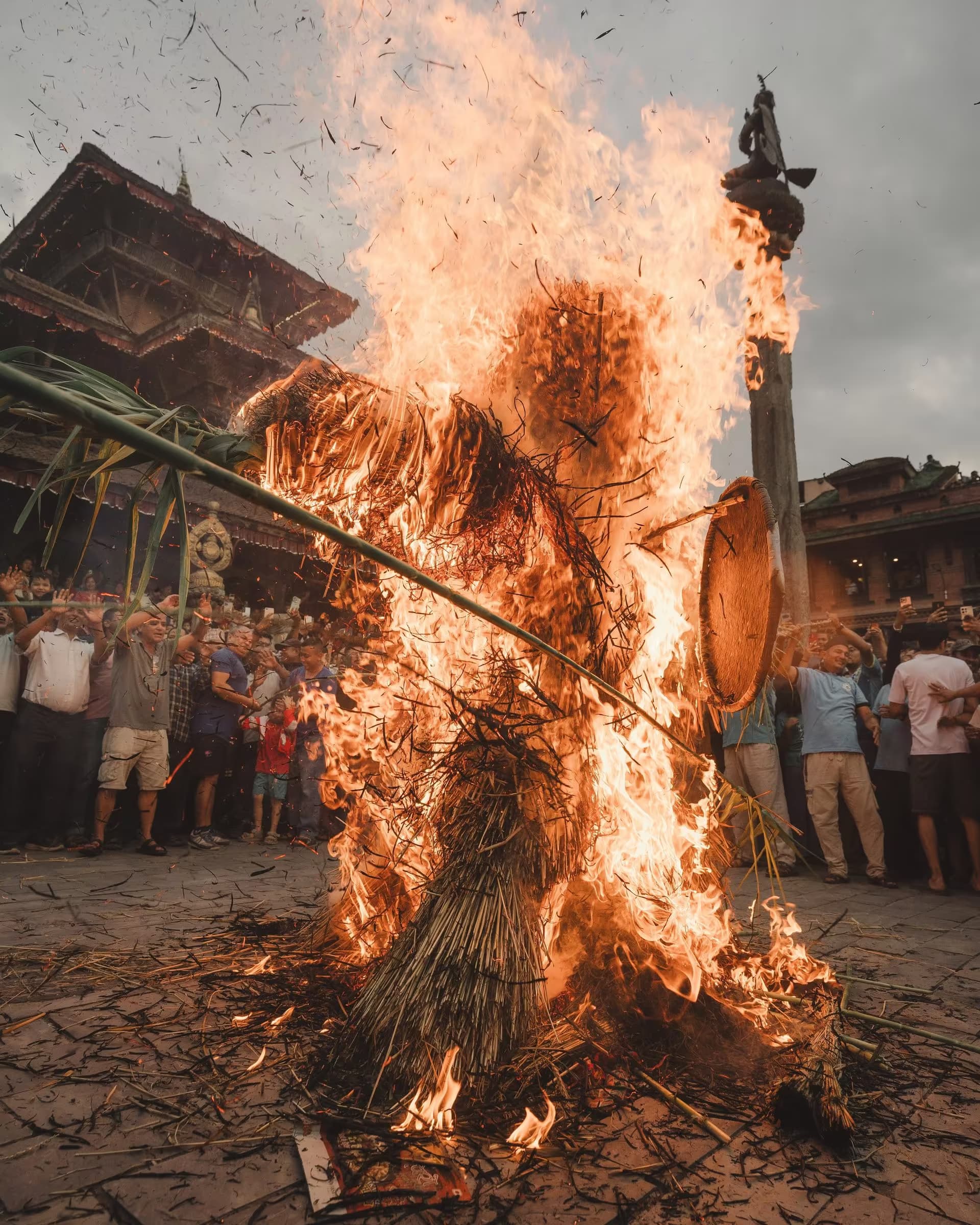
The Newar night of demon-burning that opens the festival season — effigies of the bell-eared demon Ghantakarna raised at the crossroads of every Newar tole, in the Kathmandu Valley and the hill bazaars beyond it, then dragged out and set alight. Known in Khas Nepali as Gathemangal.

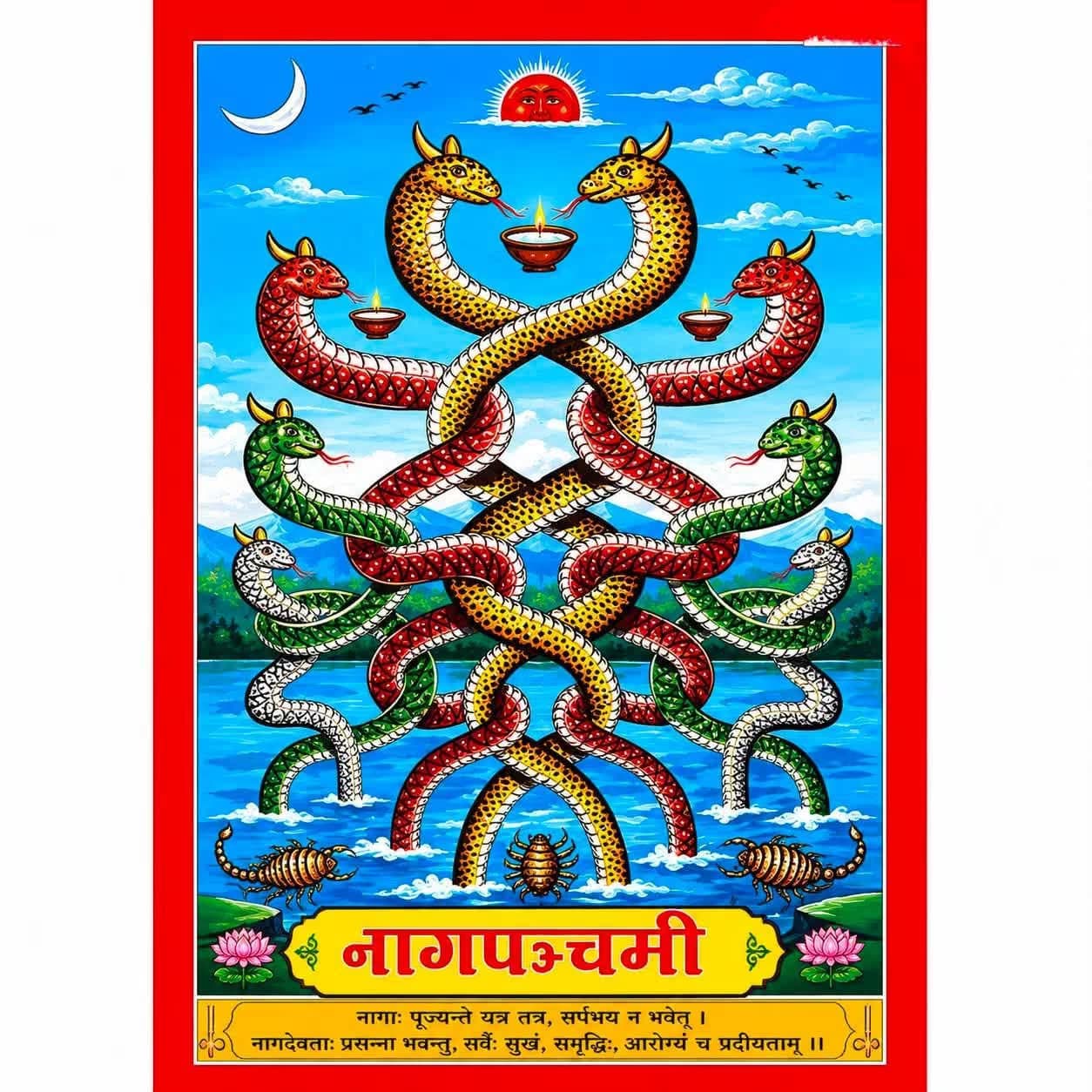
The monsoon day the Kathmandu Valley pays the nagas their rent — a printed serpent pasted above every doorway, milk poured at the serpent ponds, and prayers for rain that arrives and then stops.
Plan around Nepal’s festival calendar — see what’s coming in every month of the year.
View calendar →The ancient courtyards and palace squares where jatras, masked dances, and chariot processions come alive.
Explore →