Indra Jatra
इन्द्रजात्रा
Kathmandu's most spectacular street festival celebrating the god Indra, featuring the living goddess Kumari's chariot procession.
Location
Kathmandu Durbar Square and old city
Duration
8 days
Month (Local)
Bhadra
Month (AD)
September
Plan around Indra JatraIndra Jatra in Kathmandu — 3 DaysShow planHide plan
Indra Jatra in Kathmandu — 3 Days
An on-foot old-Kathmandu plan built around Indra Jatra's opening chariot pulls: first learn the Durbar Square landmarks, then follow Kwaneya south and Thaneya north through the bazaar.
3 days · 26 stops
Copying makes it yours — change any day, then share the link with whoever you're going with.
Highlights
Kumari chariot procession through old Kathmandu. Swet Bhairav mask display with beer flowing from its mouth. Masked Lakhe dances in the streets. Ceremonial pole raising and lowering at Hanuman Dhoka.
Tips for Visitors
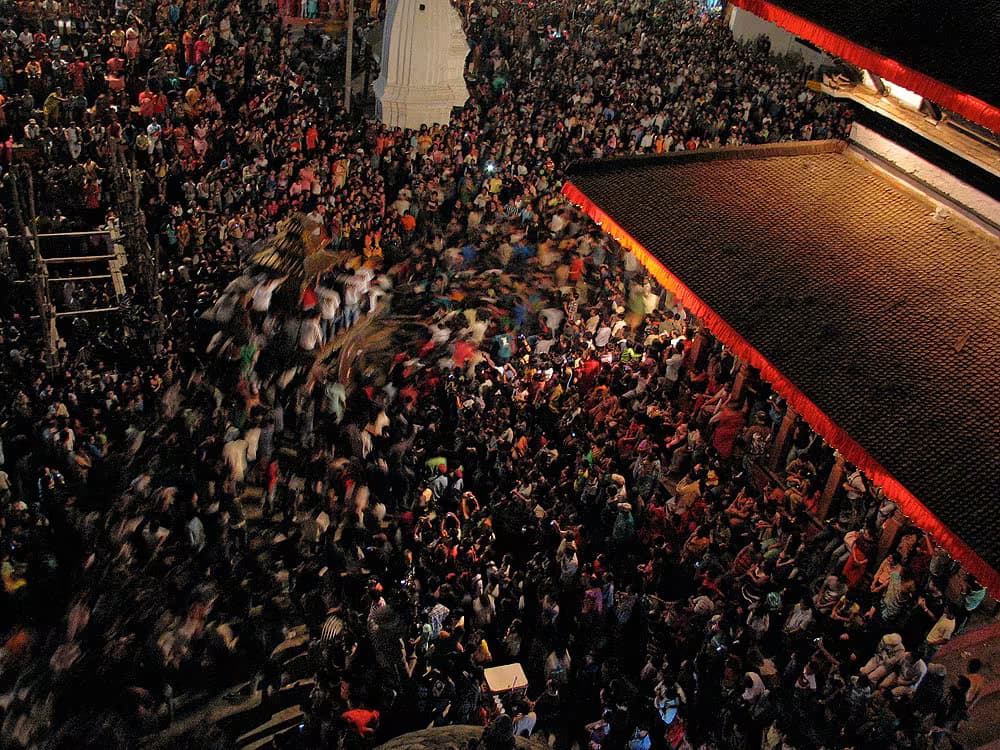
Arrive early to get a good viewing spot at Durbar Square. The Kumari chariot procession usually passes between 4-6 PM. Respect barriers around the Kumari — photography restrictions may apply. Streets get extremely crowded; watch your belongings.
Indra Jatra — Yenya in Newar — is Kathmandu's greatest street festival, an eight-day celebration in Bhadra (around September) that marks the end of the monsoon. It folds together three strands: the worship of Indra, the rain god; Kumari Jatra, the chariot procession of the living goddess; and the display of the city's many Bhairavs.
Its legend explains why a king of the gods is honoured in the streets. Indra, it is said, came down to the valley in disguise to gather parijat (night-jasmine) flowers for his mother's worship; not recognised, he was seized and bound as a common thief. His mother descended to earth to reveal his identity and win his release, and in return promised the valley winter dew for its crops and safe passage to heaven for the recently dead — which is why bereaved families join the processions. The festival is traditionally credited to the 10th-century king Gunakamadeva.
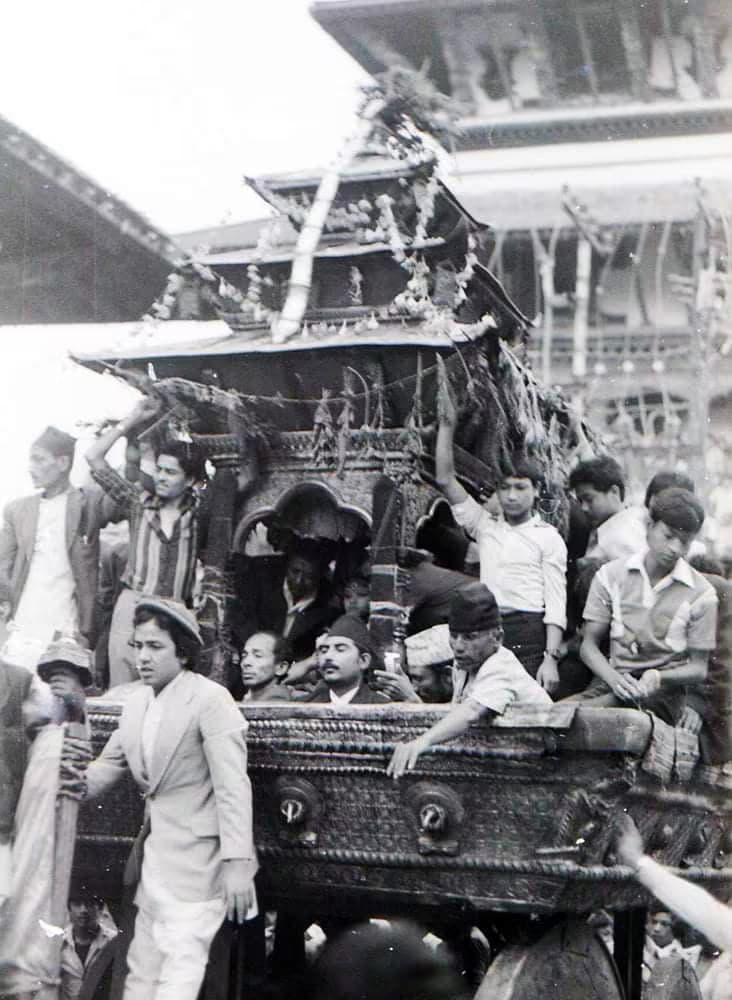
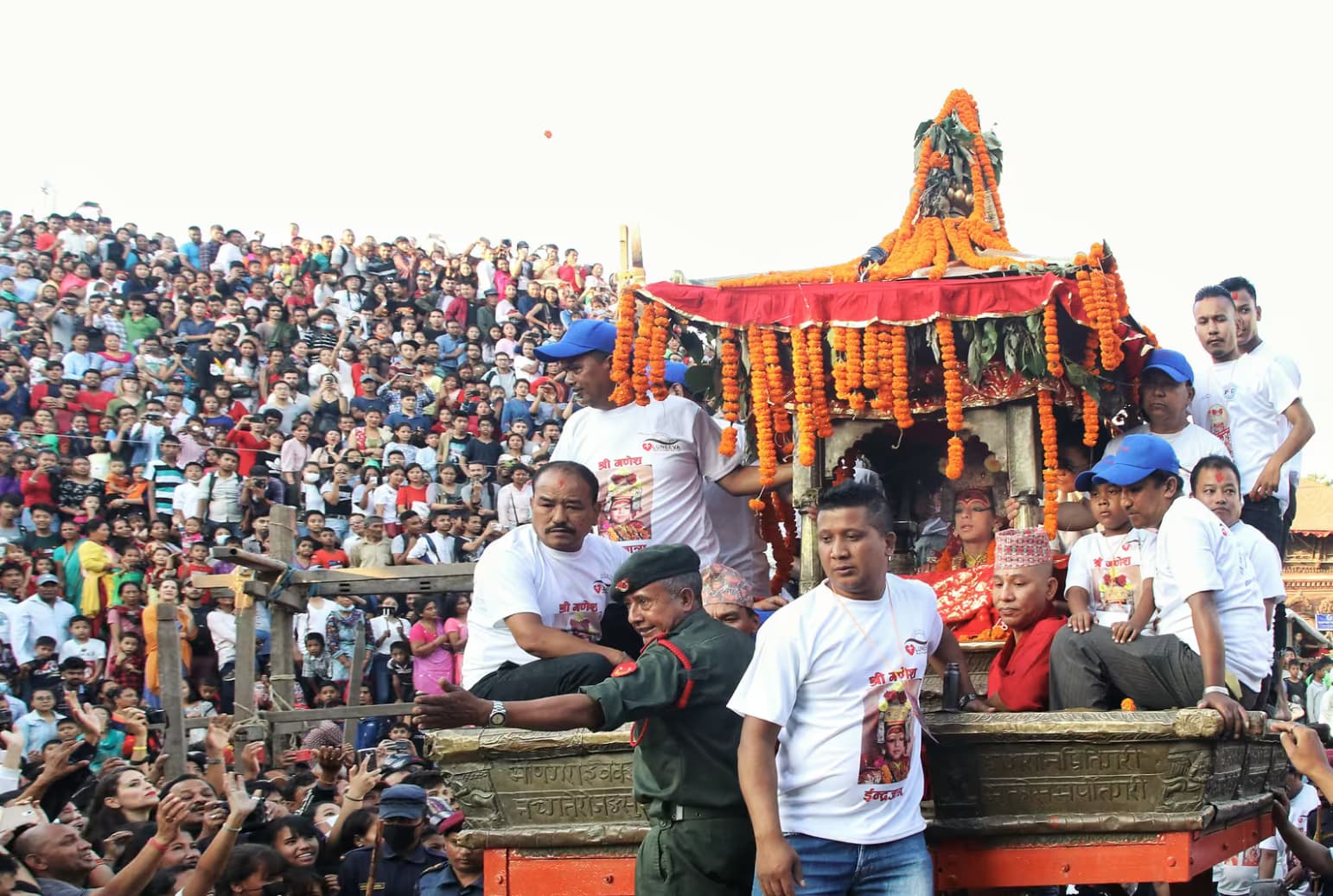
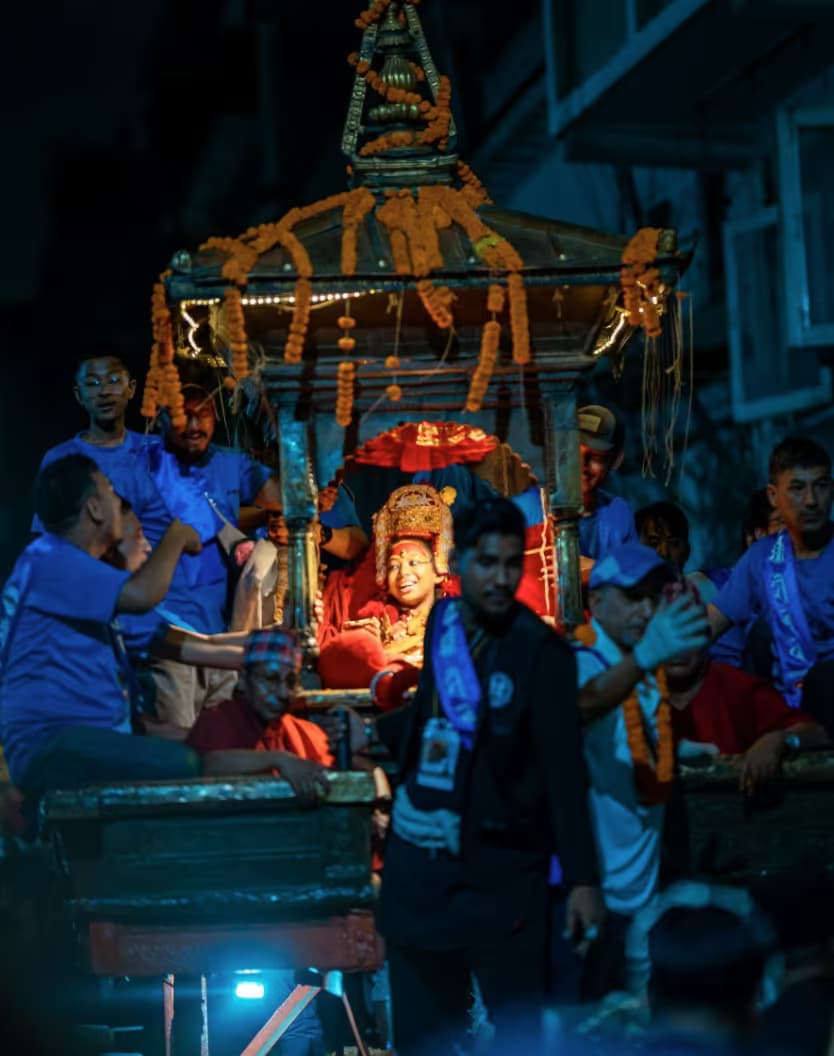
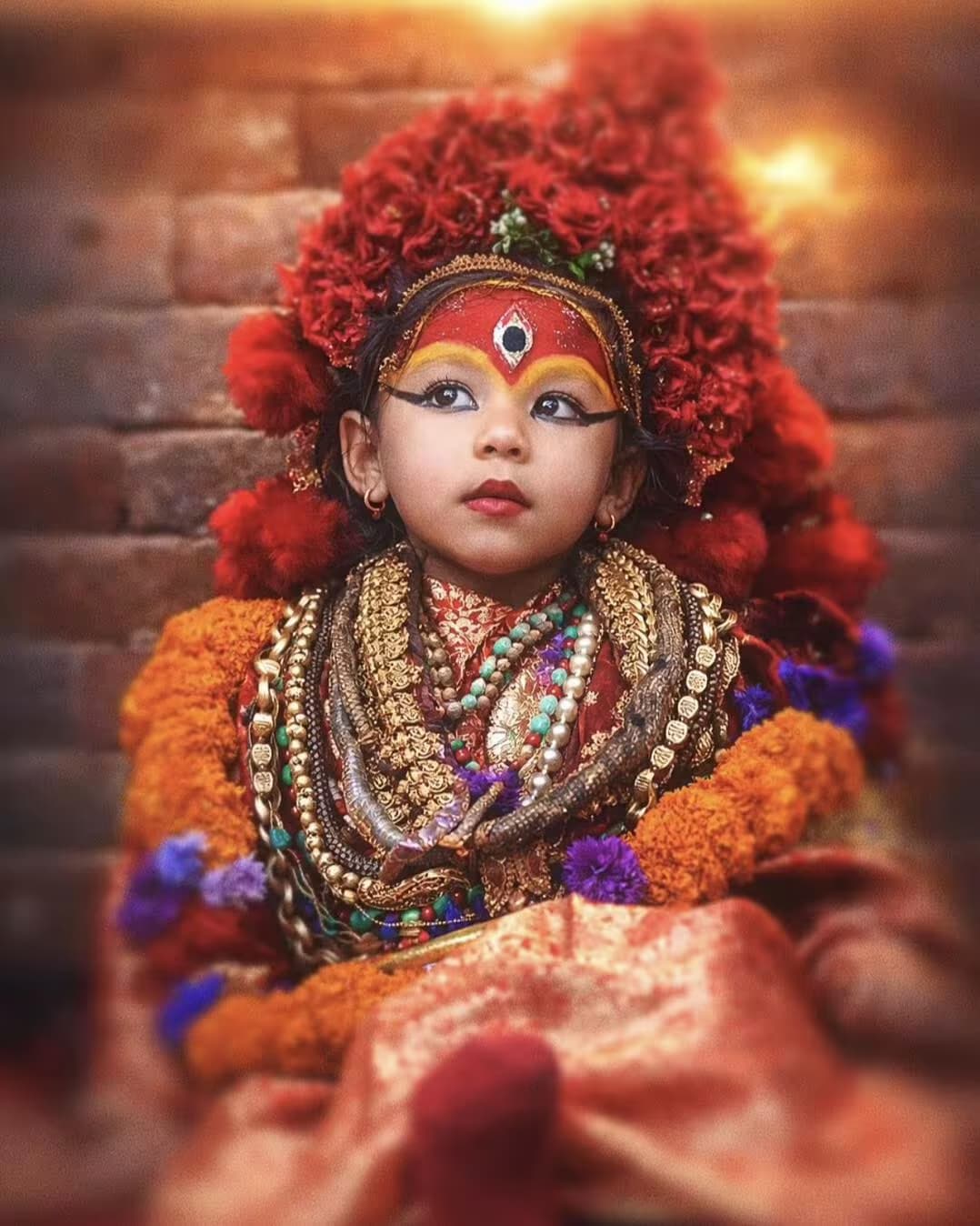
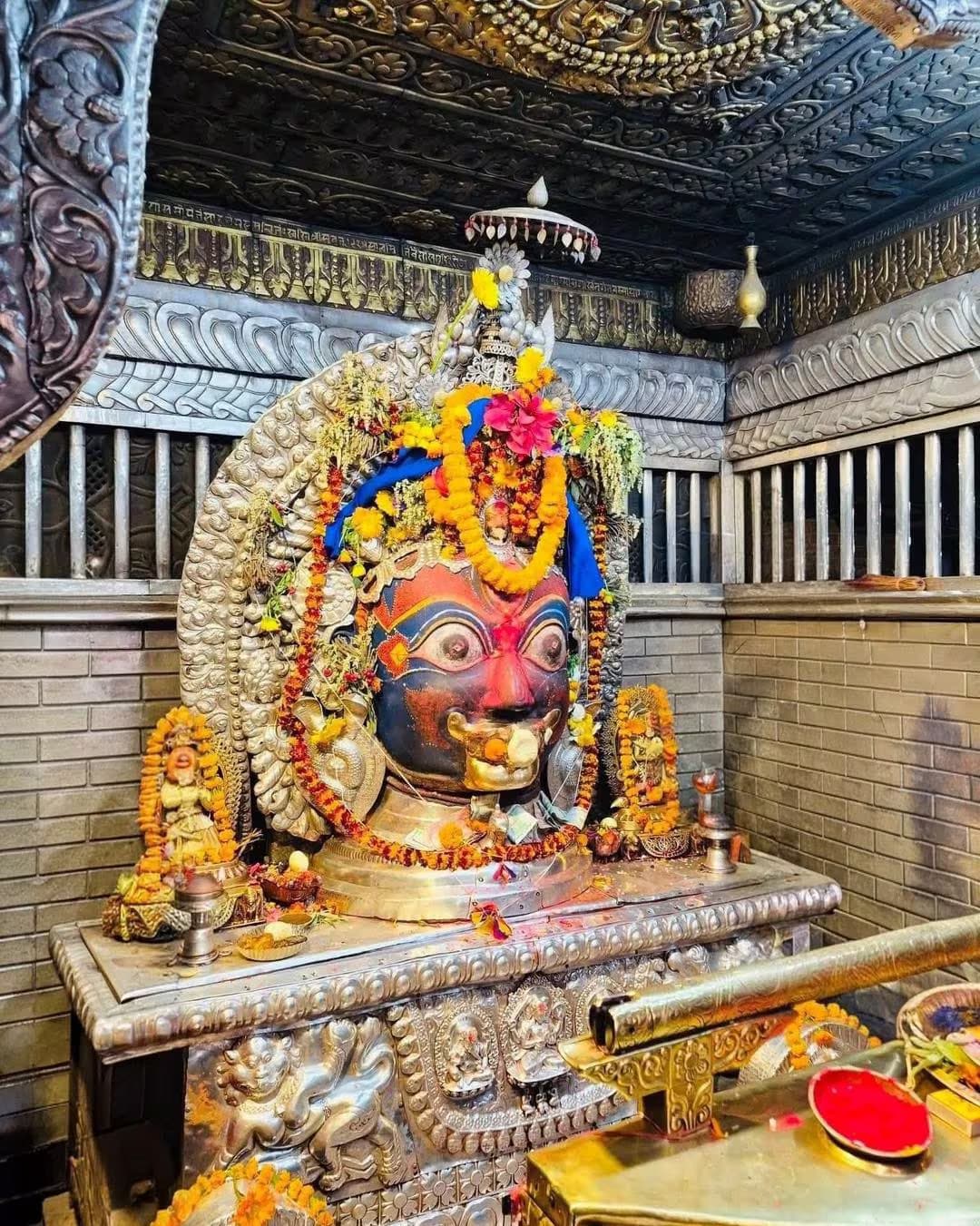
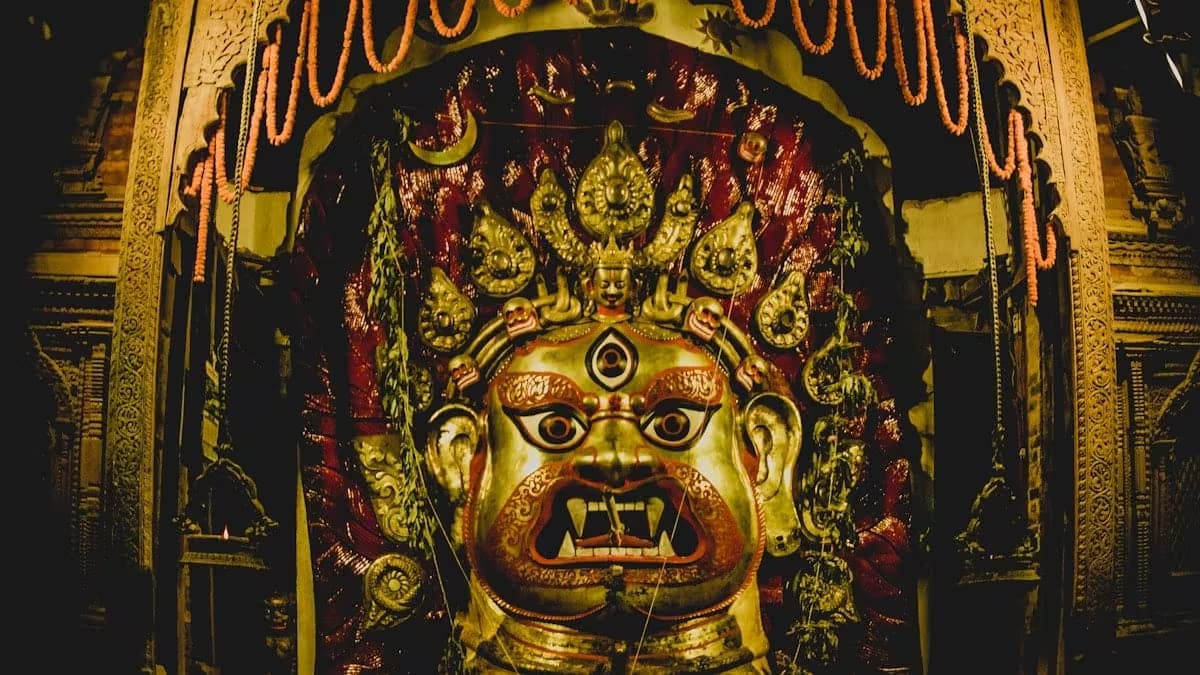
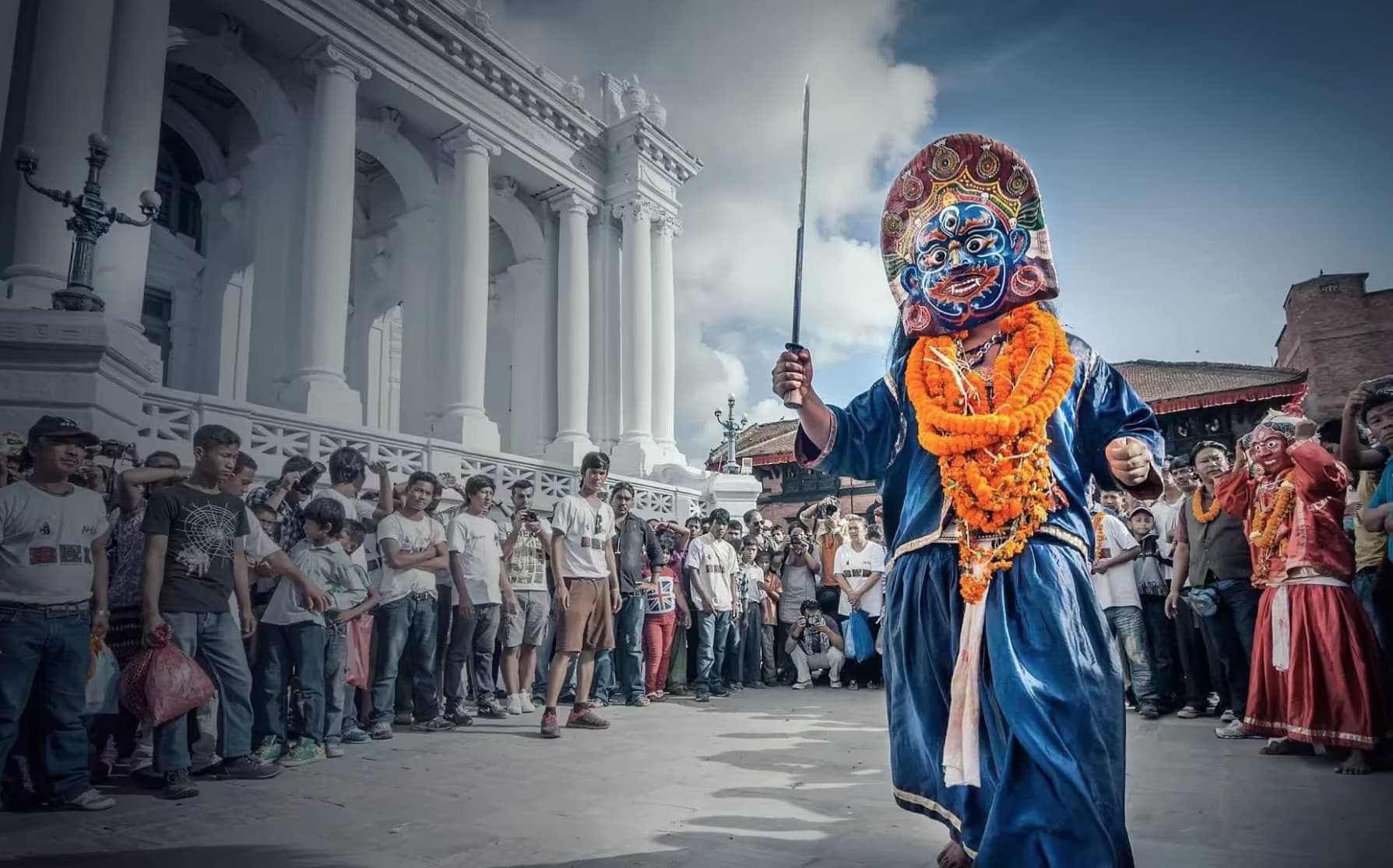
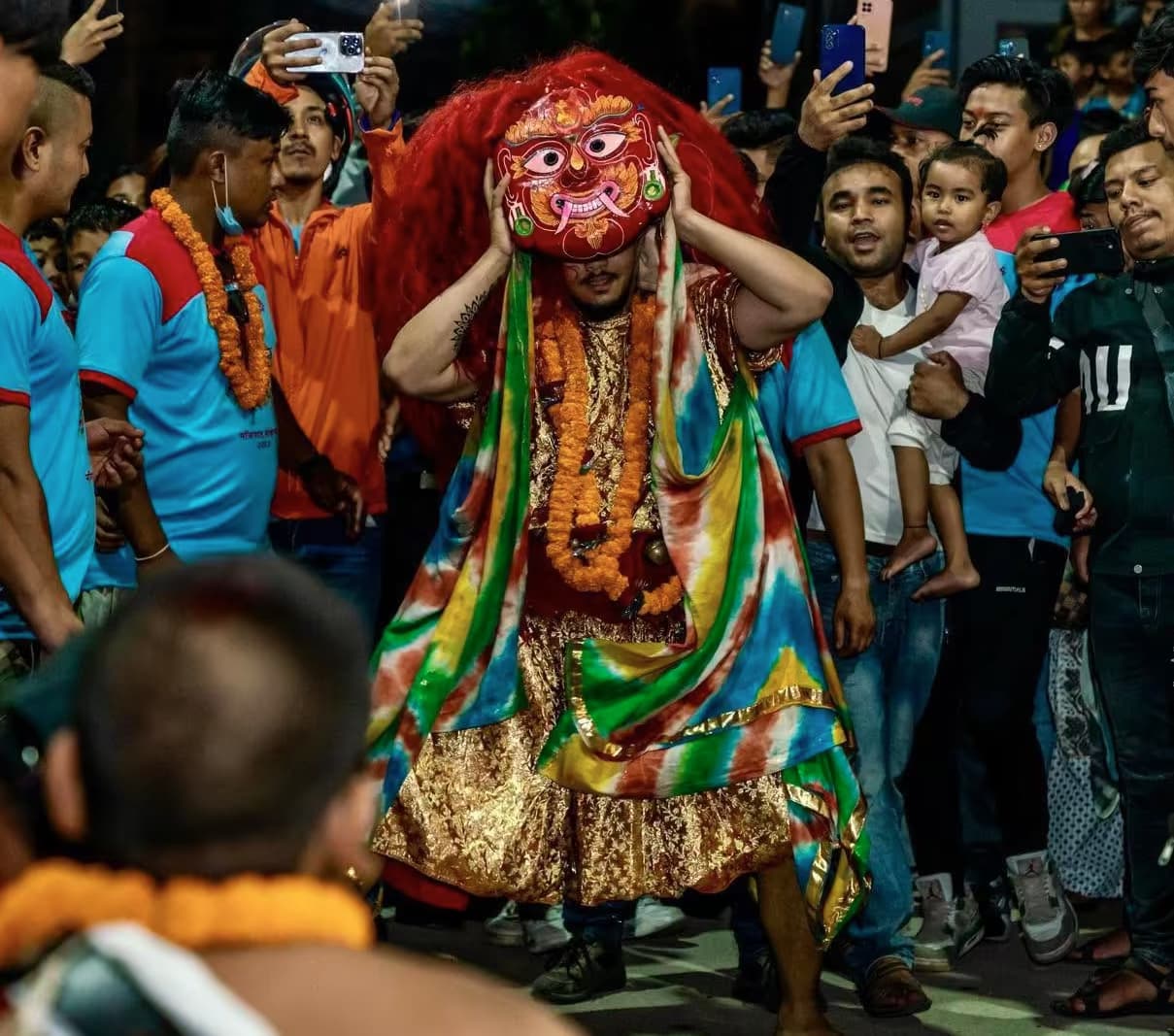
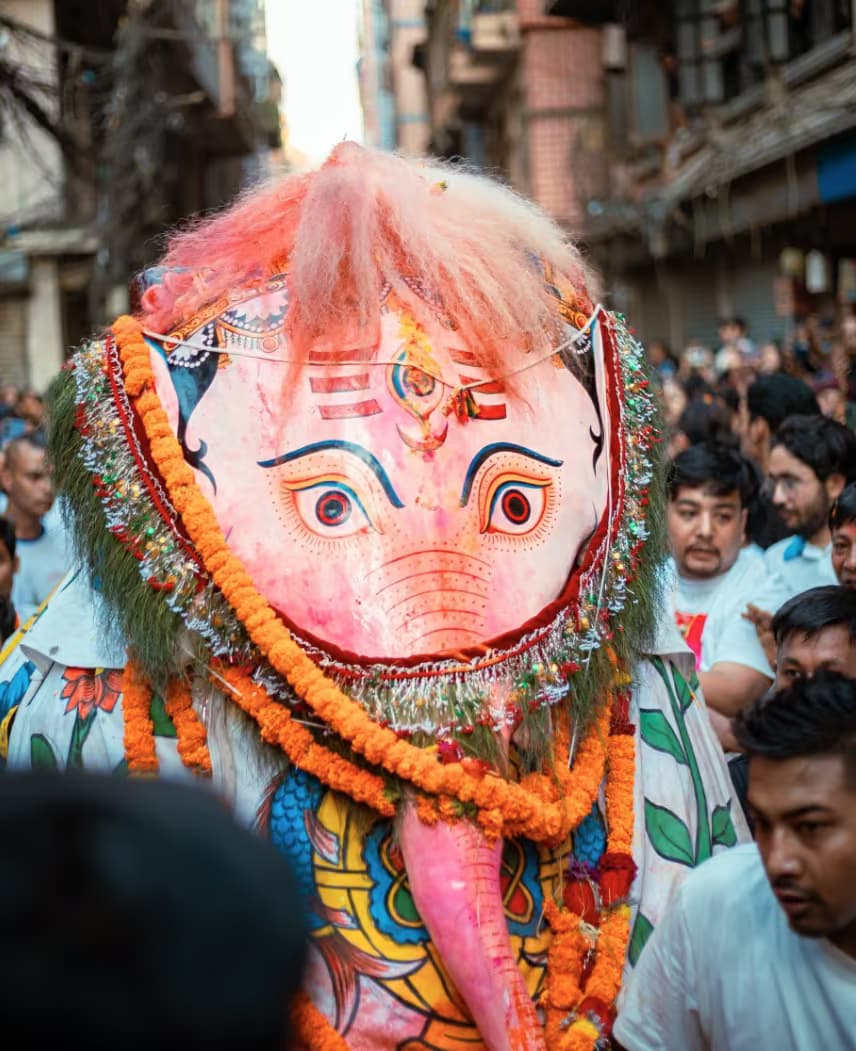
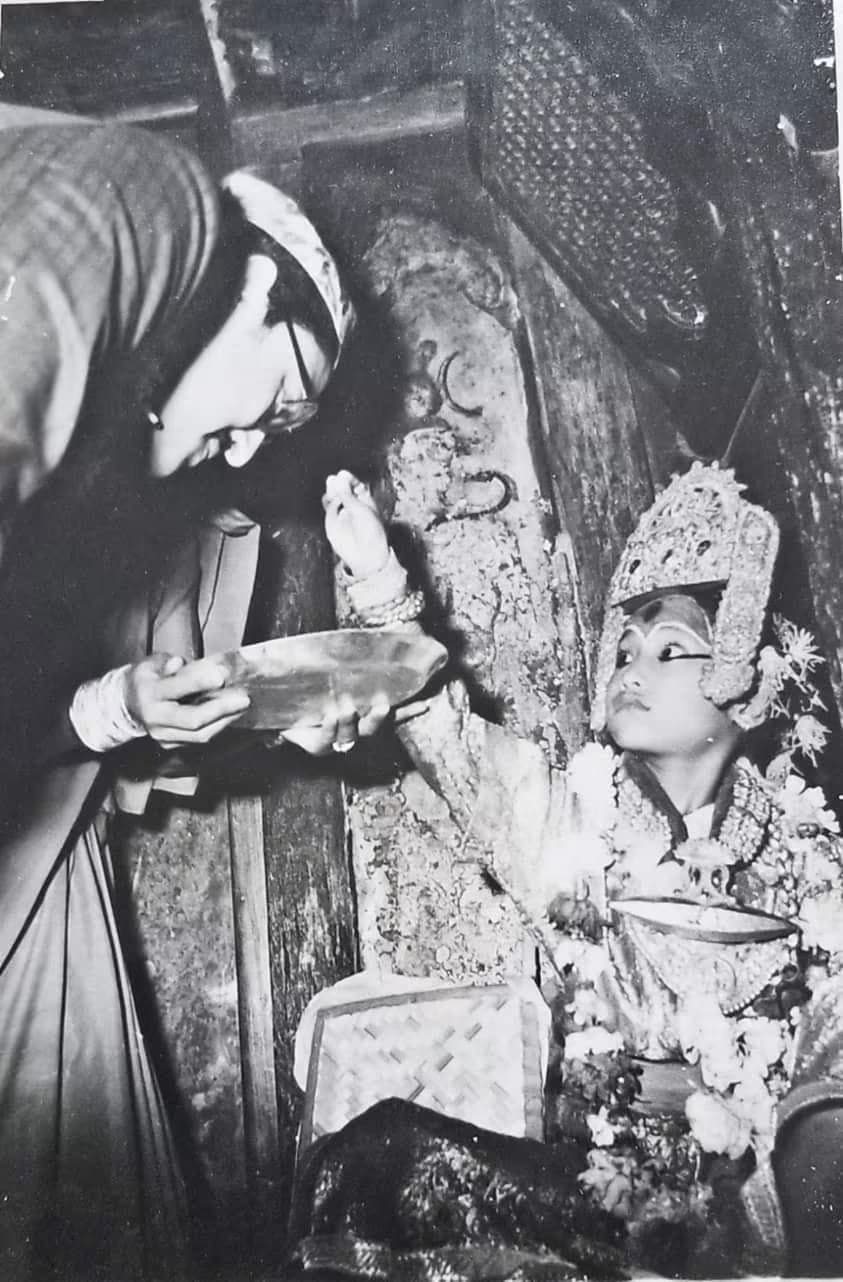
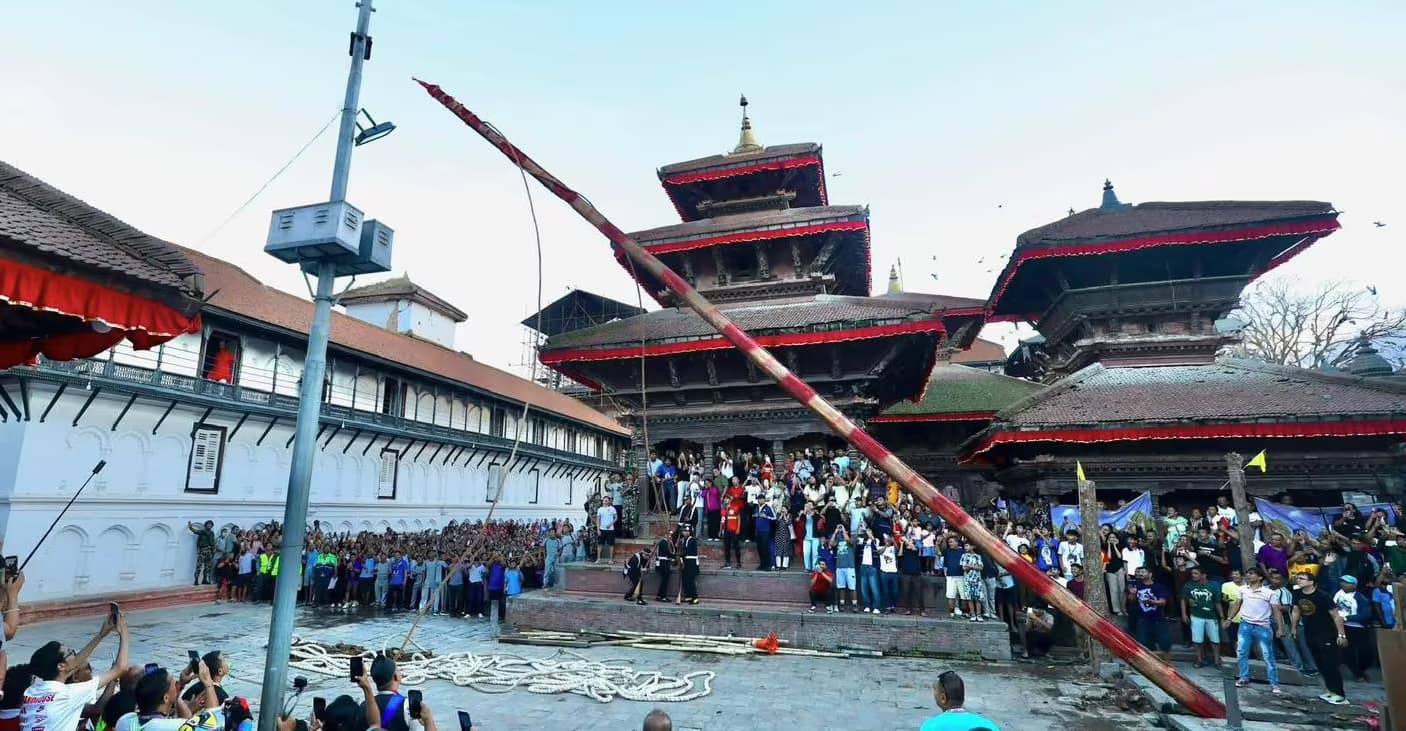
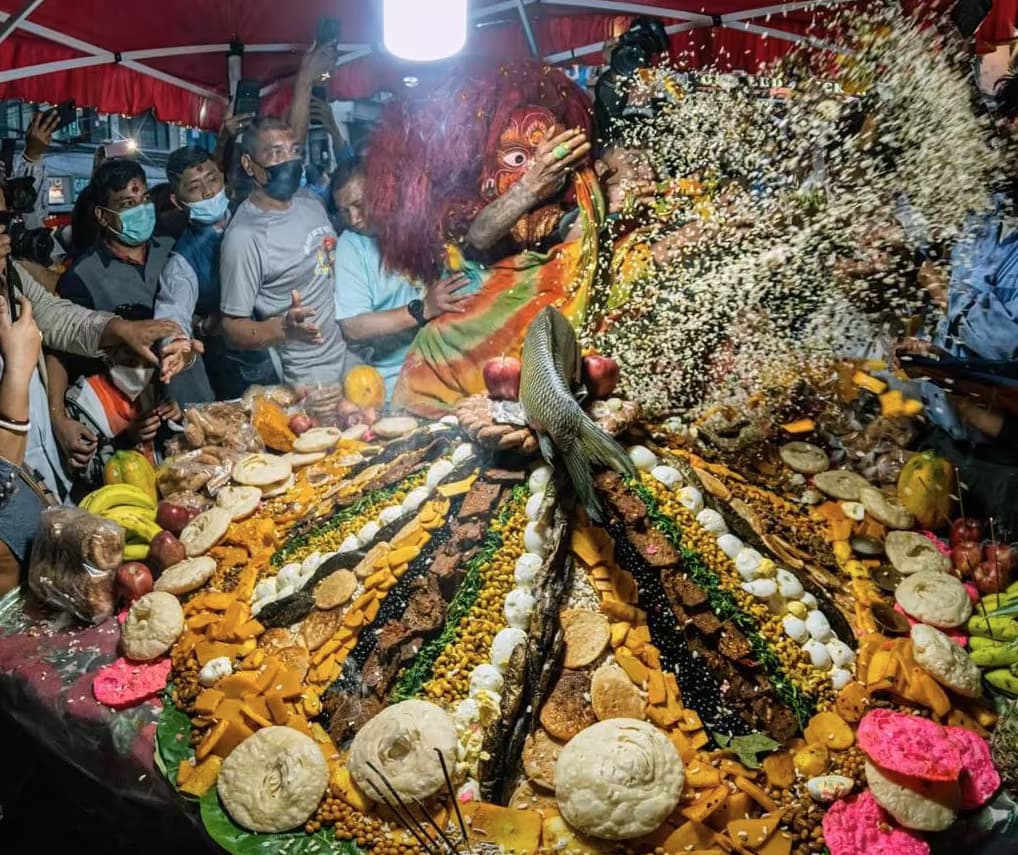
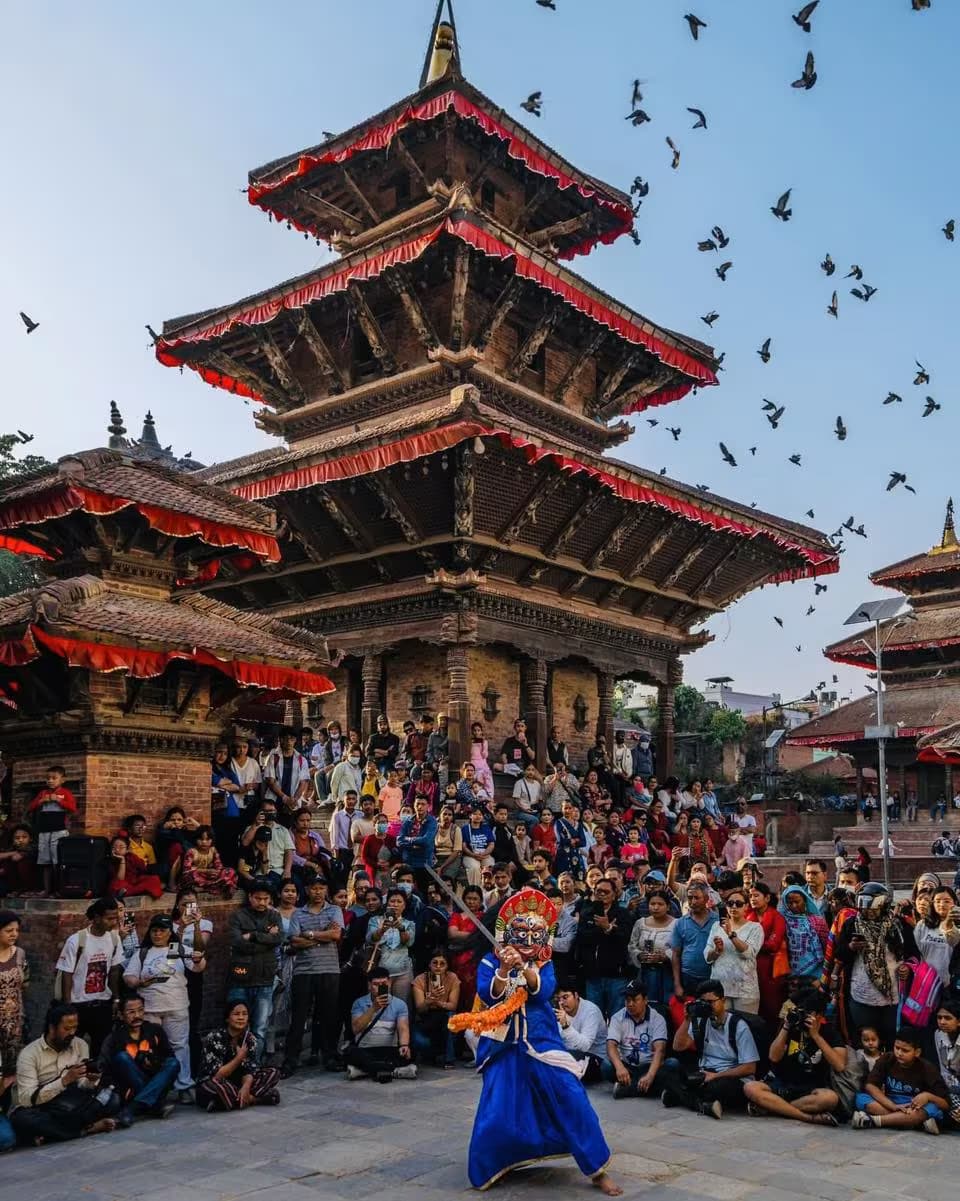
It opens with the raising of the Yosin, a tall ceremonial pole, at Hanuman Dhoka. Over the following nights the squares fill with masked dances — the red-faced Majipa Lakhe demon, the Pulukisi (a bamboo-framed elephant, Indra's mount searching for him), the sword-wielding Sawa Bhakku Bhairav, and the nightly Das Avatar of Vishnu's ten incarnations — while huge Bhairav masks, among them the Akash Bhairav at Indra Chok, are unveiled, and rice beer pours from the mouth of the giant Sweta Bhairav mask at Hanuman Dhoka for the crowds to catch. The most beloved rite, the Kumari Jatra, was added in 1756 by the last Malla king of Kathmandu, Jaya Prakash Malla: the Kumari — a young girl revered as the living form of the goddess Taleju — is drawn through the old city in a great chariot flanked by the chariots of Ganesh and Bhairav. The festival closes with the lowering of the Yosin pole, releasing Indra back to the heavens.
Deities & Presences
Dances
Rituals & Ceremonies
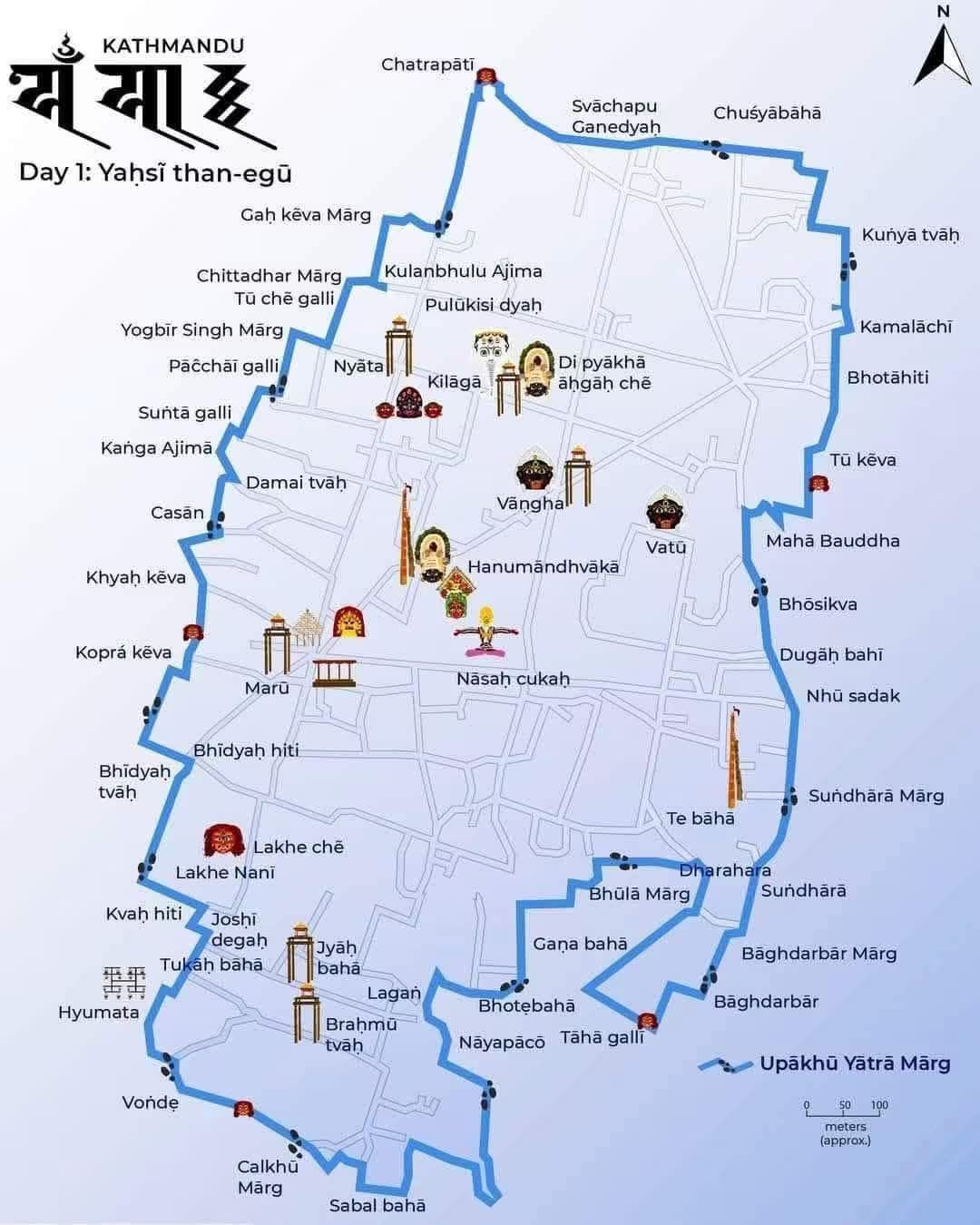
Procession Routes
Guides that feature this place
- Seasonal9 min
Indra Jatra 2026: Kathmandu Dates, Events, and Visitor Guide
Indra Jatra 2026 runs September 25 - October 2 in Kathmandu. This guide covers the eight-day shape, the three chariot days (Kwaneya, Thaneya, Nanicha), the Kumari and Bhairav events to watch for, and how to visit respectfully.
- Seasonal8 min
Teej 2026: Dates, the Three Days, and the Dar Night Before
Teej 2026 runs September 14-16, with the nirjala fast and the Pashupatinath queues on Monday, September 14 and the dar feast the evening before, Sunday, September 13. The day-by-day schedule, where to watch, what women wear, and visitor etiquette.
Elsewhere in this region
Help us get it right
Know Indra Jatra better than we do?
We write from research and reporting, and the ground changes faster than we can keep up. If something here is out of date, or you have been and would tell it differently, we would rather hear it.