Mahalaxmi Jatra
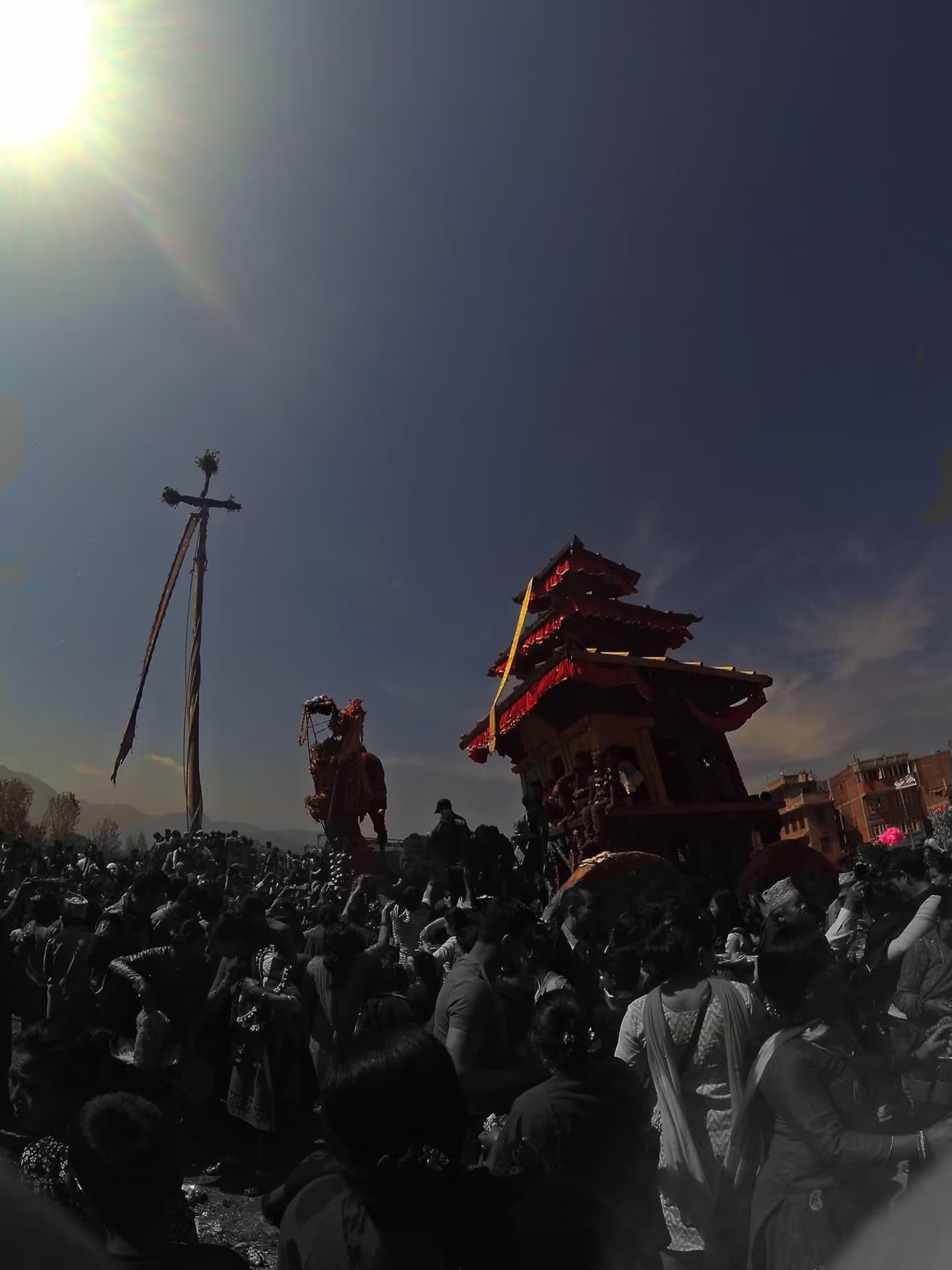
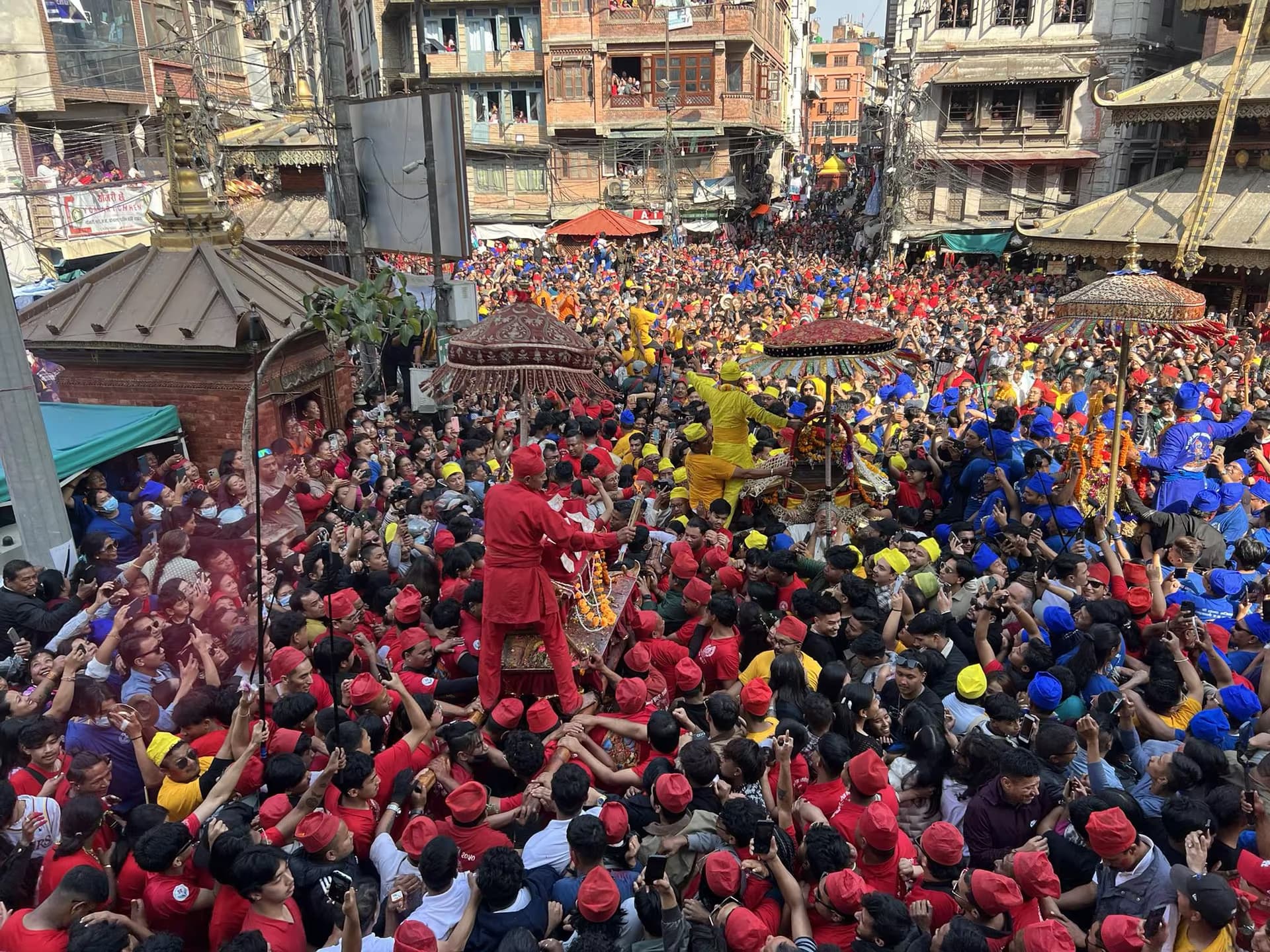
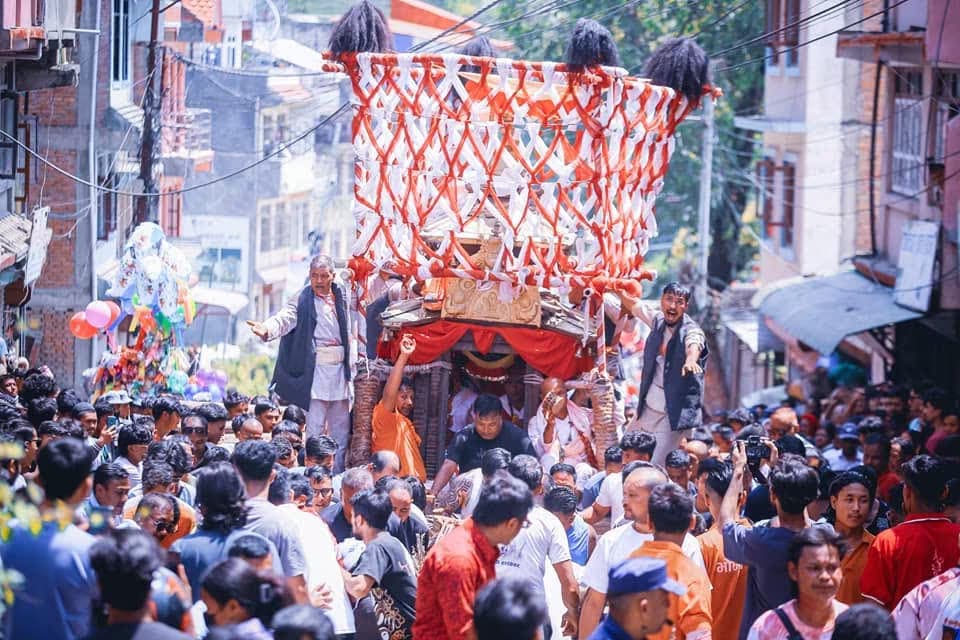
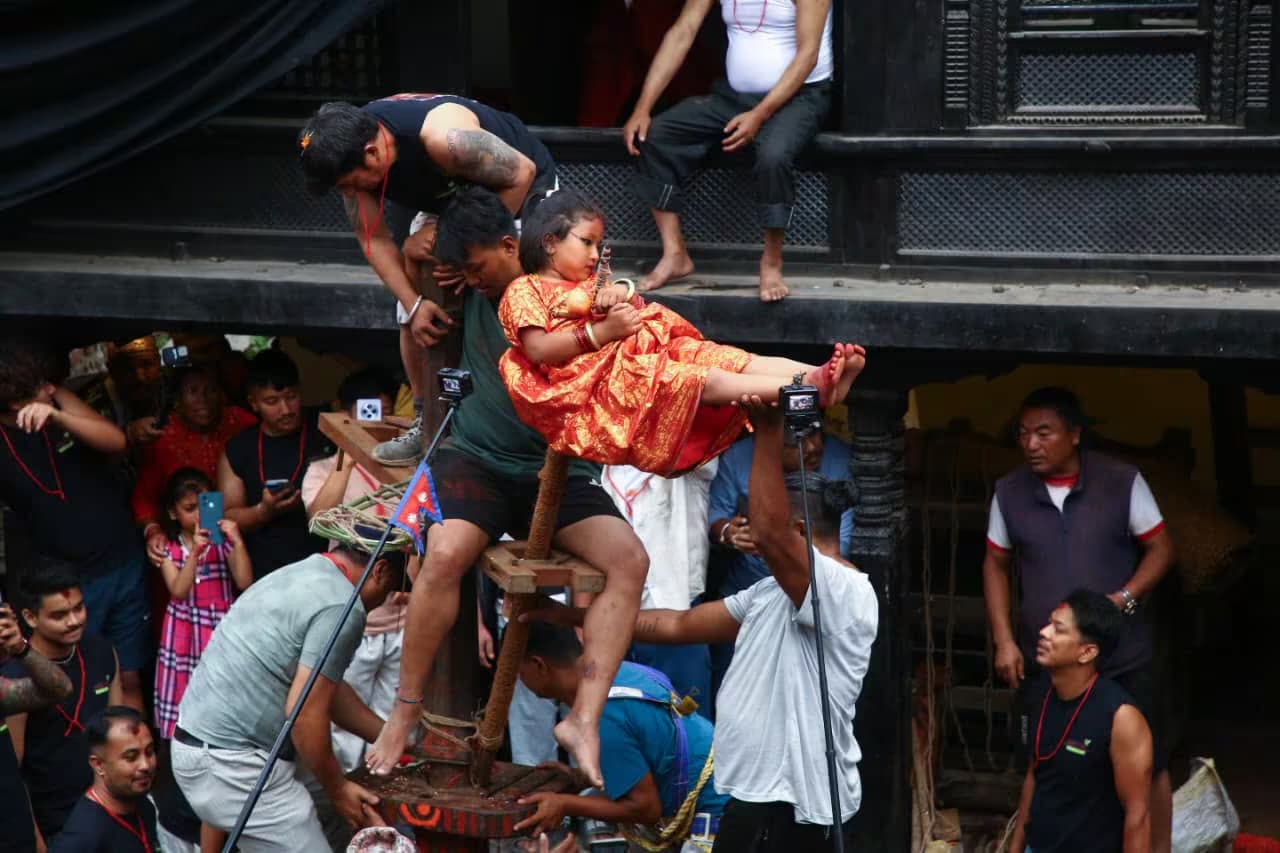
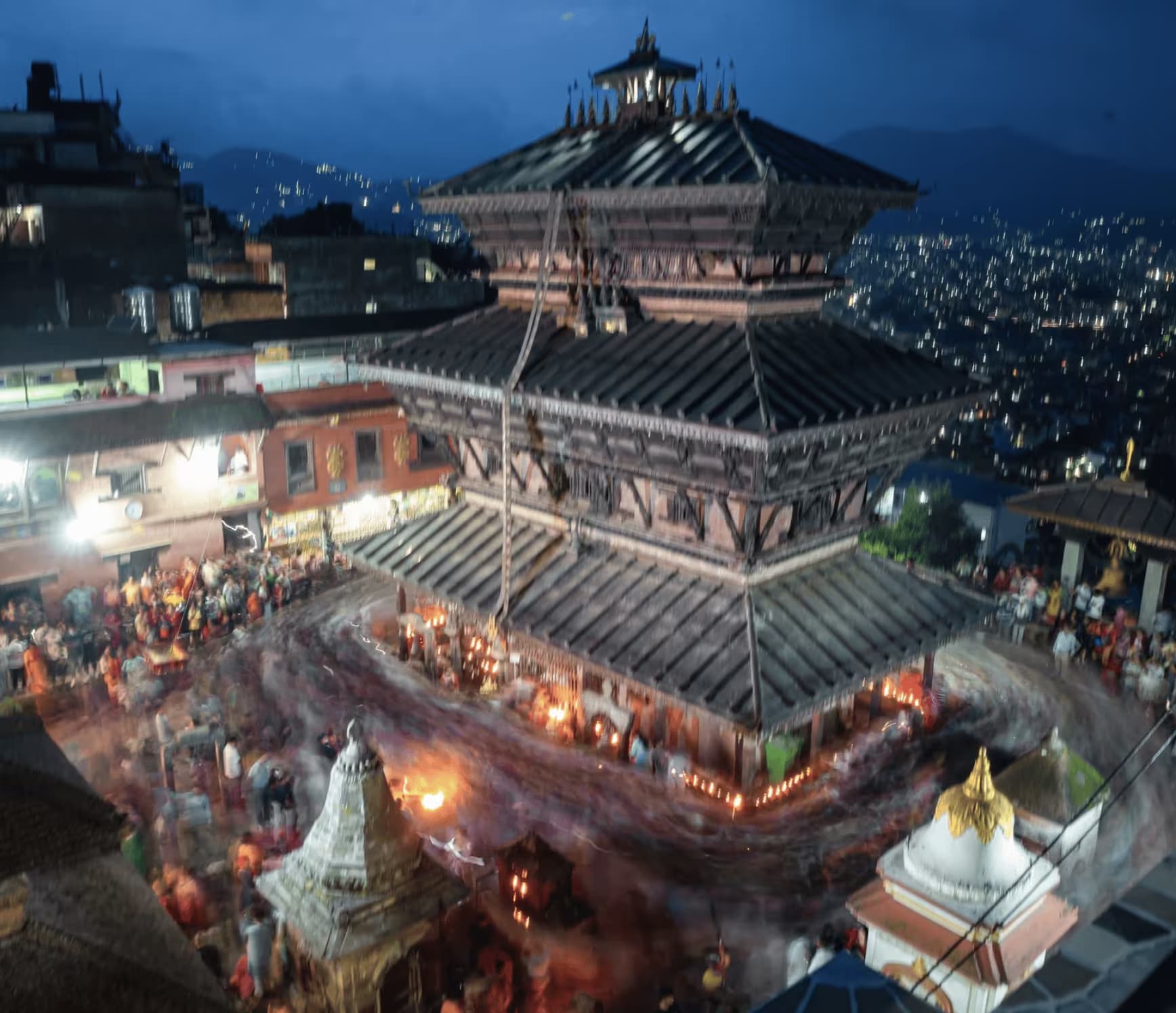
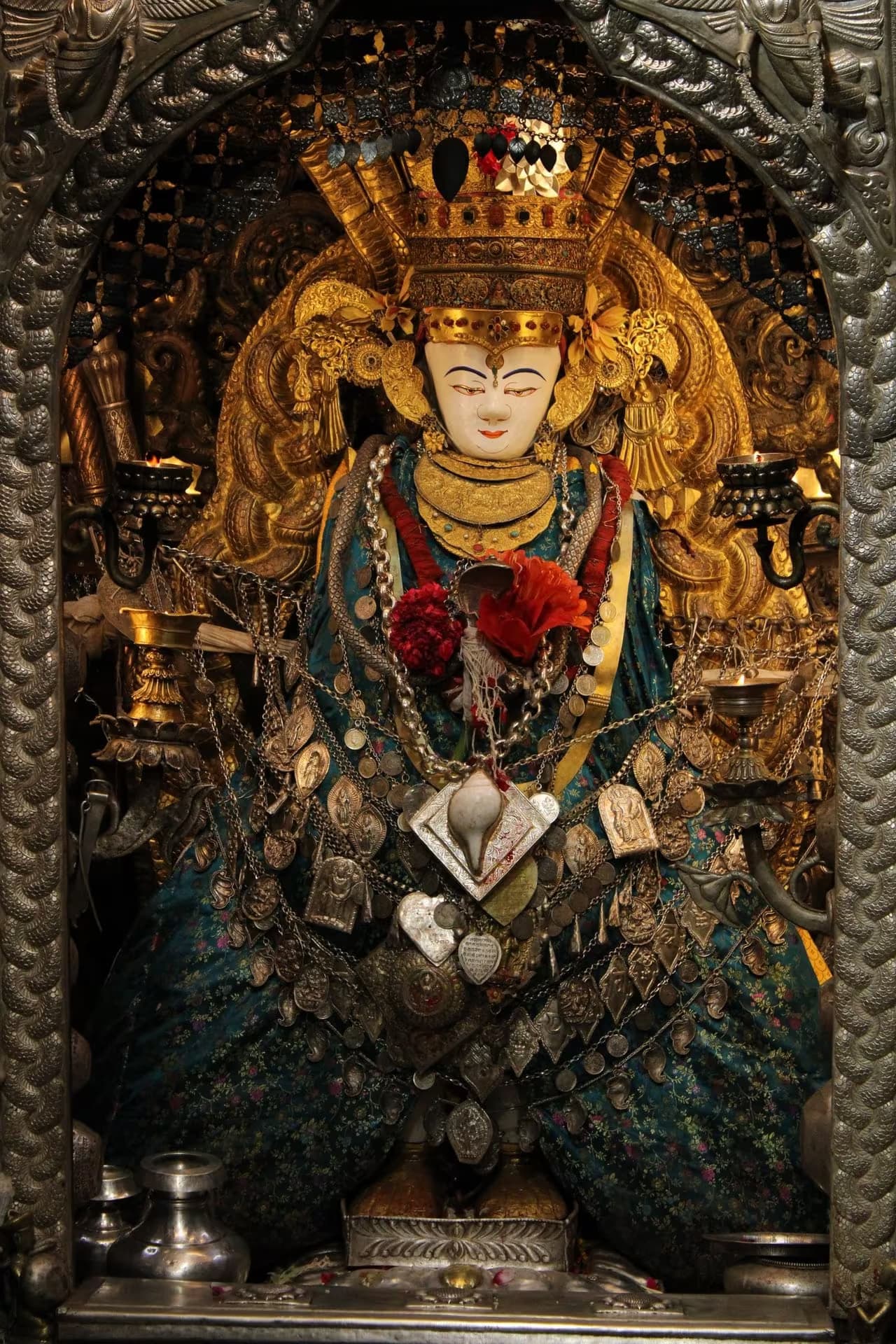
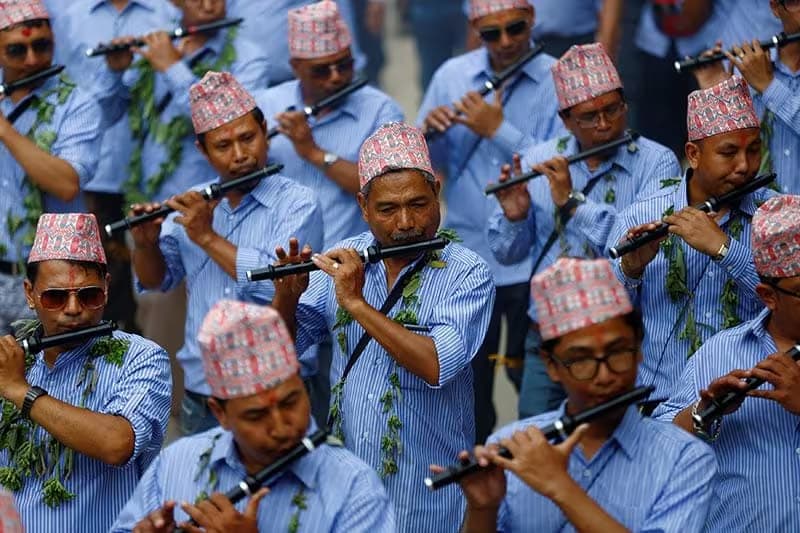
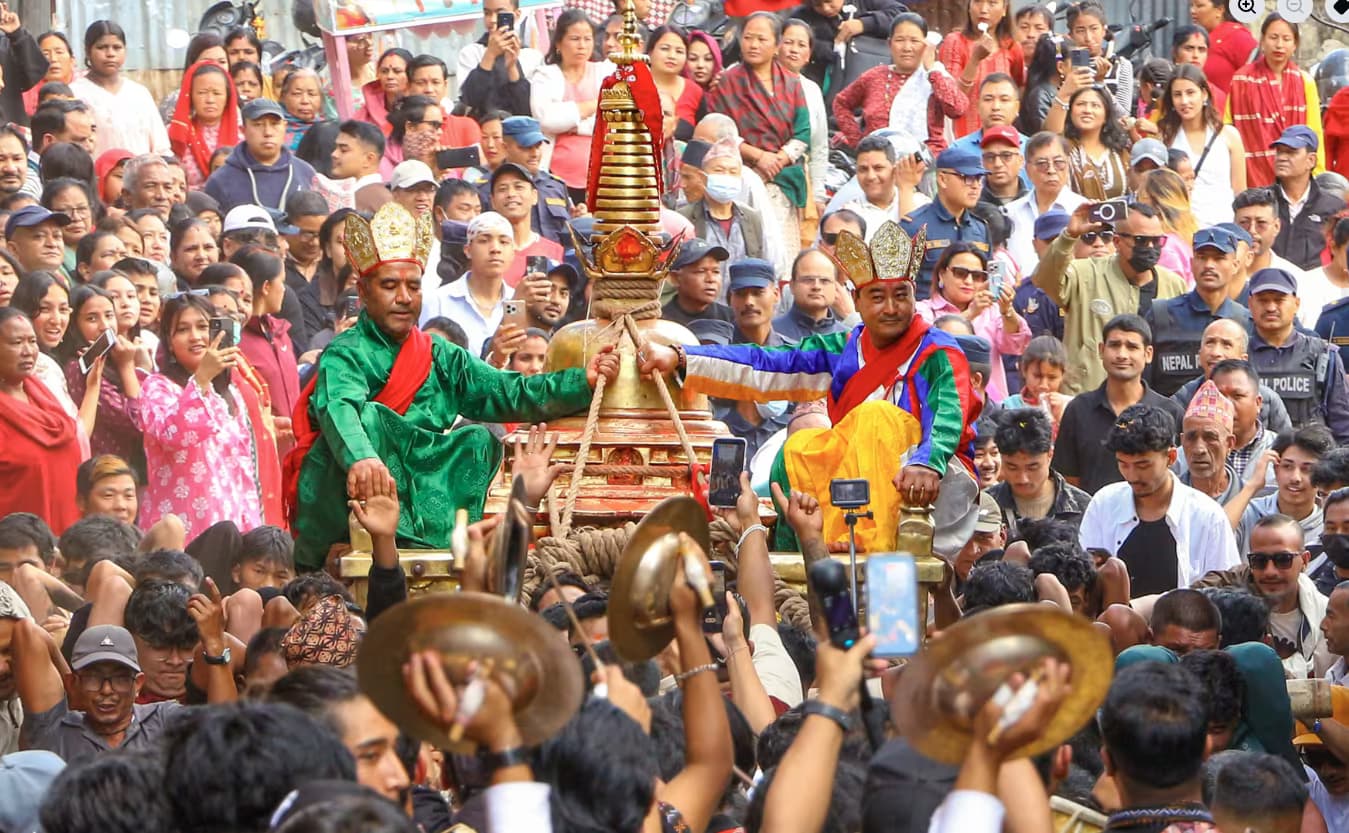
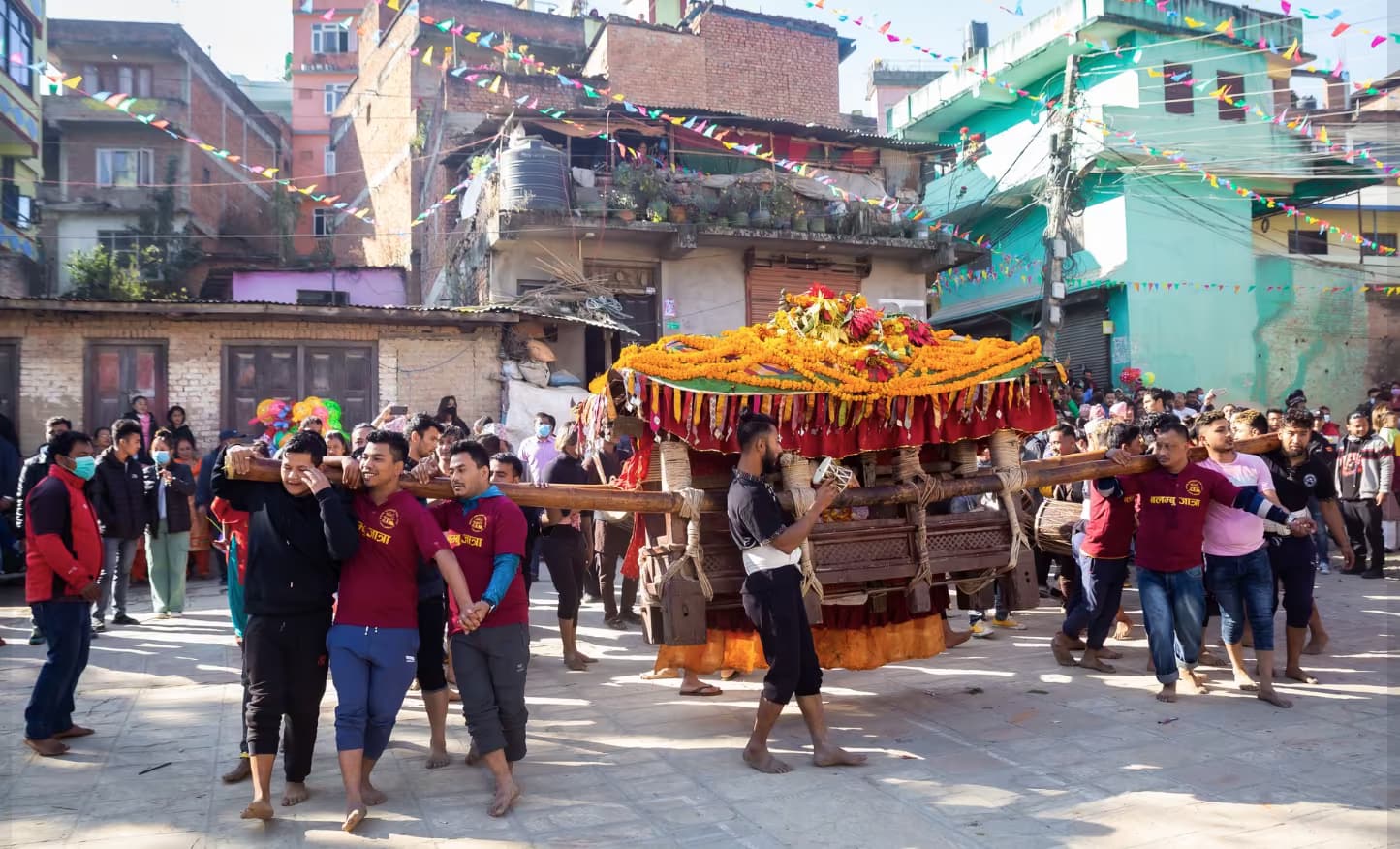
Balambu's grand 'Laa Tii Mar' festival following Nepal Era New Year, where Ganesh and Mahalaxmi chariots are danced through the streets by nine Guthis in bare feet.
November 16, 2026 — November 18, 2026
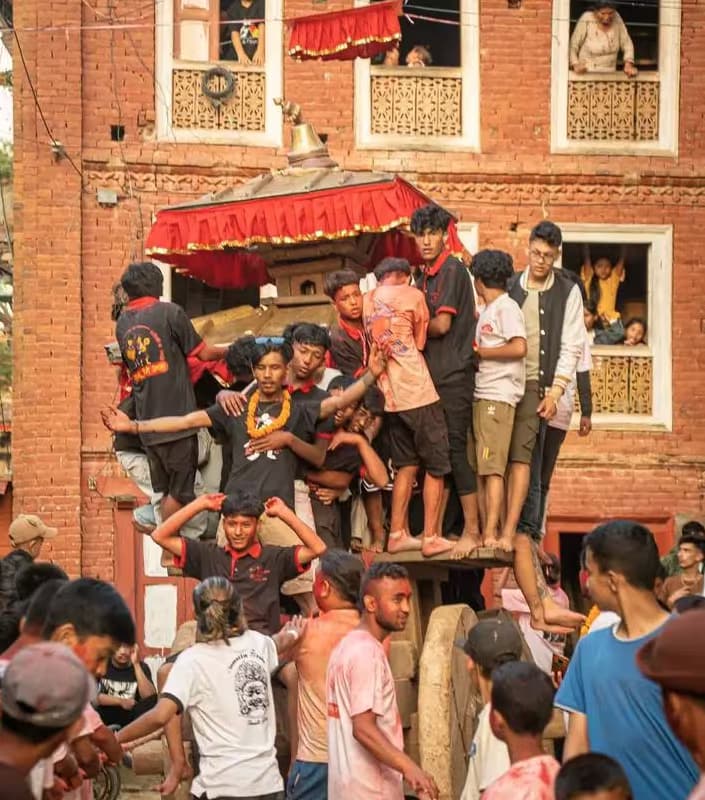
Balambu's grand 'Laa Tii Mar' festival following Nepal Era New Year, where Ganesh and Mahalaxmi chariots are danced through the streets by nine Guthis in bare feet.
November 16, 2026 — November 18, 2026
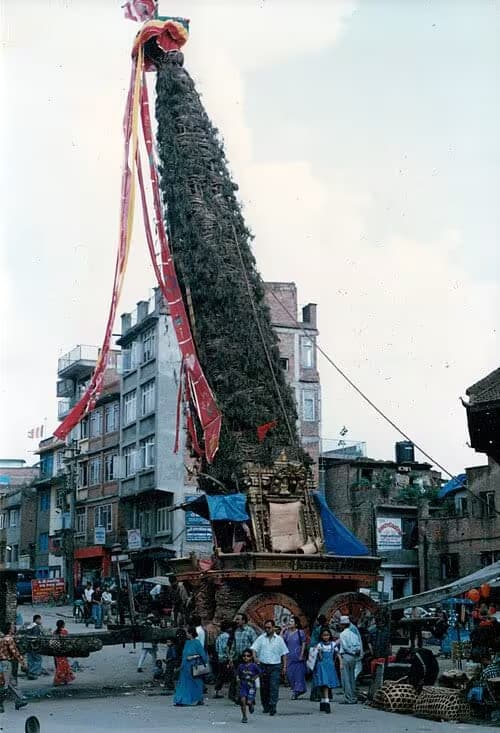
A jatra (yatra, “journey”) is a procession. A deity leaves the shrine and moves through the public city — carried on a chariot or palanquin, or present in the body of a masked dancer. The old city becomes a ritual route: streets, squares, bahals, courtyards, and temple fronts all matter.
Jatras are the signature public celebrations of the Newar community of the Kathmandu Valley. Unlike household festivals such as Dashain or Tihar, you don’t visit a jatra so much as step into it.
A jatra is a journey. Deities leave the shrine and travel through the public city on chariots, palanquins, or as masked dancers.
Streets, squares, bahals, courtyards, and temple fronts all matter. The old urban form is the ritual route.
Unlike Dashain or Tihar, jatras unfold in open civic space. You step into them rather than visit them.
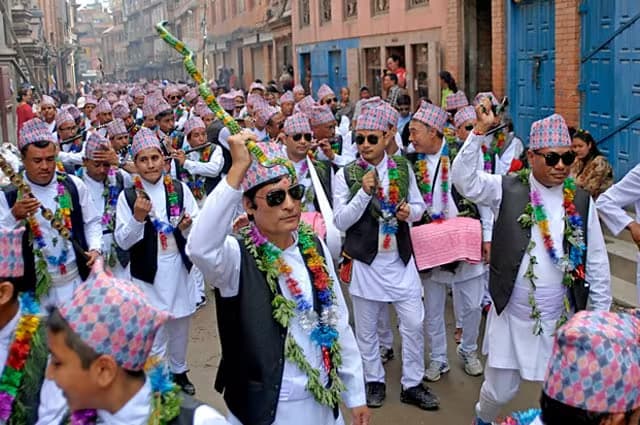
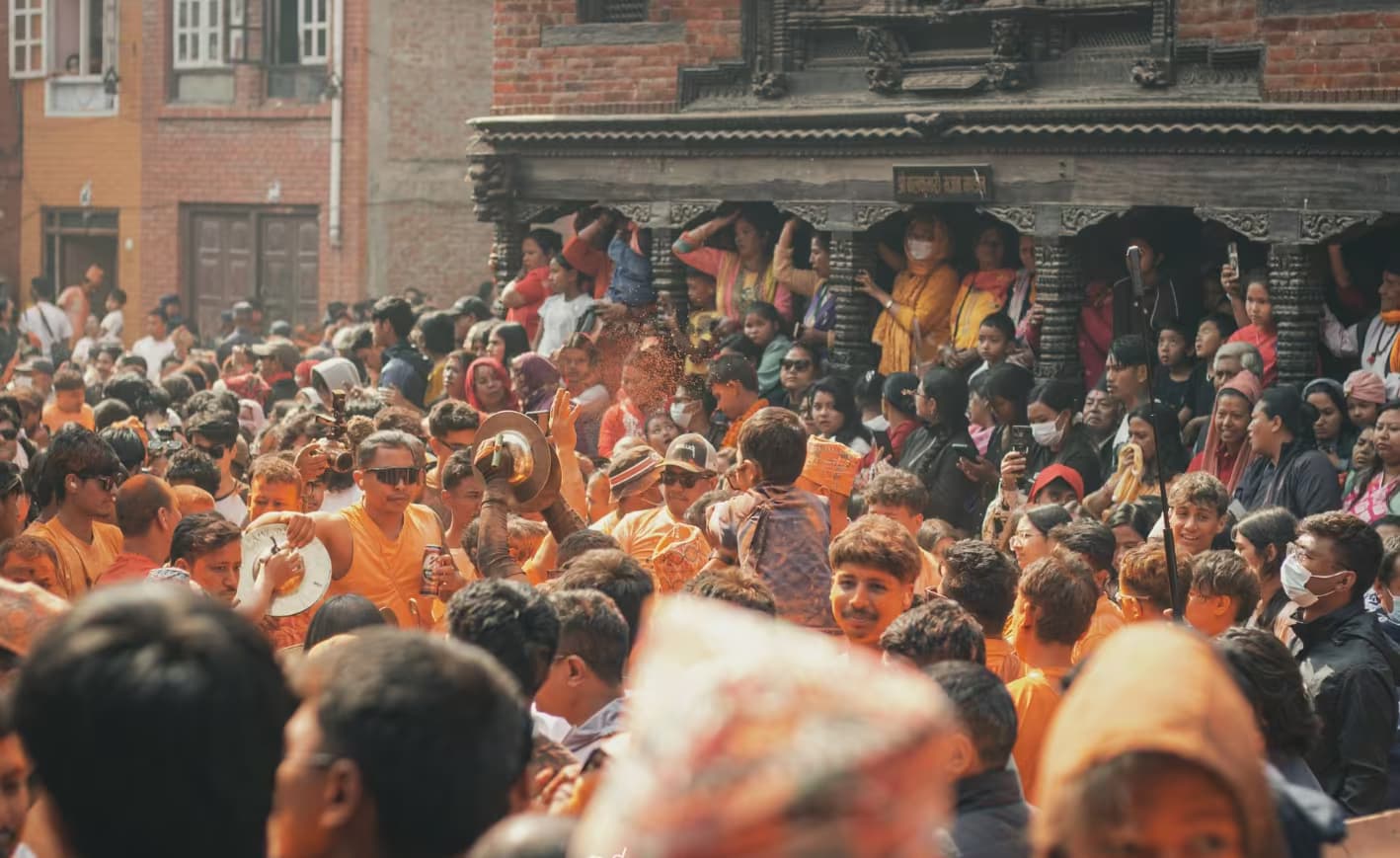
Guthis, priestly lineages, musicians, and neighborhoods still maintain duties, routes, and offerings today.

Bhaktapur's thrilling New Year chariot festival with a dramatic tug-of-war pulling massive chariots through narrow medieval streets.

Panauti's major monsoon jatra, held around the full moon of Jestha, when the town's protective deities are taken out in procession before the farming season intensifies.

Nepal's longest chariot festival — a month-long procession pulling the towering chariot of Rato Machhindranath through the streets of Patan, culminating in the dramatic Bhoto Jatra showing of the sacred vest.

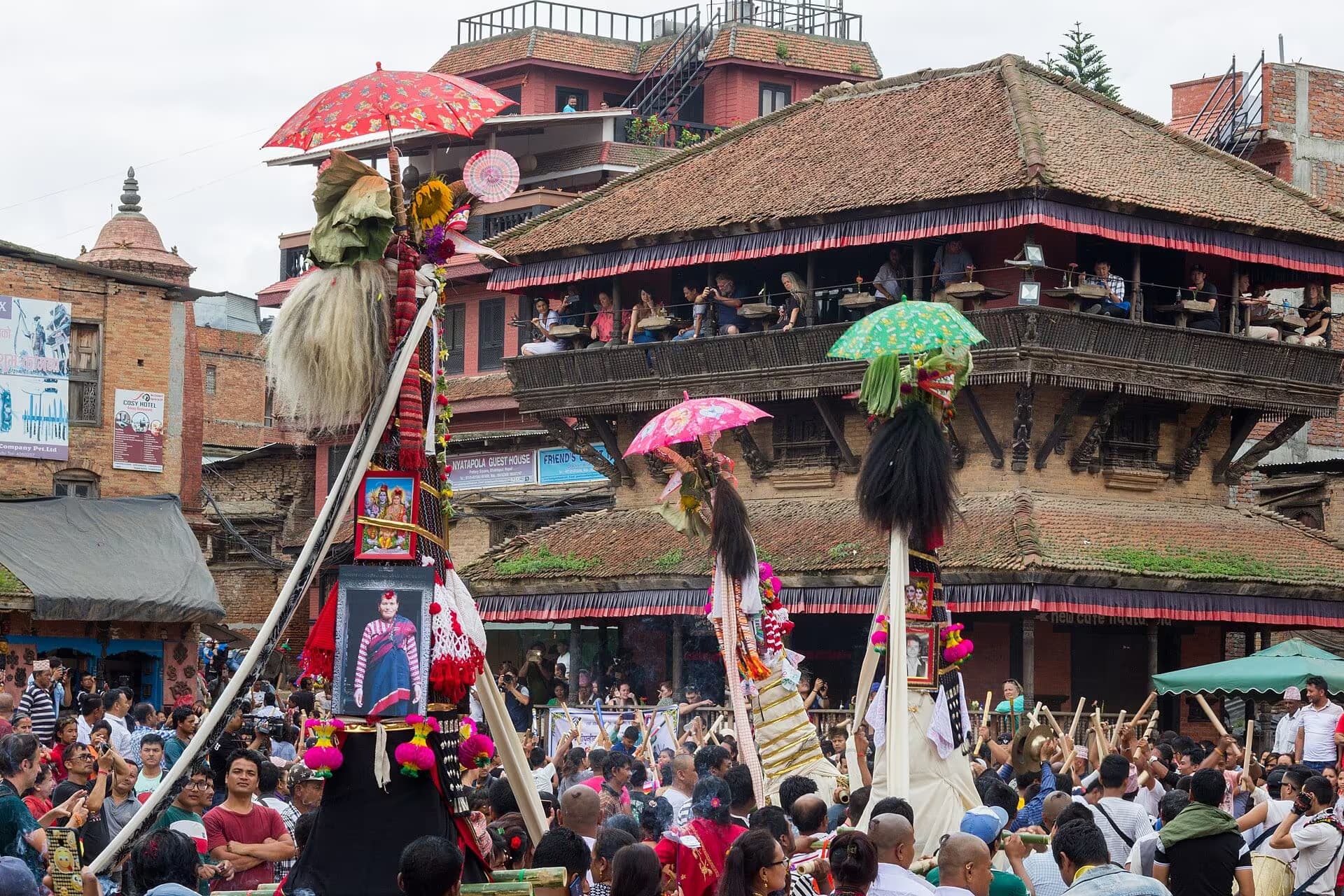
Sa Paru — the Kathmandu Valley's most unique festival, a procession honouring everyone who died in the past year, which turns from mourning into comedy and satire by the afternoon.

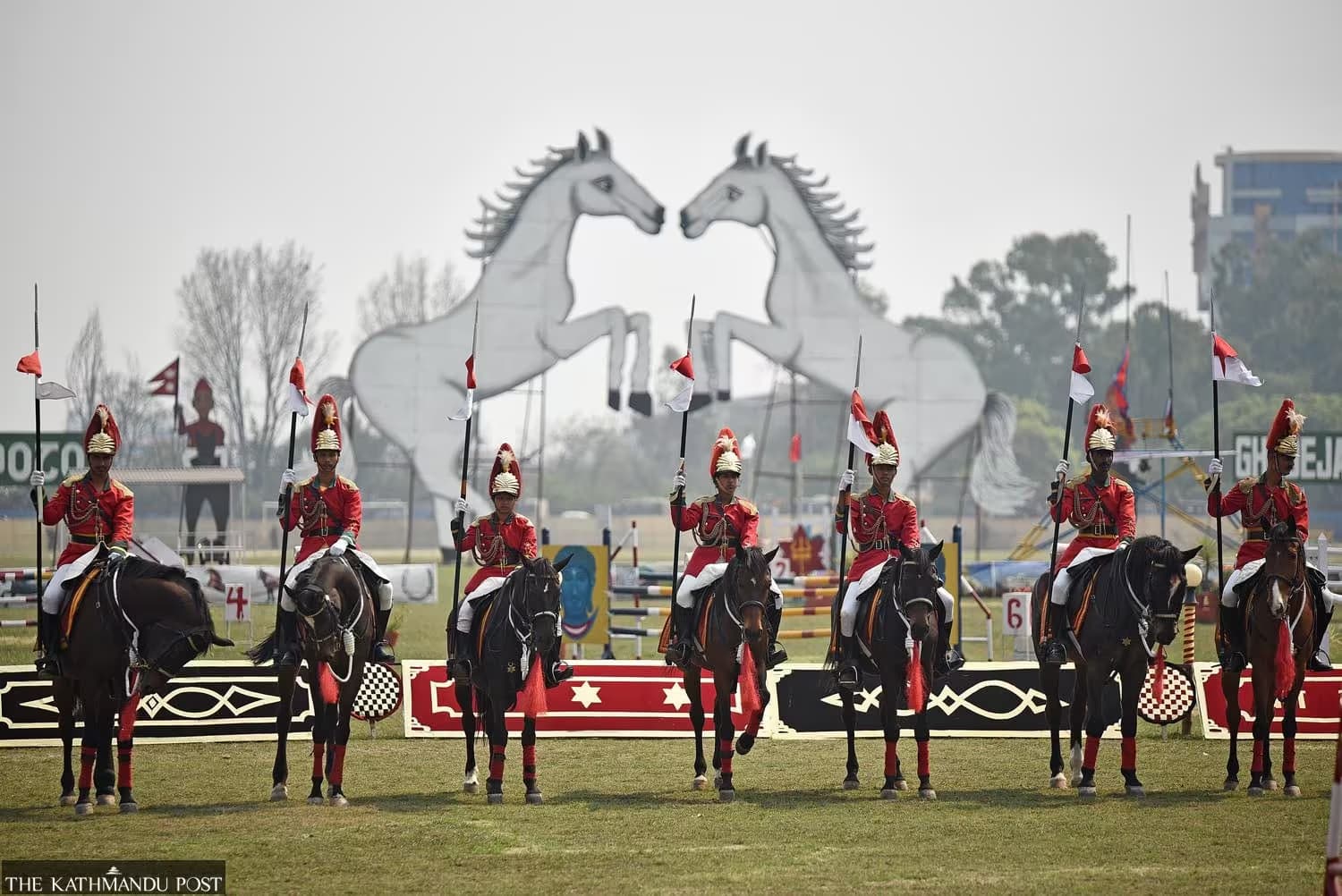
Kathmandu's dramatic horse racing festival at Tundikhel, where galloping horses and military displays are believed to trample the demon Gurumapa and keep evil at bay.

Patan's day-long Buddhist pilgrimage on foot — the day after Gai Jatra, thousands of walkers carry lamps and offerings past every Buddhist shrine in the city, from dawn until well after dark.

A dramatic night-time chariot procession of Pachali Bhairav through south Kathmandu, accompanied by tantric rituals, animal sacrifice, and a flaming torch procession.

Banepa's most important festival celebrating Goddess Chandeshwori's victory over the demon Chandasur, featuring a grand chariot procession.

Khokana's alternative to Dashain, a multi-day village festival dedicated to the goddess Shikali or Rudrayani with masked dances, processions, and tantric ritual.

Thimi's vivid vermilion festival on Baisakh 2, when palanquins of local deities circle Balkumari amid music, torchlight, and clouds of sindur.

An ancient one-evening jatra of the Newar community of Deupatan (Gwal:dey), in the Pashupati area of Kathmandu. Also called Trishul Jatra, it carries nine child gods and goddesses on nine tantric chariots in circuit around Ishaneshwar Mahadev, keeping alive legends of children saved from demons and a priest who lost his own son.

Kirtipur's own one-day jatra on the first day of Bhadra, when an image of Bagh Bhairav, the tiger form of Bhairav and the town's presiding deity, is bathed, worshipped and carried through the old streets with bands, bhajans and Lakhe dance.

Kathmandu's most spectacular street festival celebrating the god Indra, featuring the living goddess Kumari's chariot procession.

A three-day chariot procession of White Machhindranath through the old streets of Kathmandu, one of the city's most important Newar Buddhist festivals.

A fierce rain-invoking procession through old Kathmandu with sword-bearing men, historically a martial display tied to the protection of the city.

Sankhu's oldest jatra, when the goddess Bajrayogini is carried down from her hilltop temple into the ancient town in a major Newar-Tamang celebration.
Jatras carry many historical layers. No single dynasty invented them. Some preserve older Valley memories; some are linked in tradition to Licchavi-period religious culture; many took their grand urban form under the Malla city-states. All are still alive in the cities that hold them.
Many jatras preserve older Valley memories of rain, harvest, serpent worship, mother-goddess traditions, and place-based devotion. These layers predate any single dynasty and remain visible in the agrarian and ecological timing of the festival calendar.
Some traditions are linked to Licchavi-period religious culture: early temple worship, the Buddhist-Hindu overlap that still defines the Valley, and ritual practices associated with older Valley kingship.
Many jatras took their grand public form under the Malla city-states. Kathmandu, Patan, and Bhaktapur developed dense festival calendars, chariot routes, masked dances, music, and Durbar Square staging under royal patronage.
Modern Kathmandu Valley communities still maintain routes, inherited duties, music, offerings, and public participation. Jatras are not historical reenactments — they are the same festival cycle, kept alive year after year.
Jatras keep the Newar Valley together. They carry memory through public performance, encode the old city as a sacred map, and renew belonging across families, neighborhoods, and inherited duties.
Jatras carry older memory through repeated public performance, not only through monuments. Each procession is a way the past continues to act in the present.
The route is part of the ritual. Old urban form and festival meaning reinforce each other — squares, temple fronts, bahals, and narrow lanes were shaped for processions and continue to host them.
Guthis, priestly lineages, musicians, craft groups, chariot builders, neighborhood associations, families, and devotees share inherited responsibilities. The social result — shared labor, neighborhood feasts, music, route preparation, offerings, and public participation — renews belonging across Newar communities.
Jatras renew belonging in Kathmandu, Patan, Bhaktapur, Kirtipur, Bungamati, Thecho, Tokha, Khokana, and other Newar towns. They mark which city a person belongs to as much as which deity is honored.
A practical interpretive guide. Music, drums, feasting, and neighborhood renewal all sit inside these four: the chariot moving through the route, the masked dance carrying the deity, the route itself as a sacred map, and the guthi that keeps it going.
Jatras are live ritual, not performance for visitors. A few practical points keep things gracious for everyone on the route.
A moving shrine, a civic engineering effort, and a ritual object. Built and pulled by inherited communities, the chariot carries a deity out of the temple and into the city.
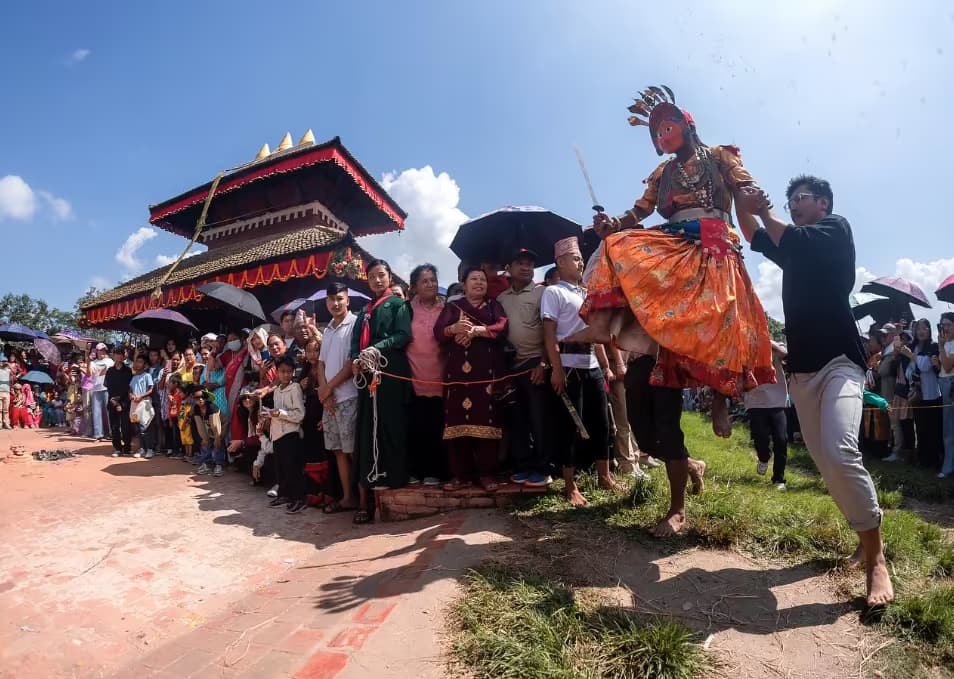
Deity presence in human form. Masks, costume, drums, and choreography turn dancers into protectors, ancestors, or divine figures for the duration of the performance.
A sacred map of the old city. The streets, squares, and stops along a jatra route are not incidental — they encode older neighborhood boundaries, shrines, and civic memory.
The social institution that keeps jatras going. Guthis hold land, funds, ritual duties, and discipline across generations. Music, feasting, and neighborhood renewal flow through them.
Jatras unfold across the Durbar Squares, bahals, and temple courtyards of the Kathmandu Valley. Walk the stage on which they happen.