Gai Jatra
गाईजात्रा
Also known as: Sa Paru, Sa: Paru, Saparu, Sa Paru Jatra, Gaijatra, Taha Macha, Ghintang Ghisi
Sa Paru — the Kathmandu Valley's most unique festival, a procession honouring everyone who died in the past year, which turns from mourning into comedy and satire by the afternoon.
Location
Kathmandu Valley (Kathmandu, Patan, Bhaktapur)
Duration
1 days
Month (Local)
Bhadra
Month (AD)
August/September
Highlights
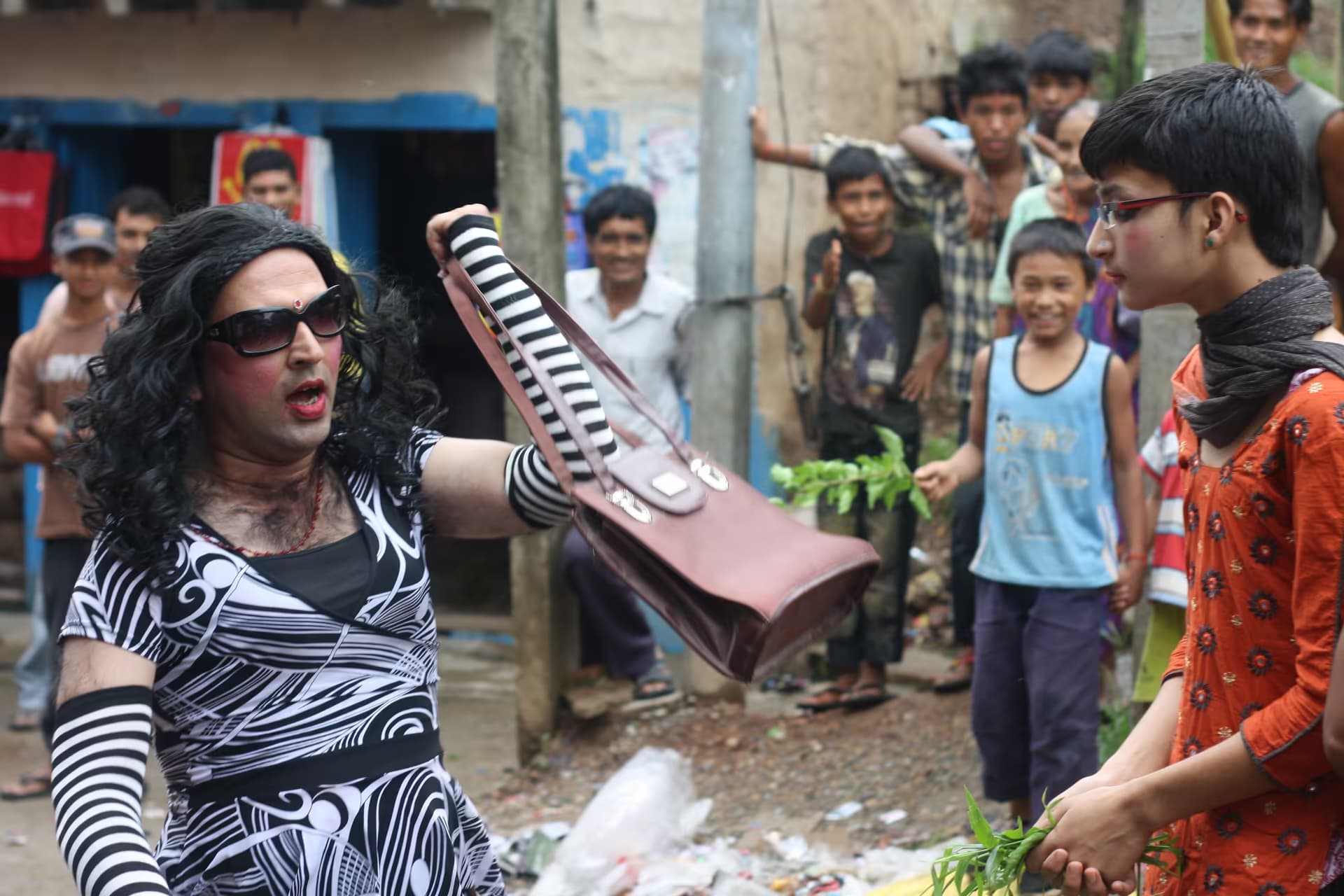
Morning procession of decorated cows honoring the deceased. Satirical street theater and comedy performances. Cross-dressing parades and political mockery. Bhaktapur's taha-macha bamboo effigies and the ghintang ghisi stick dance, running for seven days. Newspapers publish special humor editions.
Tips for Visitors
The morning cow procession through Kathmandu Durbar Square is moving and photogenic. Afternoon satire and comedy is best enjoyed in Basantapur and Patan. Bhaktapur is the other choice entirely, and the better one if you can only see one place — the taha-macha procession along the main street, and stick dancing that carries on for days after Kathmandu has gone quiet. Be sensitive during the mourning procession — these are real families honoring real losses. The satirical comedy is in Nepali and Nepal Bhasa, but the costumes are universally entertaining.
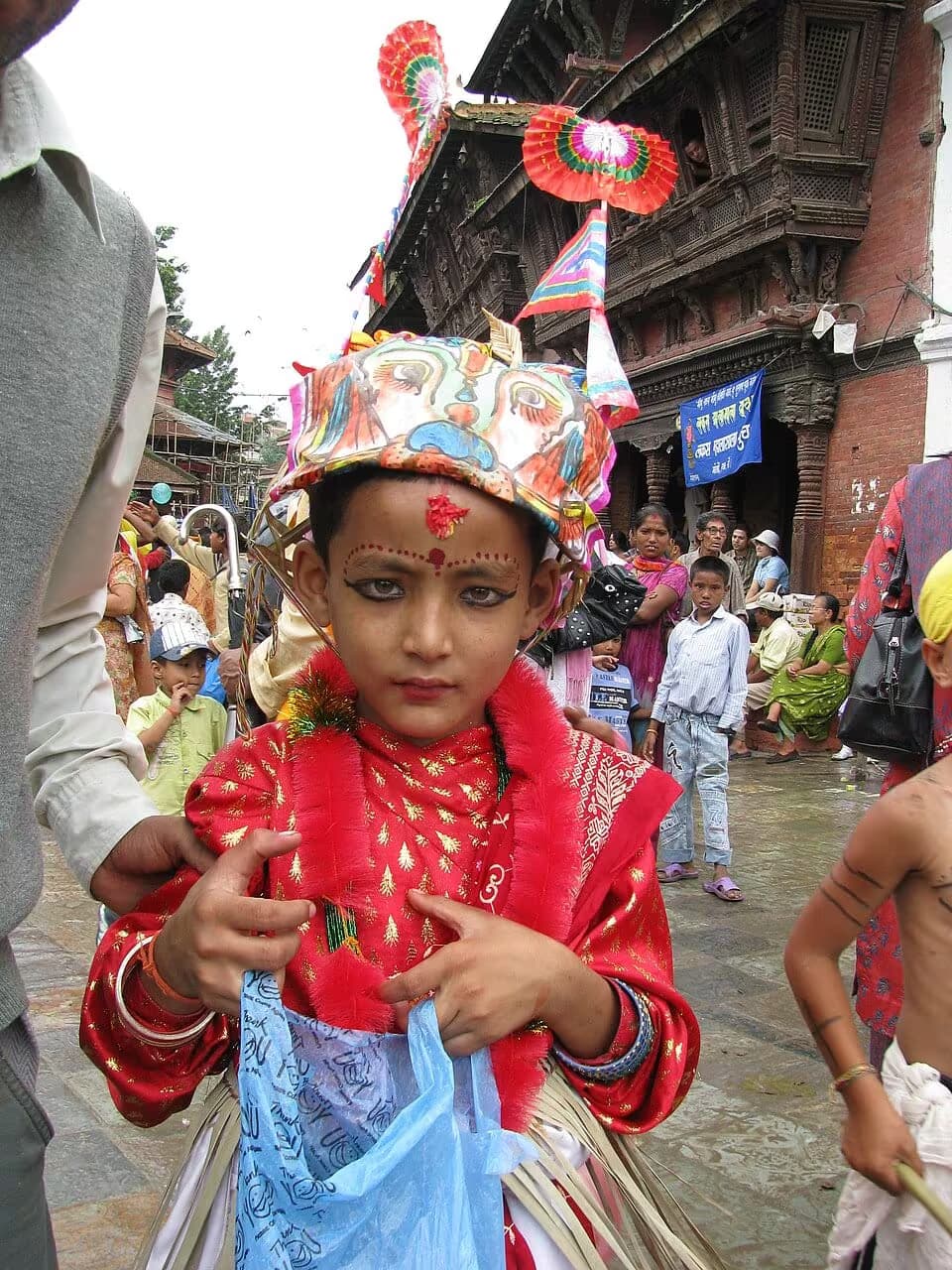
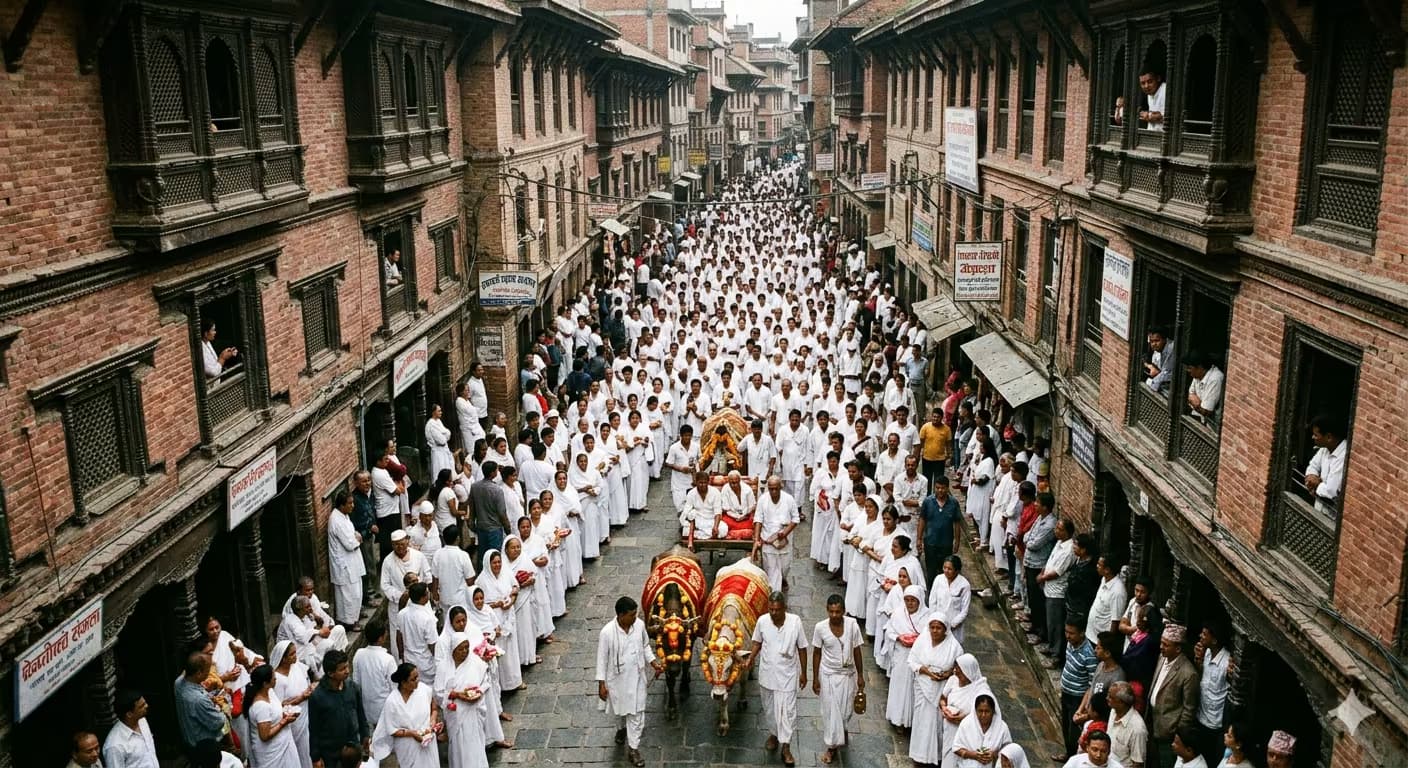
Gai Jatra (the Festival of Cows) is perhaps Nepal's most emotionally complex festival — a day that transforms grief into laughter, honoring death through celebration. Every family in the Kathmandu Valley that has lost a member in the past year leads a decorated cow (or a young boy dressed as a cow) through the streets in a grand procession, believed to help guide the departed soul to the afterlife.
Its Newar name is Sā Pāru (सा पारु) — sā, cow, and pāru, the first day of the waning fortnight, which is when it falls: the day after Janai Purnima, inside the Buddhist holy month of Gunla. Nepal Bhasa is the language you will hear it called by in the three cities, and it is the older name.
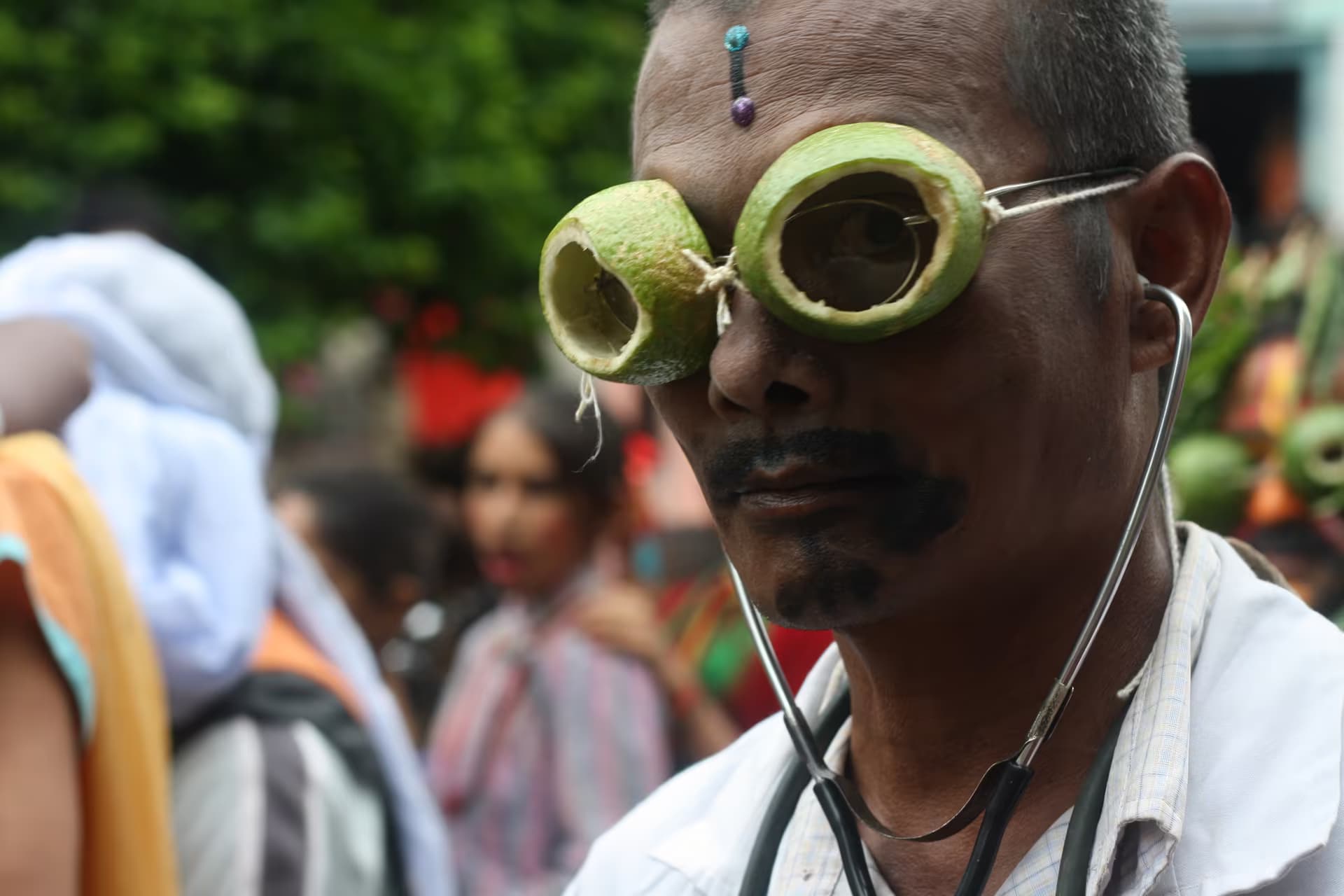
The tradition dates to the Malla period. Legend holds that King Pratap Malla, grief-stricken after the death of his young son, organized the procession so his mourning queen could see that death visits every household. When she finally laughed at the satirical performances, the king decreed that comedy would forever be part of the festival. Today, Gai Jatra is Nepal's unofficial day of satire — newspapers publish special humor editions, street performers mock politicians and social absurdities, and cross-dressing parades fill the streets.
The morning procession is deeply moving: families in white mourning clothes lead decorated cows through the streets of Kathmandu, Patan, and Bhaktapur, accompanied by Newar music bands. Each cow or cow-costumed child represents a departed family member. By afternoon, the mood shifts entirely — satirical plays, comedy shows, absurdist costumes, and political mockery take over. The contrast between morning solemnity and afternoon revelry is extraordinary.
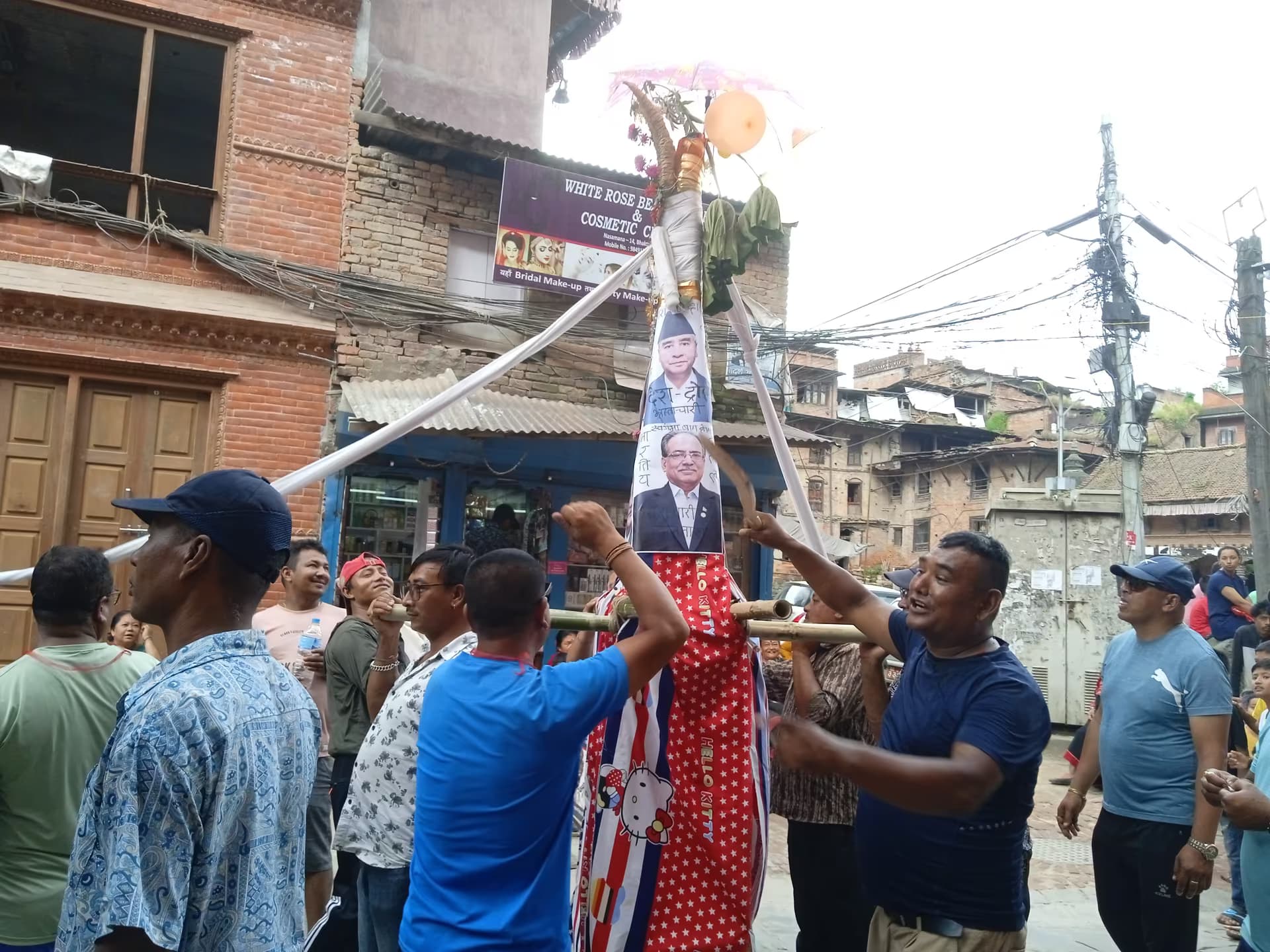
Bhaktapur keeps it differently, and for longer. There the bereaved family does not lead a cow at all but carries a taha-macha — a tall bamboo frame dressed in cloth, hung with flowers and coloured thread, with a photograph of the dead person at its centre — along the old main street, followed by bands, bhajan groups, the maka pyakhan monkey dance and the ghintang ghisi, a stick dance in which two rows of dancers move against each other striking sticks in time with the drums. And it does not end at dusk: the dancing continues through the following days and closes only on Krishna Janmashtami, seven days later. If you have one day, take it in Kathmandu; if you have a week, take it in Bhaktapur. In Patan, the day after Sa Paru brings Matya, the long circuit of every Buddhist shrine in the city.
In recent years, Gai Jatra has evolved into a major platform for social commentary, with young people using costumes, placards, and street theater to critique everything from corruption to climate change. The festival demonstrates the Newar genius for holding space for both grief and joy simultaneously.
Characters
Rituals & Ceremonies
Procession Routes
- Associated with Pratap MallaInstituted
Traditionally credited with instituting and popularising the festival to console his grieving queen.
Related
Connected places and entries worth pairing
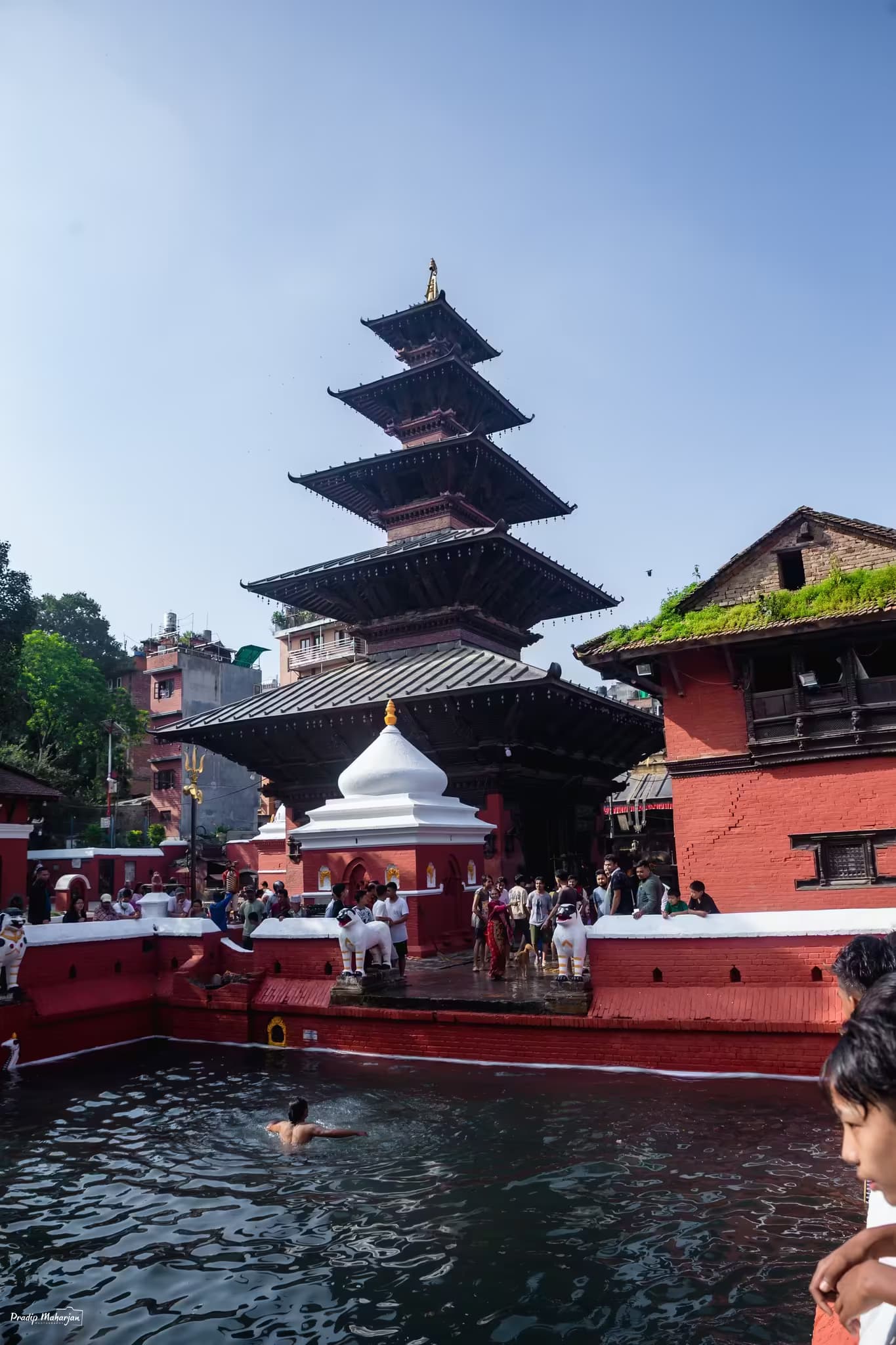
Janai Purnima
Sa Paru falls the day after Janai Purnima
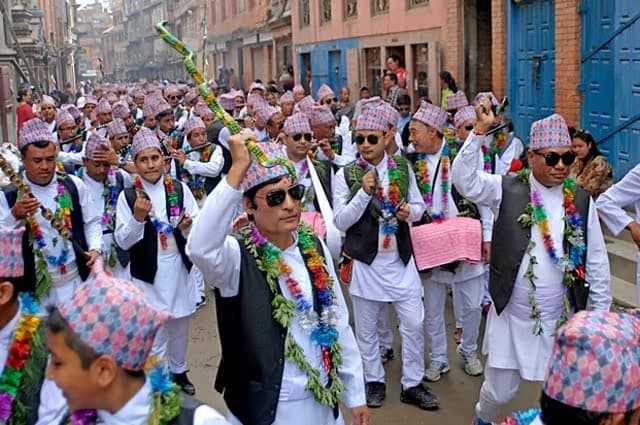
Matya
Patan's Matya follows on the next day

Krishna Janmashtami
Bhaktapur's stick dancing runs from Sa Paru until Janmashtami, seven days later

Bhaktapur Durbar Square
Bhaktapur keeps the festival with taha macha effigies along the main street
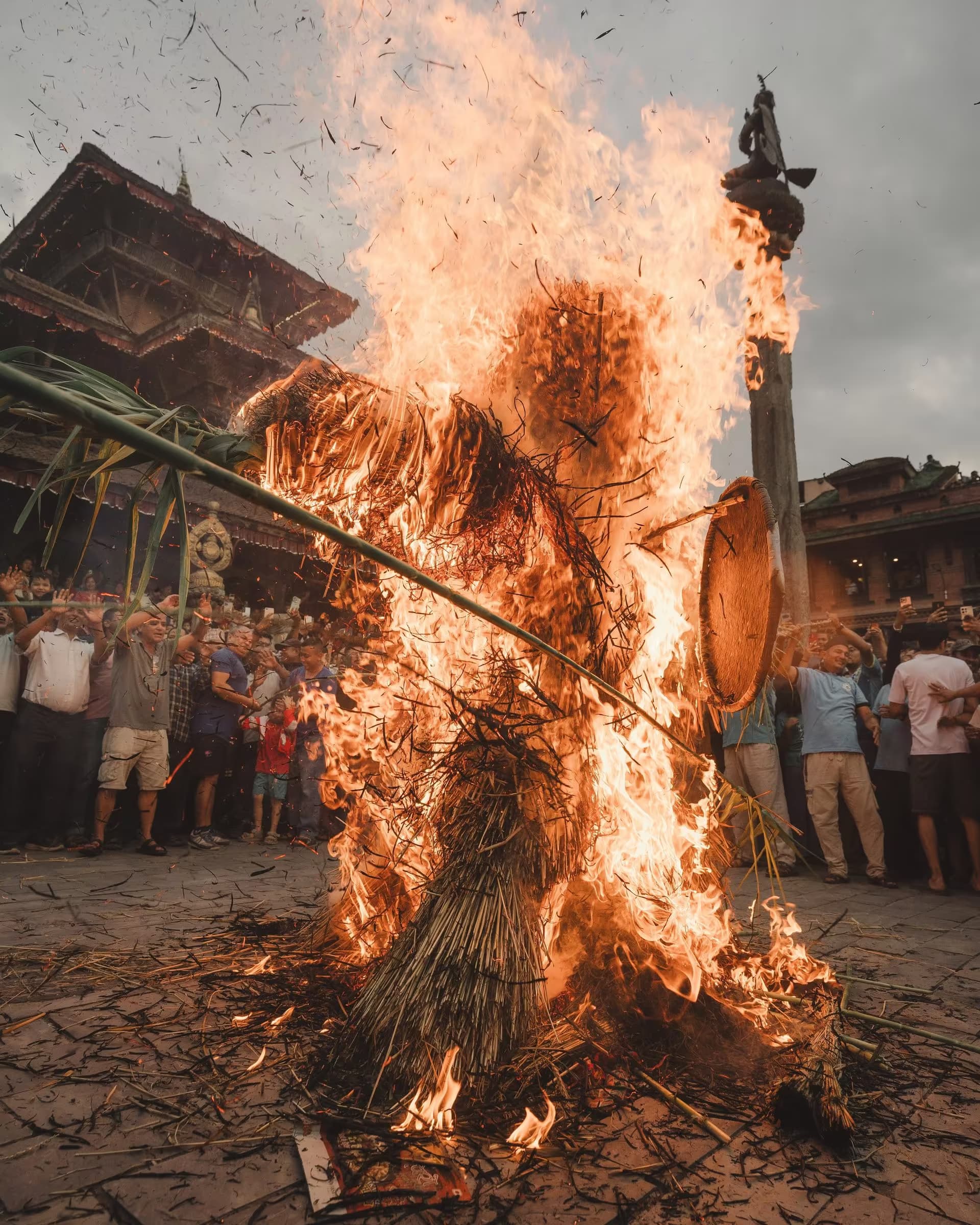
Gathamuga: Charhe
The season Sa Paru belongs to is opened by the burning of Ghantakarna
Elsewhere in this region
Help us get it right
Know Gai Jatra better than we do?
We write from research and reporting, and the ground changes faster than we can keep up. If something here is out of date, or you have been and would tell it differently, we would rather hear it.