What it is
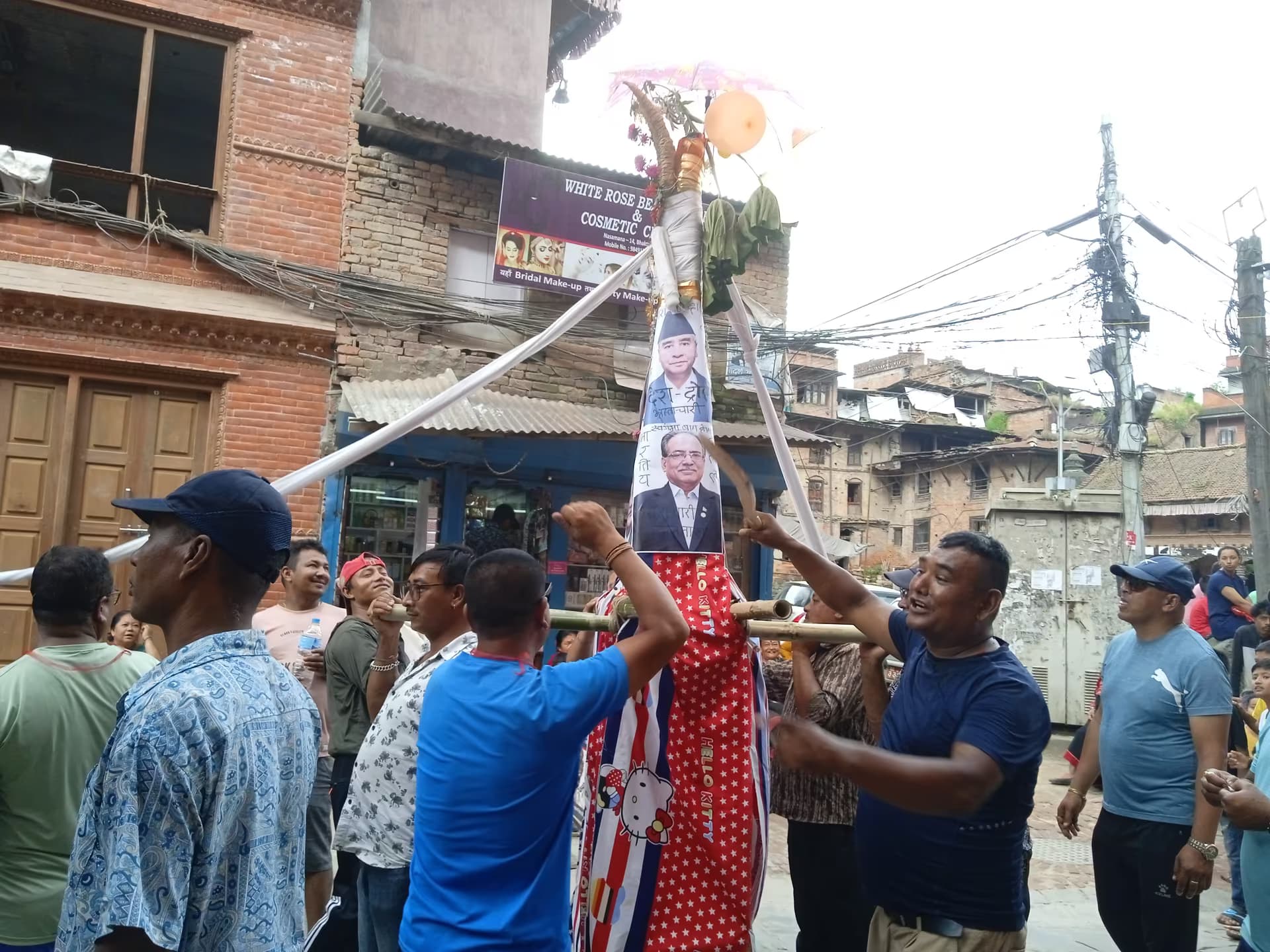
A taha macha is built rather than led. Bamboo strips are lashed into a tall, narrow frame, wrapped in cloth, and hung with marigolds, coloured thread and small ornaments; at the centre, at about the height of a person's face, the family sets a photograph of the one who died. Two or more relatives shoulder it. Where Kathmandu's procession is a cow, or a boy who has become one, Bhaktapur's is a made object that carries a likeness — and the difference is not decorative. The cow guides the soul across; the taha macha shows the town who has gone.
Along the main street
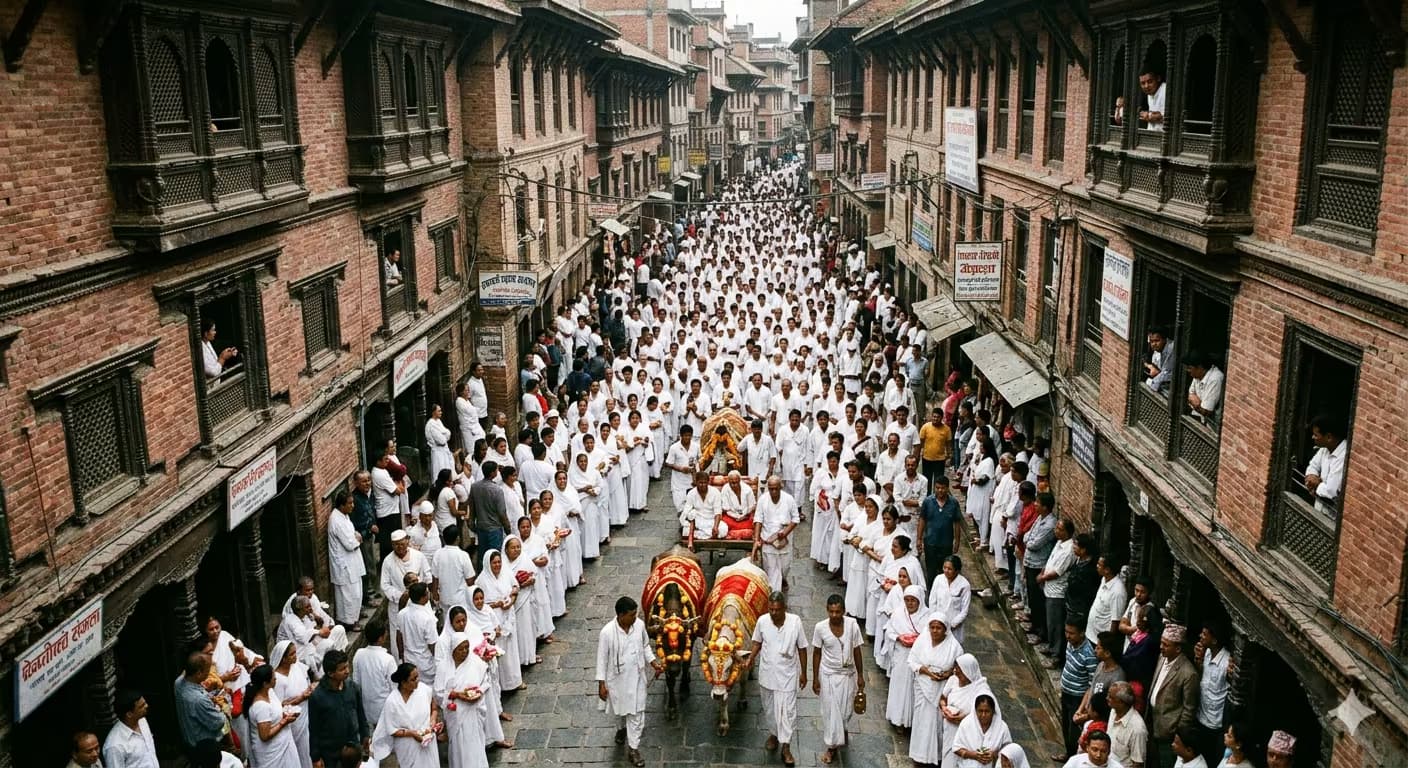
The route is Bhaktapur's old main street, the long east–west spine through the town, and the effigies join it tole by tole through the day, so that the procession thickens as it goes. Bands walk with them, bhajan groups sing, and the maka pyakhan — the monkey dance — moves through the crowd. Families walk in white. Onlookers press to the edges of the street and onto the plinths of the temples to let each taha macha through.
Why a photograph
Because everybody in a small town knows the face. A cow is a soul in transit and could belong to any household; a photograph names the household. For a year the family has been in mourning, largely out of view — the taha macha is the day that grief is carried into the middle of the street and every neighbour is made to see it, which is precisely the logic of the whole festival, and Bhaktapur states it most plainly.
Related
Connected places and entries worth pairing
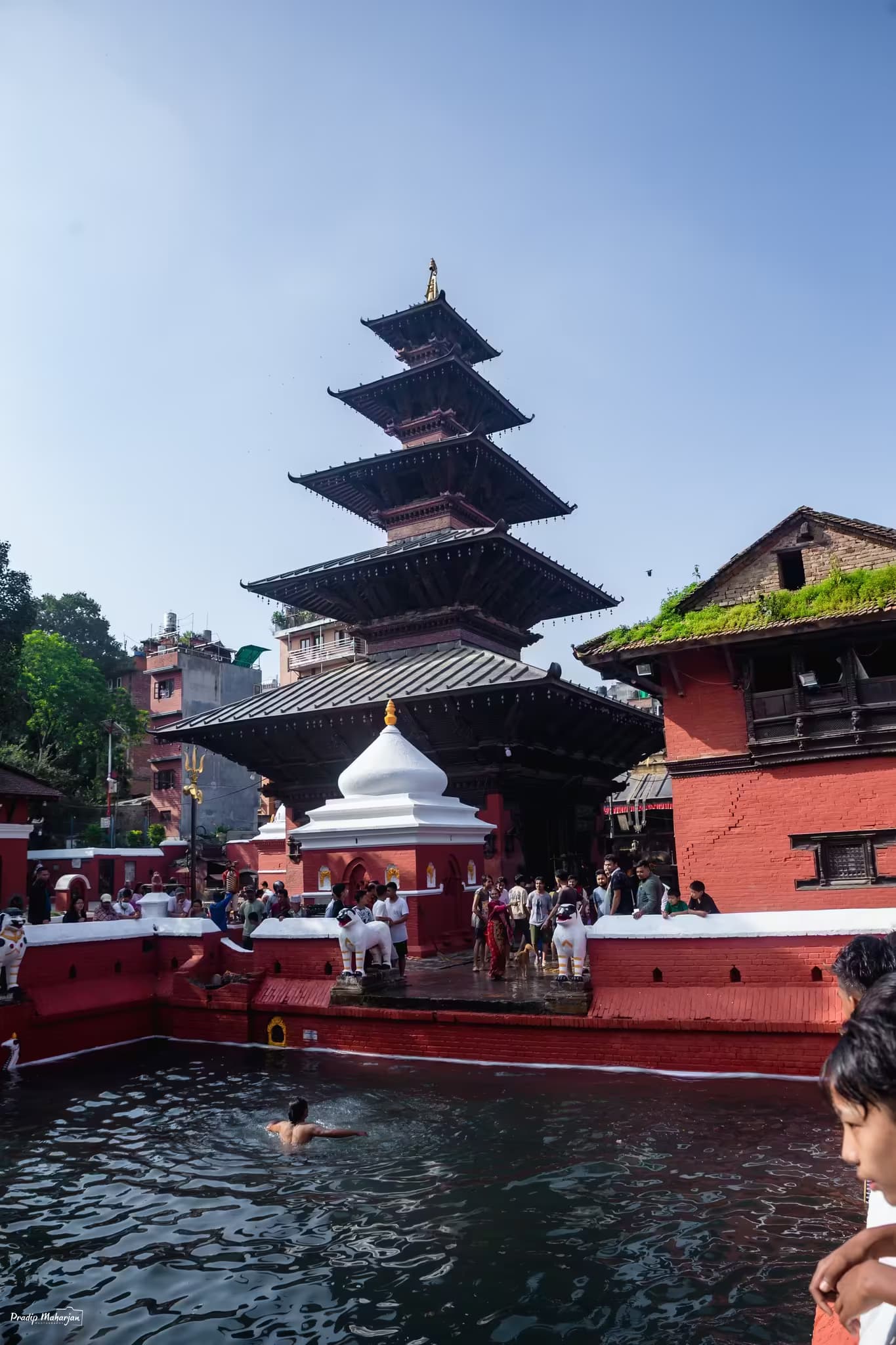
Janai Purnima
Sa Paru falls the day after Janai Purnima
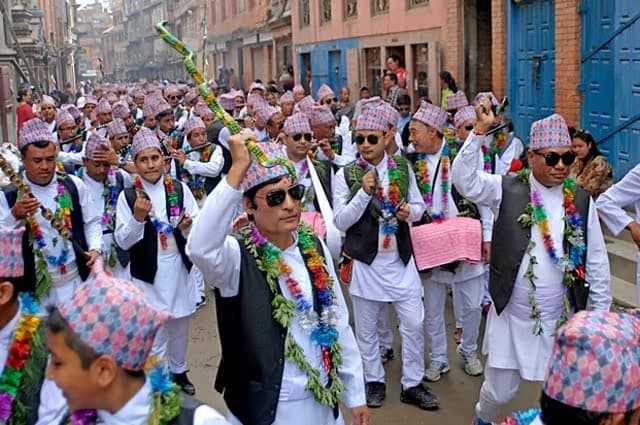
Matya
Patan's Matya follows on the next day

Krishna Janmashtami
Bhaktapur's stick dancing runs from Sa Paru until Janmashtami, seven days later

Bhaktapur Durbar Square
Bhaktapur keeps the festival with taha macha effigies along the main street
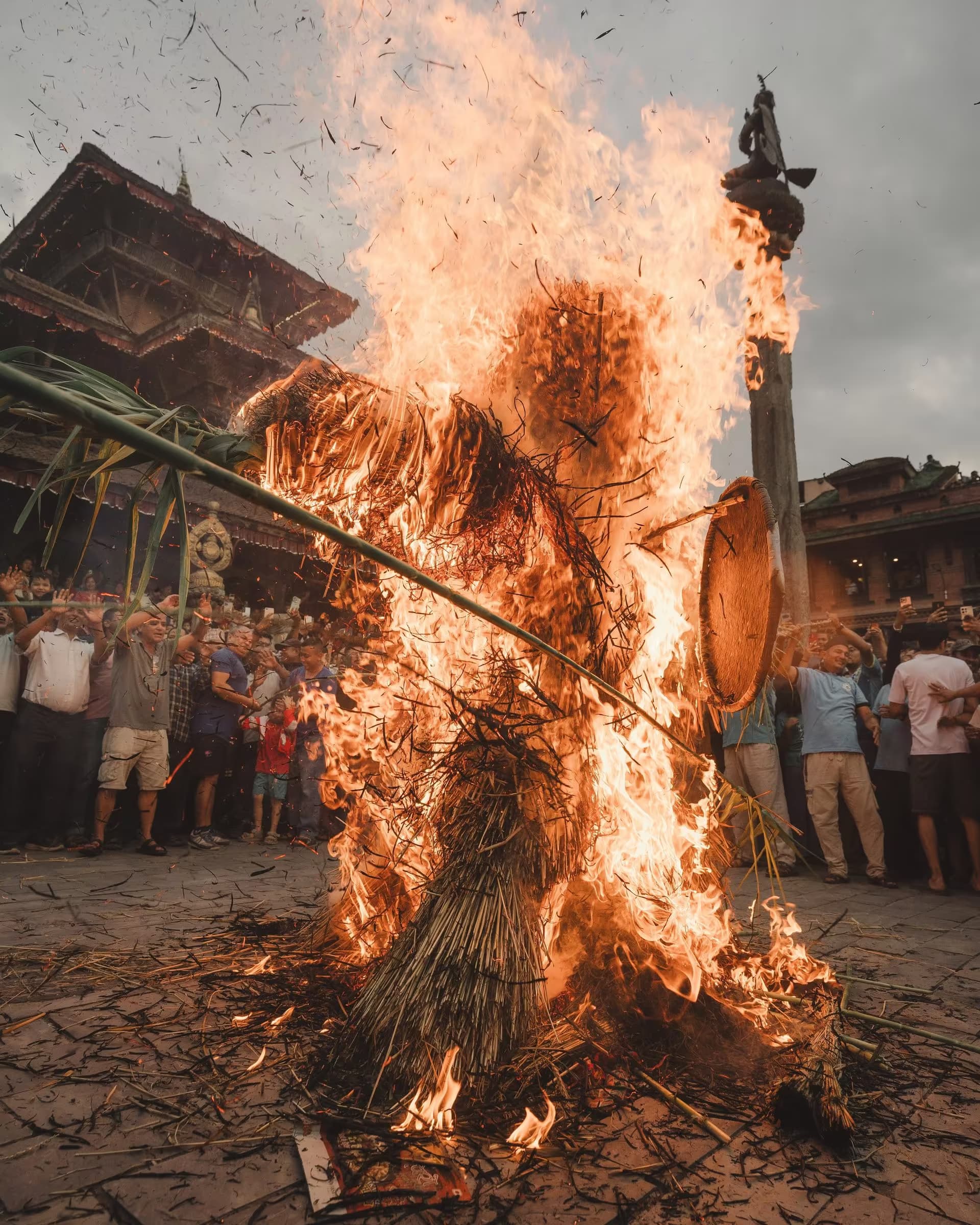
Gathamuga: Charhe
The season Sa Paru belongs to is opened by the burning of Ghantakarna
Characters
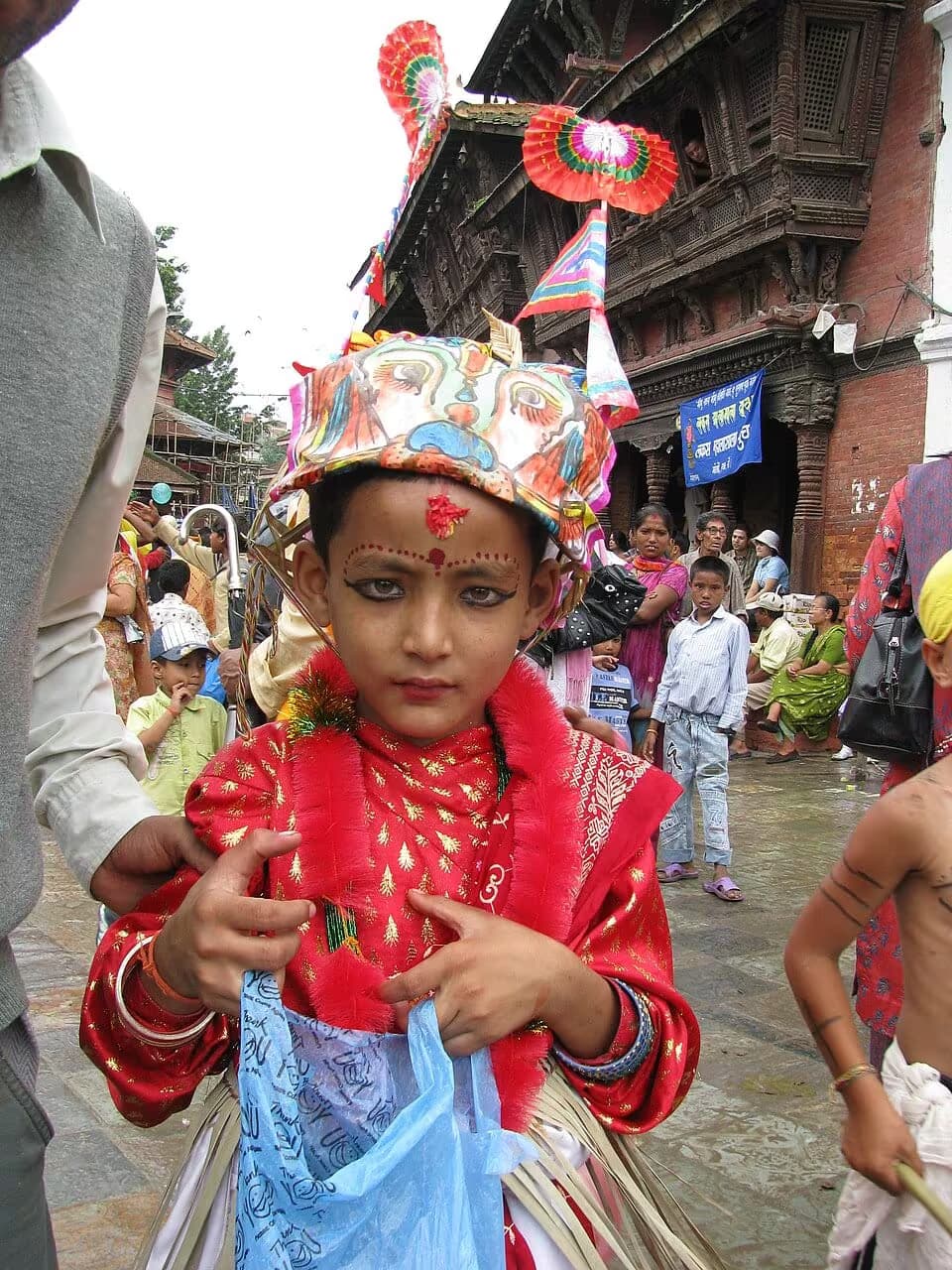
Rituals & Ceremonies
Procession Routes
Part of Gai Jatra