Gender Inversion
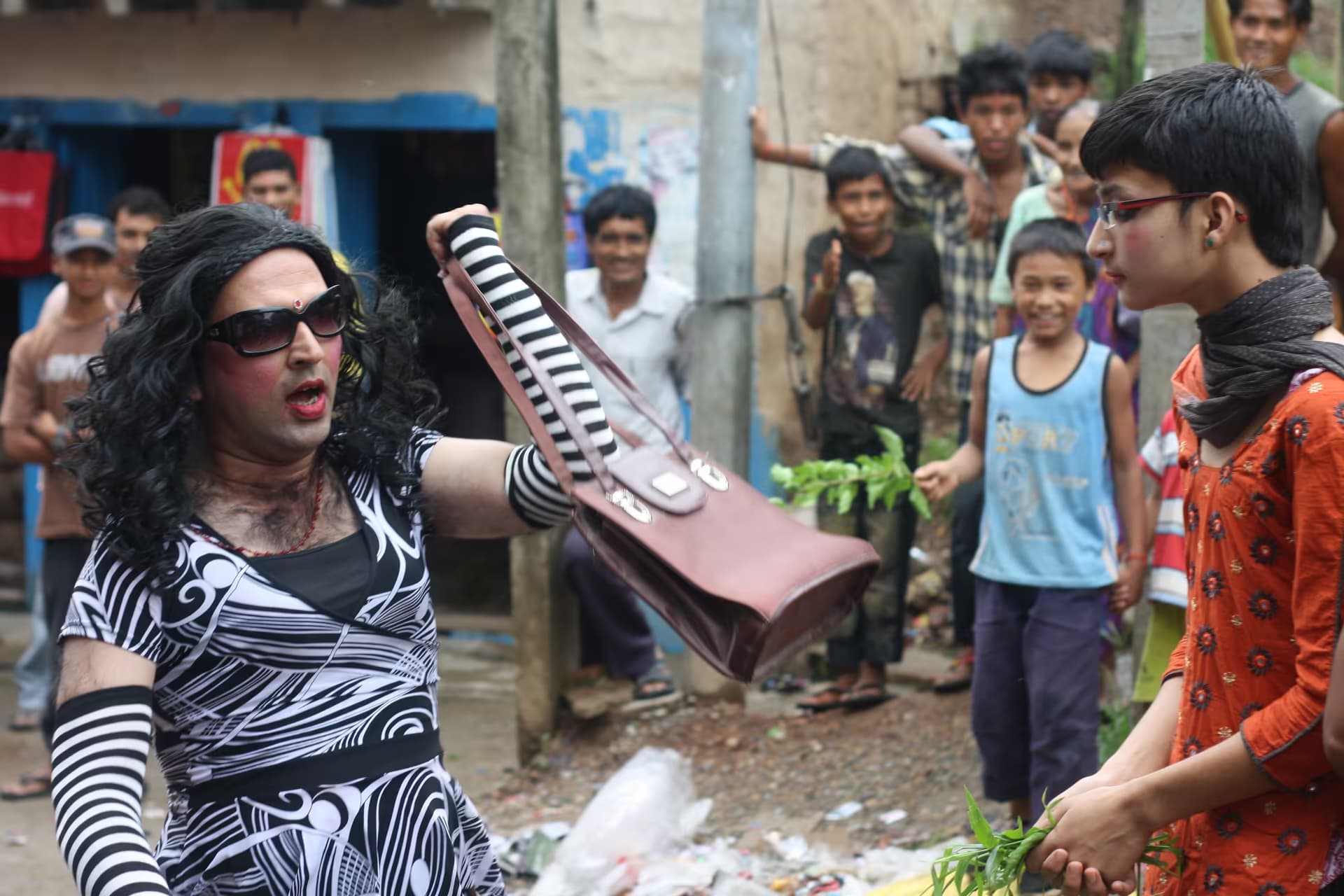
Men dressed in saris, makeup, and exaggerated feminine accessories parade through the streets of the old city. The performance is comedic but also subversive — traditional gender roles are temporarily suspended, and the resulting spectacle is both funny and revealing. In Newar society with its prescribed norms around gender presentation, a day when men perform femininity in public carries a charge that exceeds simple humor. The inversion works because what is inverted is real and recognized; the comedy depends on the audience knowing exactly what rules are being broken and agreeing, for this one day, to enjoy the breaking.
Absurdist Costumes
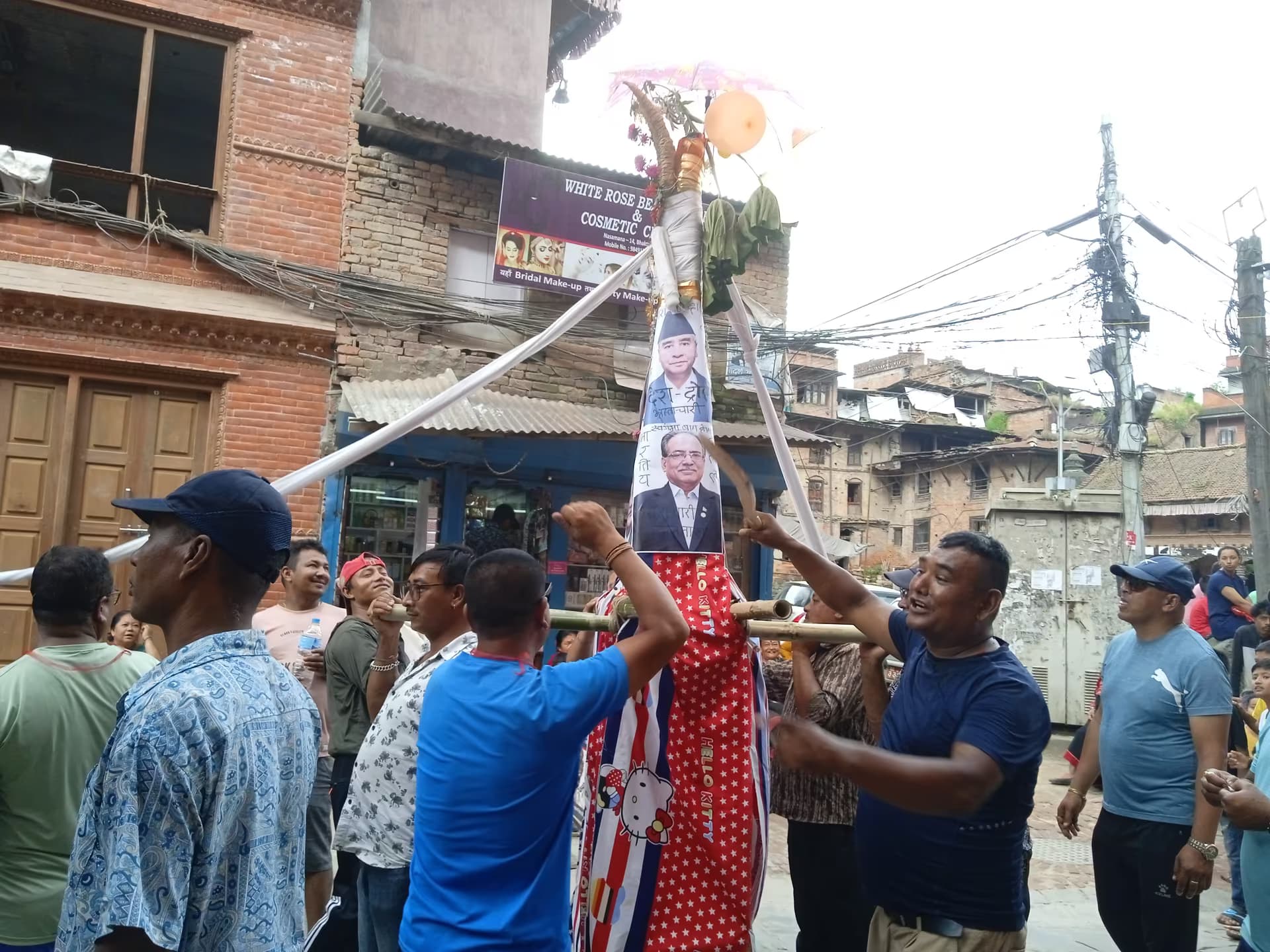
Beyond cross-dressing, the costumes encompass the full range of visual satire: politicians with exaggerated features rendered in papier-mâché, social types (the corrupt bureaucrat, the greedy landlord, the oblivious tourist), mythological figures mashed with contemporary references, animals, monsters, and figures that defy easy categorization. The costume-making is a community effort — families, youth groups, and tole organizations prepare for weeks. The visual creativity is part of the point; Gai Jatra is, among other things, a competition in seeing who can be most inventively ridiculous, and the neighborhood that produces the year's best costume earns a prestige that lasts until the next year's parade.
The Body as Canvas
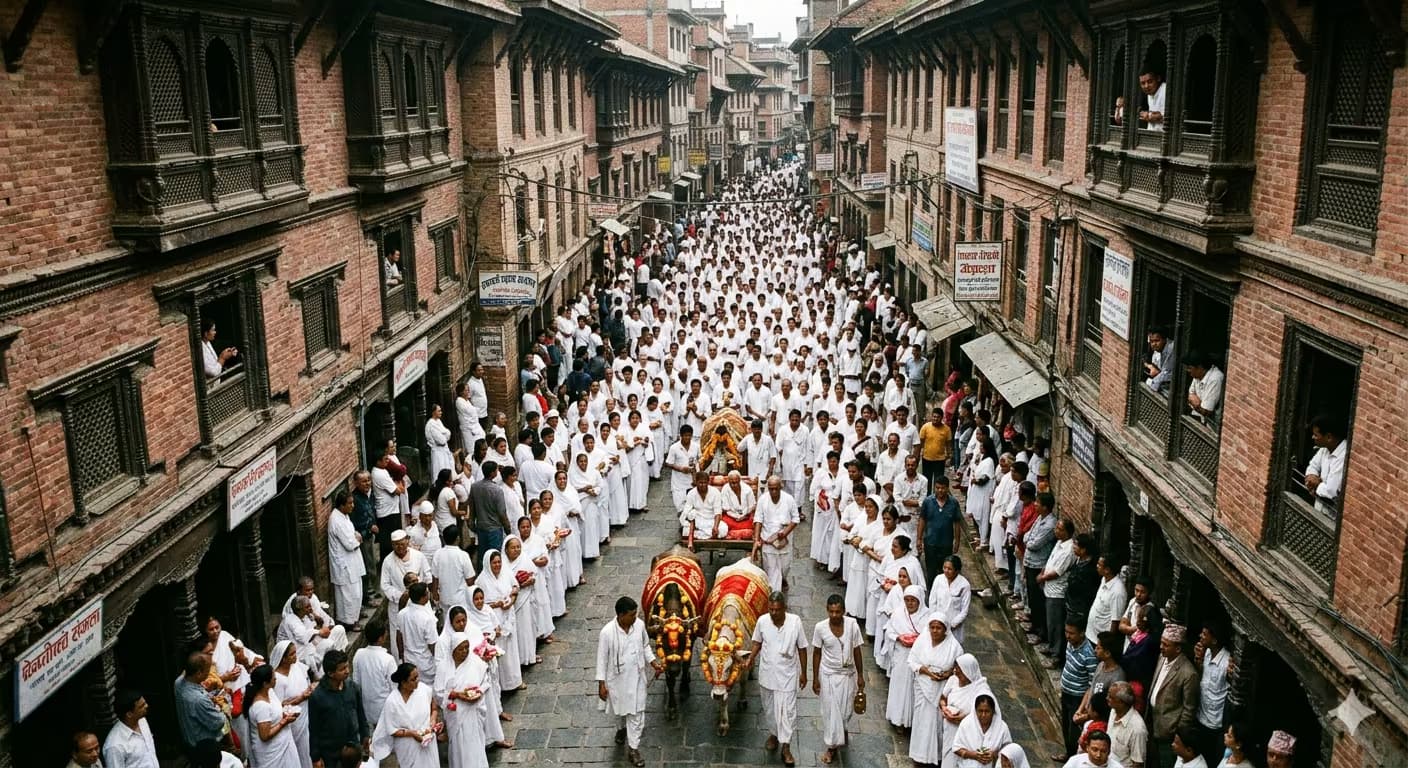
Painted faces, padded bellies, stuffed clothing, stilts, and masks: the body — which in the morning procession was the site of grief (the white mourning clothes, the child carrying his relative's soul) — becomes in the afternoon the site of comic transformation. Gai Jatra works through the body in both registers. First through its vulnerability to death, its smallness before loss. Then through its capacity for absurdity, its refusal to be only solemn. Both are true; the festival insists on seeing both. The same community that walked in mourning at dawn is dancing in absurdist costumes by afternoon, and the distance between those two images is the festival's entire meaning.
Related
Connected places and entries worth pairing
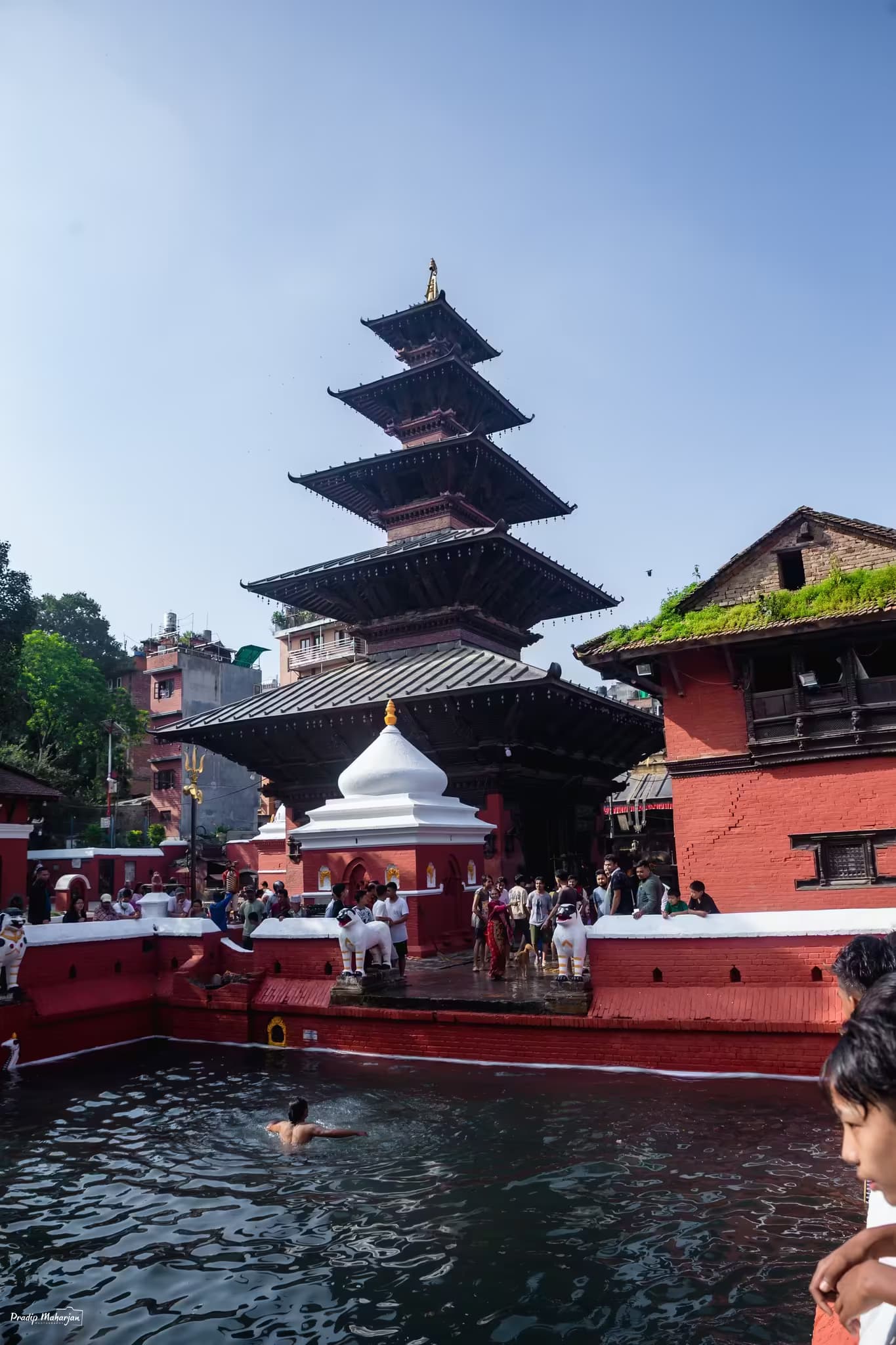
Janai Purnima
Sa Paru falls the day after Janai Purnima
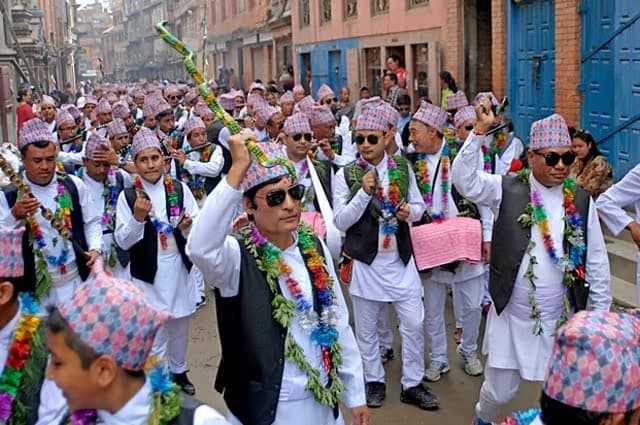
Matya
Patan's Matya follows on the next day

Krishna Janmashtami
Bhaktapur's stick dancing runs from Sa Paru until Janmashtami, seven days later

Bhaktapur Durbar Square
Bhaktapur keeps the festival with taha macha effigies along the main street
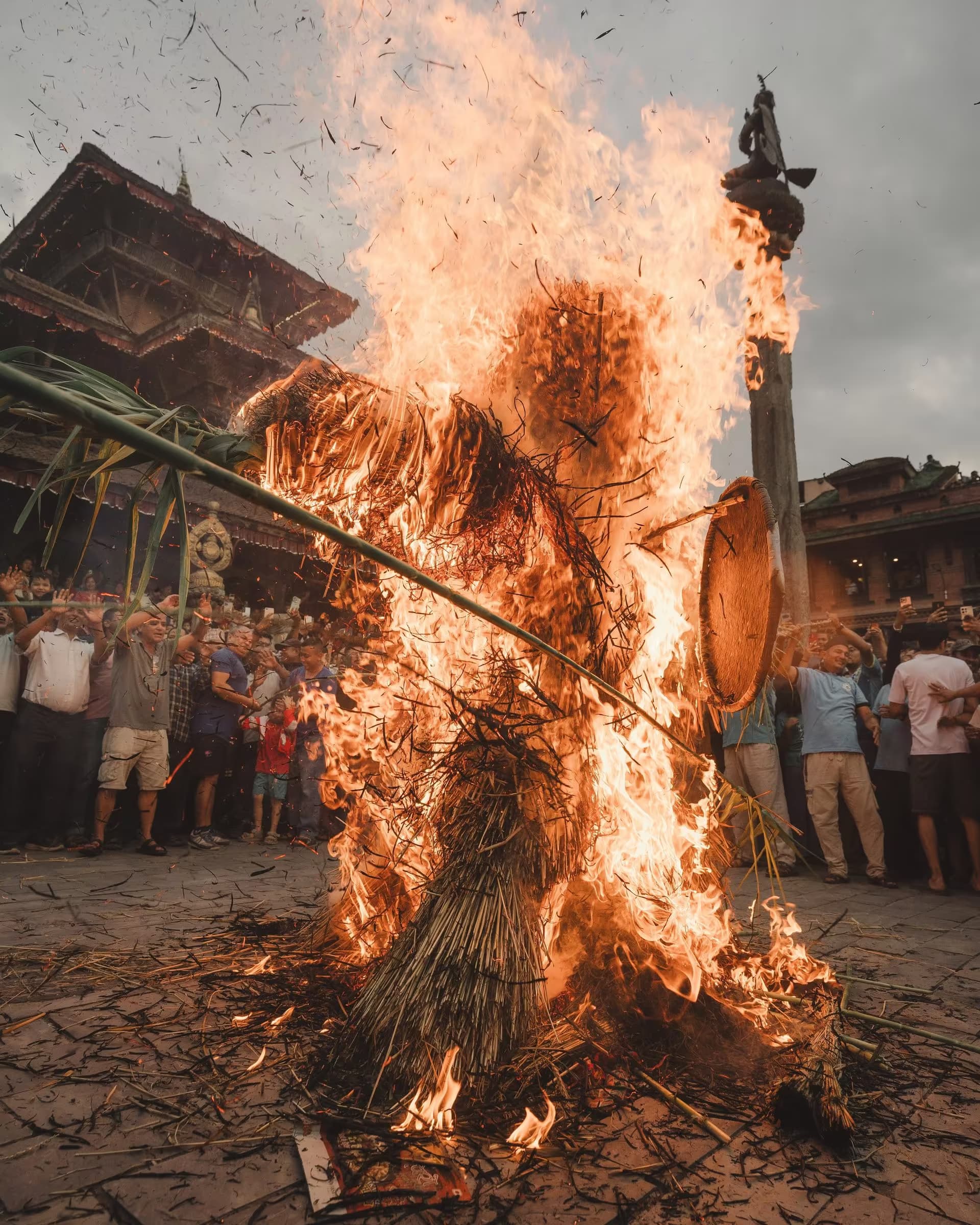
Gathamuga: Charhe
The season Sa Paru belongs to is opened by the burning of Ghantakarna
Characters
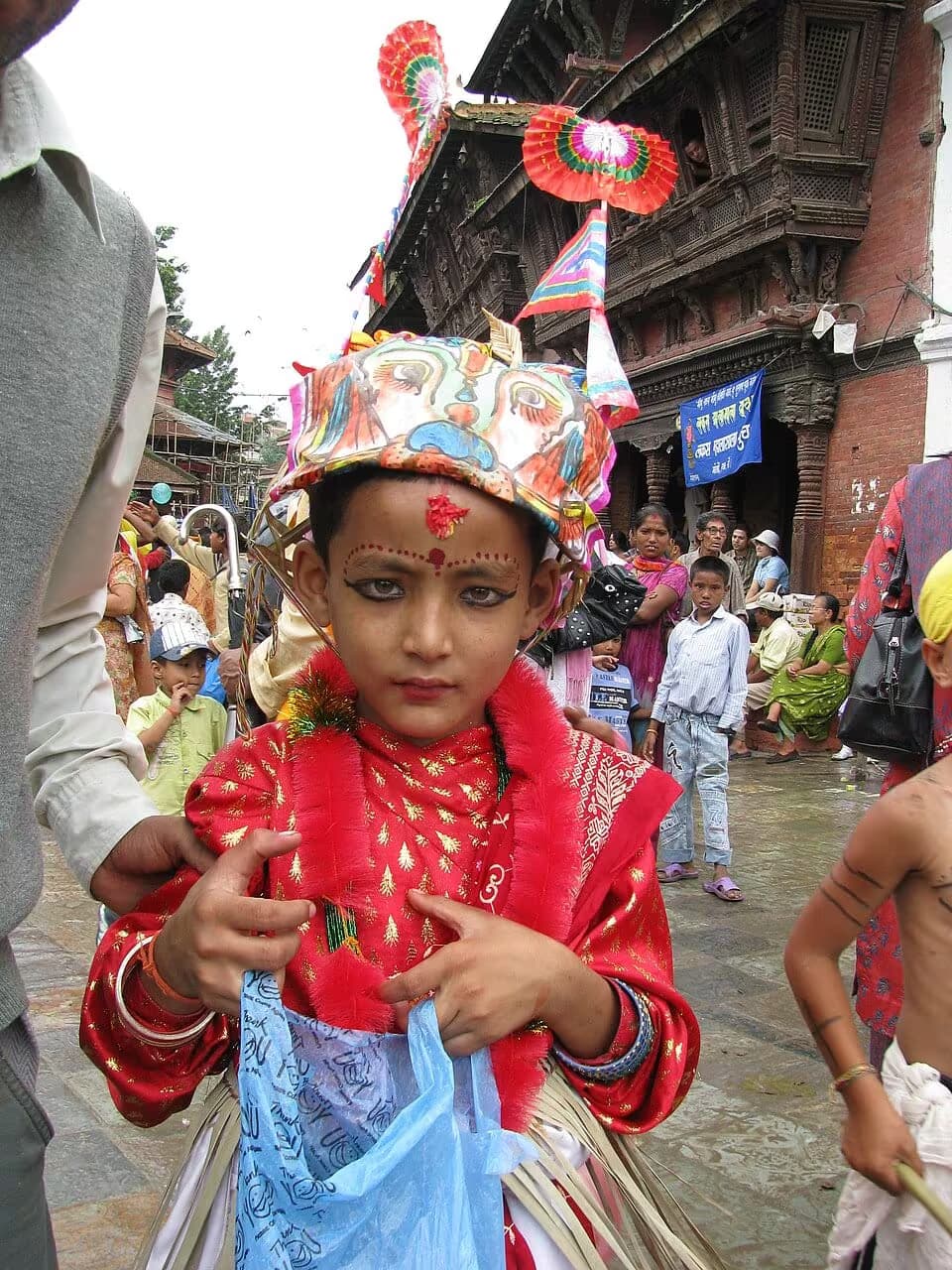
Rituals & Ceremonies
Procession Routes
Part of Gai Jatra