The Boy Dressed as Cow
In families who cannot bring a real cow to the procession, a young boy is dressed in an elaborate cow costume — a bamboo frame draped in white cloth — and led through the streets, ritually transformed into the animal that will guide the departed soul across the river of death.
The Substitution
Real cows are expensive, may not be available in urban Kathmandu, and can be difficult to manage in dense festival crowds. The boy-in-cow-costume tradition solves these practical problems while preserving the ritual's integrity. The transformation is understood as ritually real: once dressed and blessed, the boy functions as the cow for the procession's purposes. The ritual logic does not require the animal — it requires the role, and the role can be filled by a child who is willing to embody it. This flexibility is one reason the tradition has survived and adapted across the changing geography of Newar urban life.
The Costume
The construction is specific: bamboo strips bent into a frame that suggests a cow's body, draped in white cloth, with a painted or constructed cow's head at the front. The boy walks inside the frame, his legs visible beneath the cloth. The costume is made by family members or community craftsmen in the days before the festival — a practical act that is also a form of preparation, the family's attention to the departed expressed in the careful building of a vessel for their passage. The boy's own face may be whitened; he carries the identity of the animal and, through the animal, the hope for his relative's safe crossing.
The Experience
A child — often a son, nephew, or grandson of the deceased — becomes literally the vehicle for his relative's soul. The experience holds two registers simultaneously: the child's natural playfulness (children enjoy the costume, the attention, the transformation), and the profound seriousness of the ritual purpose, which even young children understand in families where the festival's meaning is explained. This duality — the child at play inside the instrument of salvation — captures something essential about Gai Jatra's genius. The festival insists on holding grief and lightness in the same frame, and the boy-as-cow is its most concentrated expression of that capacity.
Related
Connected places and entries worth pairing
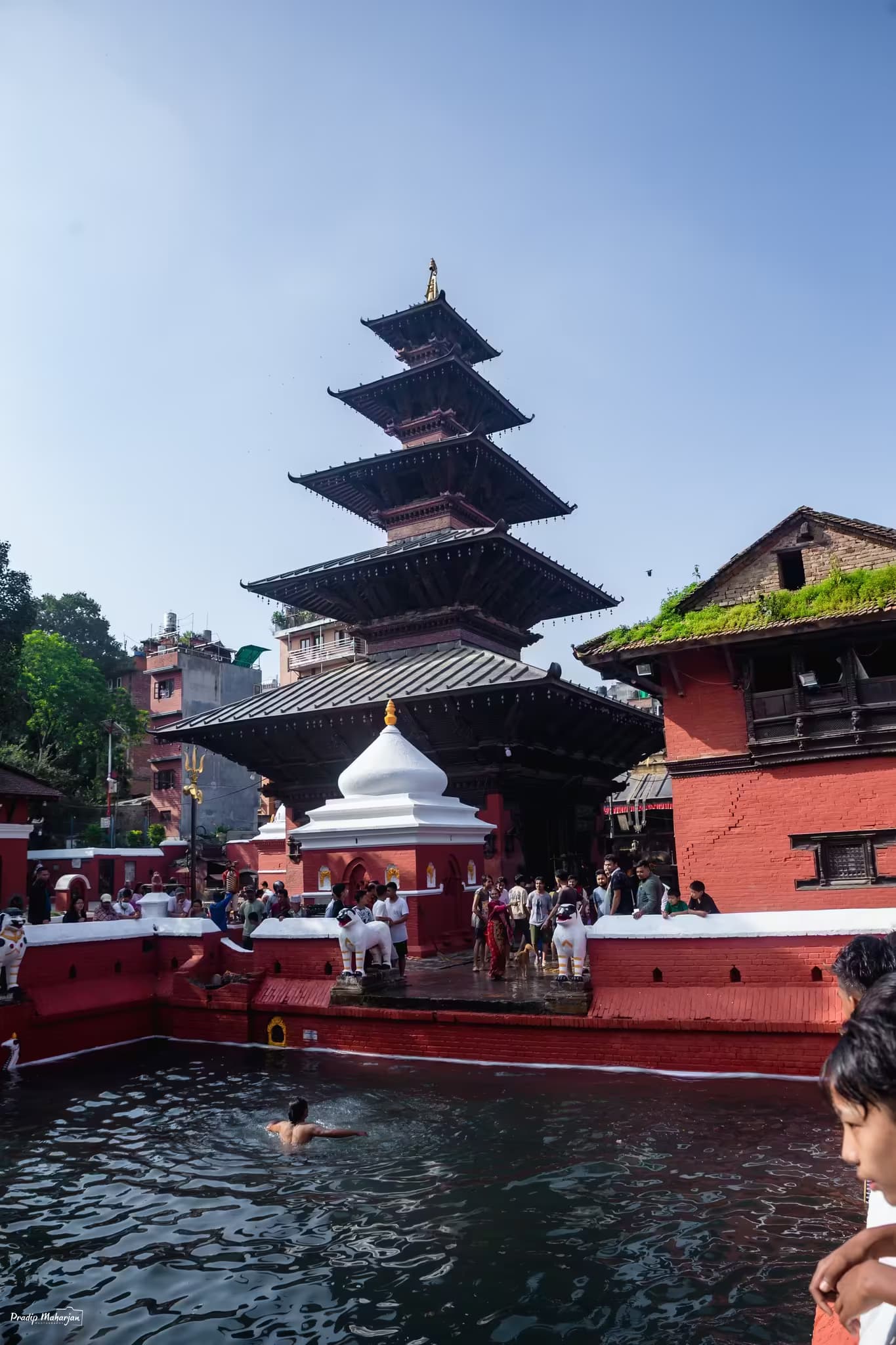
Janai Purnima
Sa Paru falls the day after Janai Purnima
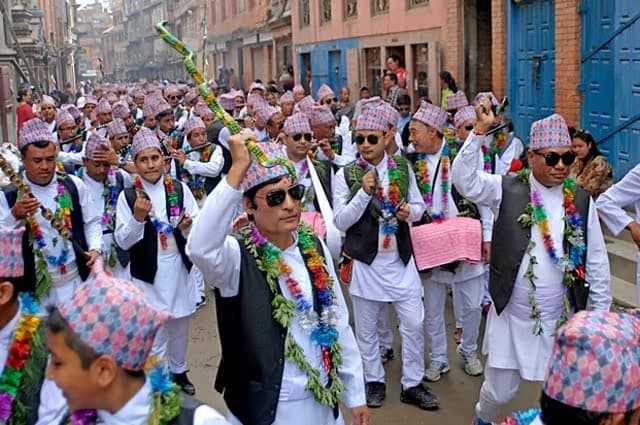
Matya
Patan's Matya follows on the next day

Krishna Janmashtami
Bhaktapur's stick dancing runs from Sa Paru until Janmashtami, seven days later

Bhaktapur Durbar Square
Bhaktapur keeps the festival with taha macha effigies along the main street
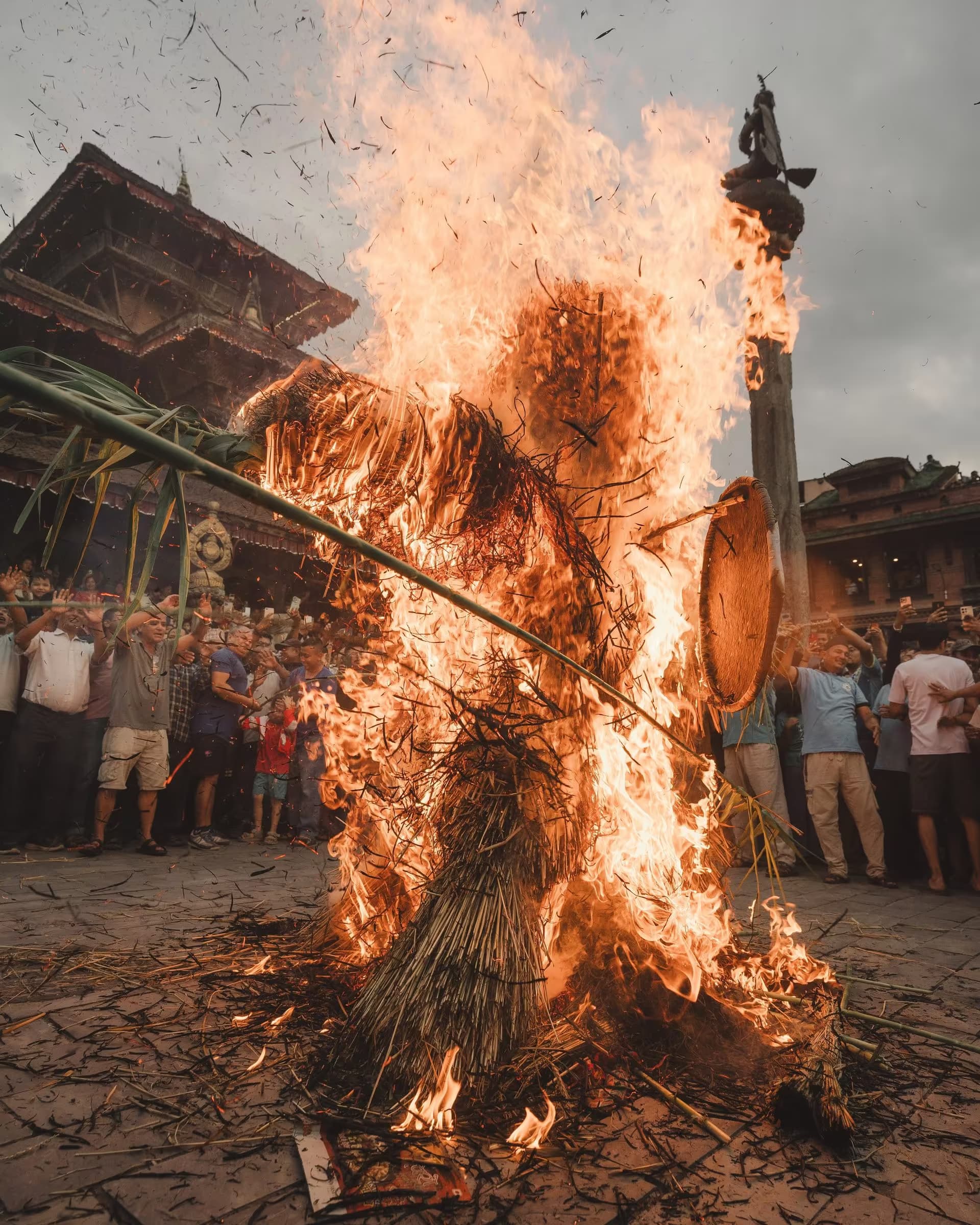
Gathamuga: Charhe
The season Sa Paru belongs to is opened by the burning of Ghantakarna
Rituals & Ceremonies
Procession Routes
Part of Gai Jatra