The Day of Satire
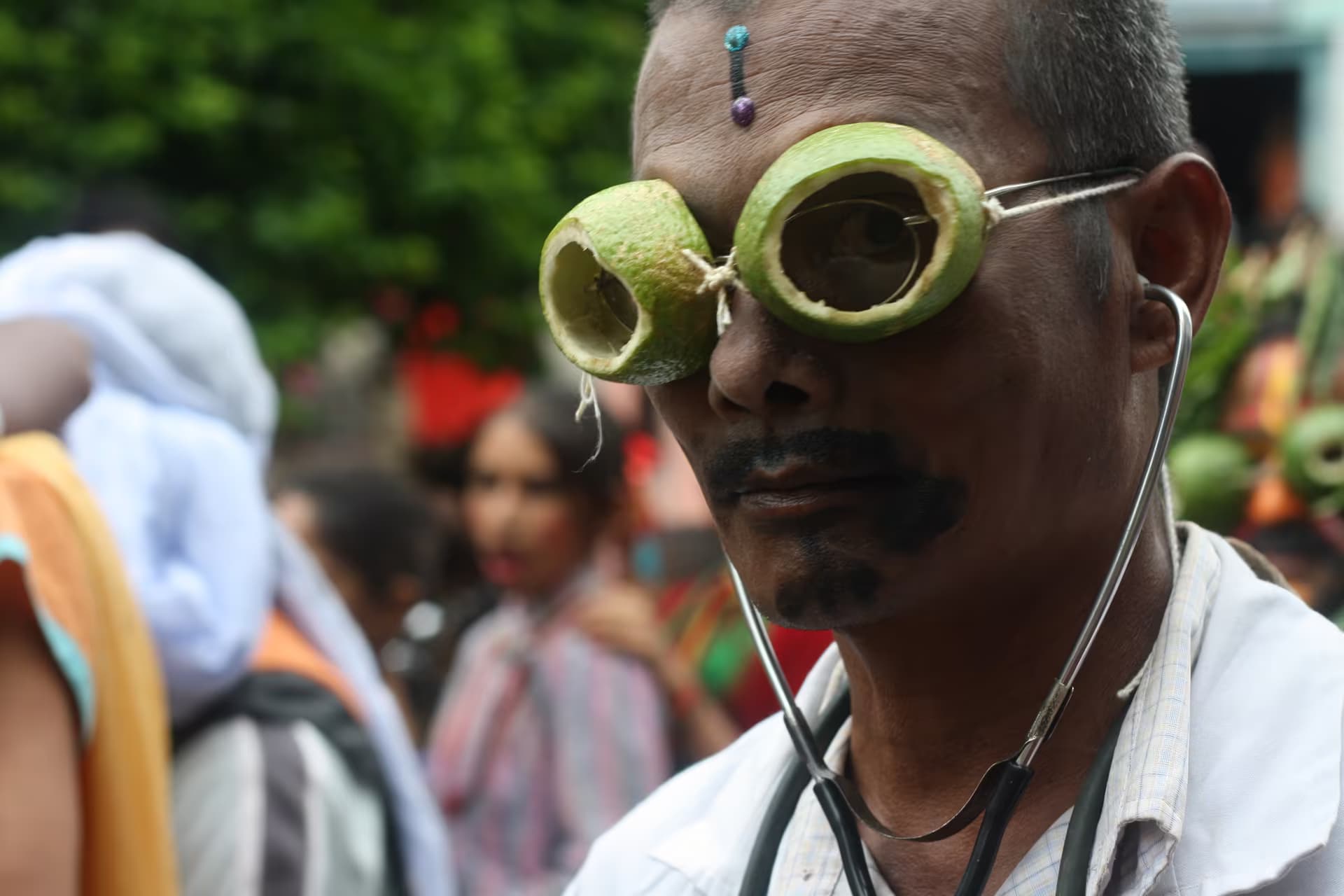
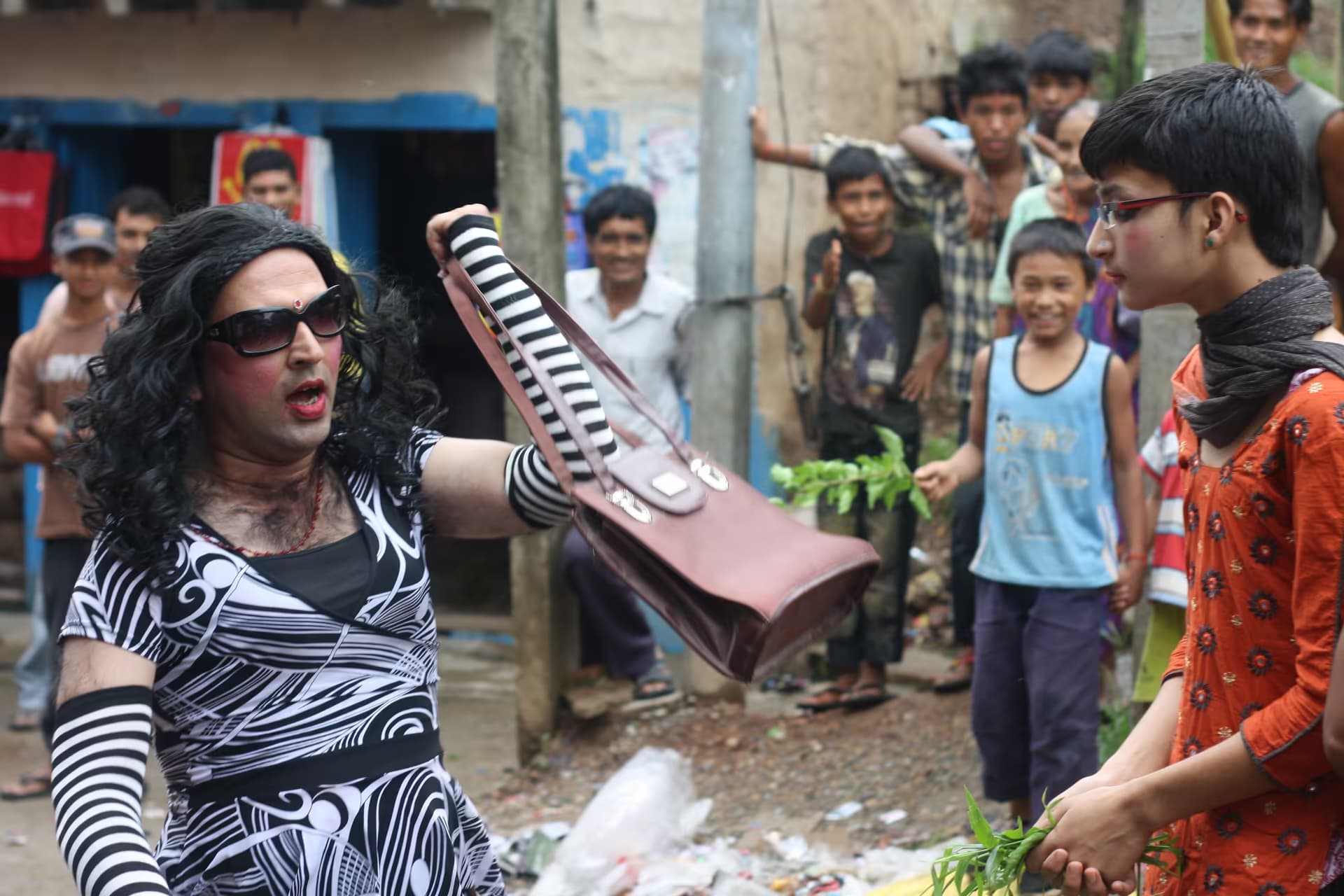
By afternoon, Gai Jatra transforms from mourning into mockery — Nepal's unofficial day of satire, when street performers, comedians, and ordinary citizens use humor to critique everything from political corruption to social hypocrisy, continuing a tradition begun by a 17th-century king's decree.
The King Who Made Laughter Sacred
The origin story belongs to King Pratap Malla of Kathmandu, who reigned from 1641 to 1674. Devastated by the death of his young son, he ordered the cow procession so that his grieving queen could see that she was not alone — that every family in the city had lost someone, that her grief was shared by all of them. When the satirical performances along the route finally made her laugh, the king decreed that comedy would forever be part of the festival. This origin grounds Gai Jatra's laughter in royal grief: the comedy is not disrespect for the dead but an acknowledgement that life continues, that joy can coexist with loss, that the bereaved deserve not just the permission to mourn but also the permission to laugh again.
The License to Mock
Gai Jatra provides a one-day license for speech that would otherwise be dangerous. Political figures are lampooned; corruption scandals are re-enacted; social taboos are broken. The satire ranges from gentle ribbing of neighborhood personalities to sharp critiques of national policy. The festival frame — this is Gai Jatra, this is tradition — protects speakers in ways that ordinary political speech is not protected. This is Nepal's equivalent of carnival's inversion: the powerless speak truth to power under ritual protection. The license is real and understood; performers say things on Gai Jatra that would have consequences on any other day of the year.
Street Theater and Skits
Troupes perform short plays on flatbed trucks or in open squares, often with cross-dressed actors, absurdist plots, and topical references that anyone following Nepal's news cycle will recognize immediately. The humor is physical and broad — slapstick, exaggerated gestures, recognizable caricatures of politicians and public figures. Crowds gather, jeer, laugh, and move on. Multiple performances run simultaneously across the durbar squares and neighborhood toles; the quality varies from amateur to professional. What matters is not polish but permission — the act of performing at all, in public, on this specific day.
Newspaper Satire
Nepal's major newspapers publish special Gai Jatra humor editions — satirical articles, fabricated news stories, absurdist headlines, cartoons mocking public figures. These editions are anticipated and collected; they represent the print tradition's equivalent of the street performances. For one day, the newspaper becomes a space of licensed mockery rather than objective reportage, and journalists enjoy the same festival protection as street performers. The editions are sometimes the sharpest political commentary of the year, their jokes containing truths that straight news cannot say.
The Balance
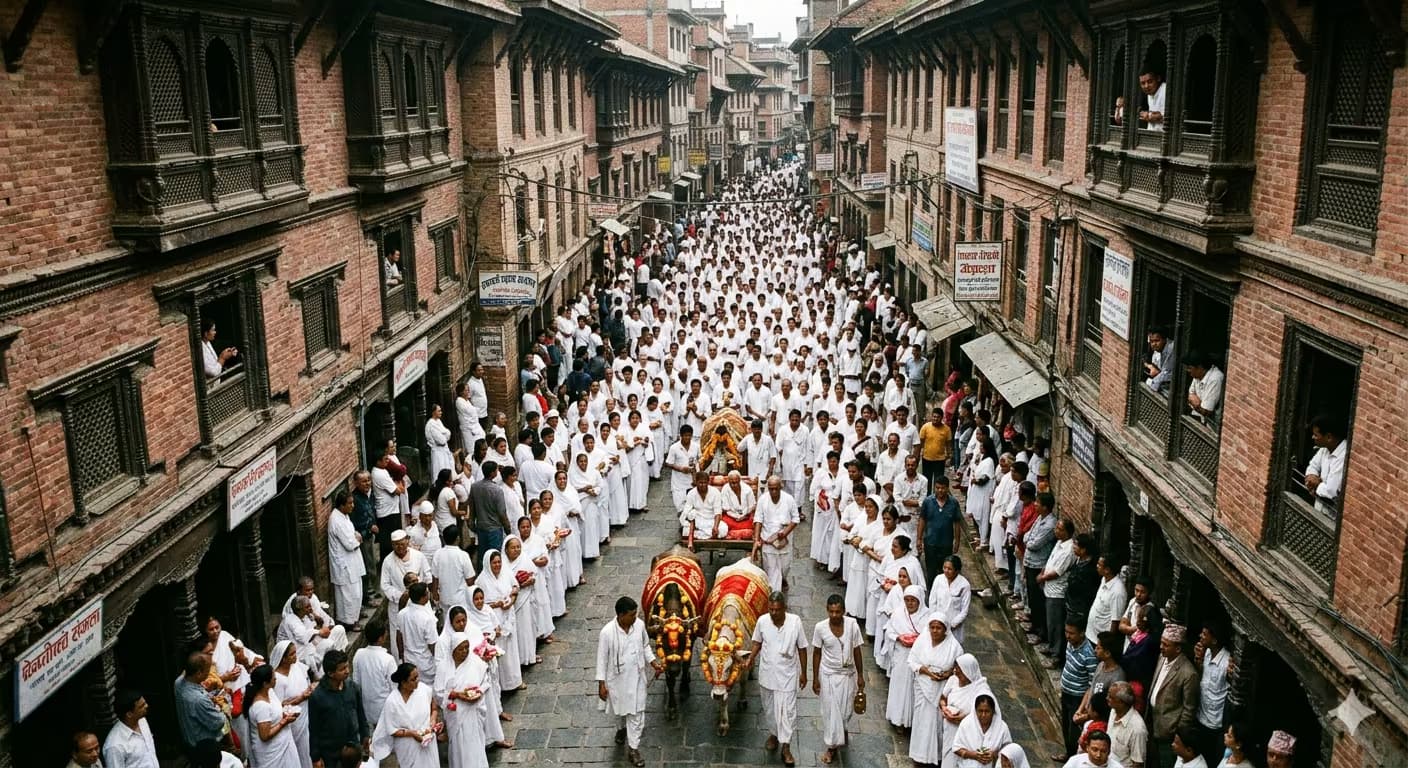
The morning-to-afternoon arc of Gai Jatra is its theological achievement. The same streets that held the cow procession at dawn — quiet, white-clothed, grief-carrying — are filled with satirical performances and absurdist costumes by afternoon. Neither undercuts the other. Gai Jatra's genius is insisting that genuine grief and genuine laughter are not opposites but companions: the festival that allows both is more honest about the human condition than one that allows only one.
Related
Connected places and entries worth pairing
Janai Purnima
Sa Paru falls the day after Janai Purnima
Matya
Patan's Matya follows on the next day

Krishna Janmashtami
Bhaktapur's stick dancing runs from Sa Paru until Janmashtami, seven days later

Bhaktapur Durbar Square
Bhaktapur keeps the festival with taha macha effigies along the main street
Gathamuga: Charhe
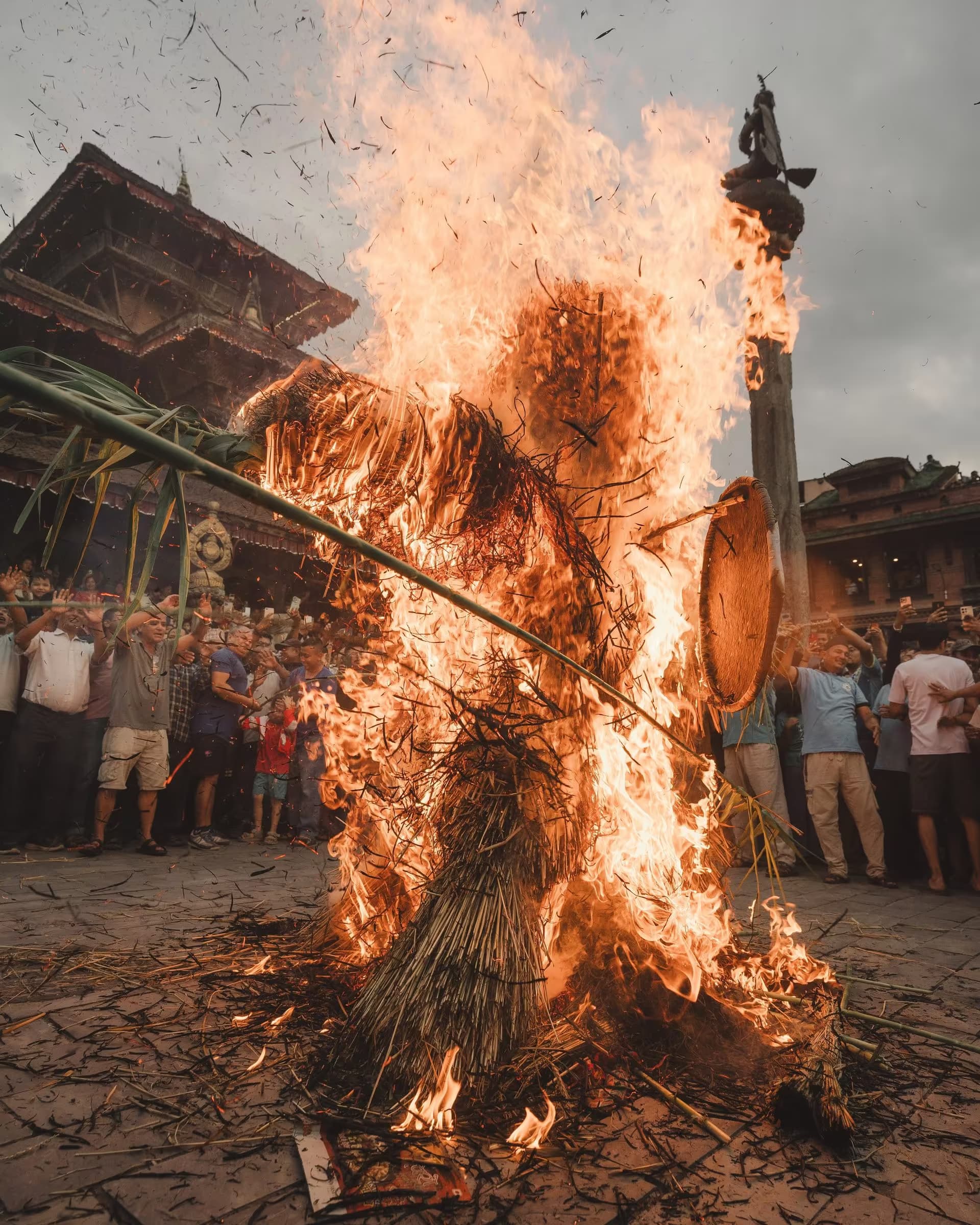
The season Sa Paru belongs to is opened by the burning of Ghantakarna
Characters
Rituals & Ceremonies
Procession Routes
Part of Gai Jatra