The dance
Ghintang ghisi — the name is the sound of it, the sticks and the drum — is danced by two facing rows. Each dancer holds a pair of short wooden sticks, strikes their own together, then strikes against the sticks of the person opposite, stepping forward and back as the rows interleave and part. It is driven by the dhime drum and cymbals, and the tempo climbs through a set until the striking is very fast. Groups form by tole, practise for weeks beforehand, and dance in matching dress.
Days, not a day
This is the part visitors most often miss, because they come for Gai Jatra and leave the next morning. In Bhaktapur the stick dancing does not stop with the effigy procession — it continues through the evenings of the following days and closes only on Krishna Janmashtami, seven days after Sa Paru. Those later evenings are less crowded and, for the dancing itself, better: the groups are in the streets after dark, the tourists have thinned, and the town is dancing largely for itself.
Watching it
Stand along the main street or in one of the squares off it in the early evening. The rows need room, so the crowd is asked to open and close around them, and following one group from square to square for an hour is a better evening than trying to see all of them. It is participatory in spirit — visitors are sometimes handed sticks — but wait to be offered rather than joining a line uninvited.
Related
Connected places and entries worth pairing
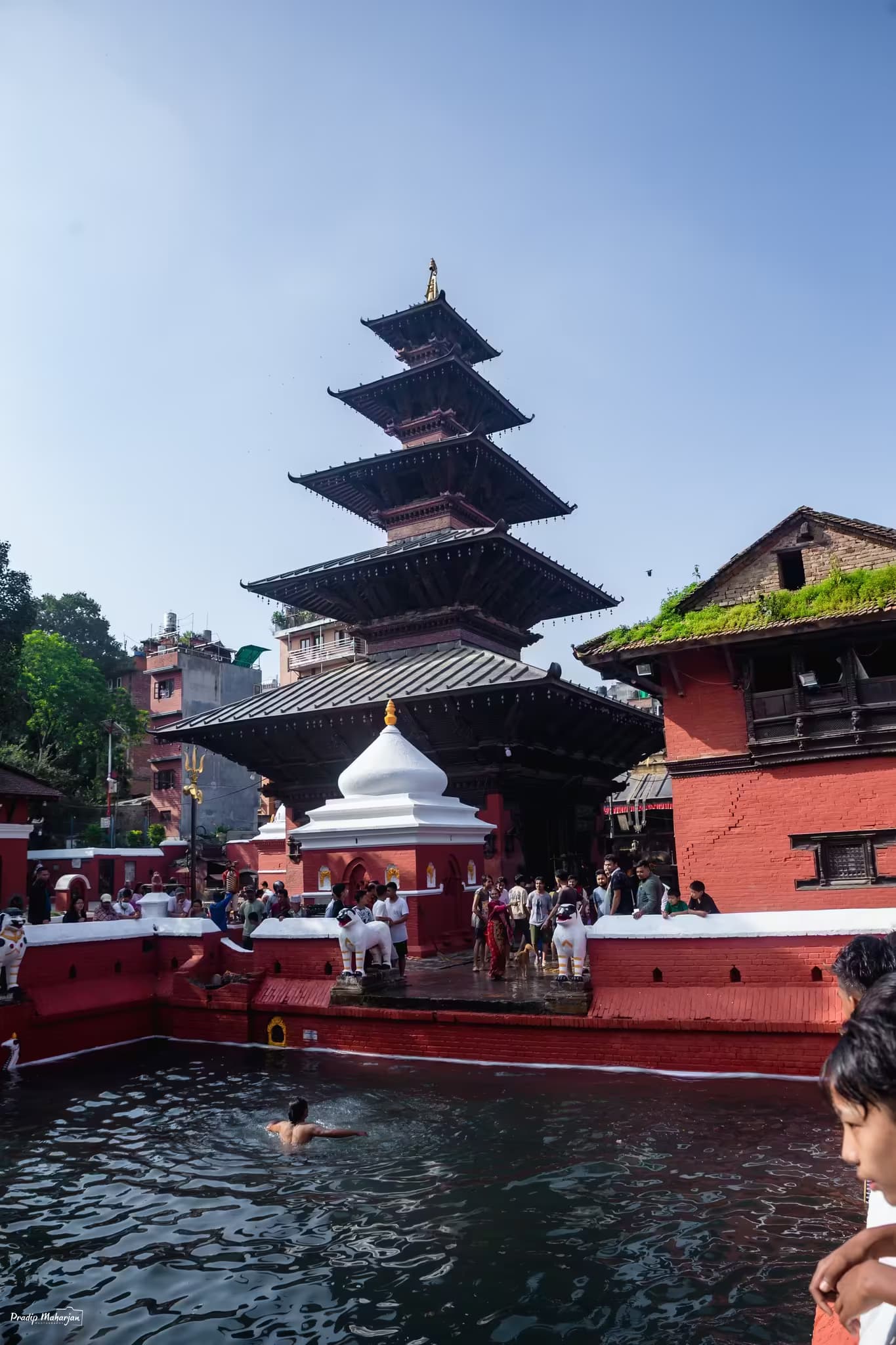
Janai Purnima
Sa Paru falls the day after Janai Purnima
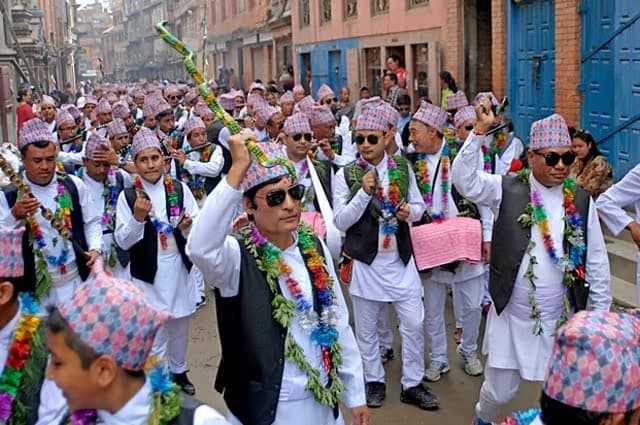
Matya
Patan's Matya follows on the next day

Krishna Janmashtami
Bhaktapur's stick dancing runs from Sa Paru until Janmashtami, seven days later

Bhaktapur Durbar Square
Bhaktapur keeps the festival with taha macha effigies along the main street
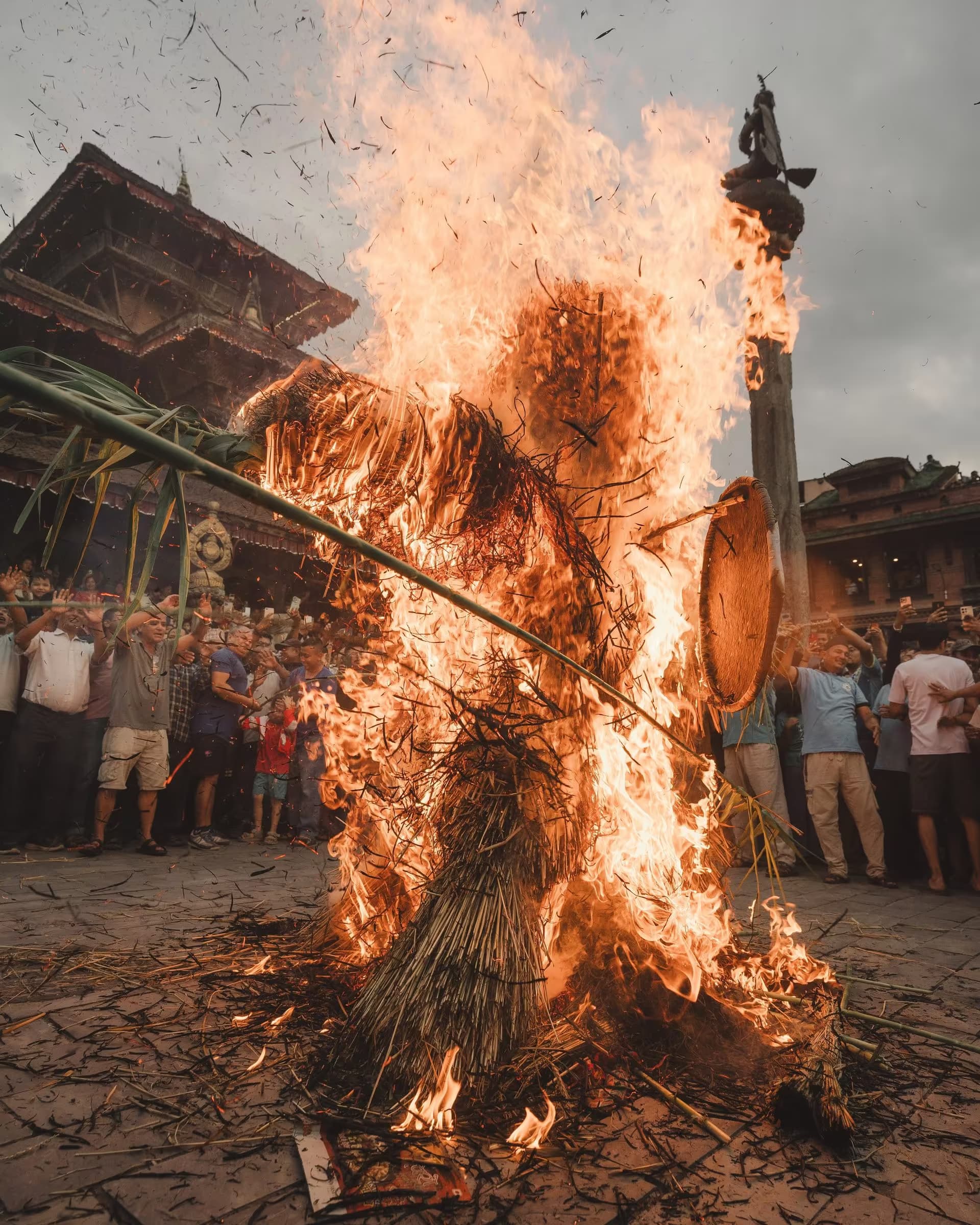
Gathamuga: Charhe
The season Sa Paru belongs to is opened by the burning of Ghantakarna
Characters
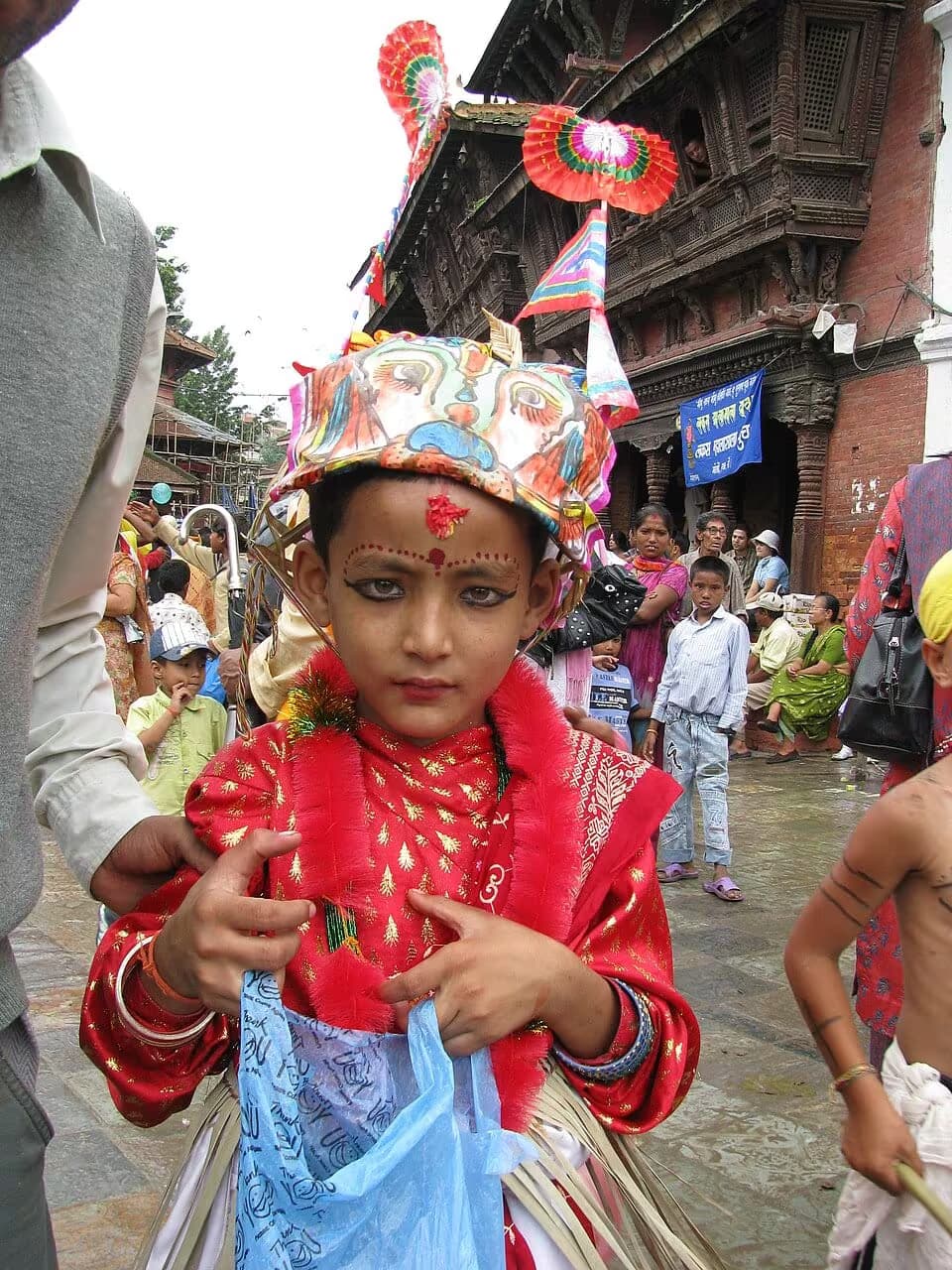
Rituals & Ceremonies
Procession Routes
Part of Gai Jatra