Pratap Malla ruled Kantipur — the kingdom centred on modern Kathmandu — through the mid-17th century and is remembered as one of the most flamboyant and learned of the Malla kings. A poet, patron, and self-styled scholar, he stamped his reign across the heart of the city more visibly than almost any other ruler of the Valley.
His building programme was concentrated around Kathmandu Durbar Square and the religious sites that frame the old city: ponds, columns, inscriptions, and temple additions that still carry his name. Many works are best understood as additions made during his reign rather than single-handed creations, but the density of his patronage is unmistakable.
That patronage was paid for by the Tibet trade, and it was not the court's alone. The merchants who grew rich on the Lhasa route endowed monasteries of their own during his reign — Chusya Bahal, founded in 1662 by the trader Gunajyoti Bajracharya, is among the finest to survive, and belongs to his Kathmandu rather than to his hand.
One of his most consequential works was largely invisible. Pratap Malla is credited with building Kathmandu's Rajkulo — the royal canal that carried water from the valley's edge into the city. It fed his great tank at Rani Pokhari and recharged the network of hiti, the sunken stone water spouts that supplied Kathmandu's neighbourhoods, extending a hydraulic tradition already a thousand years old. Spouts like Sundhara drew on exactly this system. His rival capitals soon followed, with Jitamitra Malla cutting Bhaktapur's own rajkulo in 1678 and the Patan kings extending theirs to feed the palace ponds.
Reading his attributions carefully matters. Whole complexes like the Durbar Square were shaped by many kings; what is genuinely Pratap Malla's are the specific columns, temples, ponds, and inscriptions credited to his reign — and those are the nodes mapped below.
Where his works stand
Numbered markers match the monuments below. Festivals and intangible legacy are listed but not mapped.
What he built — and what he added to
Direct works
Monuments he built or founded.
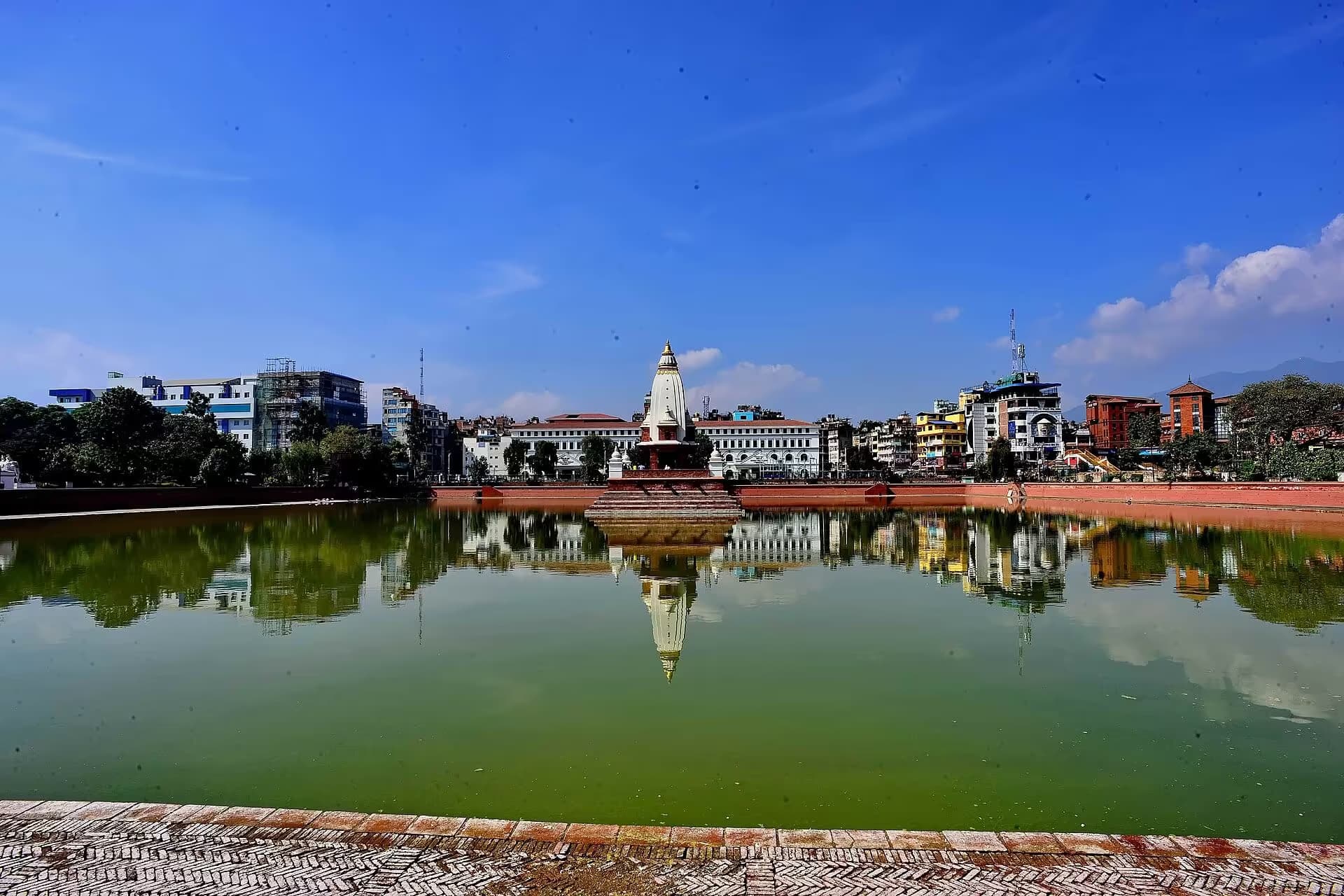
Rani Pokhari
Commissioned 1667–70Built the great tank to console Queen Rajya Laxmi after their son's death, with the central Bal Gopaleshwor shrine.
Kathmandu
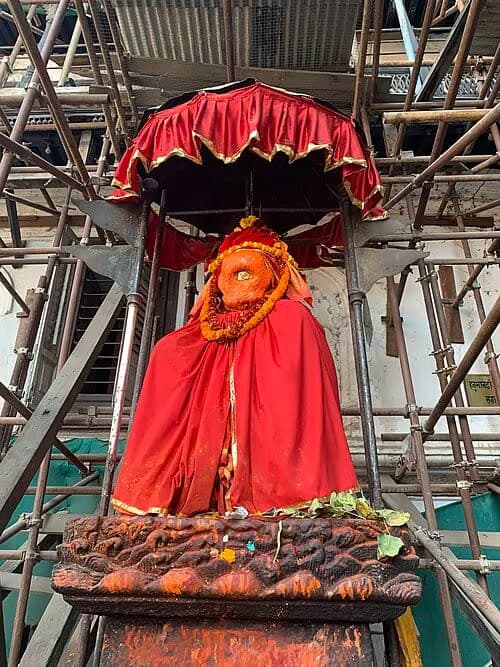
Hanuman Statue (Hanuman Dhoka)
Erected 1672Set the vermilion-draped Hanuman on its pillar at the palace gate — the image that gave Hanuman Dhoka its name — alongside his celebrated inscription in fifteen scripts.
Kathmandu Durbar Square, palace entrance
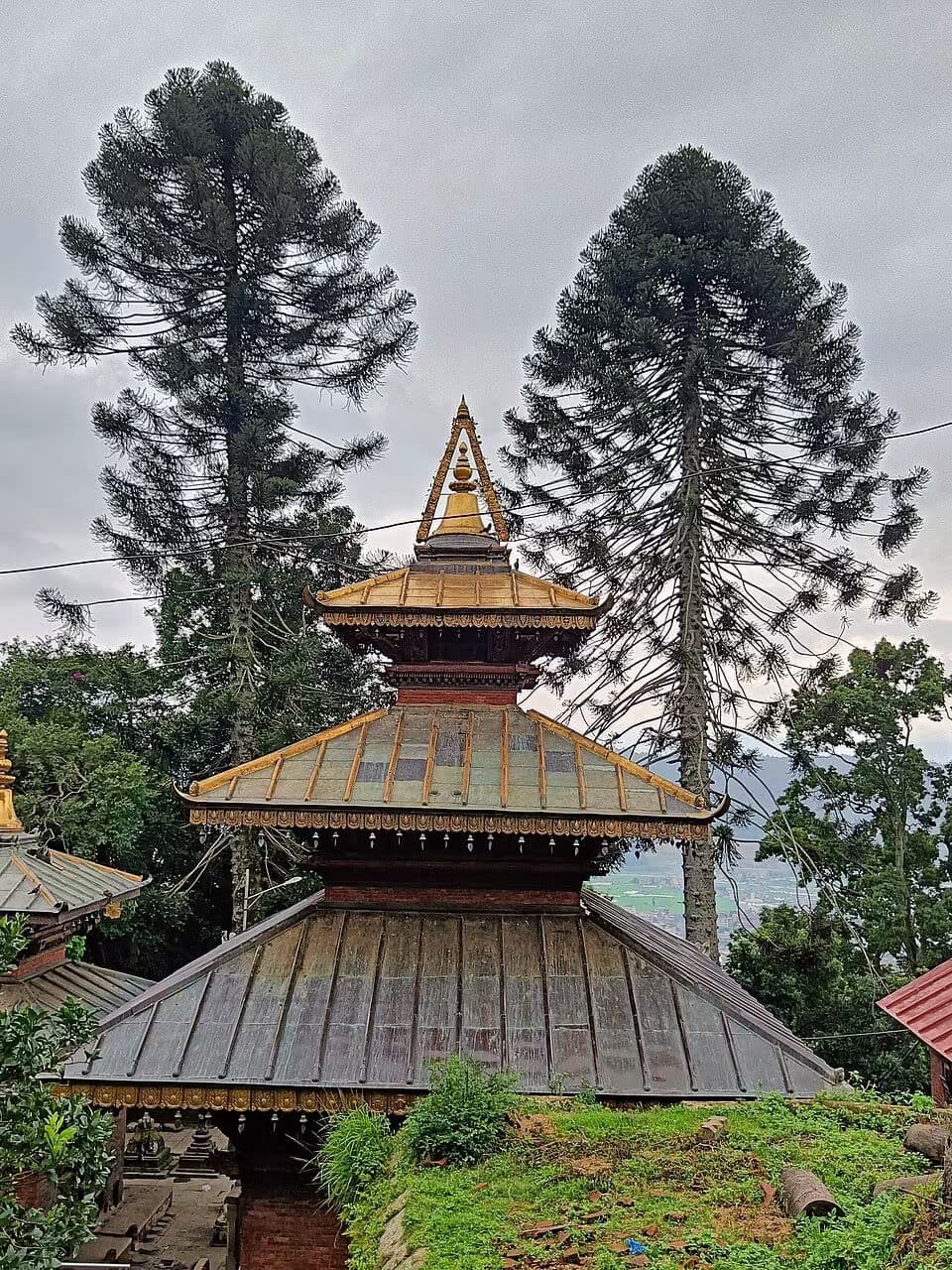
Vajrayogini Temple
Pagoda c. 1655The hilltop Vajrayogini pagoda above Sankhu is associated with his reign, though the sacred site itself is far older.
Sankhu
Reign-era additions
Contributions to shared complexes — named additions, not whole squares.
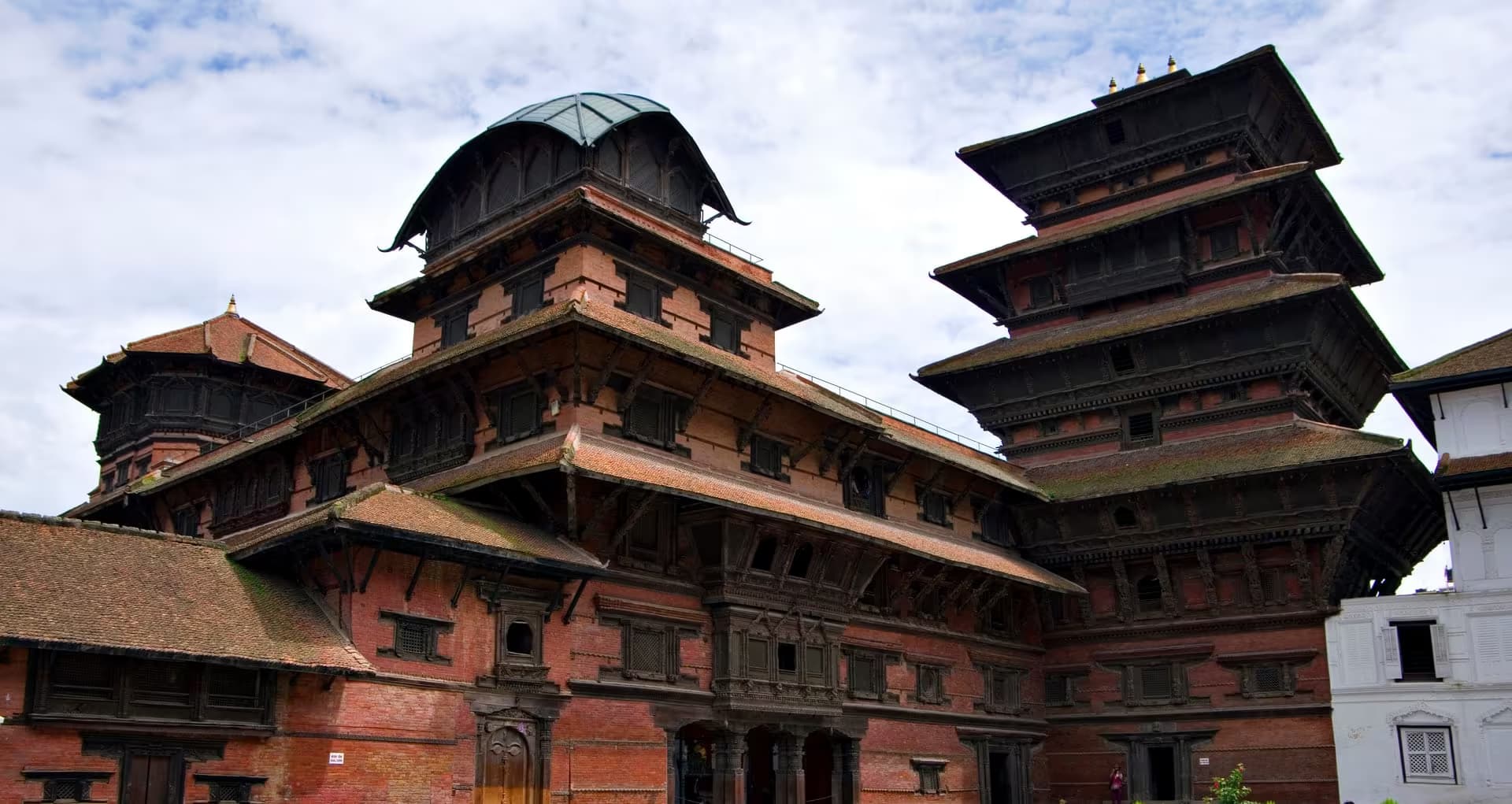
Kathmandu Durbar Square
His reignThe square's golden age belongs to his reign — the Hanuman gate, Kal Bhairav, his own kneeling column statue and the fifteen-script inscription all stand within it.
Kathmandu
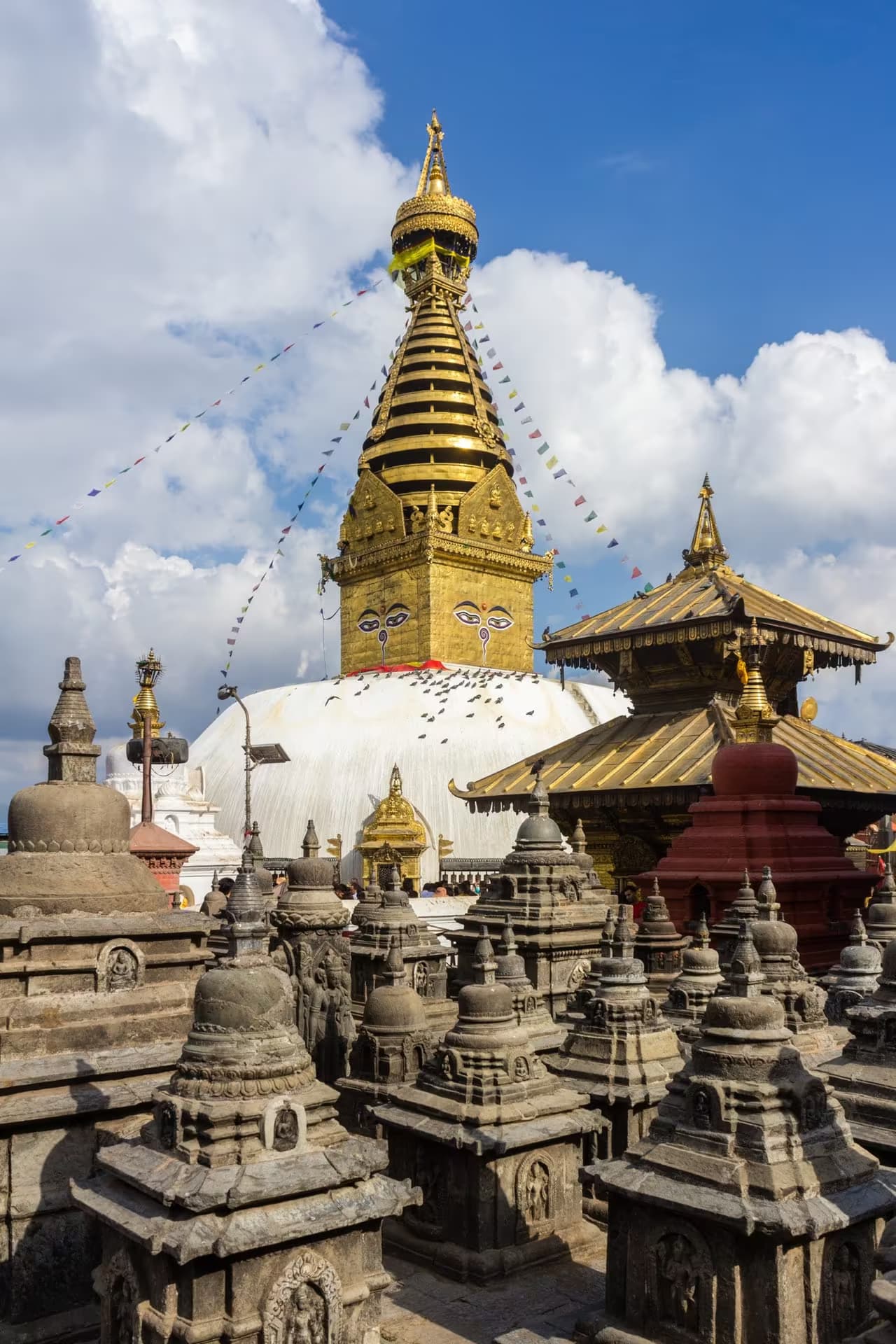
Swayambhunath
Additions 1646Added the Anantapur and Pratapur shikhara temples and the great vajra at the eastern stairs.
Swayambhu
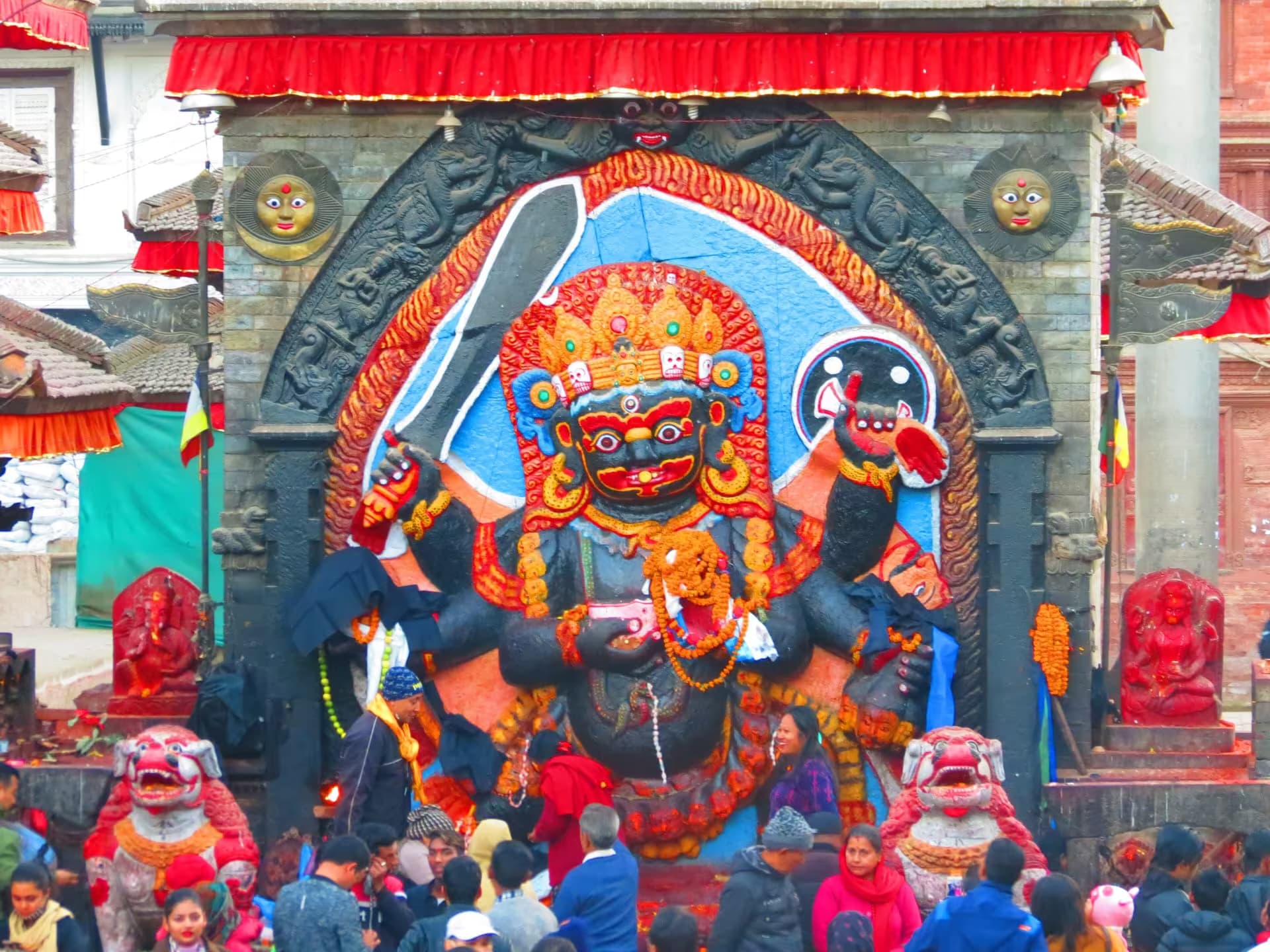
Kal Bhairav
Installed, 17th c.Had the colossal Kal Bhairav image installed in the Durbar Square during his reign.
Kathmandu Durbar Square
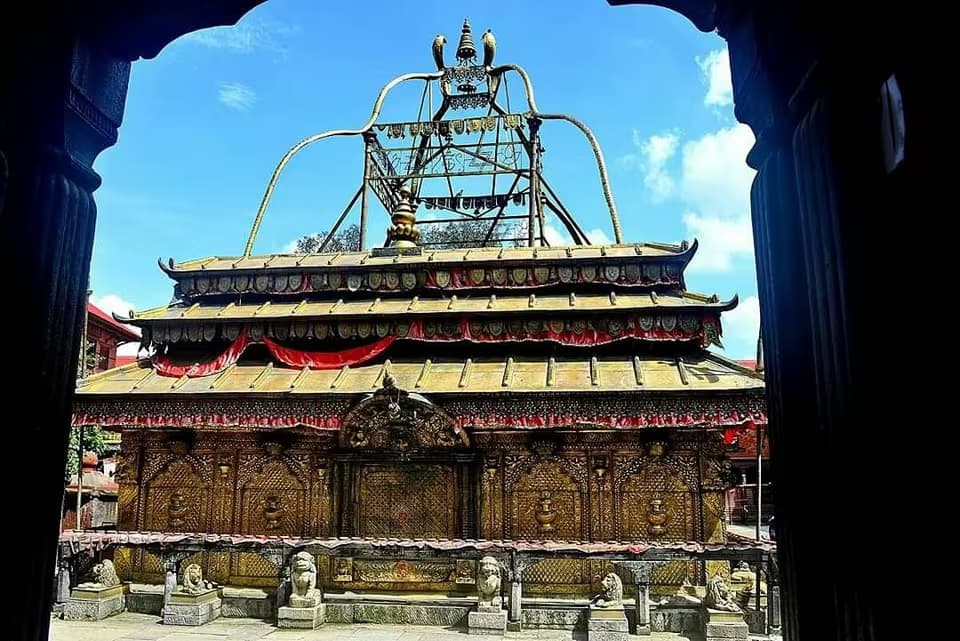
Guhyeshwari Temple
Renovated, 17th c.Renovated the Shakti shrine near Pashupatinath during his reign.
Guhyeshwari, east of Pashupati Kshetra
Cultural legacy
Festivals and institutions tied to his reign.
Help us get it right
Know Pratap Malla better than we do?
We write from research and reporting, and the ground changes faster than we can keep up. If something here is out of date, or you have been and would tell it differently, we would rather hear it.