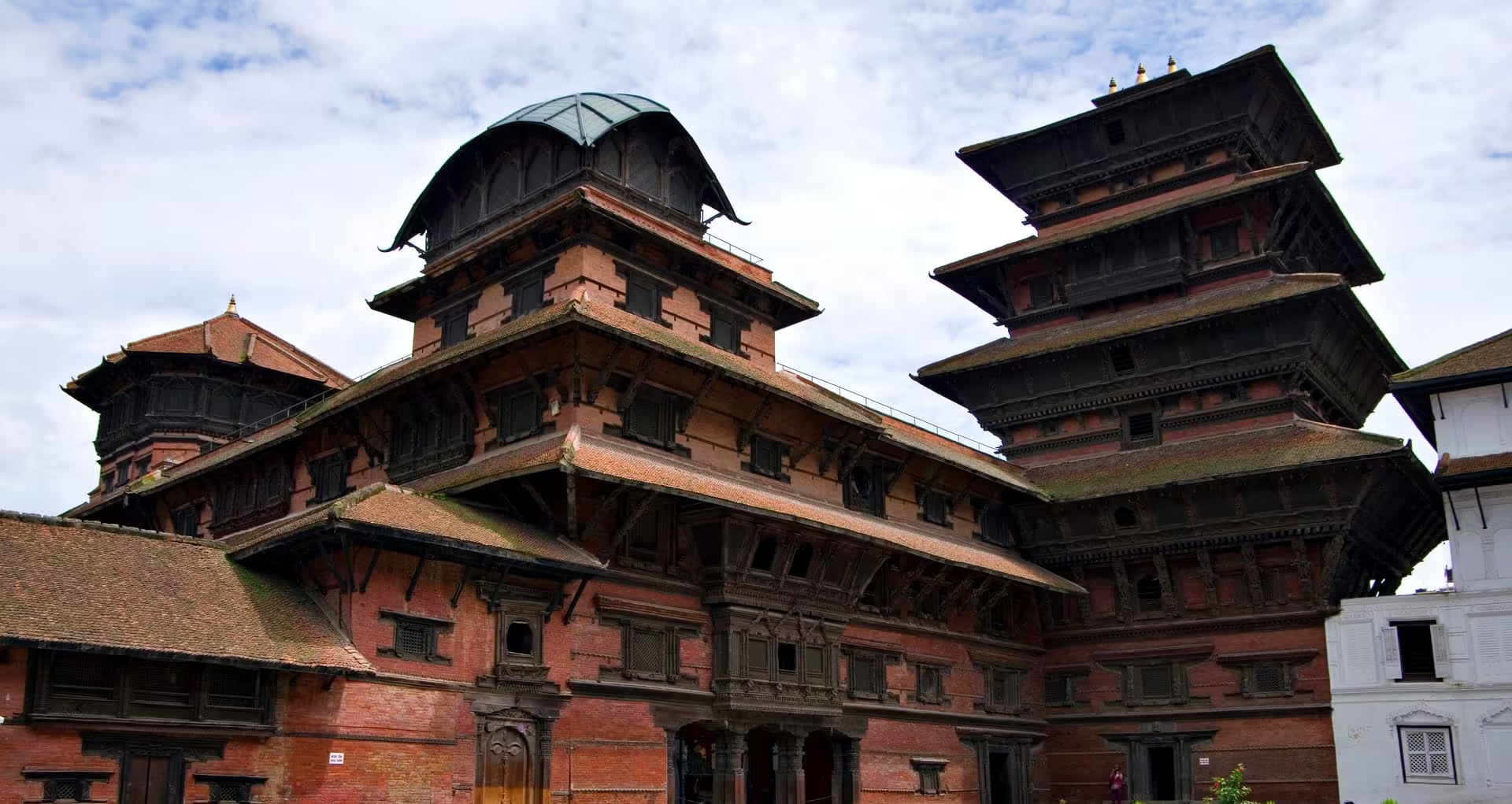
Kathmandu Durbar Square
The historic royal palace square in the heart of old Kathmandu, a UNESCO World Heritage Site with stunning Newari architecture and living Kumari goddess.
- Altitude
- 1,350 m
- Coordinates
- 27.704°, 85.307°
Current Weather
Kathmandu Durbar Square, known locally as Hanuman Dhoka, was the royal seat of the Malla and then the Shah kings for more than five centuries, and is one of the seven monument zones of the Kathmandu Valley UNESCO World Heritage Site. It is a dense open-air museum of Newar art, built up over generations of royal patronage.
Its landmarks read almost as a roll-call of its kings. Mahendra Malla raised the towering Taleju Temple in 1564 — dedicated to the Mallas' patron goddess and opened to Hindus just once a year, at Dashain — along with the nearby Jagannath Temple (1563), famous for the erotic carvings on its roof struts. The square's golden age belongs to Pratap Malla (r. 1641–1674), whose Tibet-trade wealth paid for the vermilion-draped Hanuman statue at the palace gate (1672), the fearsome black-stone Kal Bhairav, his own kneeling statue on a column (1670), and a celebrated stone inscription in fifteen scripts (1664). The three-storey Kumari Ghar, home of Kathmandu's living goddess, was built by Jaya Prakash Malla in 1757; after the conquest, Prithvi Narayan Shah added the nine-storey Basantapur (Nautalle) tower around 1770 to mark his unification of Nepal. Older than all of them is Kasthamandap, the wooden public rest-house that gave the city its name — excavation after its 2015 collapse traced its origins to the Lichhavi era.
The square is one of three rival royal showpieces created when the valley split into the kingdoms of Kathmandu, Patan and Bhaktapur after the death of Yaksha Malla around 1482; it was here, during Indra Jatra in 1768, that Prithvi Narayan Shah seized Kathmandu and began the end of Malla rule. The 2015 earthquake fell hard on the square — Kasthamandap, the Maju Deval and the Trailokya Mohan temple collapsed entirely and the tower lost its upper tiers — though Kasthamandap has since been rebuilt.
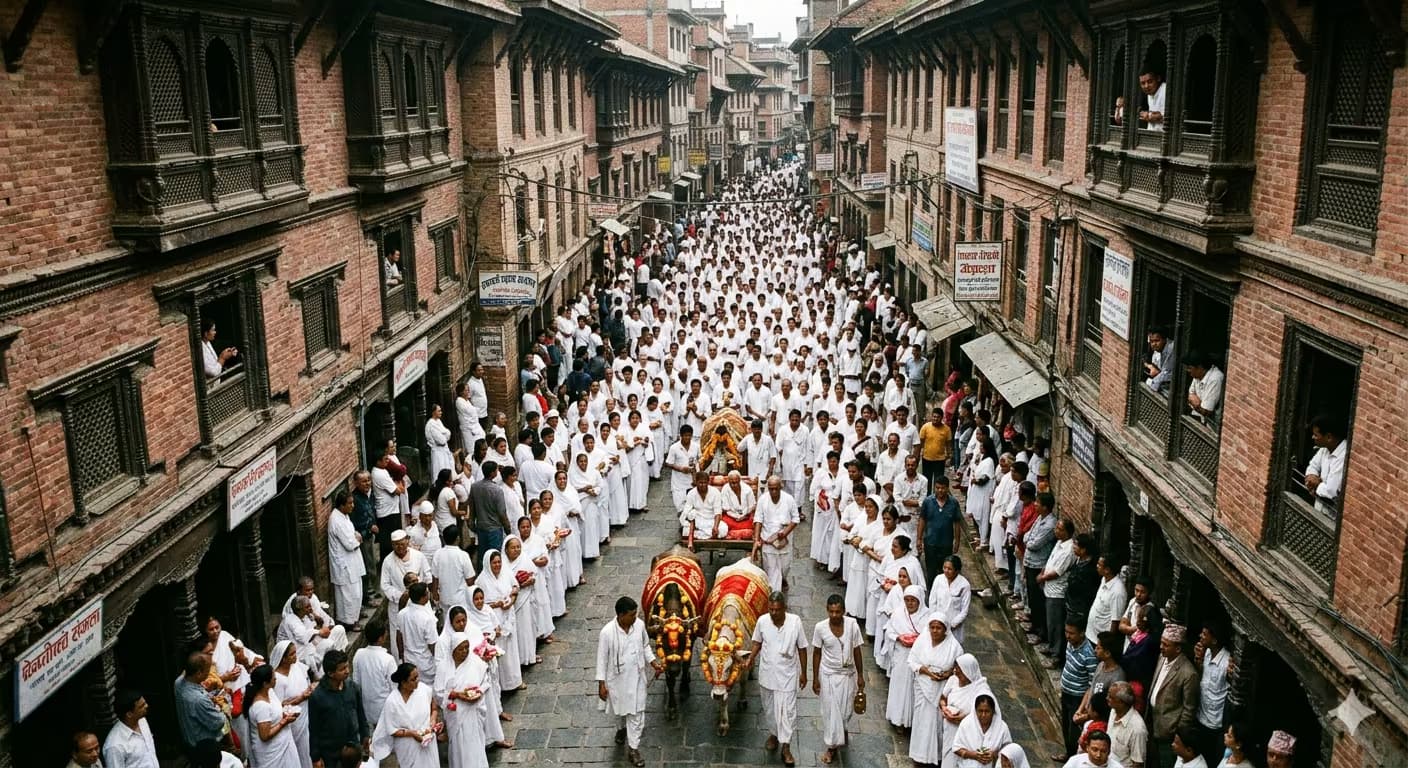
It remains the living heart of the old city, busiest and most magical during Indra Jatra when the Kumari is drawn through the lanes in her chariot. Come early or late for the best light, and wander out into the Asan and Indrachowk bazaars for everyday Newar street life.
- Expanded during the reign of Pratap MallaHis reign
The square's golden age belongs to his reign — the Hanuman gate, Kal Bhairav, his own kneeling column statue and the fifteen-script inscription all stand within it.
Location & What's Inside
Within this area
Places and landmarks inside
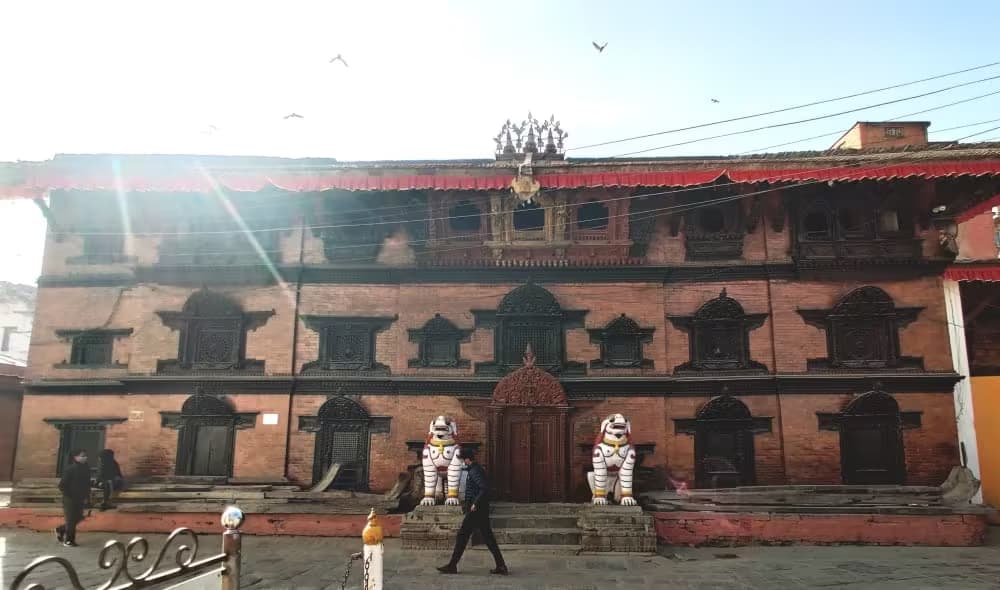
Kumari Ghar
Residence of the Royal Kumari, the living goddess of Kathmandu
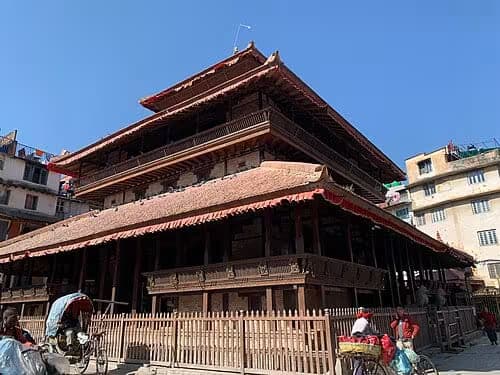
Kasthamandap
The legendary wooden pavilion that gave Kathmandu its name
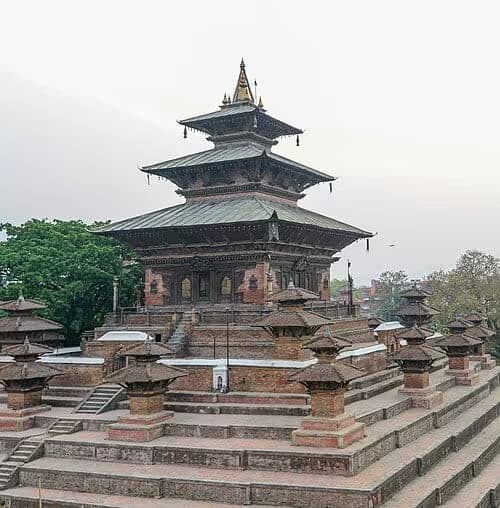
Taleju Temple
Tallest temple in the square, 36m triple-roofed pagoda to the Malla tutelary goddess
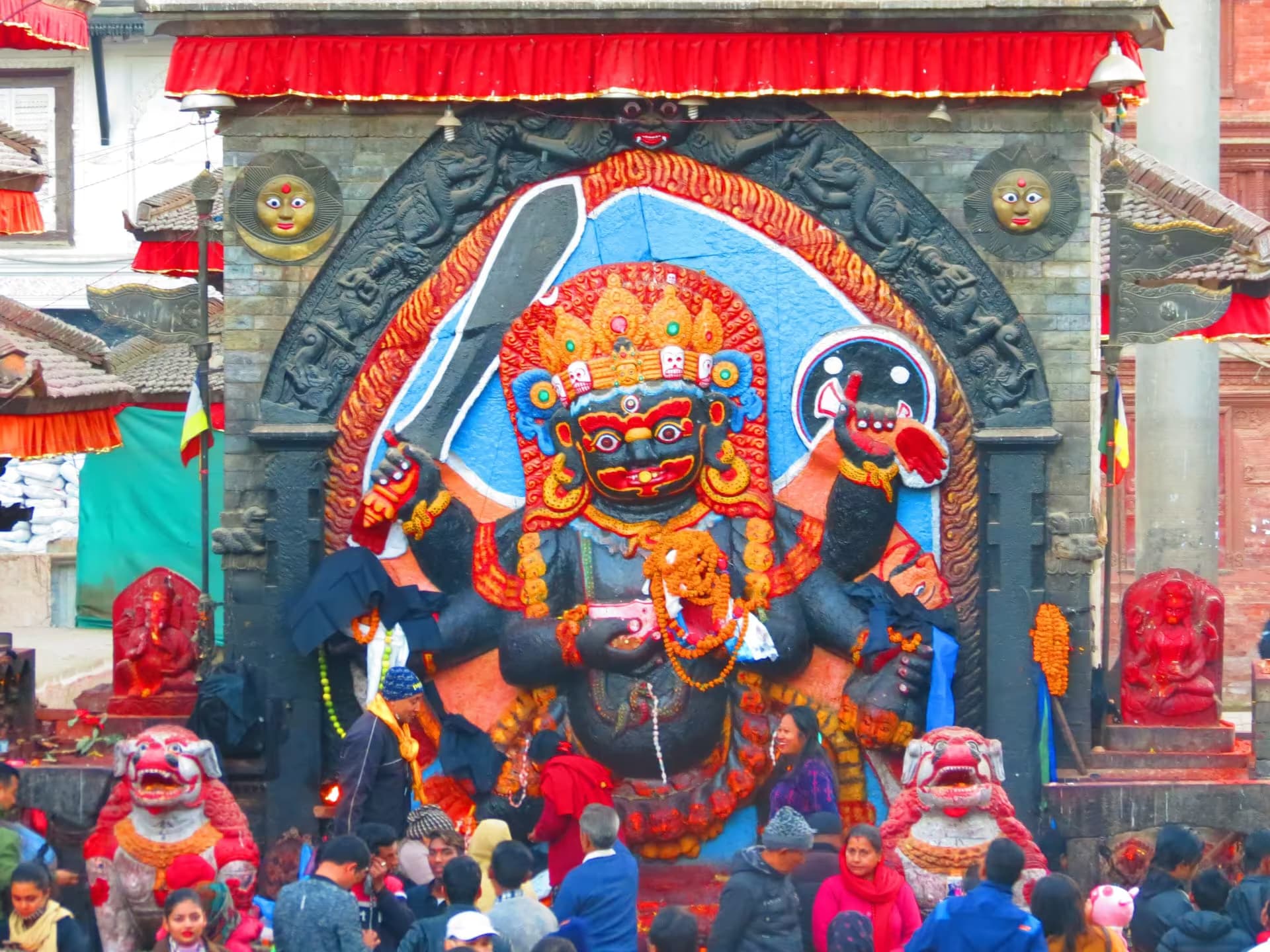
Kal Bhairav
Massive 12th-century stone relief of terrifying Bhairav, used for oath-taking
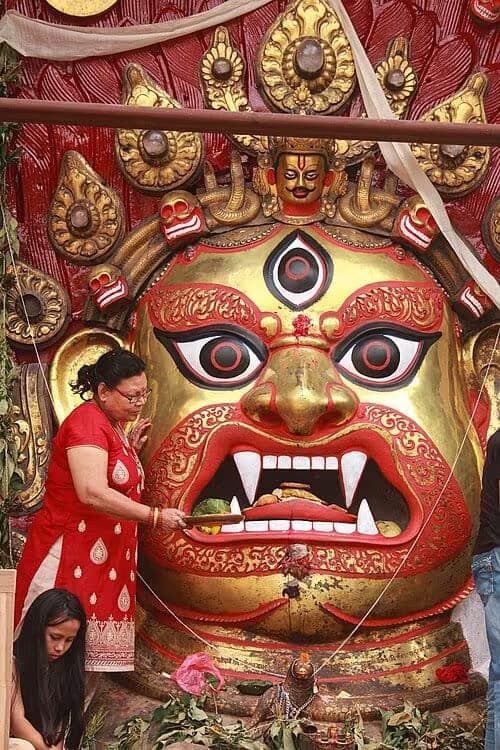
Swet Bhairav
Giant gilded Bhairav head hidden behind a lattice, revealed during Indra Jatra
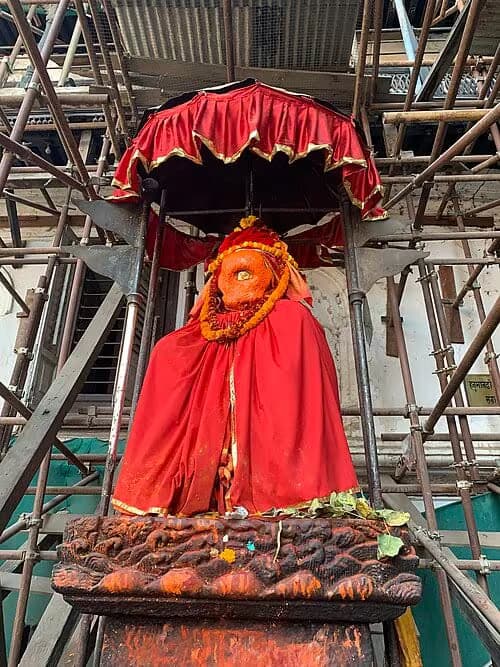
Hanuman Statue (Hanuman Dhoka)
Sindoor-coated Hanuman guarding the old palace gate — namesake of Hanuman Dhoka
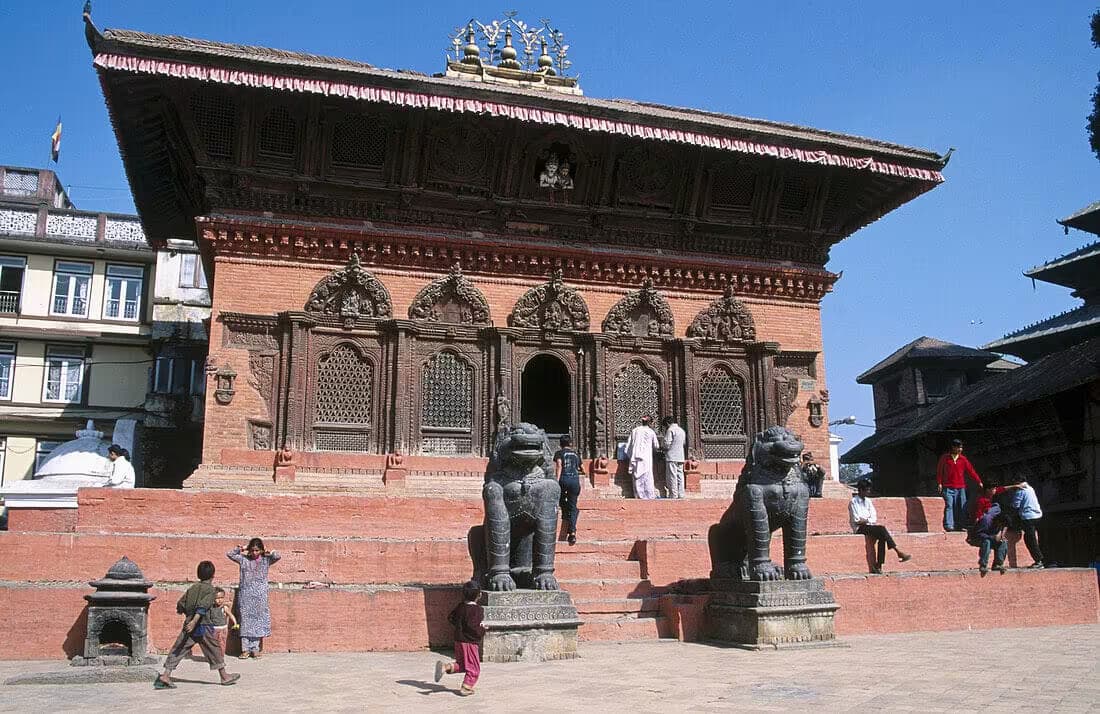
Shiva-Parvati Temple
Temple with the iconic carved Shiva-Parvati couple gazing from the upper window
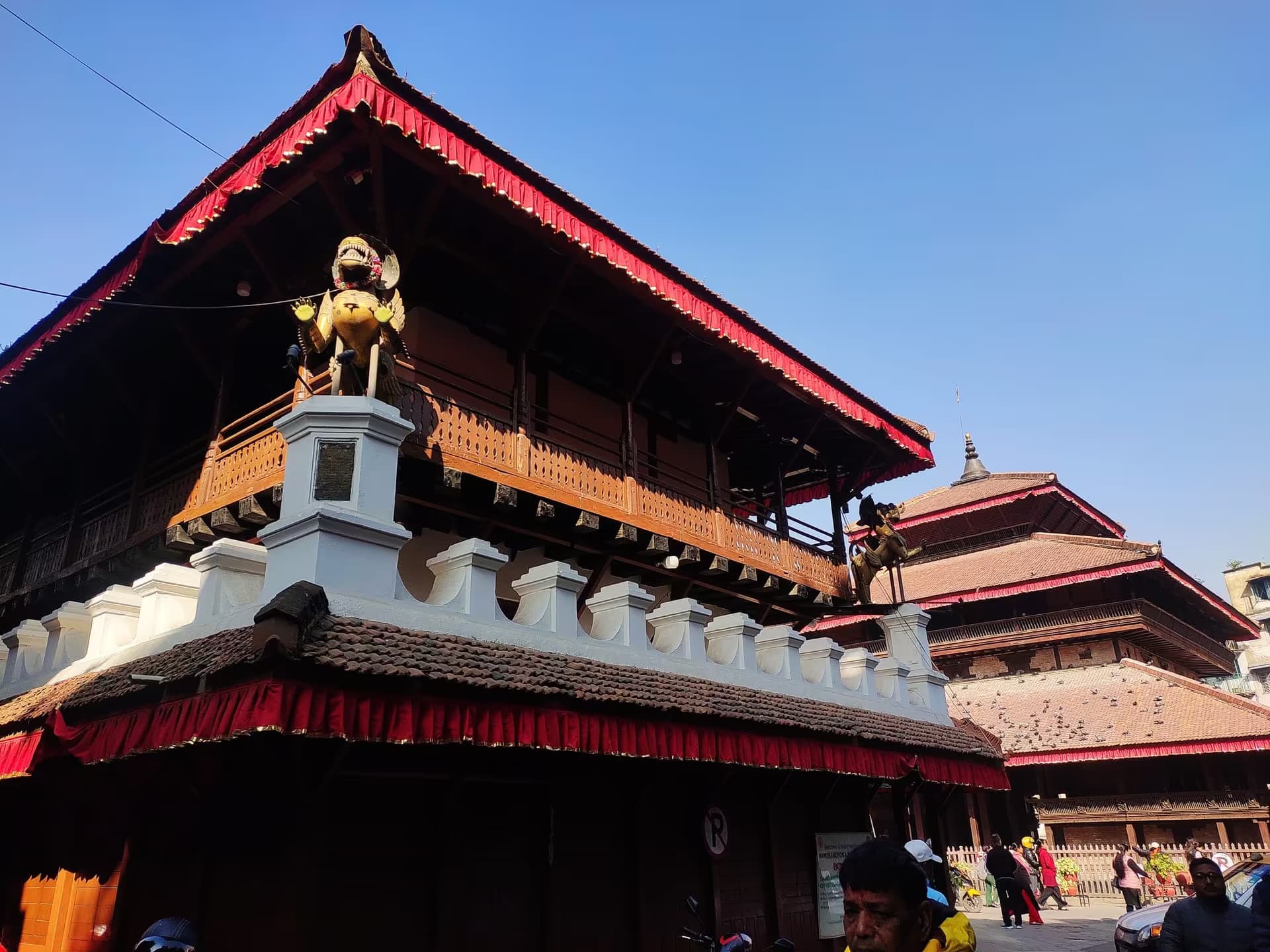
Singha Sattal
Lion-guarded Newari pilgrim shelter with fine woodcarvings at Maru Tole
Related
Connected places and entries worth pairing
Guides that feature this place
- Regional11 min
Kathmandu Valley Heritage Walk: Temples, Stupas & Living Culture
A routed three-day walk through the Kathmandu Valley's seven UNESCO monument zones — with the entry fees, opening hours and the lanes, bahals and bazaar streets that connect them.
- Seasonal9 min
Indra Jatra 2026: Kathmandu Dates, Events, and Visitor Guide
Indra Jatra 2026 runs September 25 - October 2 in Kathmandu. This guide covers the eight-day shape, the three chariot days (Kwaneya, Thaneya, Nanicha), the Kumari and Bhairav events to watch for, and how to visit respectfully.
- Seasonal9 min
Dashain 2026: Dates, the Full 15-Day Schedule, and Tika Day
Dashain 2026 runs October 11-25, with Vijaya Dashami tika on Wednesday, October 21. The fifteen-day schedule day by day, when Fulpati and tika fall, which temples open, and how to travel in Nepal's busiest fortnight.
- Seasonal8 min
Tihar 2026: Dates, All Five Days, and Laxmi Puja Night
Tihar 2026 runs November 7 to 11, with Laxmi Puja on Sunday, November 8. All five days with their dates from the official 2083 BS patro — including why Laxmi Puja falls a day earlier than usual this year — plus Bhai Tika, Mha Puja and Nepal Sambat, and where to see it.
Trips that visit here
Elsewhere in this region
 Sacred Site
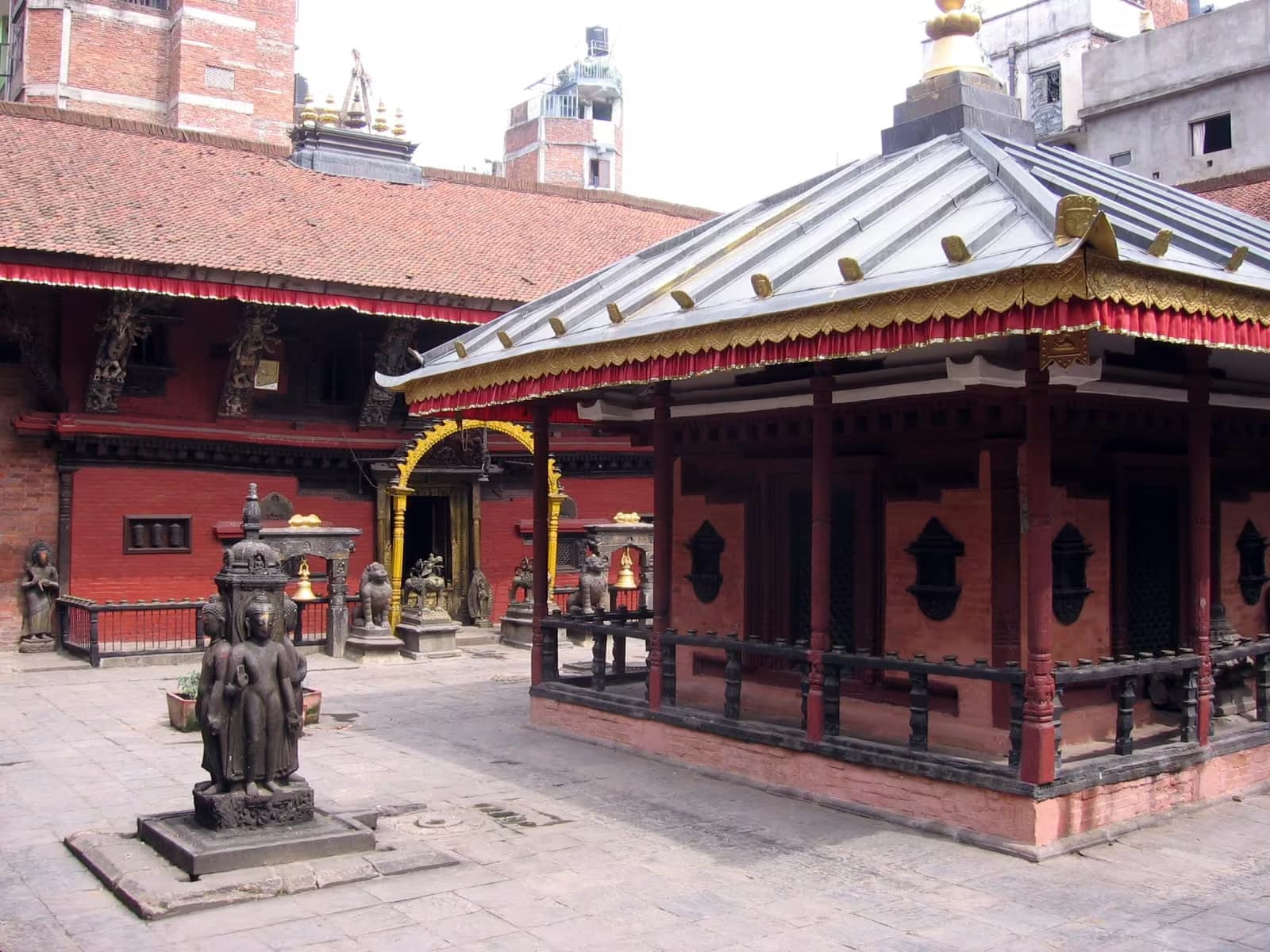
Itum Bahal (Keshchandra Mahavihar)
- Sacred Site
Kumari Ghar
 Sacred Site
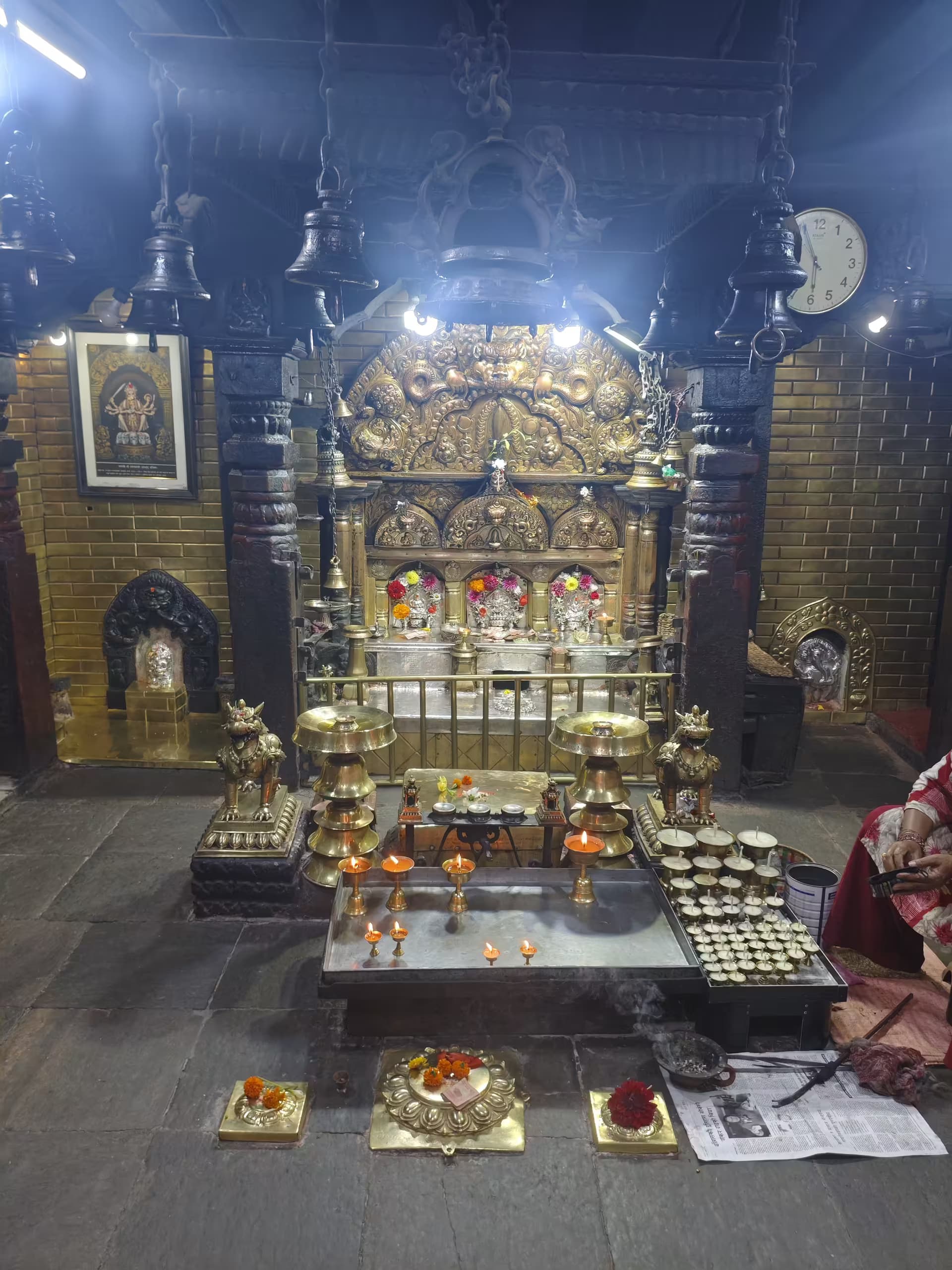
Naradevi Temple
 Sacred Site
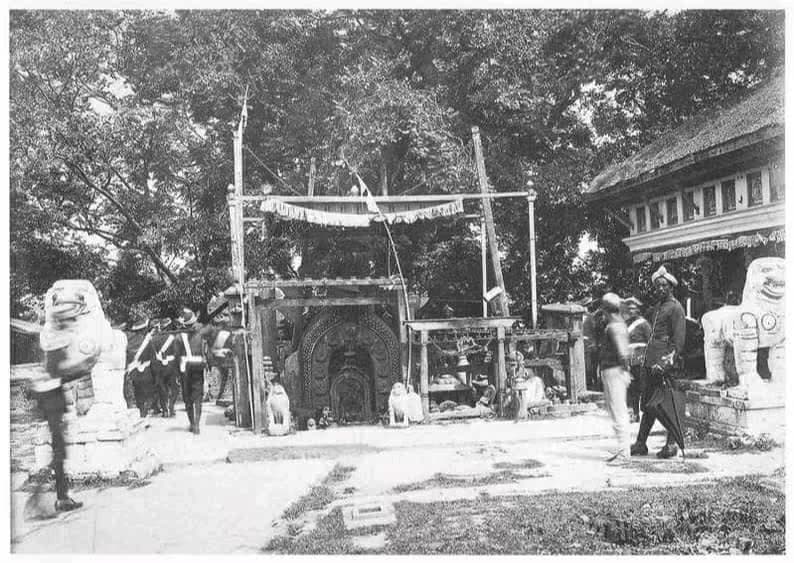
Bhadrakali Temple
- Sacred Site
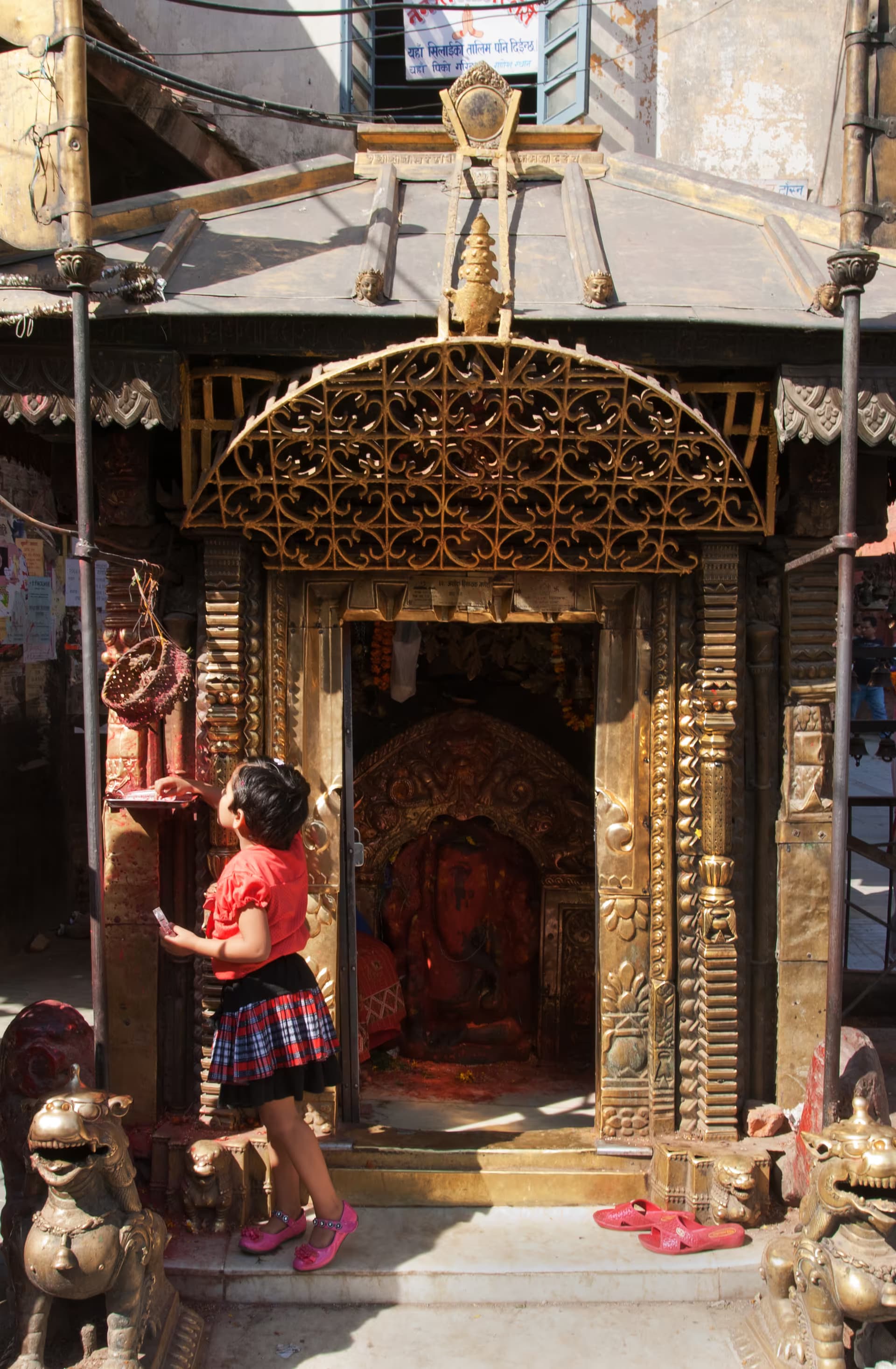
Swet Bhairav
 Sacred Site
Ashok Binayak
 Destination
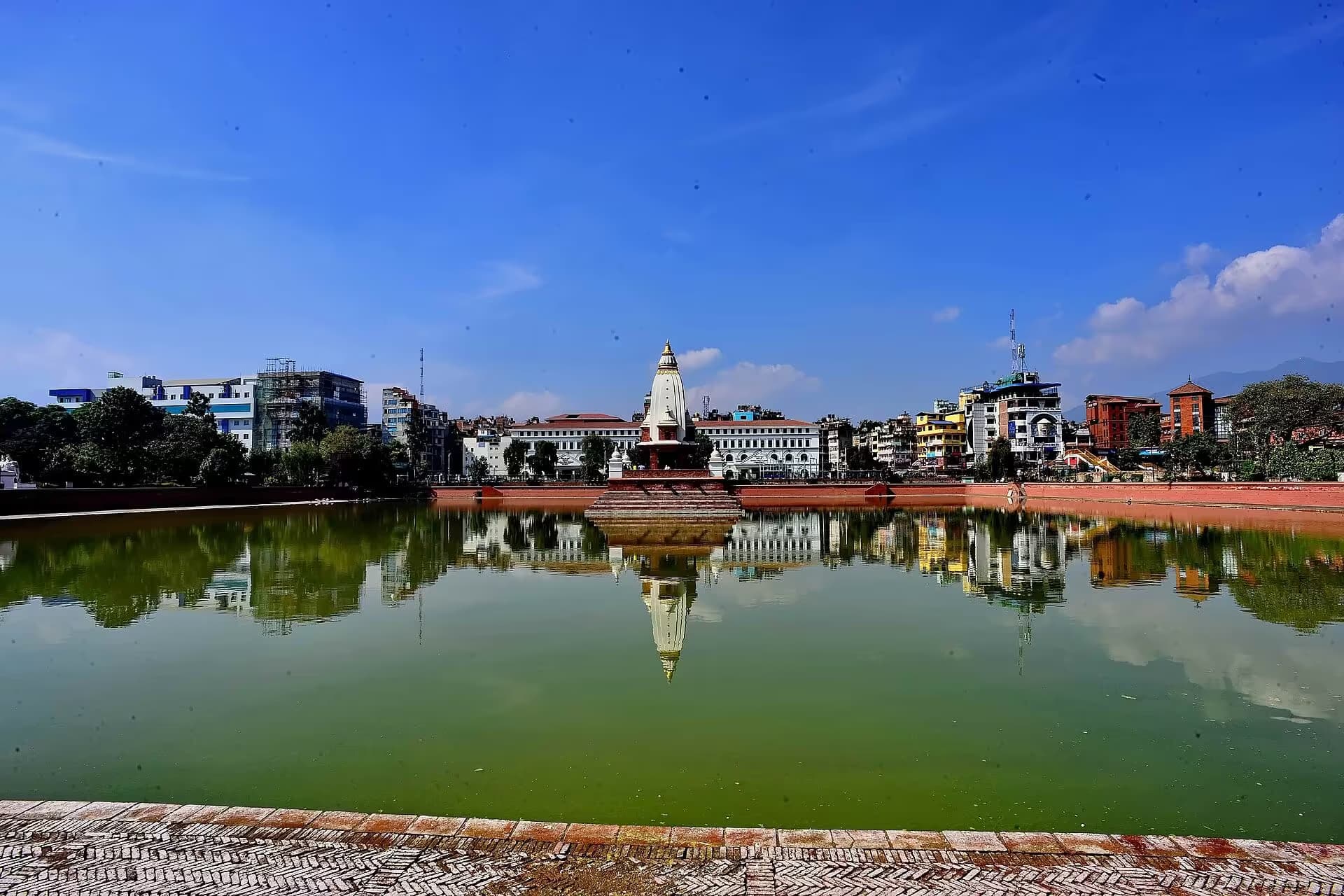
Rani Pokhari
- Sacred Site
Taleju Temple
 Sacred Site
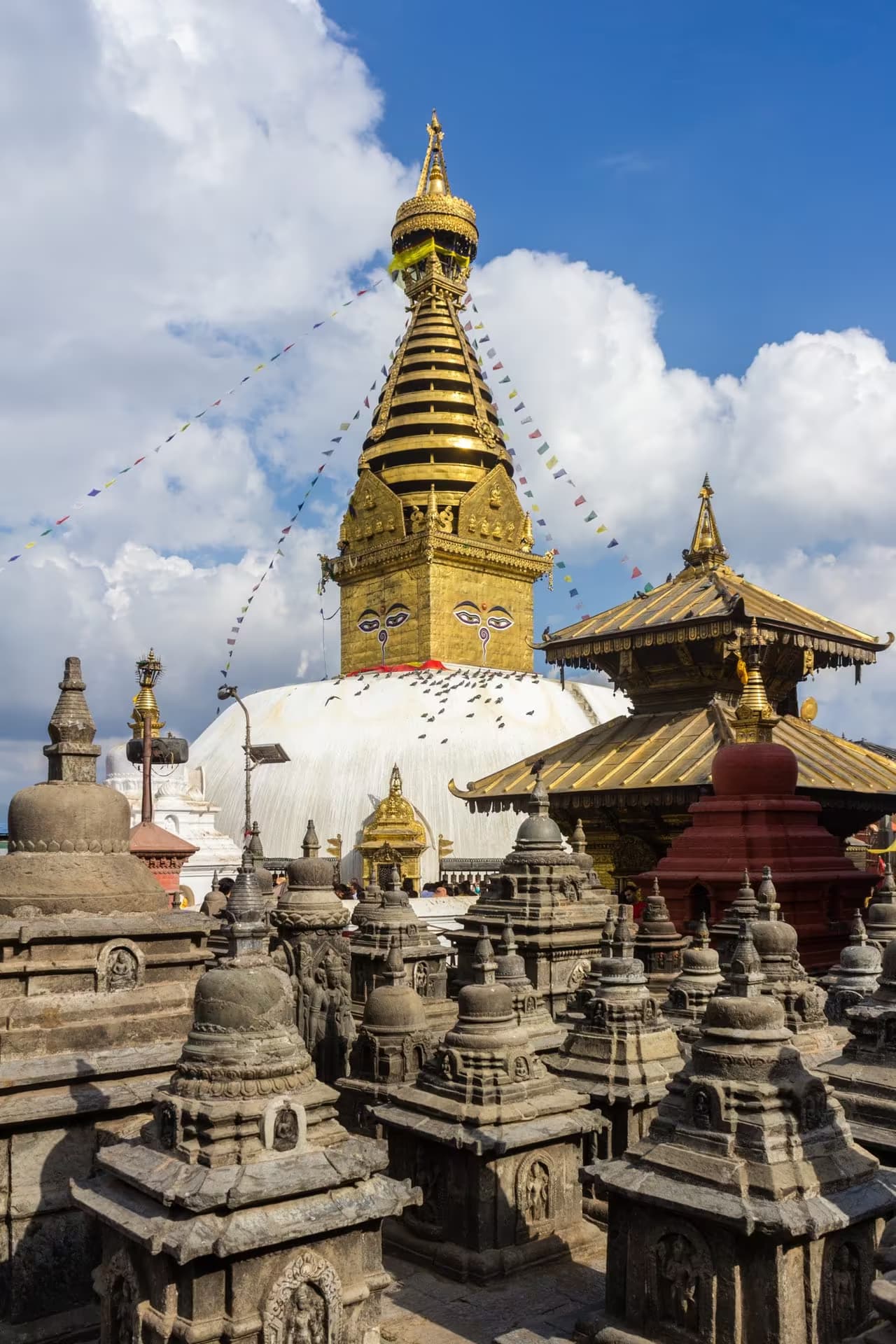
Swayambhunath
 Sacred Site
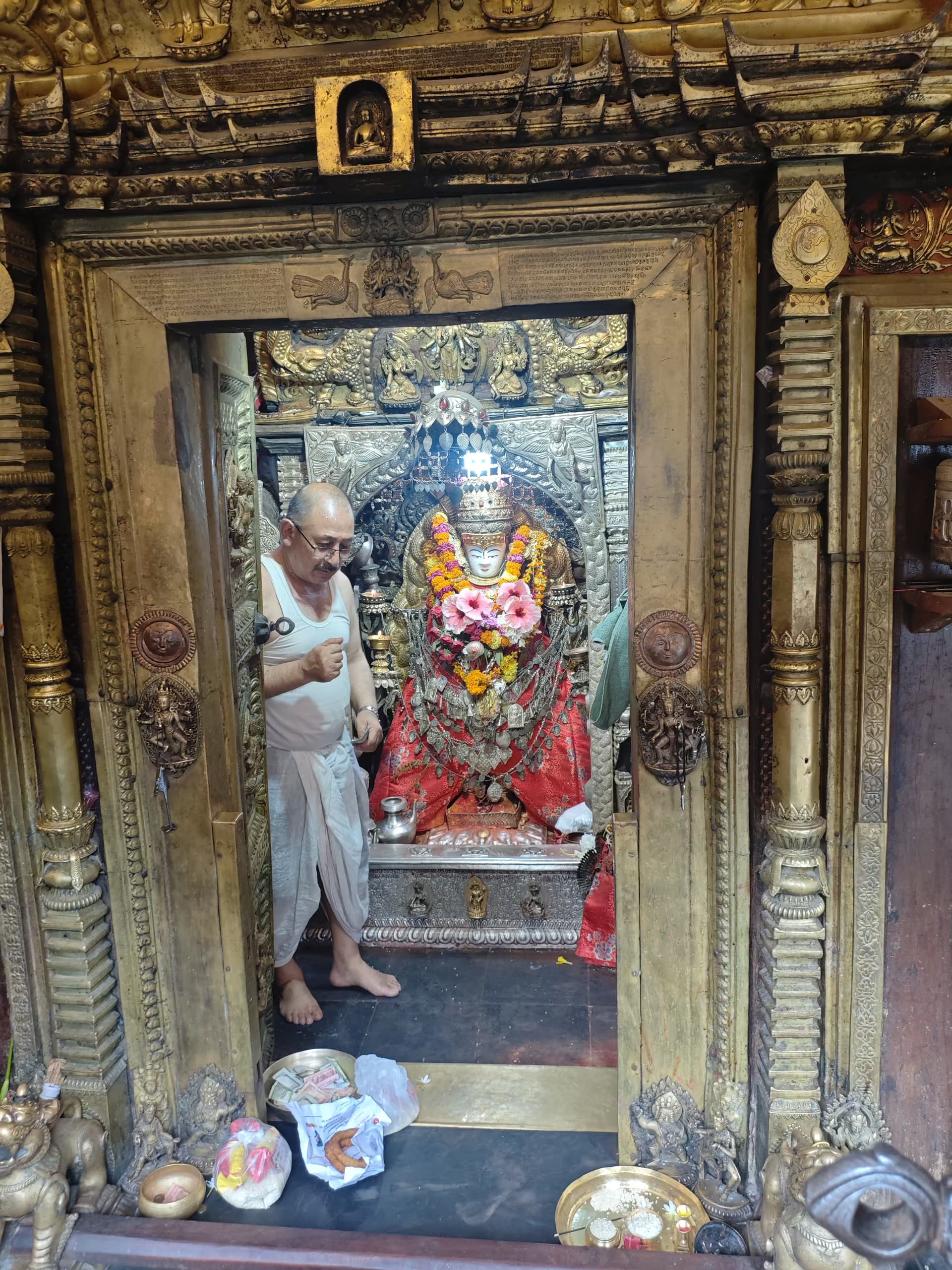
Jana Bahal (Seto Machhindranath Temple)
- Sacred Site
Singha Sattal
- Sacred Site
Kasthamandap
- Sacred Site
Hanuman Statue (Hanuman Dhoka)
- Sacred Site
Shiva-Parvati Temple
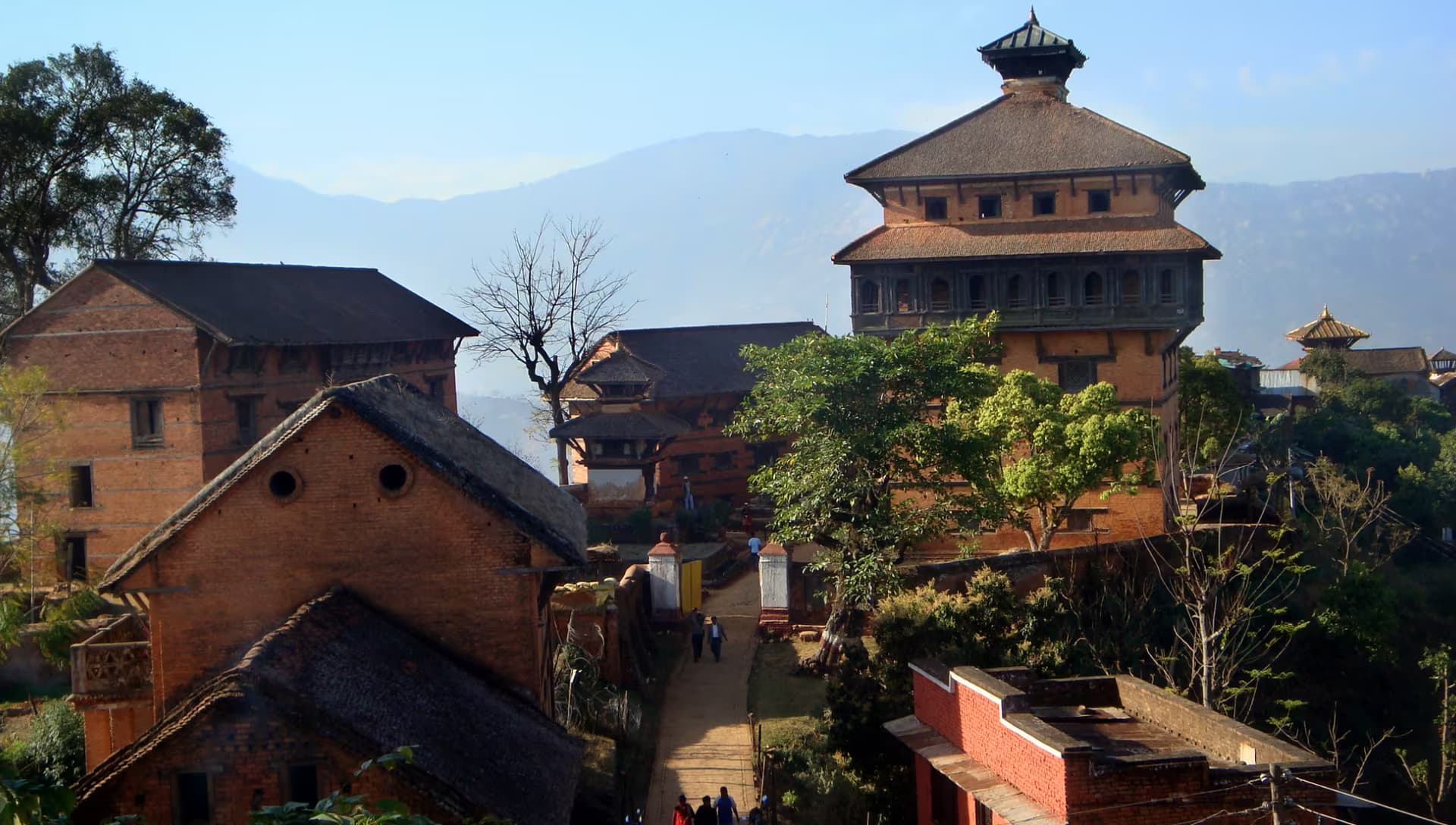 Destination
Nuwakot Durbar
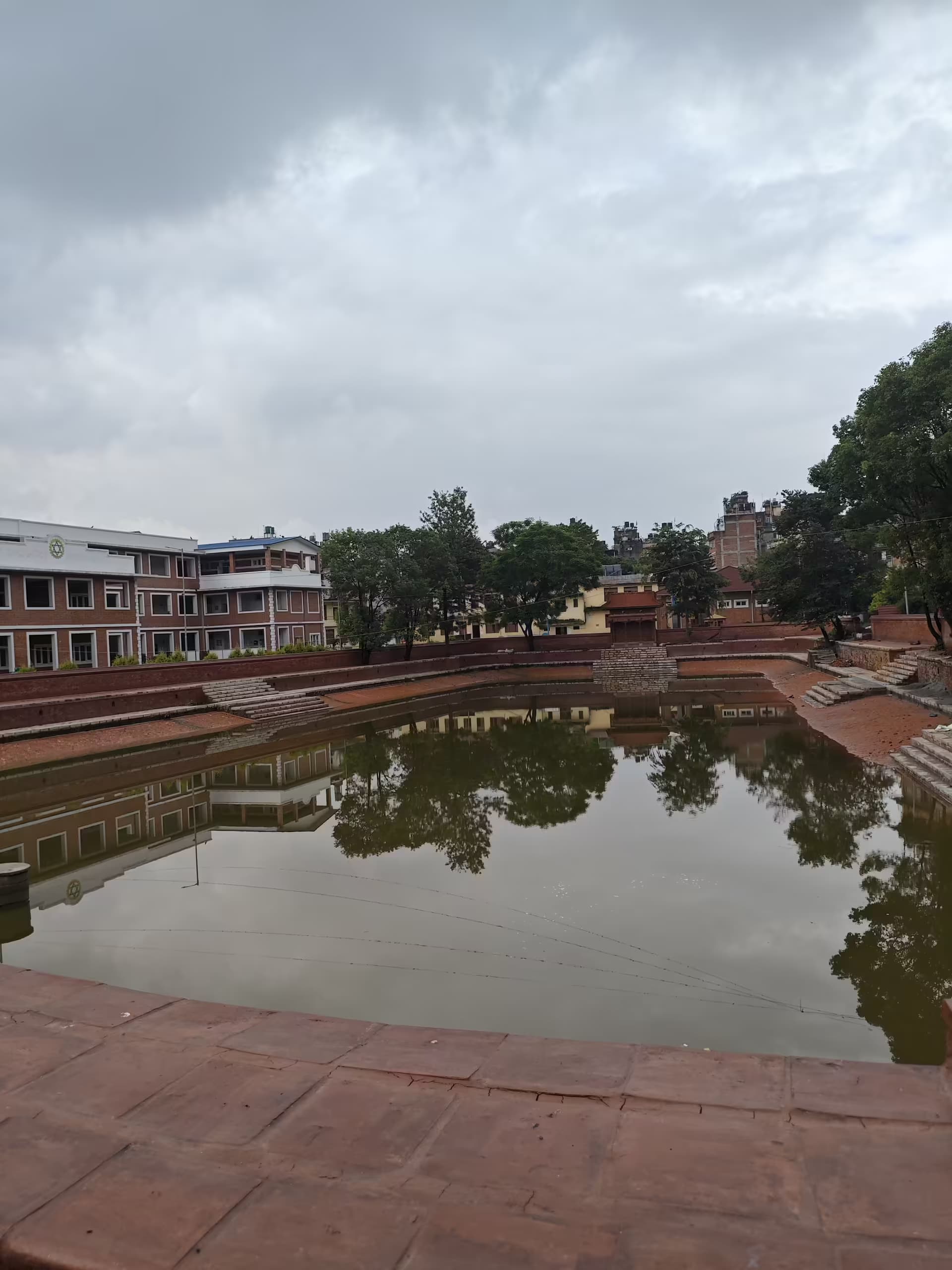 Destination
Ikha Pukhu
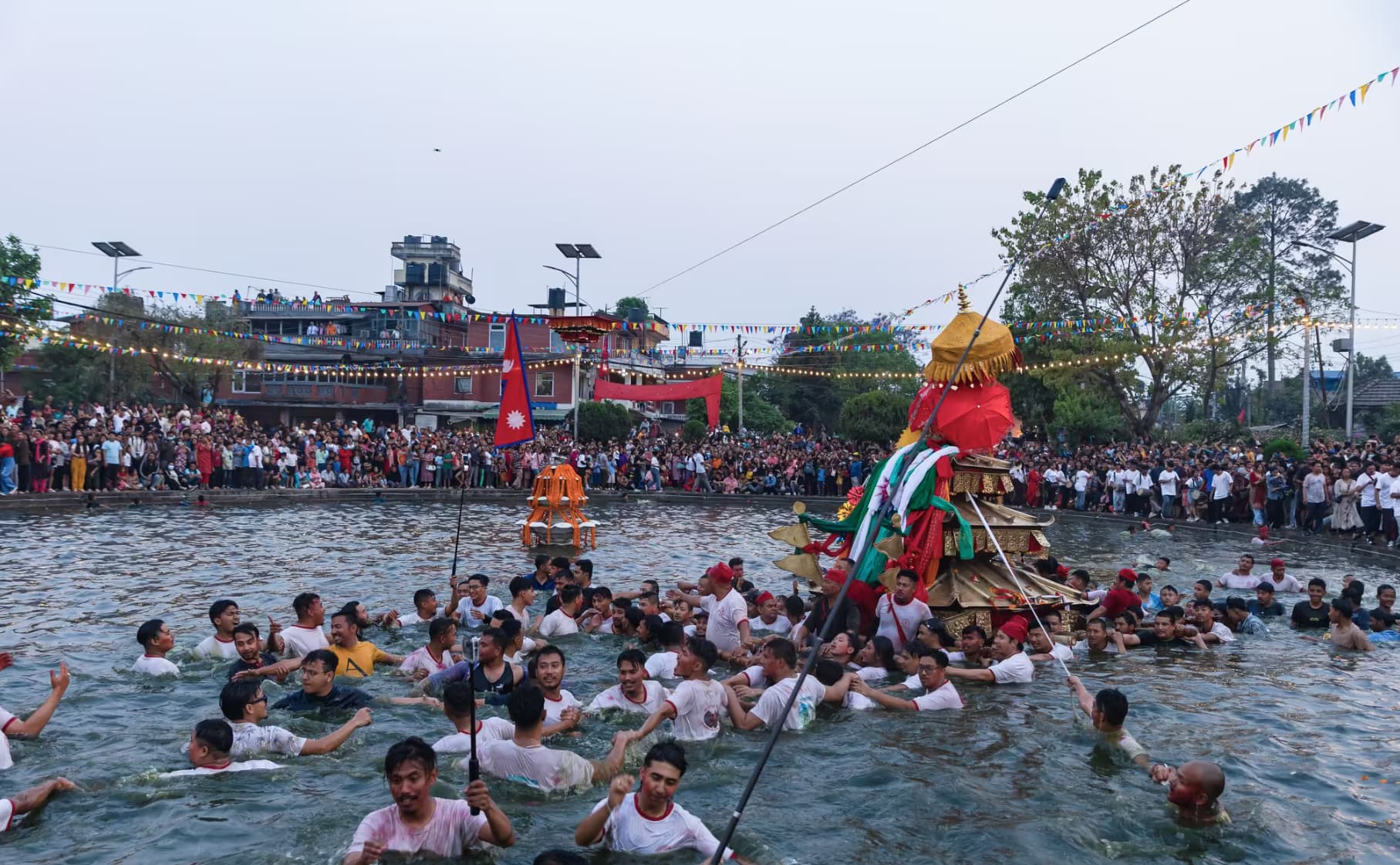 Destination
Gahana Pokhari
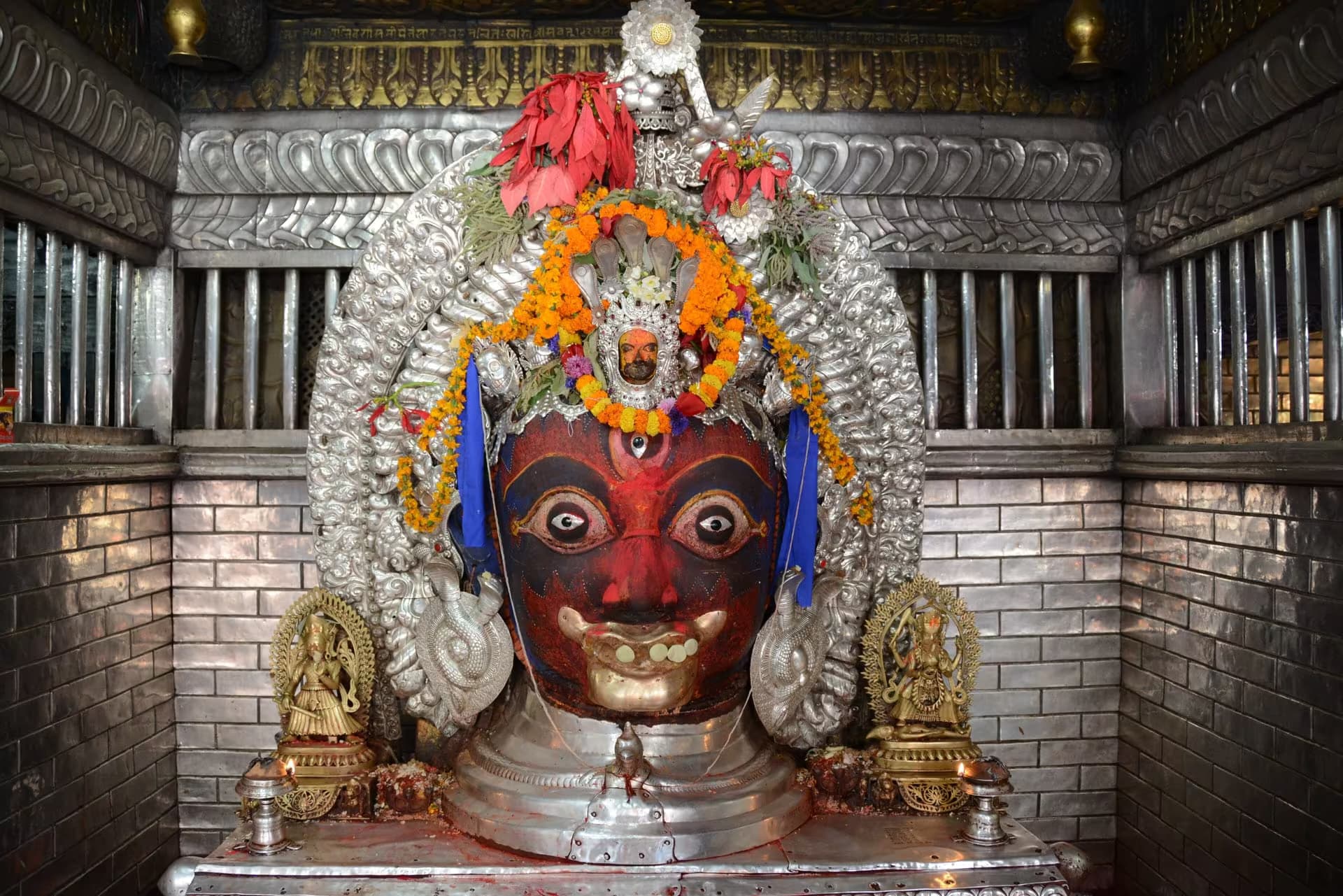 Sacred Site
Akash Bhairav Temple
- Sacred Site
Kal Bhairav
 Destination
Nag Pokhari (Naxal)
 Guide
GuideTihar 2026: Dates, All Five Days, and Laxmi Puja Night
 Guide
GuideKathmandu Valley Heritage Walk: Temples, Stupas & Living Culture
 Guide
GuideIndra Jatra 2026: Kathmandu Dates, Events, and Visitor Guide
- festival_element
The Chir Pole
 Guide
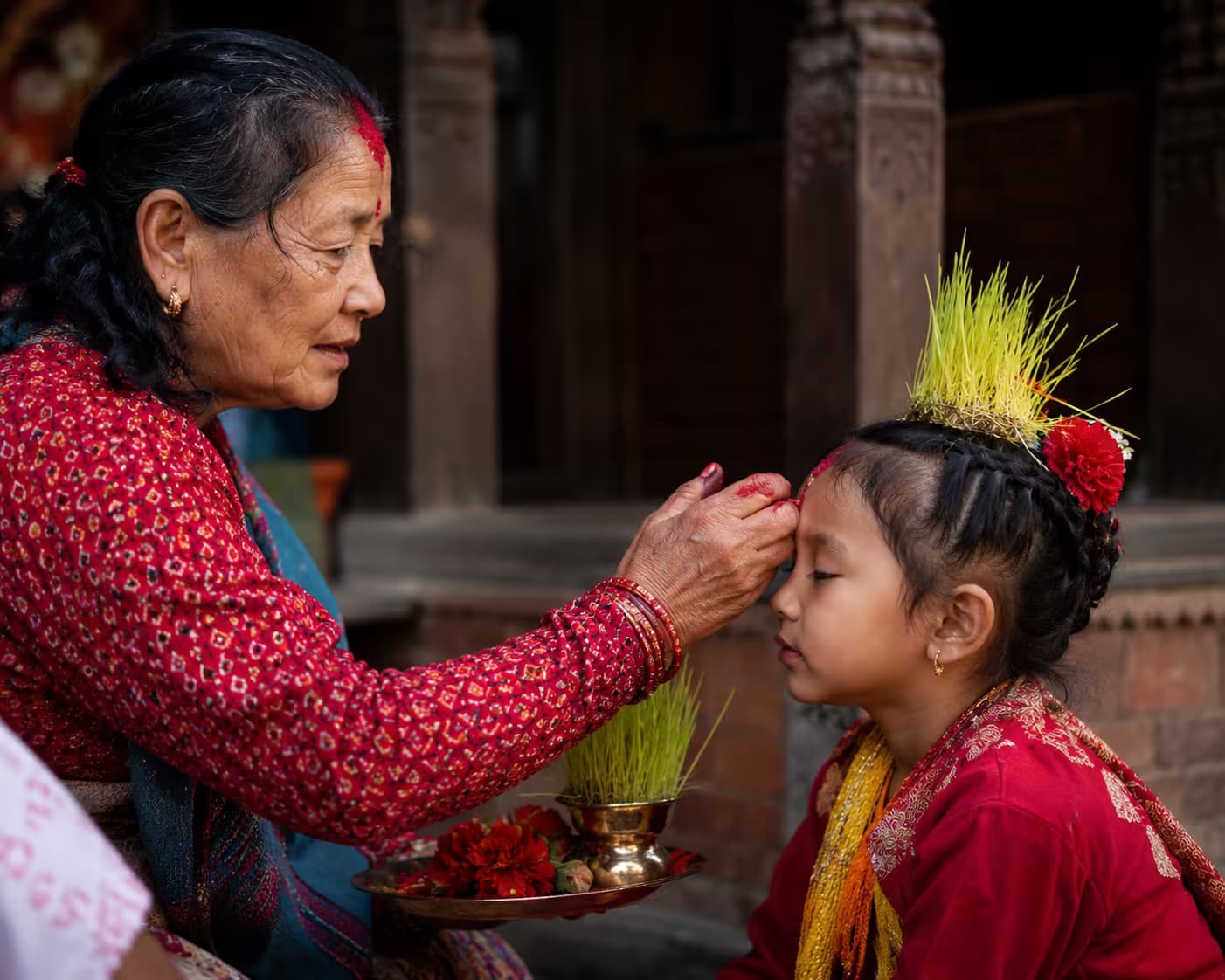
GuideDashain 2026: Dates, the Full 15-Day Schedule, and Tika Day
- festival_element
The Three-Day Chariot Route
- festival_element
Playing Colour at Basantapur
 festival_element
The Procession Through Old Kathmandu
Help us get it right
Know Kathmandu Durbar Square better than we do?
We write from research and reporting, and the ground changes faster than we can keep up. If something here is out of date, or you have been and would tell it differently, we would rather hear it.