Temple · Syncretic
Kumari Ghar
कुमारी घर
Royal Kumari (living incarnation of Taleju Bhawani / Vajradevi)·Built 1757 AD by King Jaya Prakash Malla·Kathmandu
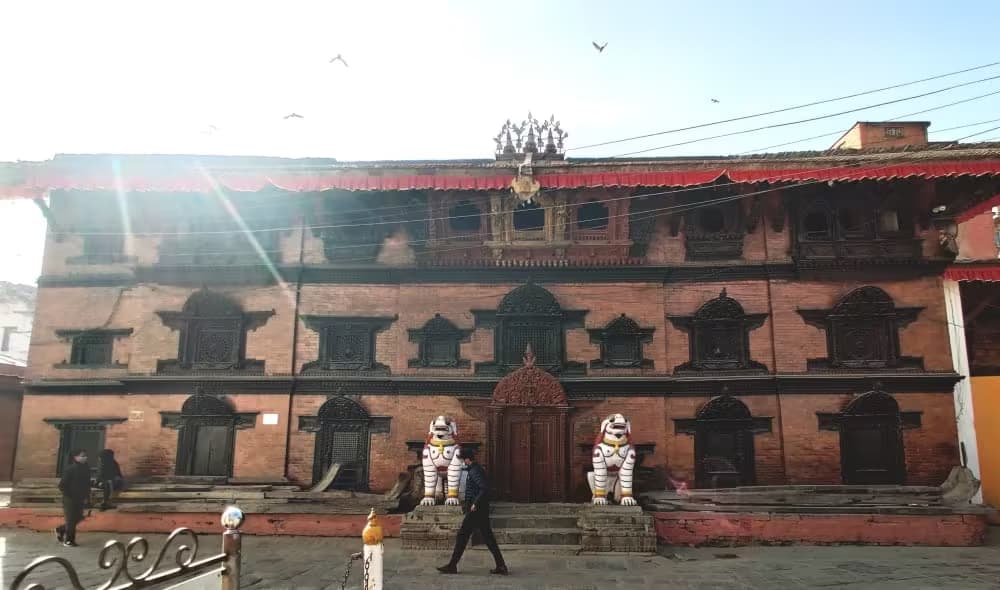
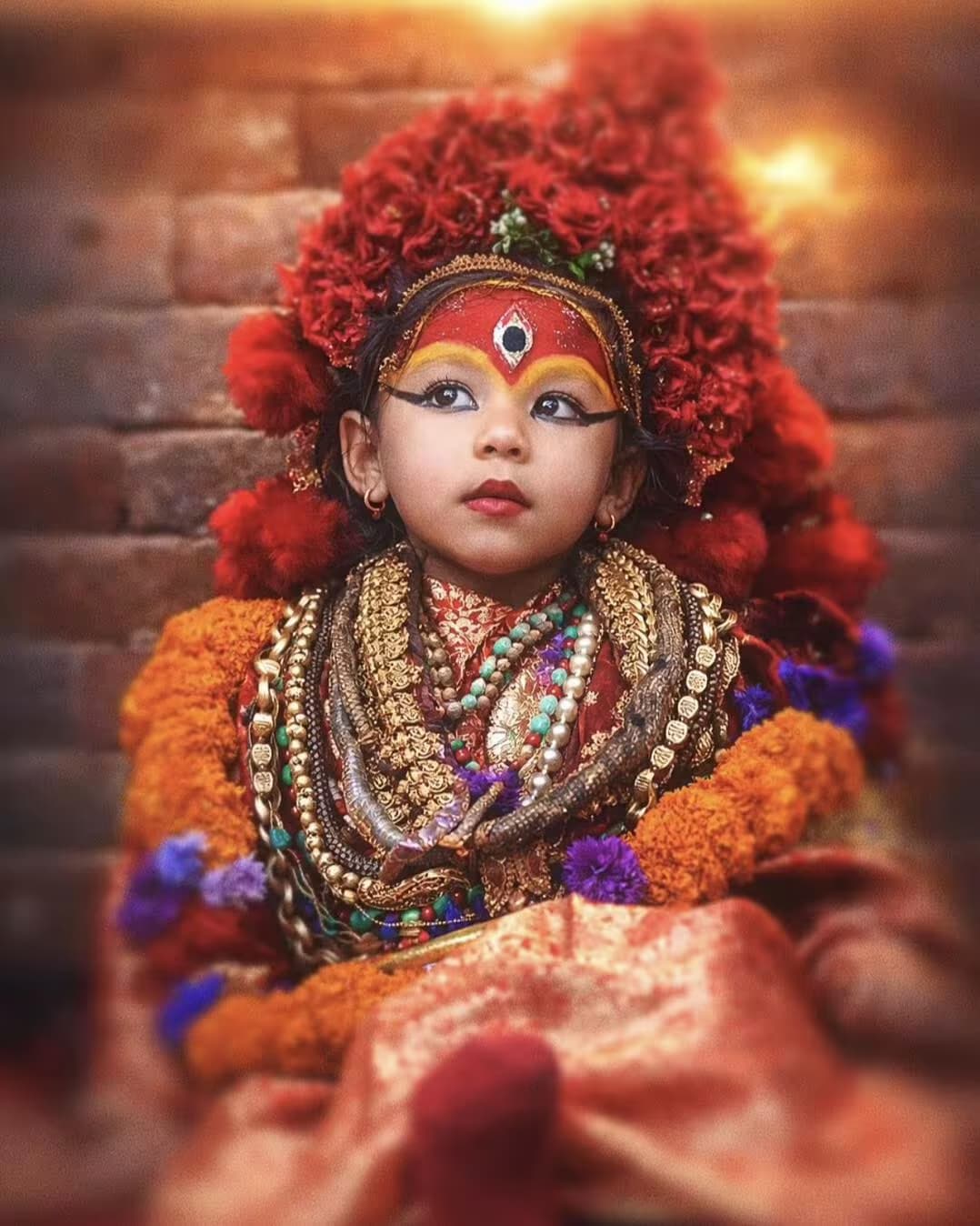
The ornate 18th-century residence of Kathmandu's Royal Kumari — a living prepubescent girl worshipped as the incarnation of goddess Taleju.
Dedicated to
Royal Kumari (living incarnation of Taleju Bhawani / Vajradevi)
Period
Built 1757 AD by King Jaya Prakash Malla
Hours
Courtyard open during daytime hours (approx. 9 AM – 5 PM)
Admission
Free
Neighborhood
Kathmandu Durbar Square
Kumari Ghar is the official residence of the Royal Kumari — the living goddess of Kathmandu — and one of the most extraordinary buildings in Durbar Square. Built in 1757 by King Jaya Prakash Malla, the three-storey building is a masterpiece of Newari carved-wood architecture.
The courtyard interior features exquisitely carved wooden balconies, windows, and pillars depicting deities, peacocks, and serpents. While visitors can enter the courtyard, photography inside is strictly prohibited. If you are fortunate, the young Kumari may briefly appear at her carved window on the first floor — a fleeting, sacred moment.
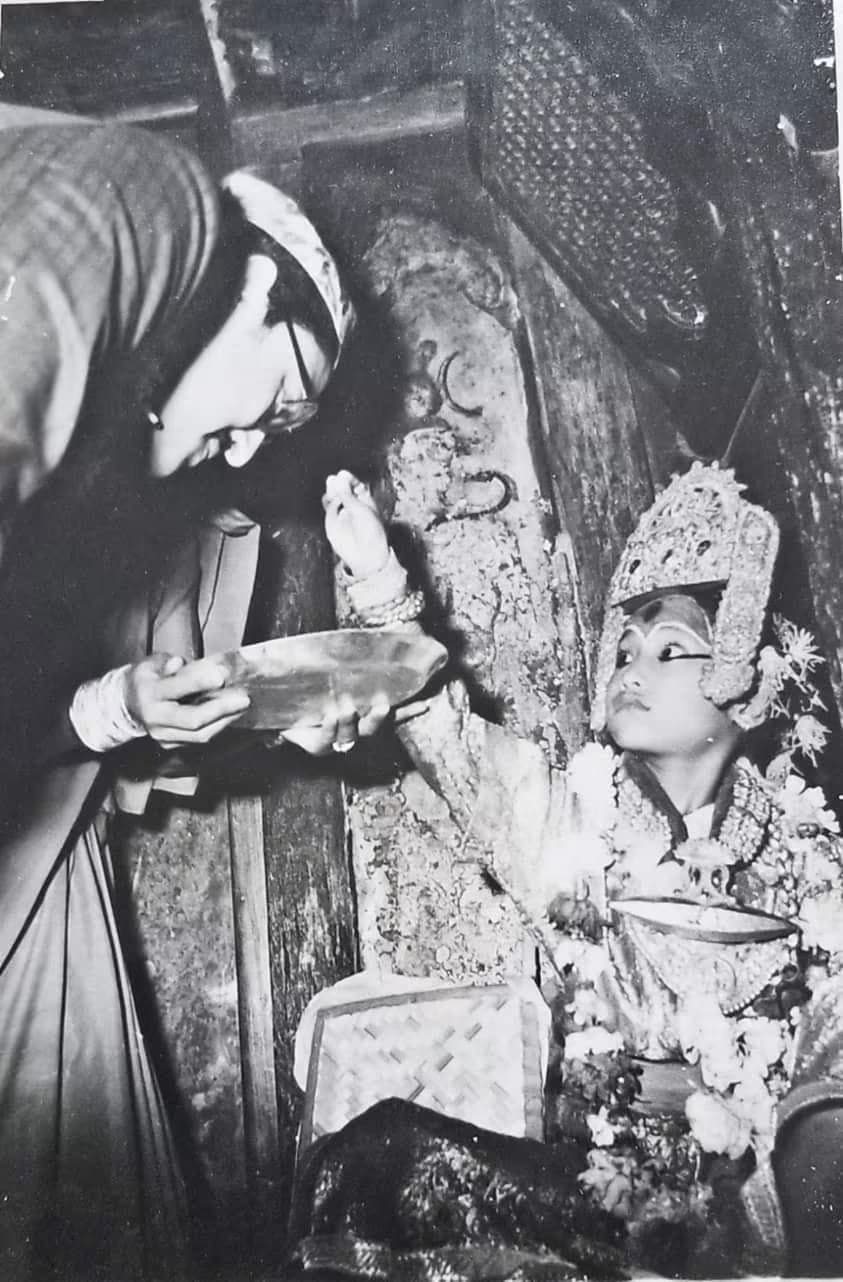
The Kumari tradition selects a prepubescent girl from the Newar Shakya caste through an elaborate process involving horoscope matching and tests of fearlessness. She serves as Kumari until she reaches puberty, after which a new girl is selected. The Kumari is worshipped as the living incarnation of Taleju Bhawani (Hindu) and Vajradevi (Buddhist), making this a rare syncretic institution.
During Indra Jatra, the Kumari is carried through the streets of old Kathmandu in a towering chariot, the highpoint of the city's festival calendar. The Kumari Ghar facade, with its golden window frame on the first floor, is one of the most photographed exteriors in Nepal.
Folio III
Nearby Sacred Sites
Places within a short walk that help turn this stop into a small sacred cluster.
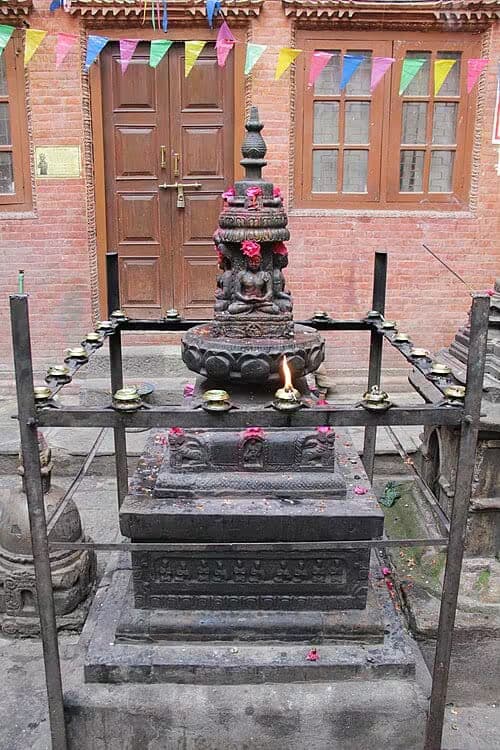
Sikhamu Bahal (Shreekhanda Tarumula Mahavihar)
The only bahal in Kathmandu's Durbar Square quarter, associated with the legendary teacher Lila Bajra Bajracharya — one of four masters who shaped Valley Buddhism.
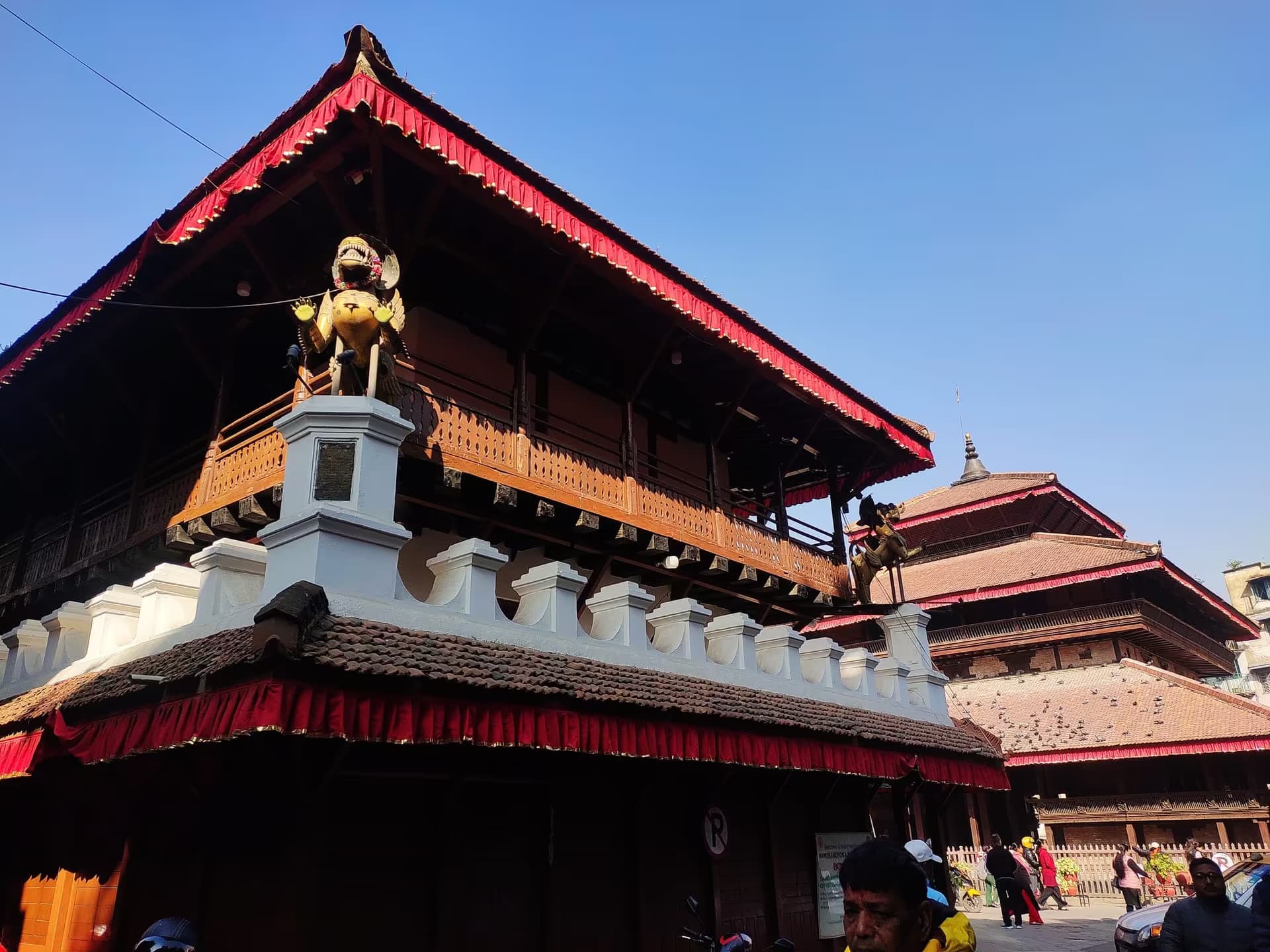
Singha Sattal
A beautifully carved Newari rest house near Kasthamandap, guarded by stone lions — one of the finest surviving sattal (pilgrim shelters) in the Kathmandu Valley.
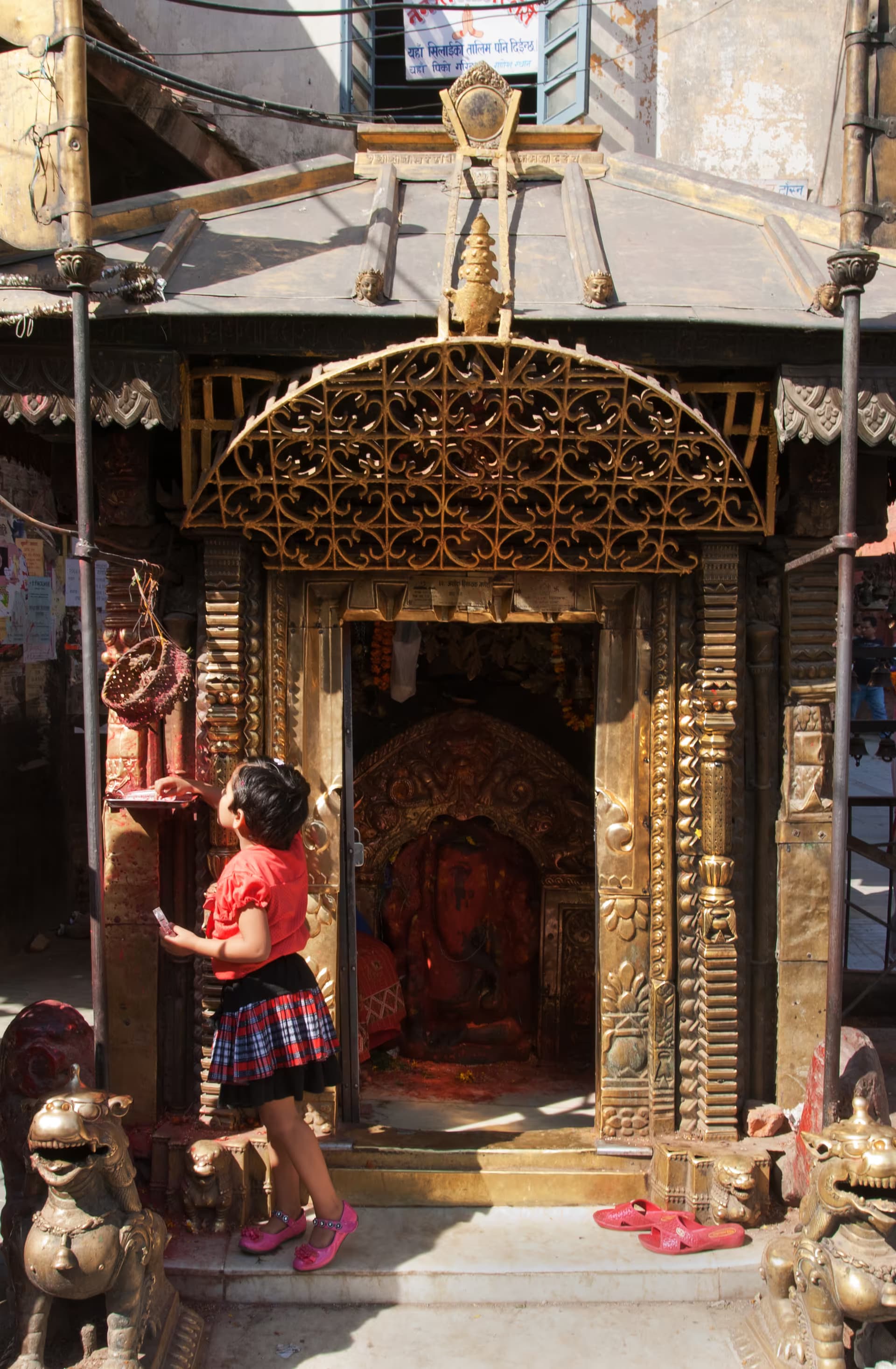
Ashok Binayak
Maru Ganesh shrine near Kathmandu Durbar Square, one of the city's most visited Ganesh temples but not part of the Char Binayak circuit.
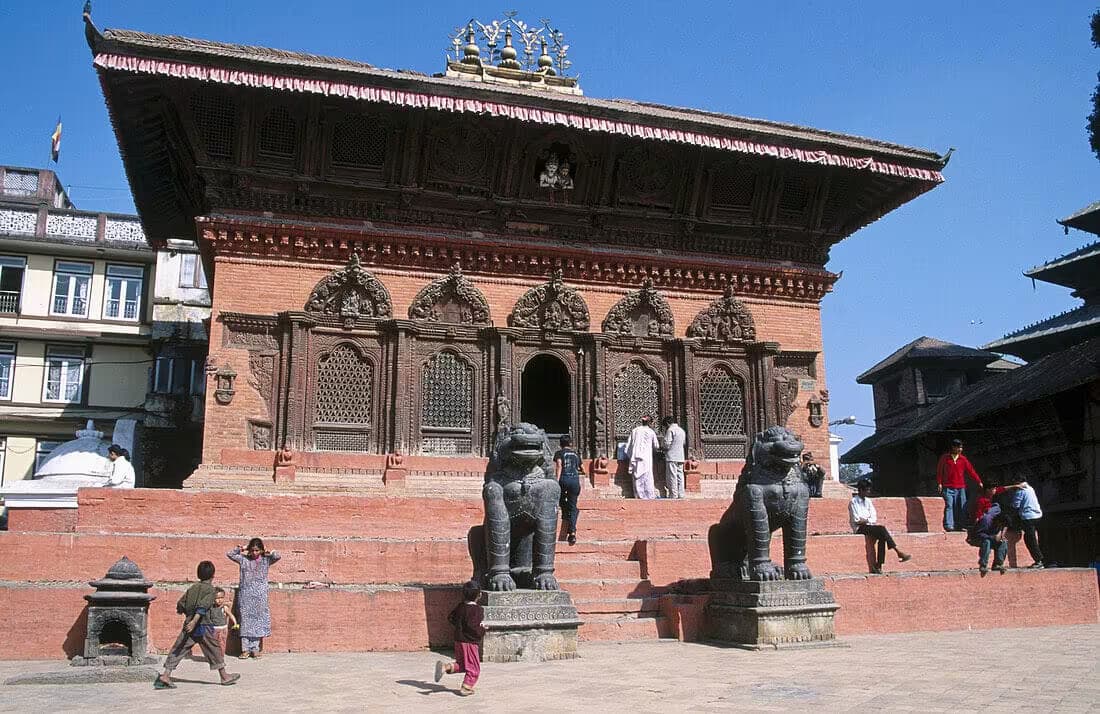
Shiva-Parvati Temple
An 18th-century temple famous for the carved wooden figures of Shiva and Parvati leaning out from the upper window, gazing at the life of Durbar Square below.
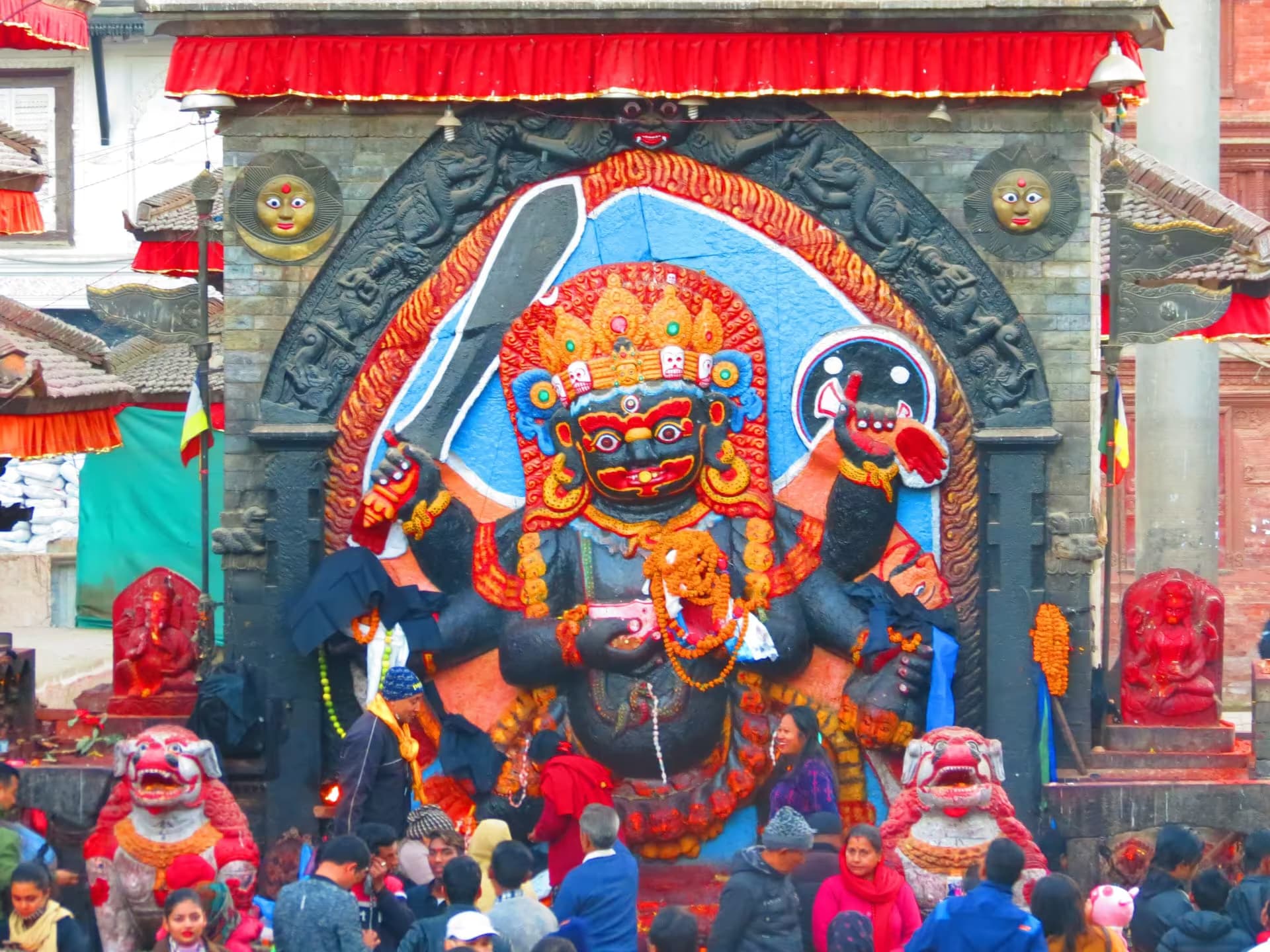
Kal Bhairav
A massive 12th-century stone relief of the fearsome Bhairav — Shiva's terrifying aspect — standing six feet tall in the open court of Kathmandu Durbar Square.
Coda
Continue the Pilgrimage
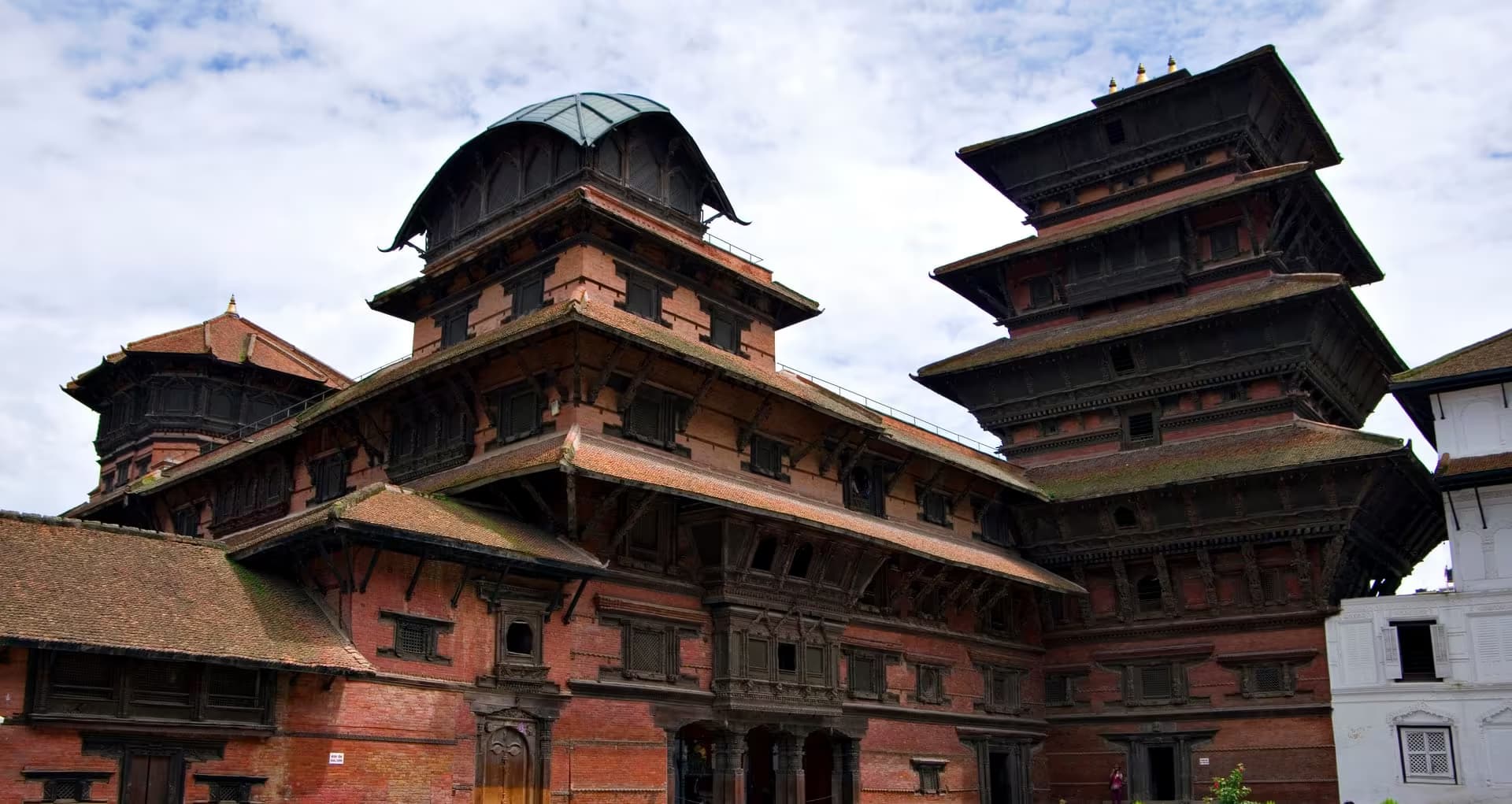
Part of
Kathmandu Durbar Square
Guides that feature this place
Planning this visit? Local operators publishing trips here can arrange it.
Elsewhere in this region
Help us get it right
Know Kumari Ghar better than we do?
We write from research and reporting, and the ground changes faster than we can keep up. If something here is out of date, or you have been and would tell it differently, we would rather hear it.