Who Is Kumari
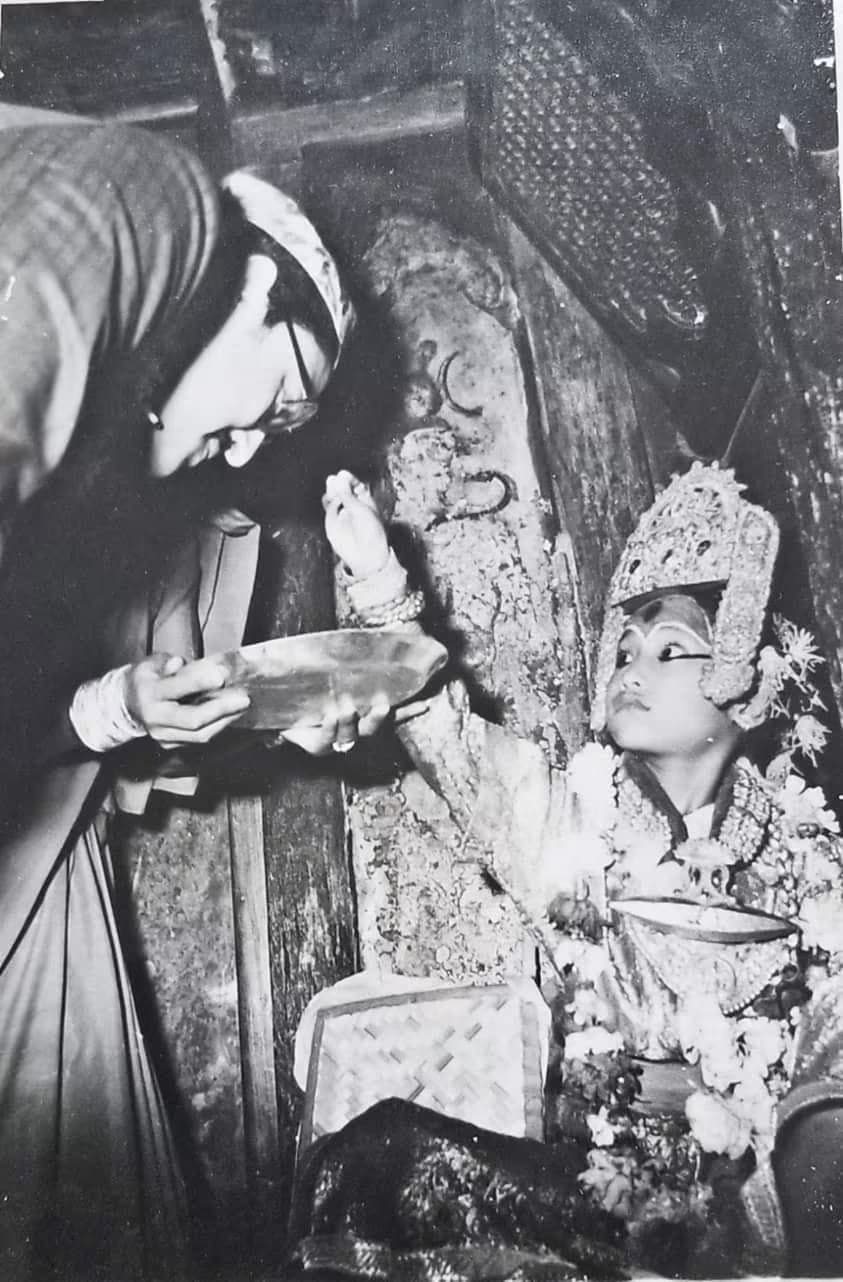
Kumari is not a goddess in the sense of an omnipresent divine being. She is a specific girl — selected from the Shakya goldsmith community of Newar Buddhists — who is identified, through a series of ritual tests and astrological examination, as the temporary earthly vessel of the goddess Taleju Bhawani. Taleju is the tutelary goddess of the Malla dynasty; her Kumari is the living proof that divine power still inhabits Kathmandu.
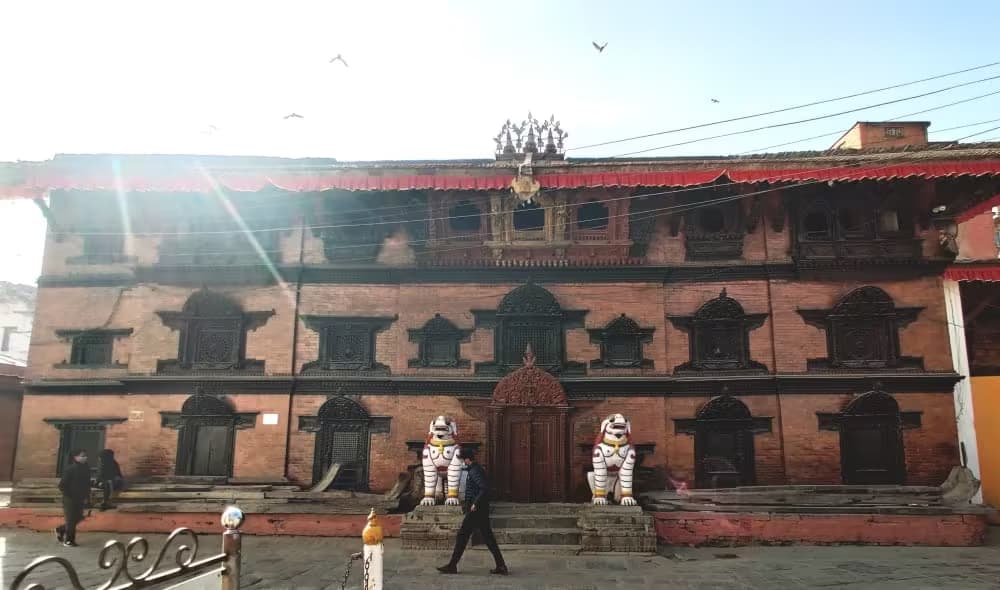
The selection process is rigorous. Candidates must be pre-pubescent, free of any physical blemish, and must pass a set of tests that include remaining calm in a dark room full of buffalo heads and demon masks — demonstrating the courage that the goddess requires. Once selected, the girl lives in Kumari Ghar (the Kumari House) in Basantapur, receiving devotees, rarely leaving, her feet not permitted to touch the ground outside the sacred compound. She remains Kumari until puberty ends her tenure; she is then honoured and returned to civilian life.
Kumari's Role in Indra Jatra
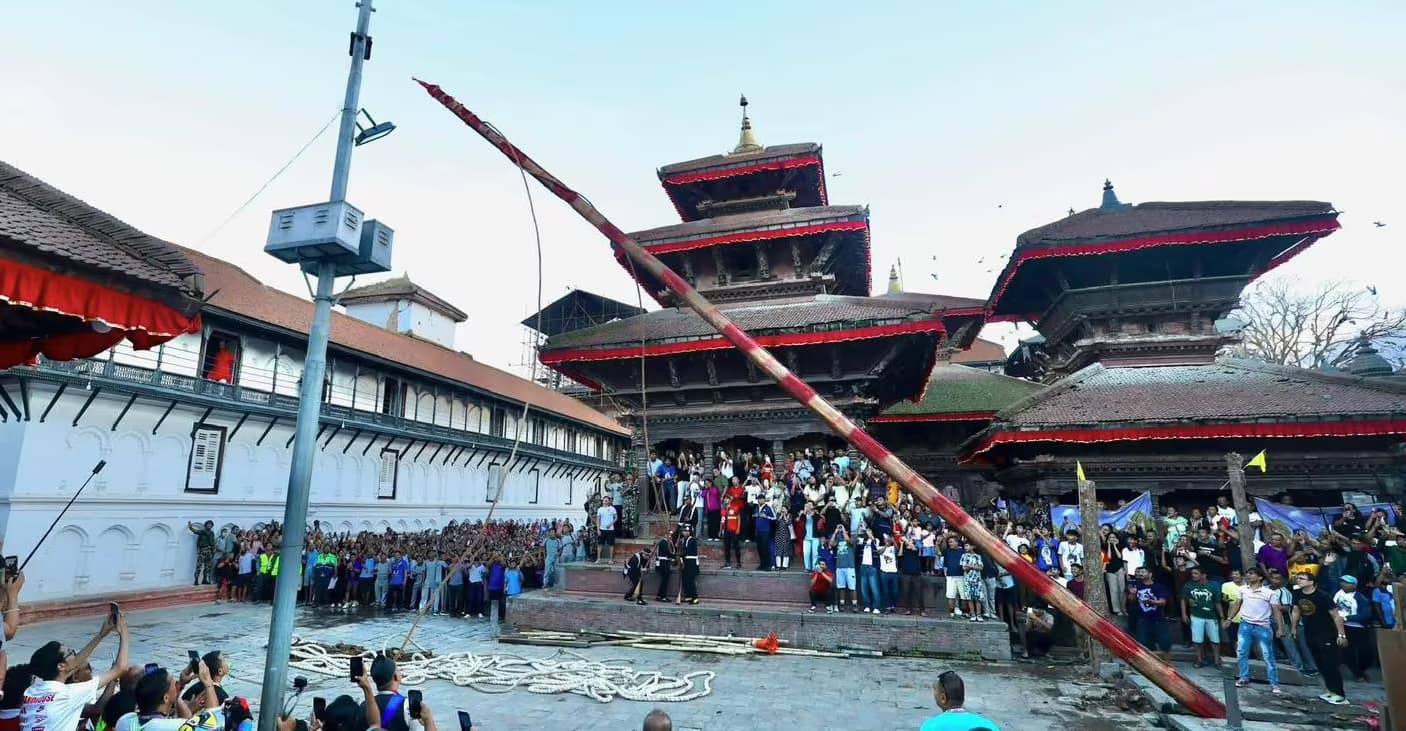
For most of the year, Kumari's public appearances are limited to her window at Kumari Ghar, where she blesses visitors. Indra Jatra is the great exception. On the festival's first day — when the Yosin pole is raised at Hanuman Dhoka — Kumari gives the traditional tika blessing to Nepal's head of state in a ceremony at Basantapur (see the Tika element for this moment's political history).
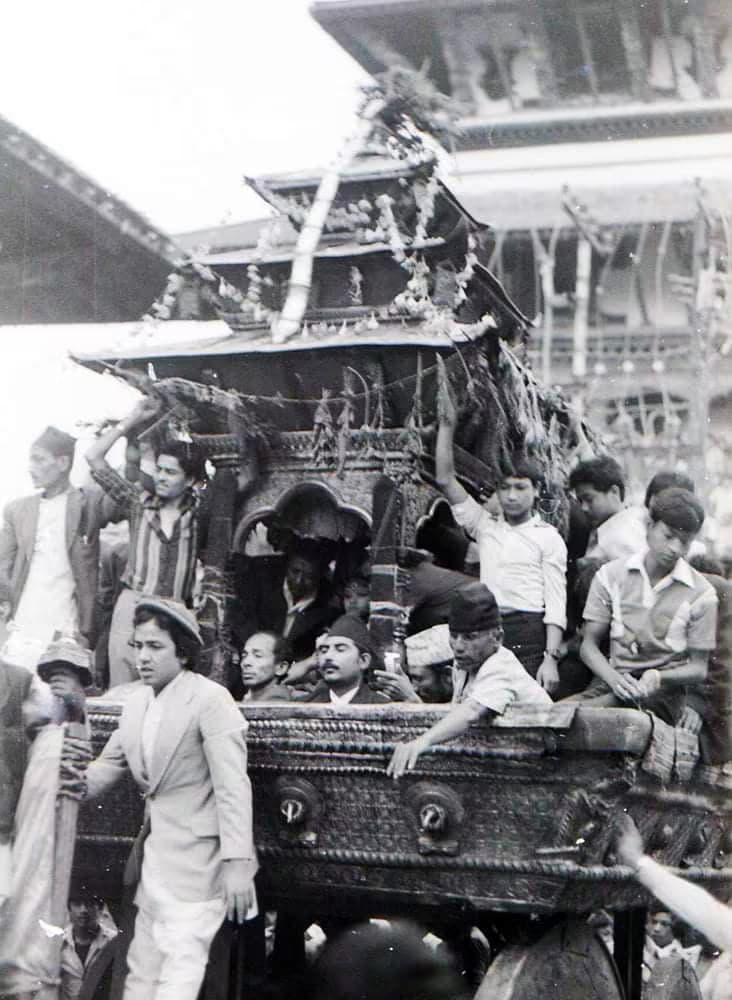
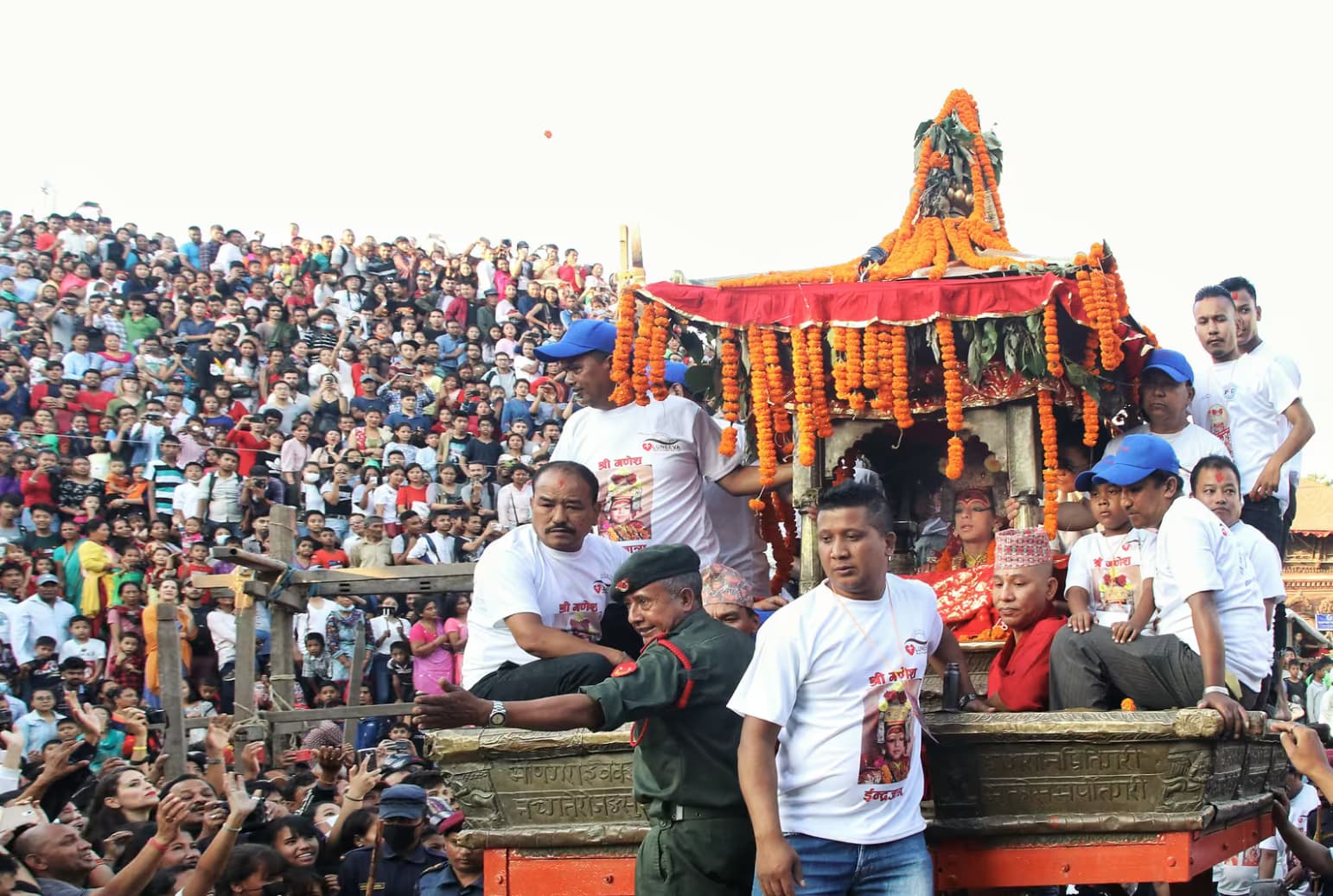
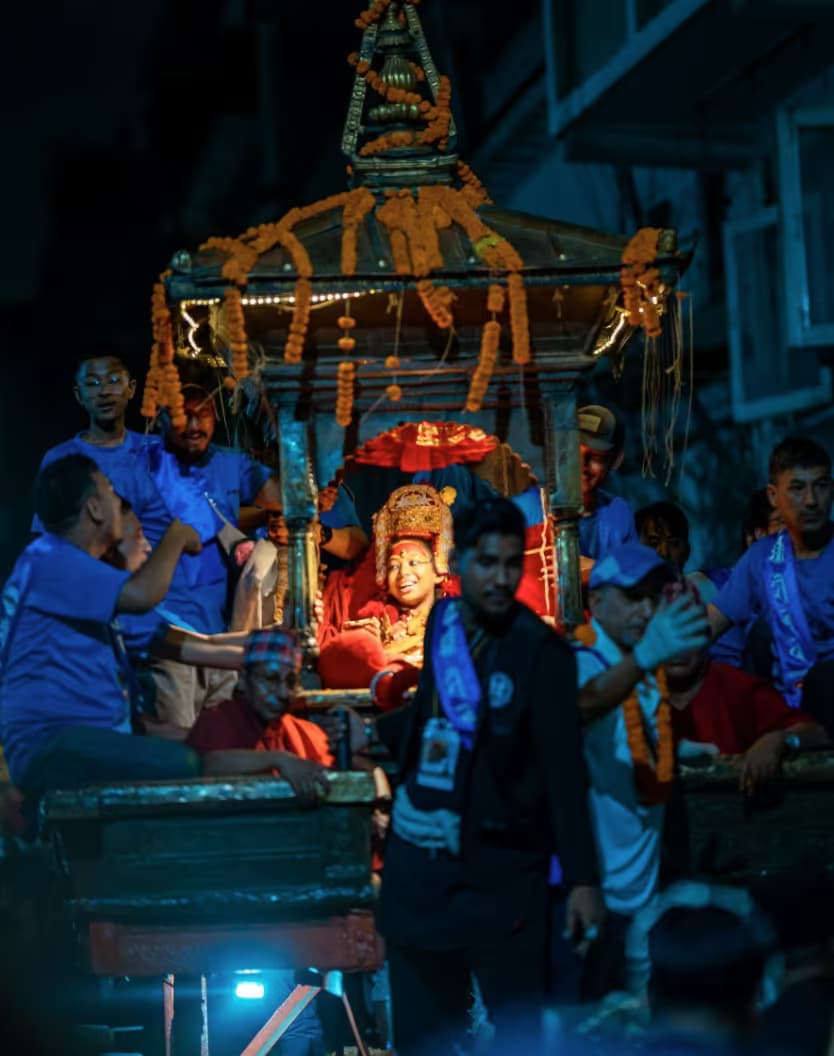
She then rides in her chariot on each of the three chariot days (Kwaneya, Thaneya, Nanicha), carried in procession through Kathmandu's old city. The chariot procession is the only time Kathmandu's inhabitants can see the Kumari outside Kumari Ghar, and the occasion draws dense crowds along every route.
Restrictions and Reverence
Kumari's feet must not touch impure ground — she is carried when she moves outside Kumari Ghar, or she rides in the chariot. Photography of her face is not encouraged, and in certain moments during the procession it is prohibited by tradition. Her gaze is considered so powerful that prolonged eye contact is inauspicious for most devotees; the tika she bestows with averted eyes or a brief glance is understood as especially potent.
After Kumari
When a Kumari's tenure ends, she returns to ordinary life. The transition is significant: a former Kumari holds a special social status in Newar society, neither quite ordinary nor still divine. The folklore that marrying a former Kumari brings misfortune is largely a modern myth; former Kumaris have married and lived full lives. What is accurate is that reintegration requires care and community support — a fact that contemporary advocates have used to push for better institutional support for retired Kumaris.
Related Places & Sites
Related
Connected places and entries worth pairing
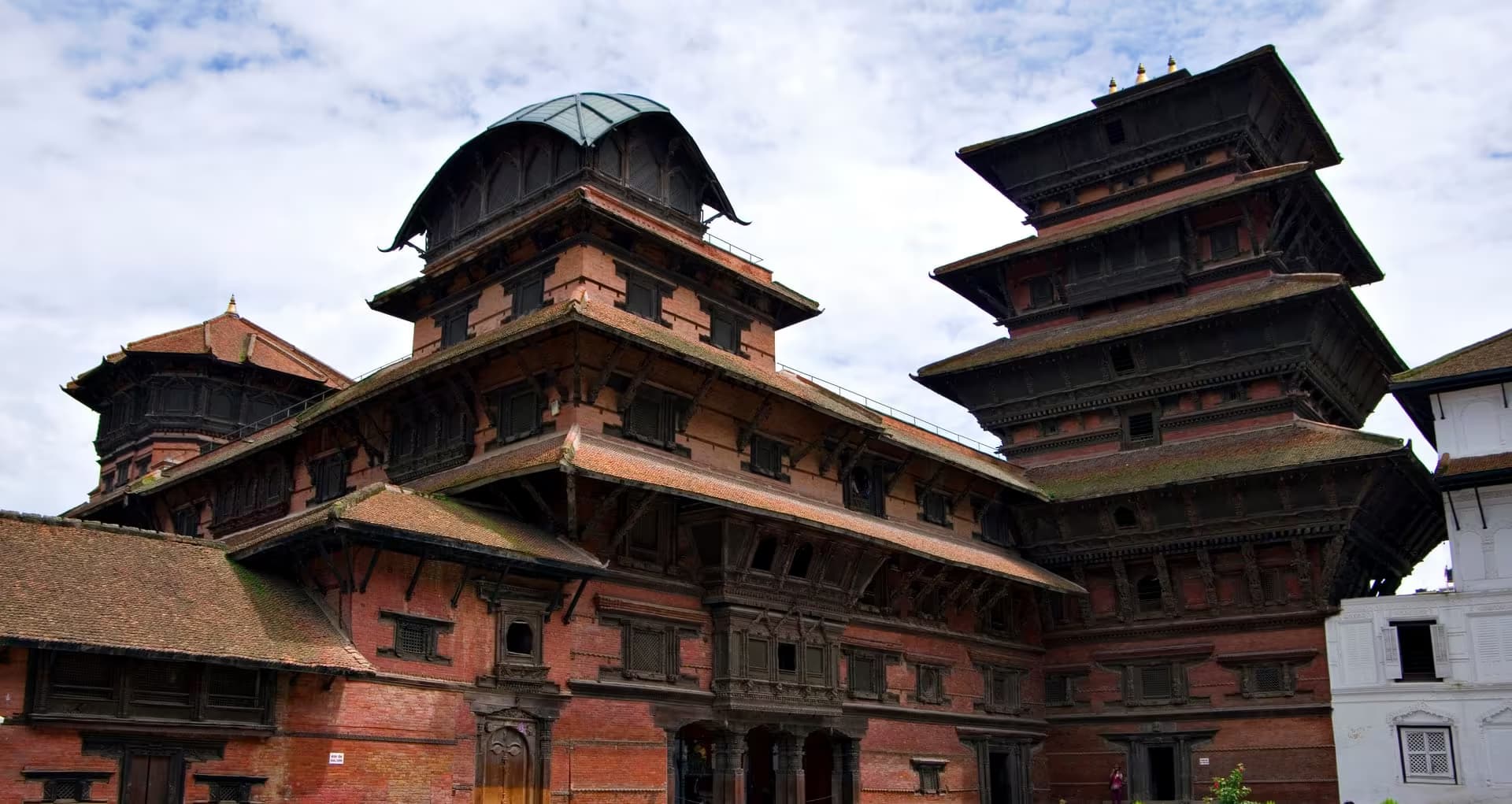
Kathmandu Durbar Square
The eight-day street festival centres on the square and the lanes around Hanuman Dhoka
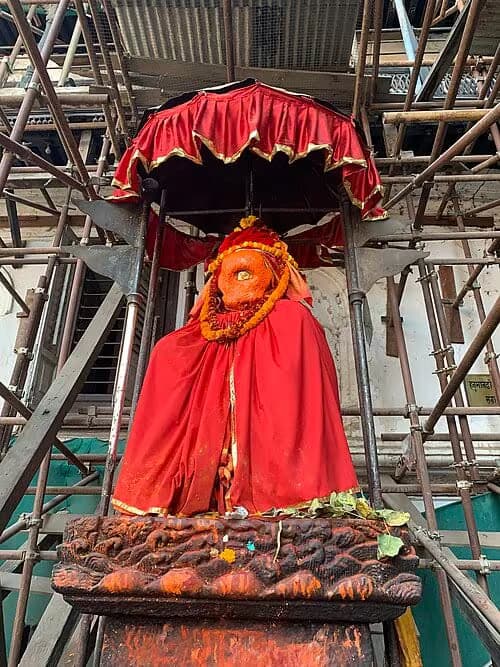
Hanuman Statue (Hanuman Dhoka)
The old royal palace entrance, where the Yosin pole rituals happen
Kumari Ghar
The Kumari's residence, a few steps from where her chariot waits
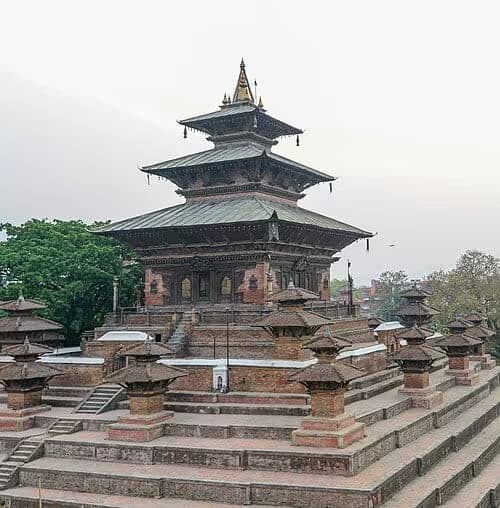
Taleju Temple
The Malla kings' tutelary goddess, whose main gate the Thaneya route passes at Makhan Tole
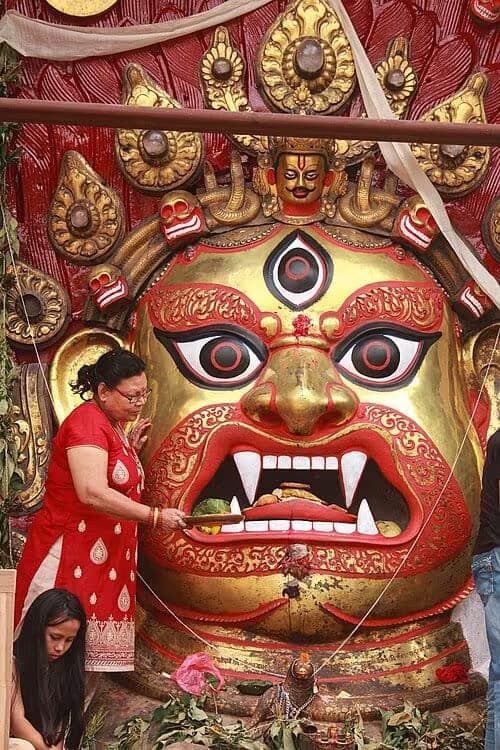
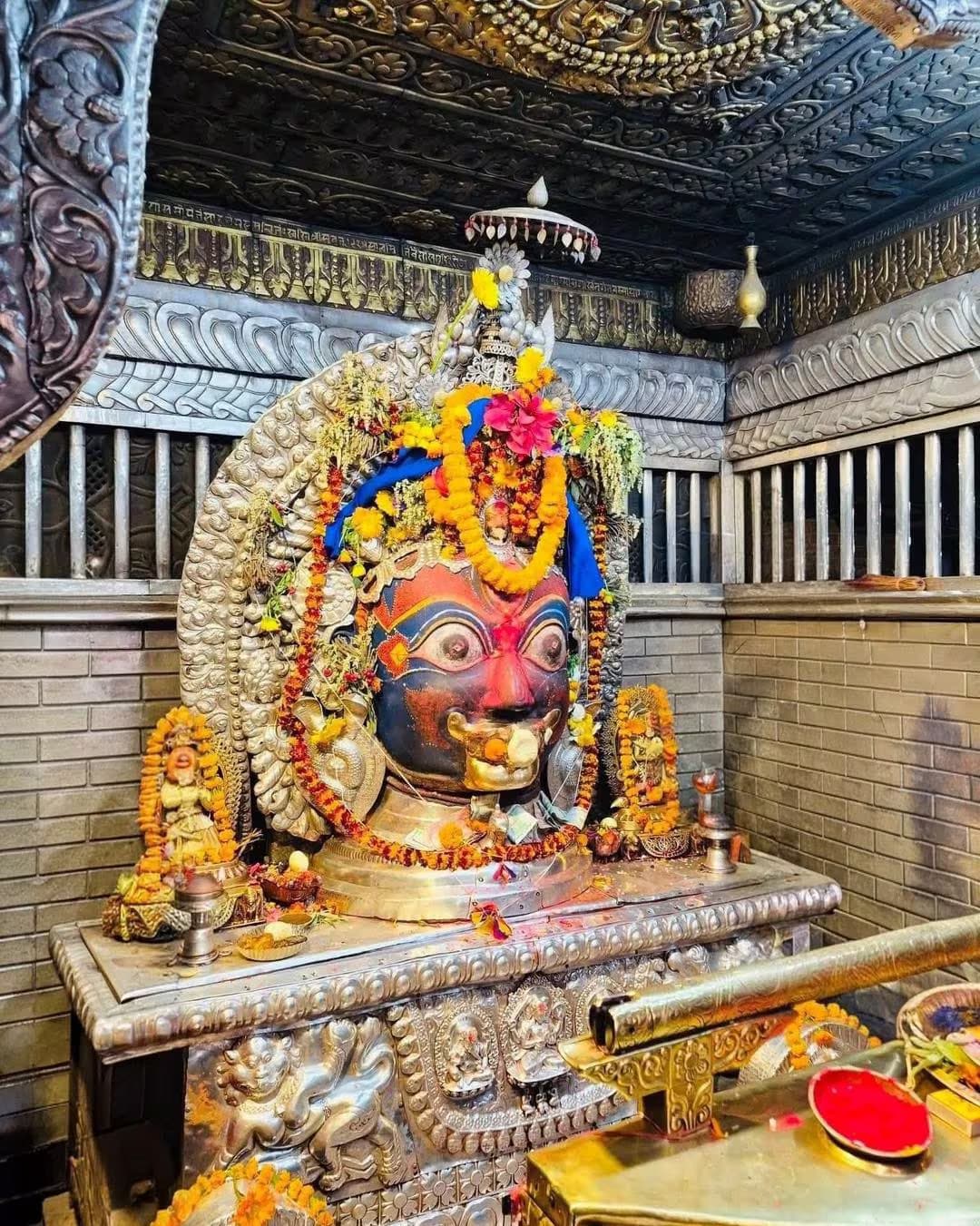
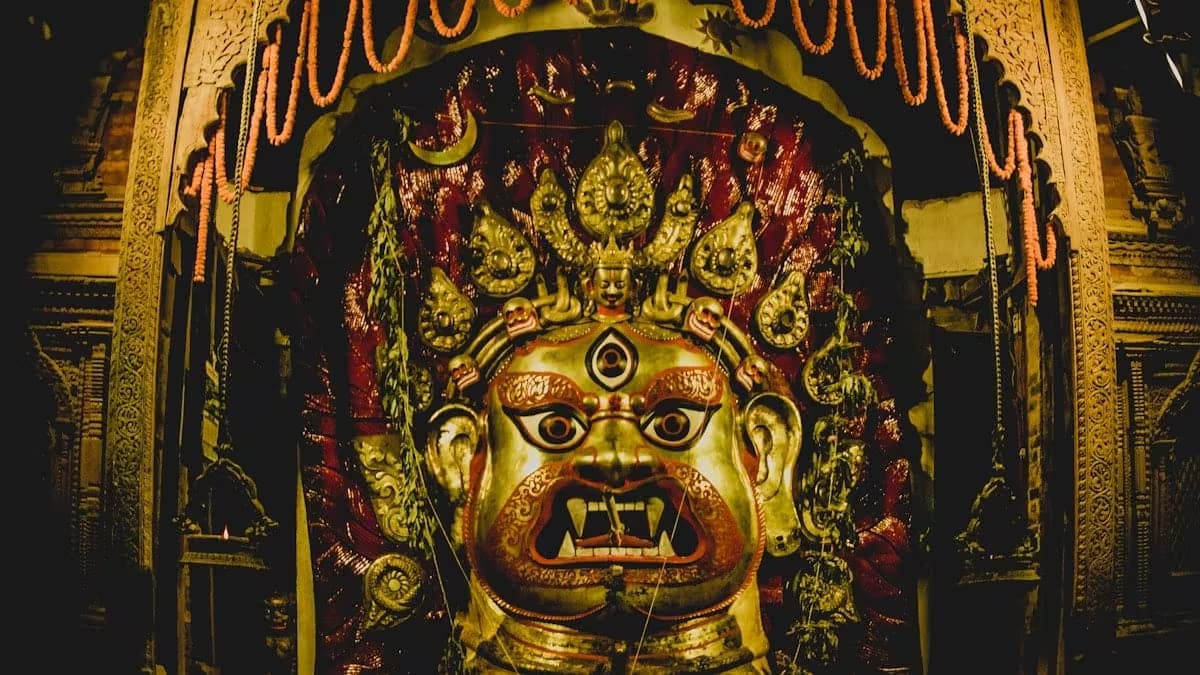
Swet Bhairav
The gilded screen at Makhan Tole, opened for only these eight days of the year
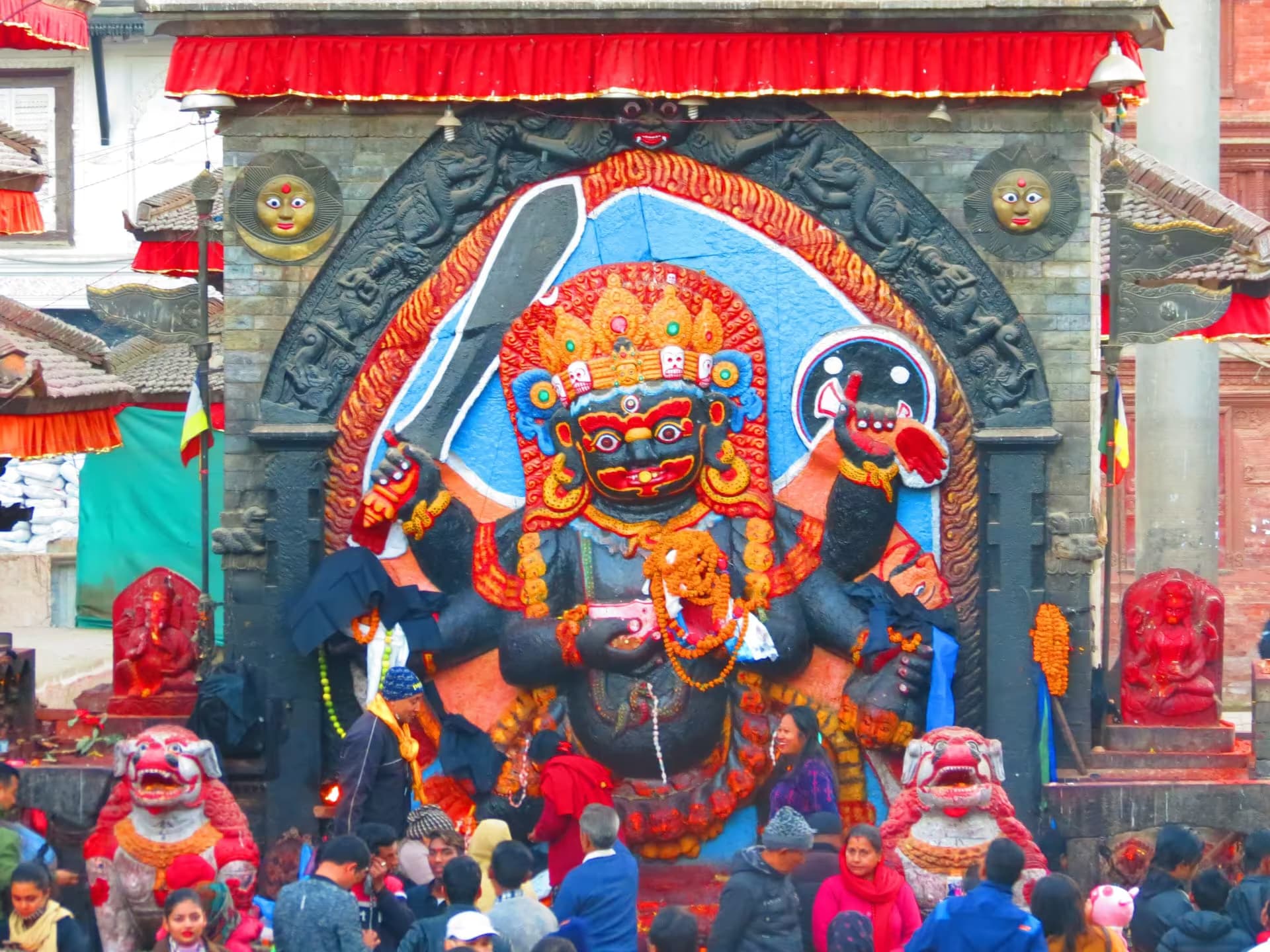
Kal Bhairav
The great stone Bhairav on the square, drawing worship through the festival week
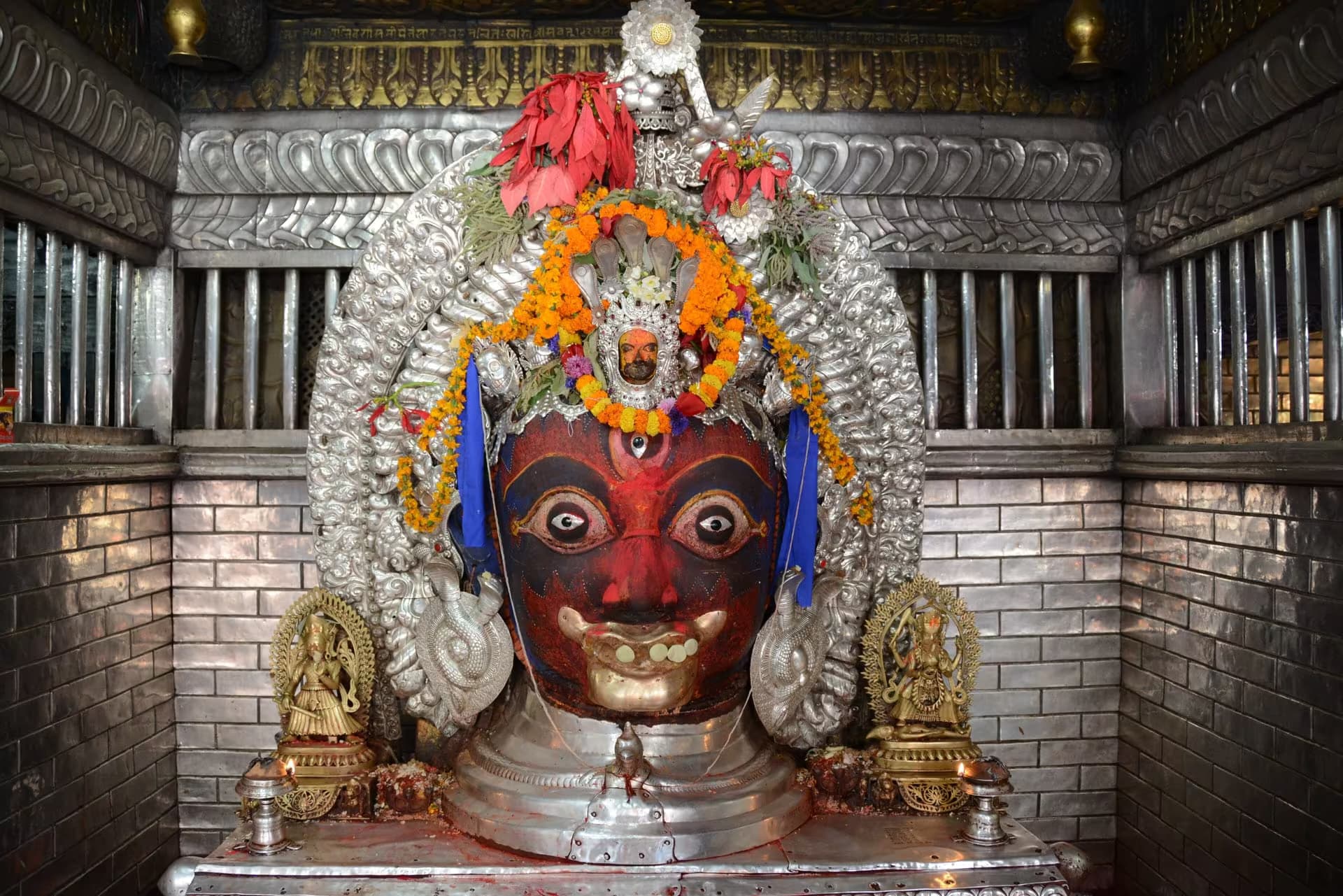
Akash Bhairav Temple
At Indra Chowk on the Thaneya route, where the silver head is brought down to street level
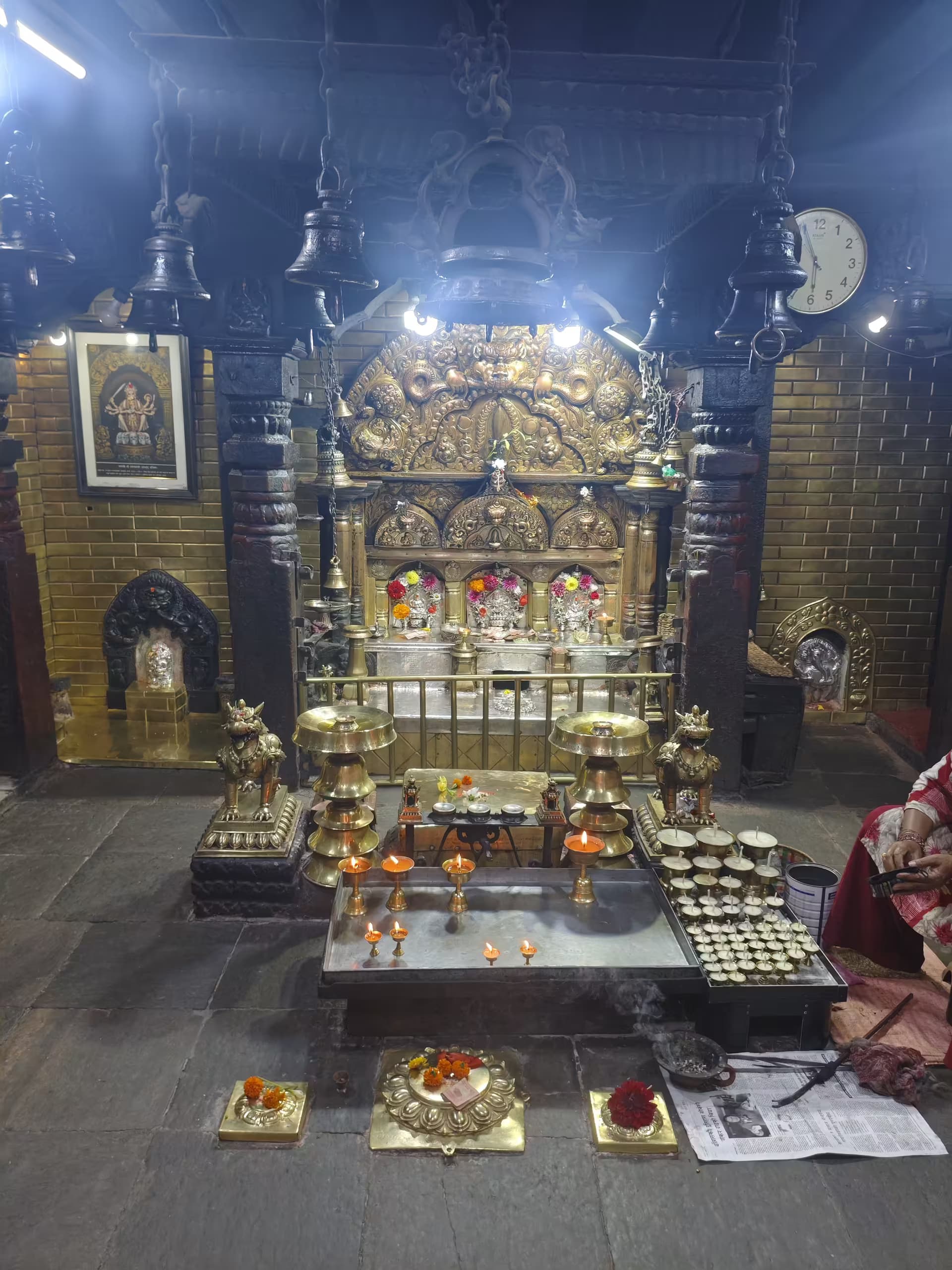
Naradevi Temple
On the inner-lane return leg of the Kwaneya route
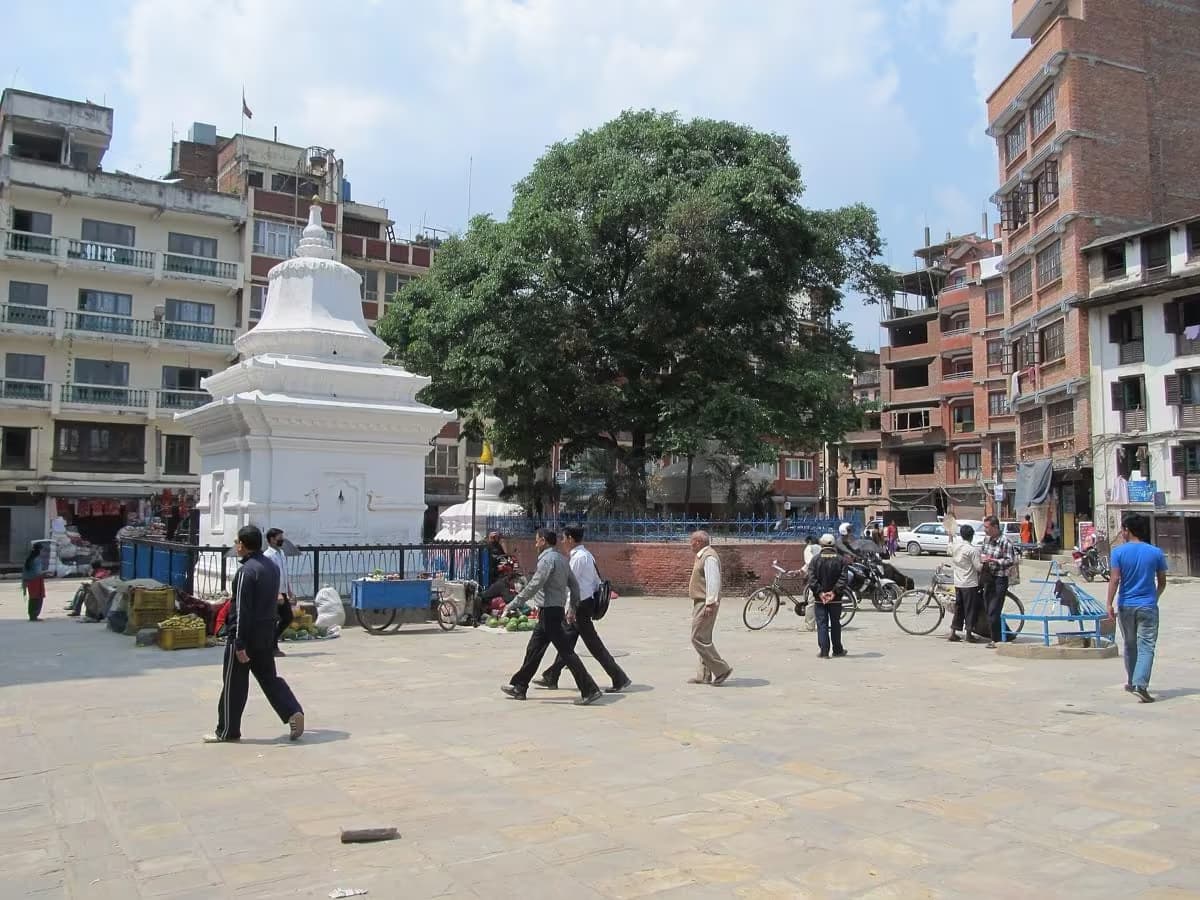
Lagan Bahal (Kirtipunya Mahavihar)
In Lagan Tole, one of the oldest quarters the long southern route threads through
Deities & Presences
Dances
Rituals & Ceremonies
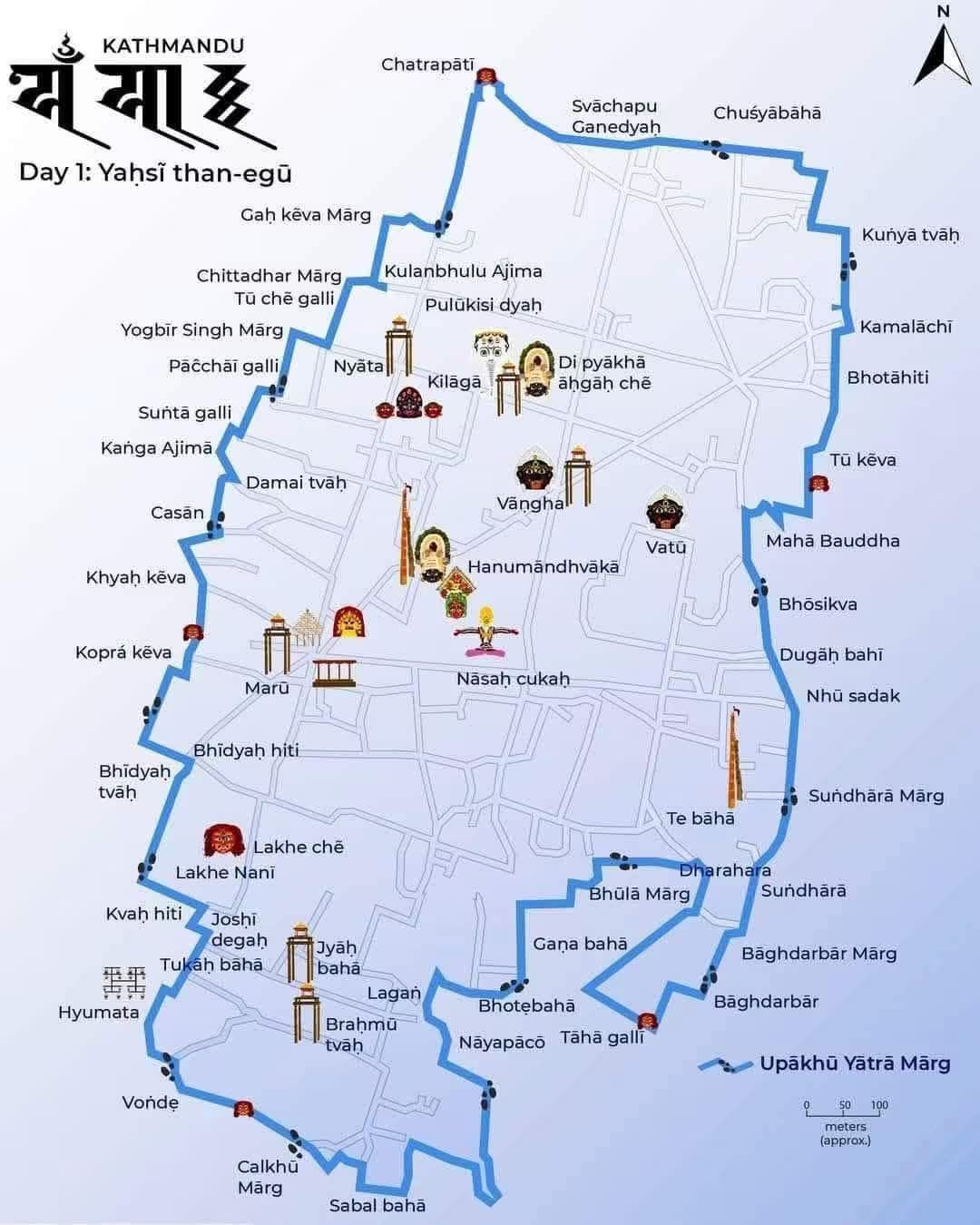
Procession Routes
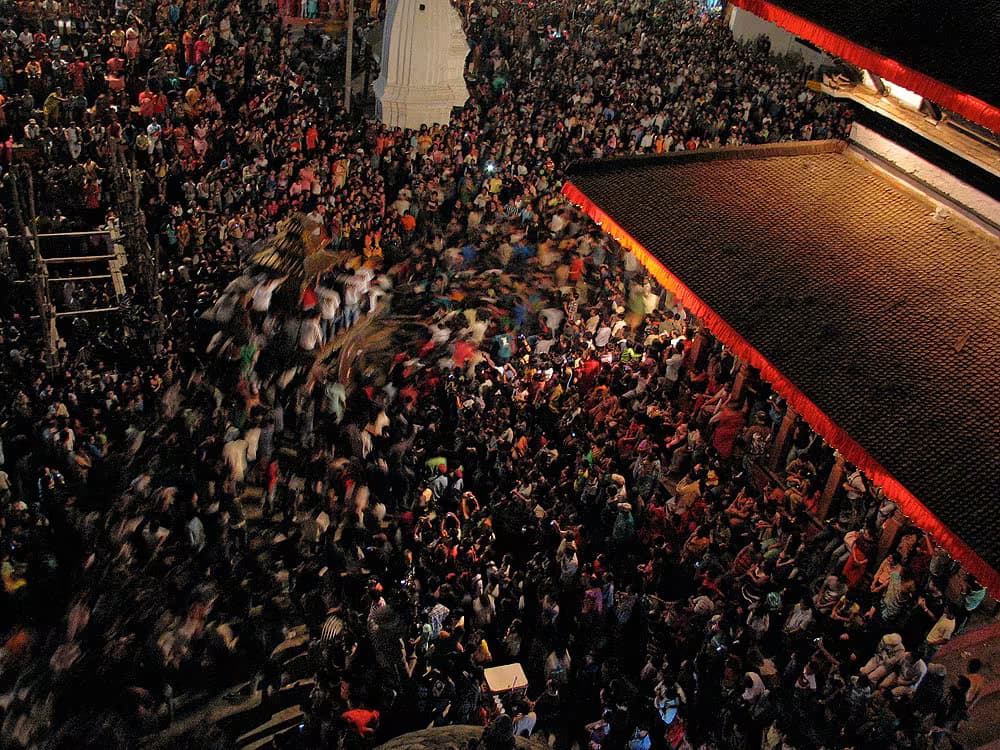
Part of Indra Jatra