Bhairav the Protector
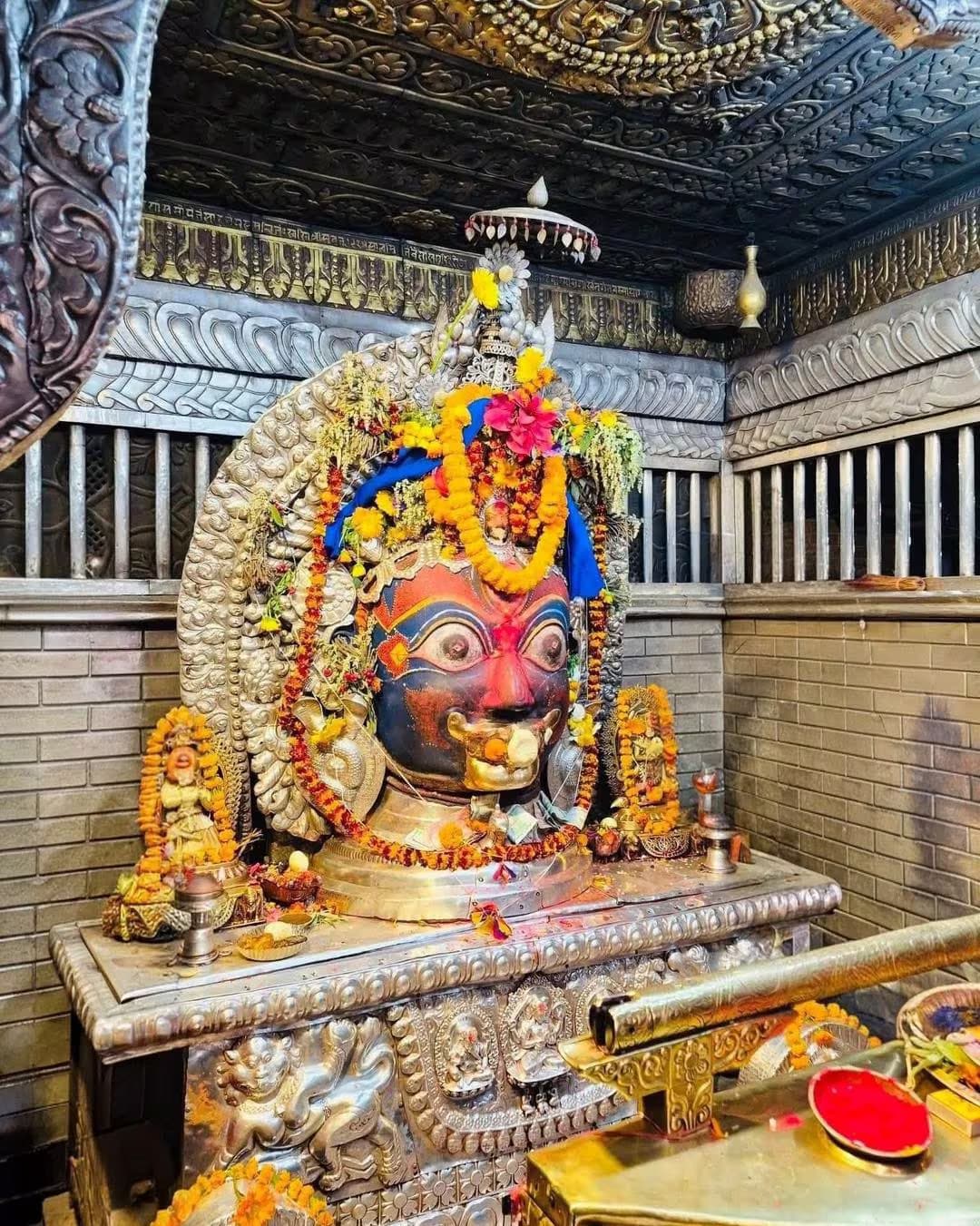
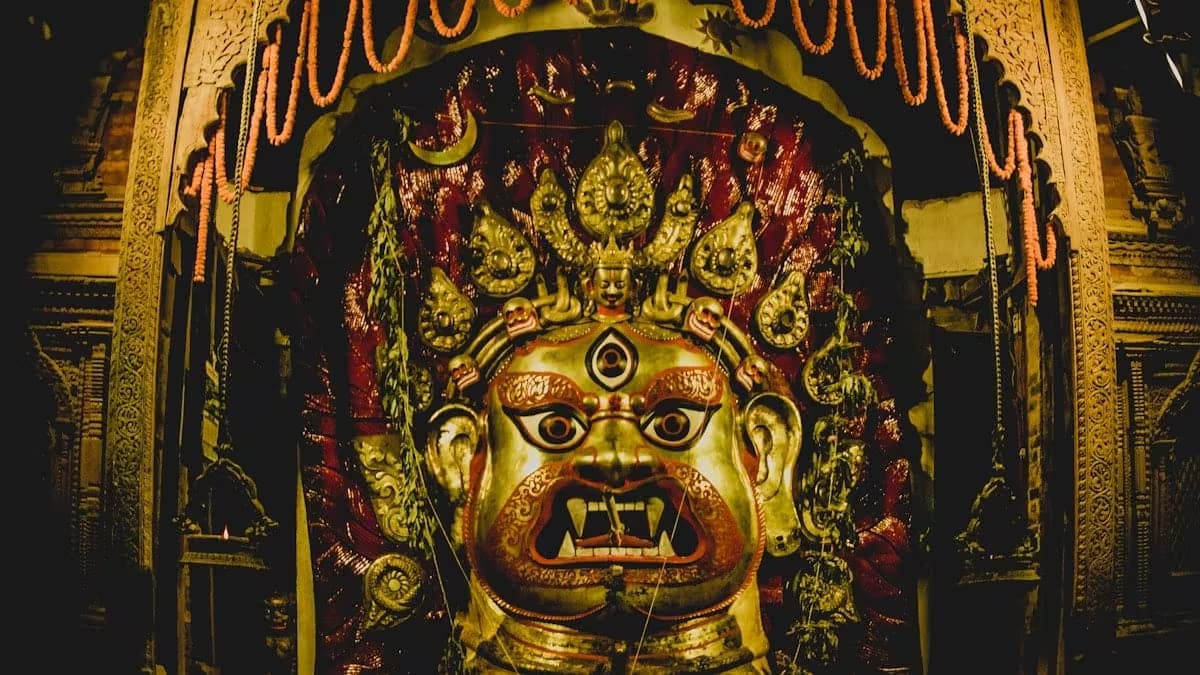
Bhairav — the fierce, terrifying form of Shiva — is woven into the fabric of Kathmandu more deeply than perhaps any other deity. Three great Bhairavi preside over the valley: Kal Bhairav (black, at Hanuman Dhoka), Swet Bhairav (white, concealed behind a gilded screen at Makhan Tole), and Akash Bhairav (sky/silver, at Indra Chowk). During Indra Jatra all three become publicly central — and the Bhairav chariot makes the deity's power mobile.
The Chariot's Character
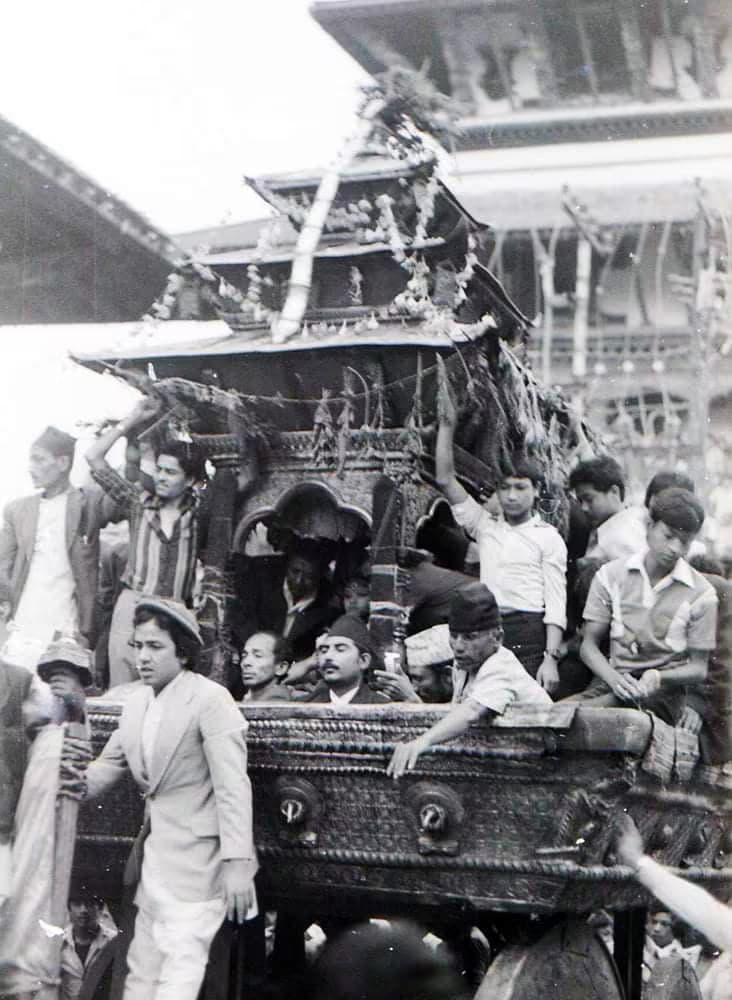
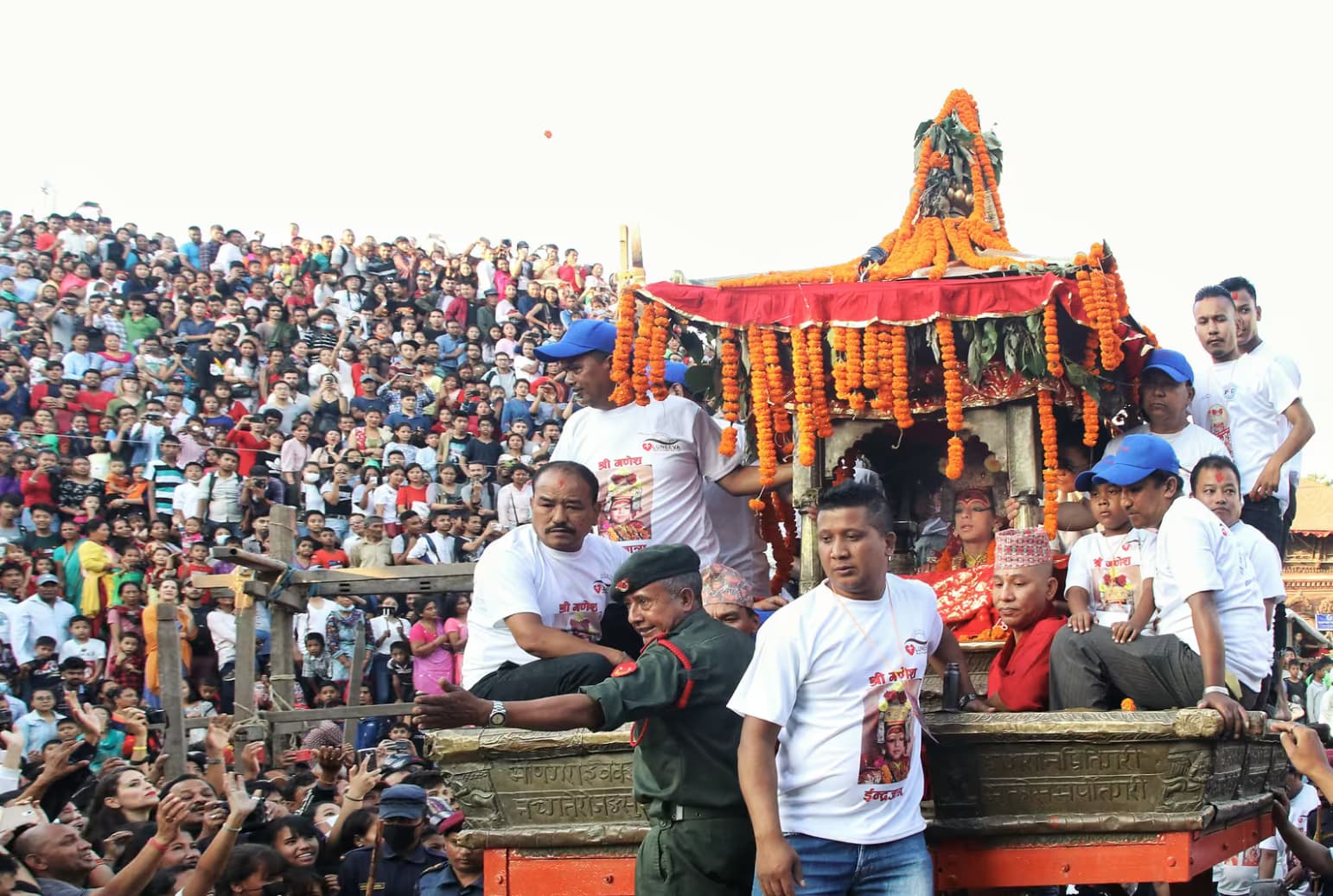
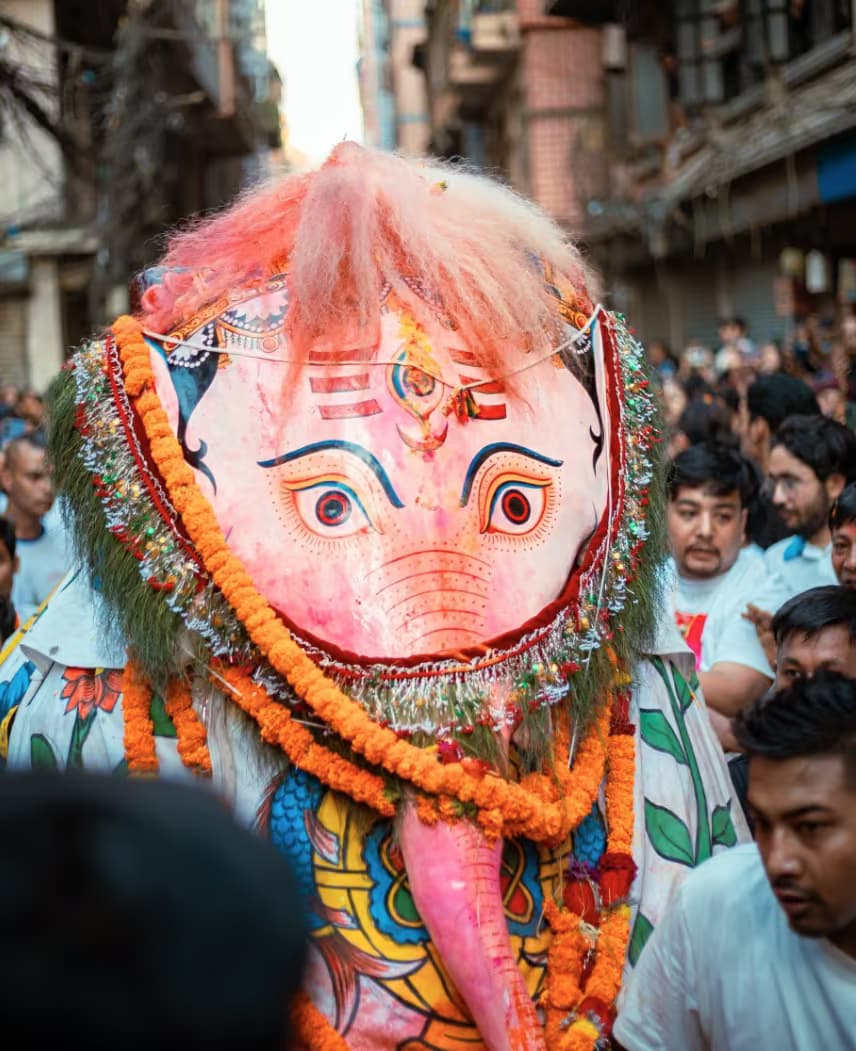
Bhairav's chariot occupies the third position in the procession — behind Ganesh and Kumari. Like Kumari's chariot, it is a multi-storey wooden structure, though its iconographic programme emphasises Bhairav's fierce nature: the skull garland, the trident, the open-mouthed demon face that signals divine wrath held in check by ritual.
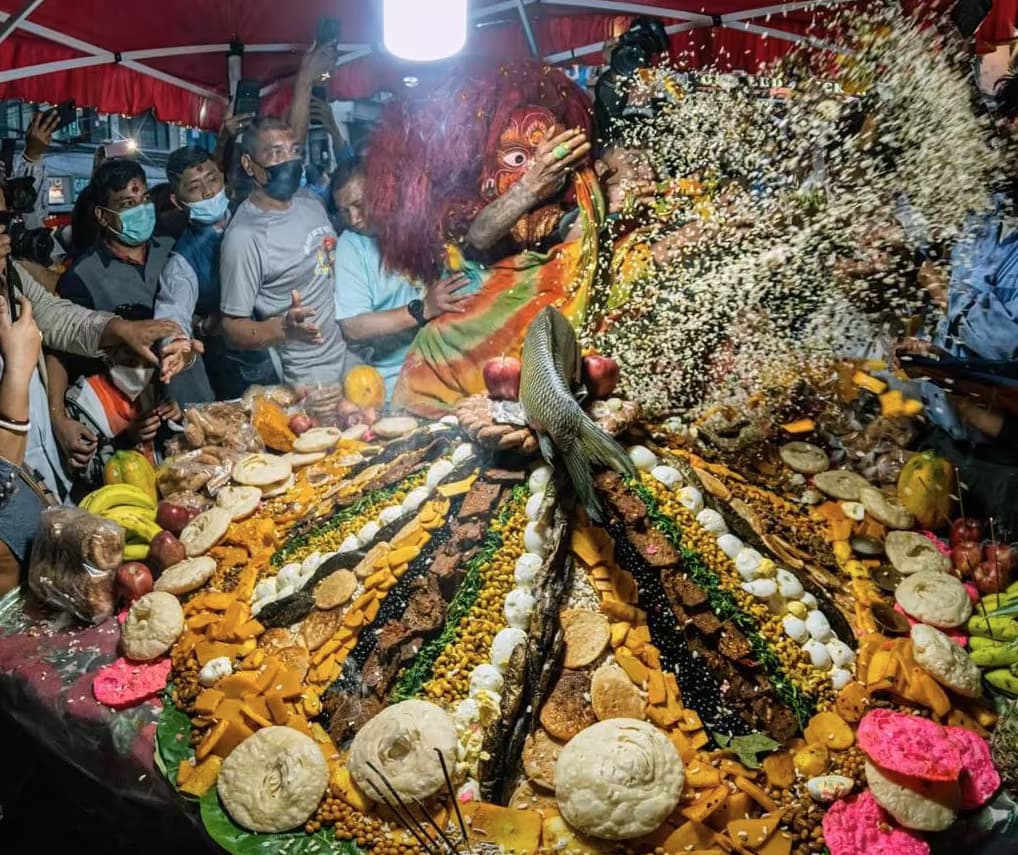
Priest attendants travel with the chariot, performing continuous puja as it moves. At certain designated stops — particularly at temples associated with Bhairav in the old city — the chariot pauses for extended ritual attention. These pauses are among the longest ceremonial stops in the procession: acknowledging that Bhairav is not a passive passenger but an active, demanding presence.
Tantric Significance
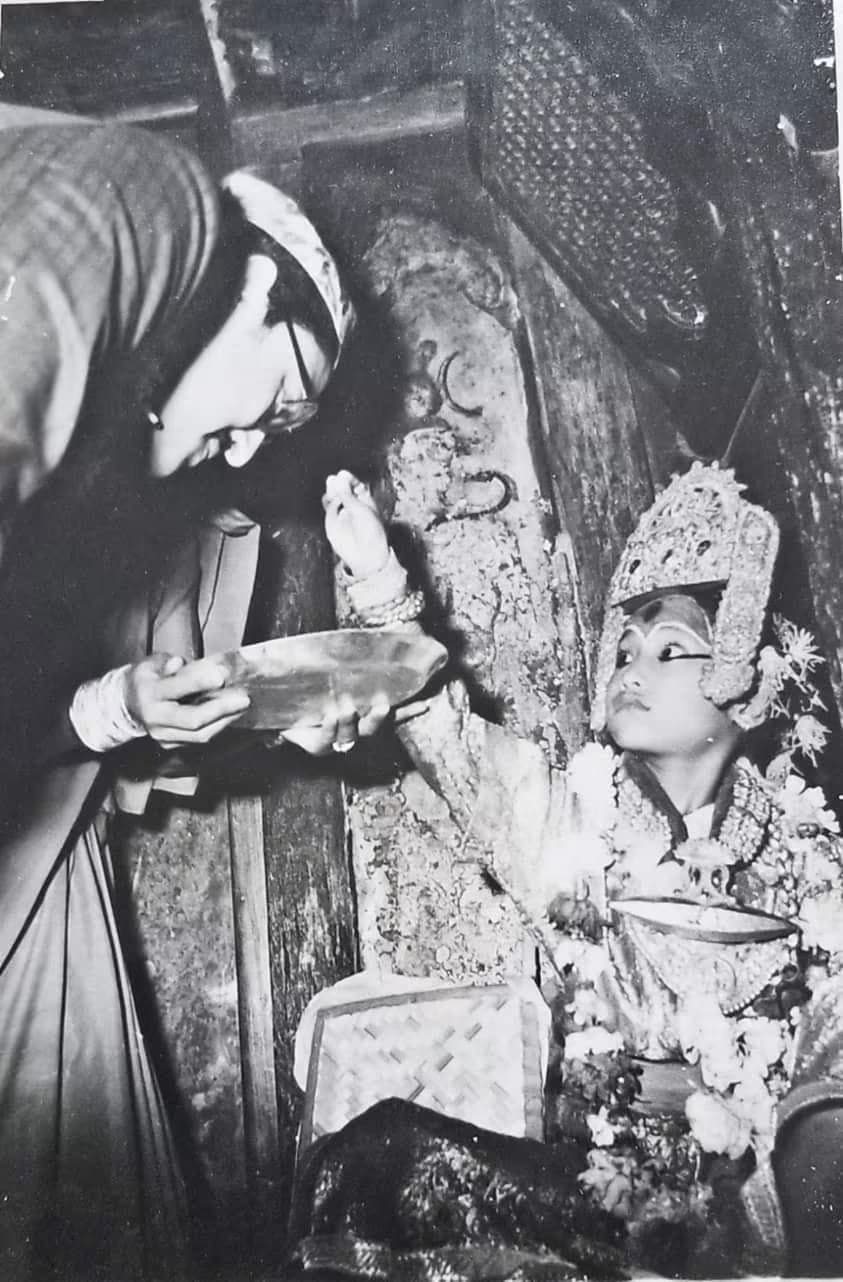
In Newar tantric cosmology, Bhairav represents the destructive and protective dimensions of divine power simultaneously. The chariot procession enacts a cosmological statement: the Living Goddess (Kumari, embodying Taleju's power) is flanked by Ganesh (auspicious beginnings) and Bhairav (fierce protection) — a divine triumvirate moving through the city to renew its sacred geography for another year.
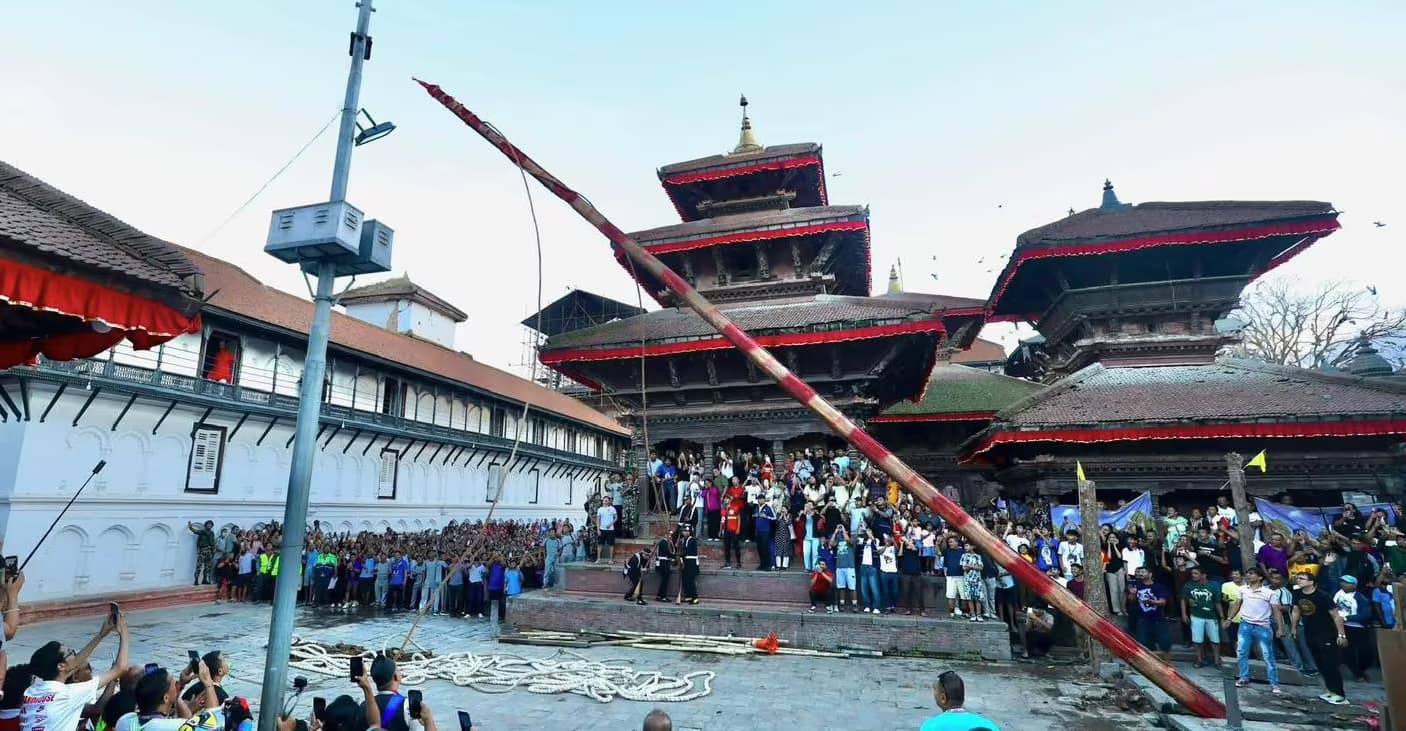
The eight days of Indra Jatra are framed by Bhairav's presence: the festival opens with the raising of the Yosin pole under Indra's (and by extension Bhairav's) authority, and closes with the pole's lowering and Bhairav's departure from public visibility. The chariot carries that presence through the streets.
Related
Connected places and entries worth pairing
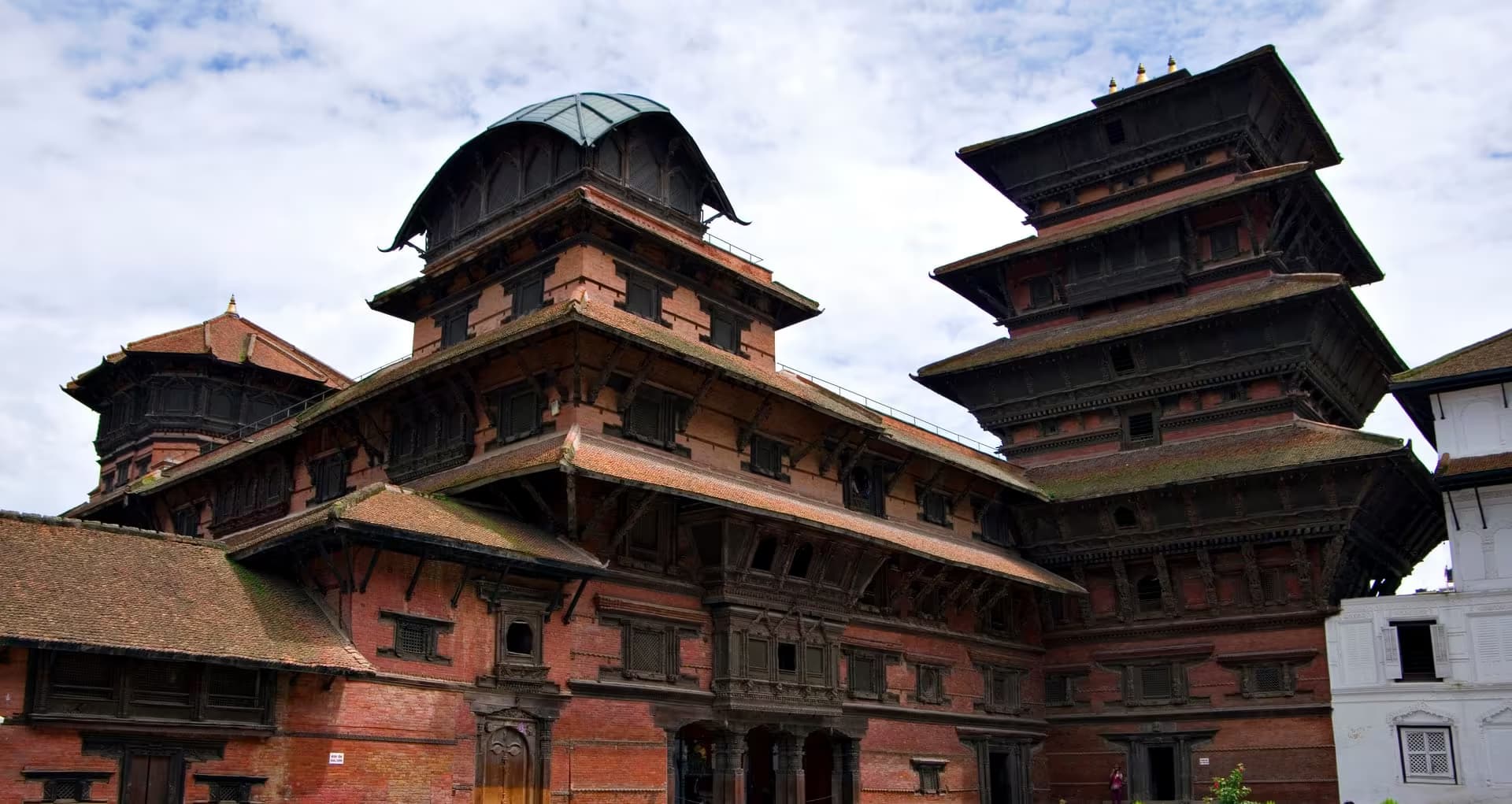
Kathmandu Durbar Square
The eight-day street festival centres on the square and the lanes around Hanuman Dhoka
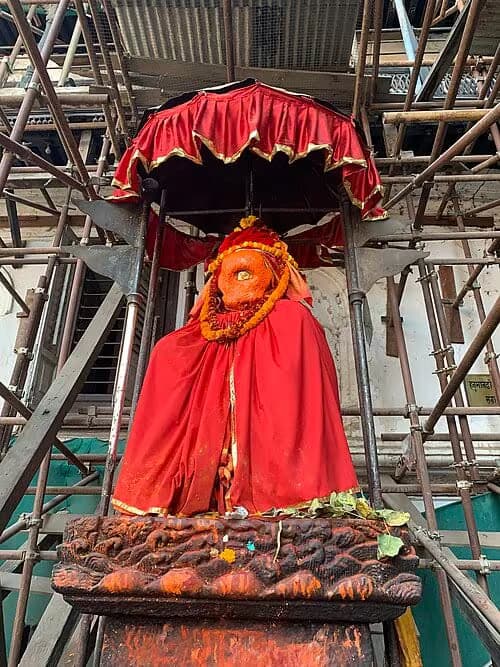
Hanuman Statue (Hanuman Dhoka)
The old royal palace entrance, where the Yosin pole rituals happen
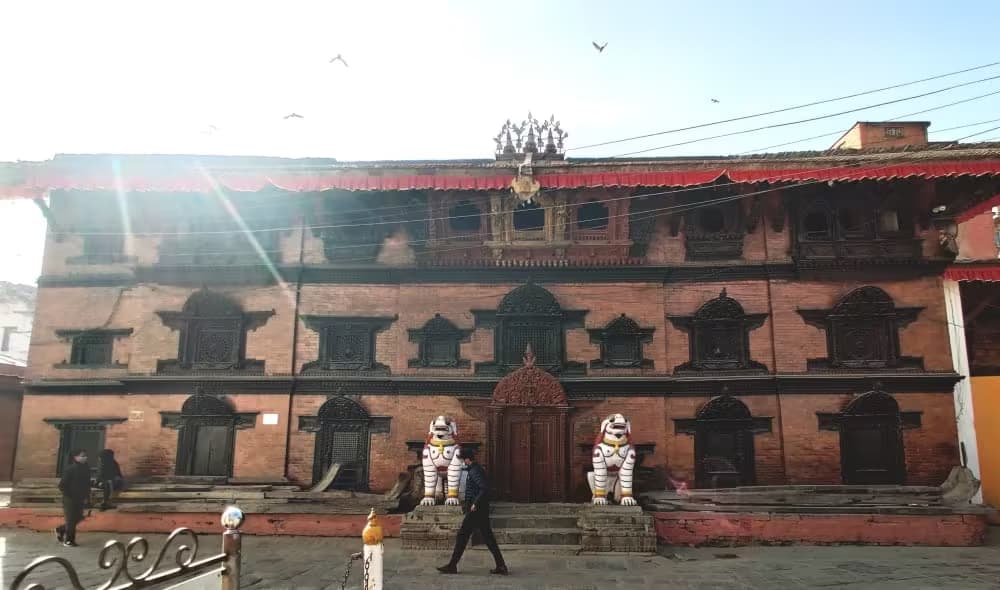
Kumari Ghar
The Kumari's residence, a few steps from where her chariot waits
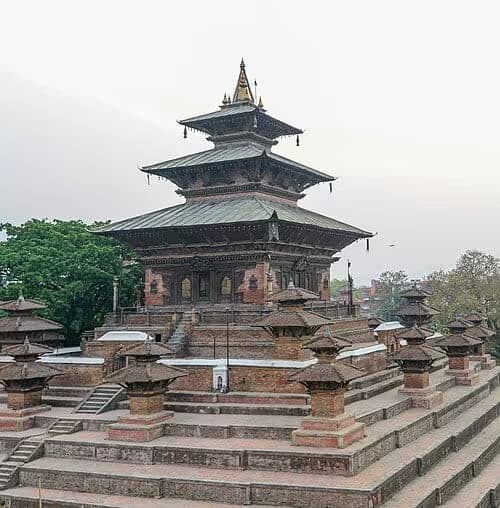
Taleju Temple
The Malla kings' tutelary goddess, whose main gate the Thaneya route passes at Makhan Tole
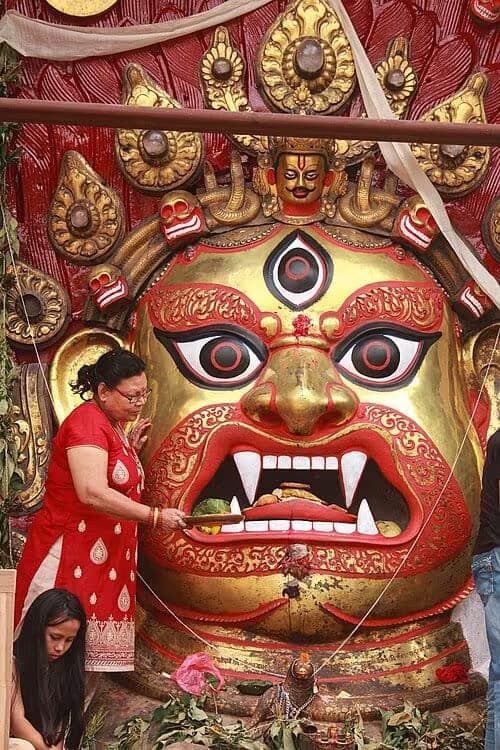
Swet Bhairav
The gilded screen at Makhan Tole, opened for only these eight days of the year
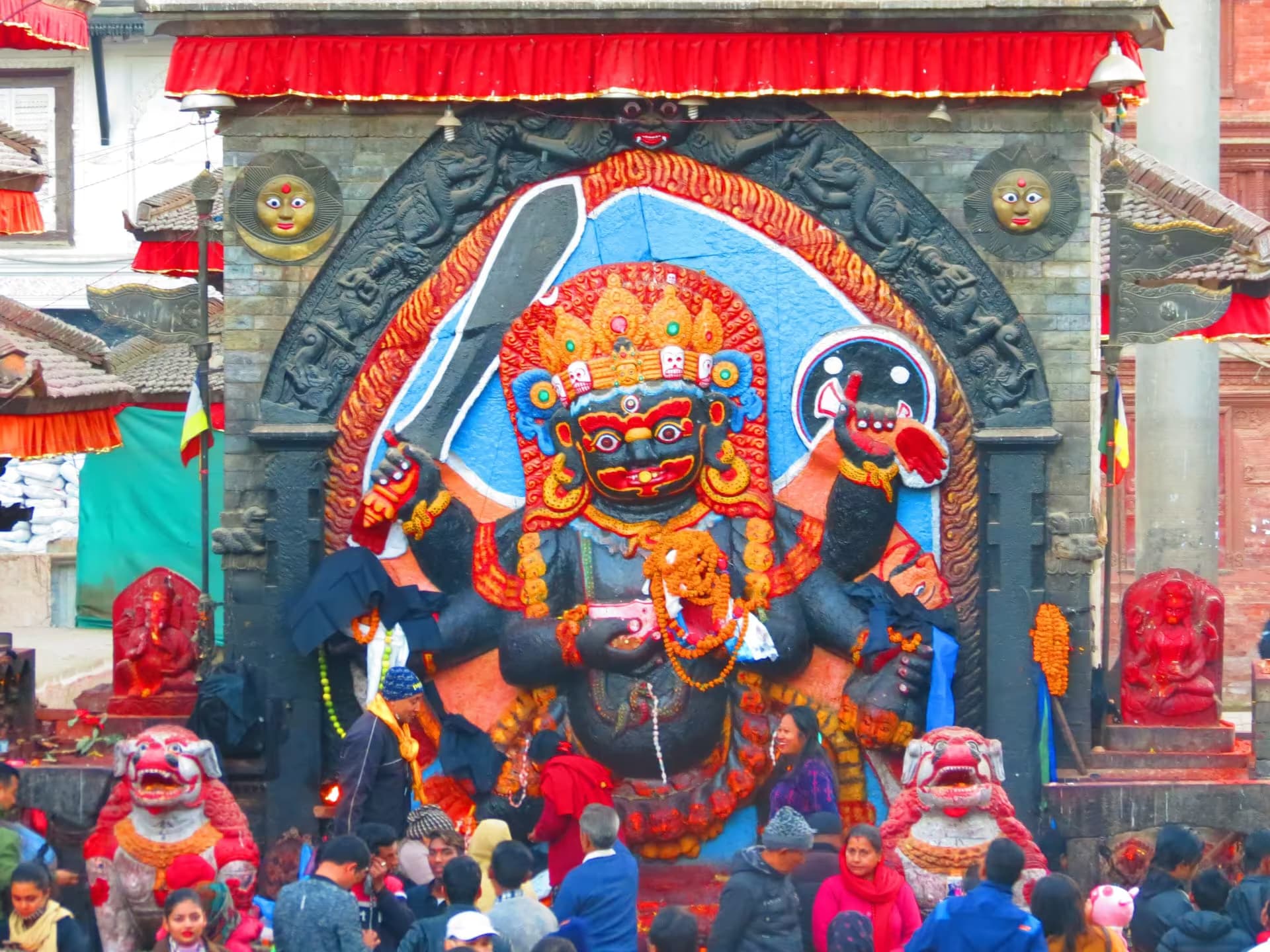
Kal Bhairav
The great stone Bhairav on the square, drawing worship through the festival week
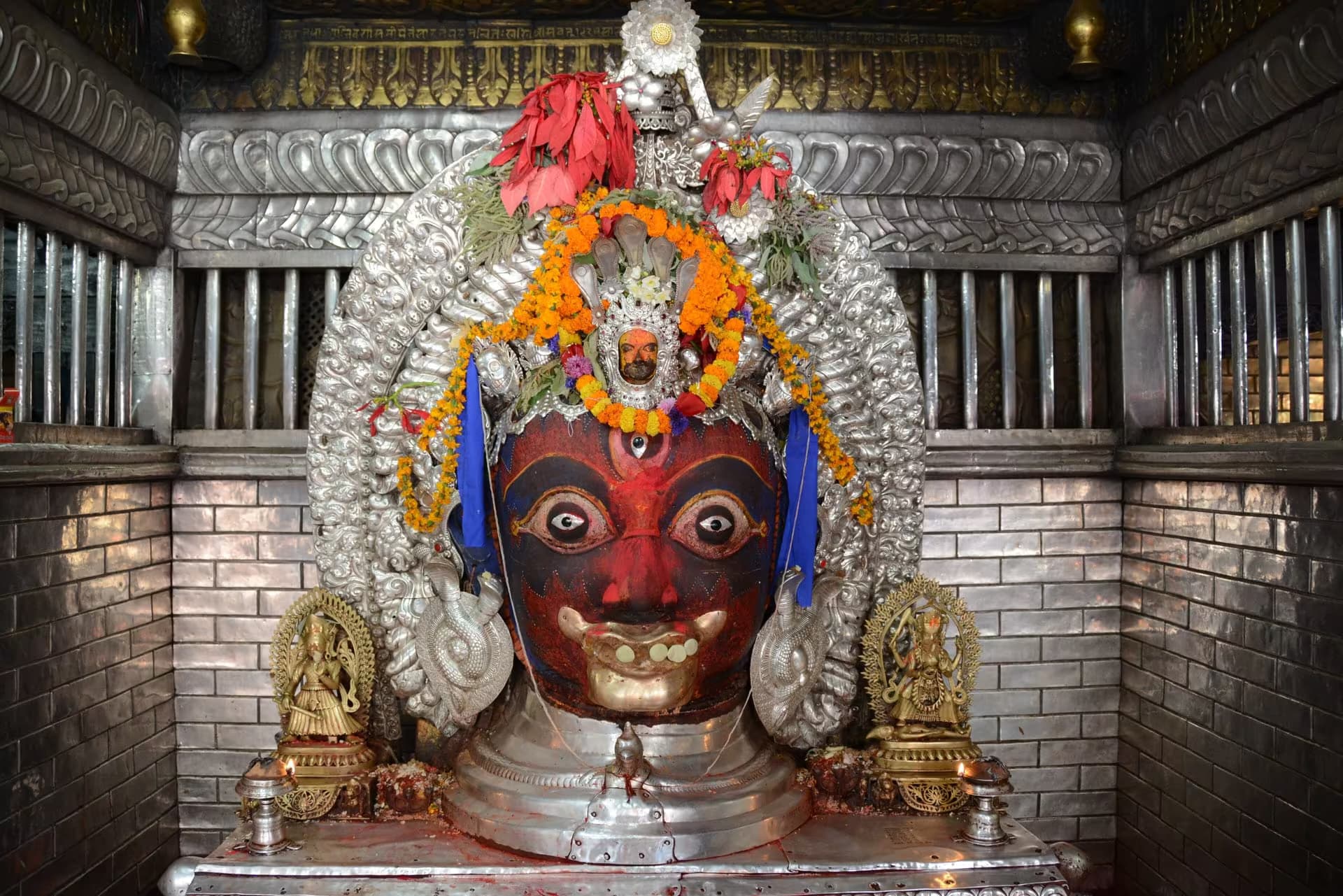
Akash Bhairav Temple
At Indra Chowk on the Thaneya route, where the silver head is brought down to street level
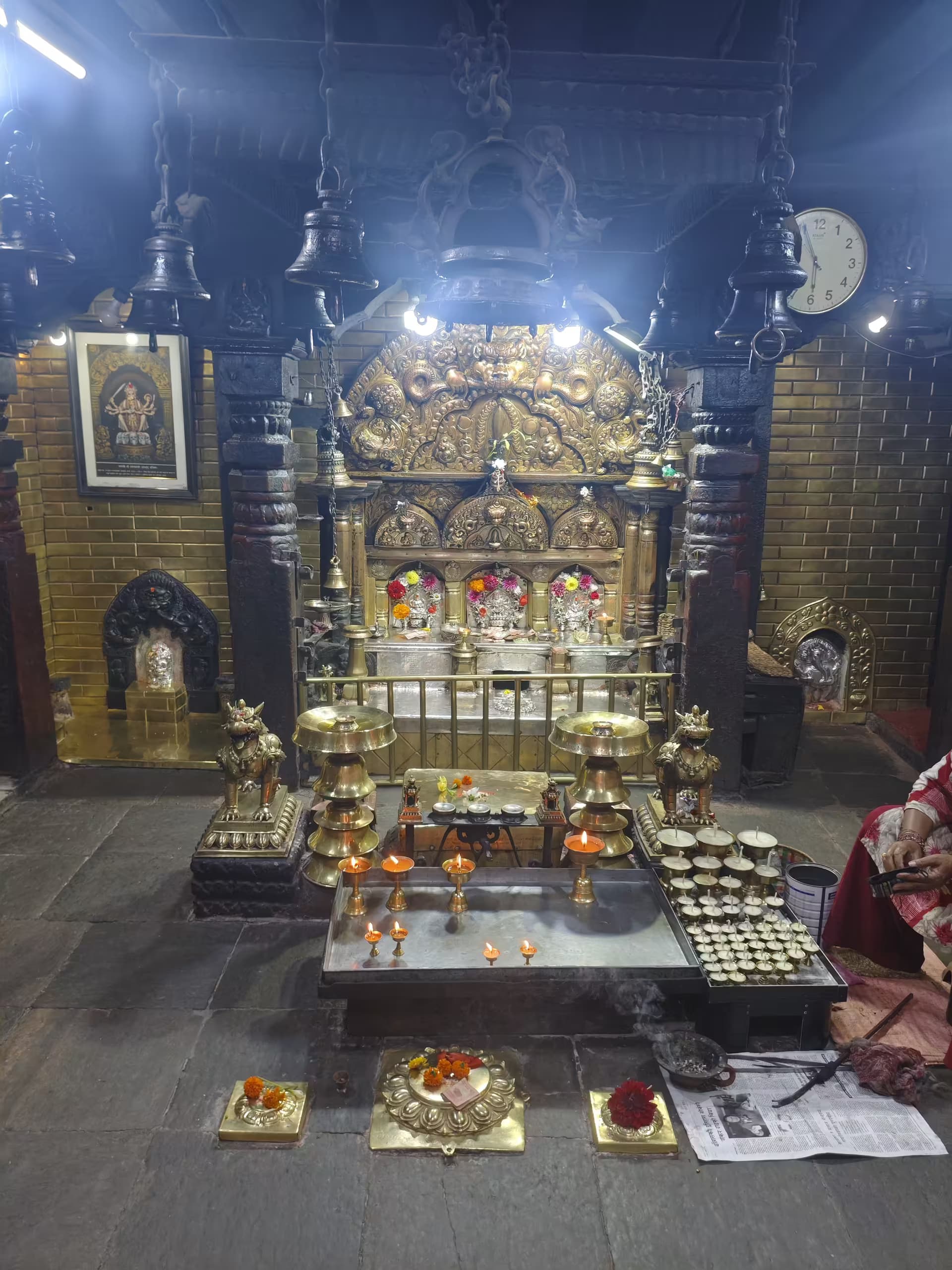
Naradevi Temple
On the inner-lane return leg of the Kwaneya route
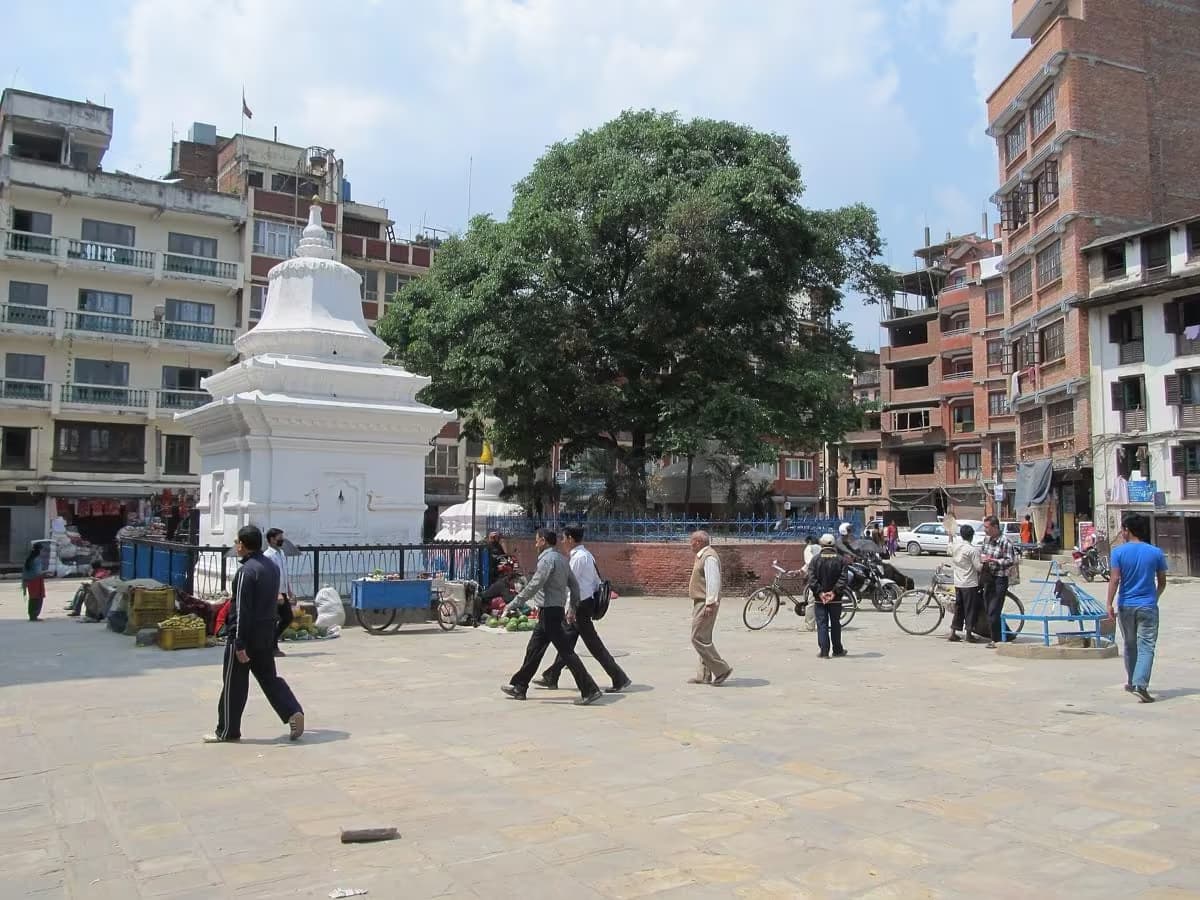
Lagan Bahal (Kirtipunya Mahavihar)
In Lagan Tole, one of the oldest quarters the long southern route threads through
Deities & Presences
Dances
Rituals & Ceremonies
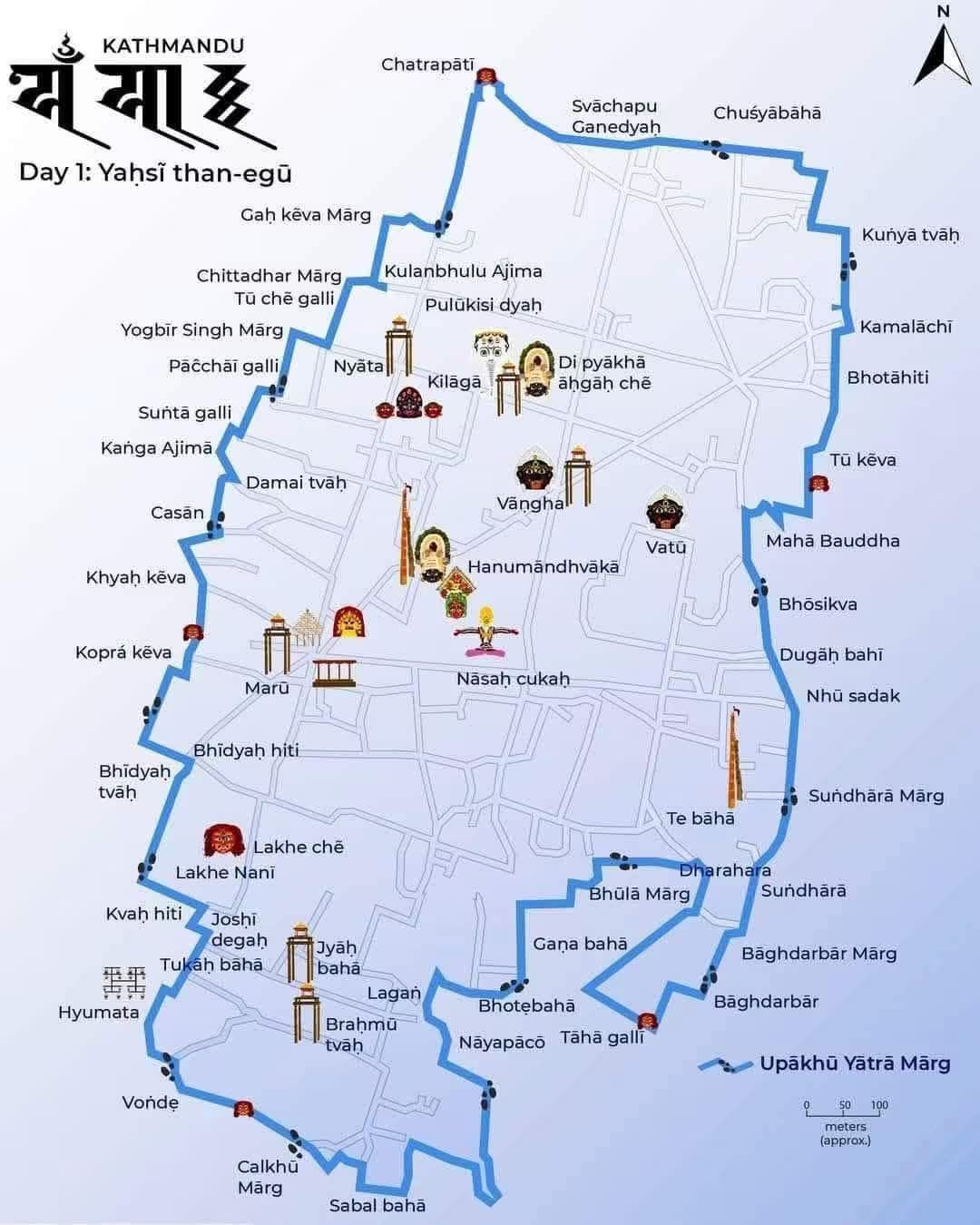
Procession Routes
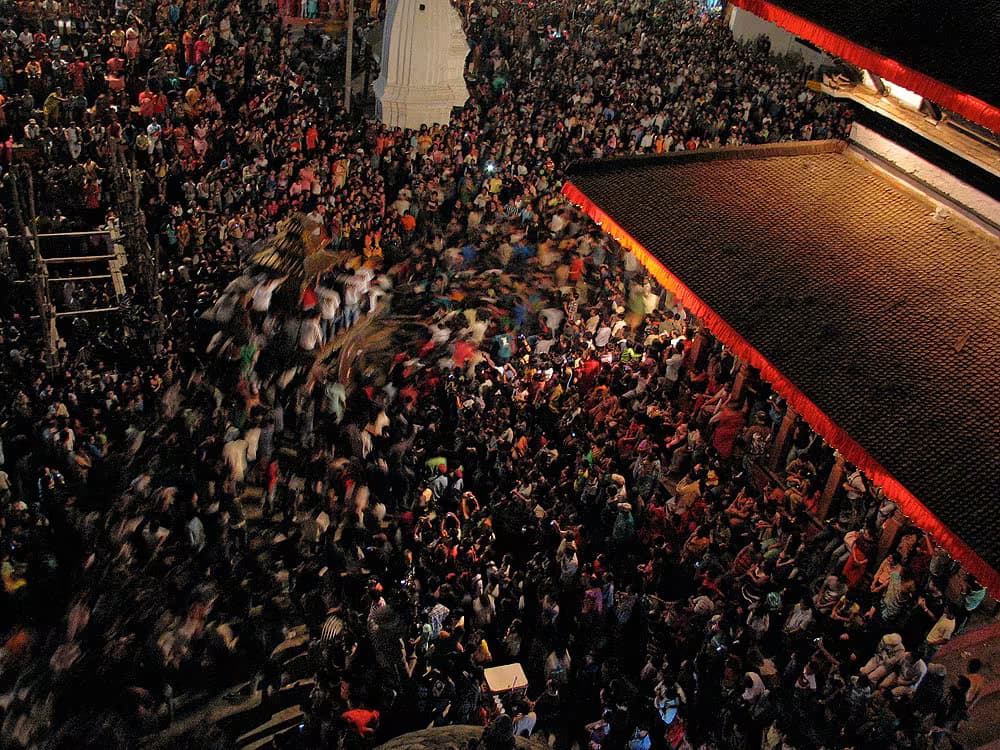
Part of Indra Jatra