The Nightly Performances
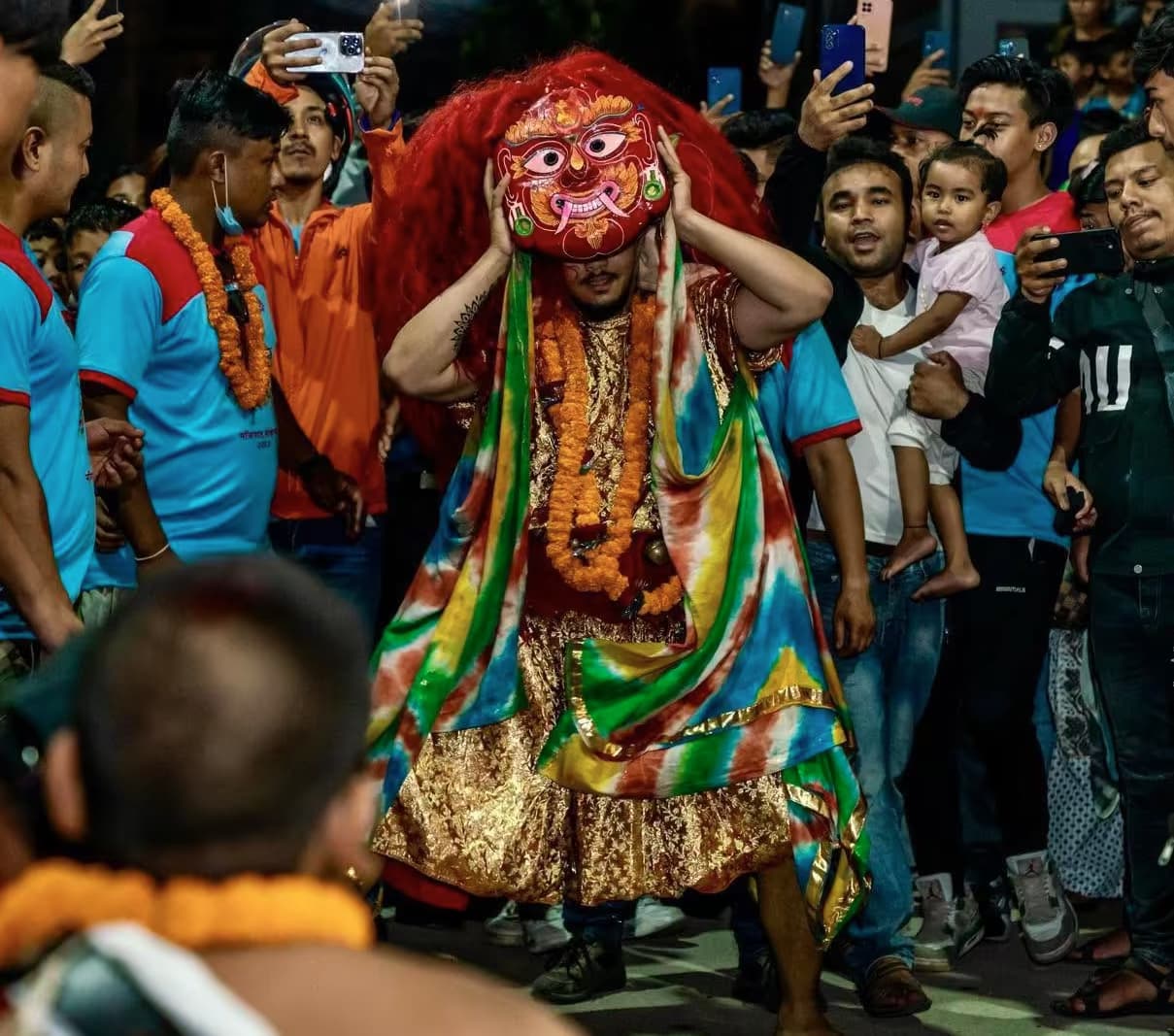
Long after the chariot processions have returned to Hanuman Dhoka and the crowds have dispersed, the festivals of Indra Jatra continue. In the squares and courtyards of the old city, masked dancers perform the Devi Pyakhan and Bhairav Pyakhan — the dance-dramas of the goddesses and of Bhairav — accompanied by the full Newar tantric orchestra of dhime drums, dhaa cymbals, bhusya gongs, and muhali reeds.
The Principal Dances
Mahakali: The fierce goddess Kali in her most intense aspect — skull garland, extended tongue, multiple arms bearing weapons. The dance expresses divine wrath as a purifying force. The costume includes a large headdress and a skirt of layered fabric that fills the performance space as the dancer spins.
Mahalaxmi: In contrast to Mahakali's ferocity, Mahalaxmi brings abundance and grace. The dancer's mudras (hand gestures) replicate those of lotus-bearing Laxmi iconography: deliberate, open-palmed, turned toward the sky. The dance is slower and more sustained than Mahakali's; its beauty lies in precision rather than energy.
Das Avatar: The ten incarnations of Vishnu performed in sequence — Matsya (fish), Kurma (tortoise), Varaha (boar), Narasimha (man-lion), Vamana (dwarf), Parashurama, Rama, Krishna, Buddha, and Kalki. Each avatar is embodied by a different masked dancer; the sequence takes several hours and functions as a compressed mythological narrative. The inclusion of Buddha as an avatar reflects the Hindu-Buddhist synthesis characteristic of Newar religious practice.
Devi Pyakhan and Bhairav Pyakhan: Shorter, more concentrated dance performances centring on the goddess and Bhairav respectively, performed in specific courtyards with specific ritual permissions. These are the most sacred of the evening performances and least accessible to outsiders.
Trance and Possession
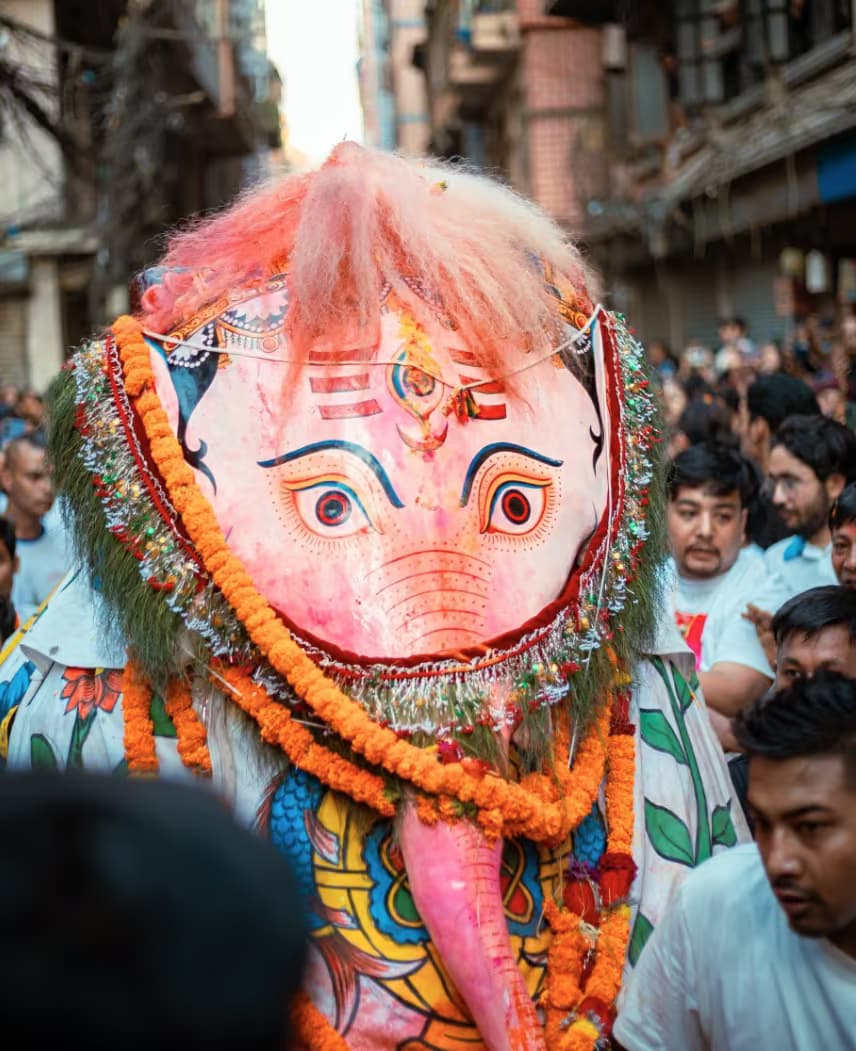
The performances are not theatrical in the sense of actors playing roles. Practitioners and devotees understand the dancer, once masked and in motion, as a vessel through which the deity is present. The transition into trance is marked: the dancer's posture changes, the movement loses the self-consciousness of performance, and the deity's energetic signature — Kali's ferocity, Laxmi's grace — becomes directly perceptible.
Hereditary Dancer Families
The right to perform each dance belongs to specific Newar families and guthis. These lineages have maintained the choreographic traditions for generations; the knowledge is not written but embodied — transmitted from elder dancer to younger through direct observation and guided practice. The loss of a lineage through demographic change or social disruption would mean the permanent loss of the performance.
Related
Connected places and entries worth pairing
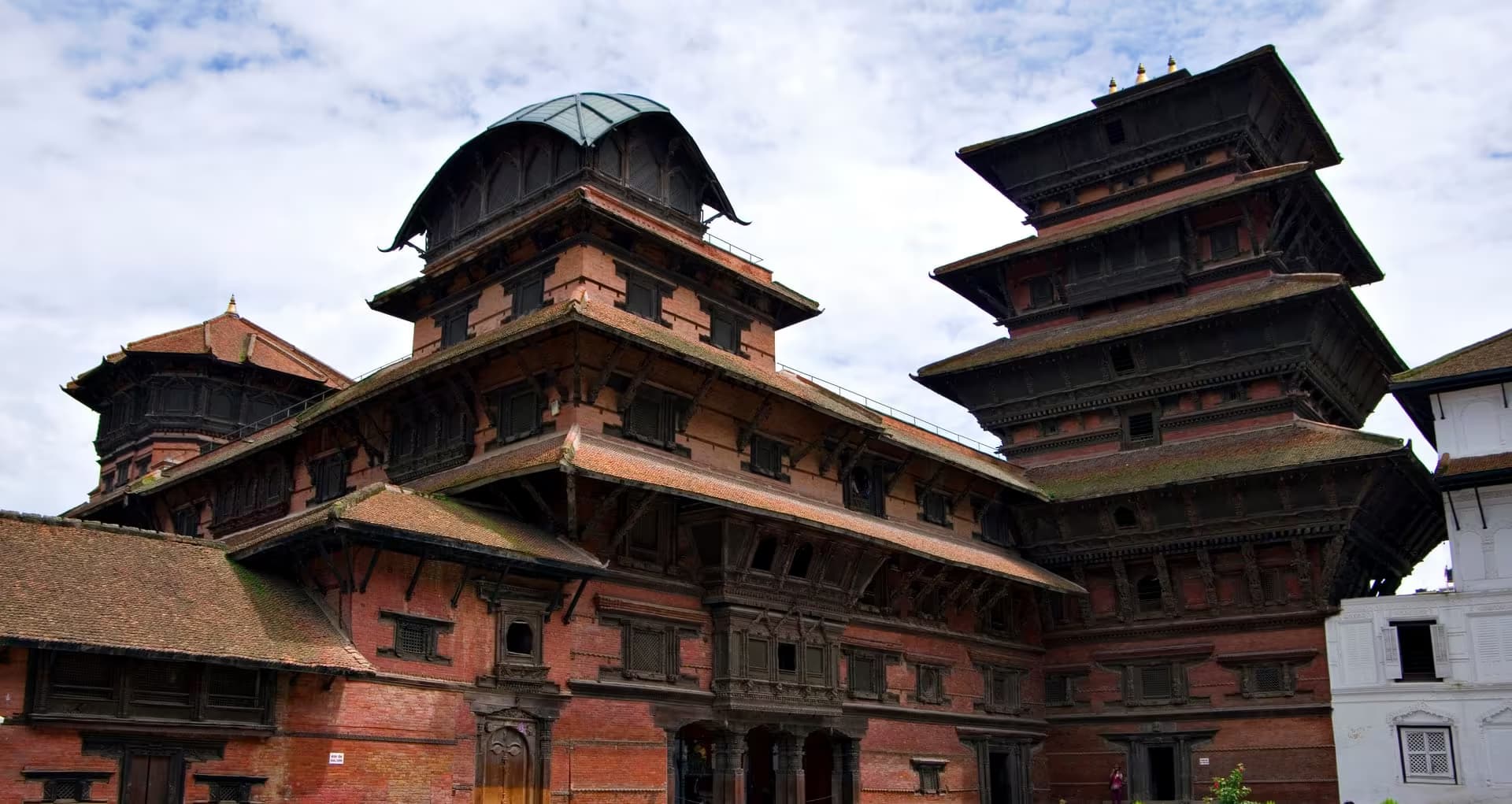
Kathmandu Durbar Square
The eight-day street festival centres on the square and the lanes around Hanuman Dhoka
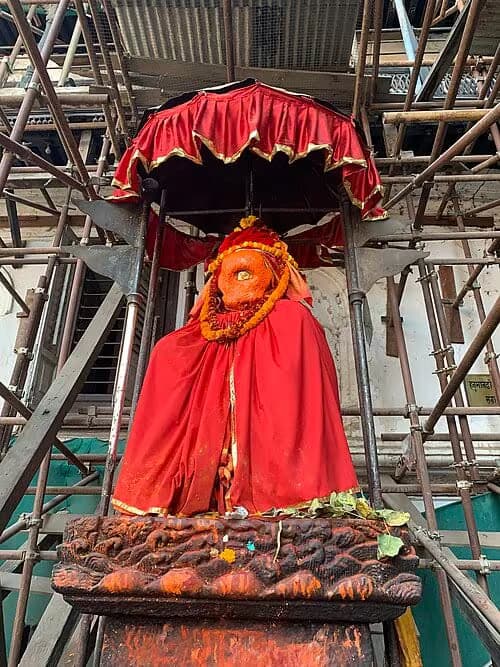
Hanuman Statue (Hanuman Dhoka)
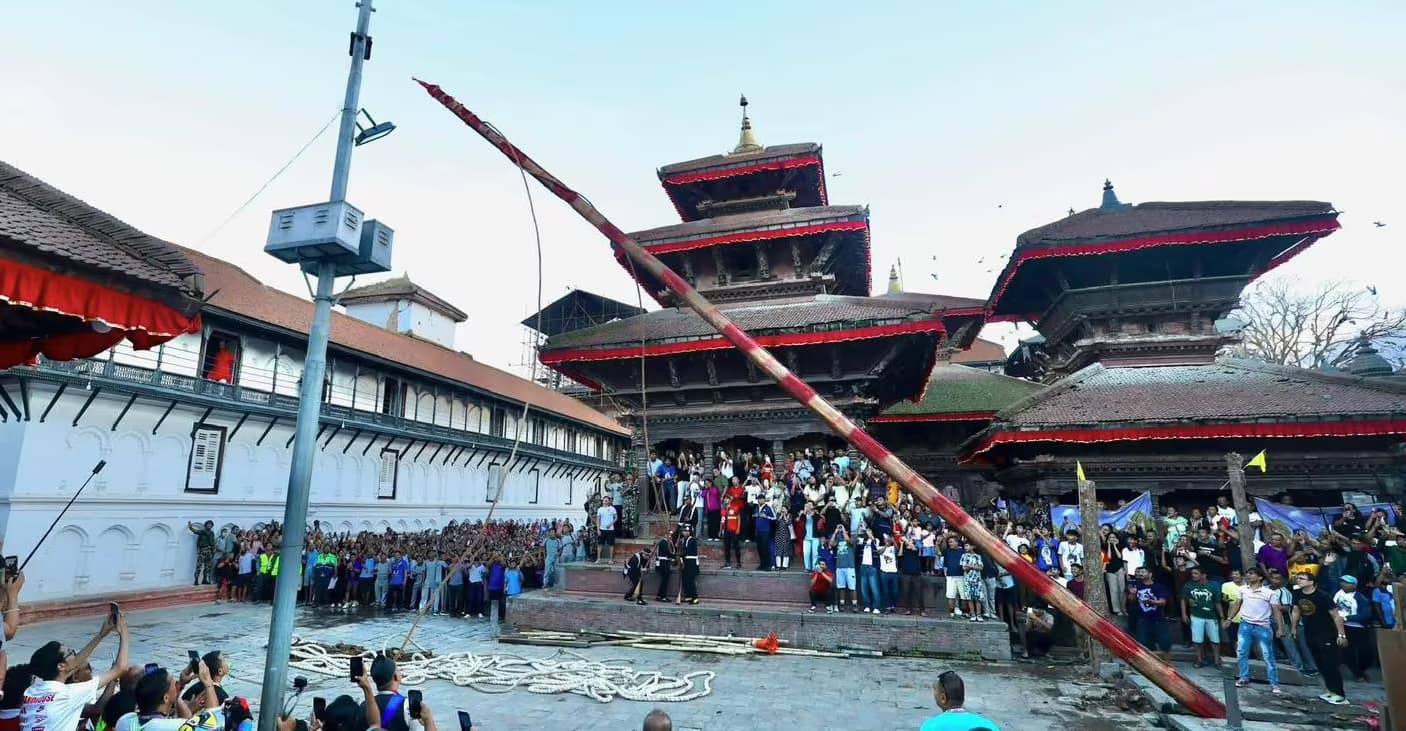
The old royal palace entrance, where the Yosin pole rituals happen
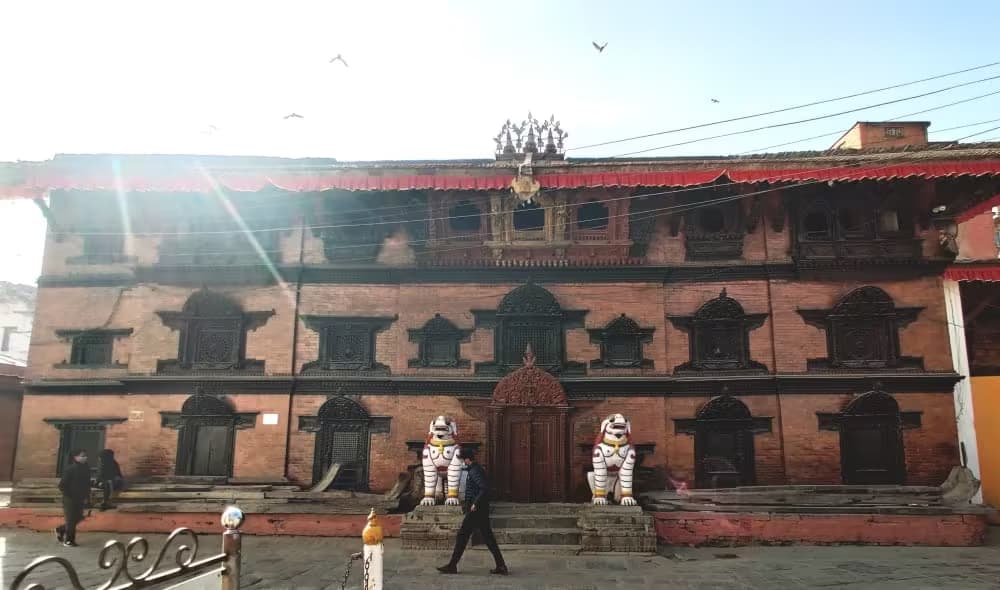
Kumari Ghar
The Kumari's residence, a few steps from where her chariot waits
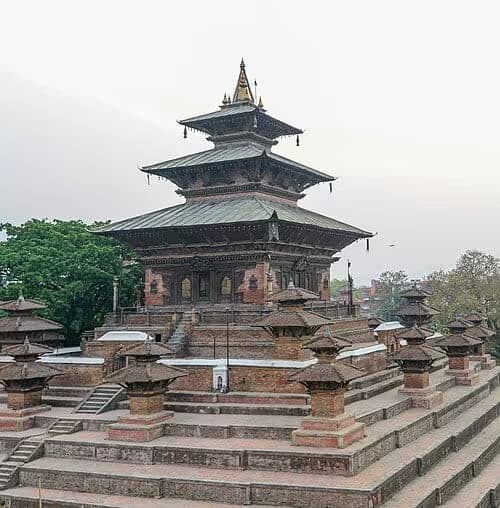
Taleju Temple
The Malla kings' tutelary goddess, whose main gate the Thaneya route passes at Makhan Tole
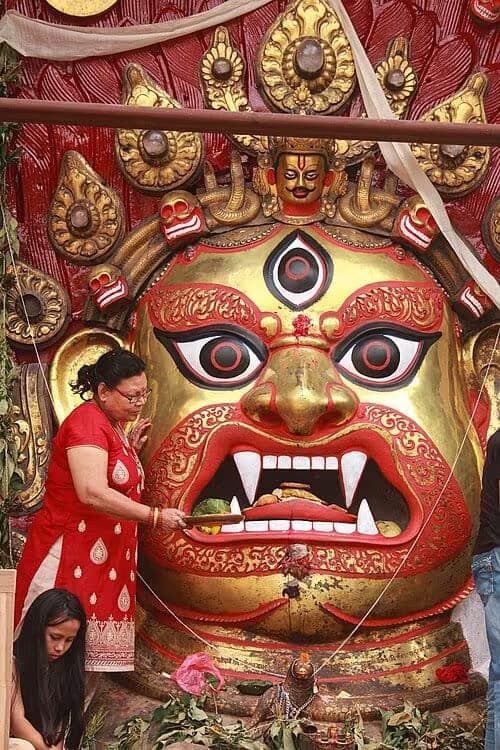
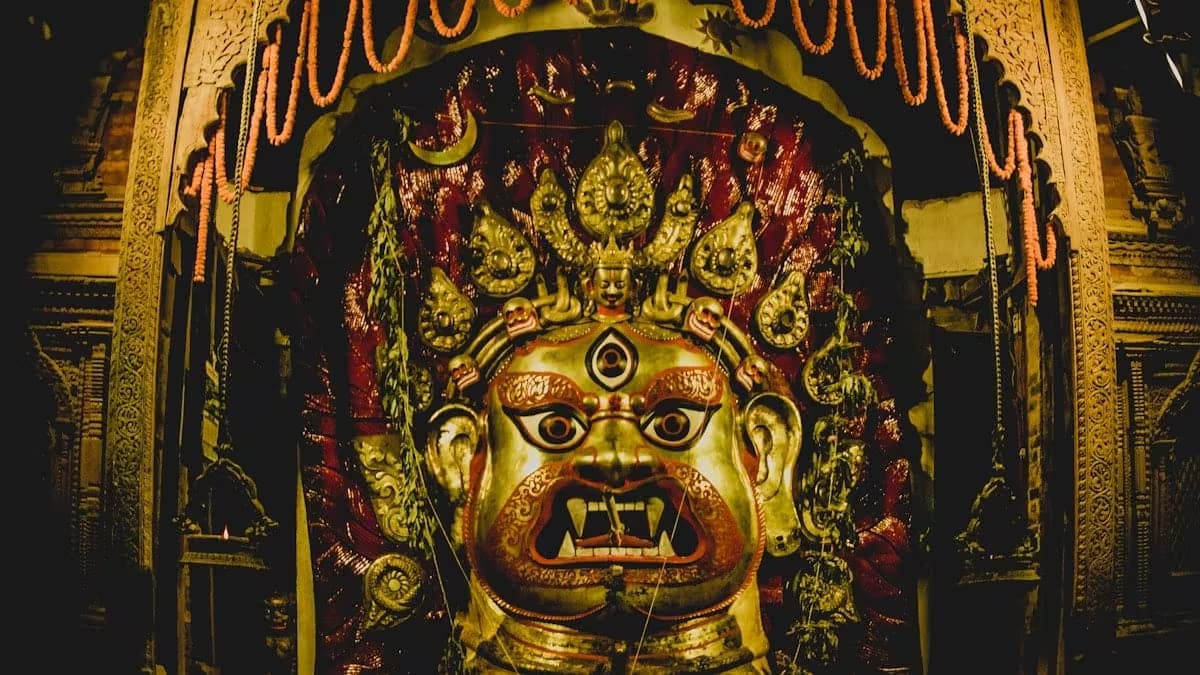
Swet Bhairav
The gilded screen at Makhan Tole, opened for only these eight days of the year
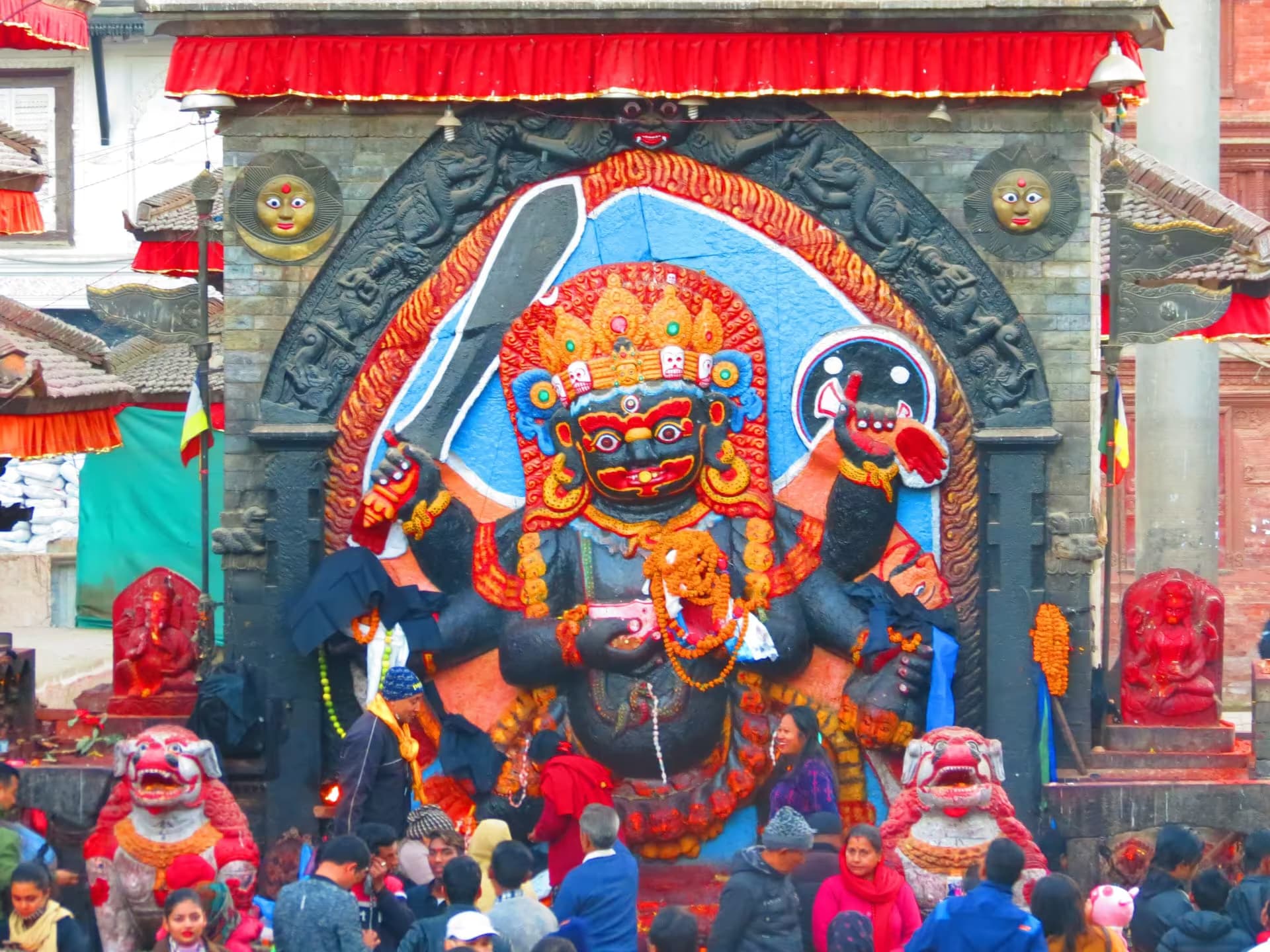
Kal Bhairav
The great stone Bhairav on the square, drawing worship through the festival week
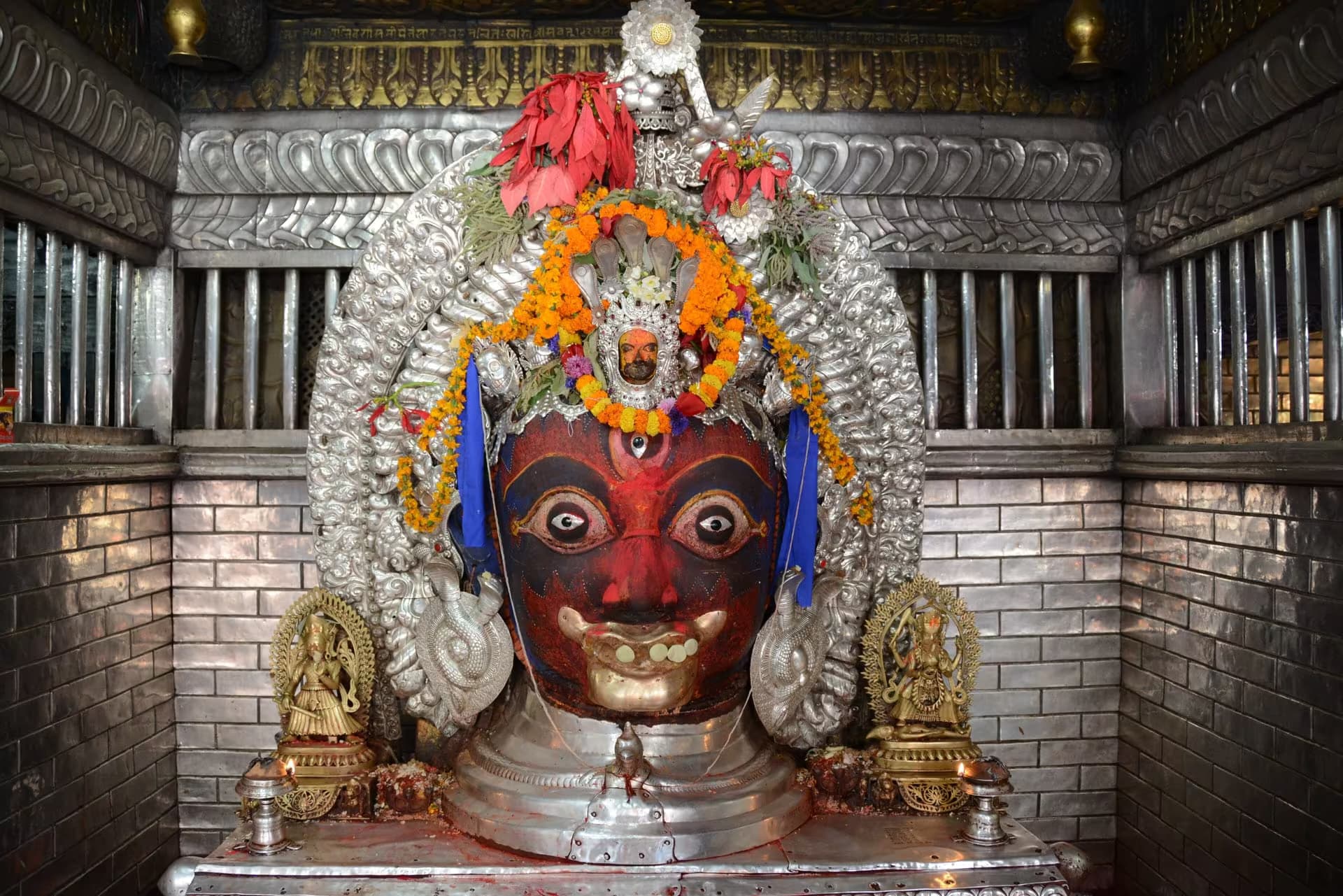
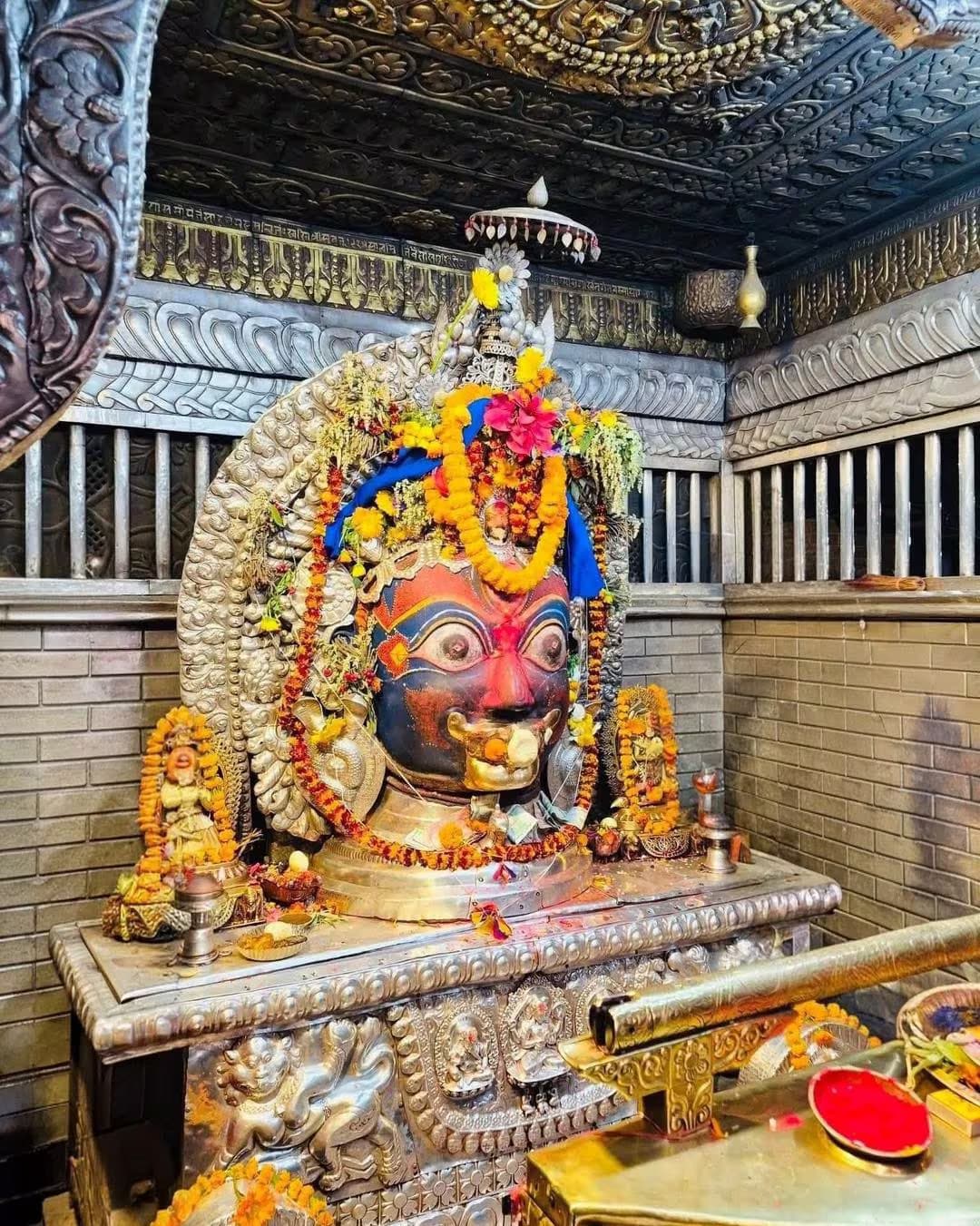
Akash Bhairav Temple
At Indra Chowk on the Thaneya route, where the silver head is brought down to street level
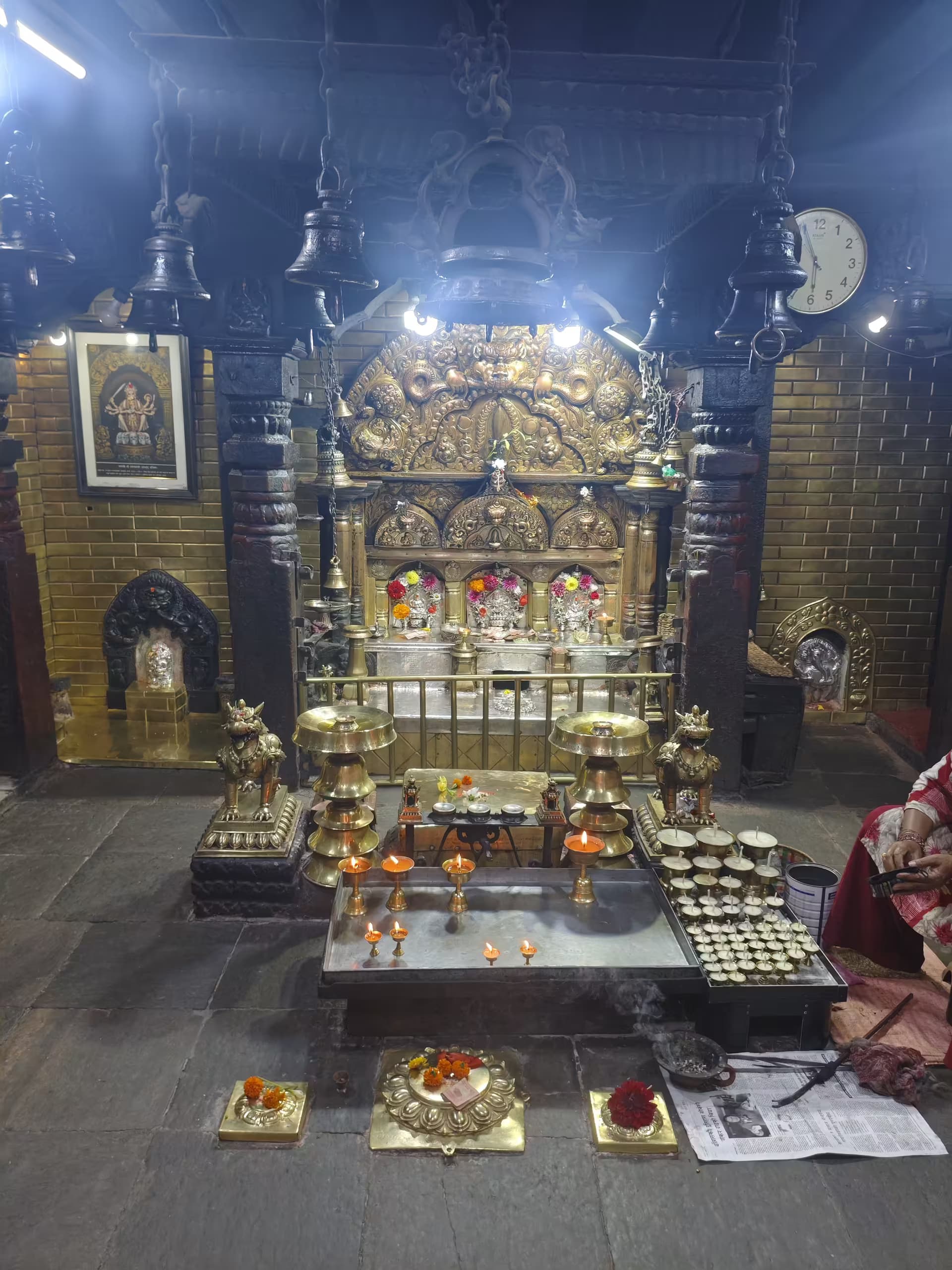
Naradevi Temple
On the inner-lane return leg of the Kwaneya route
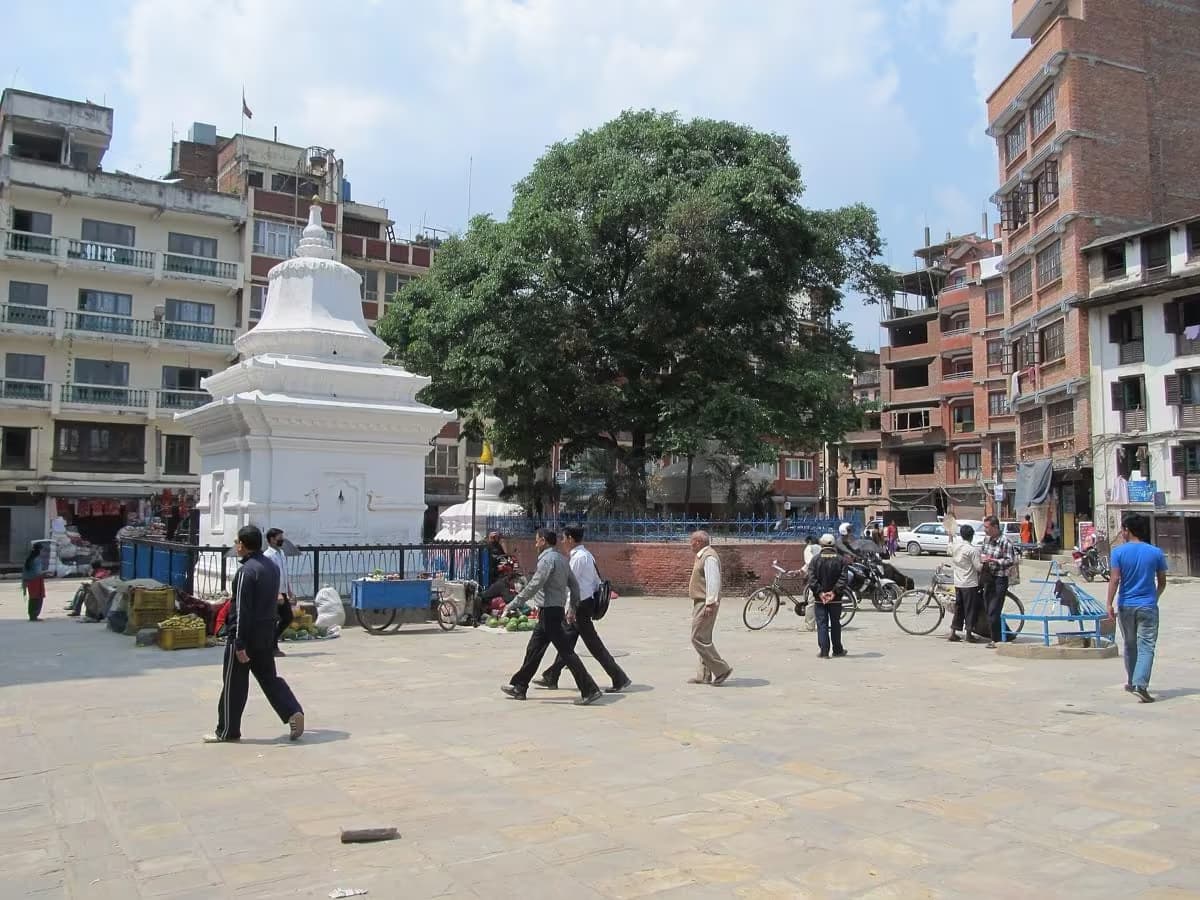
Lagan Bahal (Kirtipunya Mahavihar)
In Lagan Tole, one of the oldest quarters the long southern route threads through
Deities & Presences
Rituals & Ceremonies
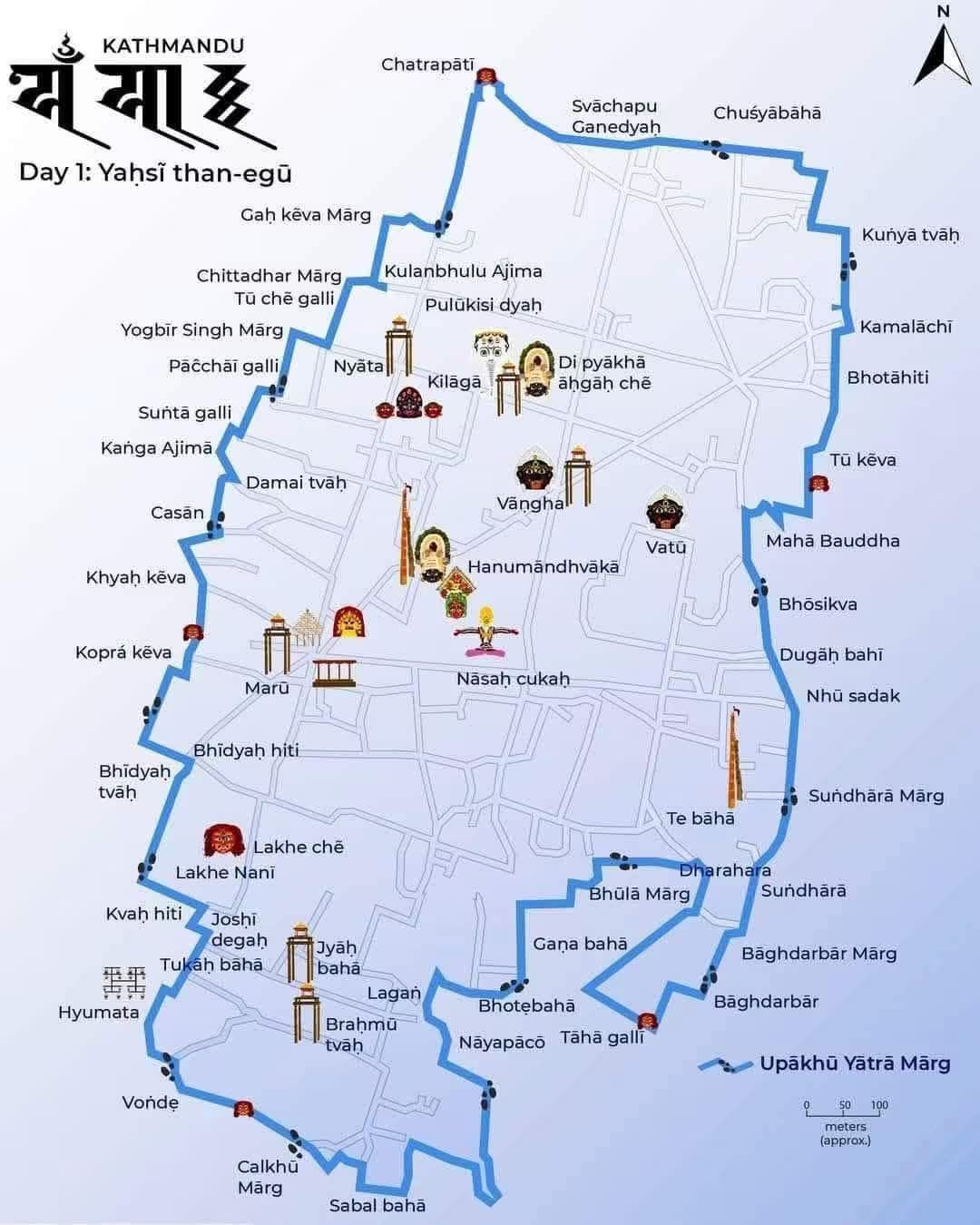
Procession Routes
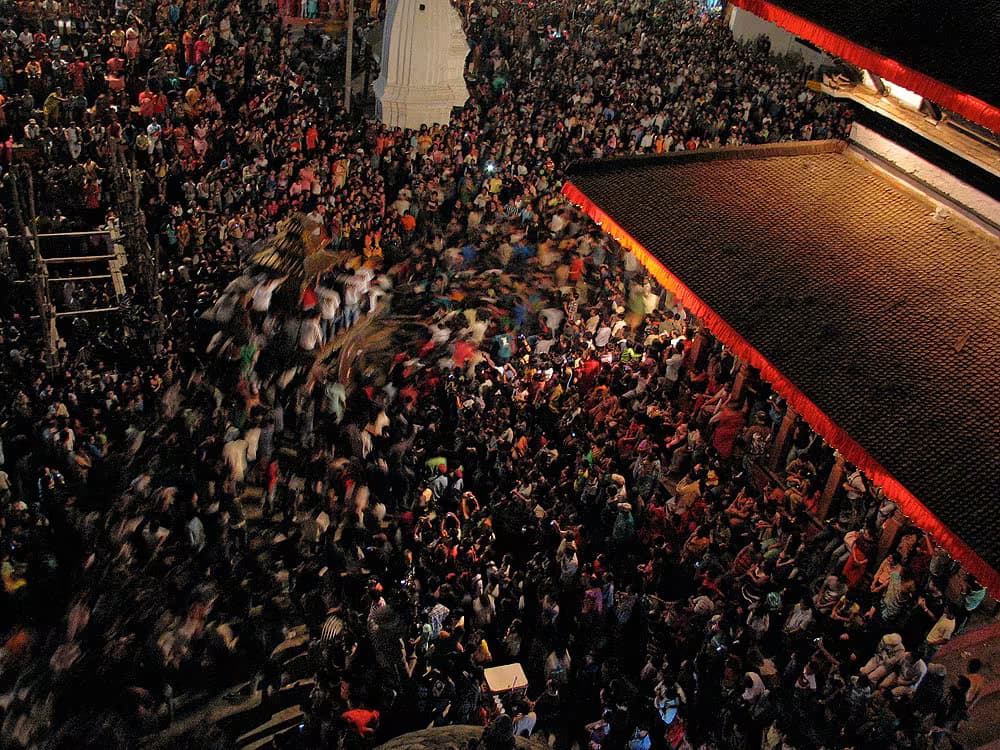
Part of Indra Jatra