Indra's Elephant
In Hindu cosmology, Airavata is the white elephant of Indra, king of the gods. In the myth at the heart of Indra Jatra, when Indra descended to earth to steal parijat flowers from a garden in the Kathmandu Valley, he was captured by the Newars and held prisoner. His elephant, unable to find his master, wandered the valley in distress.
Pulu Kisi — meaning literally "the white elephant" in Nepal Bhasa — is the festival's embodiment of this wandering. The name itself encodes the myth: pulu = white, kisi = elephant.
The Costume
Pulu Kisi is operated by two men concealed inside a bamboo-frame structure covered in white cloth, shaped to suggest an elephant's body. One man controls the trunk — a flexible bamboo tube that can be swung, raised, and lowered — while the other manages the rear. The result is something between a pantomime horse and a sacred processional figure: unmistakably an elephant, yet deliberately absurd in its lurching, swaying movement through the crowd.
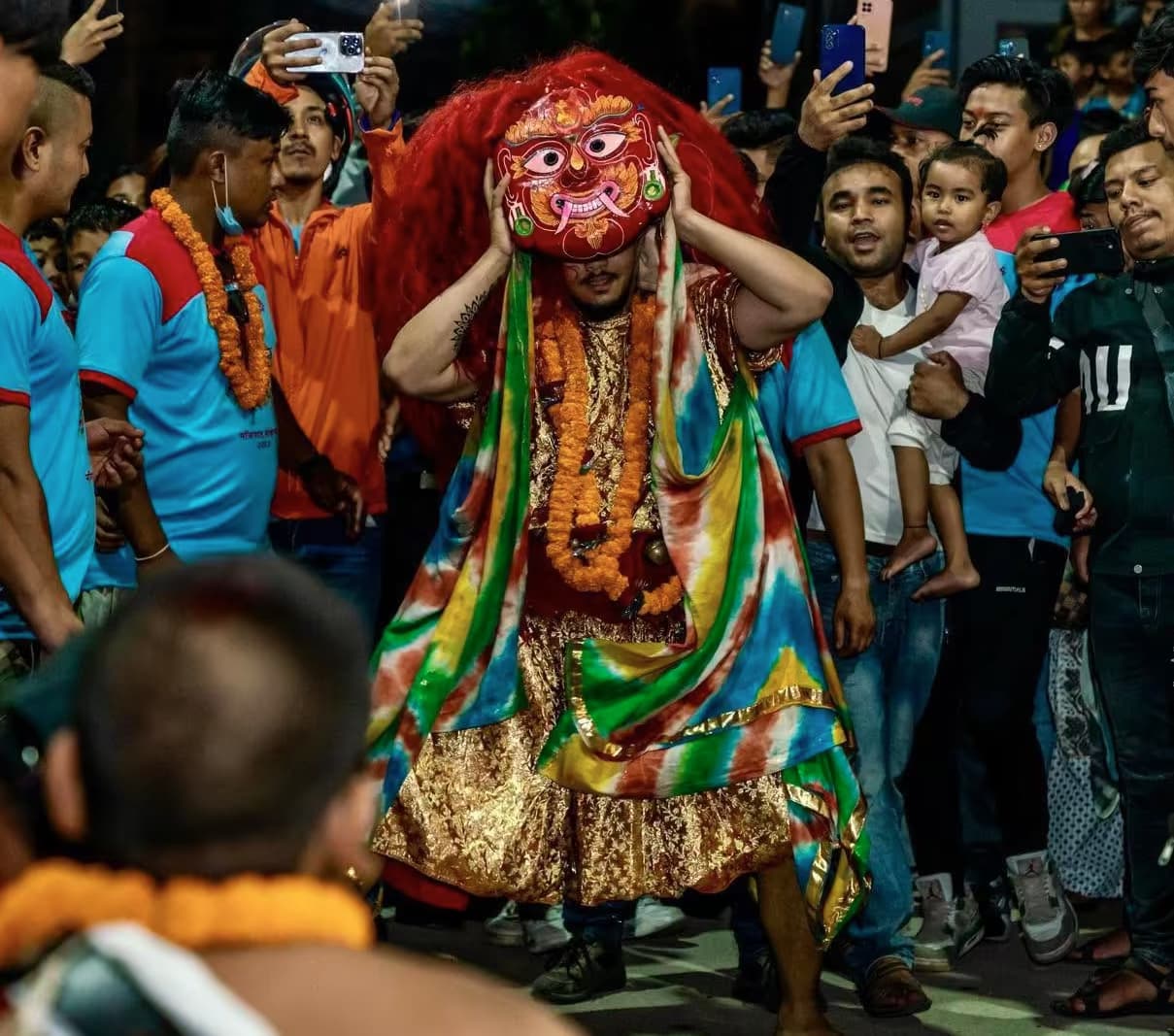
The comedic dimension is intentional and ancient. Pulu Kisi operators interact with spectators — the trunk swings toward onlookers, the elephant stumbles and recovers, bystanders scatter and return. This street theatre quality is in sharp contrast to the solemn protocol of the chariot procession, and that contrast is part of the festival's design: Indra Jatra holds comedy and solemnity, grief and celebration, simultaneously.
Myth and Message
The story of Indra's capture and release is the festival's origin narrative. According to Nepal Tourism Board sources and ethnographic accounts (including Toffin 2010), when Indra's mother — Dagin — came searching for her son and learned what had happened, the Newars released Indra. In exchange, Indra's mother promised to bless the recently deceased of the valley and guide their souls, and Indra himself promised to provide dew (essential for crops) for the coming season. Pulu Kisi's wandering search enacts the story's crisis — the moment before resolution — each year.
Performance
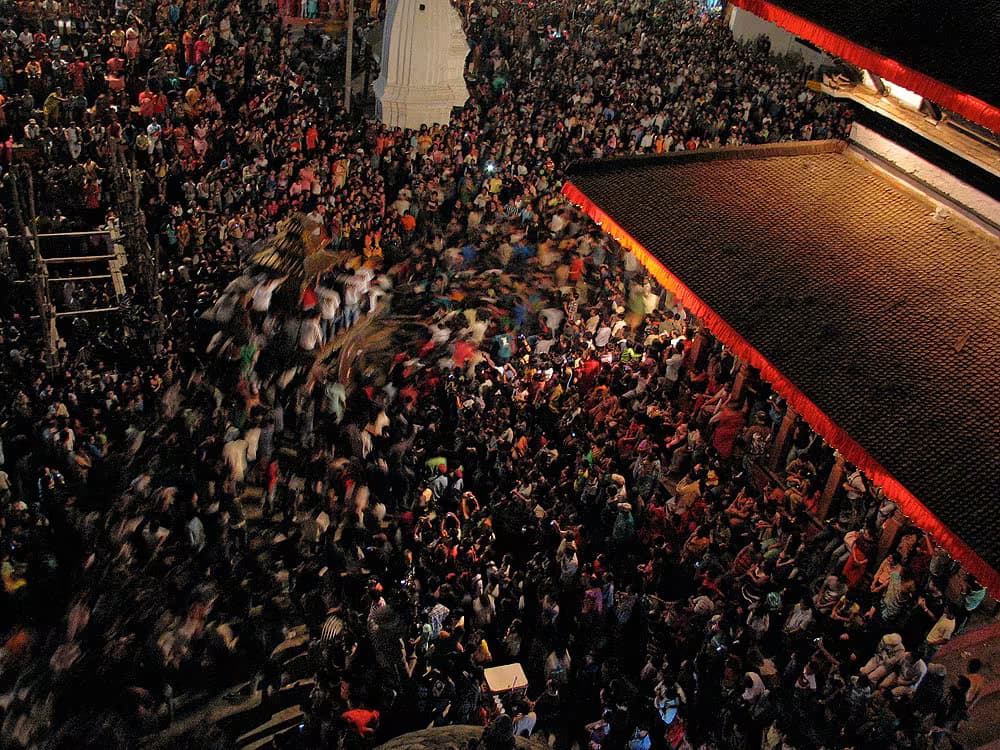
Pulu Kisi appears on each of the three chariot days, often moving independently of the chariot procession — darting into side lanes, doubling back through the crowd, creating its own chaotic path through the festival geography. Children chase it; adults pretend to flee. The contrast with the Kumari's solemn, rope-hauled progress is complete.
Related
Connected places and entries worth pairing
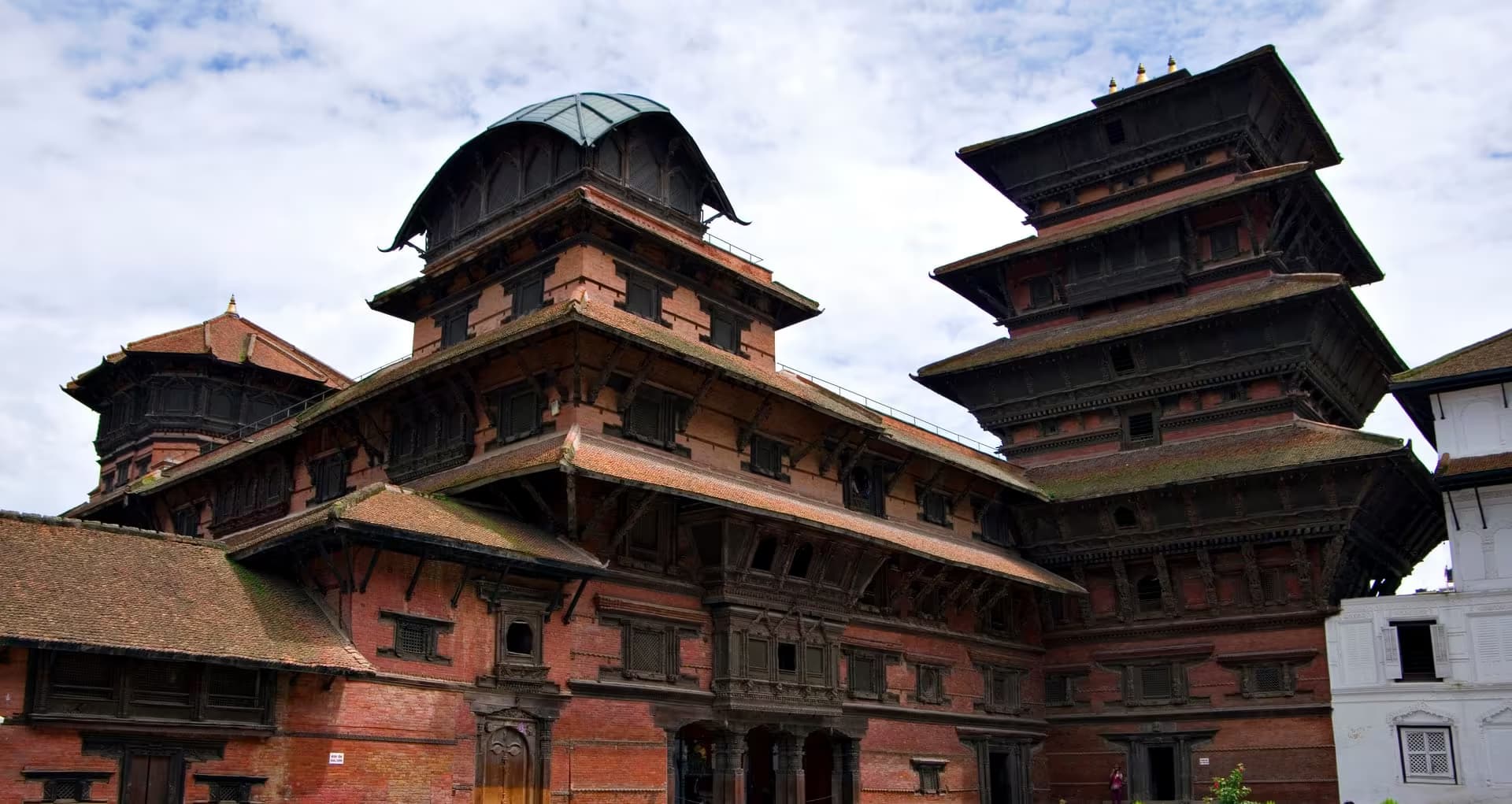
Kathmandu Durbar Square
The eight-day street festival centres on the square and the lanes around Hanuman Dhoka
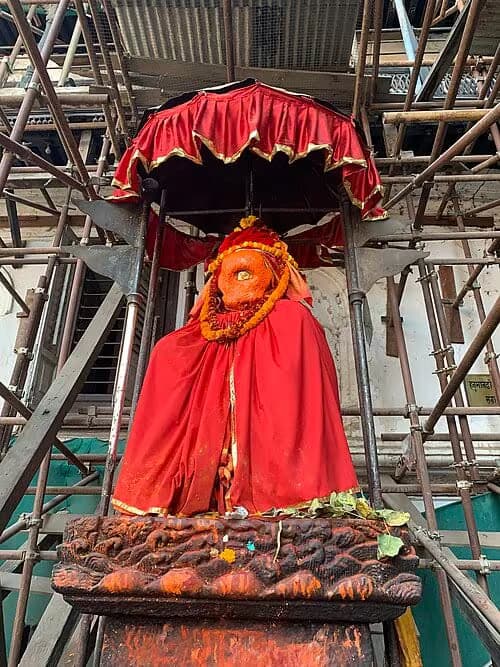
Hanuman Statue (Hanuman Dhoka)
The old royal palace entrance, where the Yosin pole rituals happen
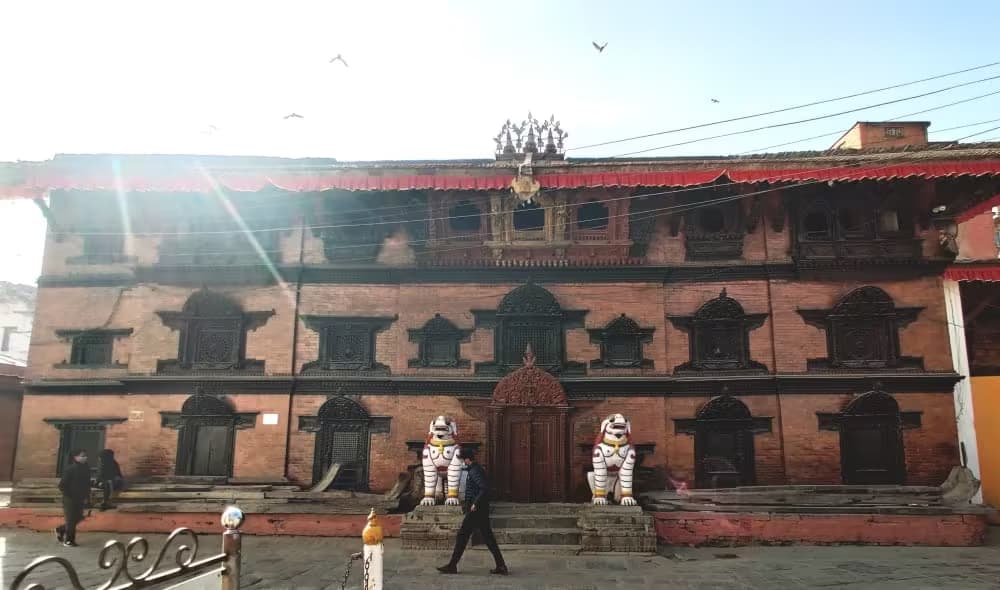
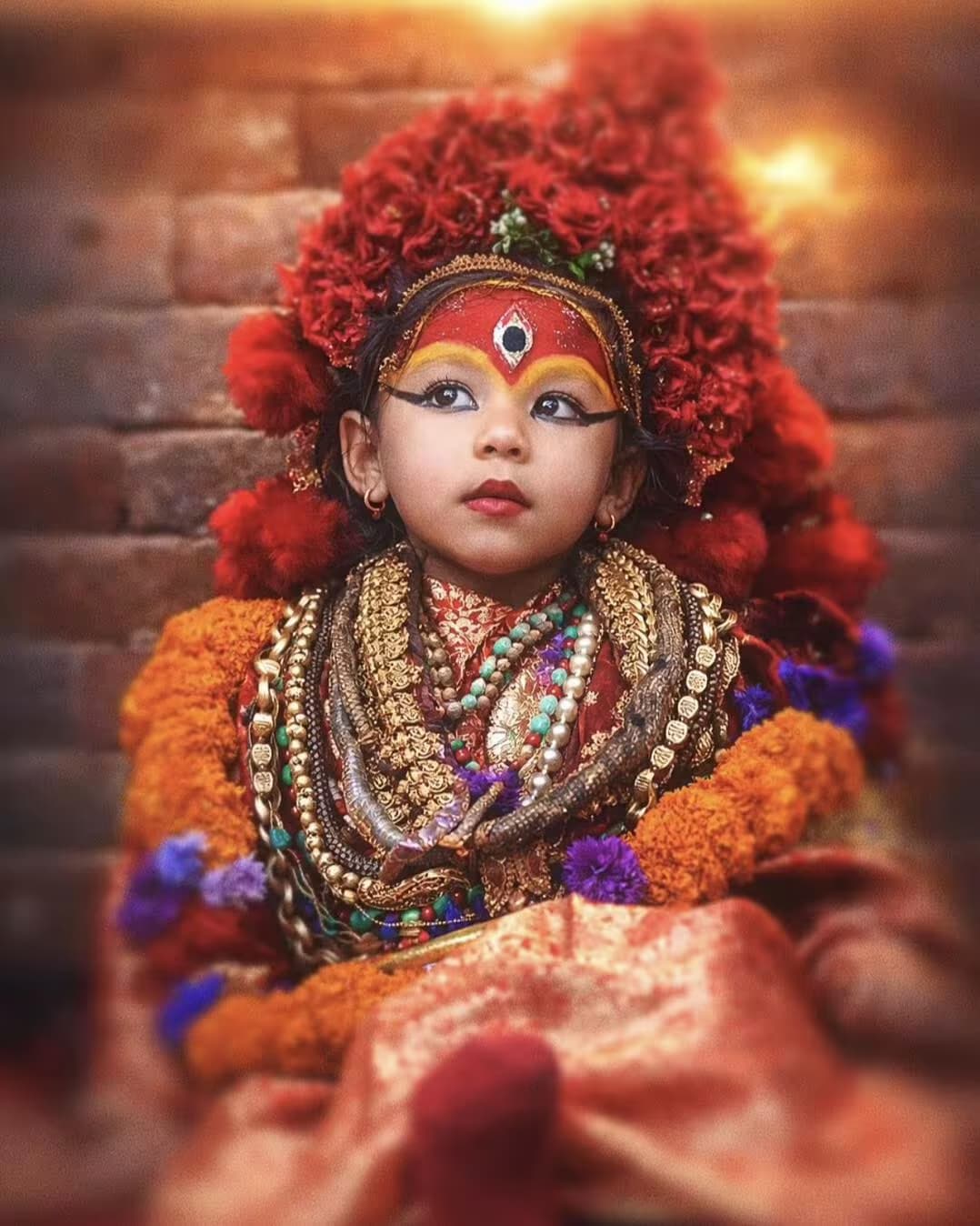
Kumari Ghar
The Kumari's residence, a few steps from where her chariot waits
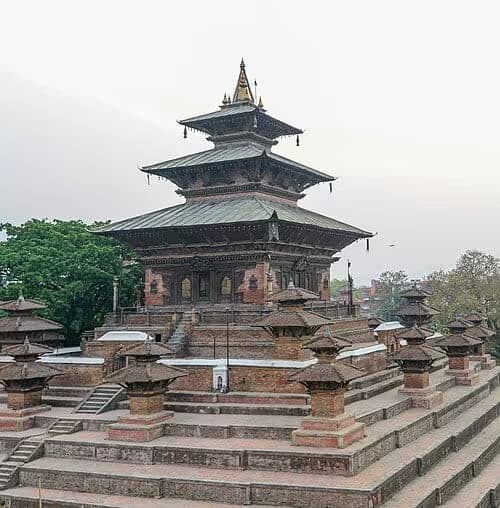
Taleju Temple
The Malla kings' tutelary goddess, whose main gate the Thaneya route passes at Makhan Tole
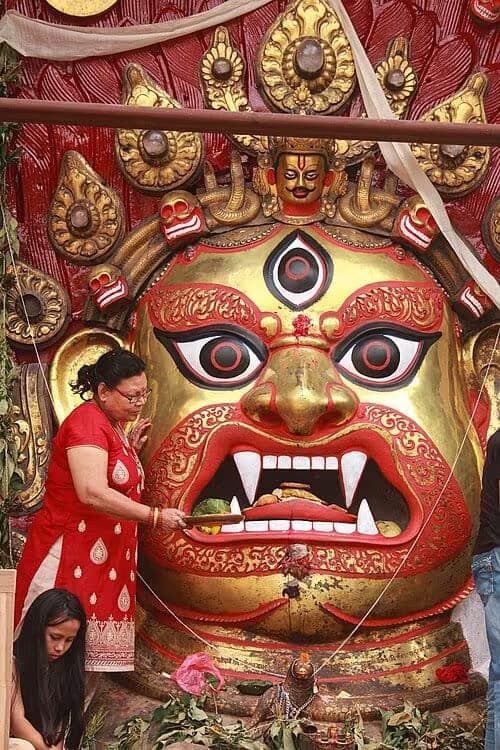
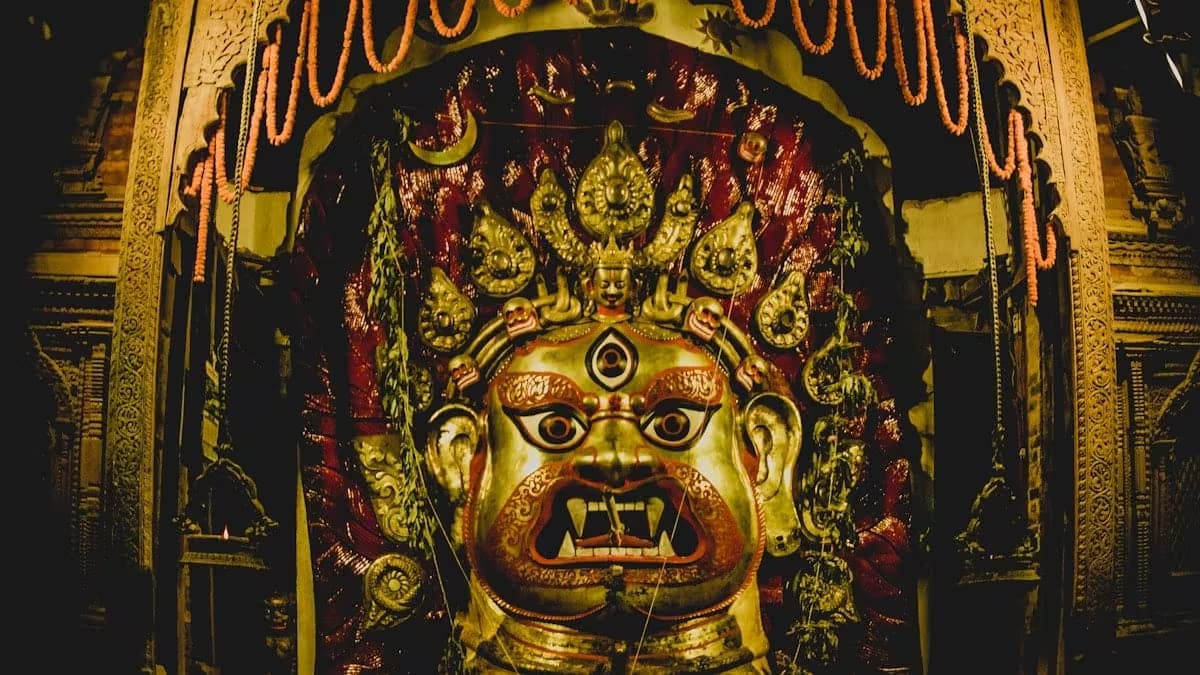
Swet Bhairav
The gilded screen at Makhan Tole, opened for only these eight days of the year
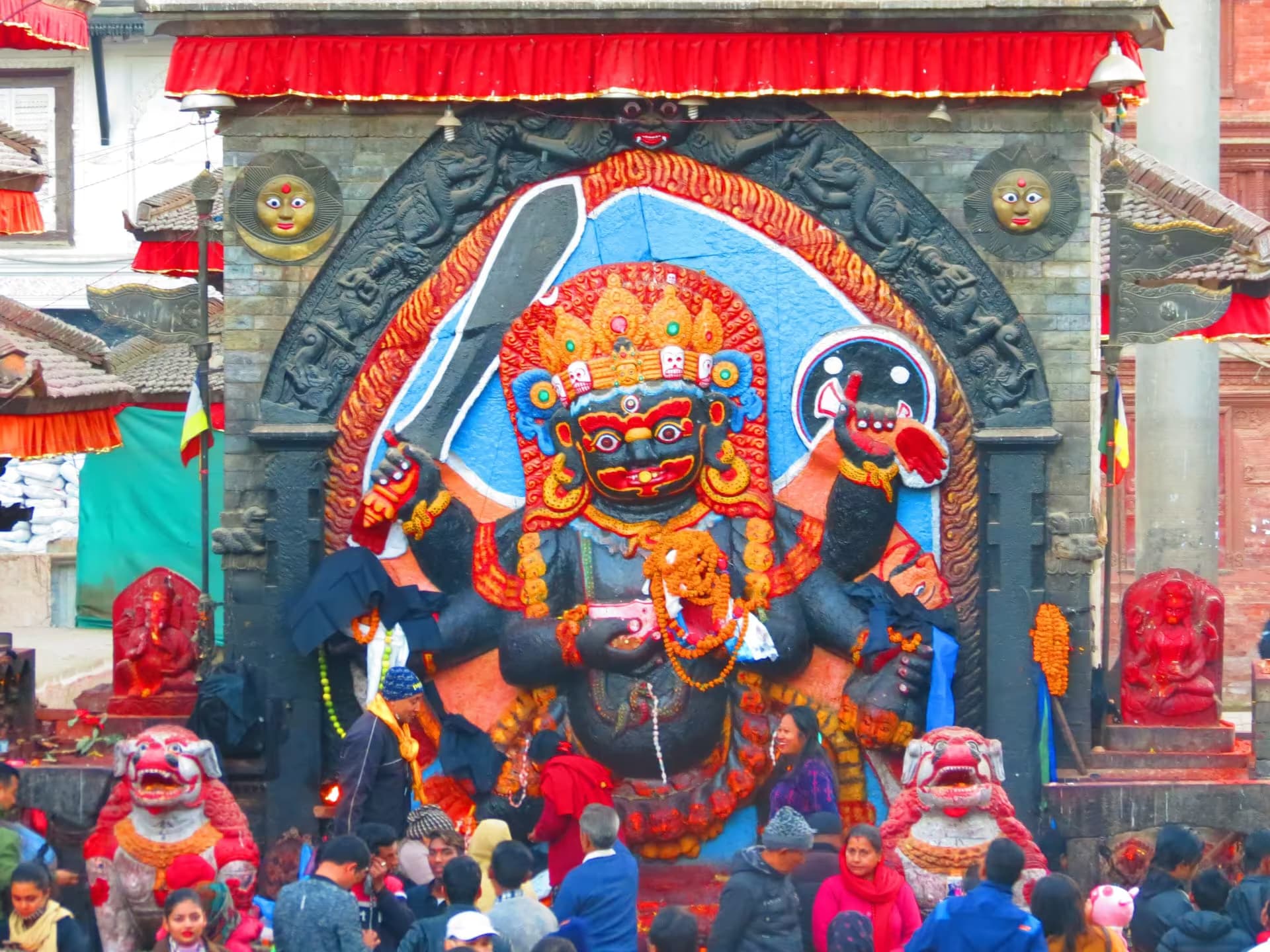
Kal Bhairav
The great stone Bhairav on the square, drawing worship through the festival week
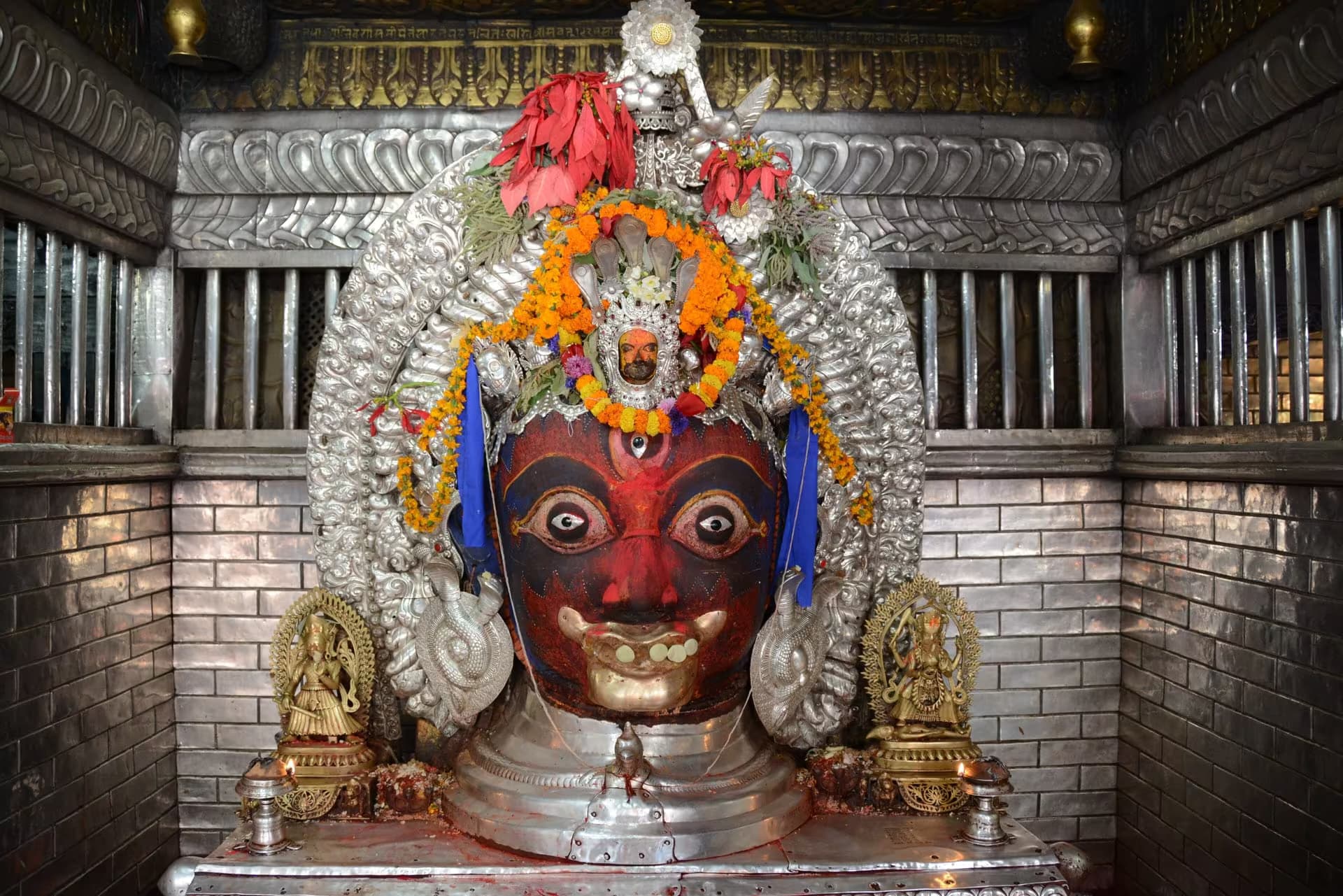
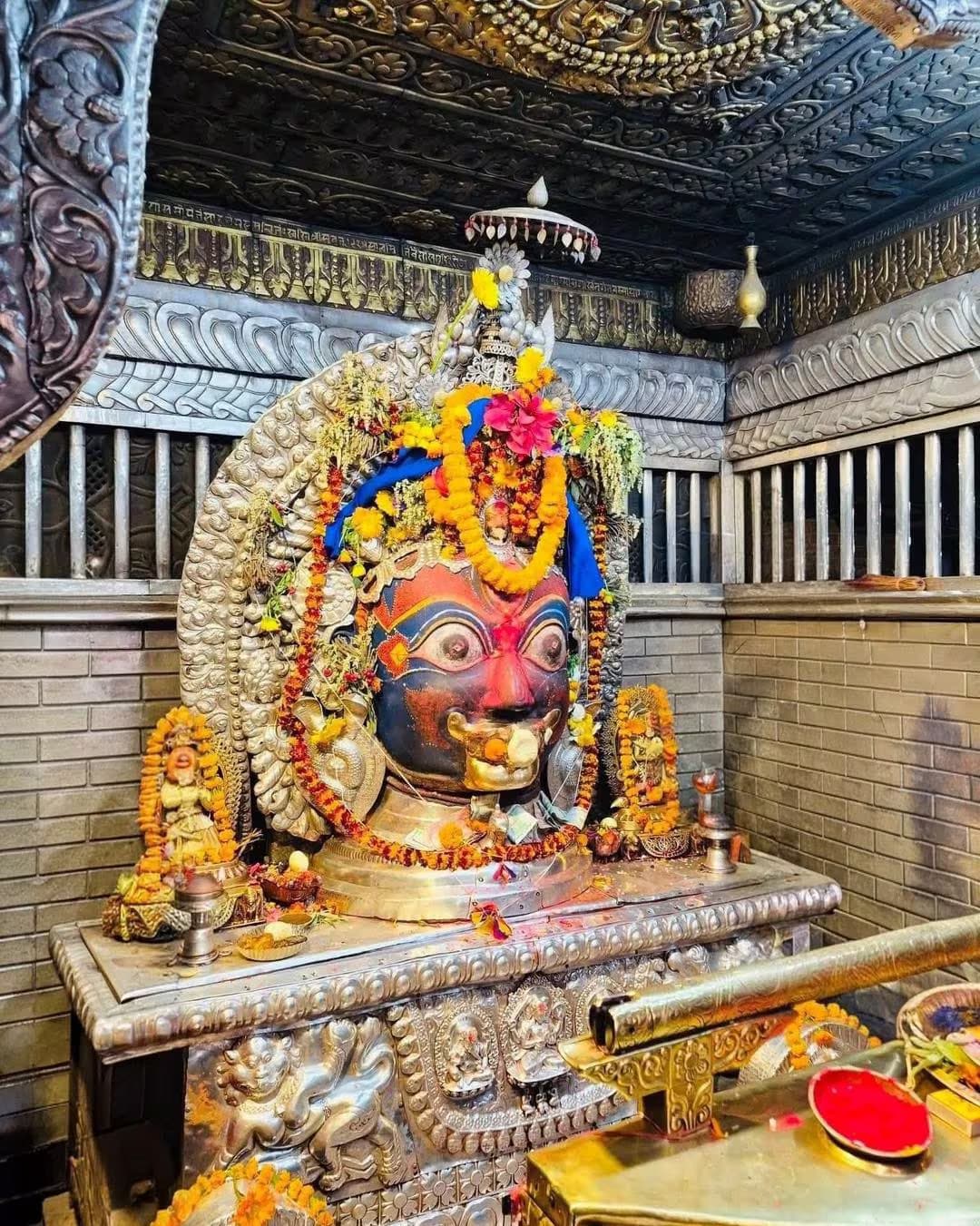
Akash Bhairav Temple
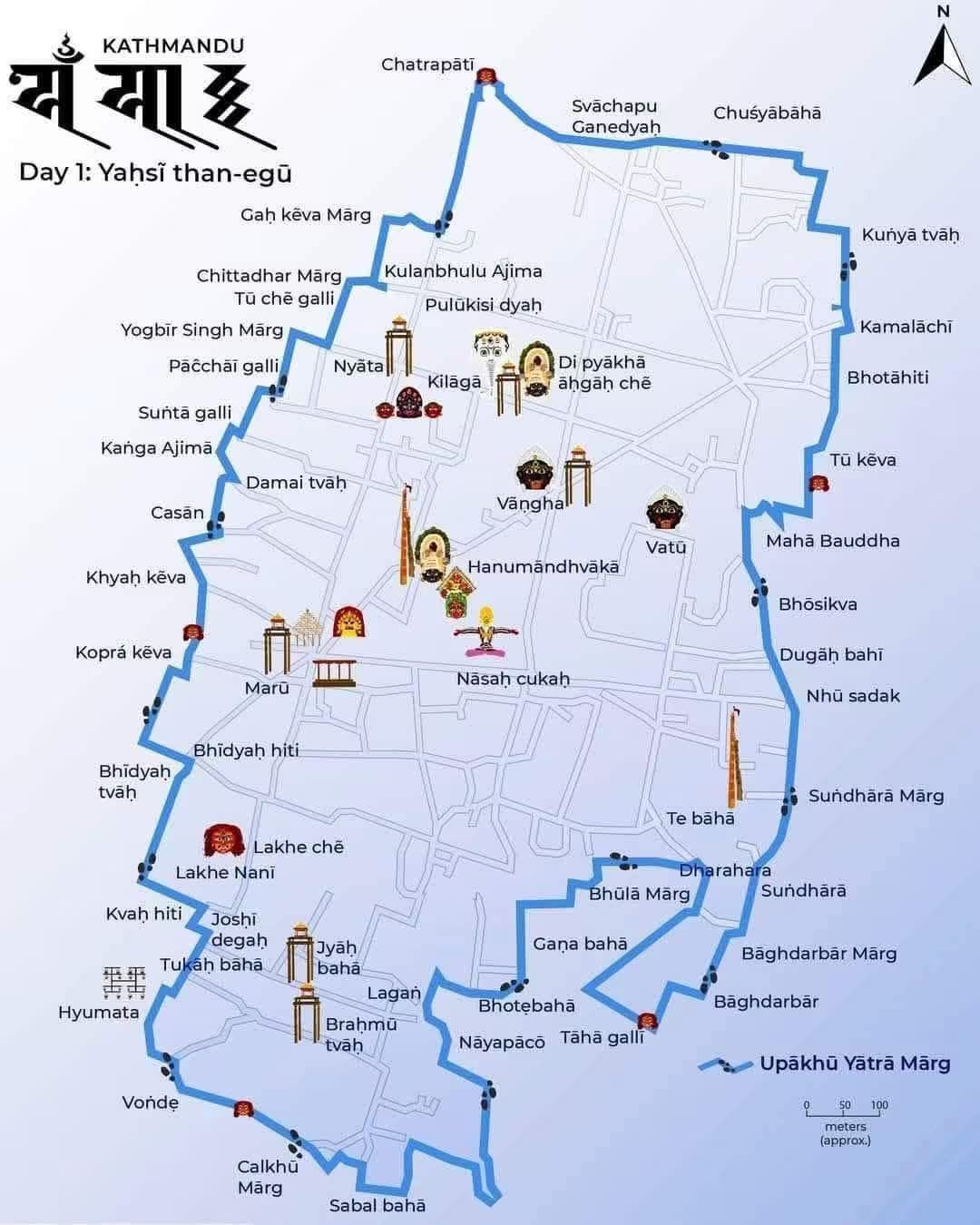
At Indra Chowk on the Thaneya route, where the silver head is brought down to street level
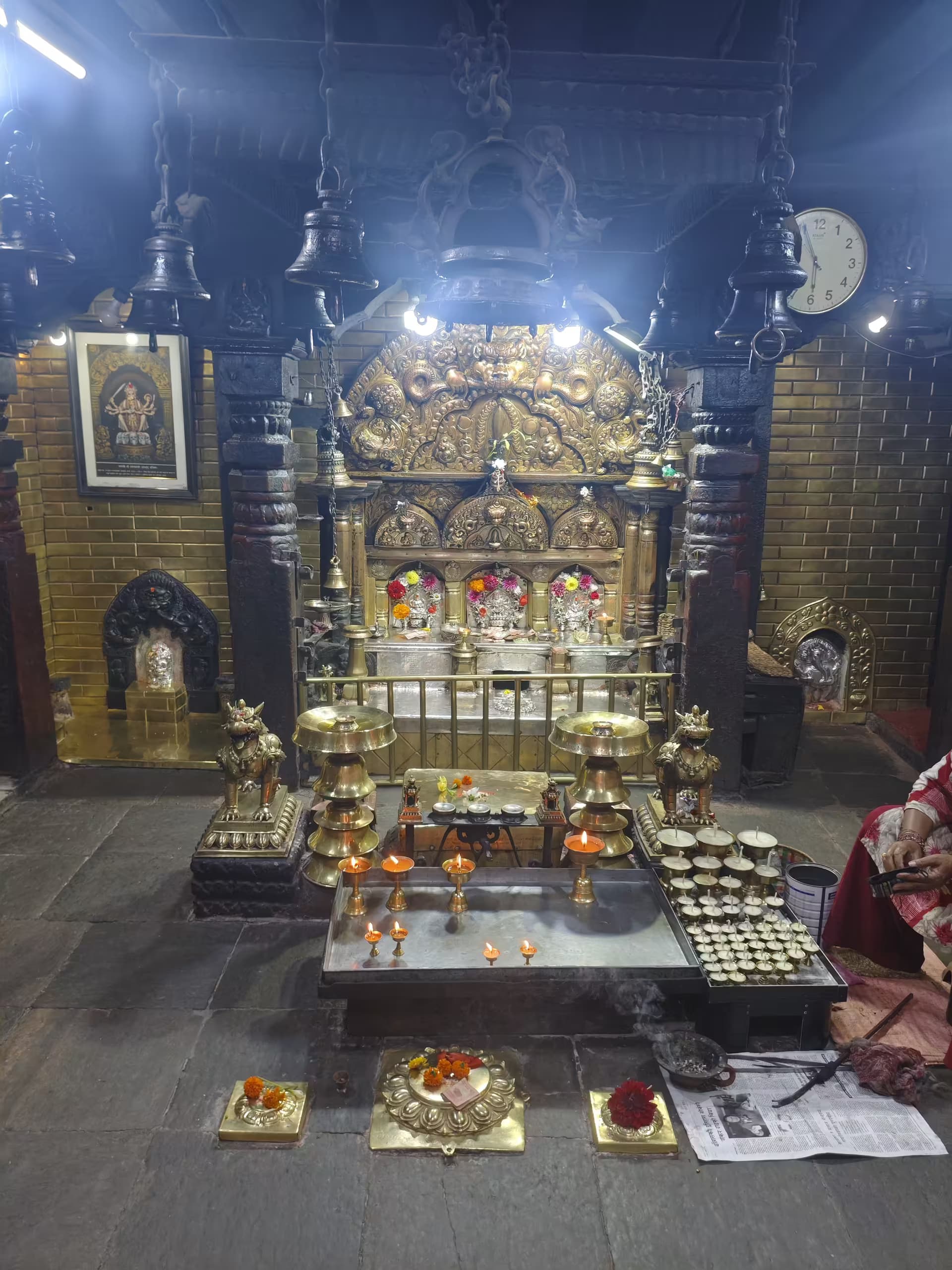
Naradevi Temple
On the inner-lane return leg of the Kwaneya route
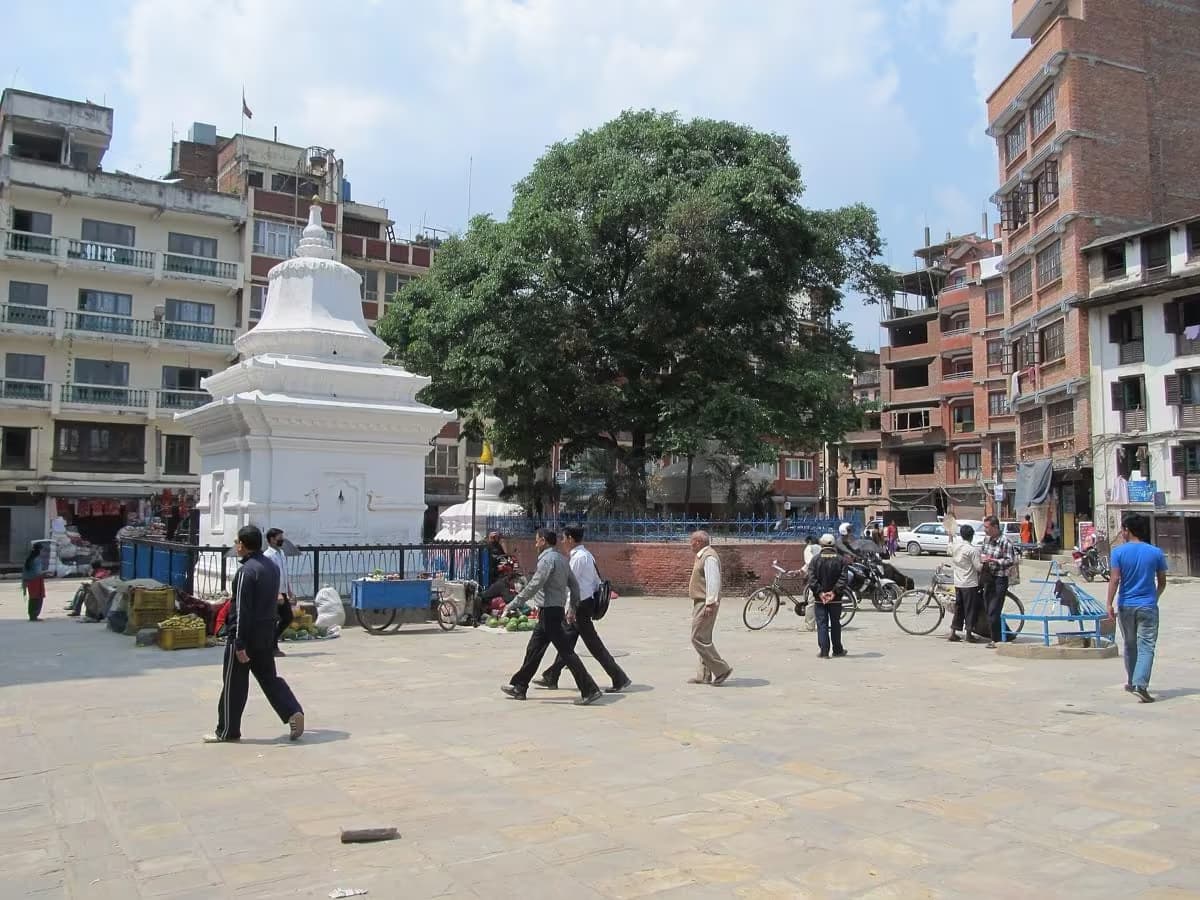
Lagan Bahal (Kirtipunya Mahavihar)
In Lagan Tole, one of the oldest quarters the long southern route threads through
Deities & Presences
Dances
Characters
Rituals & Ceremonies
Procession Routes
Part of Indra Jatra