The Love Story of a Demon
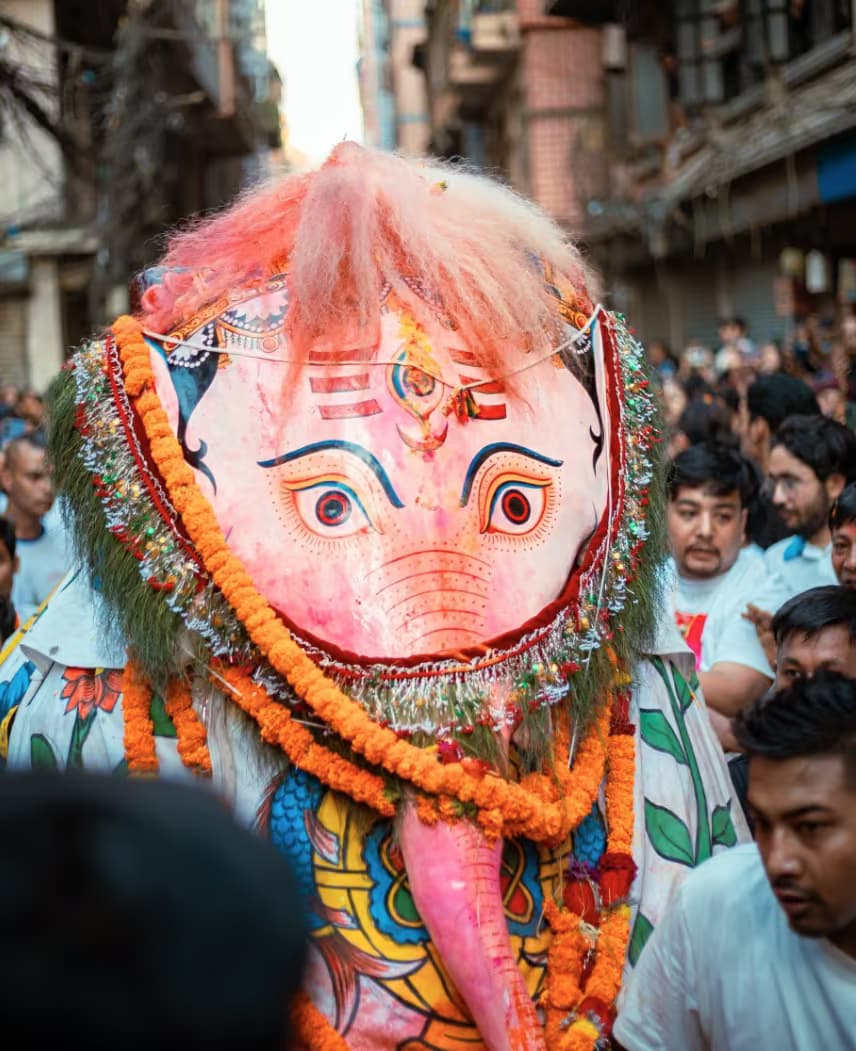
Lakhey is the demon of Newar folk tradition — a rakshasa, a flesh-eating spirit of the forest and the crossroads. In most South Asian traditions such creatures are threats to be propitiated or expelled. In Kathmandu's Indra Jatra, something more complex occurs: the Lakhey has been domesticated by love.
The story varies in its details, but the essential arc is consistent across sources: a Lakhey from the Majipa tole (one of the old Newar quarters of Kathmandu) fell in love with a human woman. He revealed his true nature to her, and rather than fleeing, she chose to remain with him. From that union — or from the transformative power of that love — the Majipa Lakhey became a protector rather than a predator. He now dances through Kathmandu each year not to hunt but to guard: his terrifying appearance drives away malevolent spirits that would otherwise harm the city's inhabitants.
The Dance
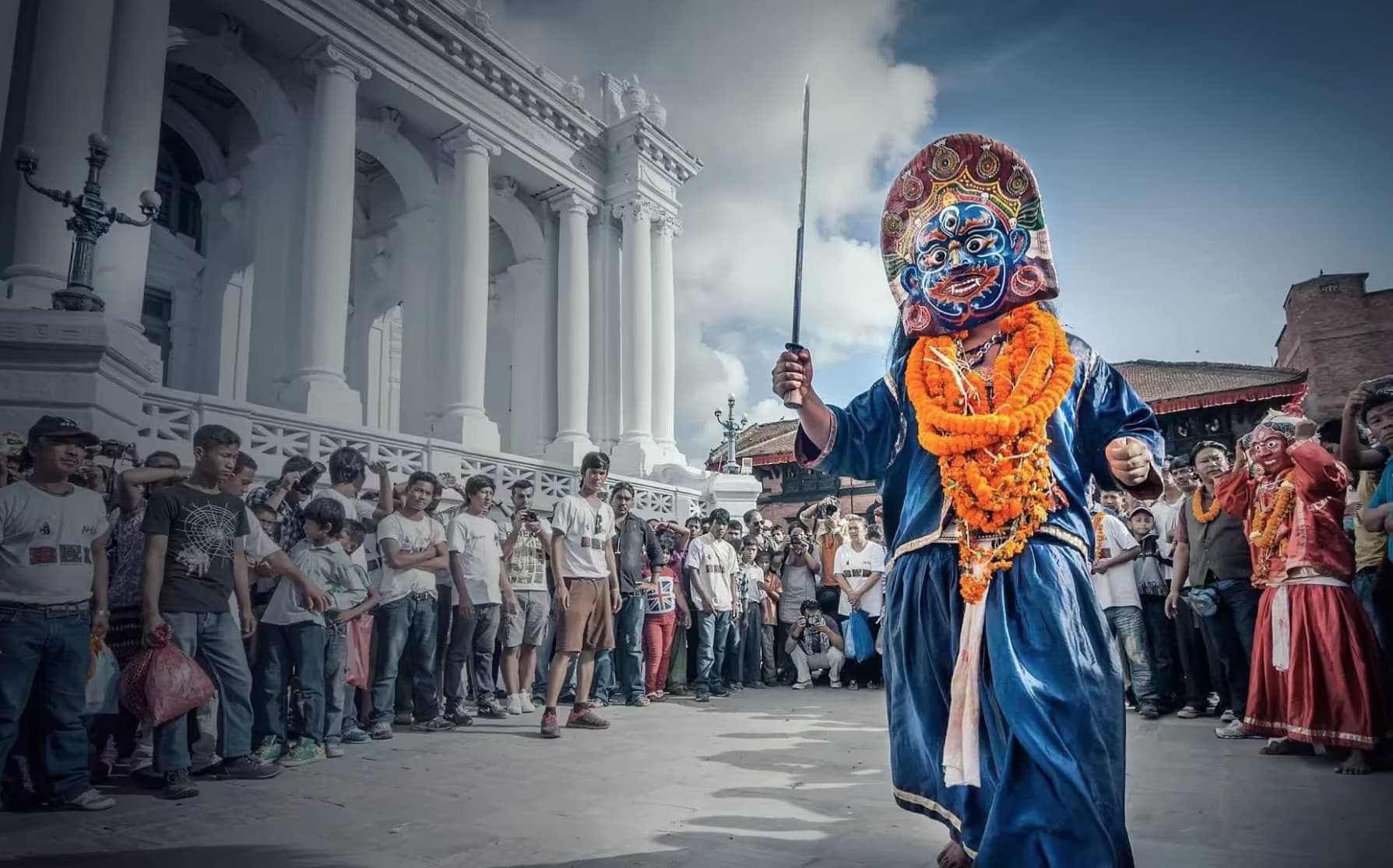
The Majipa Lakhey's performance begins each evening of Indra Jatra, accompanied by the dhime drum — a large barrel drum struck with a curved beater, its deep, resonant boom providing the characteristic rhythm of the dance. The dancer wears an elaborate red costume with a fringe of black hair and a heavy wooden mask depicting the Lakhey's face: bulging eyes, protruding fangs, red and gold colouring.
The mask is heavy — ethnographic sources suggest it may weigh several kilograms, though the exact figure has not been independently verified — and the dancer manipulates it through the choreography of the full body: the stamping feet, the swinging arms, the sudden pivots that set the fringe flying. The dance is not a theatrical performance in the Western sense; it is a ritual enactment, and the dancer is understood to embody the Lakhey's spirit for the duration.
Hereditary Lineage
The right to perform the Majipa Lakhey dance belongs to hereditary lineages within the Majipa Guthi — a Newar guthi (communal organisation) responsible for specific ritual duties in the Indra Jatra cycle. The dancer is selected from among the guthi's eligible members; the knowledge of the dance is transmitted within the lineage. This hereditary structure is central to Newar religious life: the guthi system ensures continuity of ritual practice across generations without dependence on state or temple institutions.
Musical Accompaniment
The dhime drum is the primary instrument of the Majipa Lakhey performance, but it is supported by the dhaa (a small cymbal-like instrument), the bhusya (large cymbals), and the muhali (a double-reed wind instrument similar to a shehnai). Together they form the Newar tantric musical ensemble that accompanies the most sacred and fierce ritual performances.
Related
Connected places and entries worth pairing
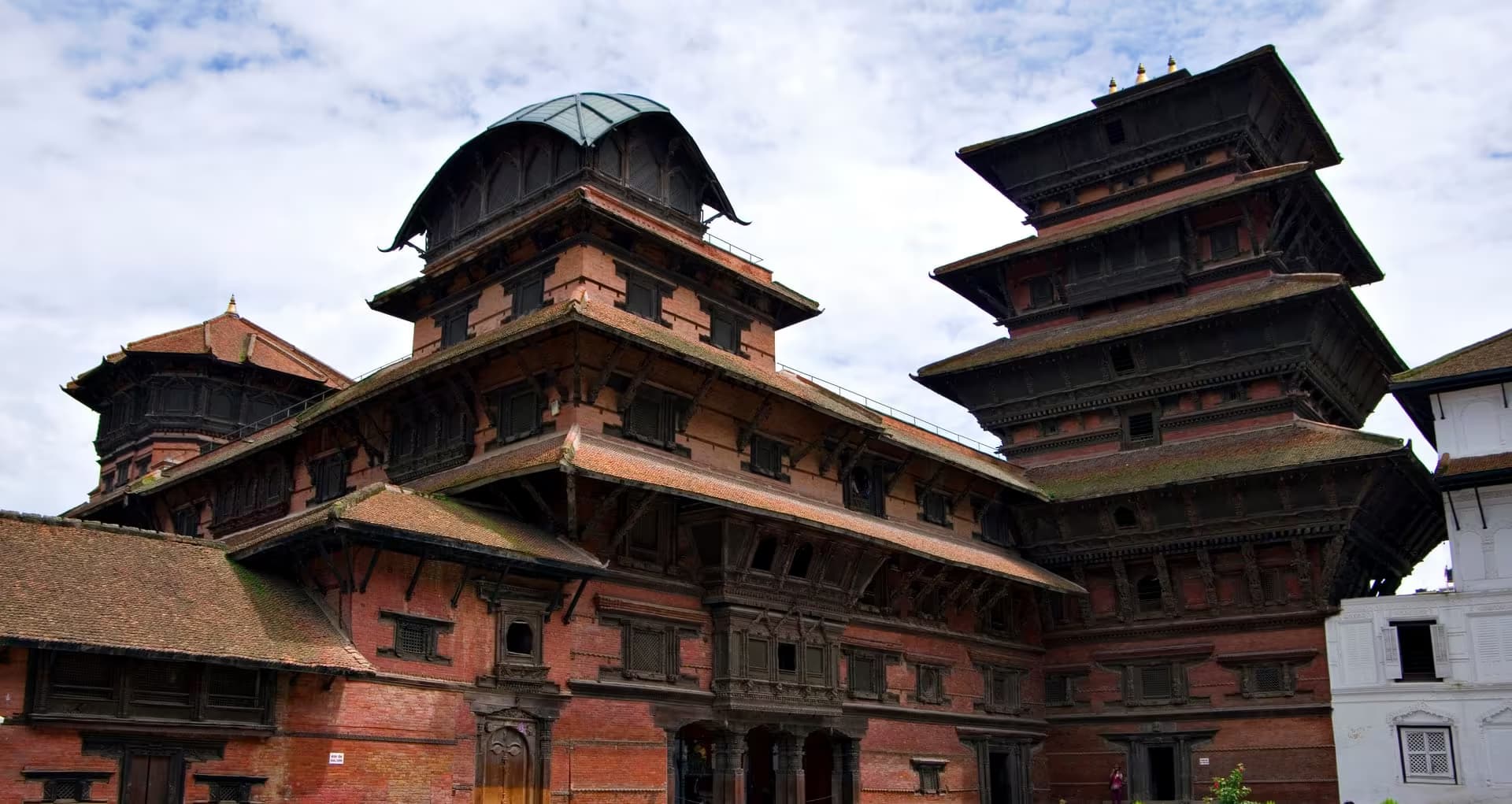
Kathmandu Durbar Square
The eight-day street festival centres on the square and the lanes around Hanuman Dhoka
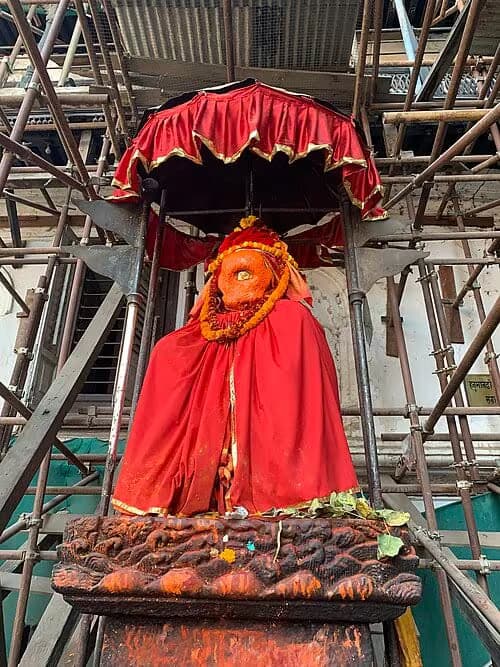
Hanuman Statue (Hanuman Dhoka)
The old royal palace entrance, where the Yosin pole rituals happen
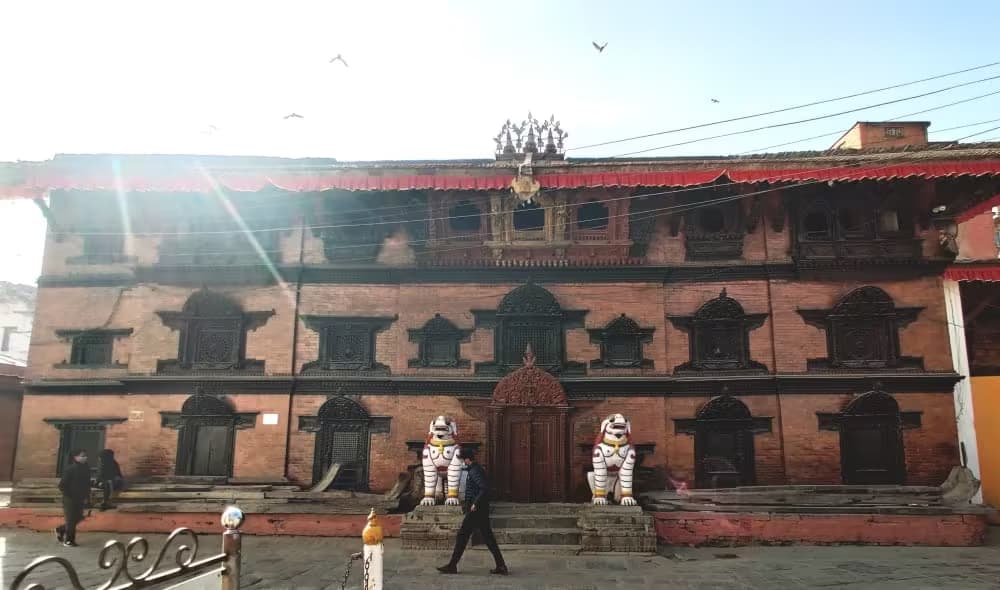
Kumari Ghar
The Kumari's residence, a few steps from where her chariot waits
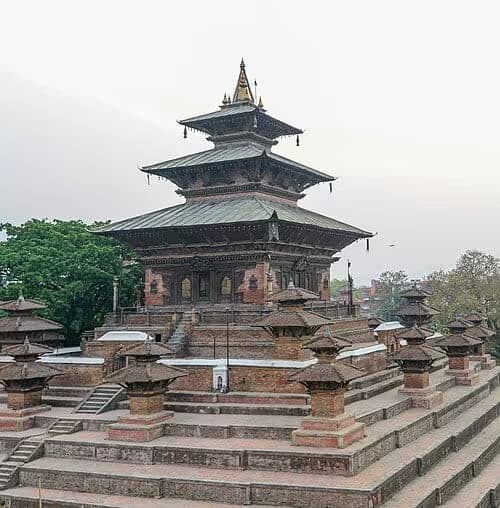
Taleju Temple
The Malla kings' tutelary goddess, whose main gate the Thaneya route passes at Makhan Tole
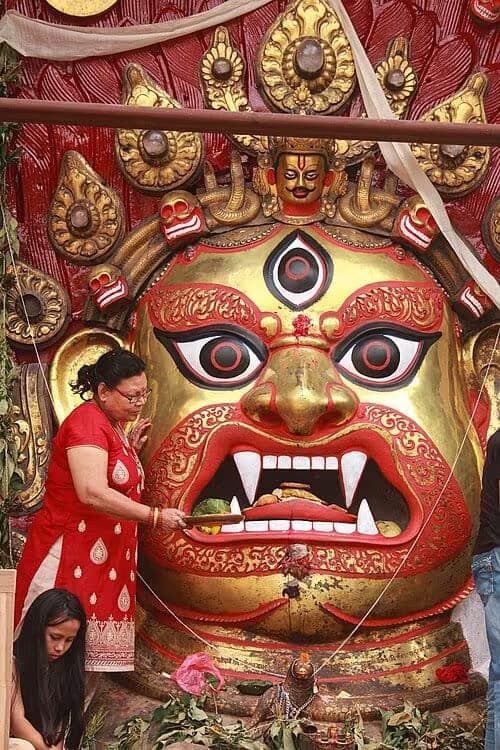
Swet Bhairav
The gilded screen at Makhan Tole, opened for only these eight days of the year
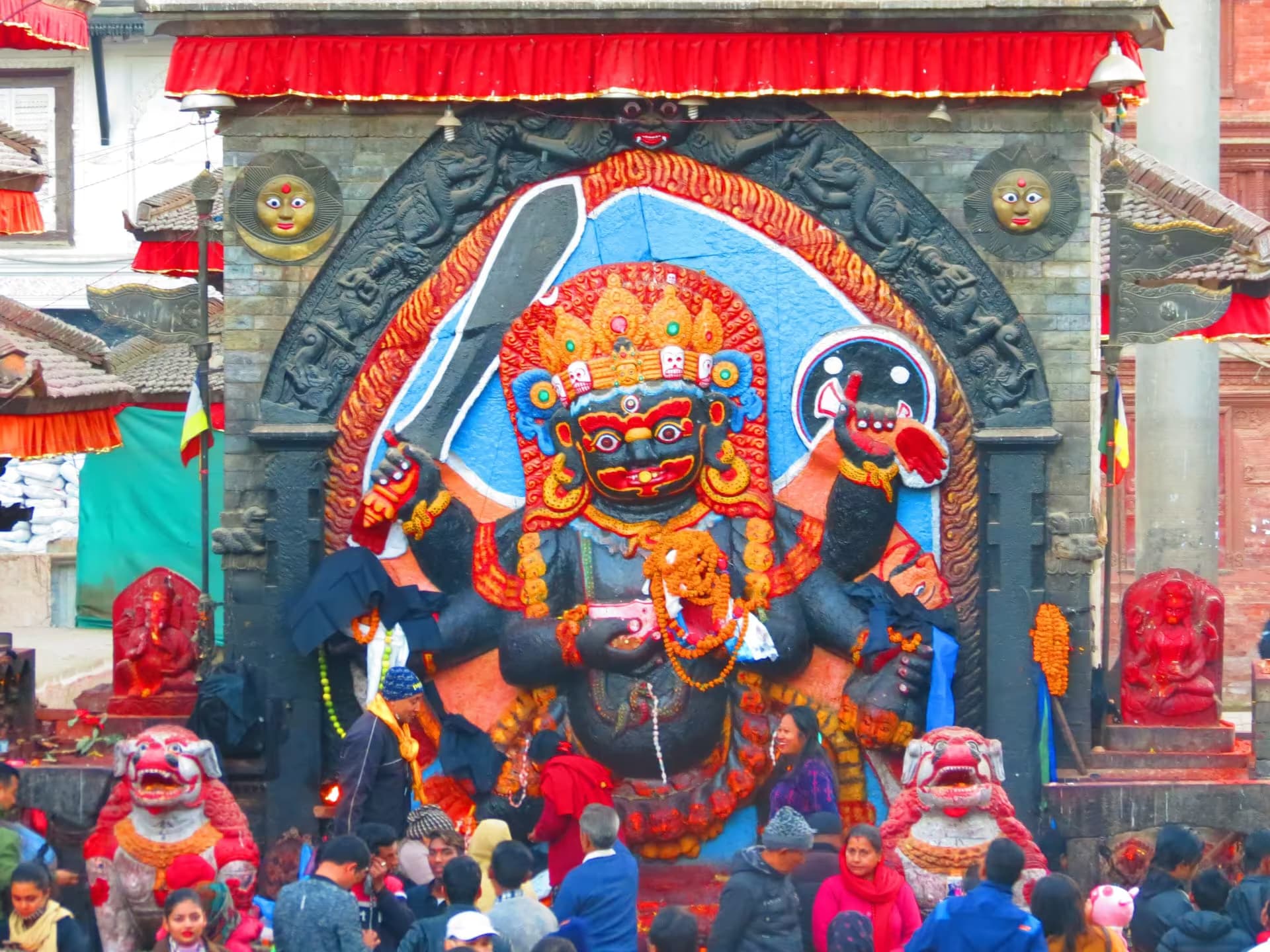
Kal Bhairav
The great stone Bhairav on the square, drawing worship through the festival week
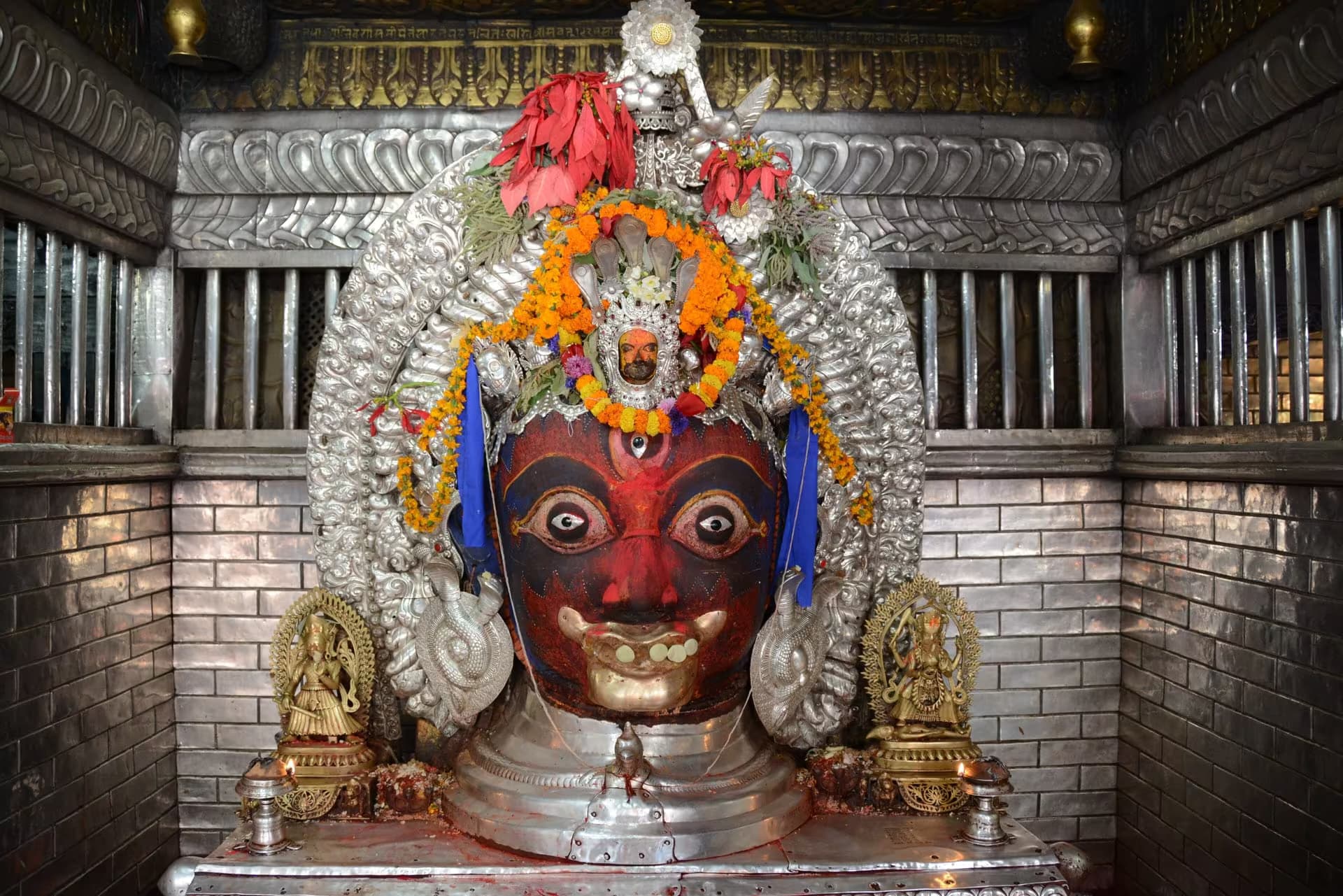
Akash Bhairav Temple
At Indra Chowk on the Thaneya route, where the silver head is brought down to street level
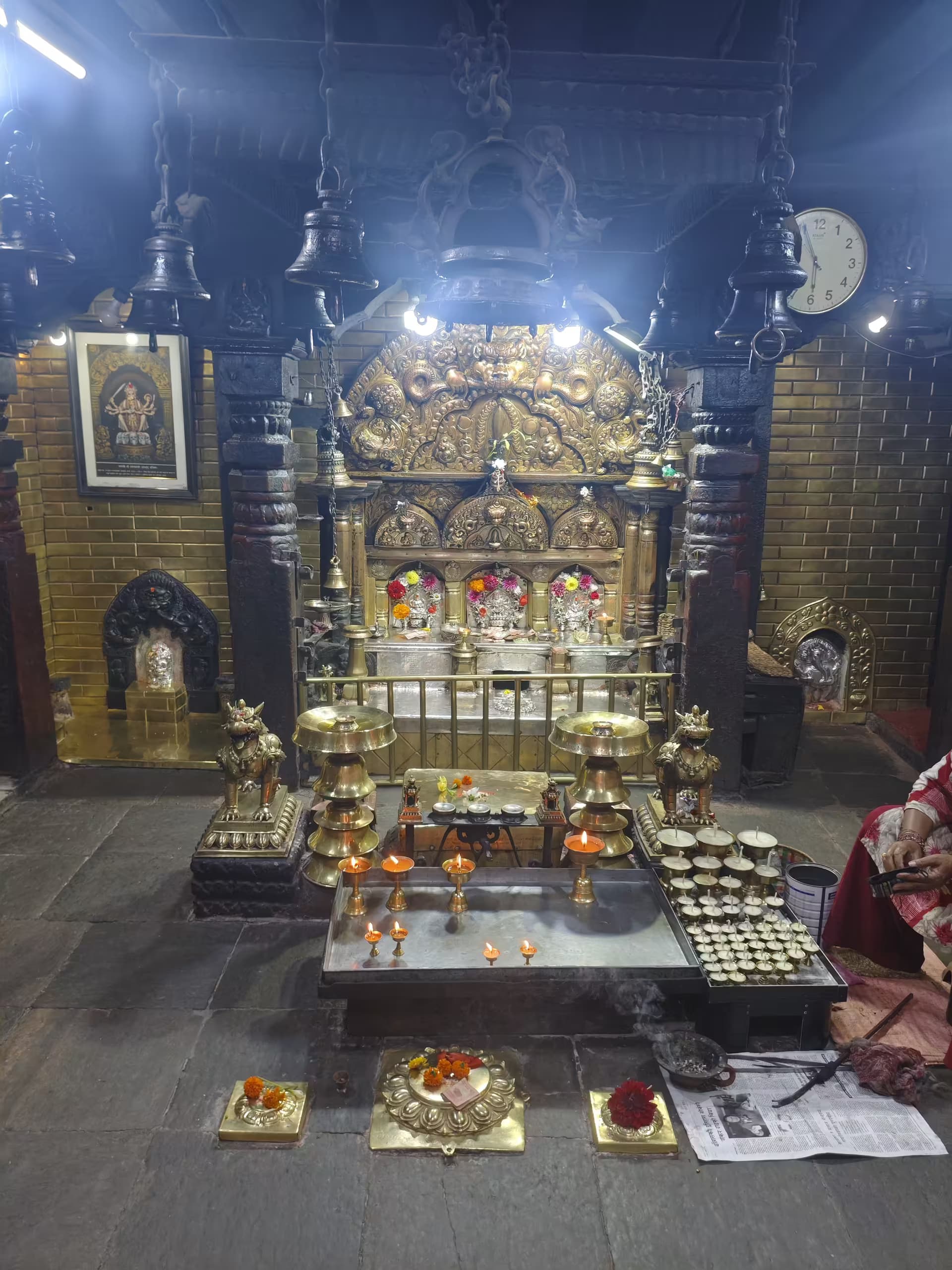
Naradevi Temple
On the inner-lane return leg of the Kwaneya route
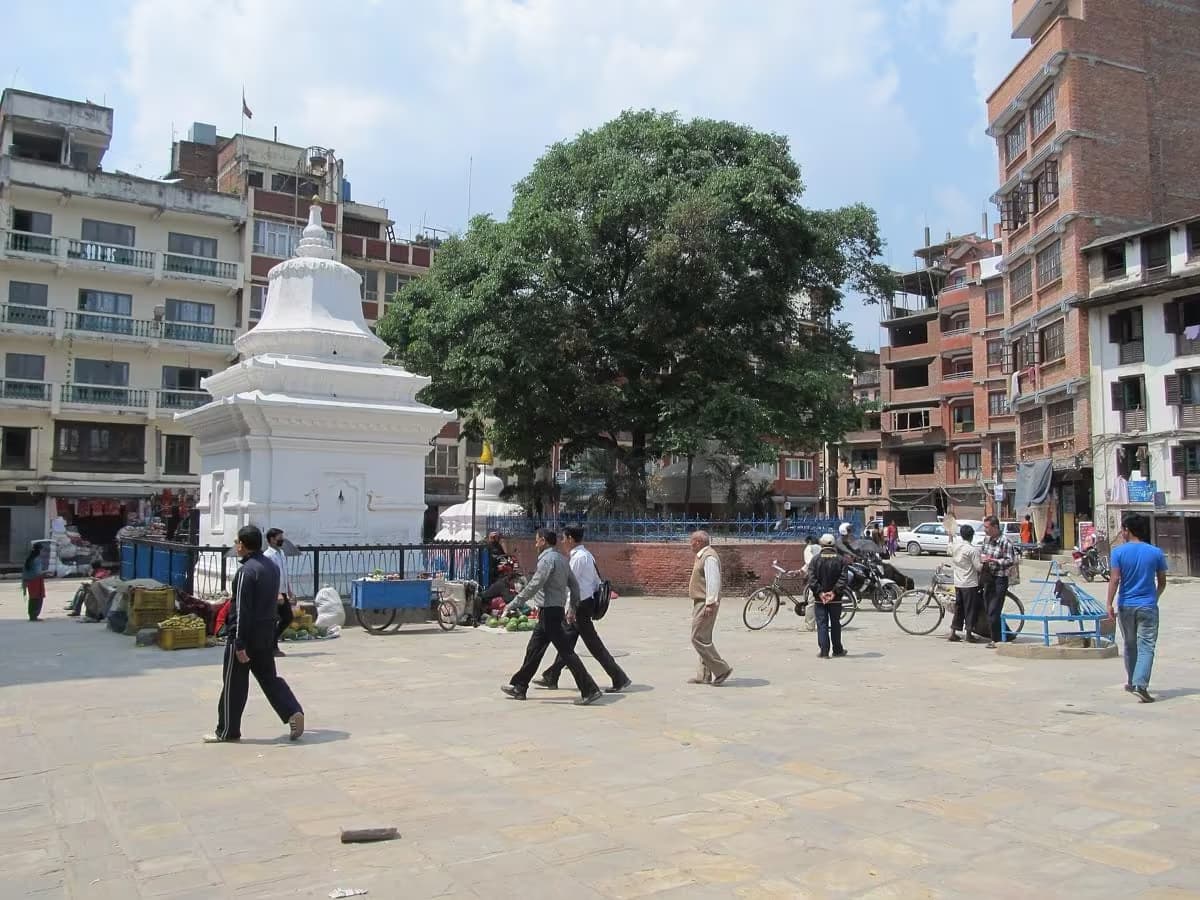
Lagan Bahal (Kirtipunya Mahavihar)
In Lagan Tole, one of the oldest quarters the long southern route threads through
Deities & Presences
Dances
Characters
Rituals & Ceremonies
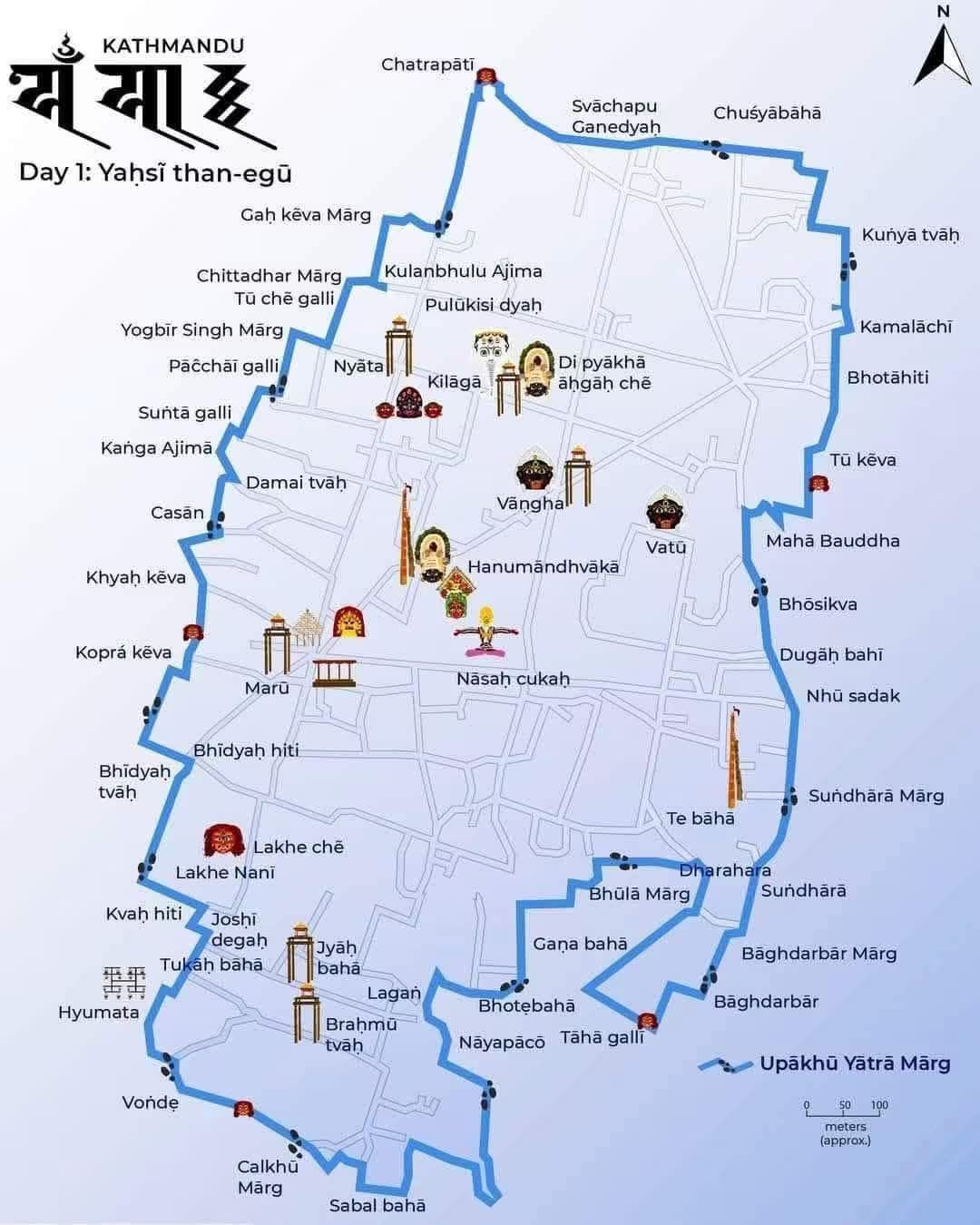
Procession Routes
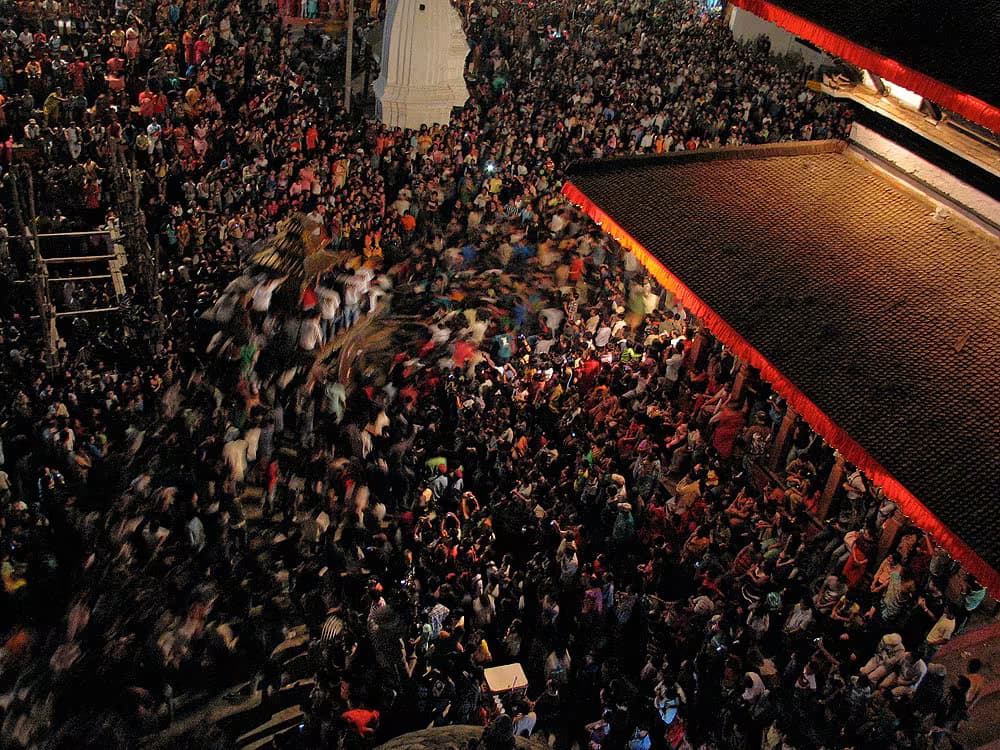
Part of Indra Jatra