Shrine · Hindu
Swet Bhairav
सेतो भैरव
Swet Bhairav (white/benevolent aspect of Bhairav)·Current mask late 18th century (Rana Bahadur Shah era)·Kathmandu
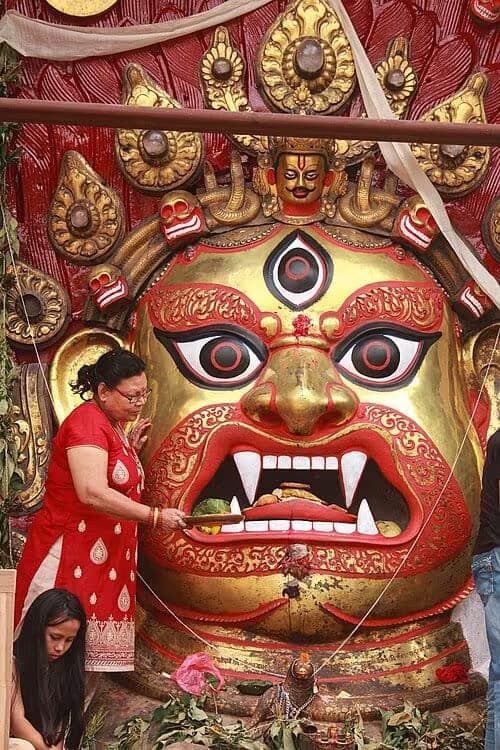
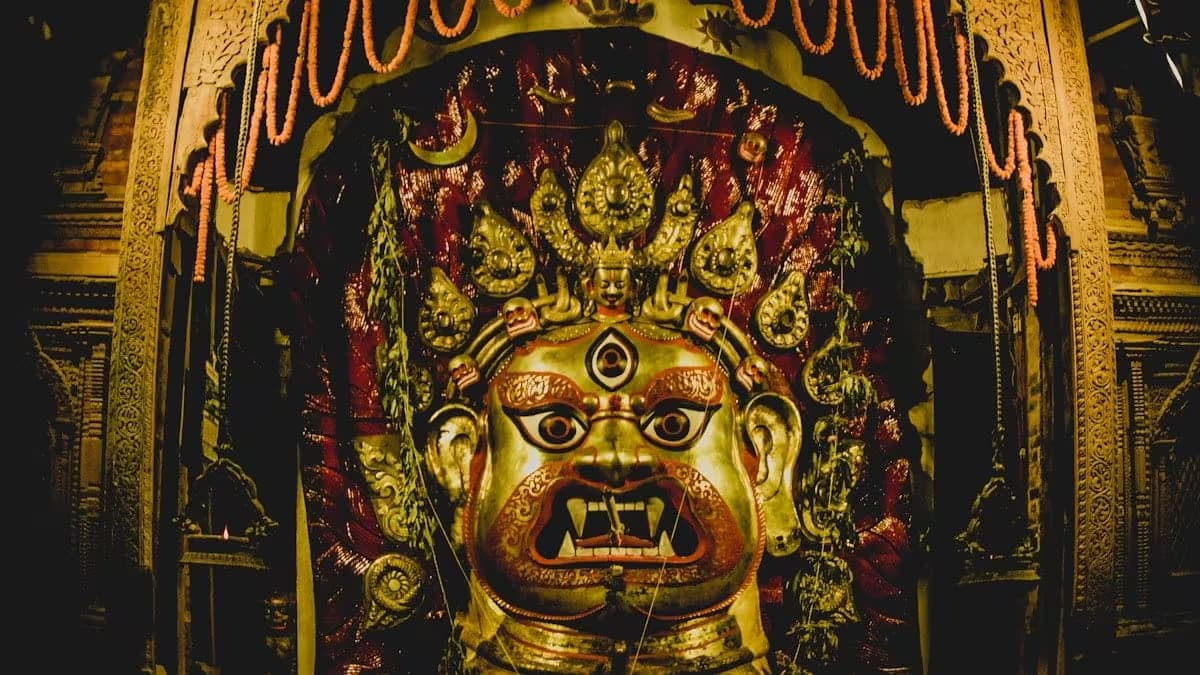
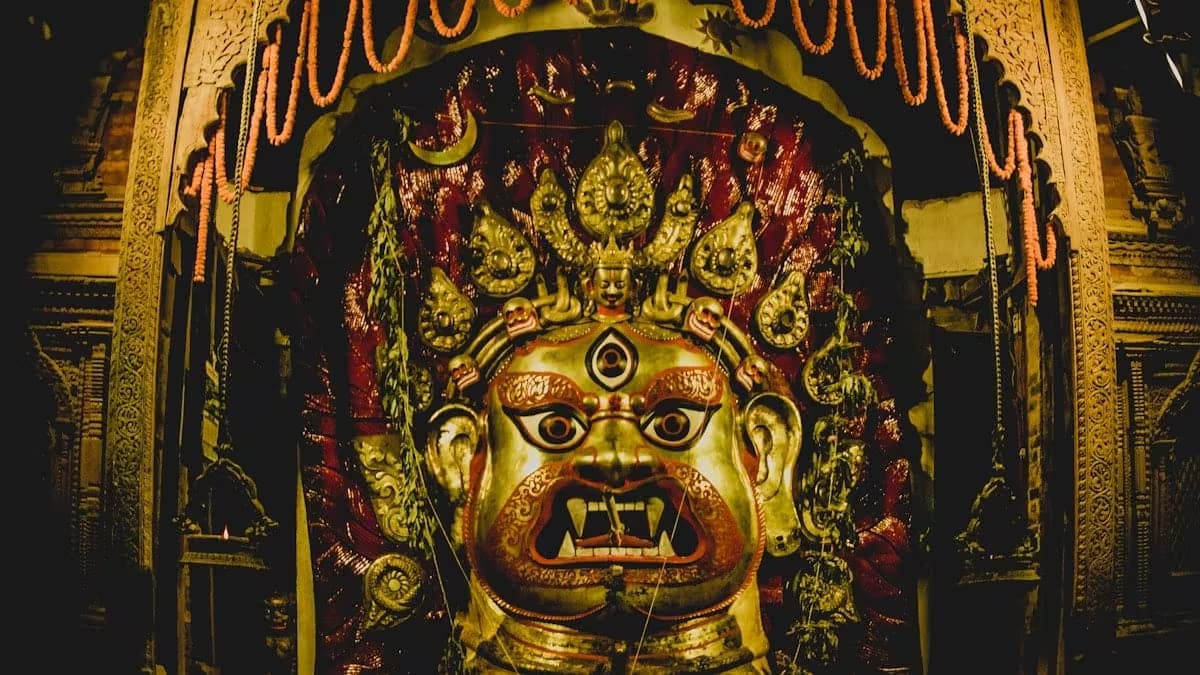
A giant gilded head of White Bhairav hidden behind a lattice screen for most of the year, dramatically revealed only during the eight days of Indra Jatra.
Dedicated to
Swet Bhairav (white/benevolent aspect of Bhairav)
Period
Current mask late 18th century (Rana Bahadur Shah era)
Hours
Lattice screen visible at all times; face revealed during Indra Jatra only
Admission
Free
Neighborhood
Kathmandu Durbar Square
Swet Bhairav (White Bhairav) is one of Kathmandu's most enigmatic sacred images — a massive gilded head roughly 10 feet tall, depicting the benevolent but fierce white aspect of Bhairav. For most of the year, this enormous face is hidden behind a wooden lattice screen near the old royal palace in Durbar Square.
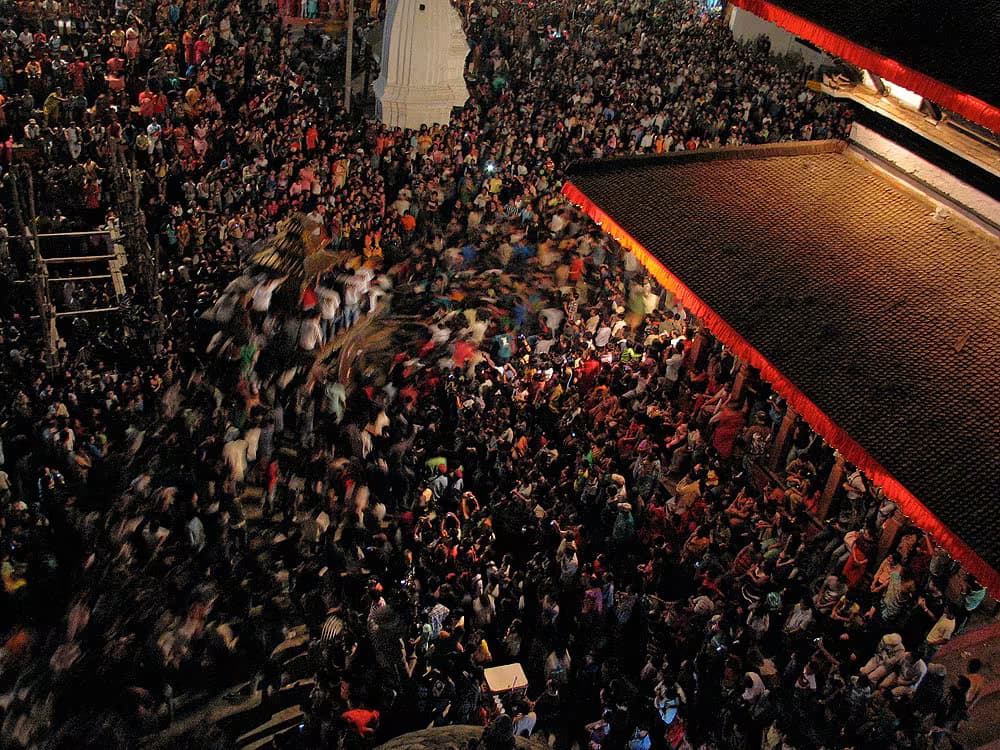
The mask is dramatically unveiled each September during Indra Jatra, the great eight-day festival of Kathmandu. When the screen is removed, the enormous golden face — with bulging eyes, bared fangs, and a crown of serpents — is revealed to thousands of spectators. During the festival, rice beer (jãd) flows from a pipe in the mouth of the Bhairav head, and crowds jostle to catch the sacred brew.
The current mask dates to the reign of Rana Bahadur Shah (late 18th century), though worship of Swet Bhairav at this site is older. Unlike Kal Bhairav's stone permanence, Swet Bhairav's power lies in concealment and revelation — the yearly unveiling is one of the most dramatic moments in Kathmandu's festival calendar.
The lattice screen itself is an object of devotion year-round, with devotees pressing coins and tika into the wooden slats.
Folio III
Nearby Sacred Sites
Places within a short walk that help turn this stop into a small sacred cluster.
Shiva-Parvati Temple
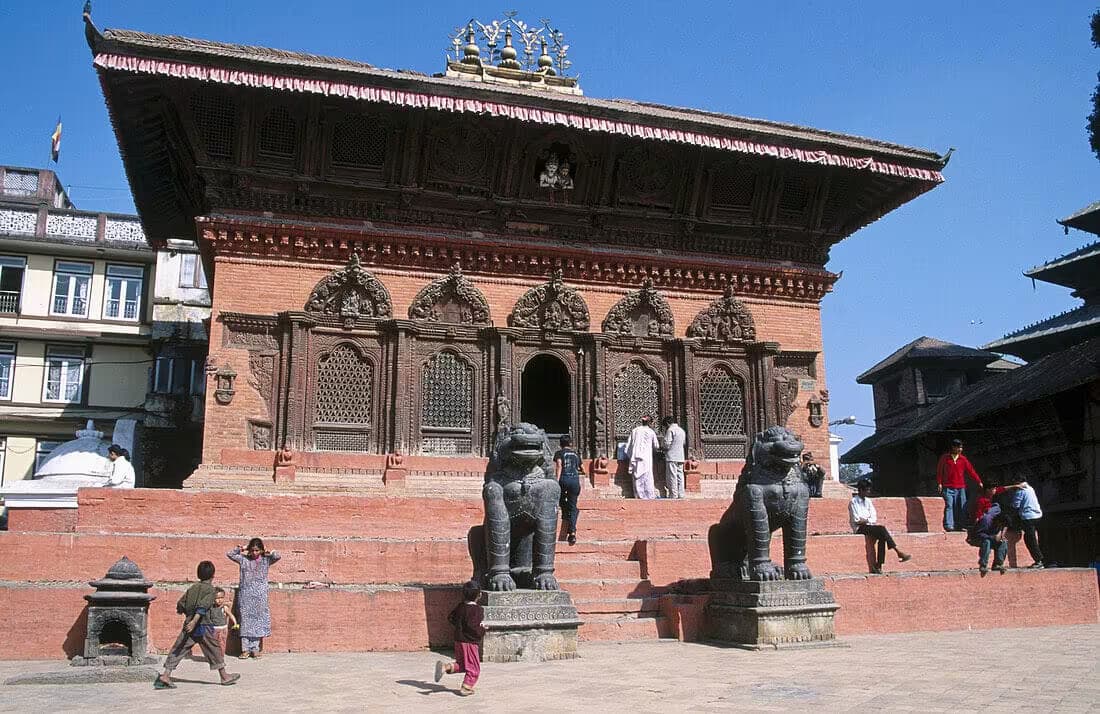
An 18th-century temple famous for the carved wooden figures of Shiva and Parvati leaning out from the upper window, gazing at the life of Durbar Square below.
Kal Bhairav
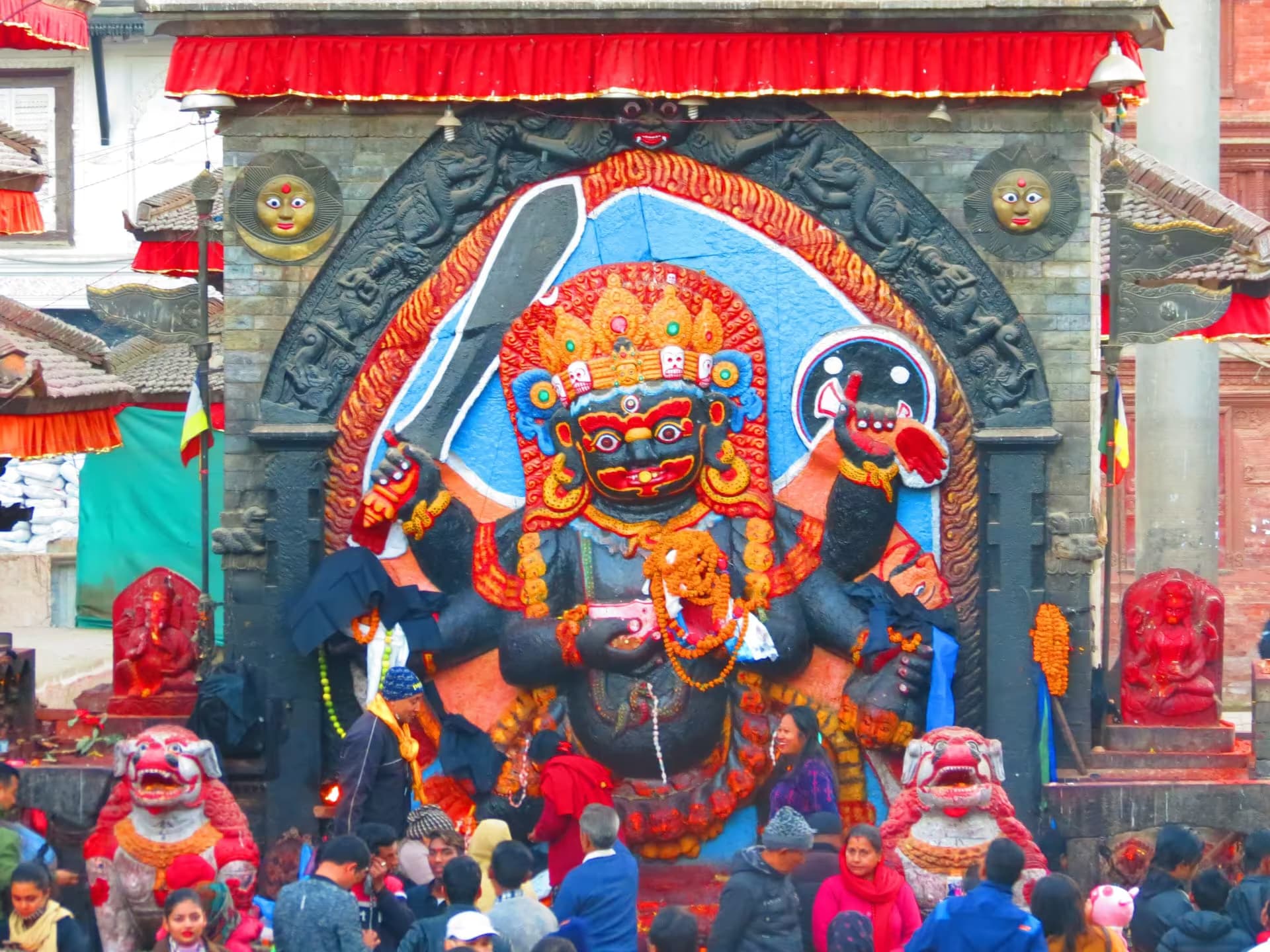
A massive 12th-century stone relief of the fearsome Bhairav — Shiva's terrifying aspect — standing six feet tall in the open court of Kathmandu Durbar Square.
Hanuman Statue (Hanuman Dhoka)
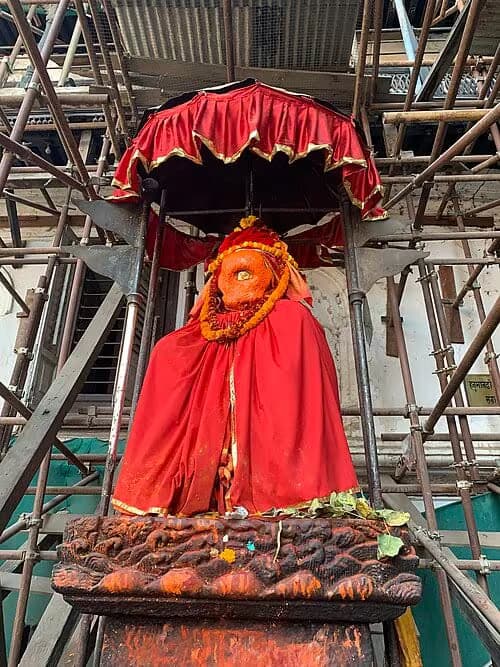
The standing stone figure of Hanuman draped in a red cloak at the entrance to the old royal palace — the image that gave Hanuman Dhoka its name.
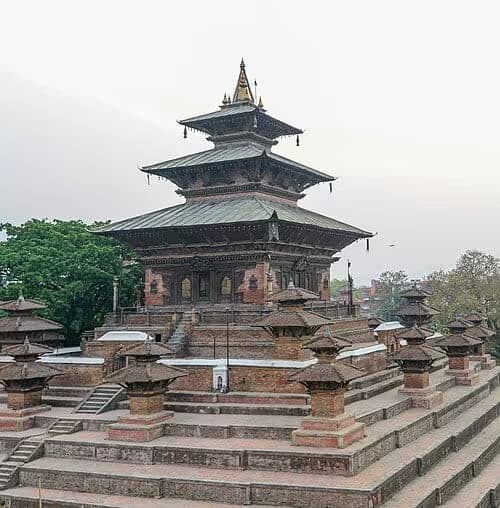
Taleju Temple
The tallest temple in Kathmandu Durbar Square — a 36-metre triple-roofed pagoda dedicated to the tutelary goddess of the Malla kings, open to Hindus only on Dashain's ninth day.
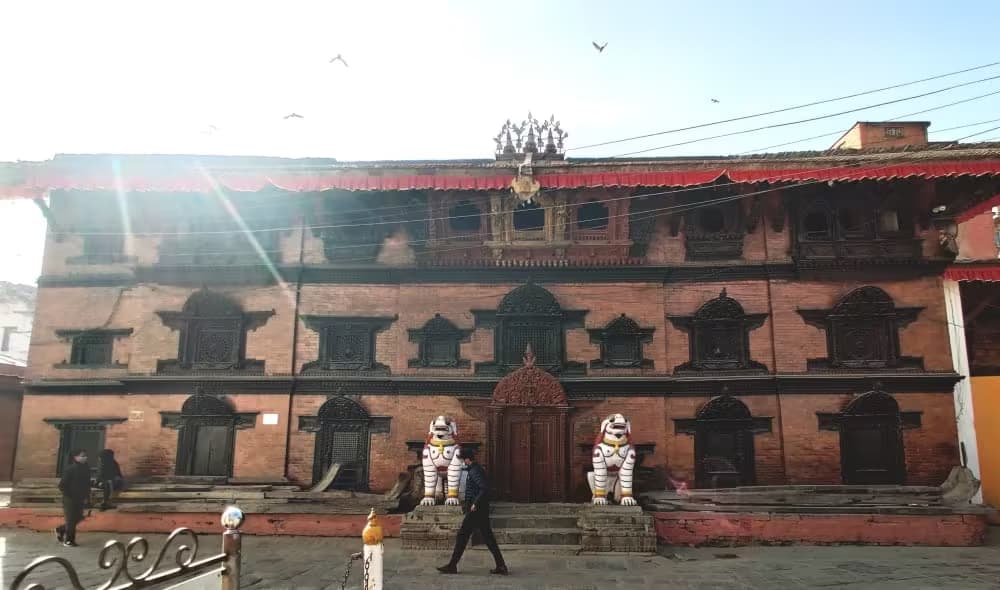
Kumari Ghar
The ornate 18th-century residence of Kathmandu's Royal Kumari — a living prepubescent girl worshipped as the incarnation of goddess Taleju.
Coda
Continue the Pilgrimage
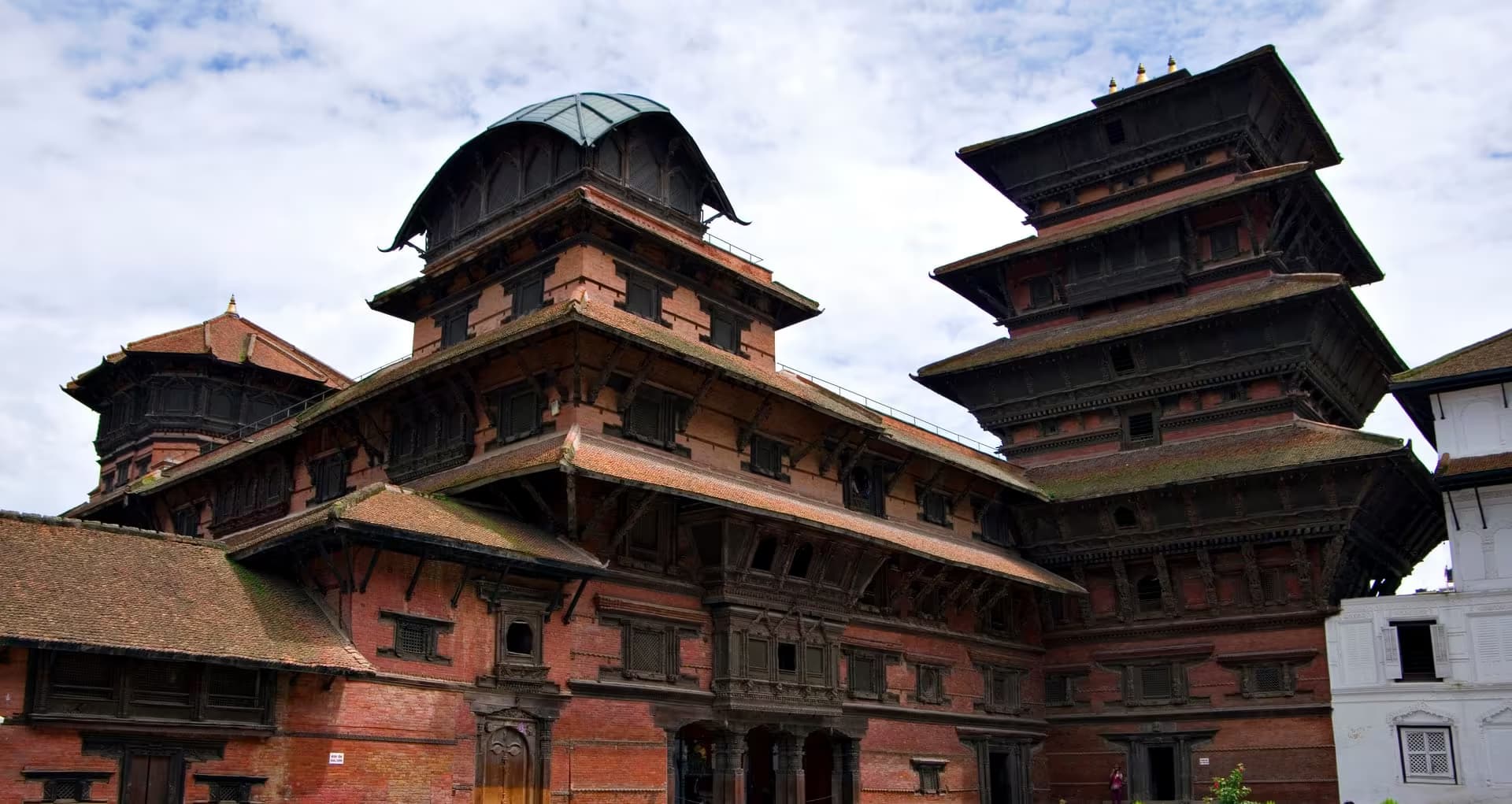
Part of
Kathmandu Durbar Square
Guides that feature this place
Planning this visit? Local operators publishing trips here can arrange it.
Elsewhere in this region
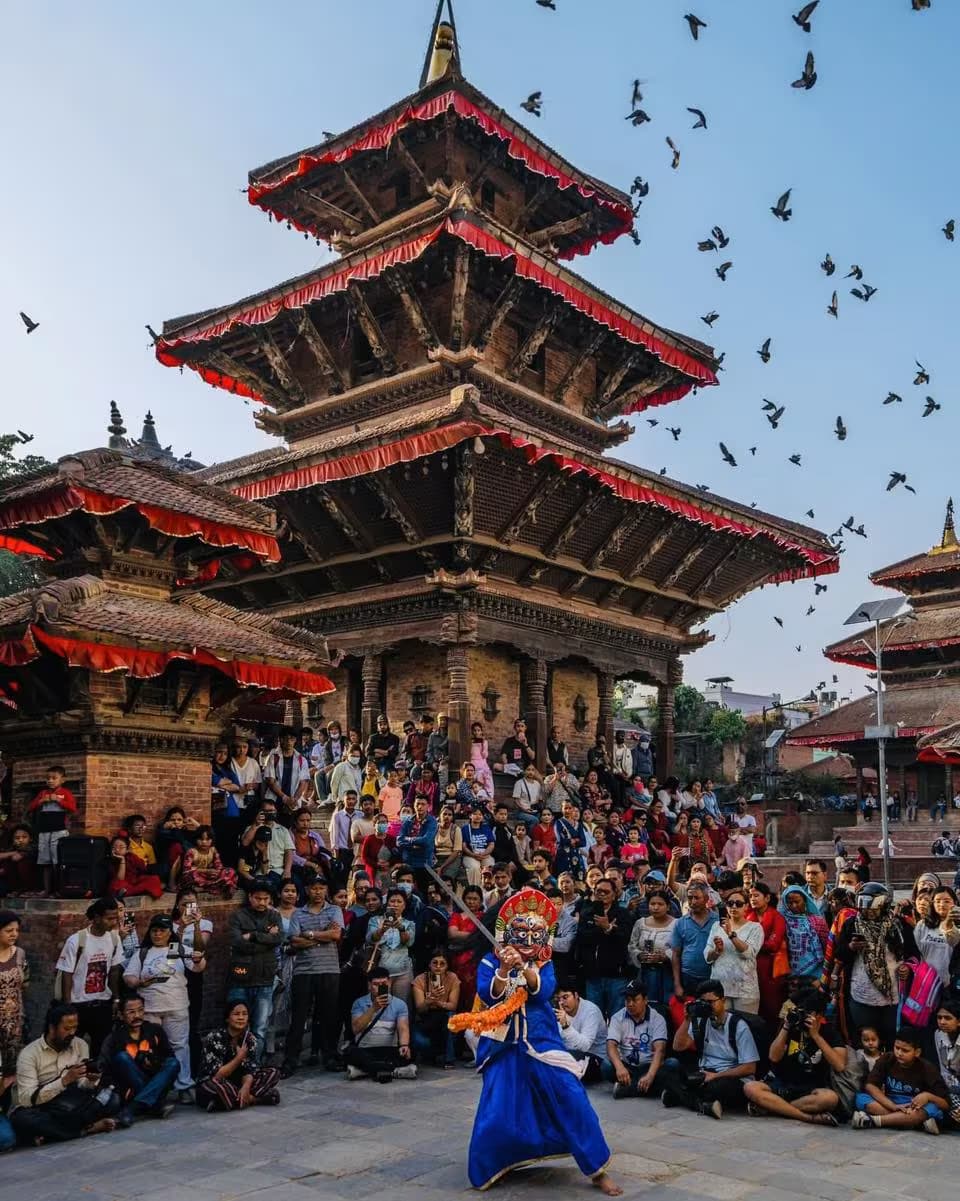
Help us get it right
Know Swet Bhairav better than we do?
We write from research and reporting, and the ground changes faster than we can keep up. If something here is out of date, or you have been and would tell it differently, we would rather hear it.