Three Days of Pulling
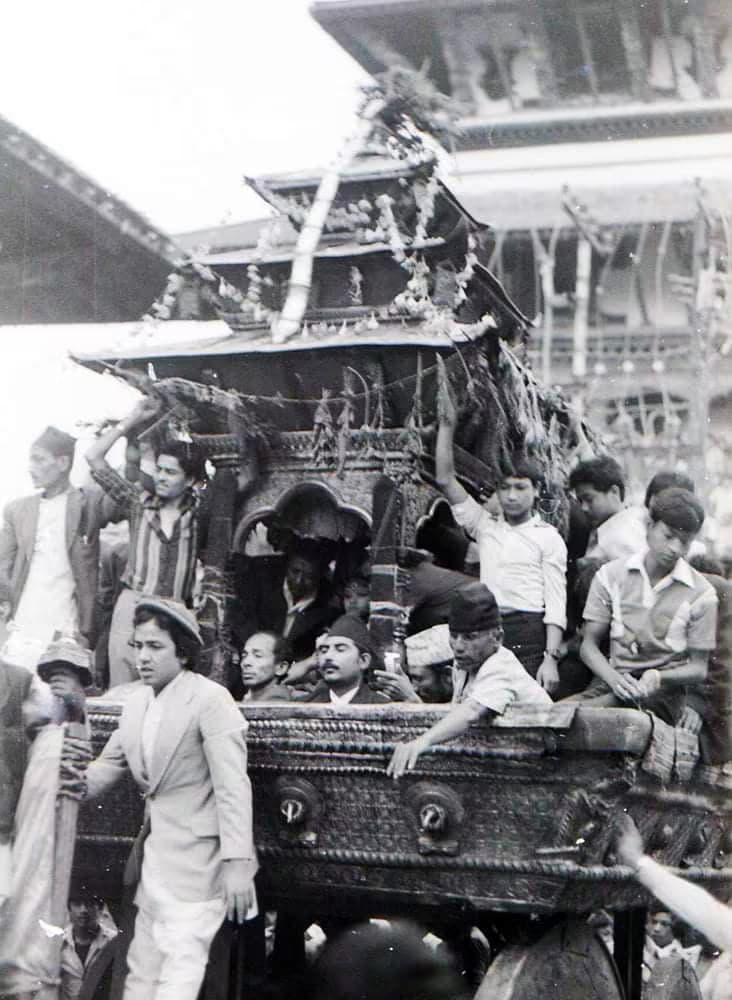
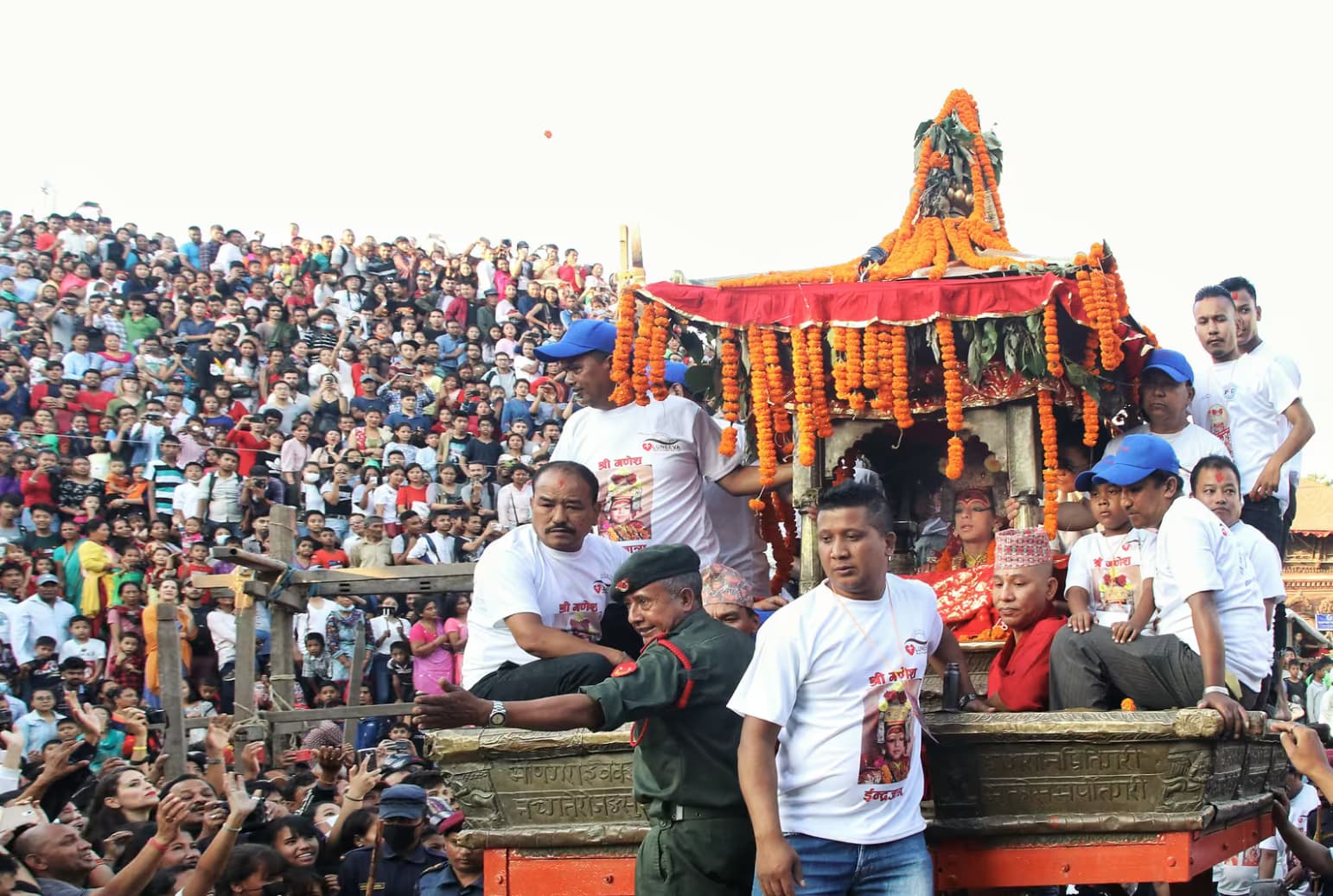
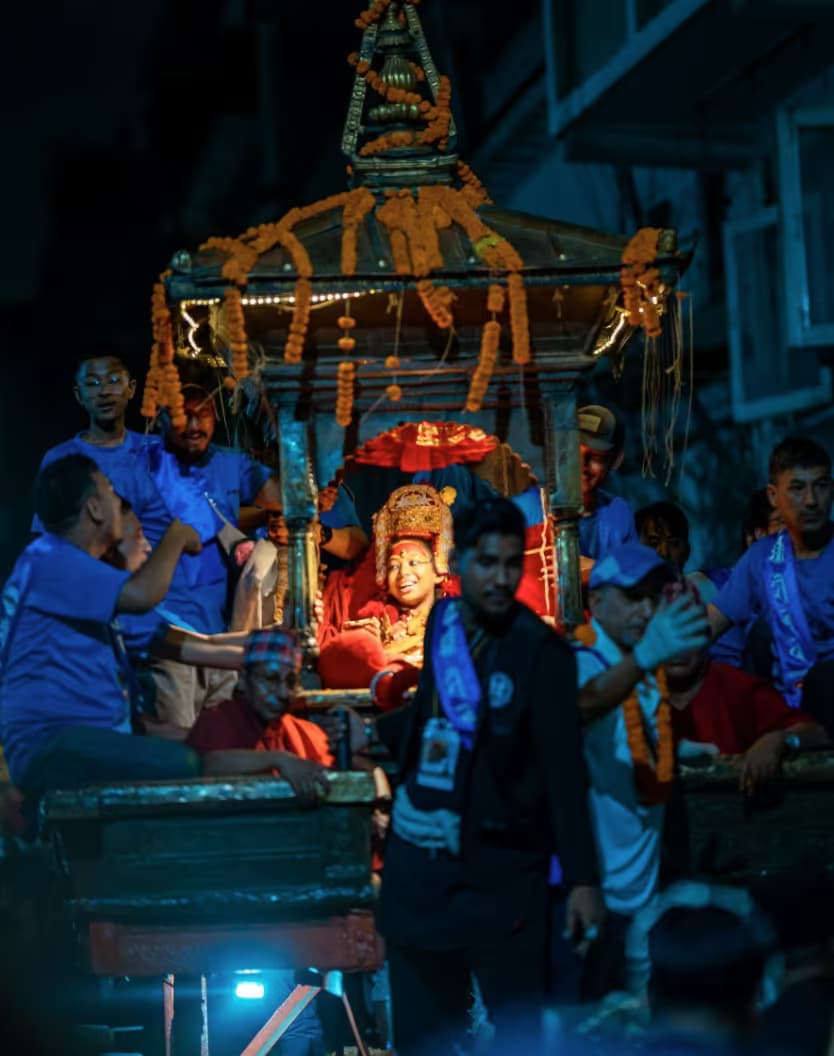
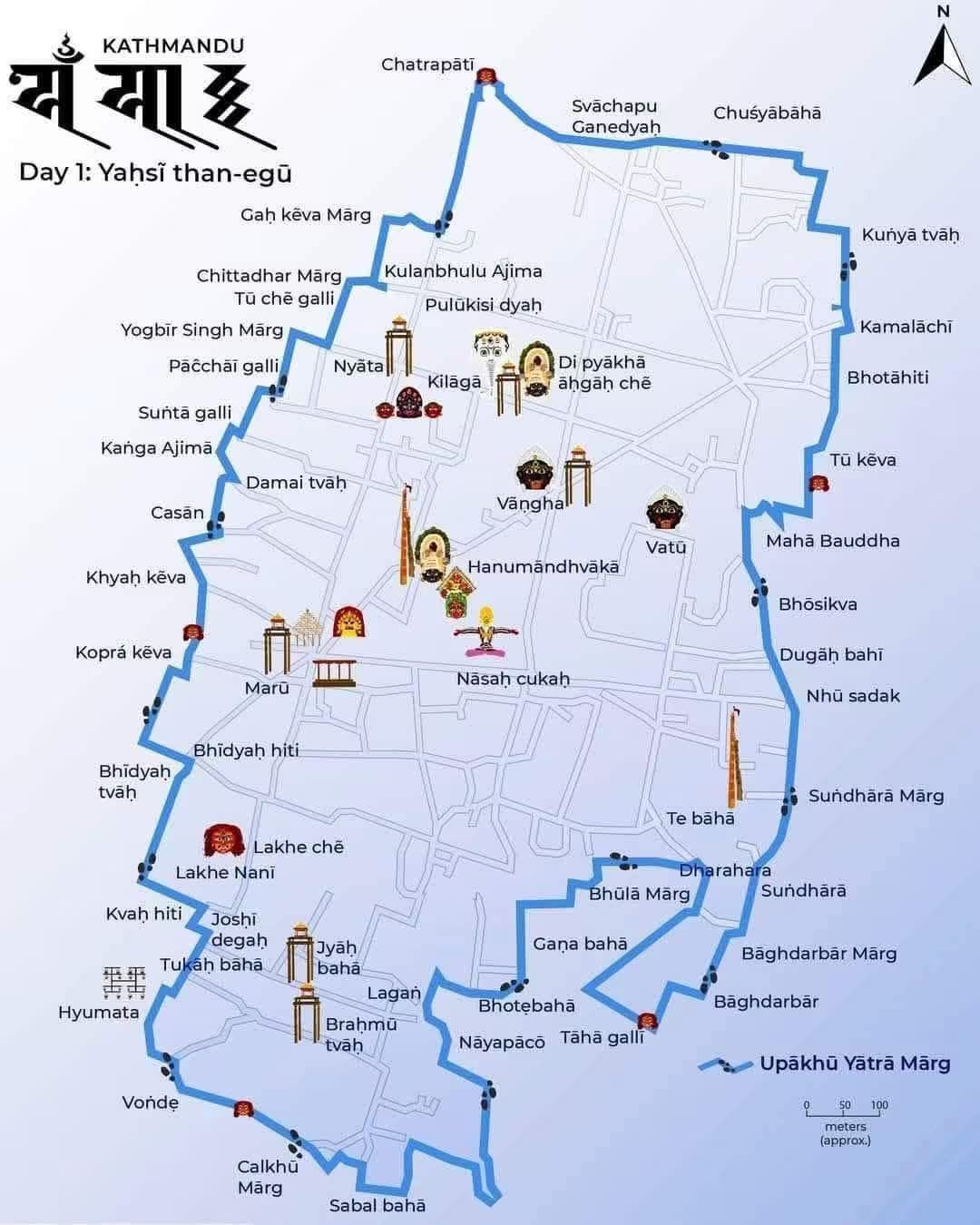
On three days of the festival week — Kwaneya (south), Thaneya (north), Nanicha (central) — the three chariots of Kumari, Ganesh, and Bhairav are pulled through different quarters of old Kathmandu, each route threading sacred geography and finishing at Basantapur.
Three Days, Three Directions
The chariot procession of Indra Jatra is not a single event but a sequence of three pulls, each covering a different quarter of old Kathmandu. Kwaneya and Thaneya fall on the first two days of the festival; Nanicha comes several days later rather than the day after Thaneya — in 2025 the three pulls fell on 6, 7, and 11 September. The names of the three days are directional terms in Nepal Bhasa:
- Kwaneya (कोनेया) — kwane = downward/south. The longest route, covering southern Kathmandu.
- Thaneya (थनेया) — thane = upward/north. The bazaar route, through Indra Chowk and Asan.
- Nanicha (ननिचा) — the middle route, through the central lanes around Kilagal.
All three routes begin and end at Basantapur (Hanuman Dhoka). For chariot construction, iconography, and the communities that build and pull the chariots, see the individual chariot pages (Kumari's Chariot, Ganesh's Chariot, Bhairav's Chariot).
First Pull — Kwaneya · The Downward Pull
Distance: Approximately 2.2 km · Duration: 4–6 hours
Kwaneya is the longest and most physically demanding day. The route covers the southern quarter of old Kathmandu, passing through some of its oldest and most intimate toles.
Route sequence:
- Basantapur (Hanuman Dhoka) — the procession's departure point
- Maru Tole — a traditional neighbourhood of oil-pressers and metalworkers
- Chikan Mugal — the narrowest point of the entire festival: an alley barely wider than the chariot, where wheels scrape building foundations and the chariot tilts visibly on the uneven stone paving. The crowd's tension here is palpable; it is the most dramatic moment of Kwaneya.
- Jaisidewal — passing Jaisidewal Temple
- Lagan Tole — one of Kathmandu's oldest settlements
- Kohiti — a stone-paved square with a traditional water spout
- Bhimsensthan — the Bhimsen Temple; one of the longest ceremonial pauses of the procession
- Return loop via Pyaphal → Yatkha → Naradevi → Basantapur
All distances and route sequences are approximate based on ethnographic maps (Gutschow 2011, Toffin 2010); the exact tole sequence varies slightly year to year. The Guthi Sansthan publishes the official route before each festival.
Second Pull — Thaneya · The Upward Pull
Distance: Approximately 1.8 km · Duration: 3–5 hours
Thaneya covers the northern bazaar district — the commercial heart of old Kathmandu. This is the most crowded day: the route passes through Kathmandu's busiest market intersections.
Route sequence:
- Basantapur (Hanuman Dhoka)
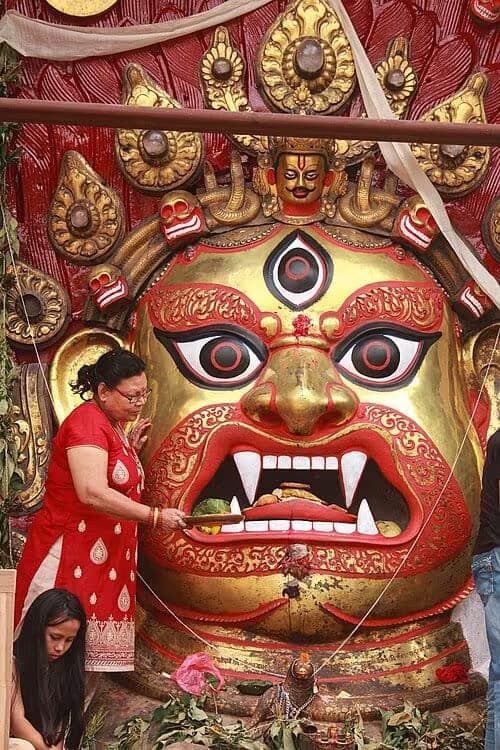
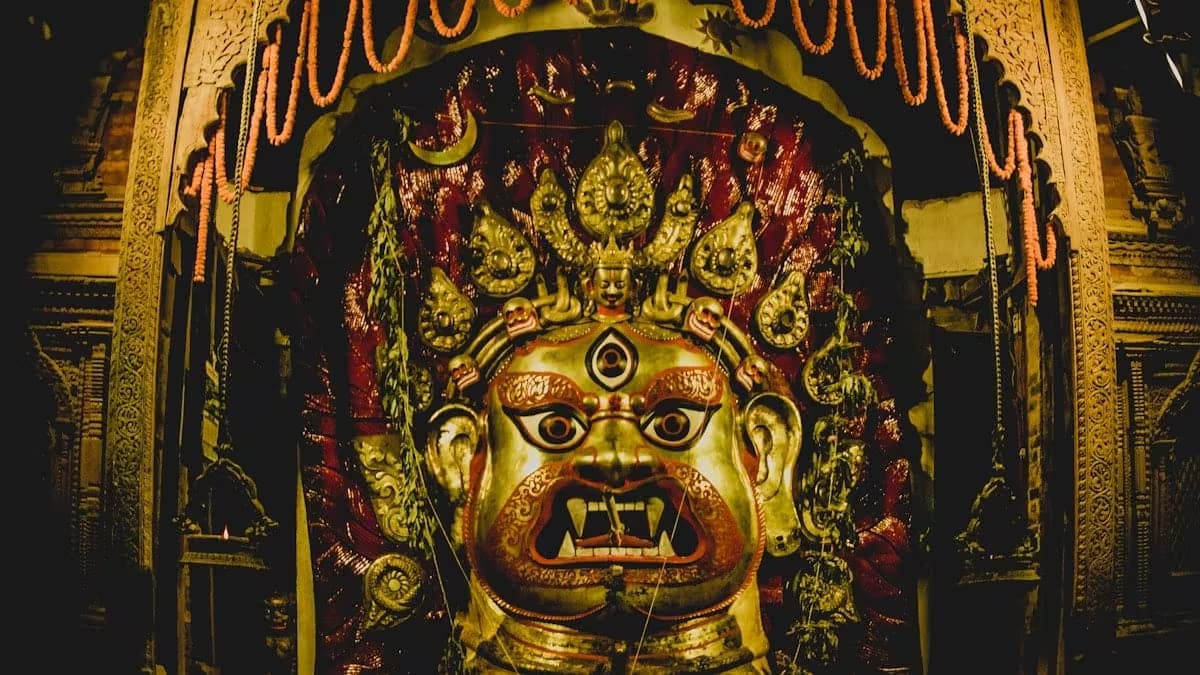
- Makhan Tole — passing the main gate of Taleju Temple, the tutelary goddess of the Malla kings; Swet Bhairav's screen is open here
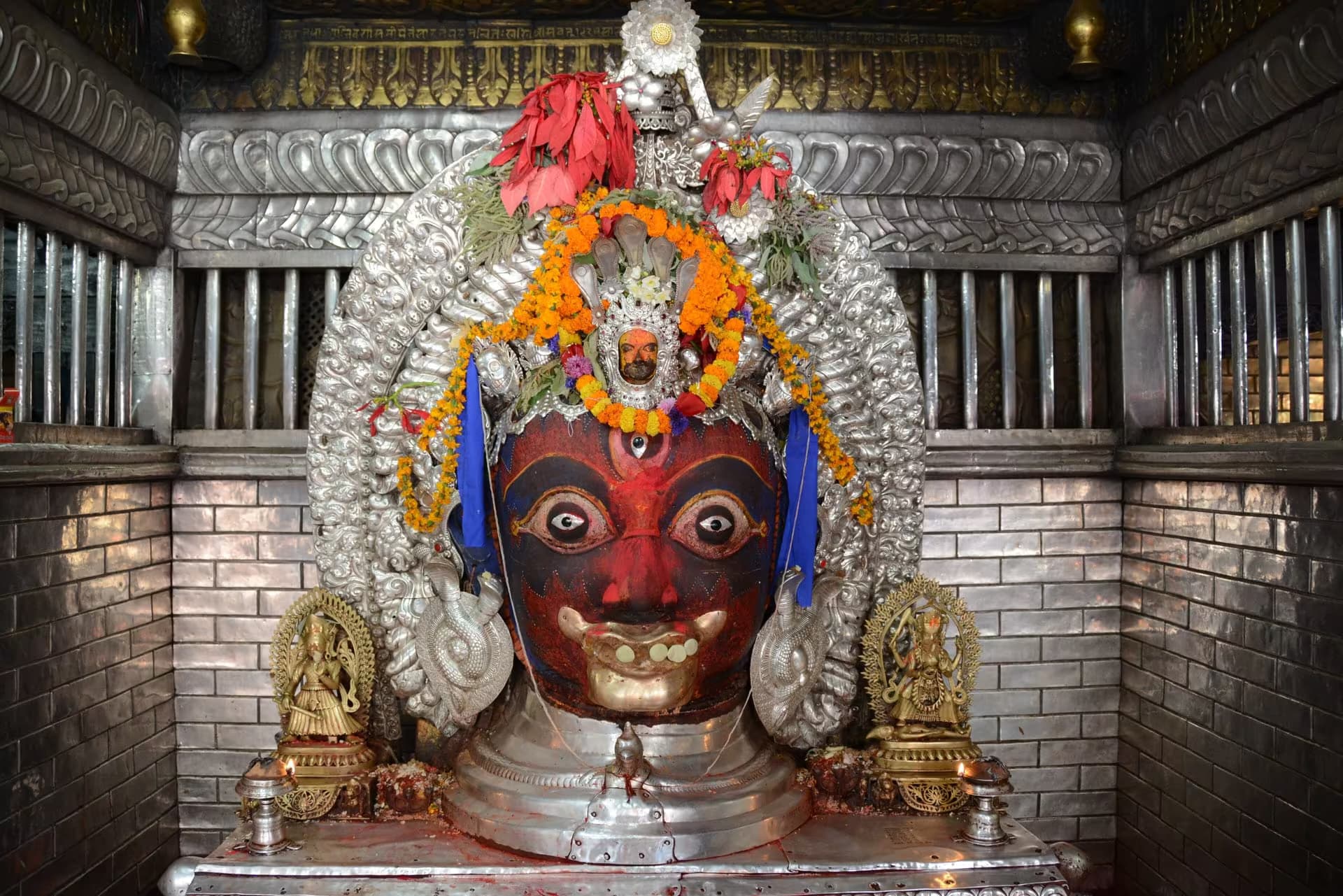
- Indra Chowk — Akash Bhairav temple; the chariot pauses for puja; the silver head is visible to devotees approaching the shrine
- Asan Bazaar — Kathmandu's busiest market intersection; the chariot dominates the entire square, vendors close stalls, and the crowd fills every surrounding surface
- Kel Tole — traditional spice and grain market
- Return via Indra Chowk → Makhan → Basantapur (figure-8 loop)
Key moment: At Asan, the chariot's arrival transforms the intersection completely. The creaking of wooden joints echoes off surrounding buildings; incense, dhime drums, and the crowd's chanting create one of the densest sensory environments in the festival.
Third Pull — Nanicha · The Middle Route
Distance: Approximately 1.2 km · Duration: 2–3 hours
Nanicha is the shortest and most intimate of the three days. The route passes through Kilagal, a central residential area where the chariots thread through courtyards and lanes that feel entirely neighbourhood-scale compared to the open bazaars of Thaneya.
Route sequence:
- Basantapur (Hanuman Dhoka)
- Kilagal — central section; narrow residential lanes where families watch from upper-floor windows and rooftops (Nepal Tourism Board sources confirm Nanicha passes through Kilagal)
- Maru — western edge, brief residential pass
- Return through inner lanes → Basantapur
Key moment: The Kilagal section has fewer tourists and a distinctly neighbourhood character. The chariot passing below apartment windows, with families throwing flower petals from above, is one of Indra Jatra's most intimate moments.
Practical Advice for Visitors
Arrive early: Viewing positions at Chikan Mugal (Kwaneya) and Asan (Thaneya) fill hours before the chariots arrive. For Kwaneya, position at Maru Tole by mid-morning for a good line of sight.
Elevated positions: Rooftop cafés at Basantapur and along Makhan Tole offer elevated views — ask ahead and expect a cover charge during the festival.
Timing: The chariots depart Hanuman Dhoka in the afternoon and may not complete their route until late evening. Exact timing varies year to year; follow local announcements from the Guthi Sansthan.
Crowds: Kwaneya and Thaneya draw the largest crowds — tens of thousands of people. Keep valuables secure and maintain awareness in dense sections.
Related Places & Sites
Related
Connected places and entries worth pairing
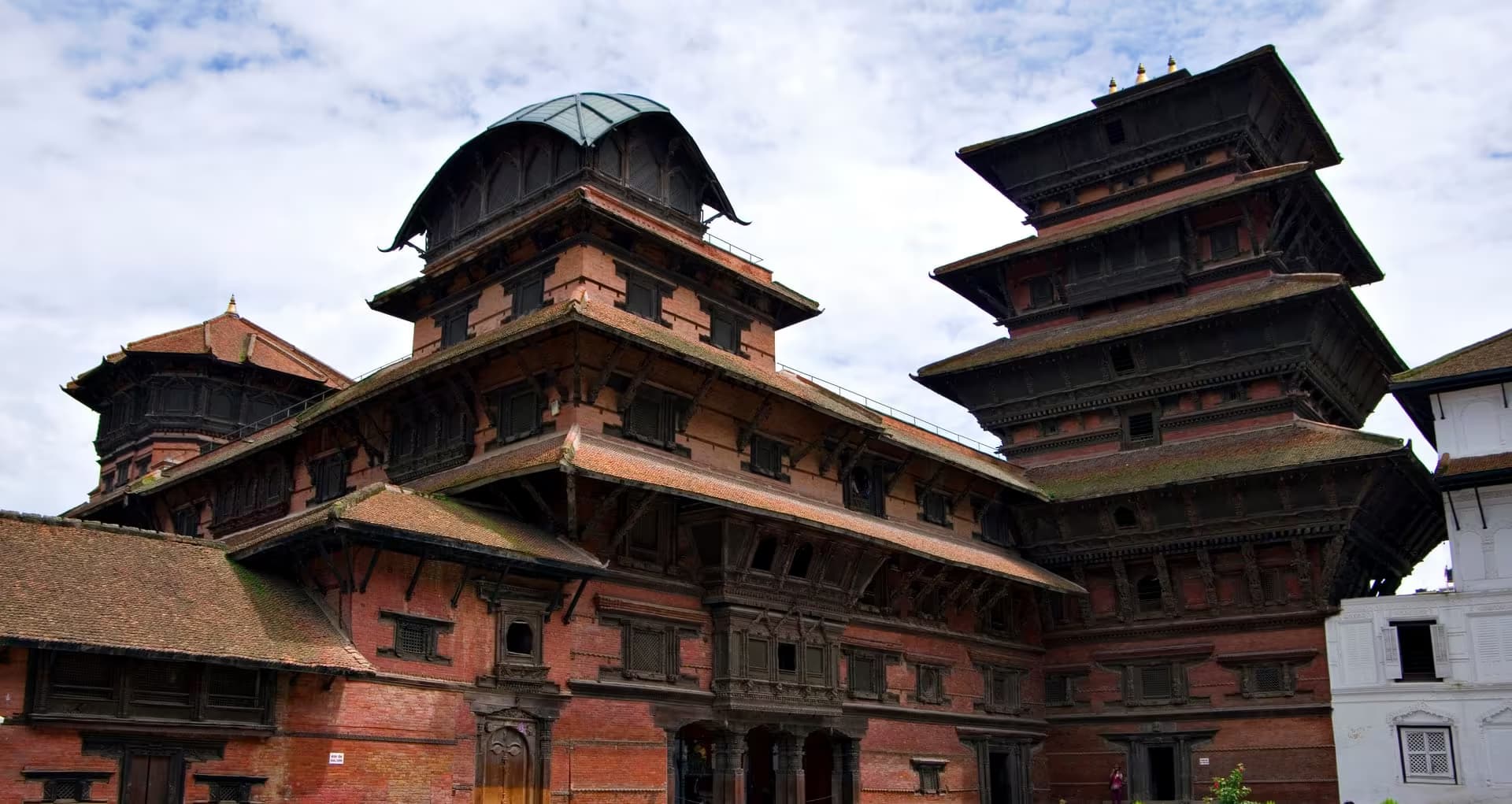
Kathmandu Durbar Square
The eight-day street festival centres on the square and the lanes around Hanuman Dhoka
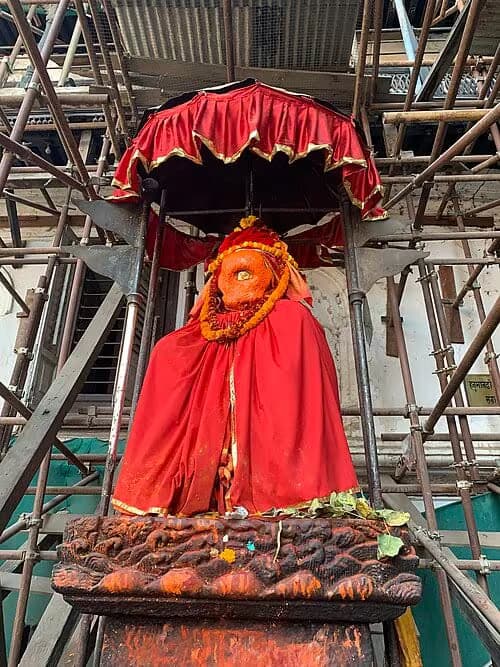
Hanuman Statue (Hanuman Dhoka)
The old royal palace entrance, where the Yosin pole rituals happen
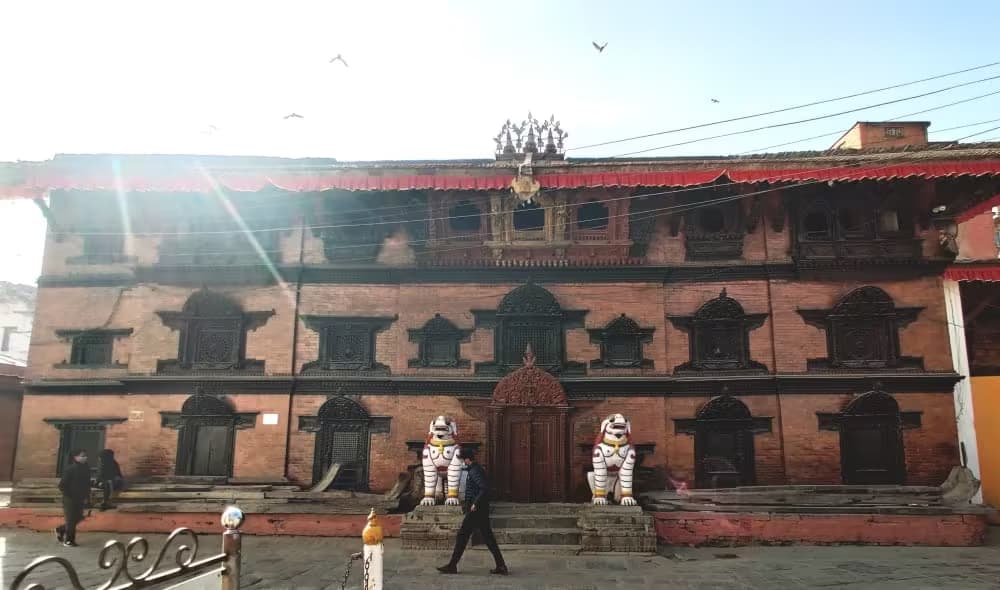
Kumari Ghar
The Kumari's residence, a few steps from where her chariot waits
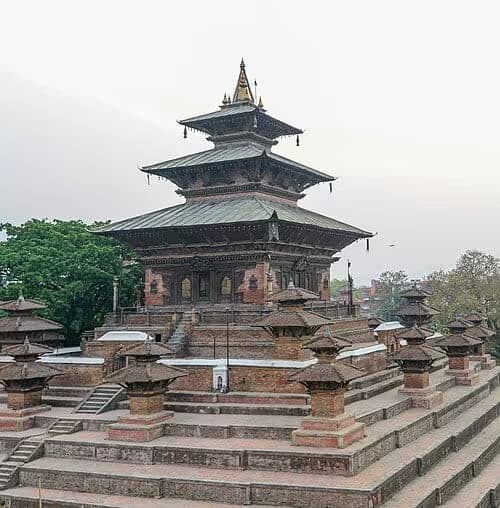
Taleju Temple
The Malla kings' tutelary goddess, whose main gate the Thaneya route passes at Makhan Tole
Swet Bhairav
The gilded screen at Makhan Tole, opened for only these eight days of the year
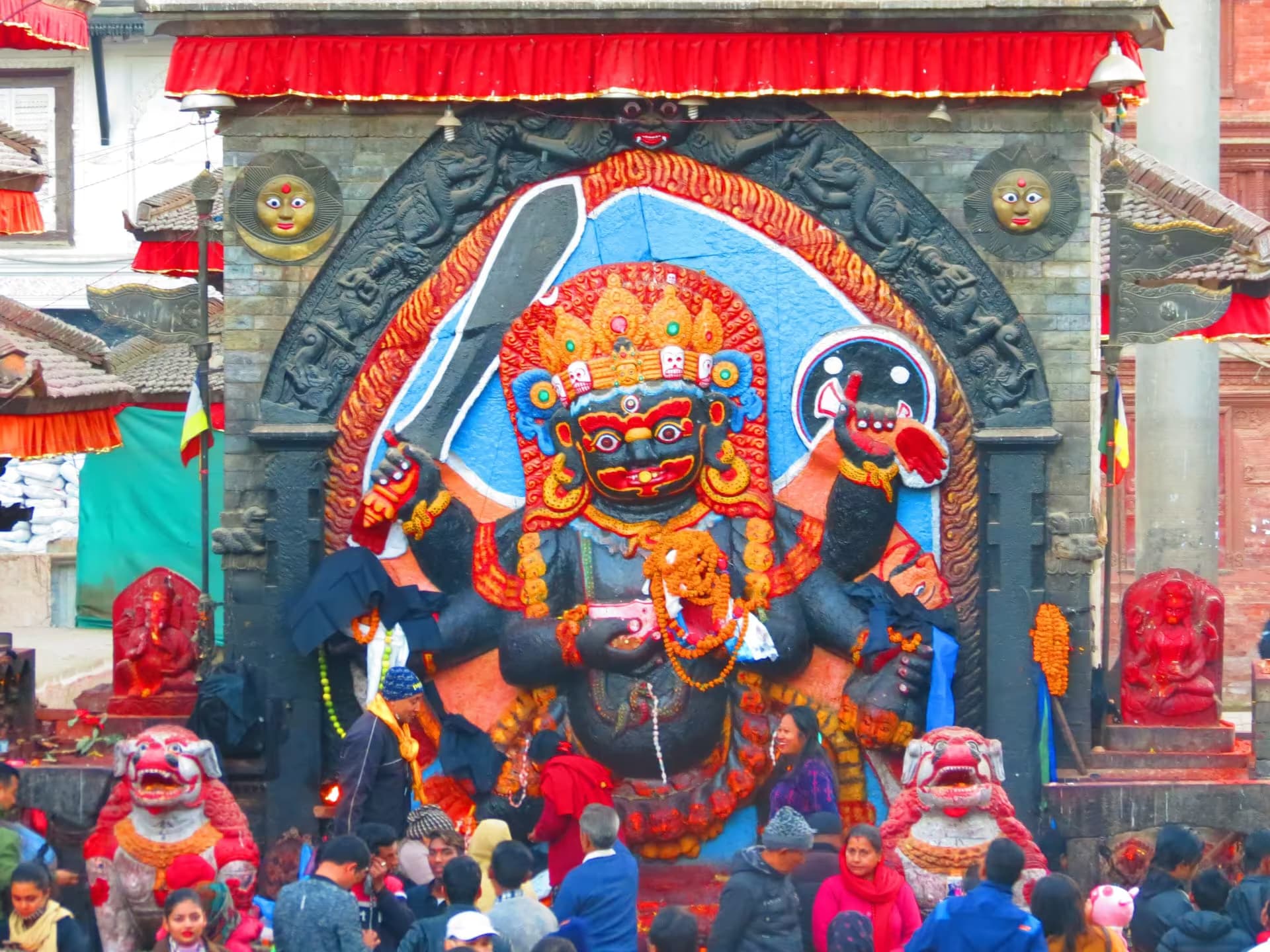
Kal Bhairav
The great stone Bhairav on the square, drawing worship through the festival week
Akash Bhairav Temple
At Indra Chowk on the Thaneya route, where the silver head is brought down to street level
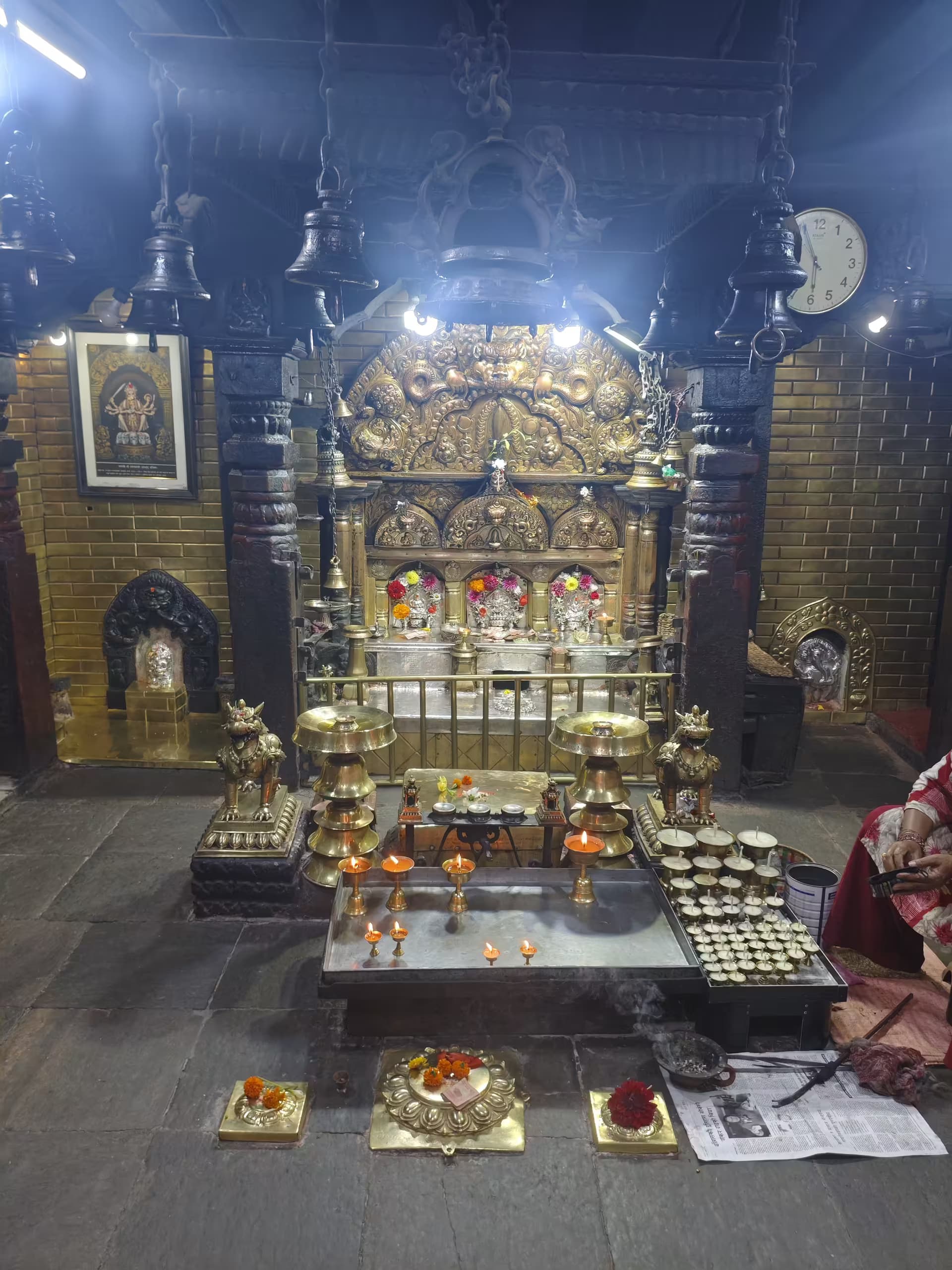
Naradevi Temple
On the inner-lane return leg of the Kwaneya route
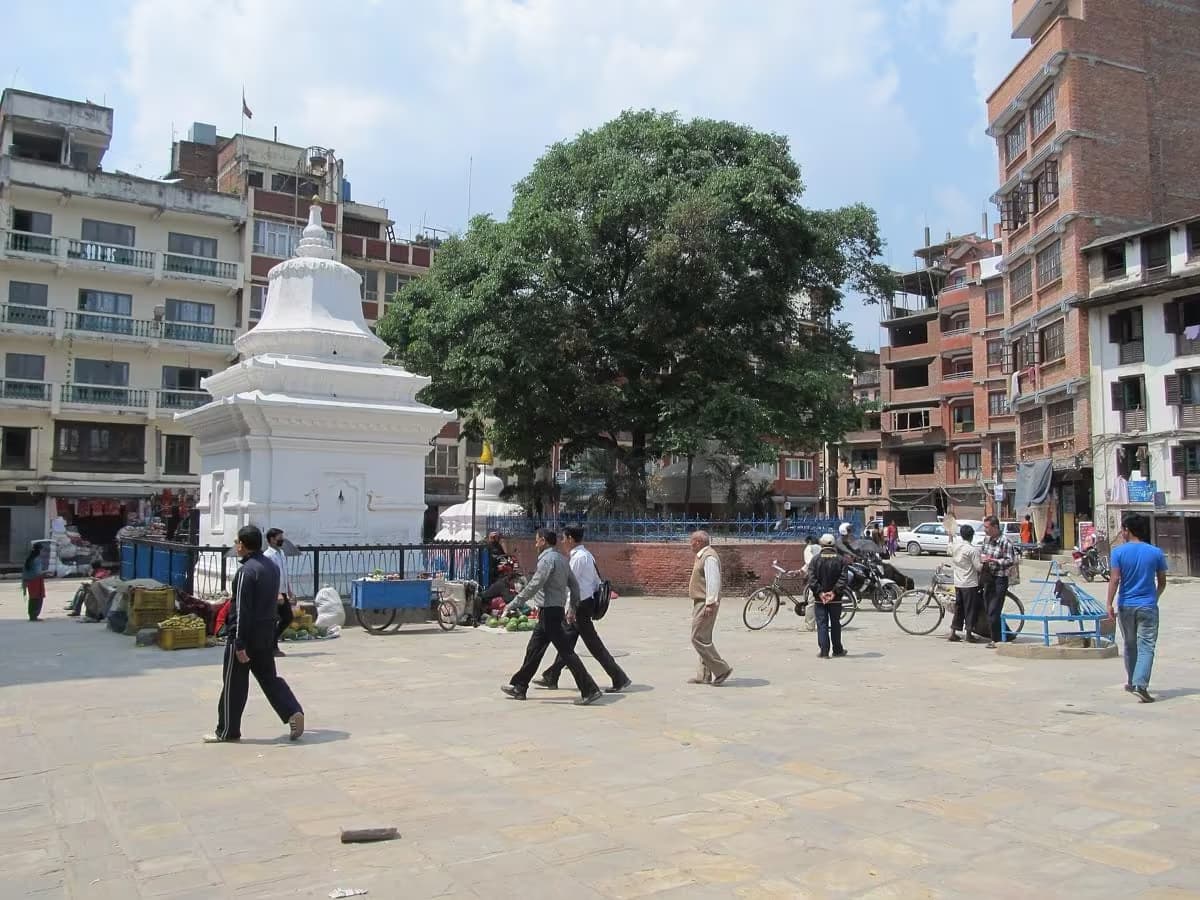
Lagan Bahal (Kirtipunya Mahavihar)
In Lagan Tole, one of the oldest quarters the long southern route threads through
Deities & Presences
Dances
Part of Indra Jatra