Samay Baji
The ritual Newar food platter — beaten rice, marinated meat, boiled egg, black soybeans, ginger, fried fish, and rice liquor — offered to deities before communal sharing, signifying auspiciousness and reinforcing the community bonds at the heart of Newar festival culture.
The Sacred Plate
Samay Baji is the quintessential Newar ritual food offering. The name comes from samay (auspicious occasion) and baji (beaten/flattened rice — the same word as chiura in Nepali). Together, they name a specific platter arrangement that appears at every significant Newar ritual event: birth ceremonies, coming-of-age rites, marriages, death rituals, and — prominently — festivals.
The platter is not a random collection of foods. Each element carries specific meaning, and the full arrangement is prescribed by ritual tradition:
- Baji (beaten rice / chiura): The foundational food, present at every ritual. Symbolises purity and auspiciousness.
- Chhoyala (spiced marinated meat, typically buffalo): The flesh offering that connects the platter to Bhairav's tantric domain. Buffalo meat is central to Newar ritual cuisine in ways that would be inappropriate in Brahminical Hindu contexts.
- Boiled egg: Associated with life and completeness.
- Bhatmas (black soybeans, roasted): A protein-rich staple of Newar cuisine, included in both daily and ritual contexts.
- Aduwa (ginger): A digestive and purifying agent, included in small quantities.
- Fried fish (fried nakka or similar): Fish appears in ritual platters in Newar Buddhist and Hindu contexts, connected to tantric ritual logic.
- Aila (rice liquor, sometimes thwon or wheat beer): The fermented offerings central to tantric worship — not merely a beverage but a sacred substance.
Offered Before Shared
Samay Baji is first offered to the deity or to the guest of honour (which in Newar hospitality protocol are interchangeable: an honoured guest is a temporary deity). Only after the offering is complete is the platter shared communally. This sequence enacts the logic of prasad: the divine touches the food, and that touch transforms it into blessing.
During Indra Jatra
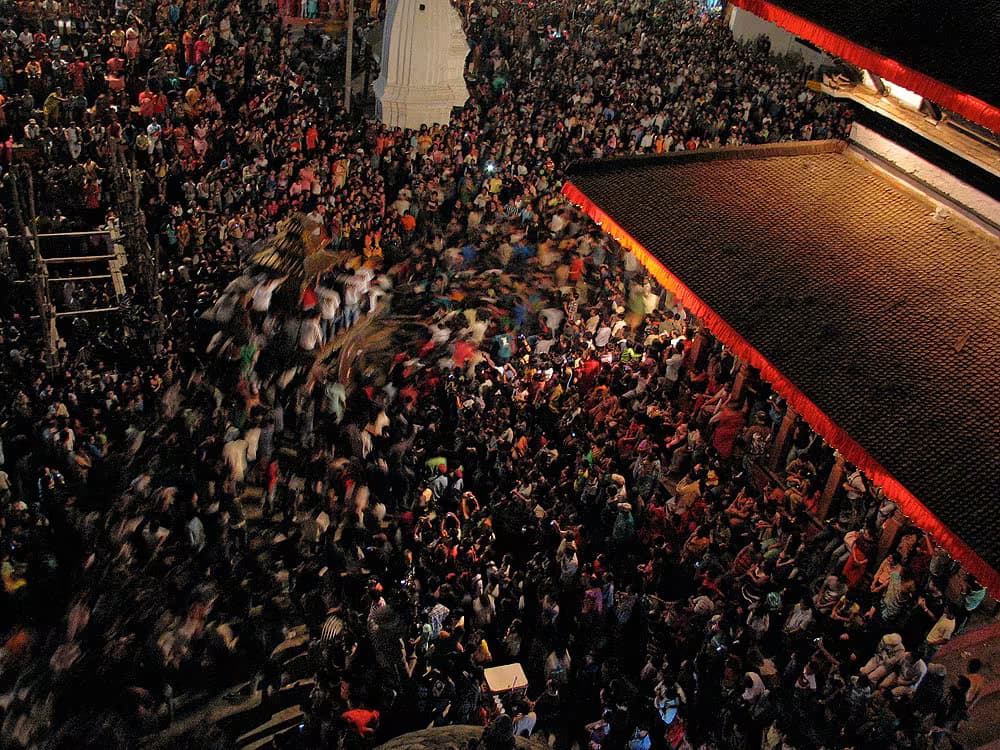
During the festival, Samay Baji is prepared in Newar households and offered at neighbourhood shrines and household altars. Families gather to share the platter after the offering, reinforcing the communal bonds that the guthi system formalises. The eating of Samay Baji together during Indra Jatra is both a religious act and a social affirmation: we are the people of this tole, this lineage, this tradition.
Related
Connected places and entries worth pairing
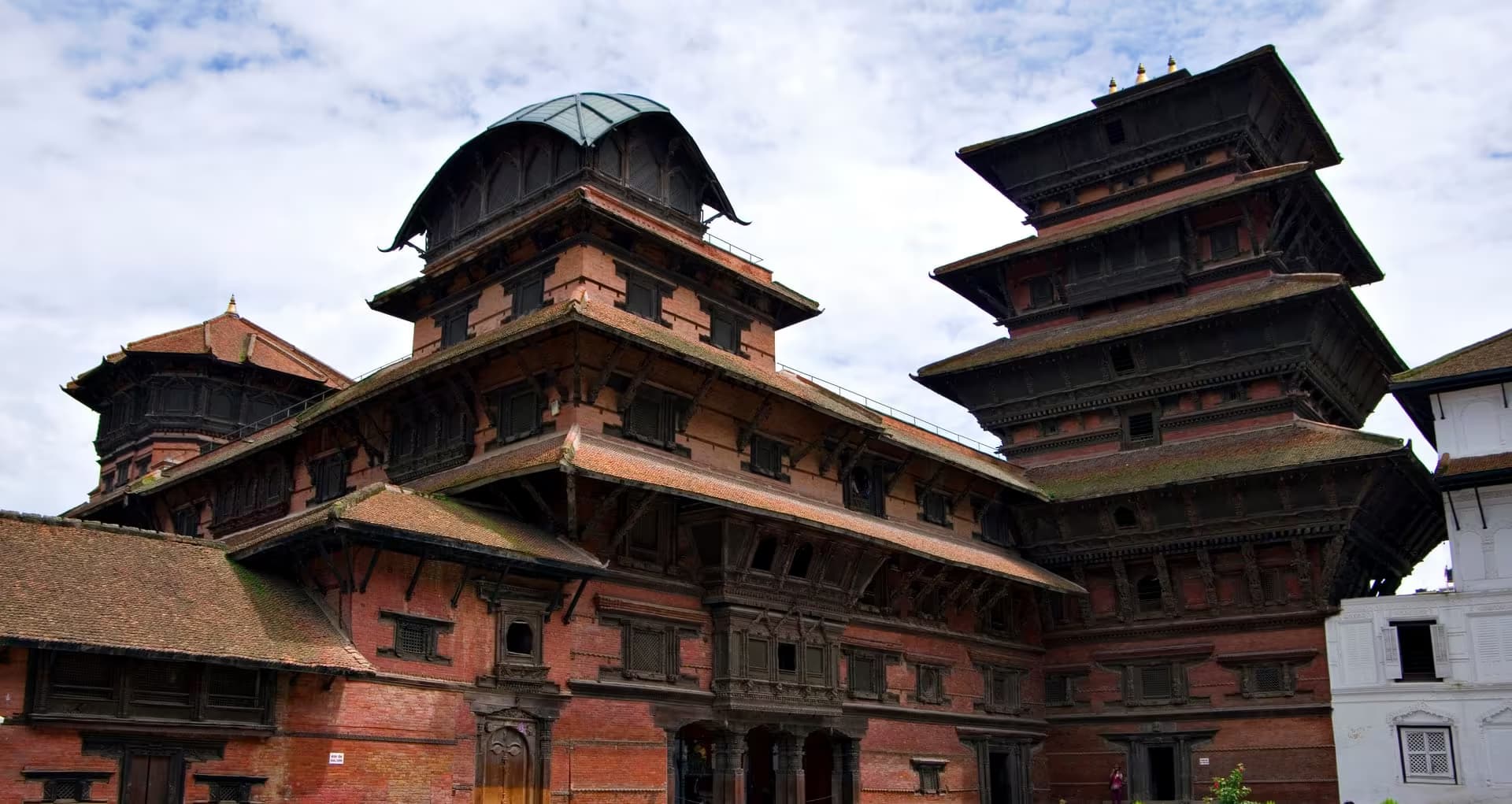
Kathmandu Durbar Square
The eight-day street festival centres on the square and the lanes around Hanuman Dhoka
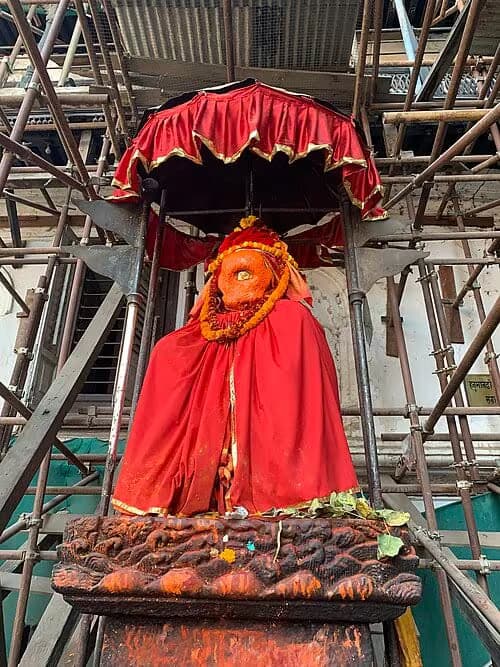
Hanuman Statue (Hanuman Dhoka)
The old royal palace entrance, where the Yosin pole rituals happen
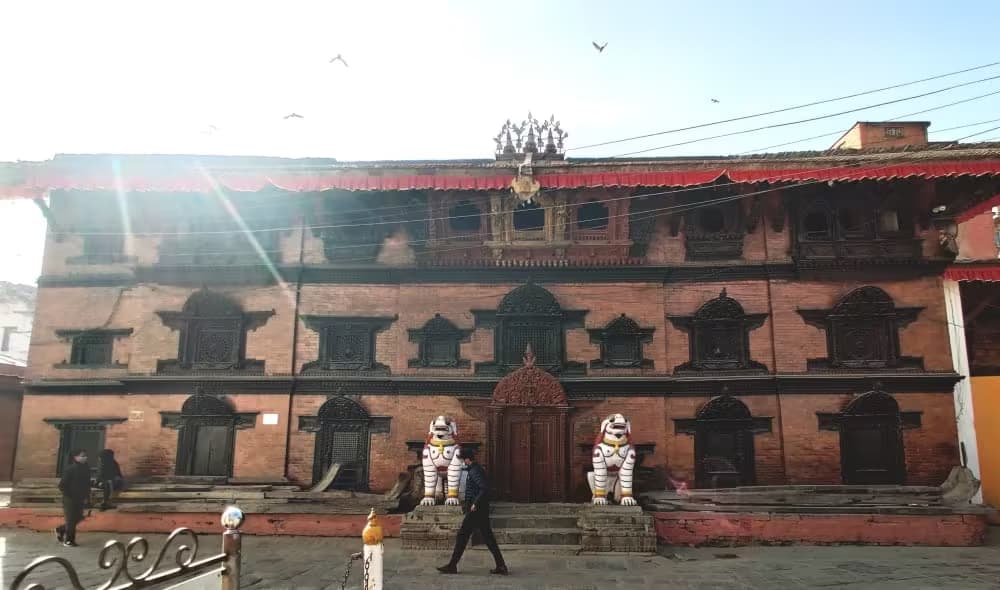
Kumari Ghar
The Kumari's residence, a few steps from where her chariot waits
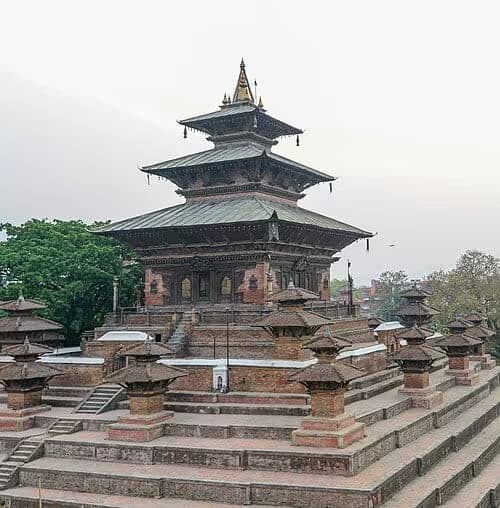
Taleju Temple
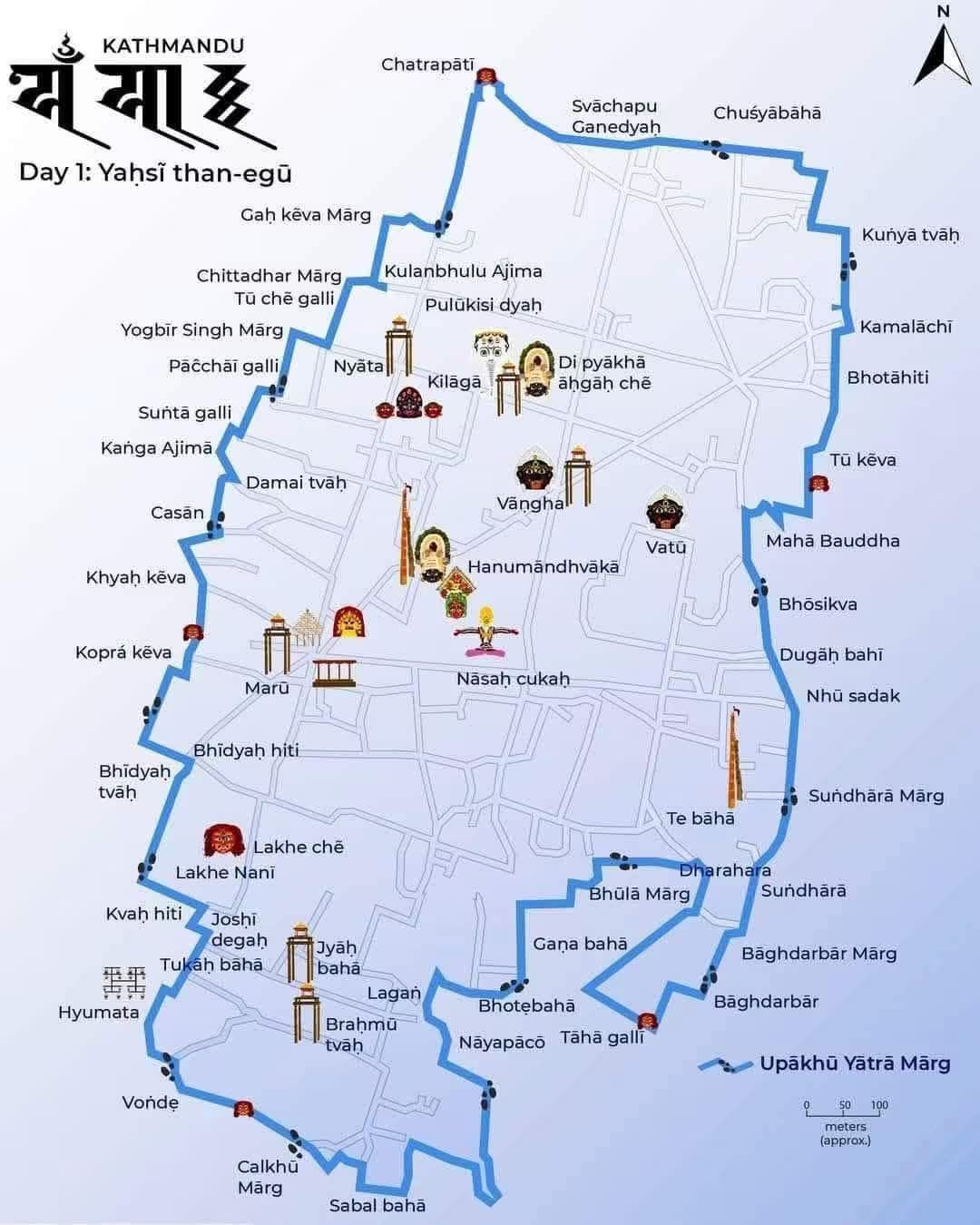
The Malla kings' tutelary goddess, whose main gate the Thaneya route passes at Makhan Tole
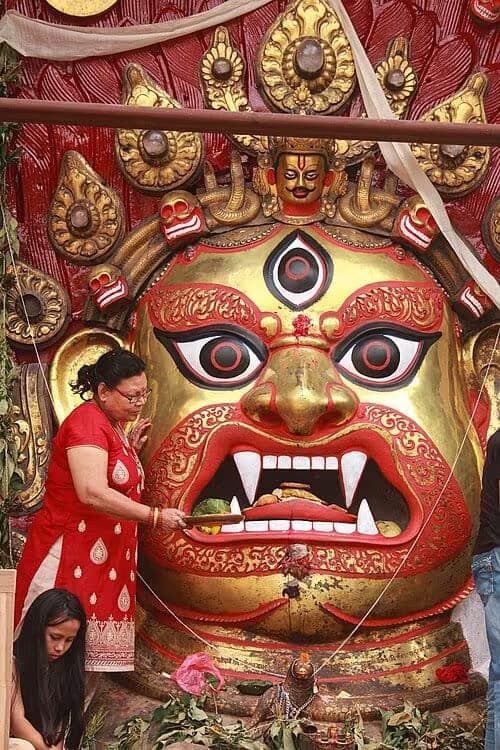
Swet Bhairav
The gilded screen at Makhan Tole, opened for only these eight days of the year
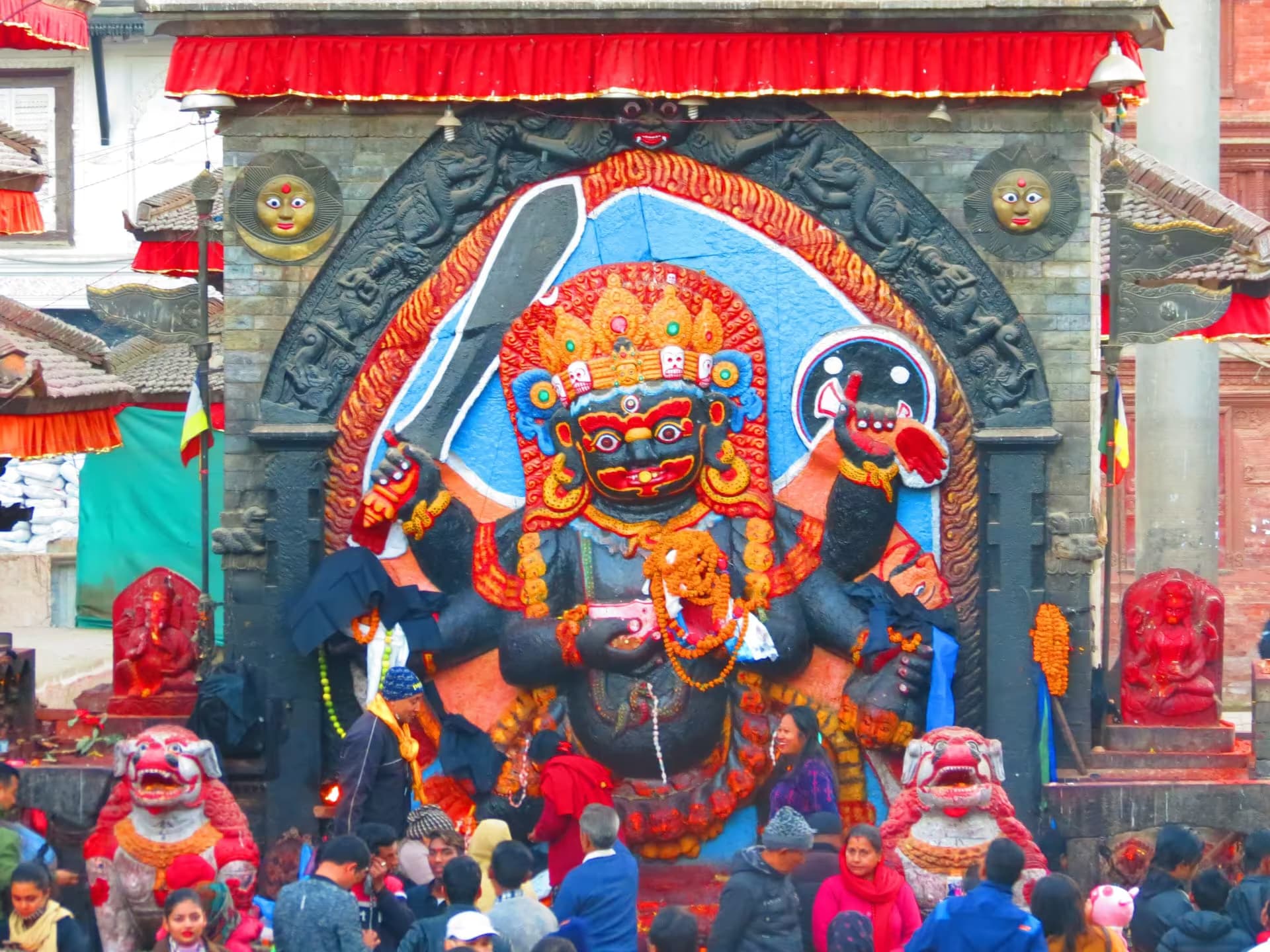
Kal Bhairav
The great stone Bhairav on the square, drawing worship through the festival week
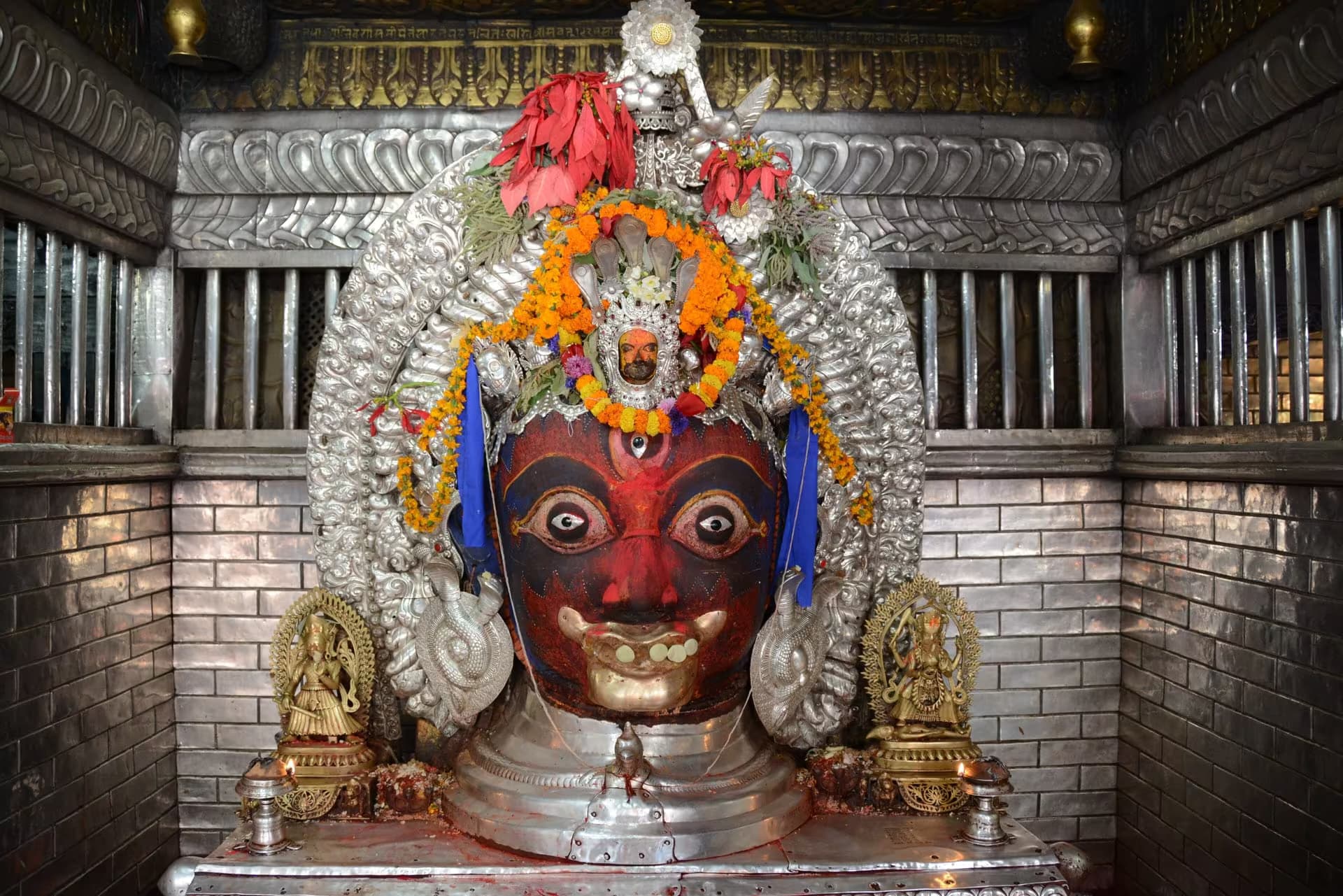
Akash Bhairav Temple
At Indra Chowk on the Thaneya route, where the silver head is brought down to street level
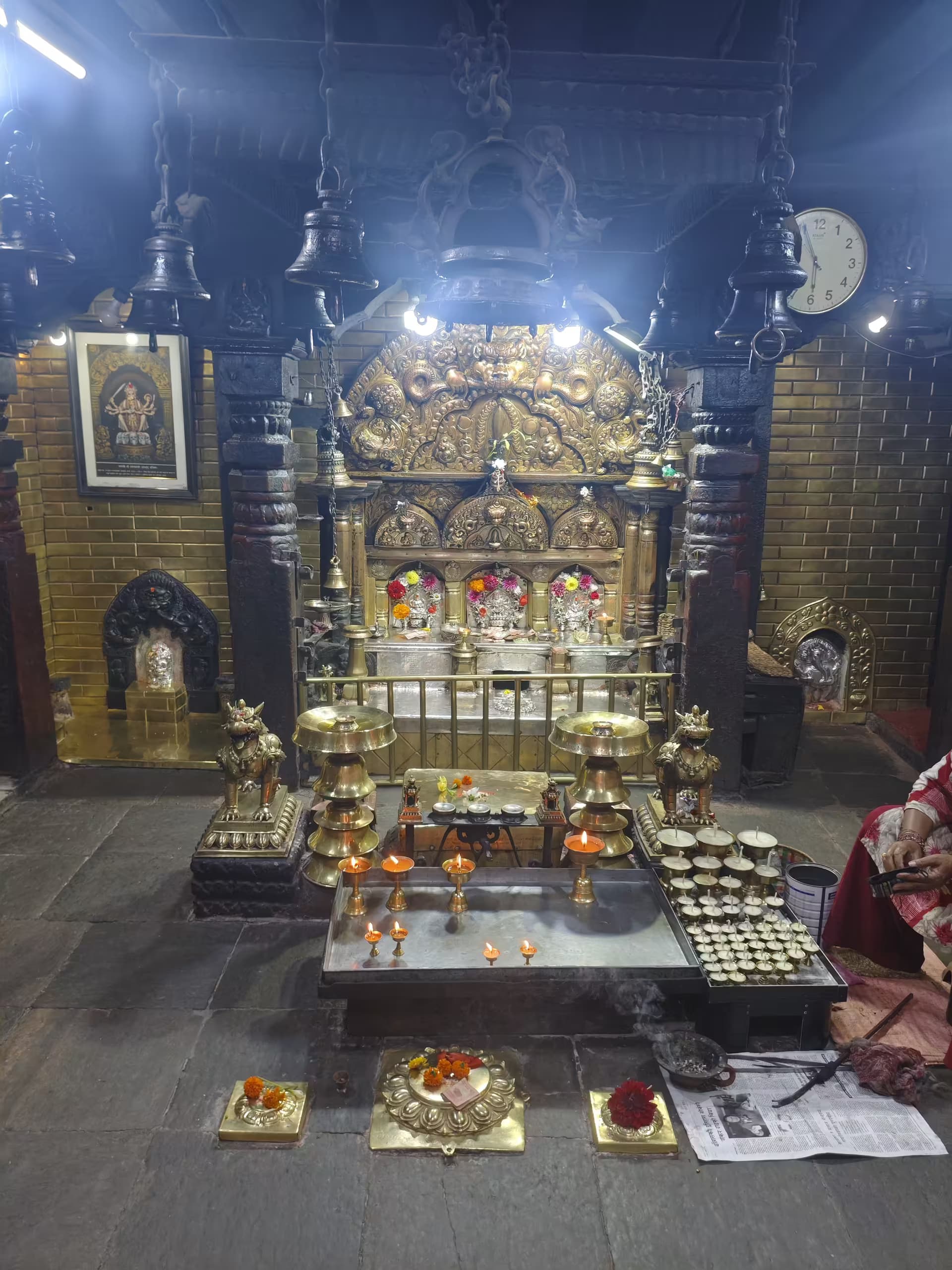
Naradevi Temple
On the inner-lane return leg of the Kwaneya route
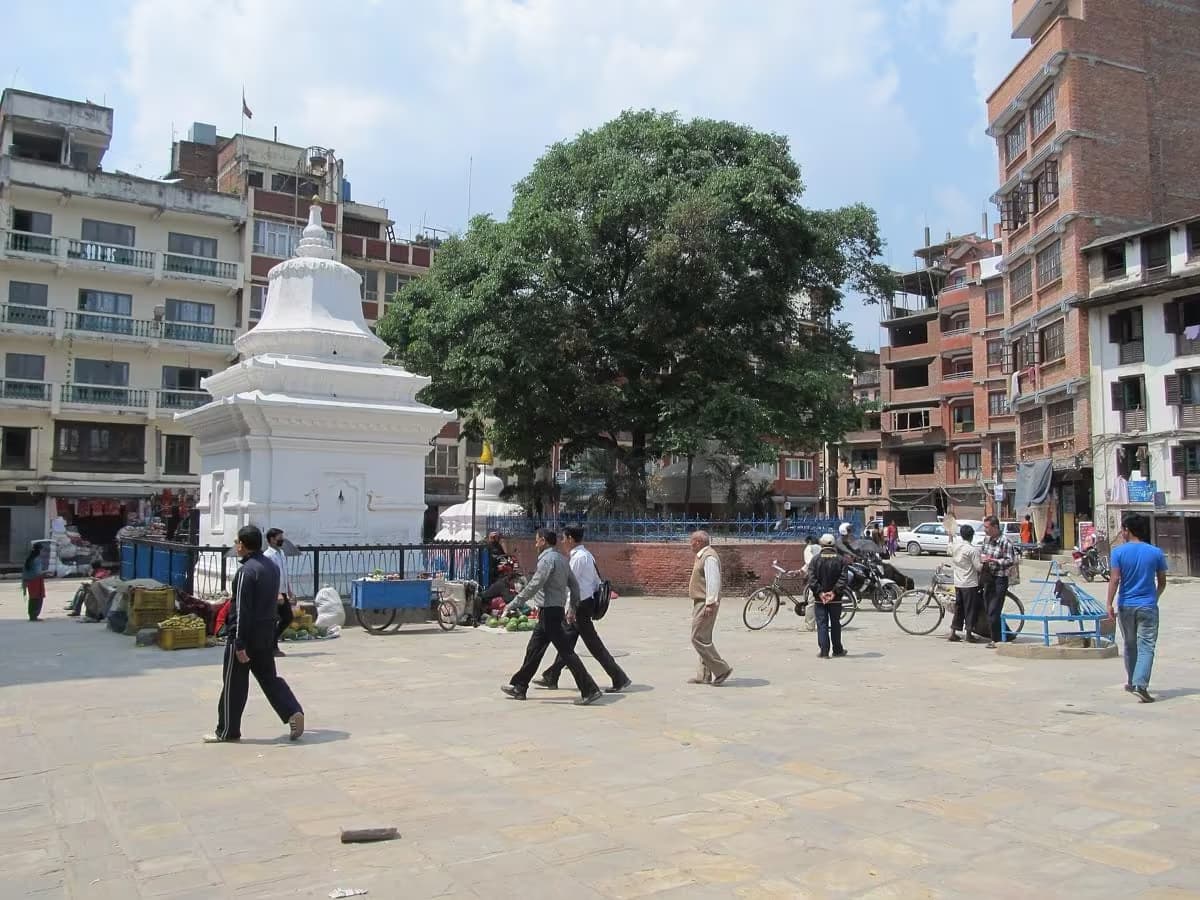
Lagan Bahal (Kirtipunya Mahavihar)
In Lagan Tole, one of the oldest quarters the long southern route threads through
Deities & Presences
Dances
Rituals & Ceremonies
Procession Routes
Part of Indra Jatra