The Chariot That Leads
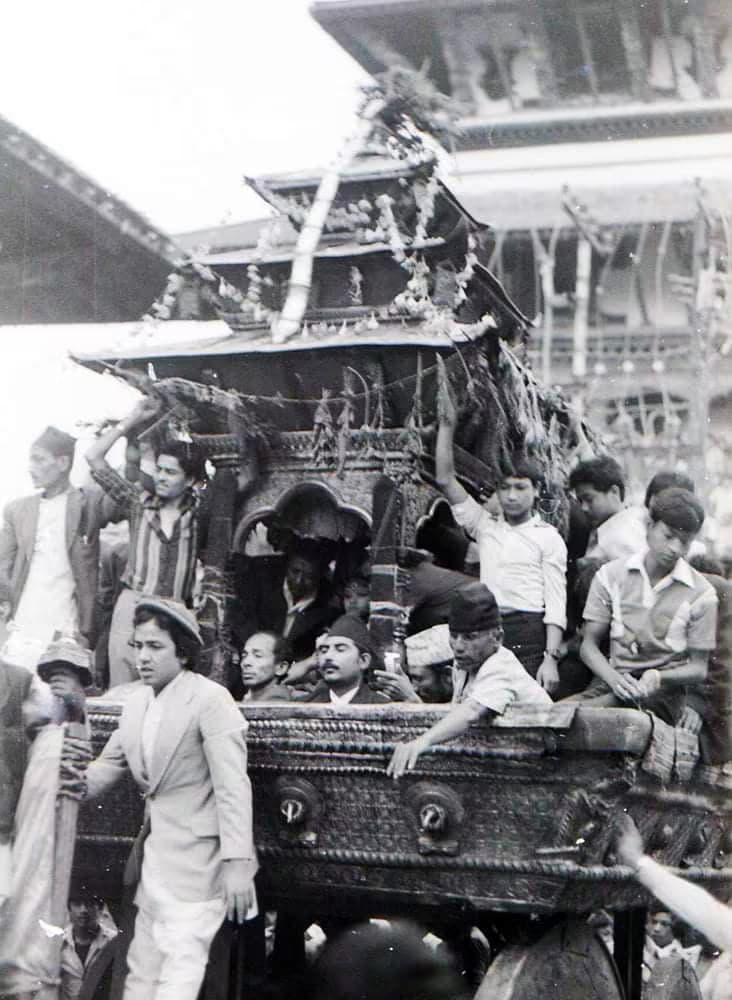
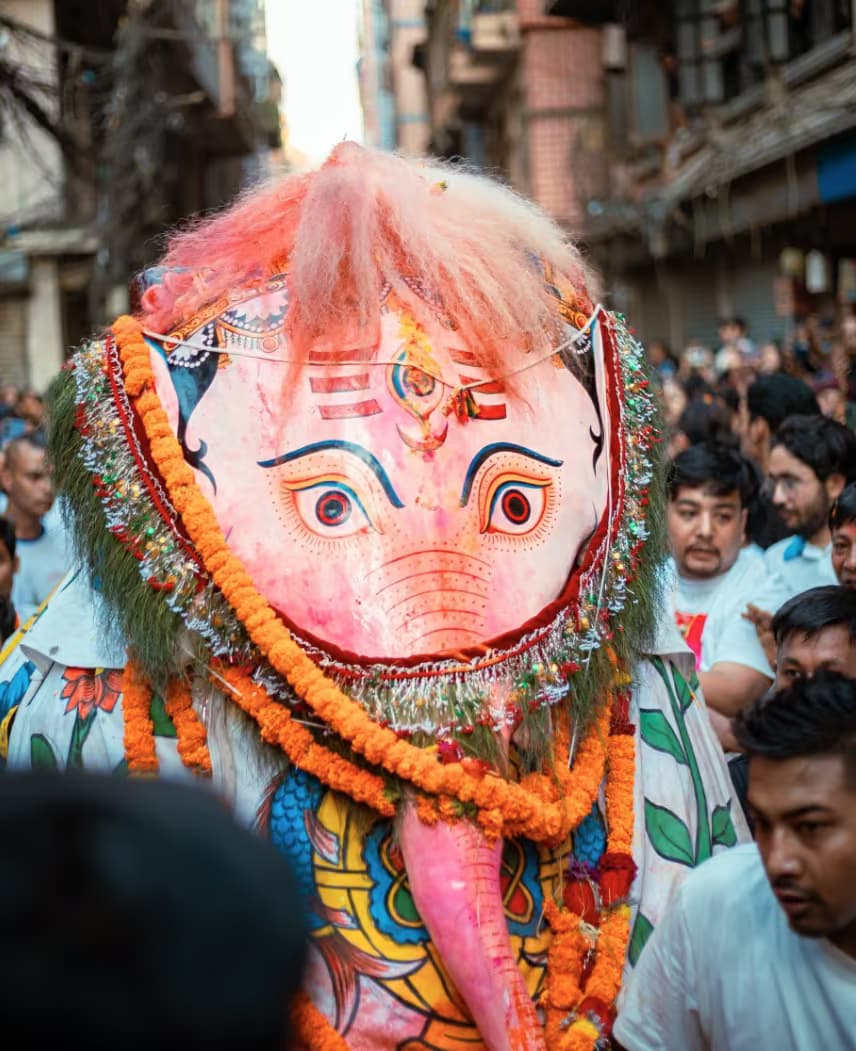
Ganesh, the elephant-headed remover of obstacles, leads every auspicious undertaking in Hindu and Newar practice. In Indra Jatra, this role is made literal: Ganesh's chariot — smaller, lower, and more nimble than Kumari's — leads the procession through the old city, clearing the spiritual path for the Living Goddess to follow.
The Children's Chariot
What distinguishes Ganesh's chariot from its companions is who pulls it. Ethnographic accounts and Nepal Tourism Board sources describe young children, particularly boys of the Newar community, taking the ropes as an act of religious initiation — a rite of passage linking the child to the festival's sacred tradition. The experience is considered auspicious for the child, and families take pride in their sons' participation. (The specific ritual framing of this participation as a formal initiation rite merits further verification against ethnographic literature such as Gutschow 2011.)
Construction and Iconography
The chariot stands roughly two storeys high — substantially smaller than Kumari's three-storey tower. Its carved wooden panels feature images of Ganesh, elephants, and floral motifs. The seated deity image at the chariot's heart is a festival effigy, not the permanent murti of any specific Ganesh temple — the chariot itself functions as a mobile shrine.
The chariot's smaller size is not a sign of lesser importance: Ganesh's position at the front of the procession is one of honour. In Newar religious geography, Ganesh shrines stand at crossroads and city gates precisely to preside over thresholds — and the procession is itself a threshold event, the boundary between the sacred and the everyday made permeable for eight days.
Ceremonial Role
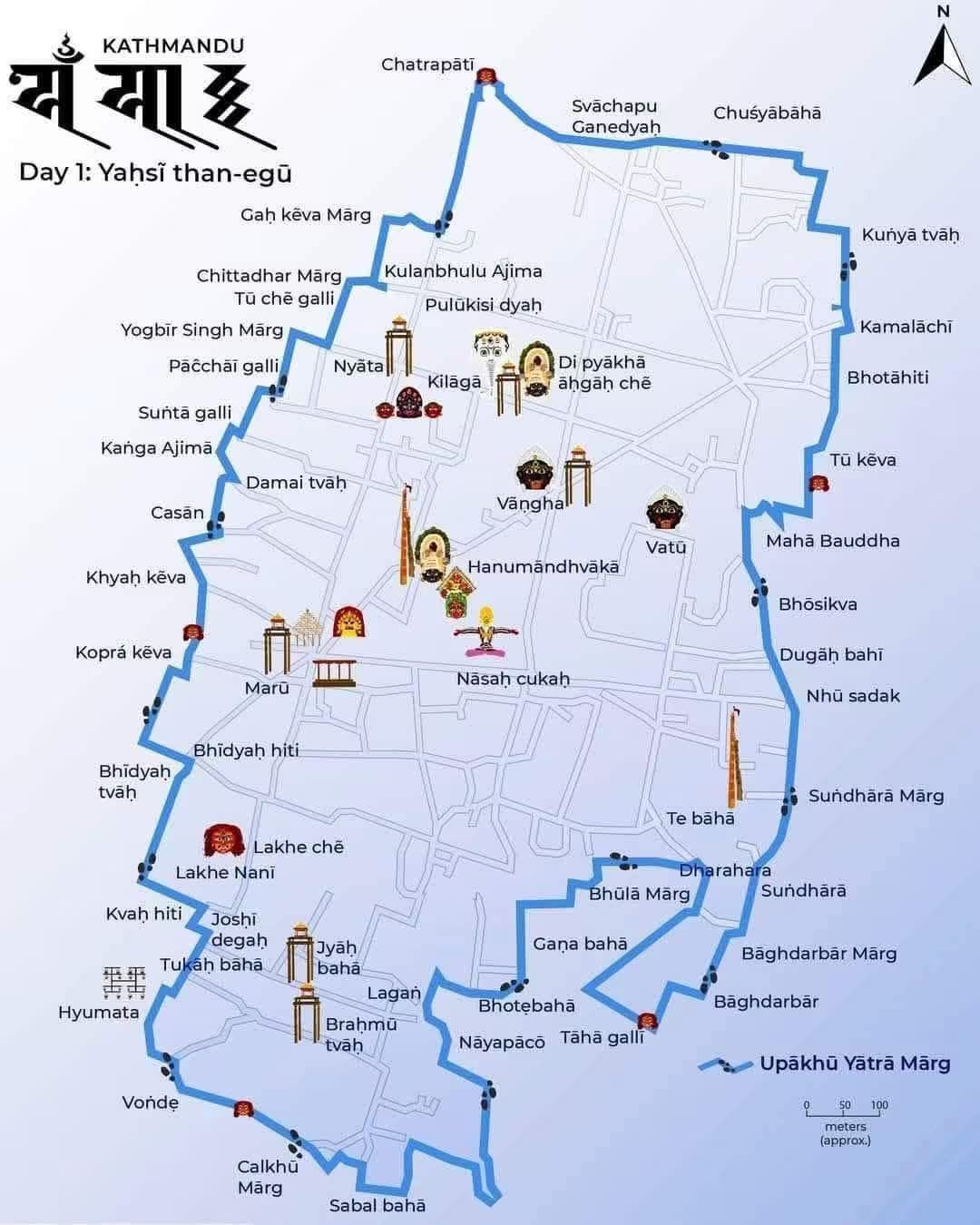
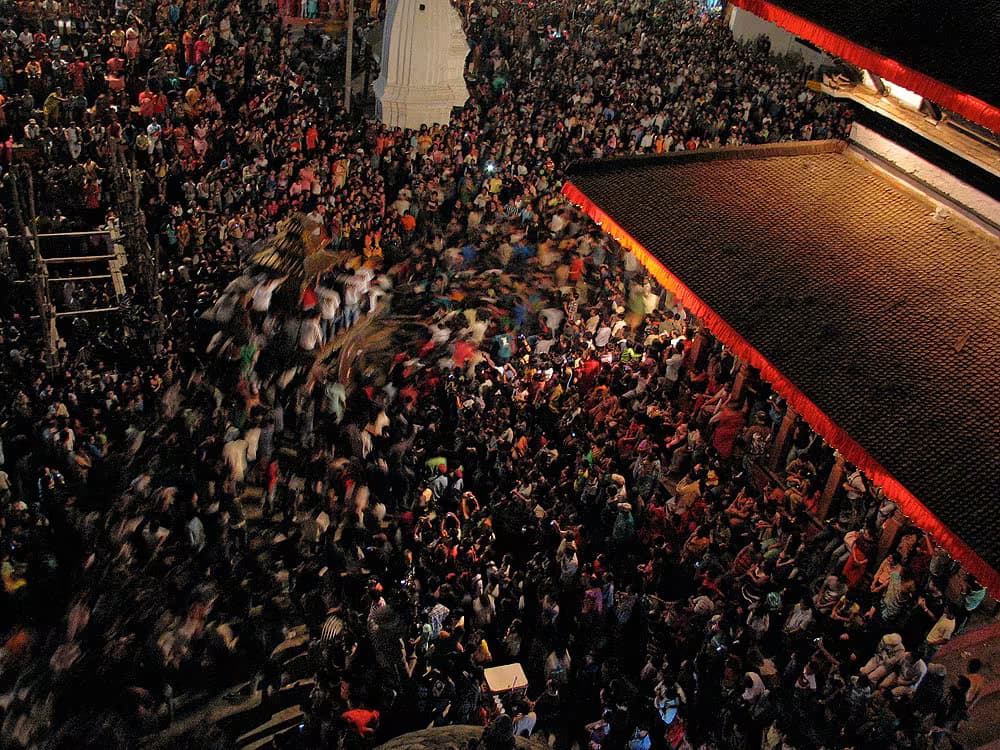
At the major ceremonial stops — Maru Tole, Indra Chowk, Asan Bazaar — Ganesh's chariot arrives first, and priests perform puja at its base before the Kumari's chariot enters. The sequence enacts a cosmic protocol: the remover of obstacles prepares the ground before the goddess arrives.
Related
Connected places and entries worth pairing
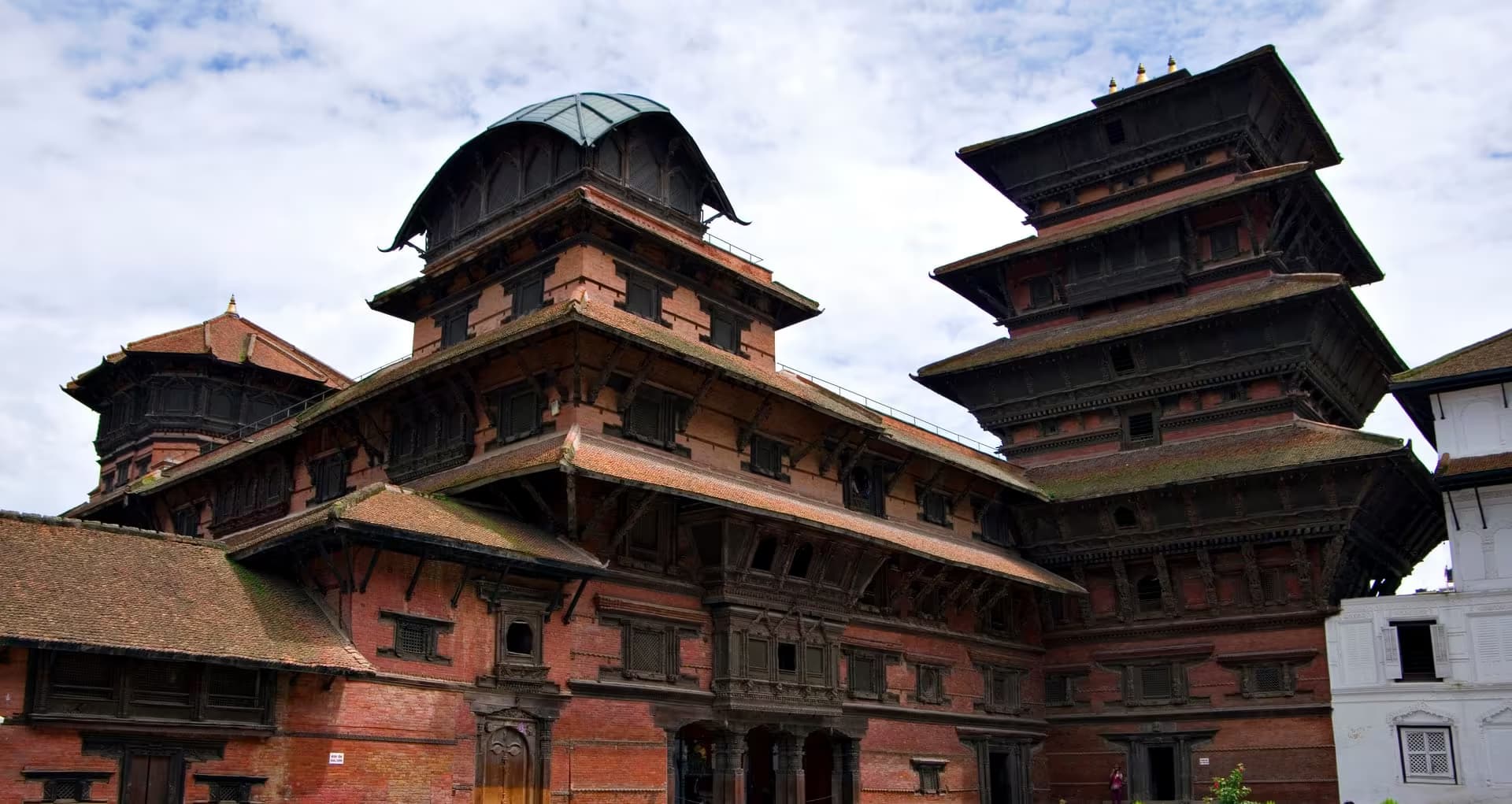
Kathmandu Durbar Square
The eight-day street festival centres on the square and the lanes around Hanuman Dhoka
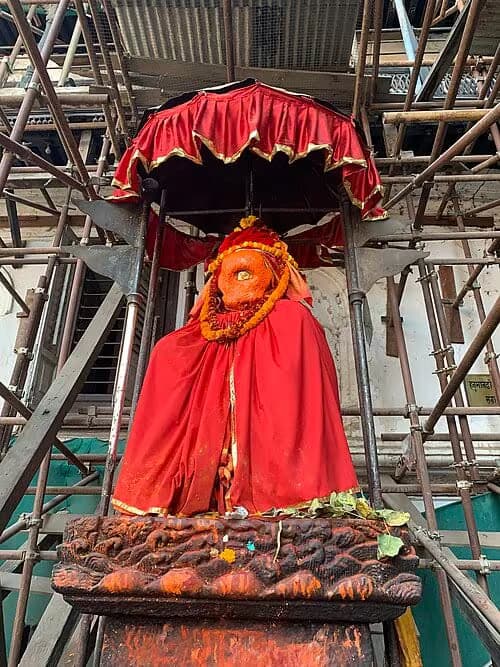
Hanuman Statue (Hanuman Dhoka)
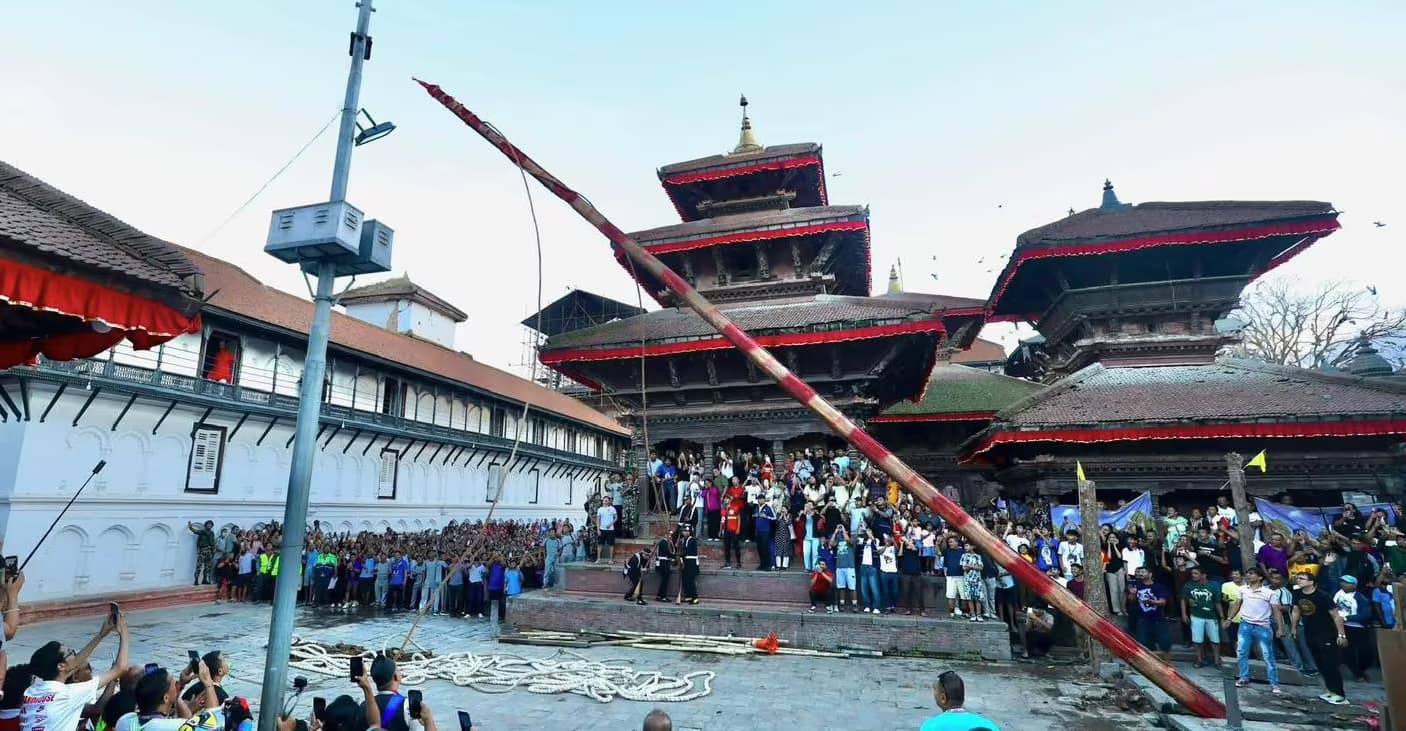
The old royal palace entrance, where the Yosin pole rituals happen
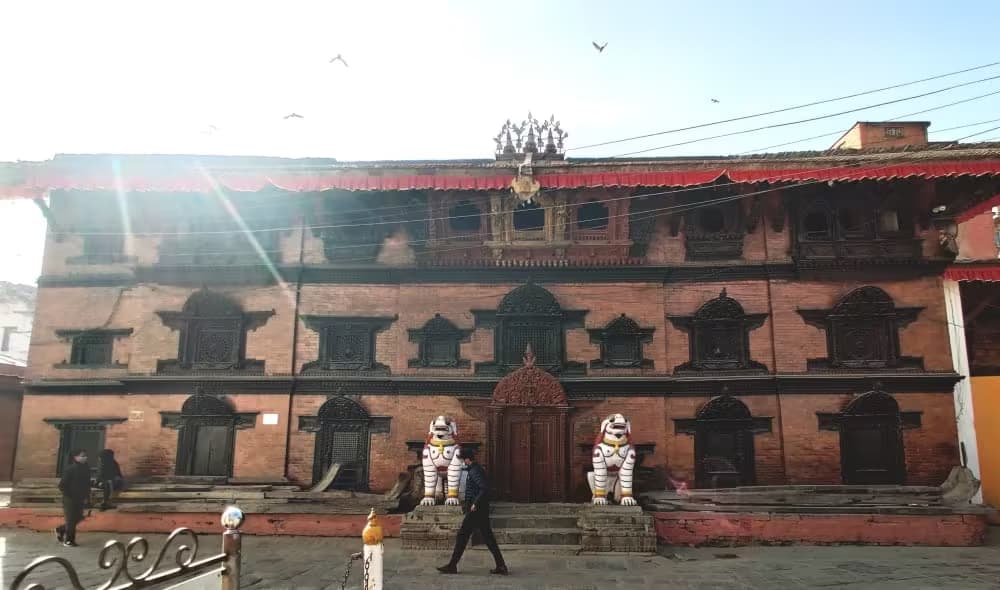
Kumari Ghar
The Kumari's residence, a few steps from where her chariot waits
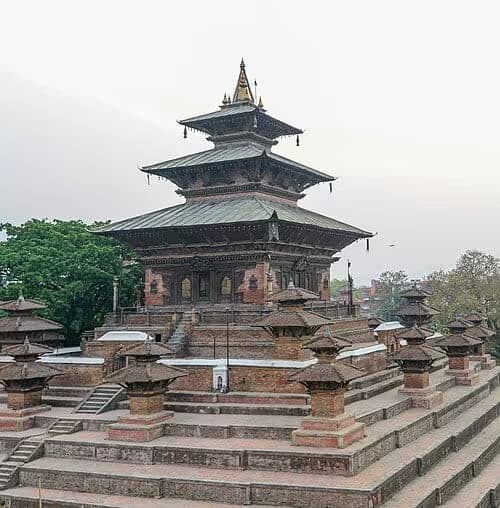
Taleju Temple
The Malla kings' tutelary goddess, whose main gate the Thaneya route passes at Makhan Tole
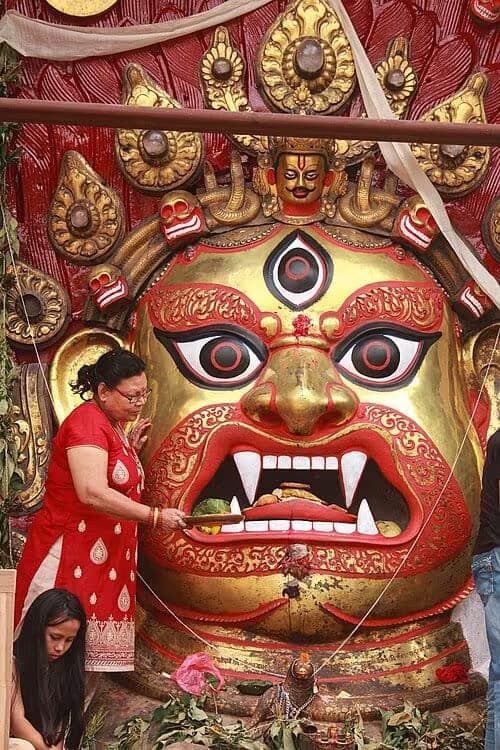
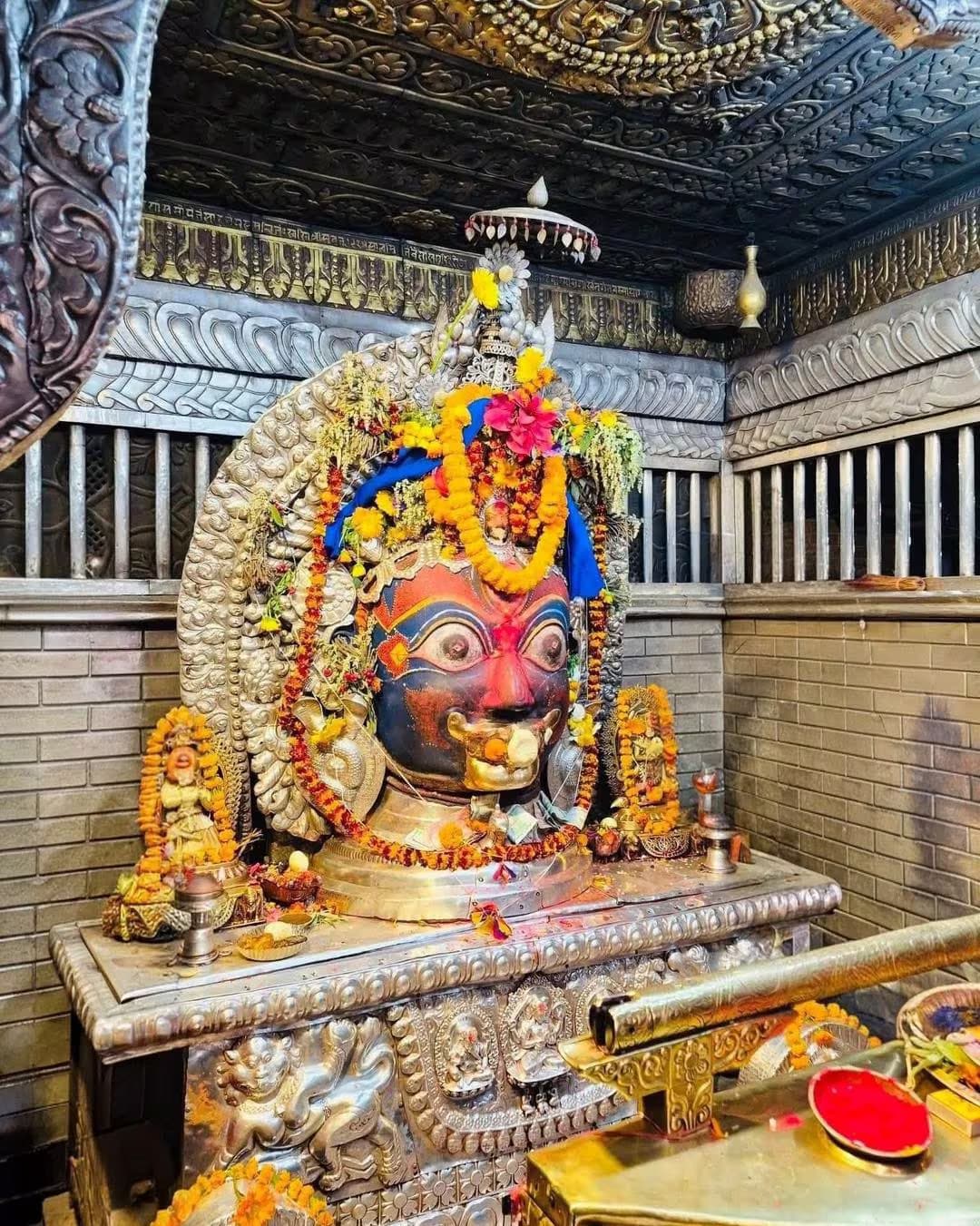
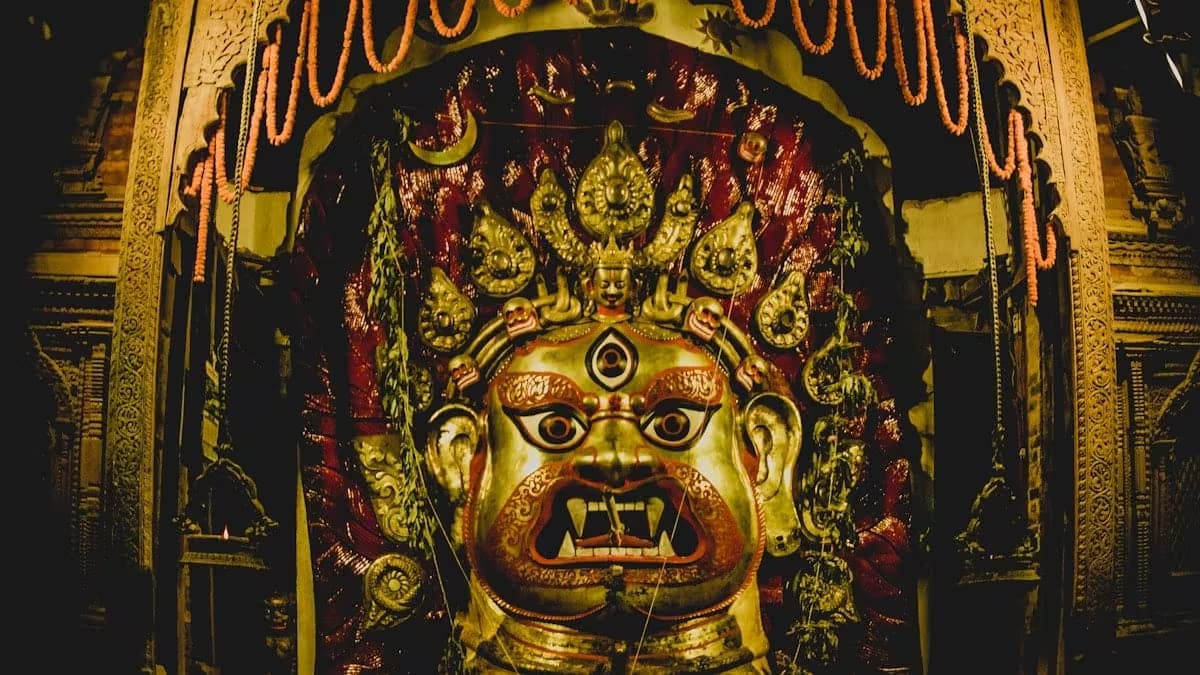
Swet Bhairav
The gilded screen at Makhan Tole, opened for only these eight days of the year
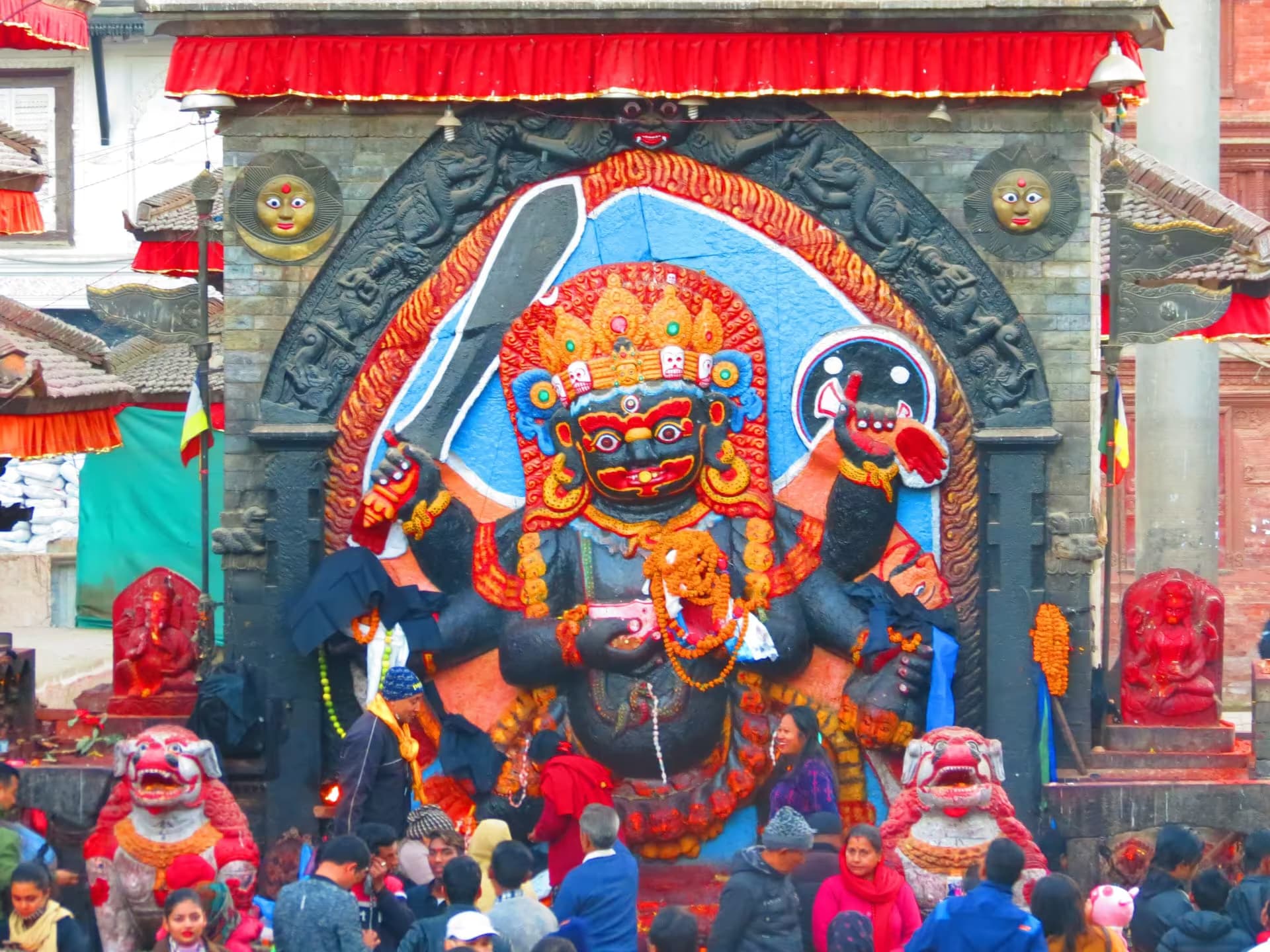
Kal Bhairav
The great stone Bhairav on the square, drawing worship through the festival week
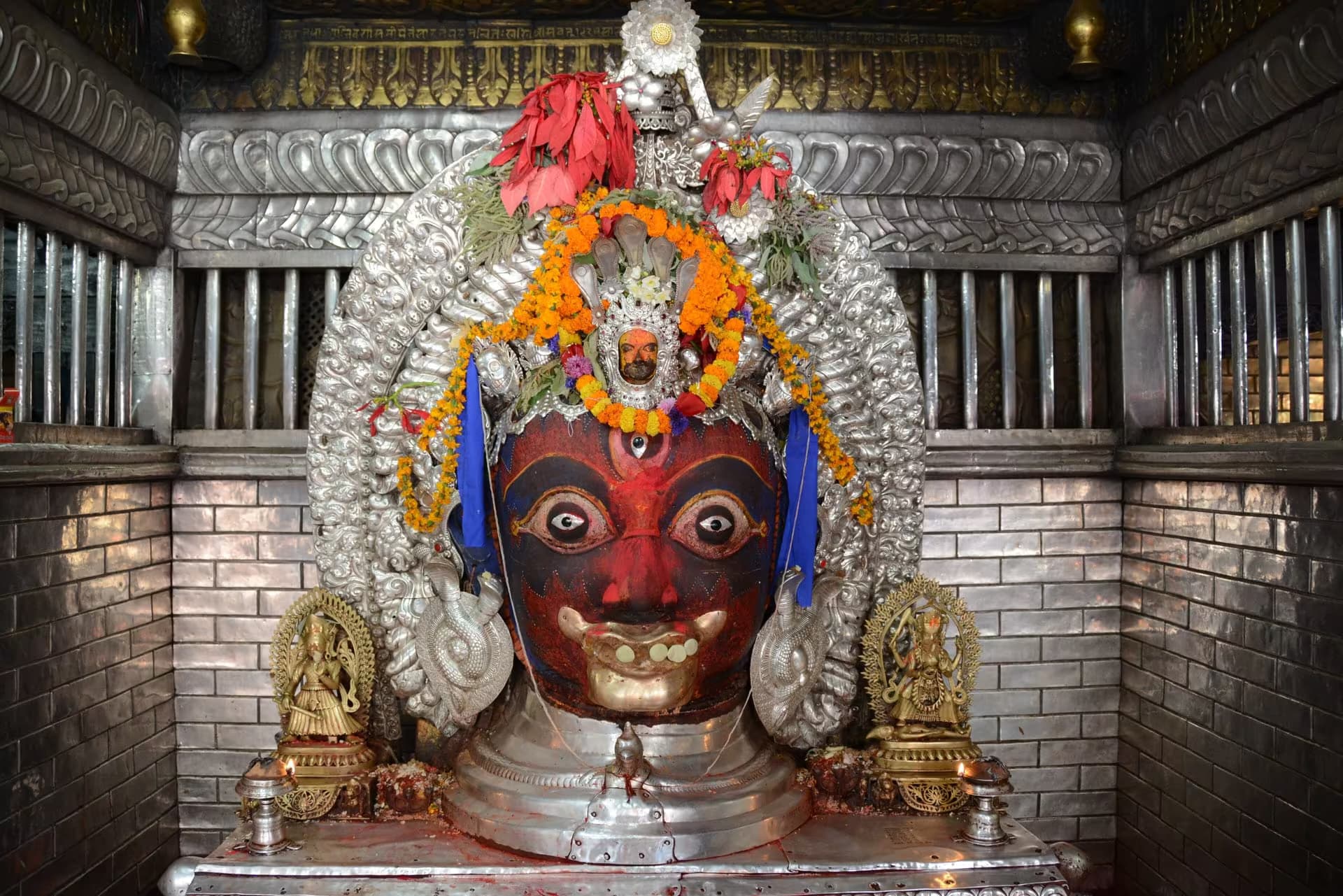
Akash Bhairav Temple
At Indra Chowk on the Thaneya route, where the silver head is brought down to street level
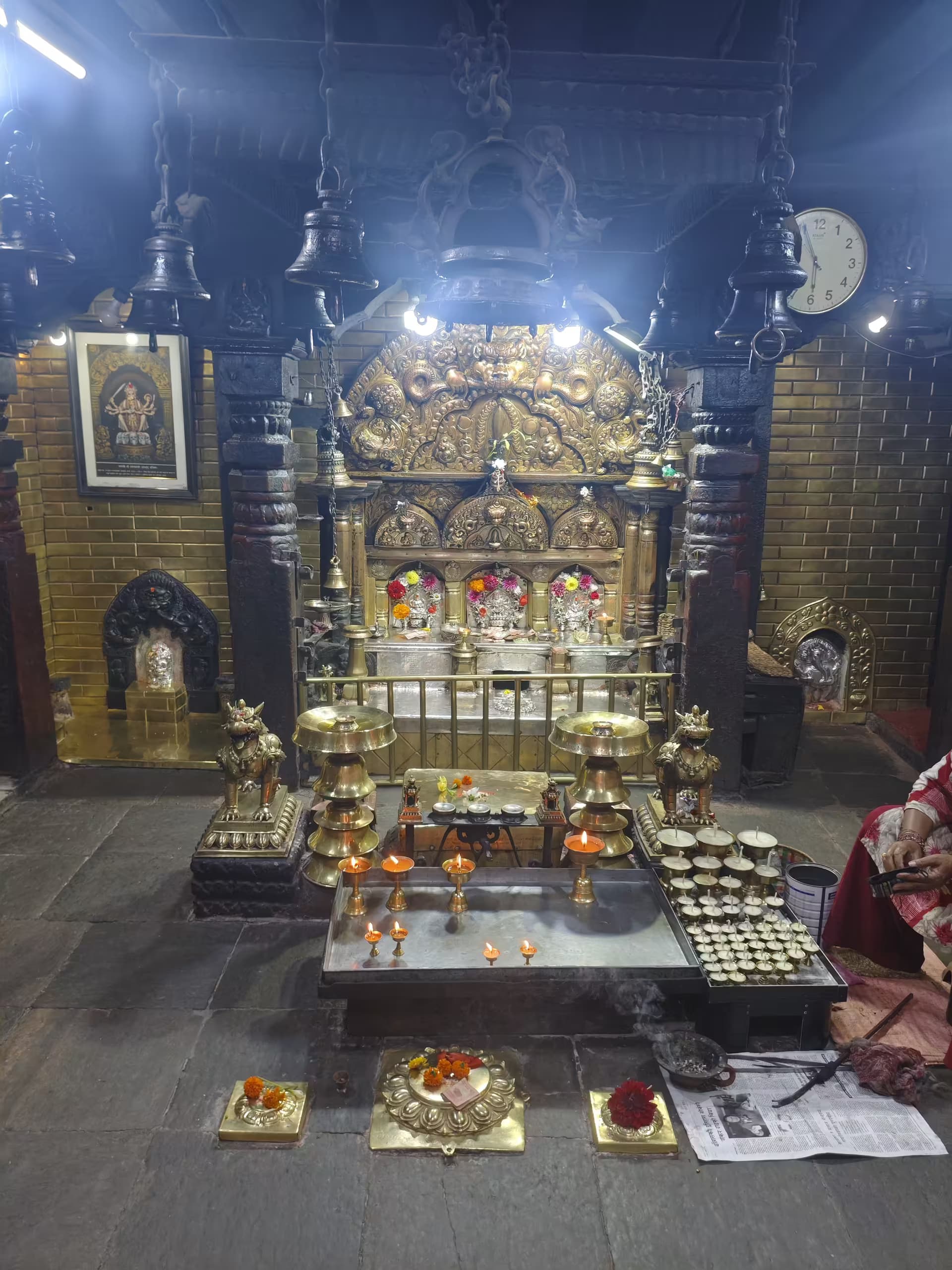
Naradevi Temple
On the inner-lane return leg of the Kwaneya route
Lagan Bahal (Kirtipunya Mahavihar)
In Lagan Tole, one of the oldest quarters the long southern route threads through
Deities & Presences
Dances
Rituals & Ceremonies
Procession Routes
Part of Indra Jatra