Three Bhairavi, One Festival
Kathmandu's religious geography centres on three great Bhairavi: Kal Bhairav (the black destroyer, at the north side of Hanuman Dhoka), Swet Bhairav (the white, concealed behind a gilded screen at Makhan Tole), and Akash Bhairav (the sky or silver Bhairav, at Indra Chowk). All three become accessible — in different ways and to different degrees — during Indra Jatra.
Akash Bhairav's temple stands at Indra Chowk, one of Kathmandu's ancient market squares and a key stop on the Thaneya chariot route. The deity's name means "Bhairav of the sky" — akash being the Sanskrit word for sky or ether, the most expansive and formless of the five classical elements.
The Silver Head
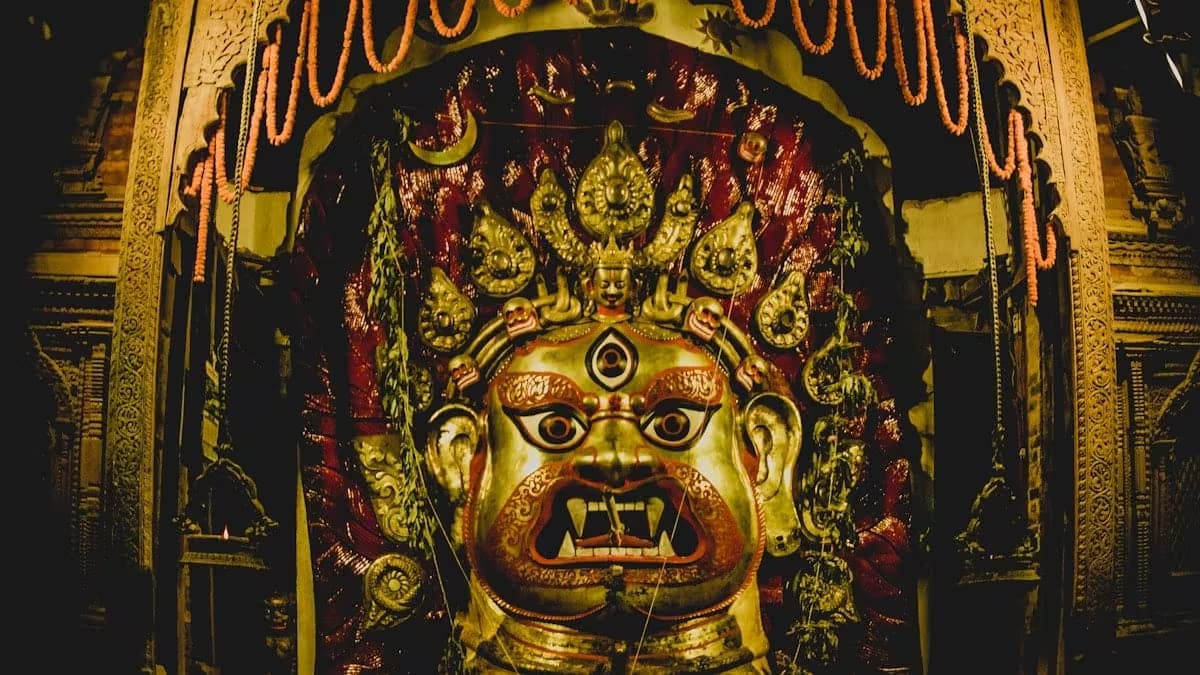
Akash Bhairav is not represented as a full figure but as a disembodied head — a severed, shining face with the characteristic features of the fierce form: wide eyes, fanged mouth, ornate crown. The image is silver — bright and lustrous — in contrast to the black of Kal Bhairav and the white of Swet Bhairav.
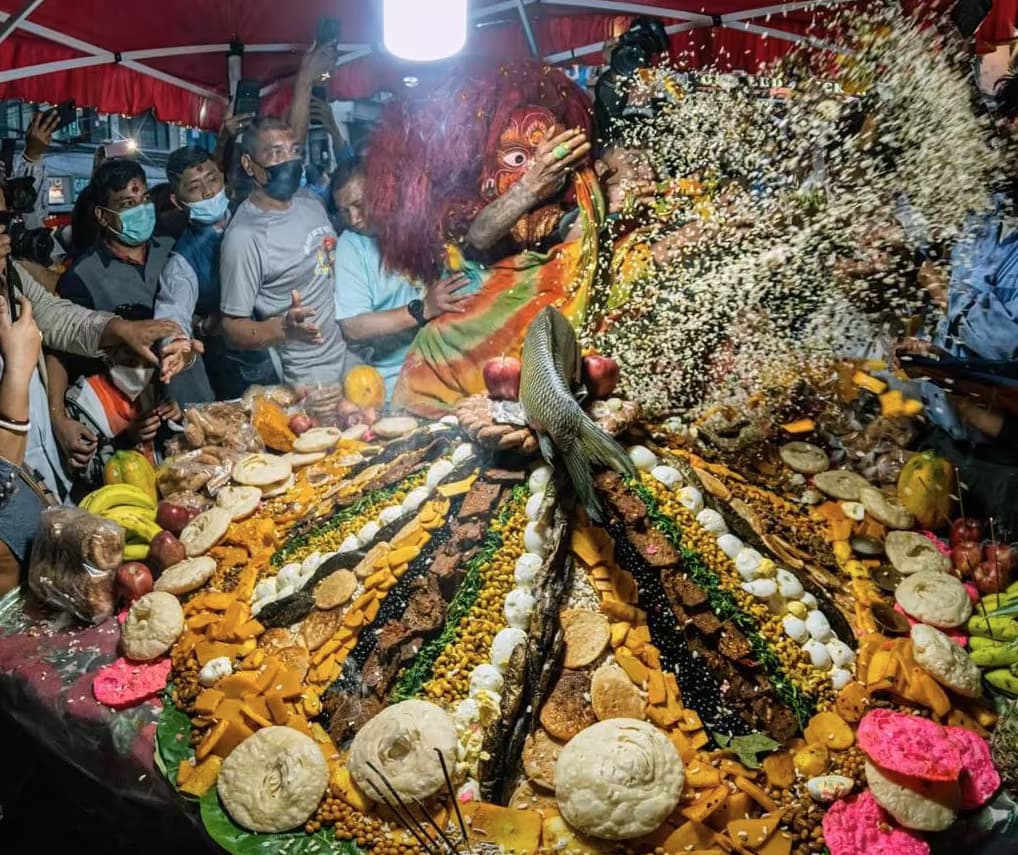
For most of the year the image is kept in the upper storey of the Indra Chowk temple building, visible from the street only partially, if at all. During Indra Jatra it is brought to a position accessible to devotees: placed at the building's lower level, where worshippers can approach directly and make offerings.
The Legend of Decapitation
The mythology of Bhairav's severed head is one of the most striking in Shaivite tradition. In the most common version, Bhairav (as an aspect of Shiva) decapitated Brahma in a moment of divine rage — cutting off one of the god's five heads to reduce his arrogance. As punishment, the skull stuck to Bhairav's hand until he performed sufficient penance and pilgrimage. The image of Bhairav as a disembodied head thus encodes both the act of divine violence and the consequence of divine karma.
In the Newar context, Akash Bhairav is also associated with Indra himself: some traditions identify the silver head as Indra's own form, or as the form Bhairav takes to protect Indra's domain. This identification connects the deity directly to the festival's origin narrative.
The Thaneya Stop
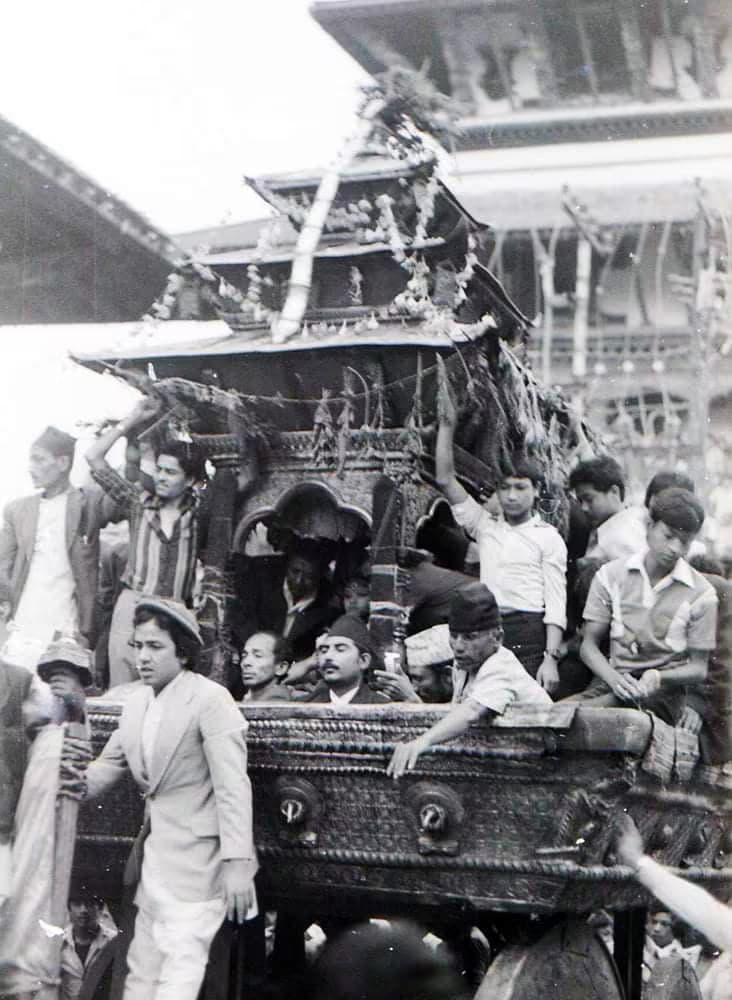
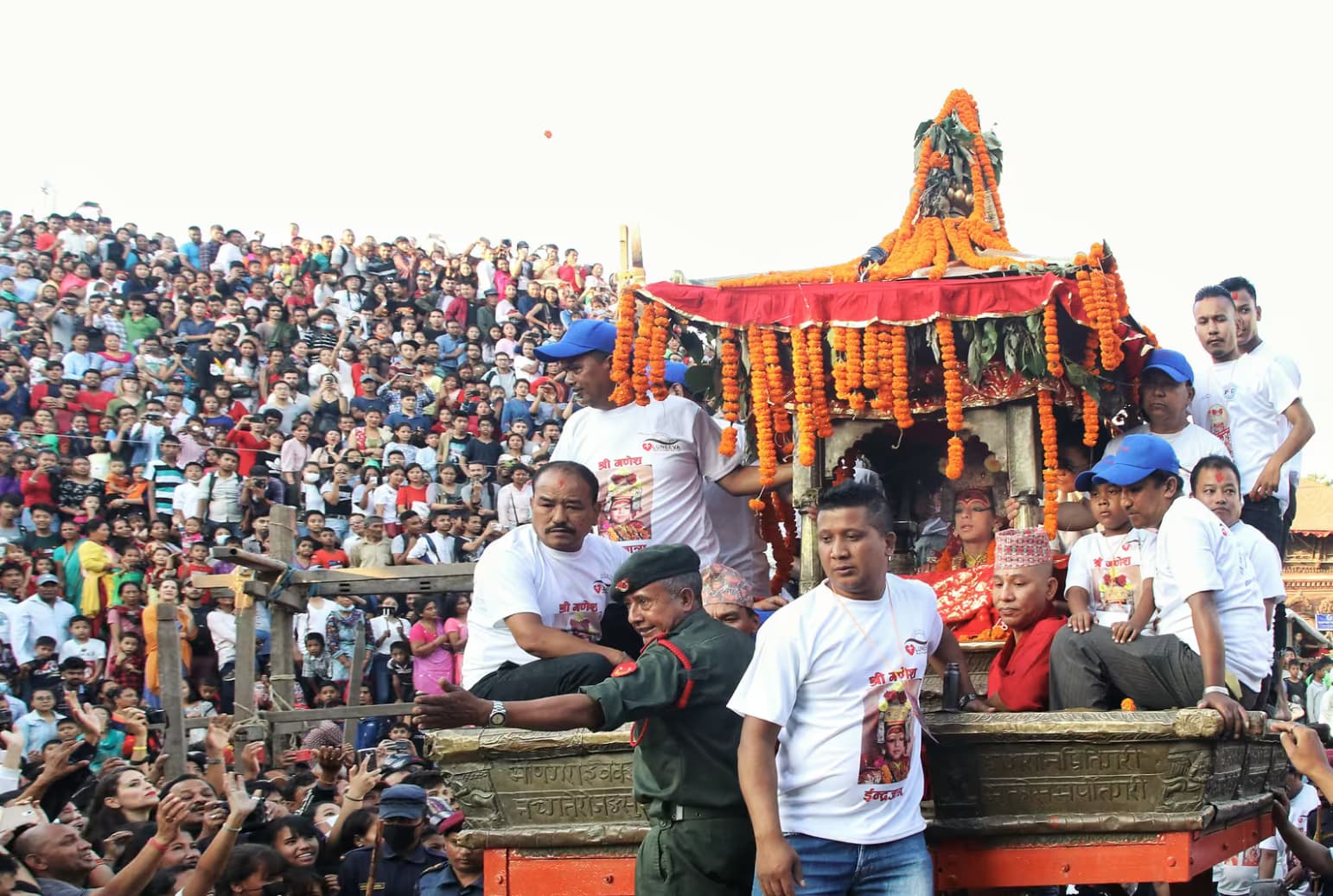
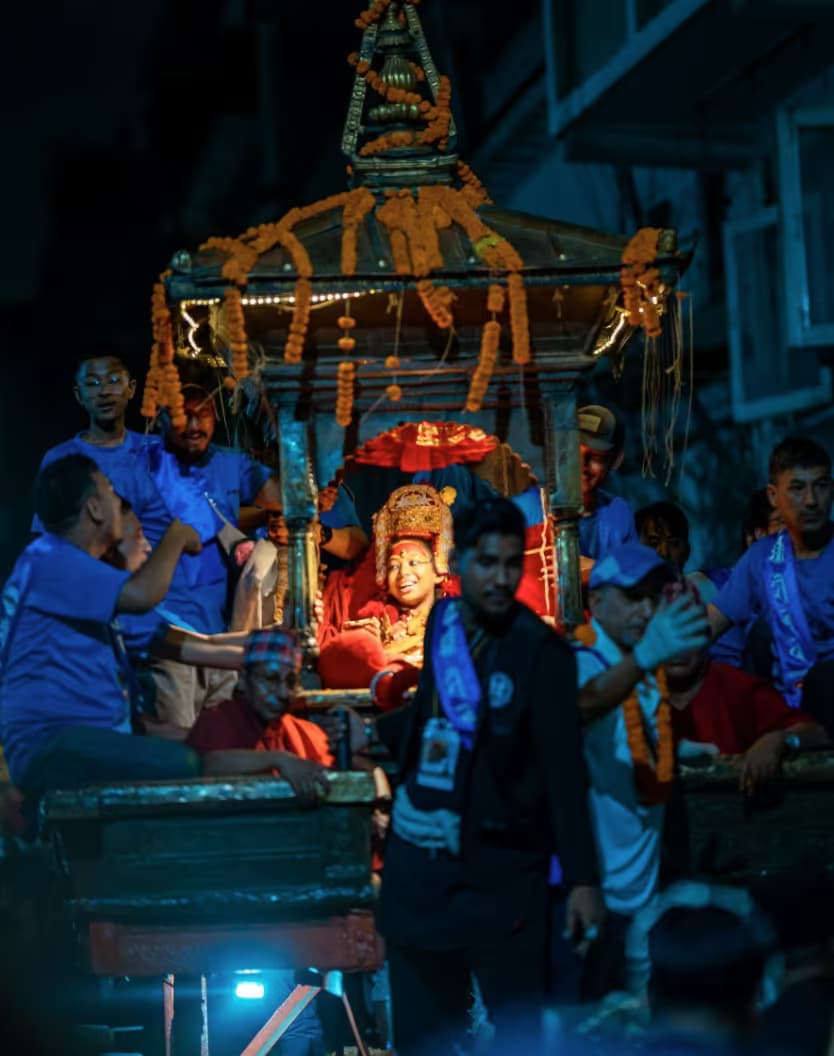
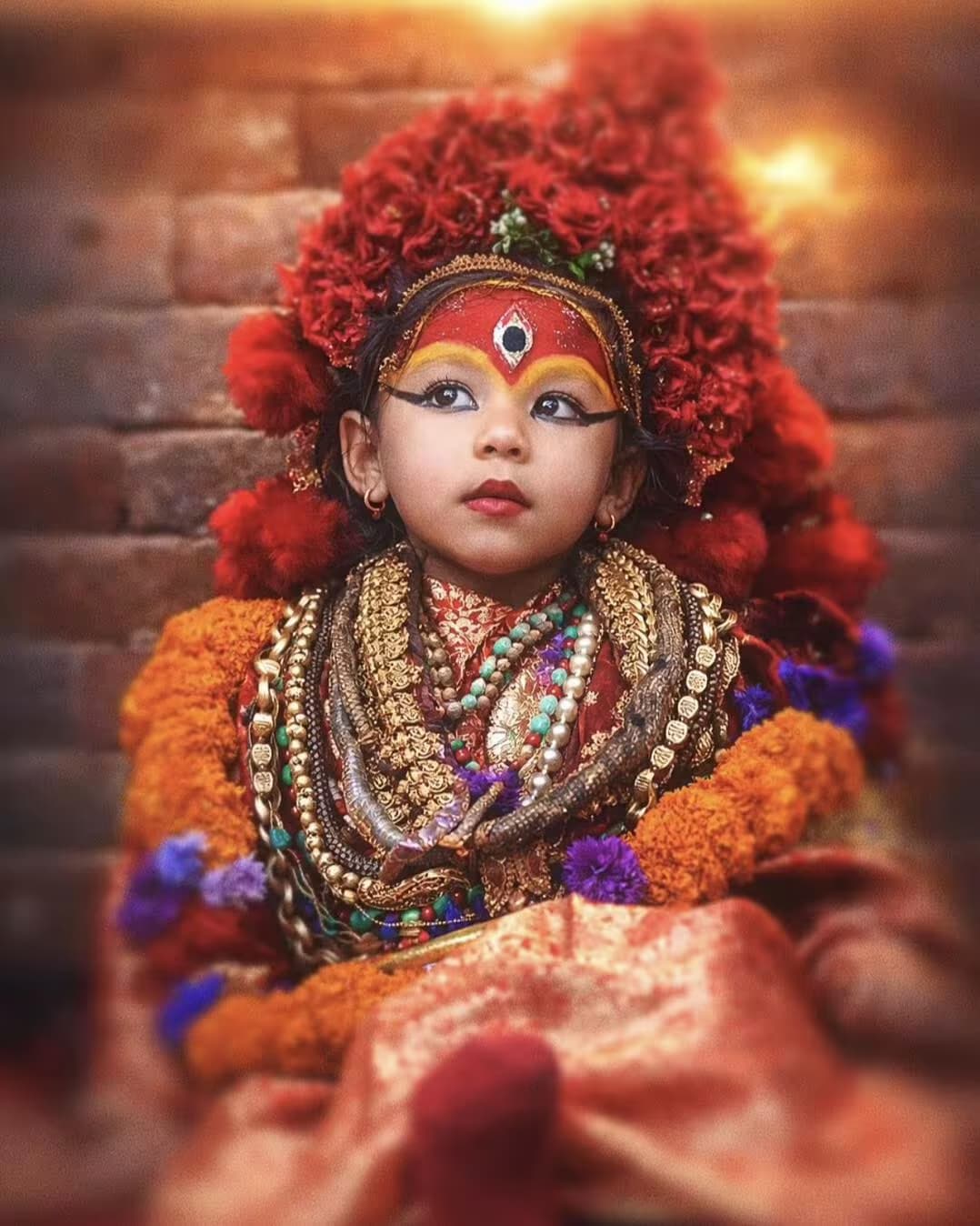
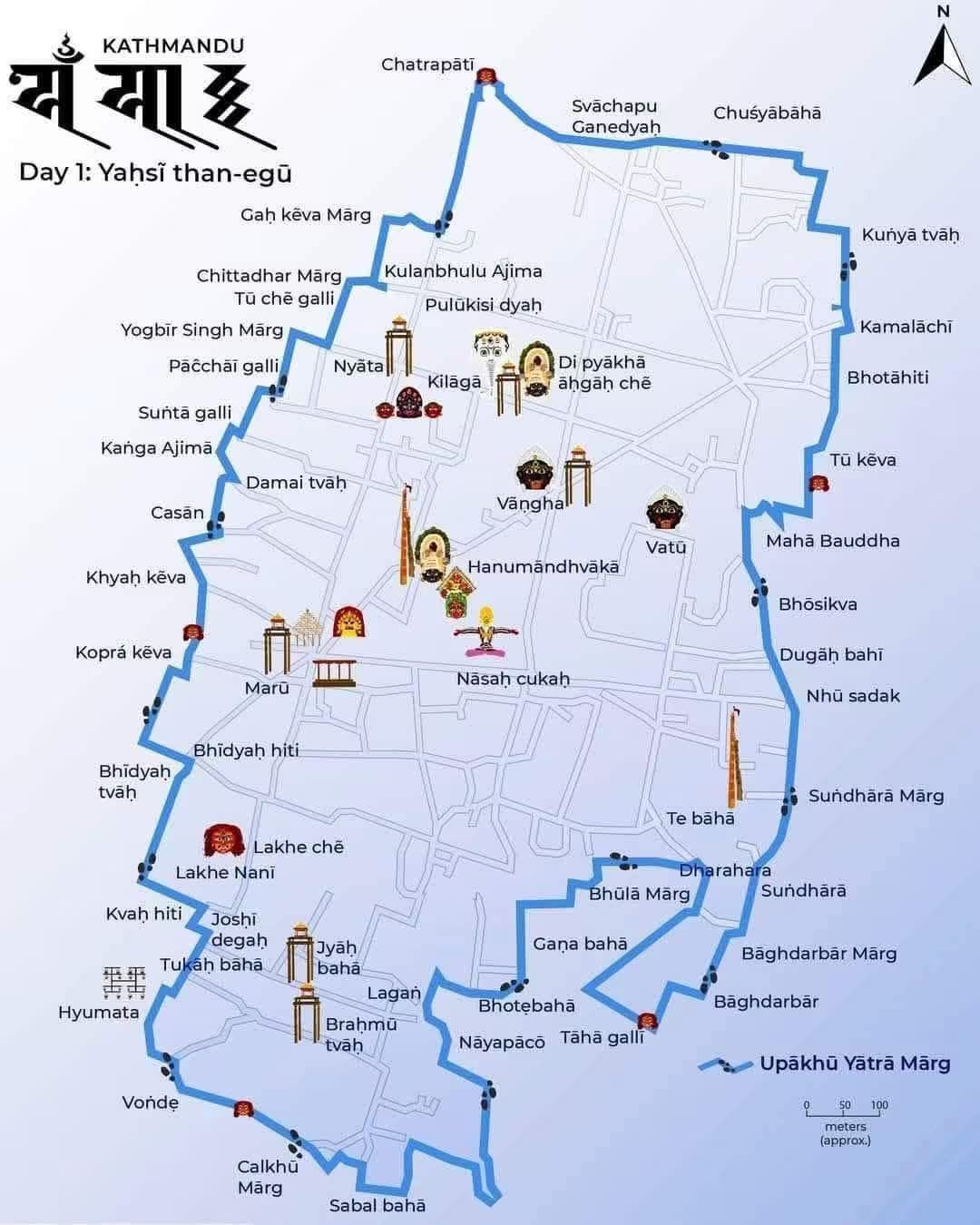
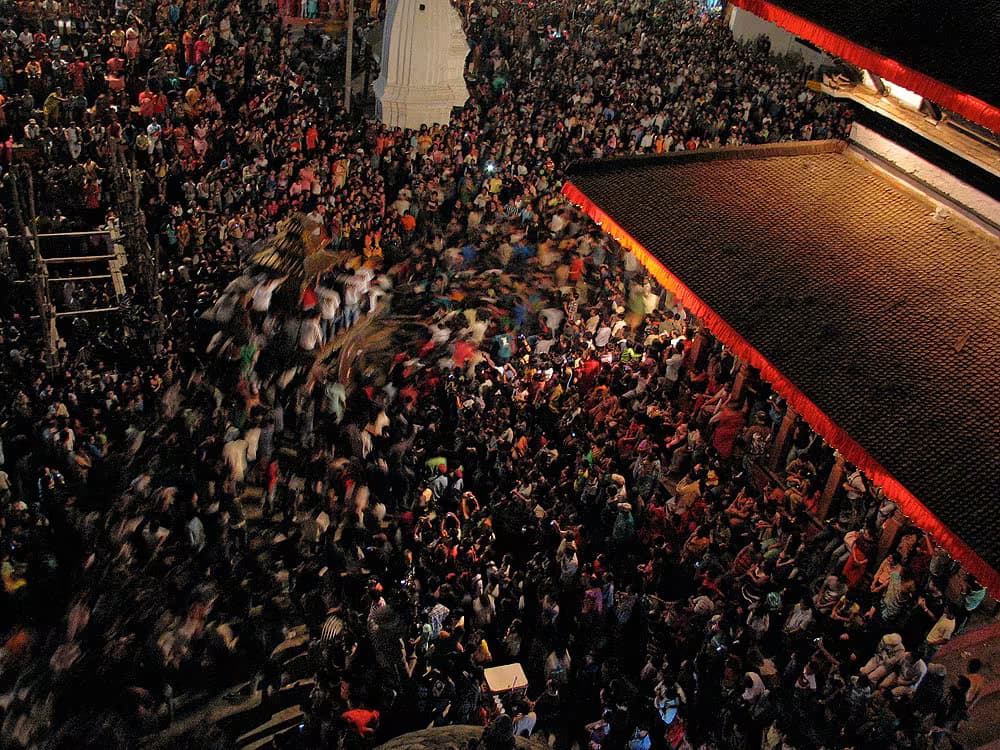
When the chariot procession reaches Indra Chowk on the second day (Thaneya), it pauses for puja at the Akash Bhairav temple. The chariot fills the square; priests descend to perform the ritual; devotees press forward. The juxtaposition of the mobile chariot (Kumari in motion) and the fixed temple (Akash Bhairav in his place) is one of the festival's great spatial moments — divinity moving meeting divinity dwelling.
Related Places & Sites
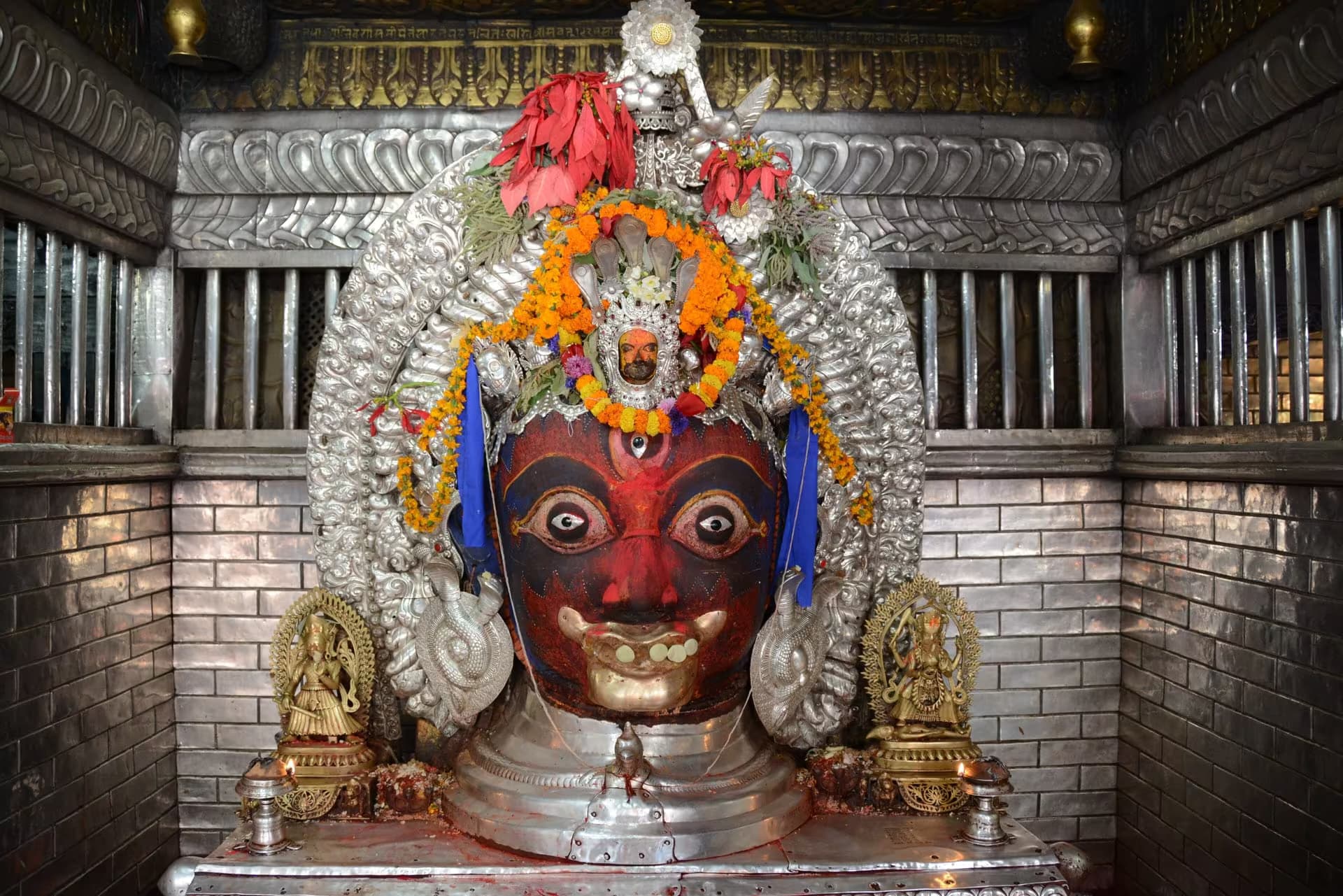
sacred site
Akash Bhairav TempleTemple of Akash Bhairav at Indra Chowk — key stop on the Thaneya chariot route
Related
Connected places and entries worth pairing
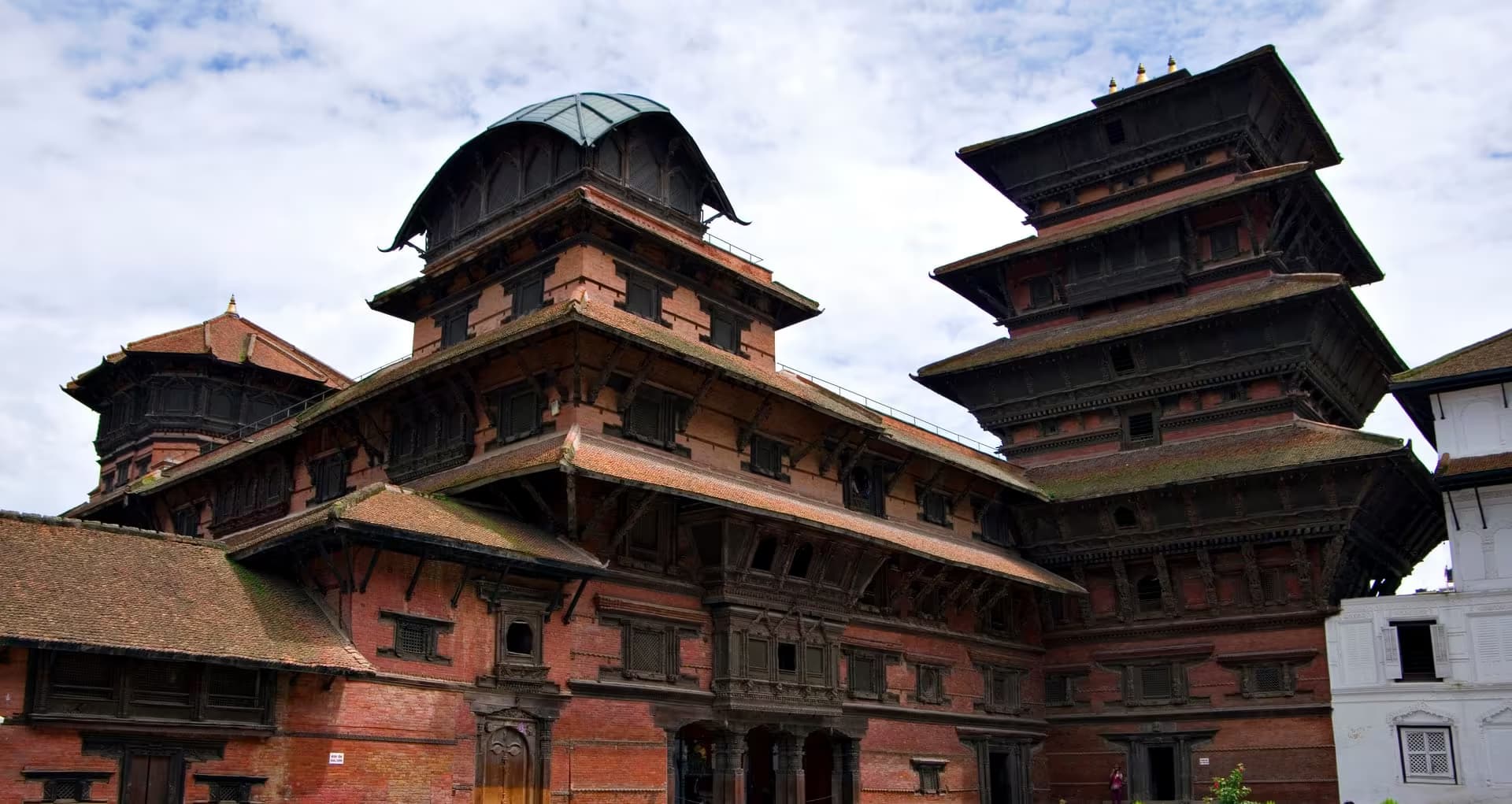
Kathmandu Durbar Square
The eight-day street festival centres on the square and the lanes around Hanuman Dhoka
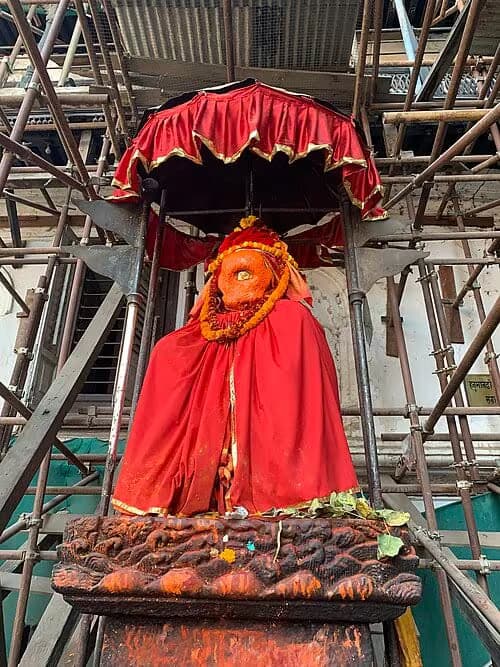
Hanuman Statue (Hanuman Dhoka)
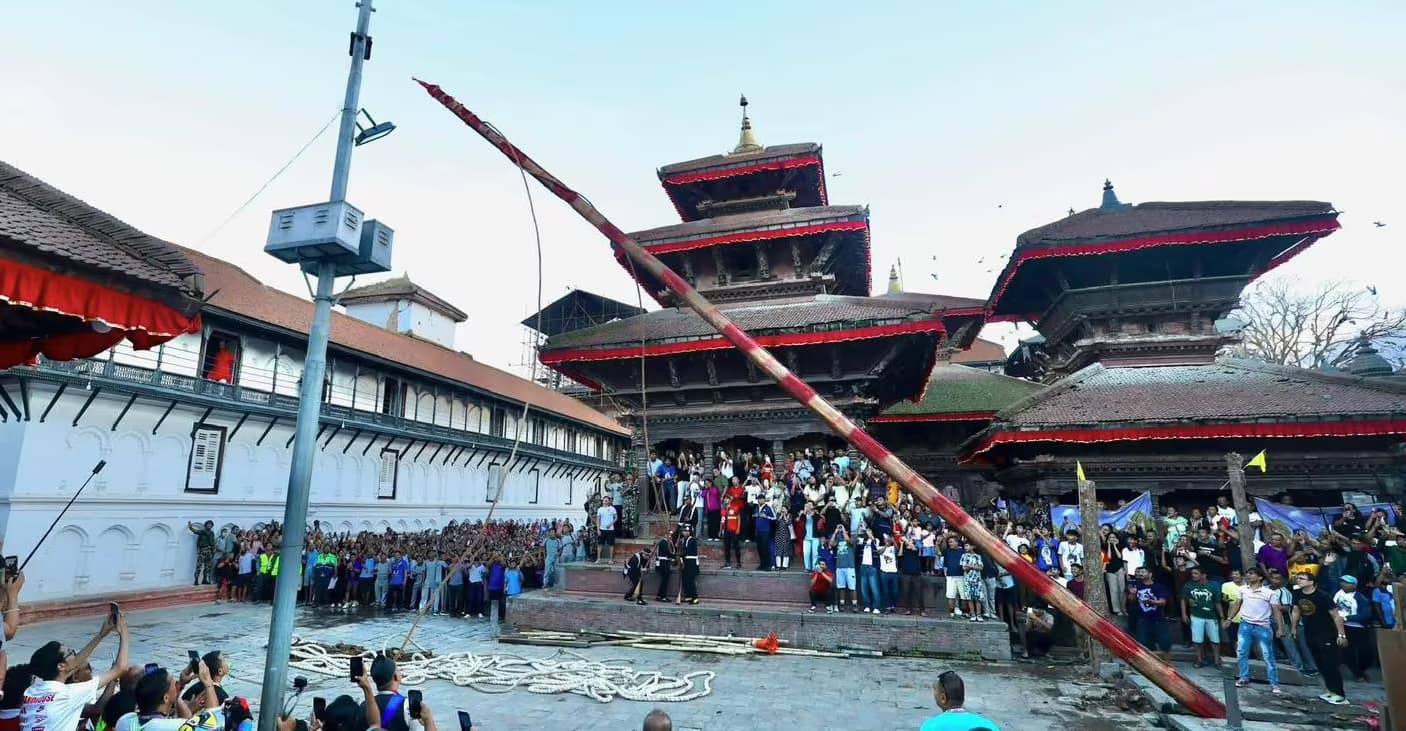
The old royal palace entrance, where the Yosin pole rituals happen
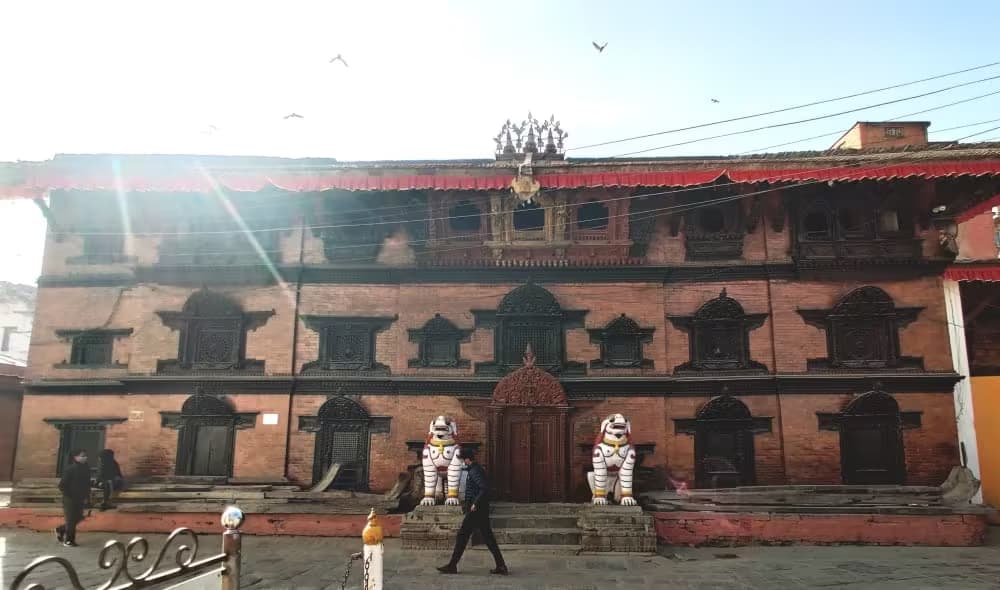
Kumari Ghar
The Kumari's residence, a few steps from where her chariot waits
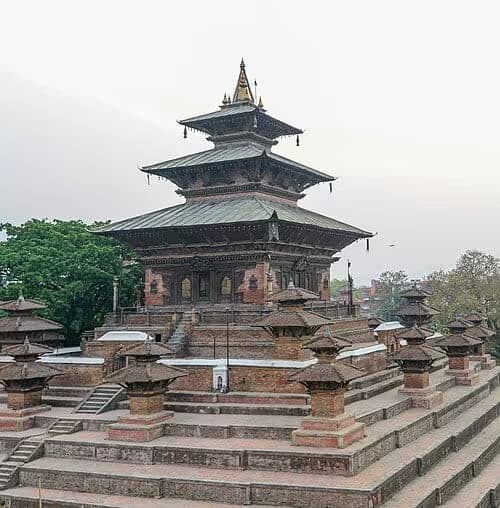
Taleju Temple
The Malla kings' tutelary goddess, whose main gate the Thaneya route passes at Makhan Tole
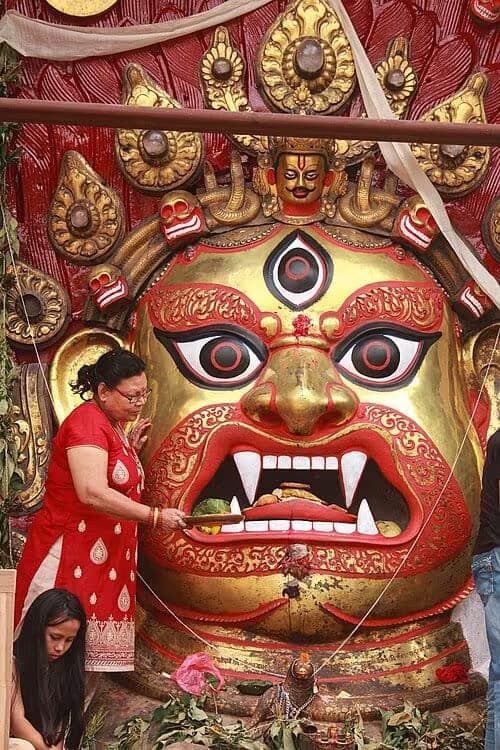
Swet Bhairav
The gilded screen at Makhan Tole, opened for only these eight days of the year
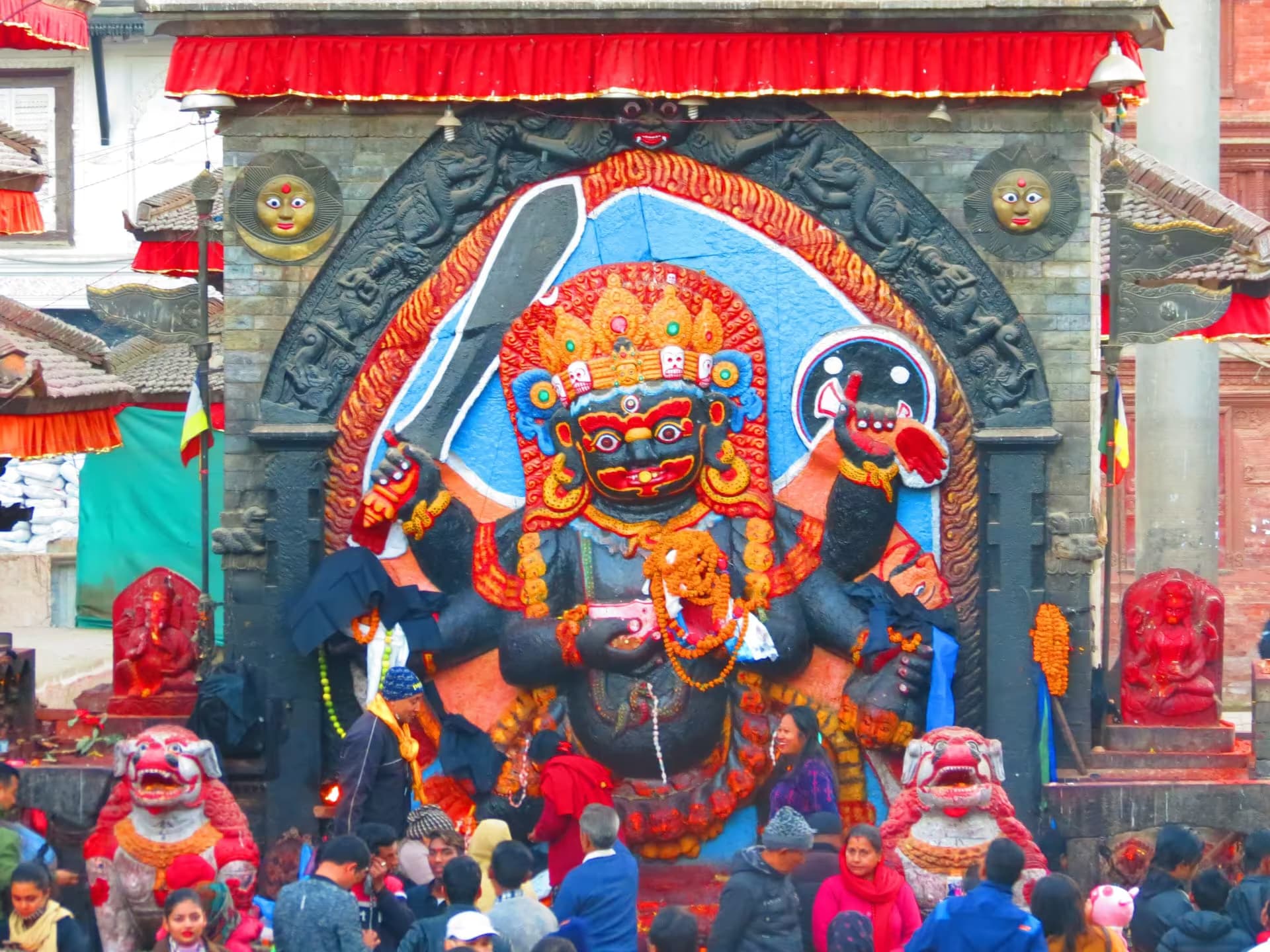
Kal Bhairav
The great stone Bhairav on the square, drawing worship through the festival week
Akash Bhairav Temple
At Indra Chowk on the Thaneya route, where the silver head is brought down to street level
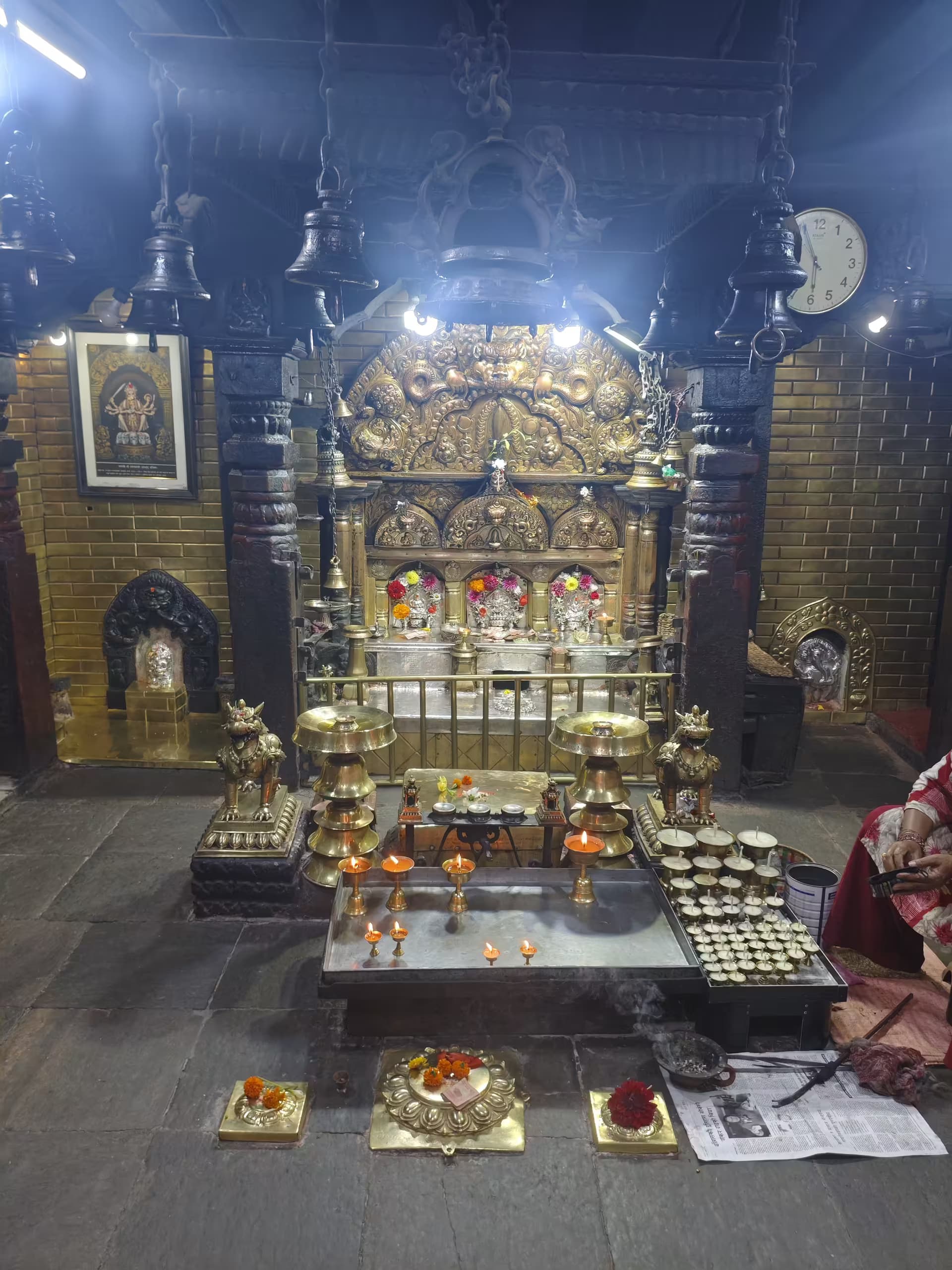
Naradevi Temple
On the inner-lane return leg of the Kwaneya route
Lagan Bahal (Kirtipunya Mahavihar)
In Lagan Tole, one of the oldest quarters the long southern route threads through
Deities & Presences
Dances
Rituals & Ceremonies
Procession Routes
Part of Indra Jatra