Shrine · Hindu
Kal Bhairav
काल भैरव
Bhairav (terrifying aspect of Shiva)·Licchavi period, c. 12th century (installed by King Pratap Malla, 17th century)·Kathmandu
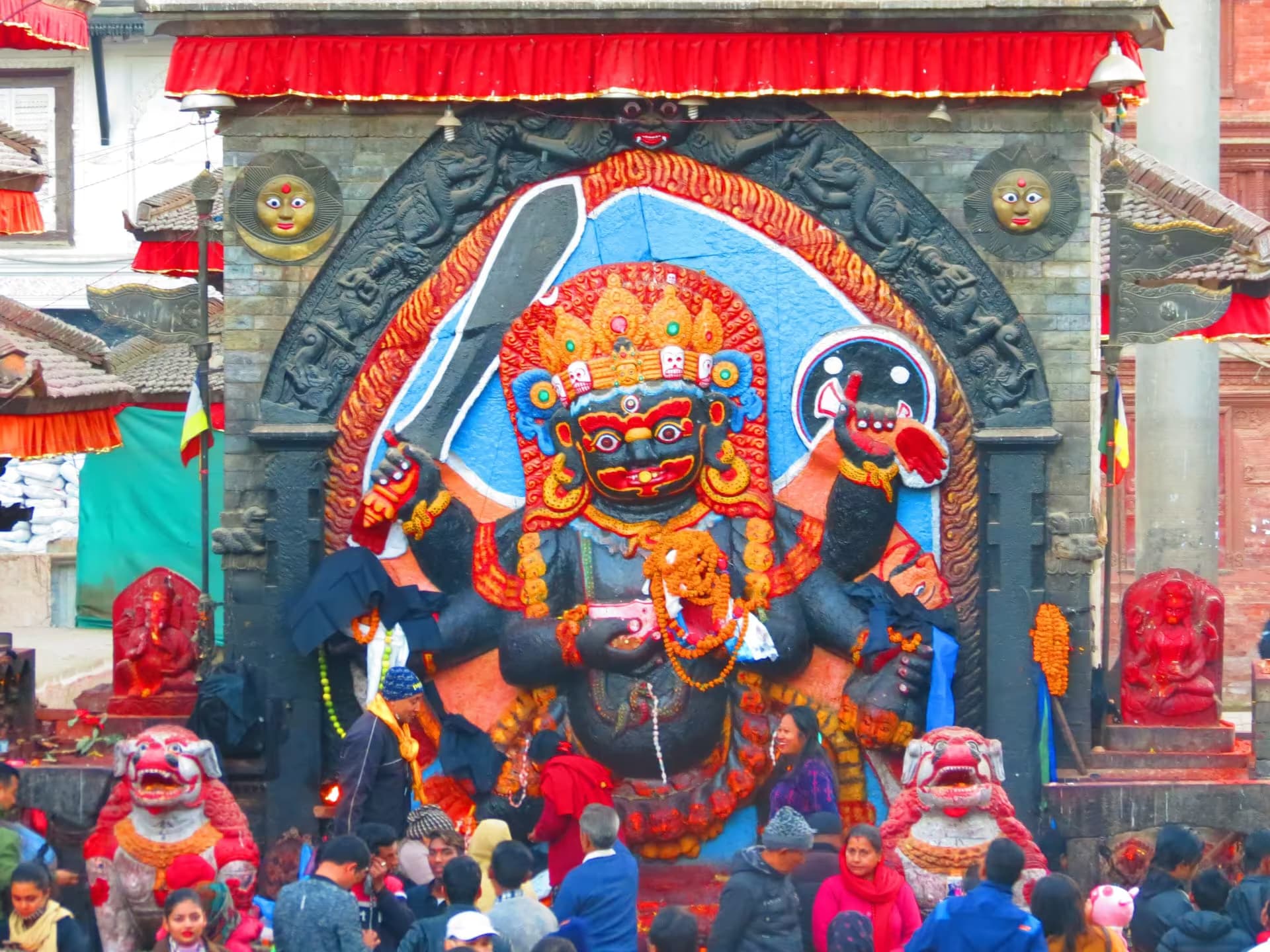
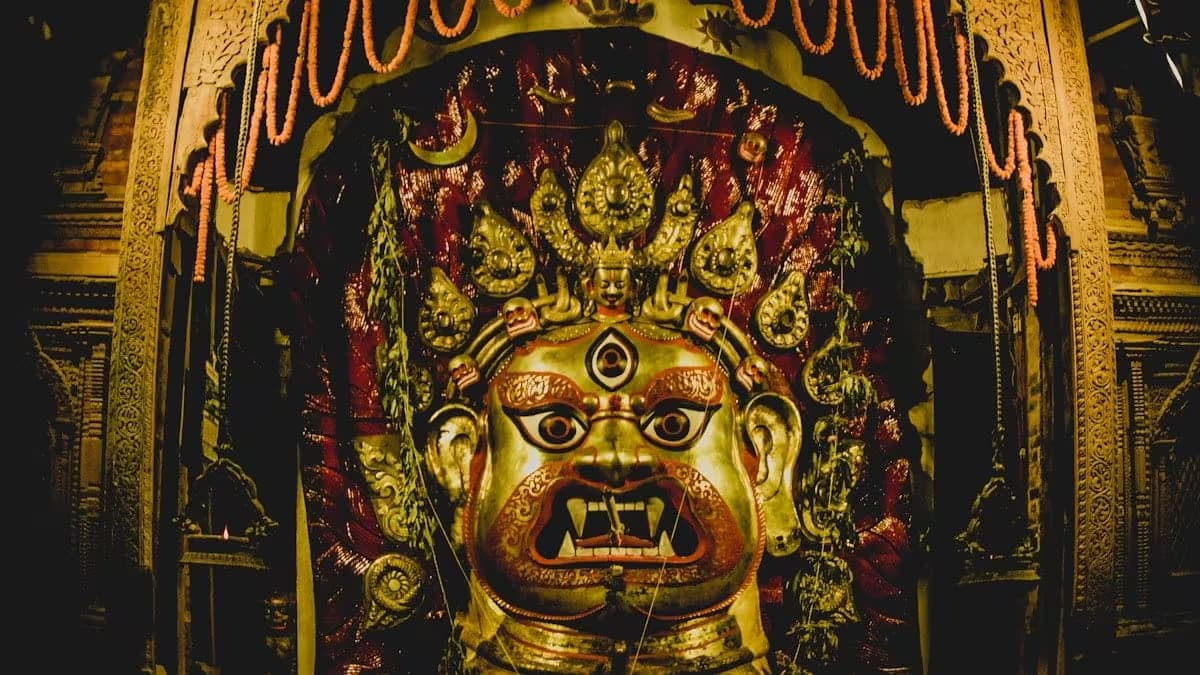
A massive 12th-century stone relief of the fearsome Bhairav — Shiva's terrifying aspect — standing six feet tall in the open court of Kathmandu Durbar Square.
Dedicated to
Bhairav (terrifying aspect of Shiva)
Period
Licchavi period, c. 12th century (installed by King Pratap Malla, 17th century)
Hours
Open 24 hours (outdoor shrine)
Admission
Free
Neighborhood
Kathmandu Durbar Square
The Kal Bhairav statue is one of the most striking and photographed images in Kathmandu Durbar Square. This large open-air stone relief, roughly six feet tall, depicts Bhairav — the terrifying manifestation of Lord Shiva — trampling a corpse, adorned with a garland of skulls and wielding six arms bearing weapons.
Dating to the Licchavi period (likely 12th century), the image was reportedly found in a field during the reign of King Pratap Malla and installed in the square. For centuries, it served a judicial function: oaths taken before Kal Bhairav were believed to be binding, and liars were said to die vomiting blood. Even in the Rana period, accused persons were brought before the statue to swear their innocence.
The statue is decorated with fresh flowers, red sindoor paste, and offerings daily. During Indra Jatra, the image plays a central role when the Kumari's chariot procession pauses here. A beer tap was once installed behind the statue during Indra Jatra, dispensing alcohol from Bhairav's mouth to the crowd.
Despite earthquake damage to surrounding structures in 2015, the Kal Bhairav statue itself stands intact — an enduring guardian of the old city.
- Expanded during the reign of Pratap MallaInstalled, 17th c.
Had the colossal Kal Bhairav image installed in the Durbar Square during his reign.
Folio III
Nearby Sacred Sites
Places within a short walk that help turn this stop into a small sacred cluster.
Shiva-Parvati Temple
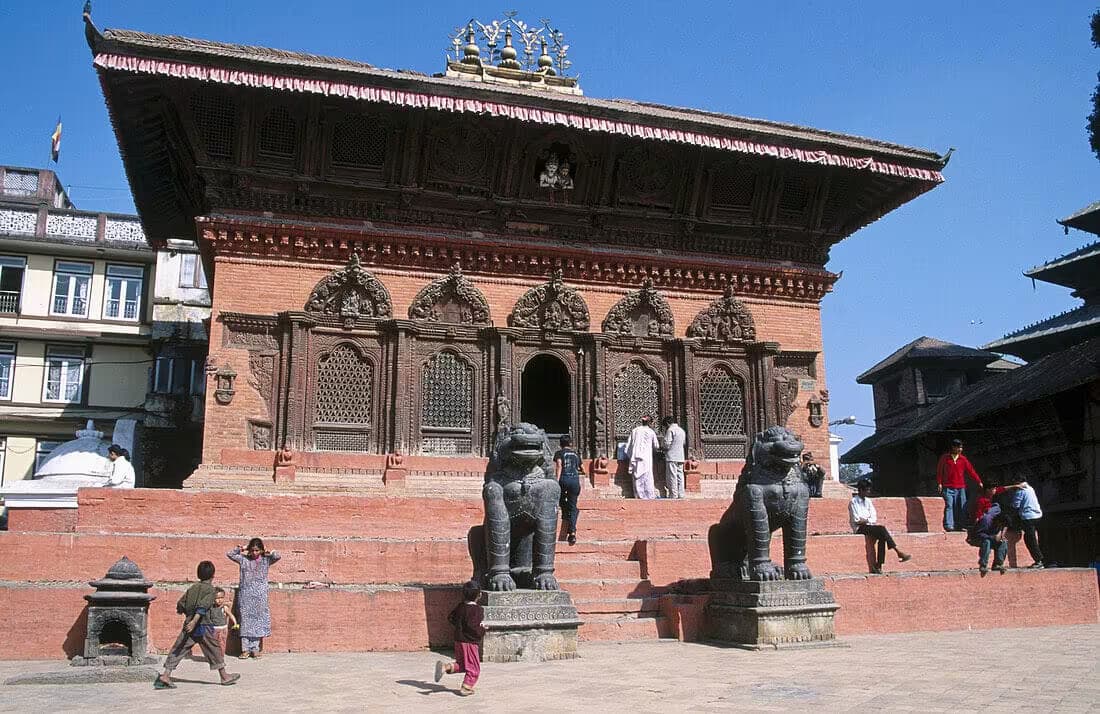
An 18th-century temple famous for the carved wooden figures of Shiva and Parvati leaning out from the upper window, gazing at the life of Durbar Square below.
Hanuman Statue (Hanuman Dhoka)
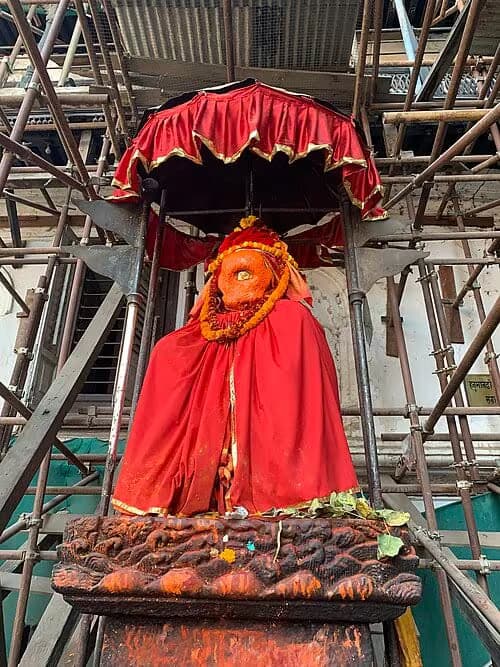
The standing stone figure of Hanuman draped in a red cloak at the entrance to the old royal palace — the image that gave Hanuman Dhoka its name.
Swet Bhairav
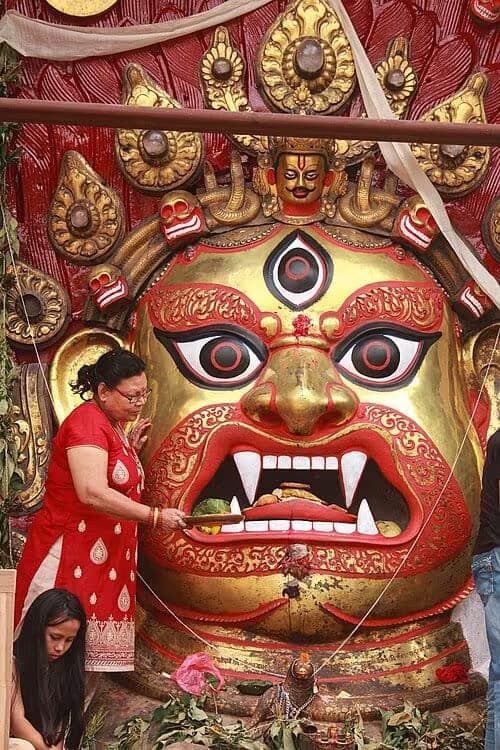
A giant gilded head of White Bhairav hidden behind a lattice screen for most of the year, dramatically revealed only during the eight days of Indra Jatra.
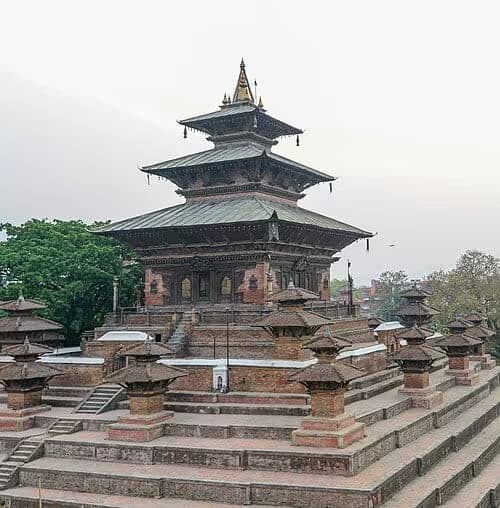
Taleju Temple
The tallest temple in Kathmandu Durbar Square — a 36-metre triple-roofed pagoda dedicated to the tutelary goddess of the Malla kings, open to Hindus only on Dashain's ninth day.
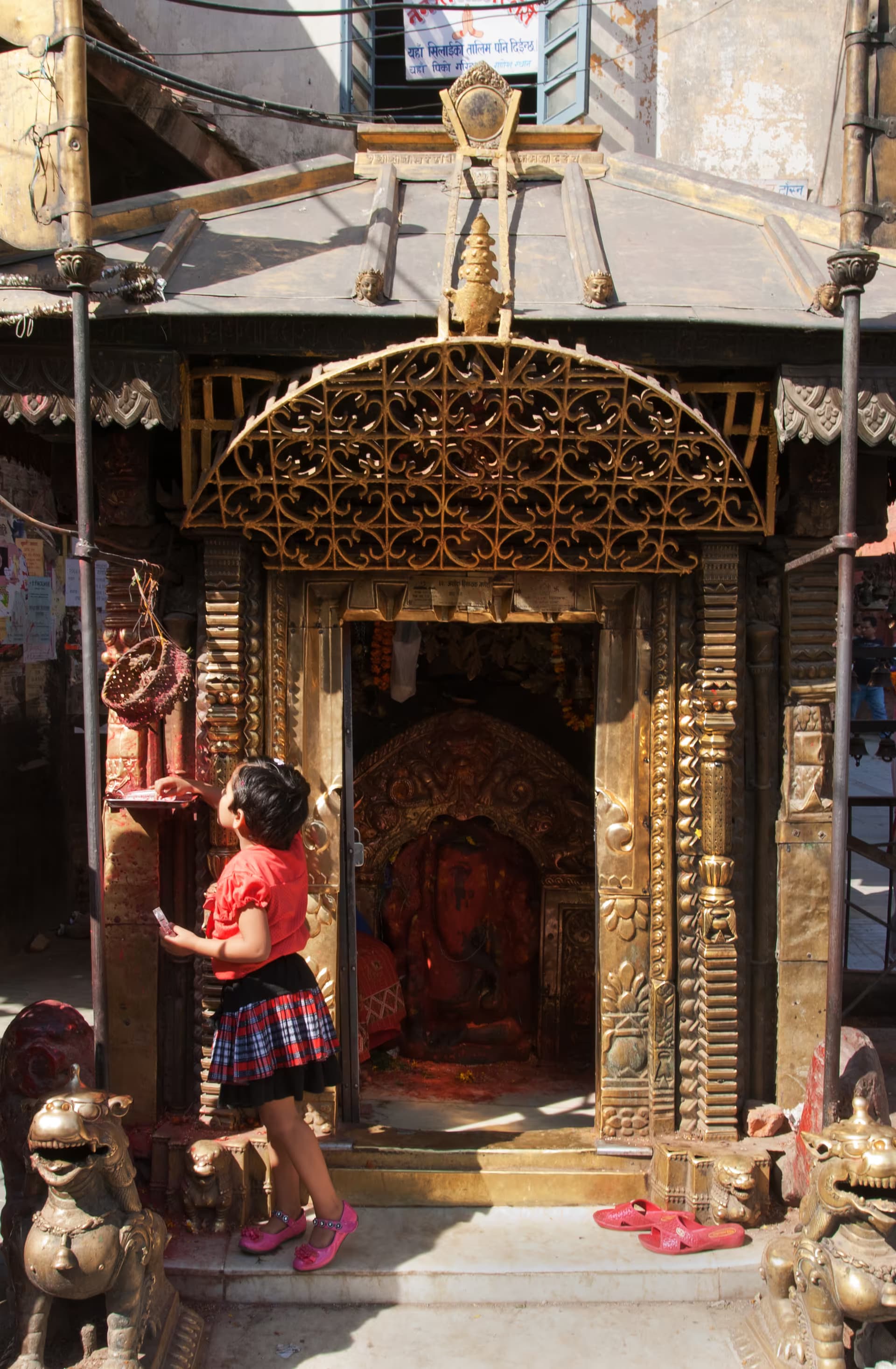
Ashok Binayak
Maru Ganesh shrine near Kathmandu Durbar Square, one of the city's most visited Ganesh temples but not part of the Char Binayak circuit.
Coda
Continue the Pilgrimage
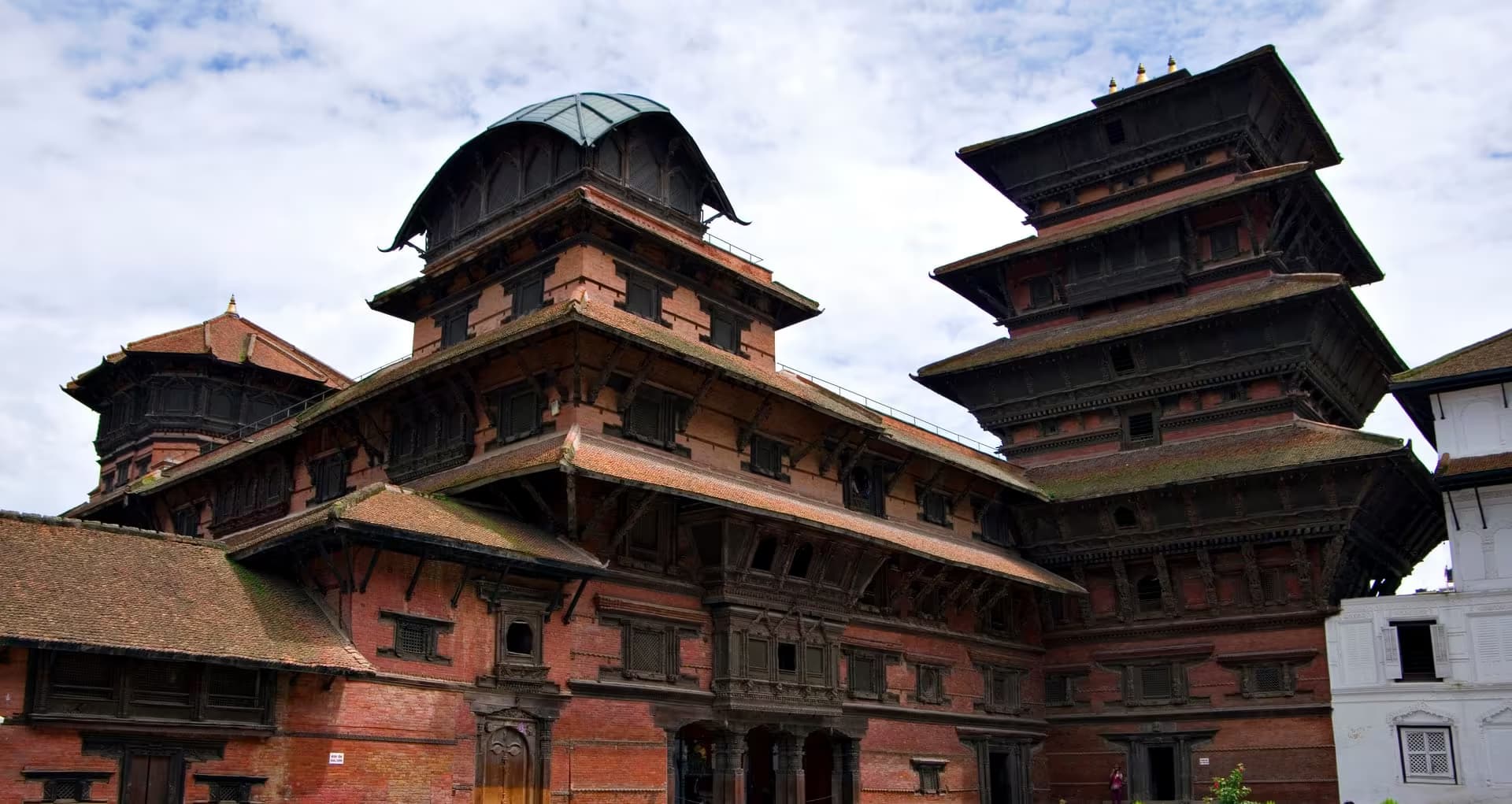
Part of
Kathmandu Durbar Square
Guides that feature this place
Planning this visit? Local operators publishing trips here can arrange it.
Elsewhere in this region
Help us get it right
Know Kal Bhairav better than we do?
We write from research and reporting, and the ground changes faster than we can keep up. If something here is out of date, or you have been and would tell it differently, we would rather hear it.