Who He Is
Bhairava is Shiva in his fierce and terrifying aspect: bulging-eyed, fanged, garlanded with skulls, often shown with a dog. He is a destroyer of ignorance and a punisher of transgression, and across the Kathmandu Valley he is above all a guardian — the deity who holds a boundary, guards a quarter, and enforces the order of a place. Shrines to him stand at thresholds, at crossroads, and at the edges of squares, frequently as a mask or a face rather than a full figure.
Bhairava in Bhaktapur
Bhaktapur's Bhairava is the city's own, and Bisket Jatra is his festival. During it he leaves his temple and is drawn through the streets in the great chariot, which is how the god is understood to survey and reclaim his city at the year's turn. The tug-of-war between the upper and lower halves is fought over his chariot specifically — the fortune at stake is his to confer.
Hindu and Buddhist
As with much of the Valley's religious life, Bhairava does not belong exclusively to one tradition. He is Shiva to Hindus, and Newar Buddhists honour him in their own frame within the same festivals and at the same shrines. Nobody is required to resolve the difference, and in practice the question is rarely asked.
Elsewhere in the Valley
Bhairava shrines are found throughout the region, and several are major sites in their own right — among them Kal Bhairav and Swet Bhairav in Kathmandu, Akash Bhairav, and the Bhairavnath Temple in Bhaktapur itself. Each has its own character and its own ritual calendar.
Related Places & Sites
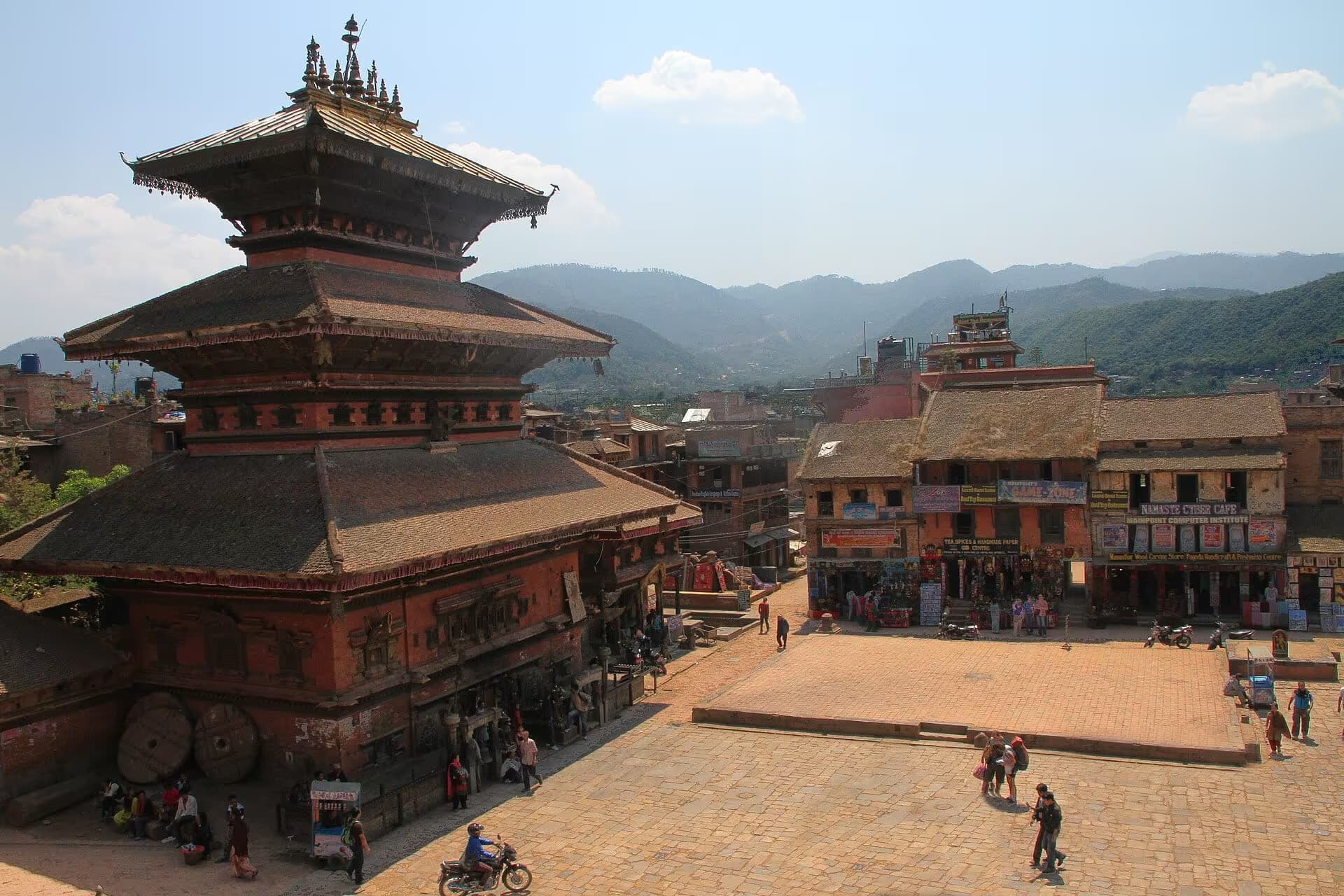
sacred site
Bhairavnath TempleBhaktapur's principal Bhairava temple, on Taumadhi Square — the deity's permanent seat between festivals
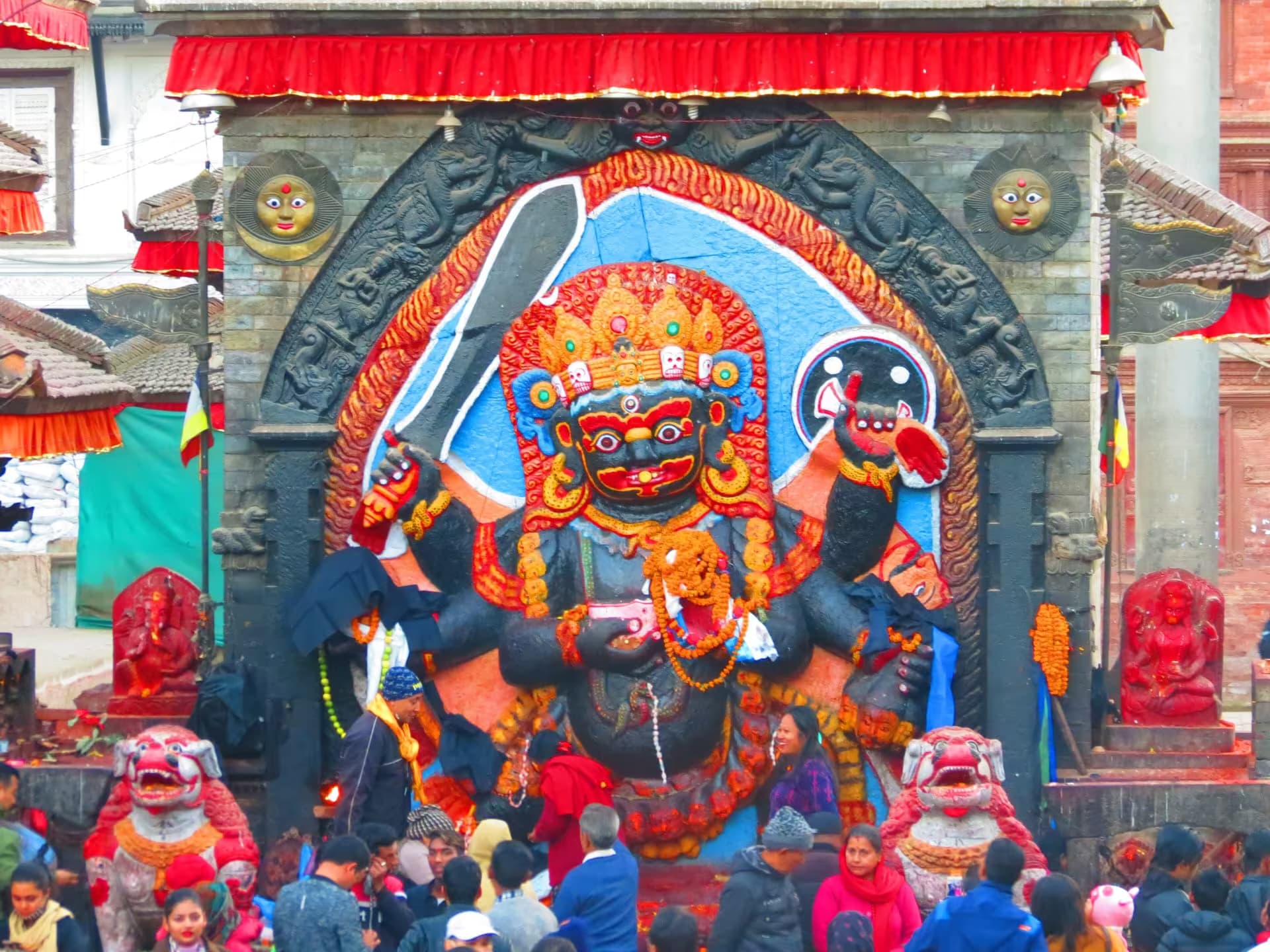
sacred site
Kal BhairavThe best-known Bhairava image in Kathmandu, for comparison with Bhaktapur's own
Part of Bisket Jatra