Temple · Hindu
Akash Bhairav Temple
आकाश भैरव मन्दिर
Akash Bhairav (Sky Bhairav — Bhairav of the heavens)·Traditional Malla period; rebuilt after 1934 earthquake·Kathmandu
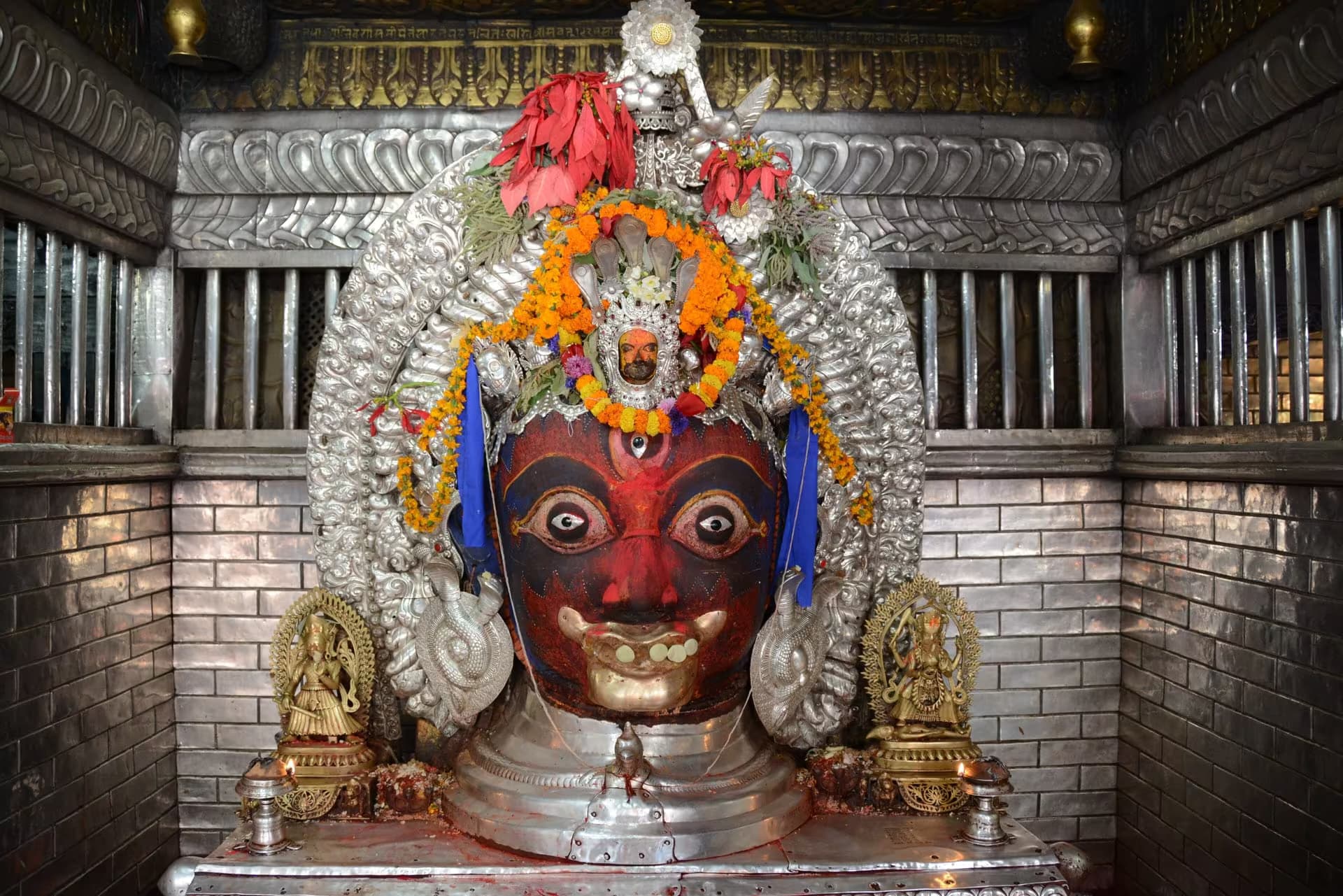
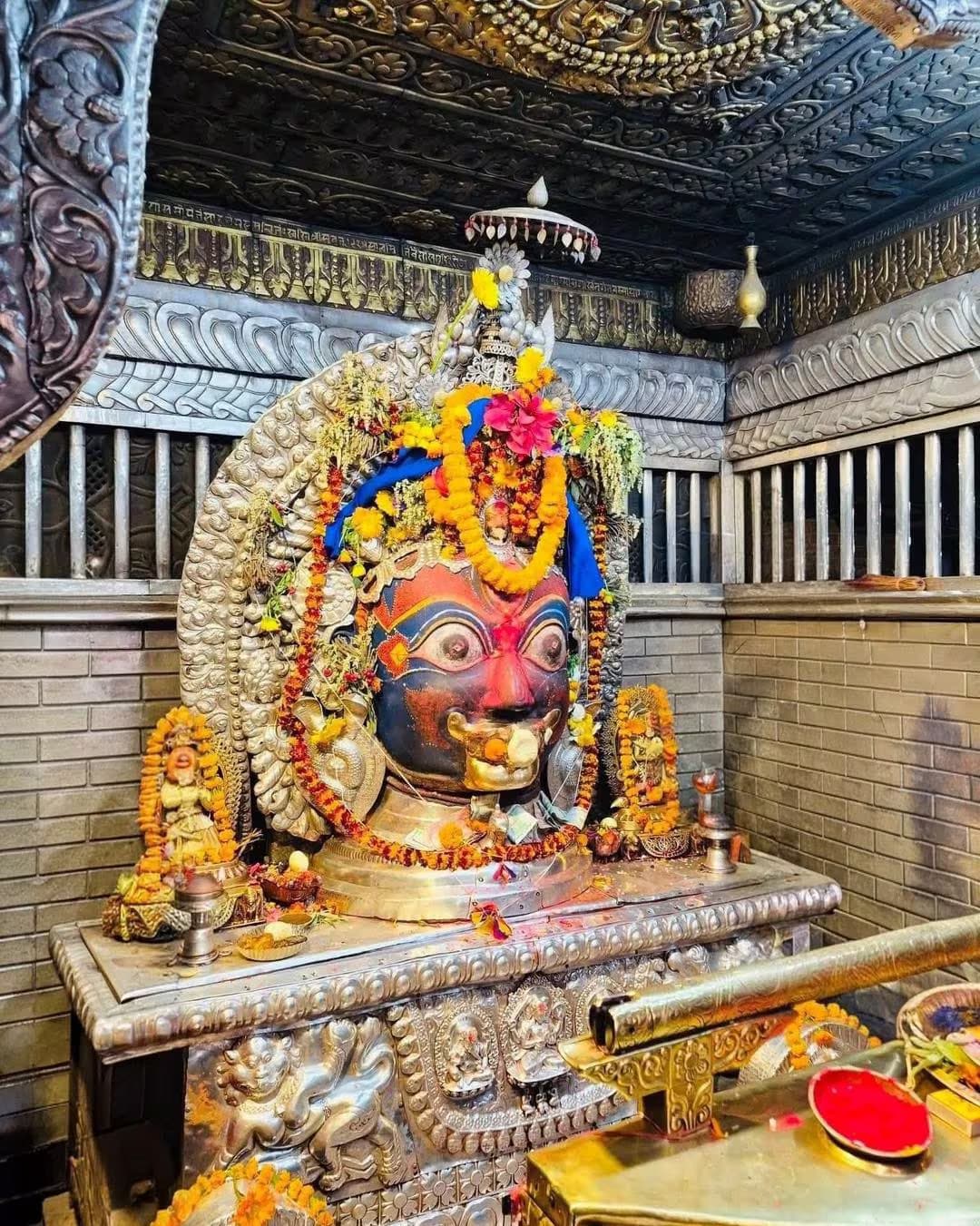
A three-storey temple at Indra Chowk housing the 'Sky Bhairav' — a disembodied silver head worshipped as the Bhairav of the heavens.
Dedicated to
Akash Bhairav (Sky Bhairav — Bhairav of the heavens)
Period
Traditional Malla period; rebuilt after 1934 earthquake
Hours
Upper floors open during Indra Jatra; exterior visible at all times
Admission
Free
Neighborhood
Indra Chowk
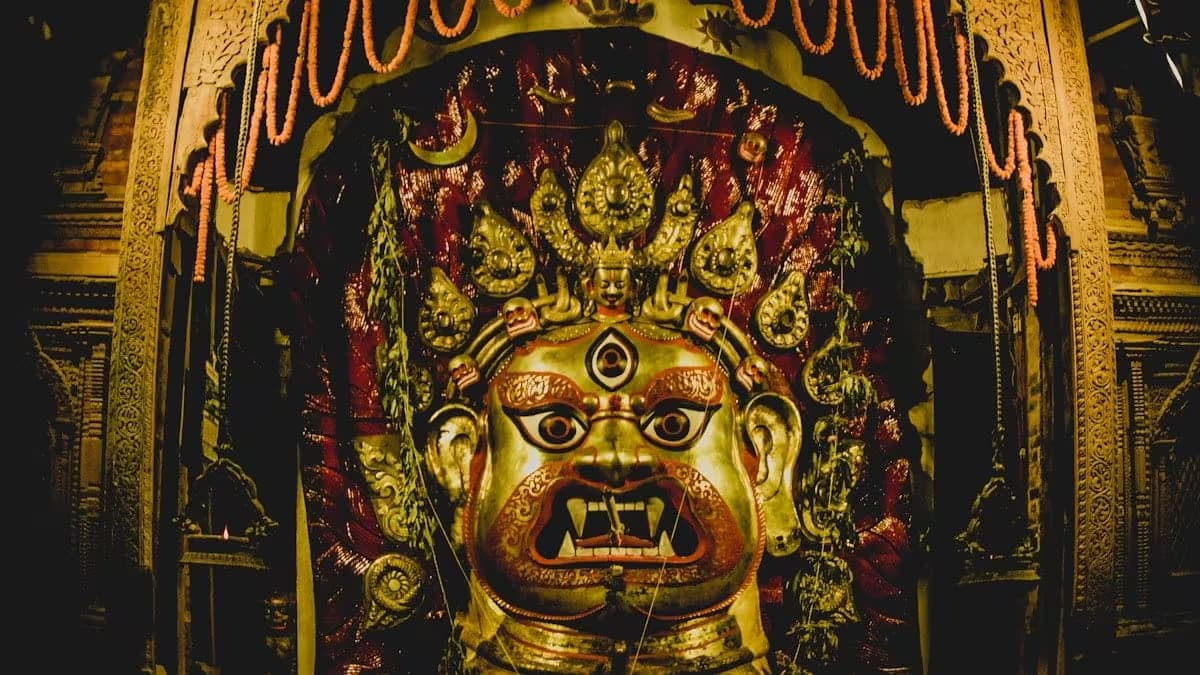
The Akash Bhairav Temple sits on the bustling intersection of Indra Chowk, one of the most vibrant crossroads in old Kathmandu, a short walk northeast of Durbar Square. The three-storey building houses Akash Bhairav — the 'Sky Bhairav' or 'Bhairav of the Heavens' — represented as a disembodied silver head adorned with a jewelled crown and flower garlands.
Akash Bhairav completes the trinity of Bhairavs in central Kathmandu: Kal Bhairav (Black/Time Bhairav) in the square, Swet Bhairav (White Bhairav) behind the lattice, and Akash Bhairav (Sky Bhairav) at Indra Chowk. Together they guard the old city from three directions.
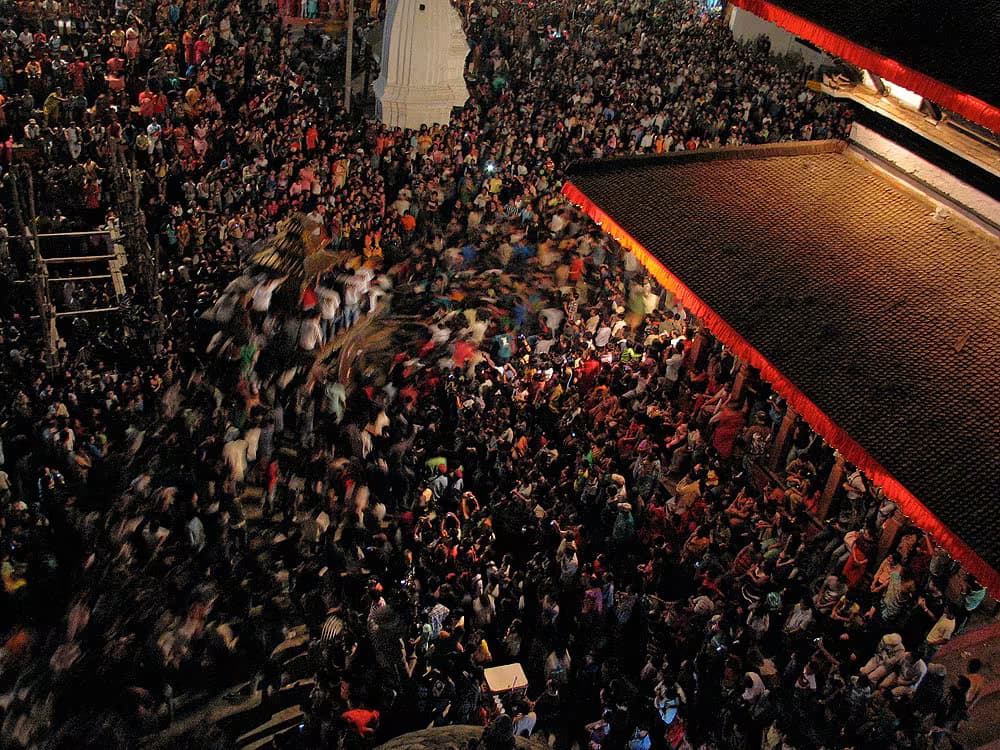
The upper floors of the temple open to the public during Indra Jatra, when the silver head is brought down to ground level for worship. Blue ceramic tiles on the building's facade distinguish it from surrounding shopfronts. The ground floor of the building is occupied by cloth shops — a quintessentially Kathmandu arrangement of sacred and commercial sharing the same structure.
The temple is especially significant during Dashain, when the Newar community performs special pujas here. The intersection of Indra Chowk itself — with bead sellers, textile merchants, and the scent of incense — is an experience inseparable from the temple visit.
Folio III
Nearby Sacred Sites
Places within a short walk that help turn this stop into a small sacred cluster.
Jana Bahal (Seto Machhindranath Temple)
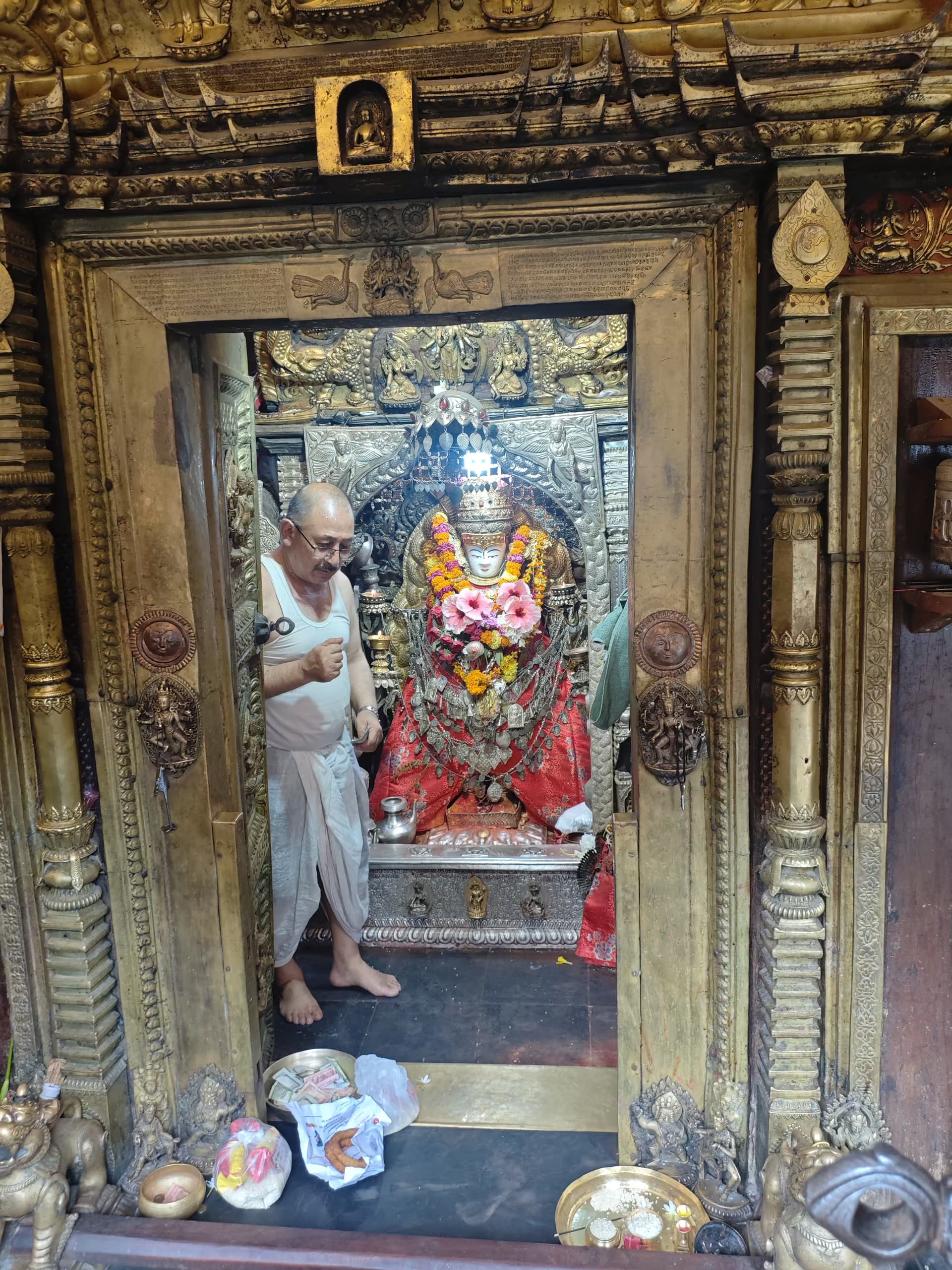
A 10th-century 'living bahal' housing the White Machhindranath, worshipped as Avalokiteshvara by Buddhists and Machhindranath by Hindus — the finest example of Valley syncretism.
Mu Bahal (Mulashree Mahavihar)
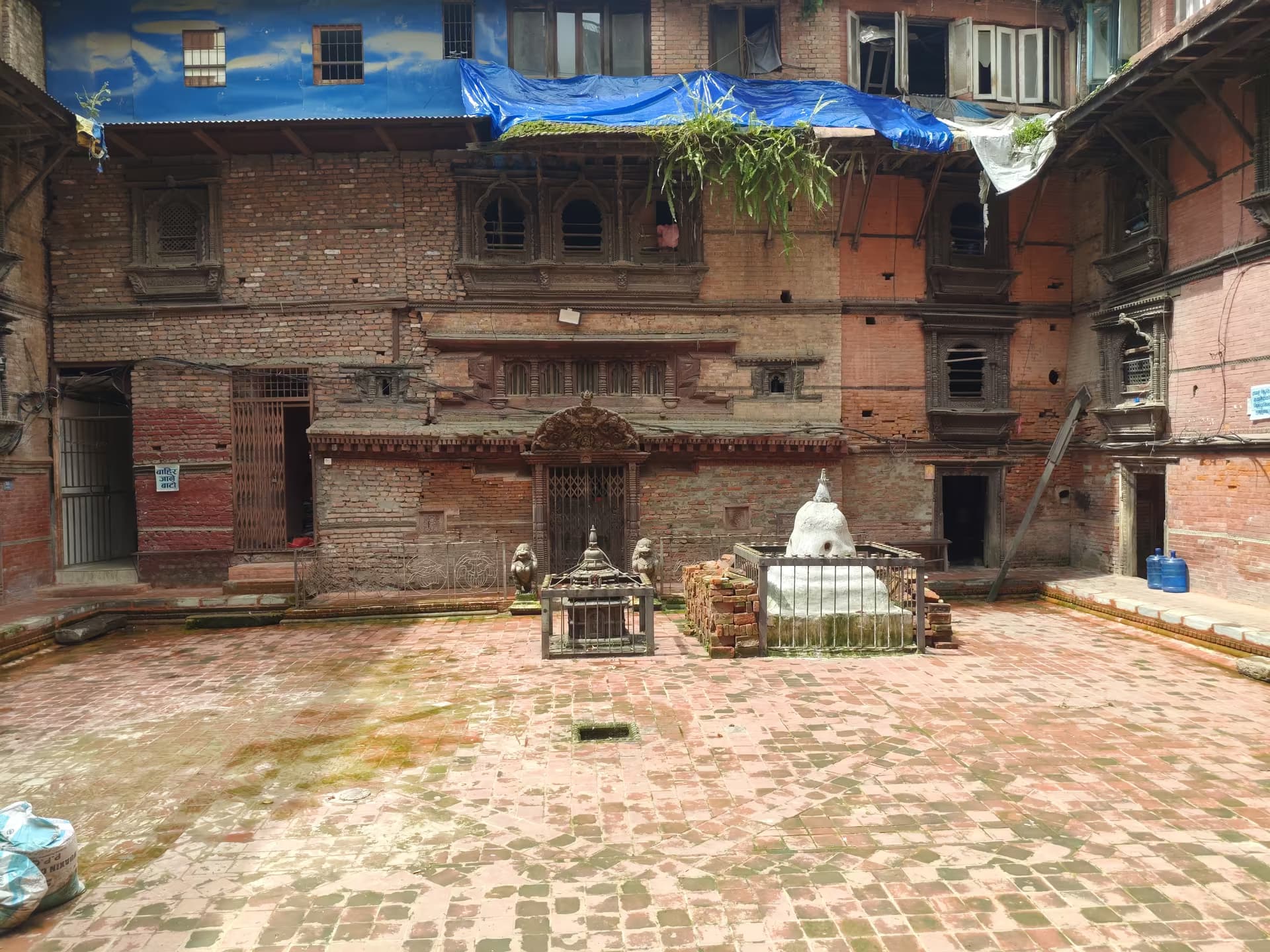
Reckoned the most artistic of Kantipur's 18 great bahals, Mulashree Mahavihar in Watu Tole enshrines Akshobhya Buddha and once held its own line of Kumaris — held to be the valley's strictest — whose seat is still worshipped in the courtyard.
Itum Bahal (Keshchandra Mahavihar)
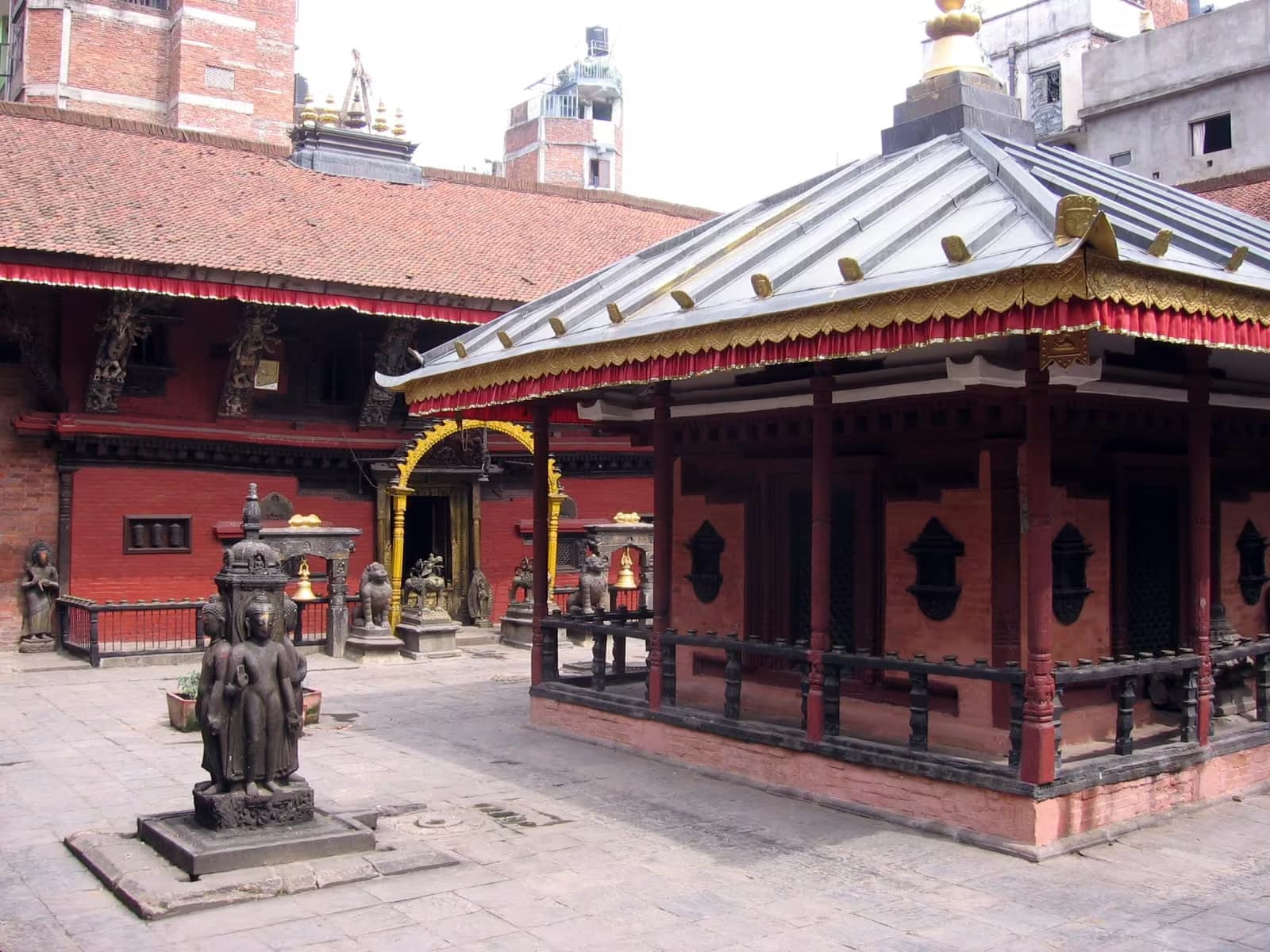
Kathmandu's largest Buddhist monastery complex with hidden courtyards, brass plaques depicting the Gurumapa legend, and a golden window relic.
Takse Bahal (Suratshree Mahavihar)
A foundational monastery of the Kathmandu Acharya Guthi system — home to teacher Surat Bajra Bajracharya, from whom many Bhaktapur bahals trace their Buddhist lineage.
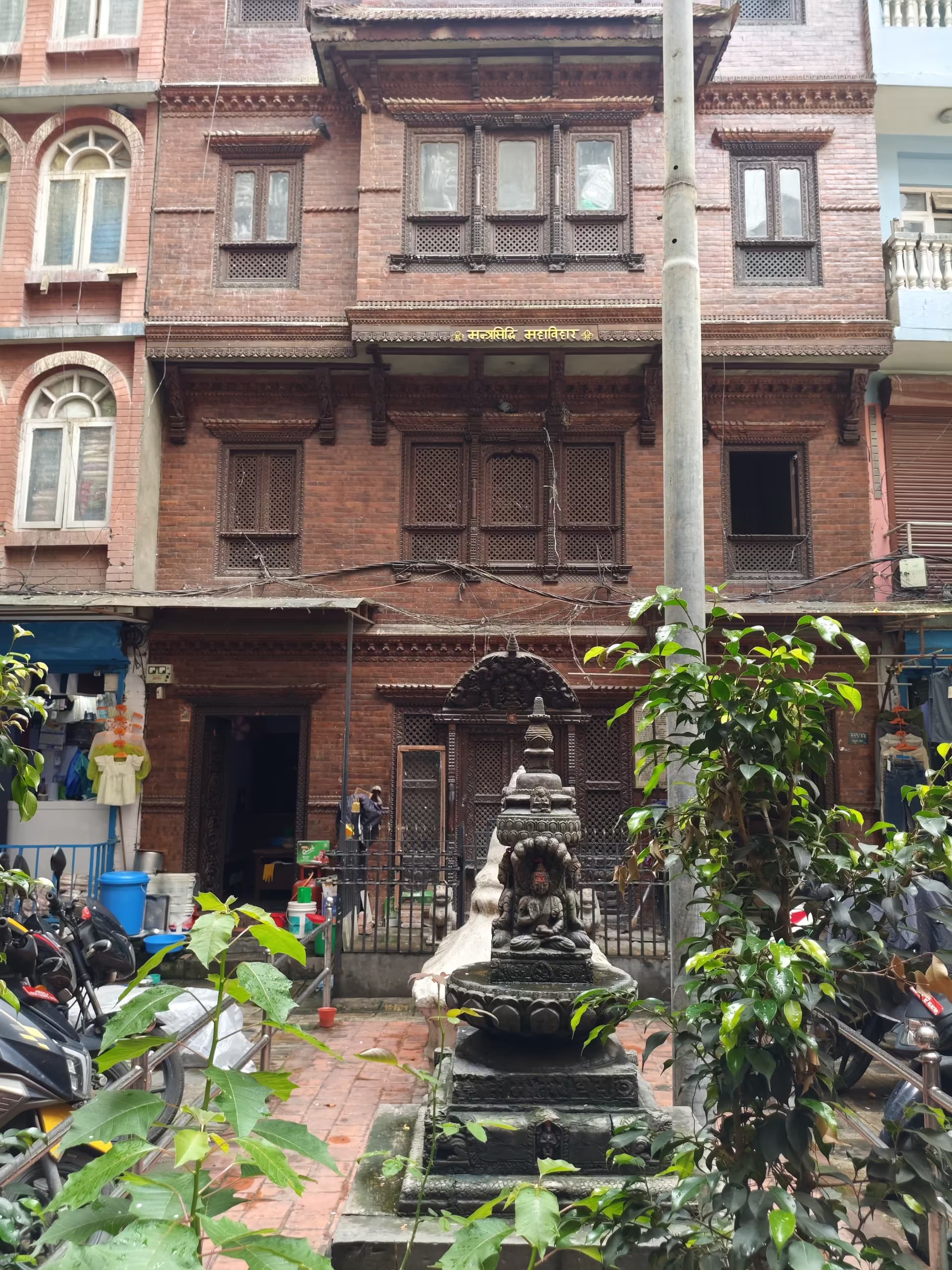
Sabal Bahal (Mantrasiddhi Mahavihar)
One of Kathmandu's eighteen Acharya Guthi bahals, Mantrasiddhi Mahavihar is a Newar Buddhist courtyard monastery near Indra Chowk, a short walk from New Road.
Coda
Continue the Pilgrimage
Guides that feature this place
Planning this visit? Local operators publishing trips here can arrange it.
Elsewhere in this region
Help us get it right
Know Akash Bhairav Temple better than we do?
We write from research and reporting, and the ground changes faster than we can keep up. If something here is out of date, or you have been and would tell it differently, we would rather hear it.