Bahal · Buddhist
Mu Bahal (Mulashree Mahavihar)
मू बहाल
Akshobhya Buddha (kwapah-dyah); Bajradevi / the Mu Kumari·Believed Licchavi era; inscription of Nepal Sambat 764 (c. 1644 CE)·Kathmandu
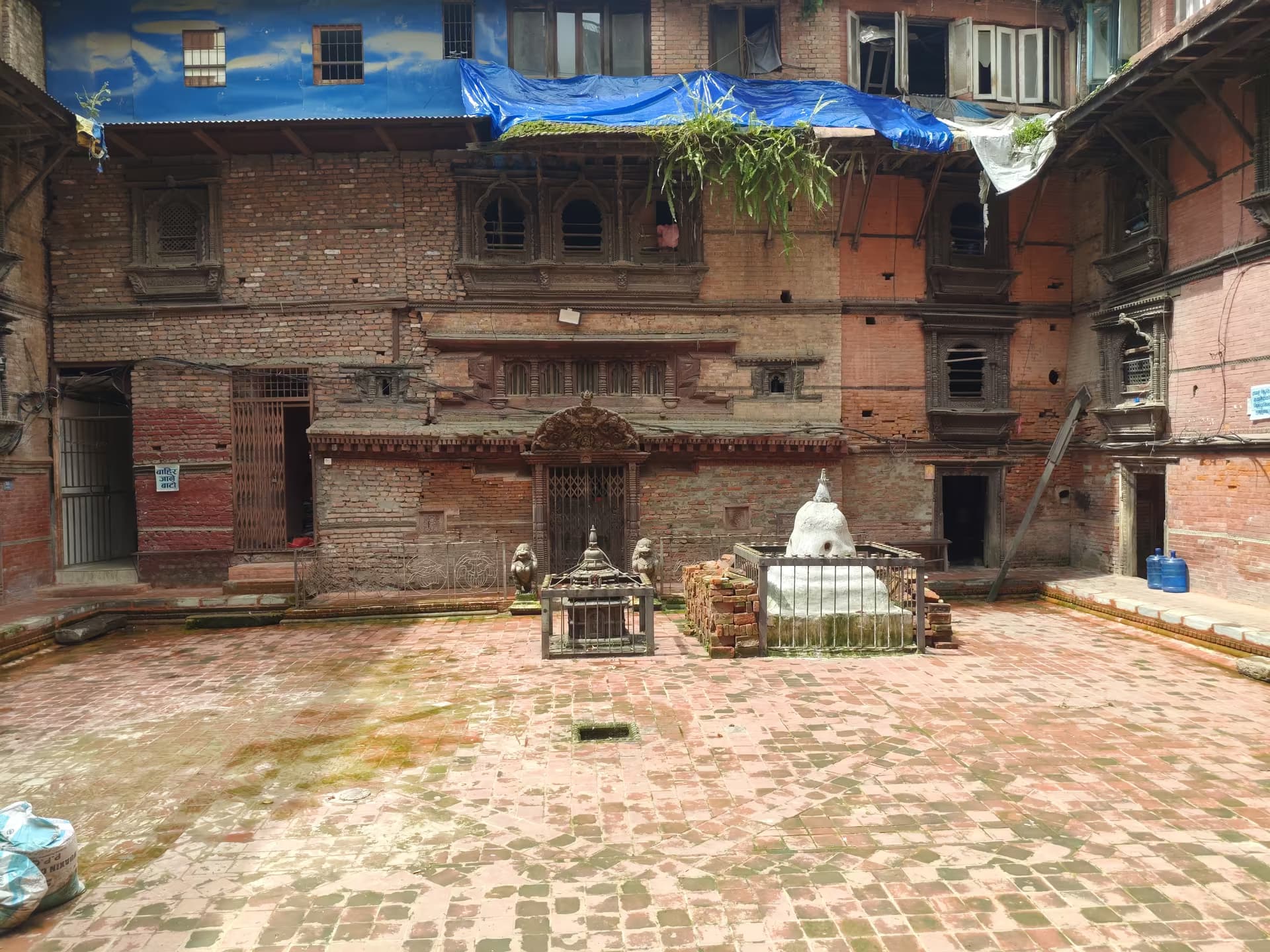
Reckoned the most artistic of Kantipur's 18 great bahals, Mulashree Mahavihar in Watu Tole enshrines Akshobhya Buddha and once held its own line of Kumaris — held to be the valley's strictest — whose seat is still worshipped in the courtyard.
Dedicated to
Akshobhya Buddha (kwapah-dyah); Bajradevi / the Mu Kumari
Period
Believed Licchavi era; inscription of Nepal Sambat 764 (c. 1644 CE)
Hours
Open courtyard (accessible during daytime)
Admission
Free
Neighborhood
Watu Tole, Ward 22, Old Kathmandu (near New Road)
Mu Bahal, whose Sanskrit name is Mulashree Mahavihar, is one of the important monastery courtyards of Ward 22 in old Kathmandu, in Watu Tole a short distance from New Road. A Nepal Sambat 764 (c. 1644 CE) inscription also records it under the name 'Mur Vihar', and the courtyard is thought to date back to the Licchavi period. Built in an exceptionally fine style, it is regarded as the most artistic of Kantipur's eighteen bahals, though today much of it stands in a dilapidated state. Its kwapah-dyah — the principal enshrined deity — is Akshobhya Buddha.
Mu Bahal is unusual for keeping its own Kumari tradition. The living goddess installed here, Kumari Maju, was held to be the chief and strictest of all the Kumaris of the valley, worshipped as the representative of Bajradevi, invoked from Hevajra-Nairatma through meditation. The Kumari of this bahal was never taken out through the main door of the vihar, and even on festival days she was brought out only under strict observance. She also served as the aagam (tutelary) deity of King Thaku, who ruled the Watu area around 1480 CE, and of his descendants. The tradition is very old, but the recorded modern line begins about a century ago with Khemkumari, daughter of the local Kuberratna; thirteen Kumaris are documented in all, the thirteenth being Sisumati, installed in Bikram Sambat 2028 (1971 CE), after which the practice lapsed. There is no Kumari at Mu Bahal today, but her seat (asan) is preserved in the north-eastern corner of the courtyard, and local residents continue to worship the seat itself.
The art of the bahal is remarkable. Its first floor is carved with figures of eight mahasiddhas — among them Virupa, Kukuripa, Dombipa, Kapalipa, Kankalipa, Tantipa and Dharmapa — a set found in no other Vajrayana bahal in Kathmandu. In front of the kwapah-dyah stands a white chaitya said to have been established by the tantric adept Suratbajra, and known for that reason as the 'Suratchaitya', with a second chaitya beside it. The courtyard also holds three aagams (esoteric shrines): a sangha aagam on the floor above the kwapah-dyah, the Mu Kumari's aagam enshrining Bajradevi, and an aagam of Hevajra-Nairatma above the western building.
The bahal's ritual life ties it to the wider Newar Buddhist city. The Mu Kumari had to be physically present at the Mahasindur Abhishek and at the Chattissamamathrya puja of Dathu Puin, as well as at the Mahabali puja of Taksha Bahal, and the guru Vajracharyas of Taksha Bahal took a direct part in selecting her. Local tradition also preserves an origin legend: the Vajracharyas of Mu Bahal are said to have once lived at Pingal Vihar near Lampokhari in Chabahil, and after a great fire destroyed that settlement at Bishalnagar in the Licchavi period, the survivors — including the tantric Surajbajra, who built a vihar here — resettled in present-day Watu Tole.
Folio III
Nearby Sacred Sites
Places within a short walk that help turn this stop into a small sacred cluster.
Akash Bhairav Temple
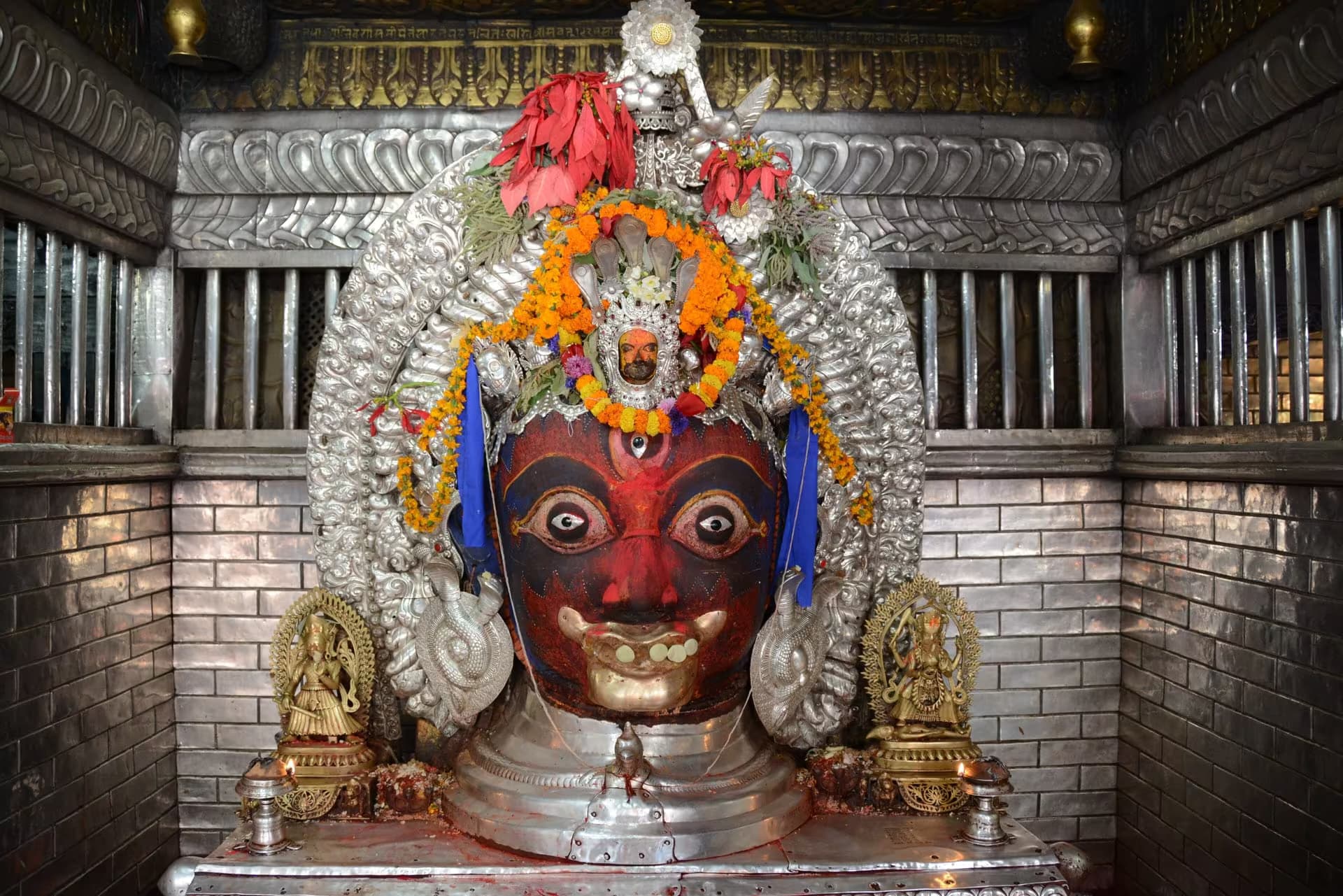
A three-storey temple at Indra Chowk housing the 'Sky Bhairav' — a disembodied silver head worshipped as the Bhairav of the heavens.
Jana Bahal (Seto Machhindranath Temple)
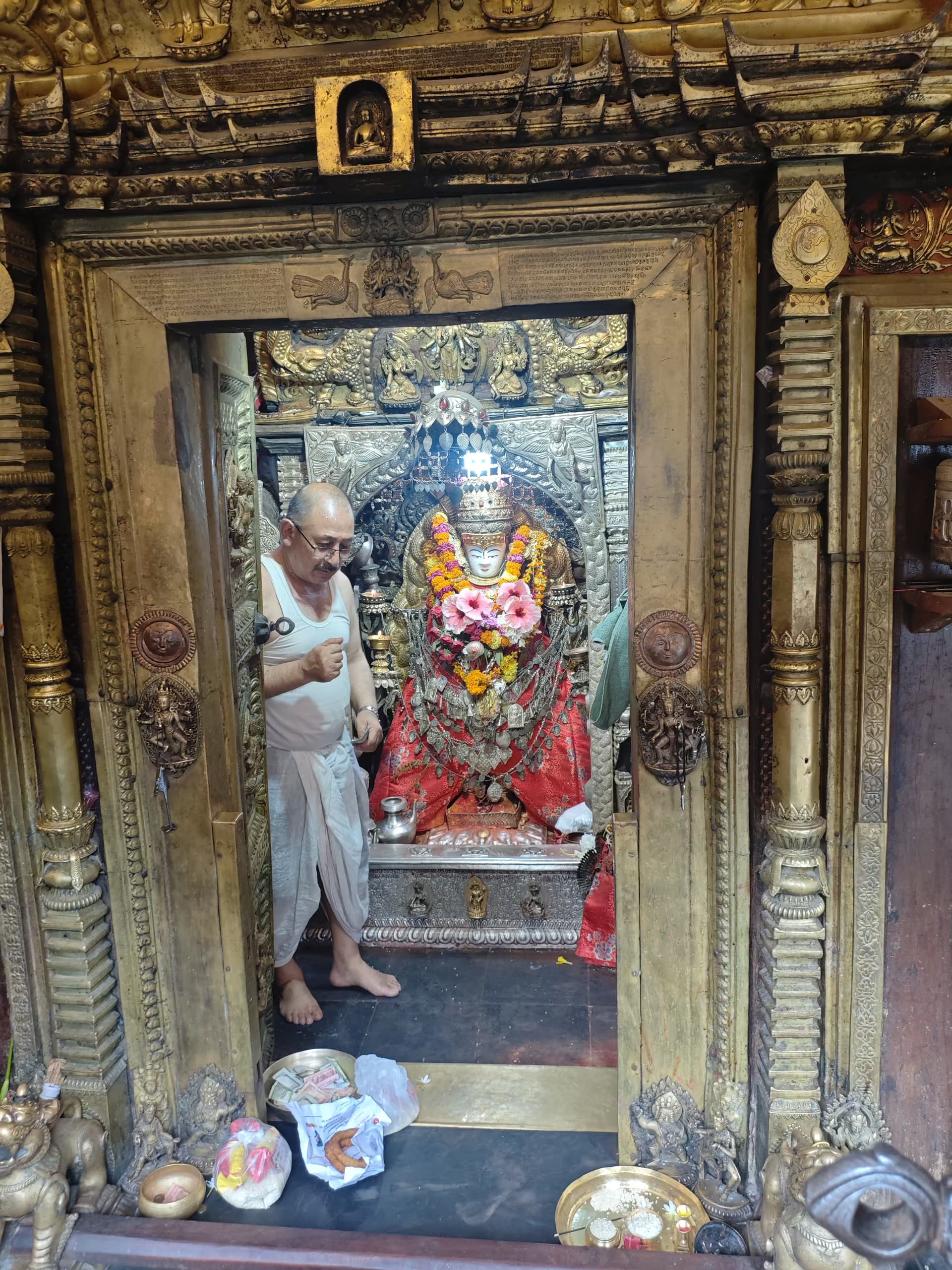
A 10th-century 'living bahal' housing the White Machhindranath, worshipped as Avalokiteshvara by Buddhists and Machhindranath by Hindus — the finest example of Valley syncretism.
Sabal Bahal (Mantrasiddhi Mahavihar)
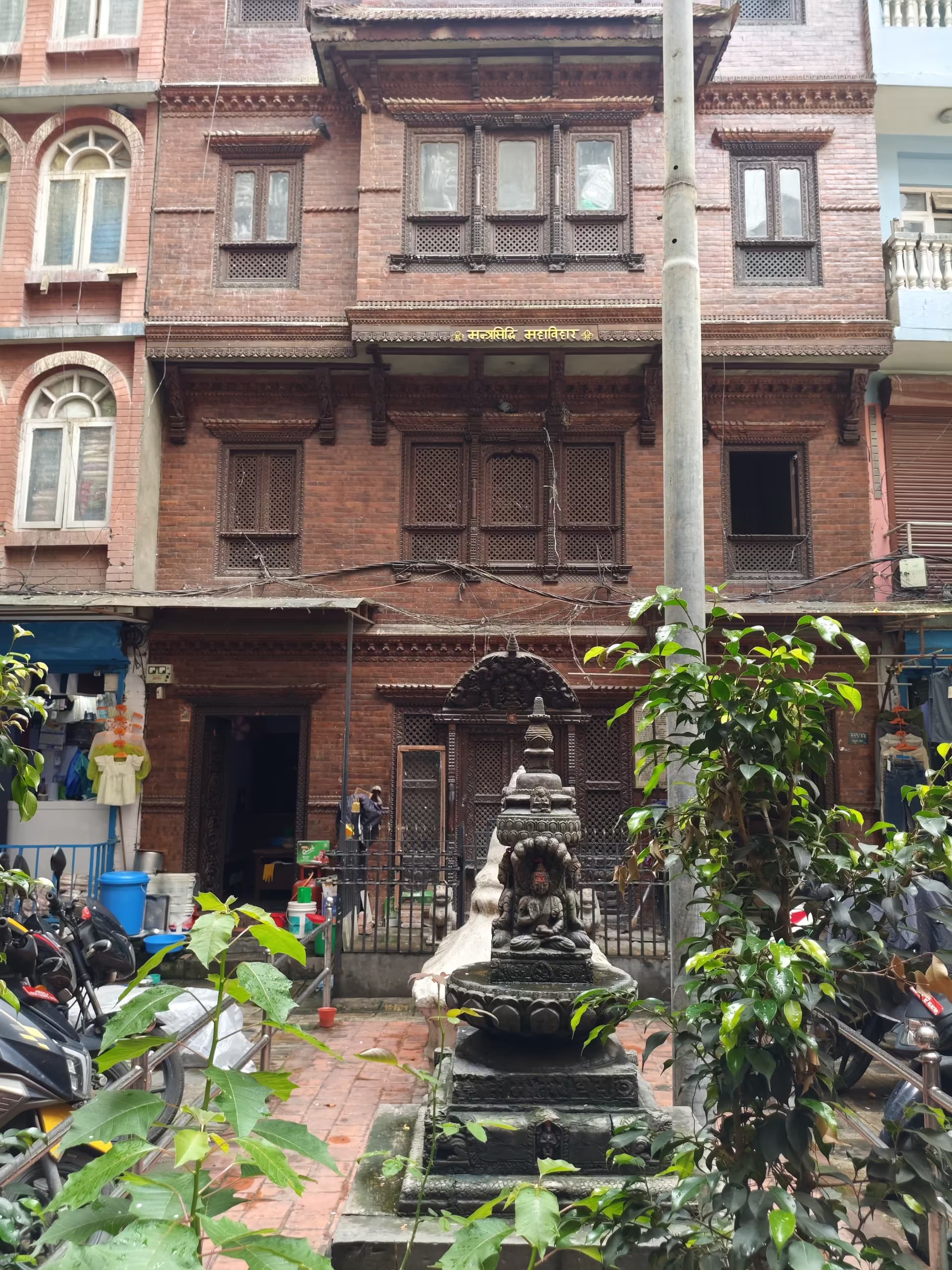
One of Kathmandu's eighteen Acharya Guthi bahals, Mantrasiddhi Mahavihar is a Newar Buddhist courtyard monastery near Indra Chowk, a short walk from New Road.
Pyukha Bahal (Dharma Dhatu Mahavihar)
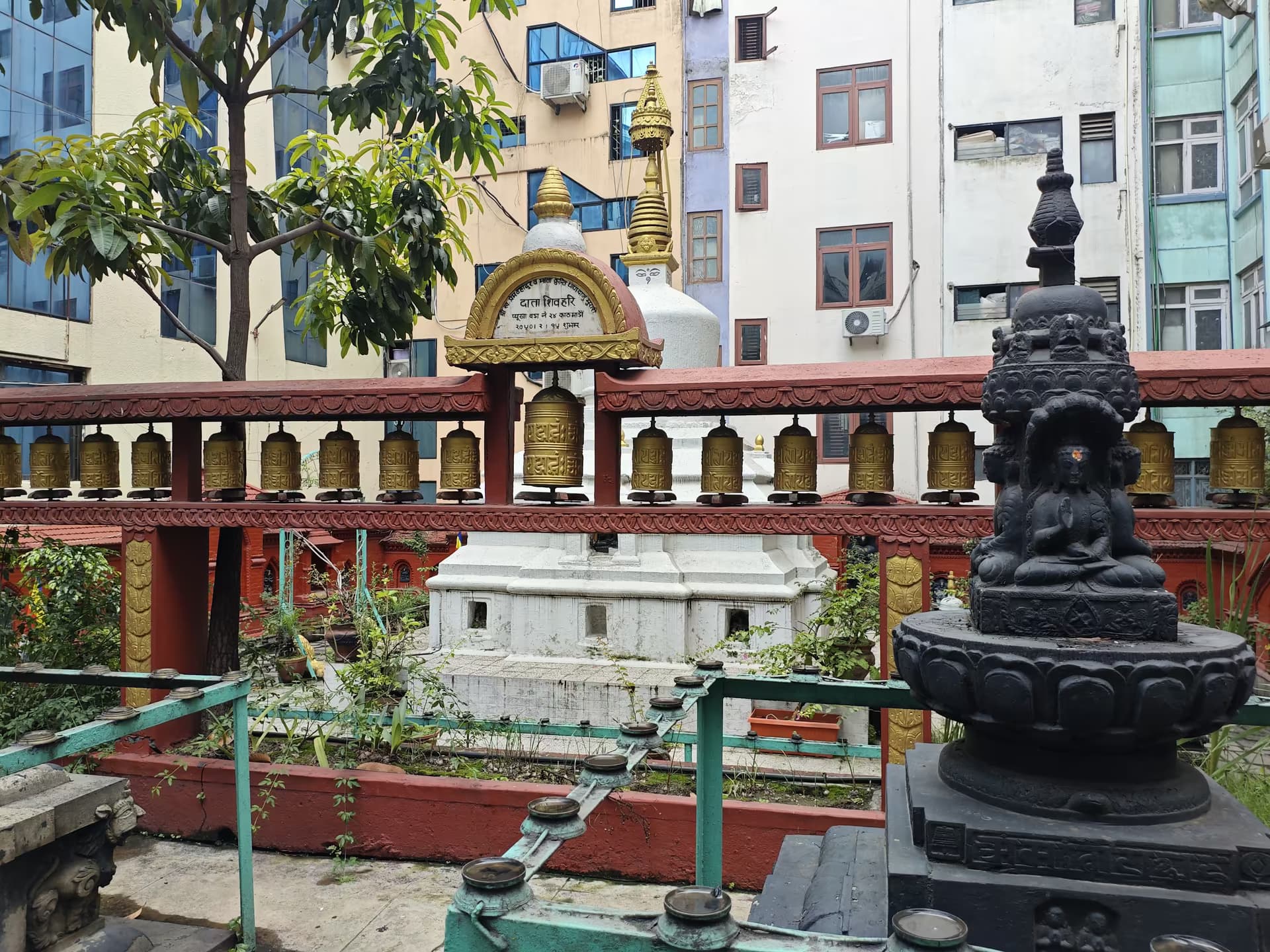
A quiet branch monastery in Pyukha Tole off New Road — formally Shree Dharma Dhatu Mahavihar, also called Ashok Chaitya Vihar — built around a large central chaitya crowned with Swayambhu-style Buddha eyes. A Nepal Sambat 667 (c. 1547 CE) inscription records its founding.
Takse Bahal (Suratshree Mahavihar)
A foundational monastery of the Kathmandu Acharya Guthi system — home to teacher Surat Bajra Bajracharya, from whom many Bhaktapur bahals trace their Buddhist lineage.
Coda
Continue the Pilgrimage
Planning this visit? Local operators publishing trips here can arrange it.
Help us get it right
Know Mu Bahal (Mulashree Mahavihar) better than we do?
We write from research and reporting, and the ground changes faster than we can keep up. If something here is out of date, or you have been and would tell it differently, we would rather hear it.