Bahal · Buddhist
Takse Bahal (Suratshree Mahavihar)
ताक्से बहाल
Vajrayana Buddhist shrine·Medieval (part of the 18 Mahavihar network)·Kathmandu
A foundational monastery of the Kathmandu Acharya Guthi system — home to teacher Surat Bajra Bajracharya, from whom many Bhaktapur bahals trace their Buddhist lineage.
Dedicated to
Vajrayana Buddhist shrine
Period
Medieval (part of the 18 Mahavihar network)
Hours
Open courtyard (accessible during daytime)
Admission
Free
Neighborhood
Dathu Puin, Old Kathmandu
Takse Bahal, formally Suratshree Mahavihar, is one of the 18 principal mahavihars of Kathmandu and holds special significance in the transmission of Vajrayana Buddhism across the Kathmandu Valley. The monastery was home to the teacher Surat Bajra Bajracharya, one of the four legendary Bajracharya masters who established the foundational teaching lineages of Valley Buddhism.
Many of Bhaktapur's bahals trace their Buddhist lineage back to Takse Bahal, making it a key link in the chain of transmission that spread organized Vajrayana monastic practice from Kathmandu to the other cities of the Valley. This historical role as a 'parent monastery' gives it an importance that belies its modest physical presence.
Located in the Dathu Puin (Midtown) quarter of old Kathmandu, Takse Bahal follows the standard Newar vihara layout with an enclosed courtyard, central shrine, and surrounding residential quarters for the Bajracharya and Shakya families who maintain the monastery.
For visitors interested in understanding how Buddhism spread and organized itself across the three medieval kingdoms of the Kathmandu Valley, Takse Bahal represents a crucial historical node in that network.
Folio III
Nearby Sacred Sites
Places within a short walk that help turn this stop into a small sacred cluster.
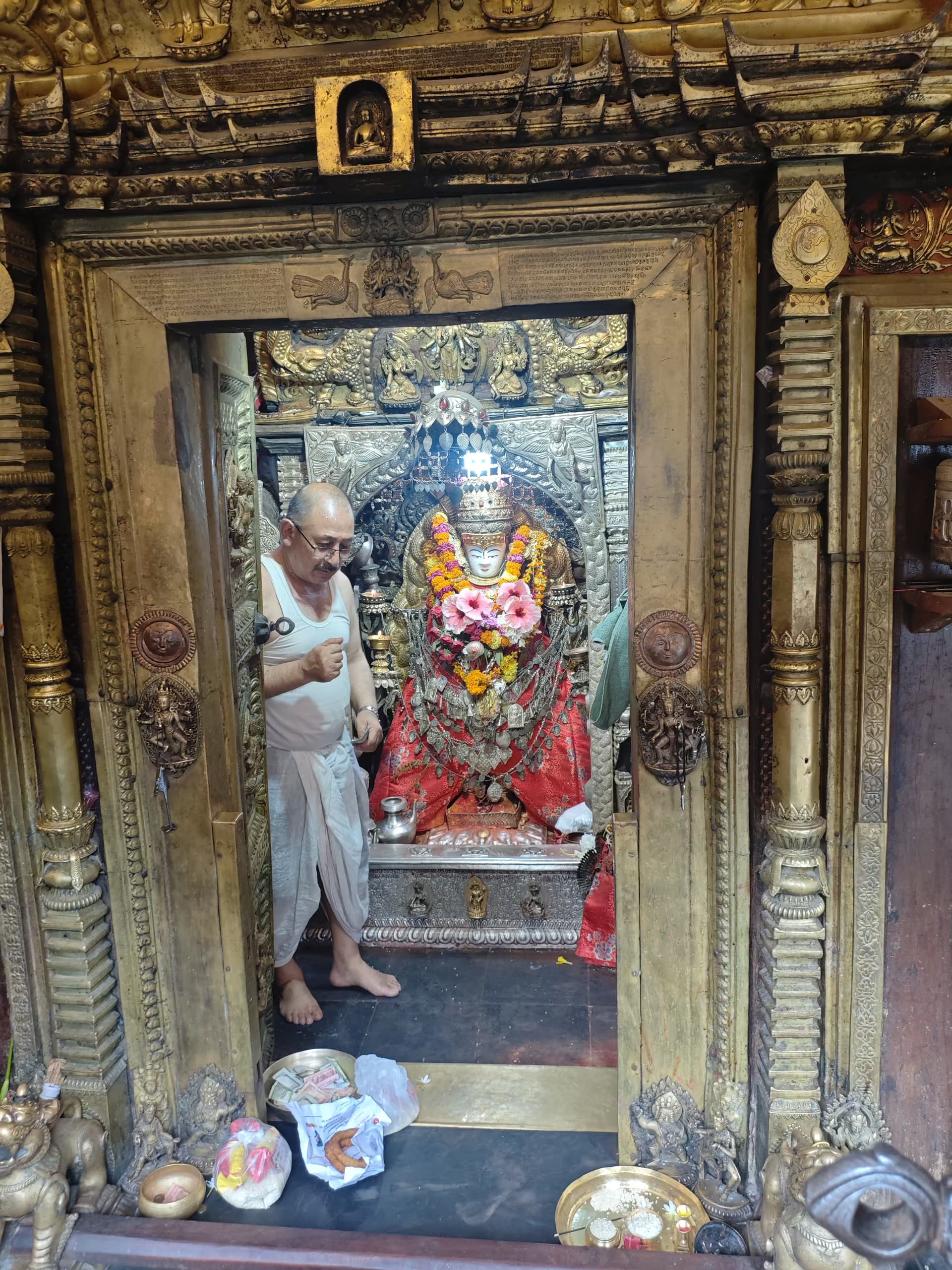
Jana Bahal (Seto Machhindranath Temple)
A 10th-century 'living bahal' housing the White Machhindranath, worshipped as Avalokiteshvara by Buddhists and Machhindranath by Hindus — the finest example of Valley syncretism.
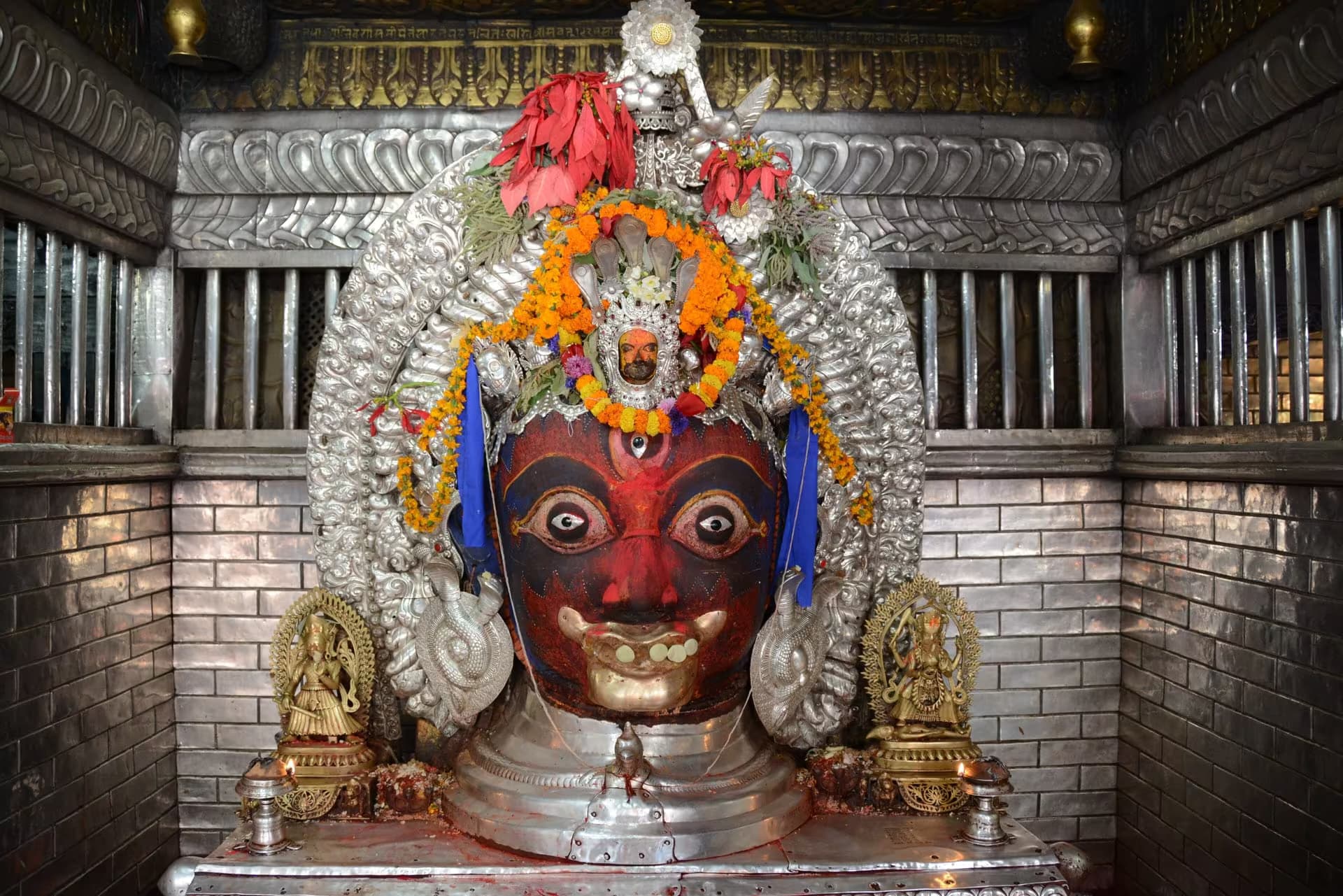
Akash Bhairav Temple
A three-storey temple at Indra Chowk housing the 'Sky Bhairav' — a disembodied silver head worshipped as the Bhairav of the heavens.
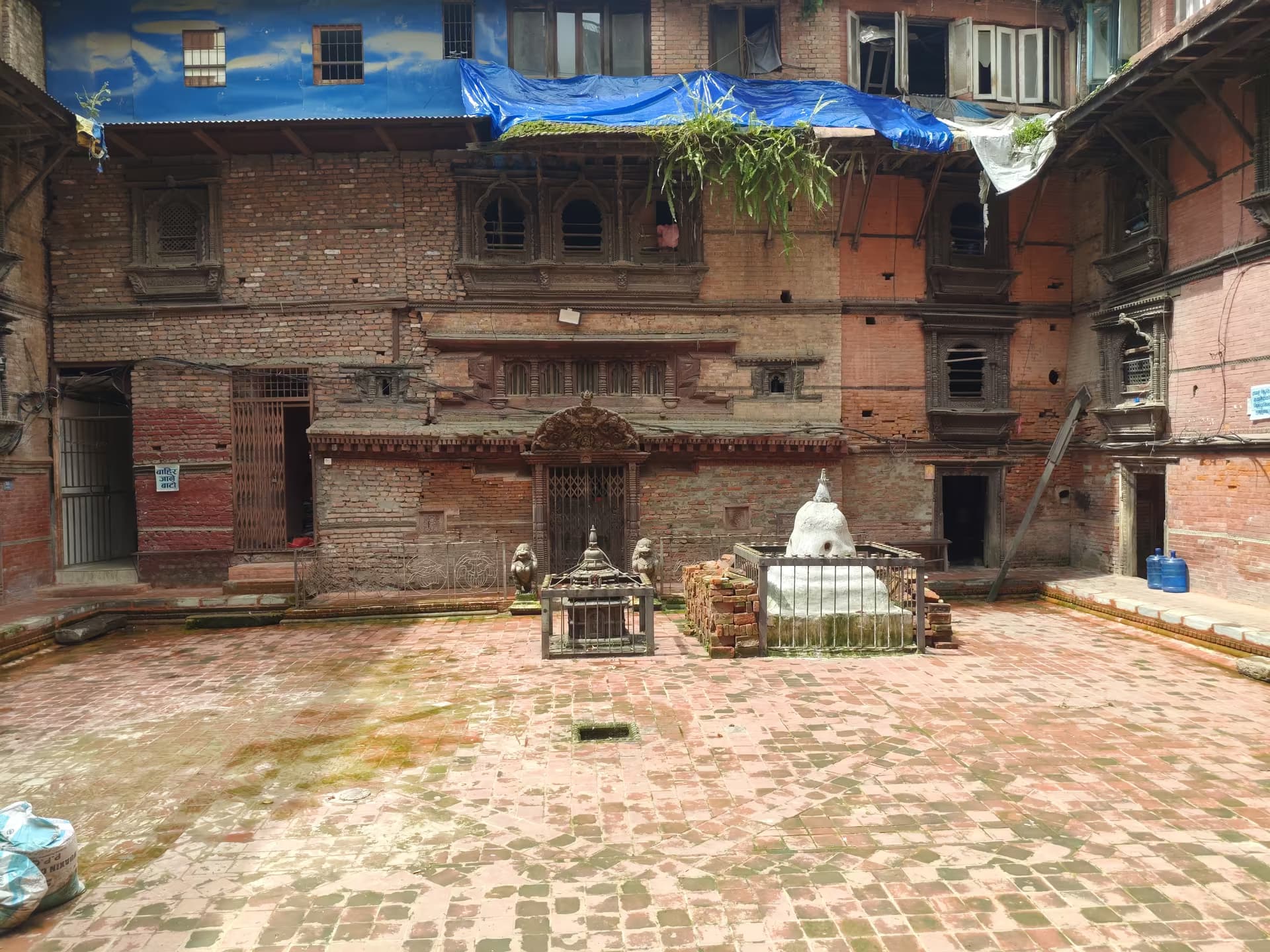
Mu Bahal (Mulashree Mahavihar)
Reckoned the most artistic of Kantipur's 18 great bahals, Mulashree Mahavihar in Watu Tole enshrines Akshobhya Buddha and once held its own line of Kumaris — held to be the valley's strictest — whose seat is still worshipped in the courtyard.
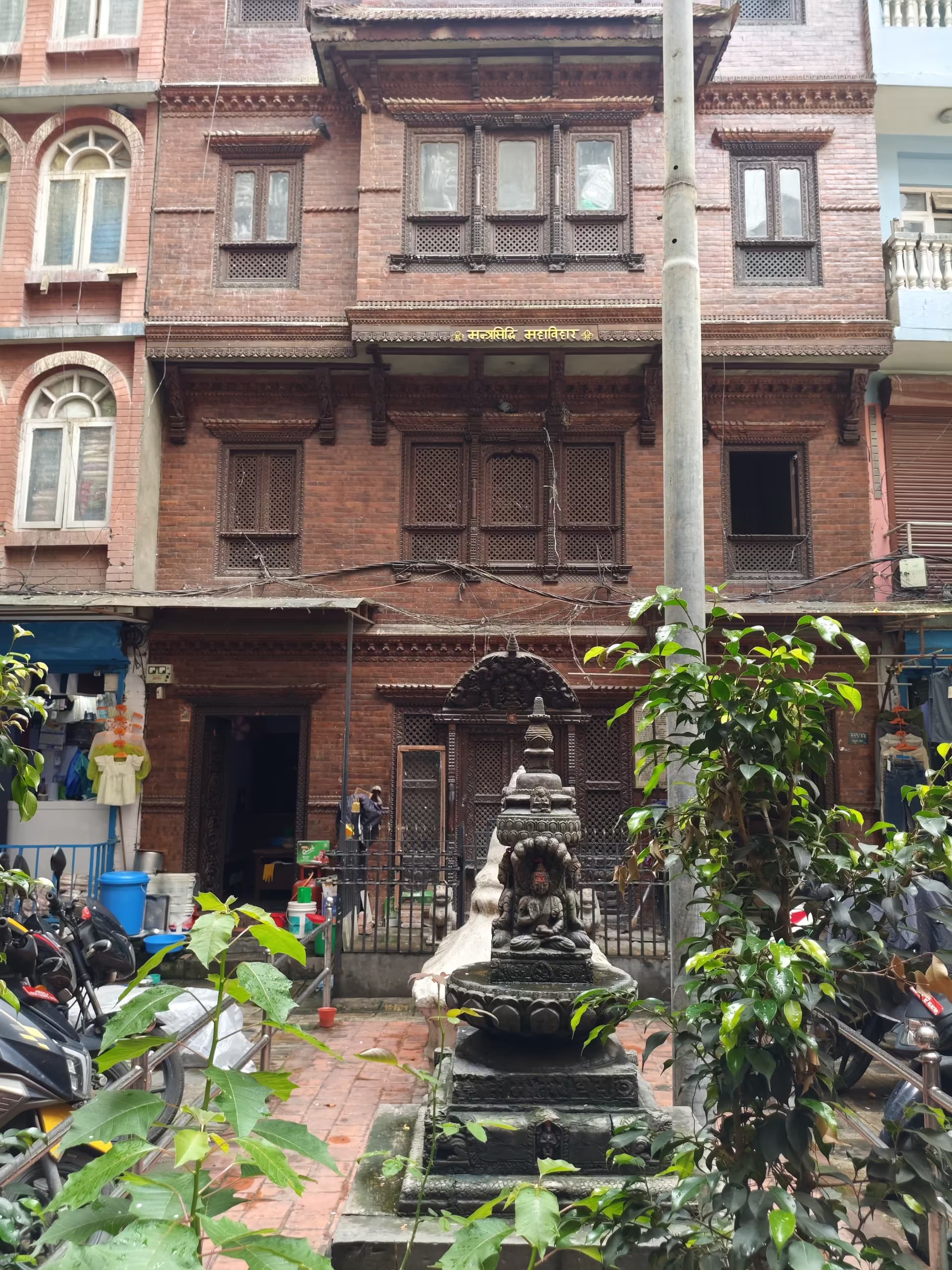
Sabal Bahal (Mantrasiddhi Mahavihar)
One of Kathmandu's eighteen Acharya Guthi bahals, Mantrasiddhi Mahavihar is a Newar Buddhist courtyard monastery near Indra Chowk, a short walk from New Road.
Mahankal Temple
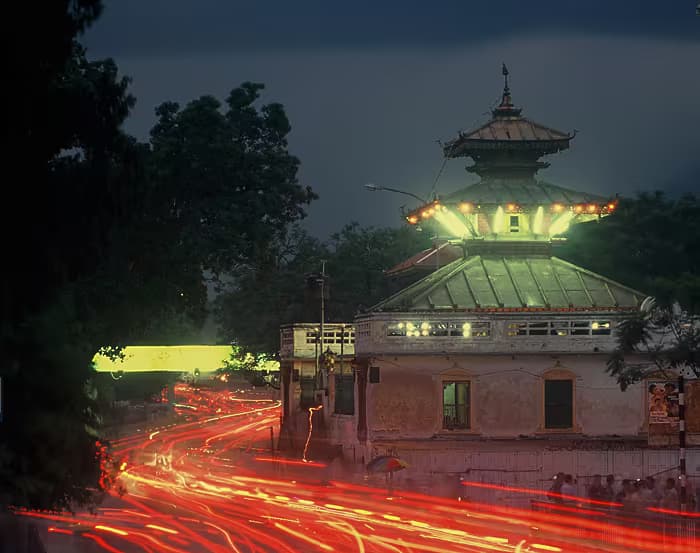
A fierce Bhairav shrine in a three-storey white temple on the western edge of Tundikhel, drawing large Saturday crowds seeking relief from hardship.
Coda
Continue the Pilgrimage
Planning this visit? Local operators publishing trips here can arrange it.
Help us get it right
Know Takse Bahal (Suratshree Mahavihar) better than we do?
We write from research and reporting, and the ground changes faster than we can keep up. If something here is out of date, or you have been and would tell it differently, we would rather hear it.