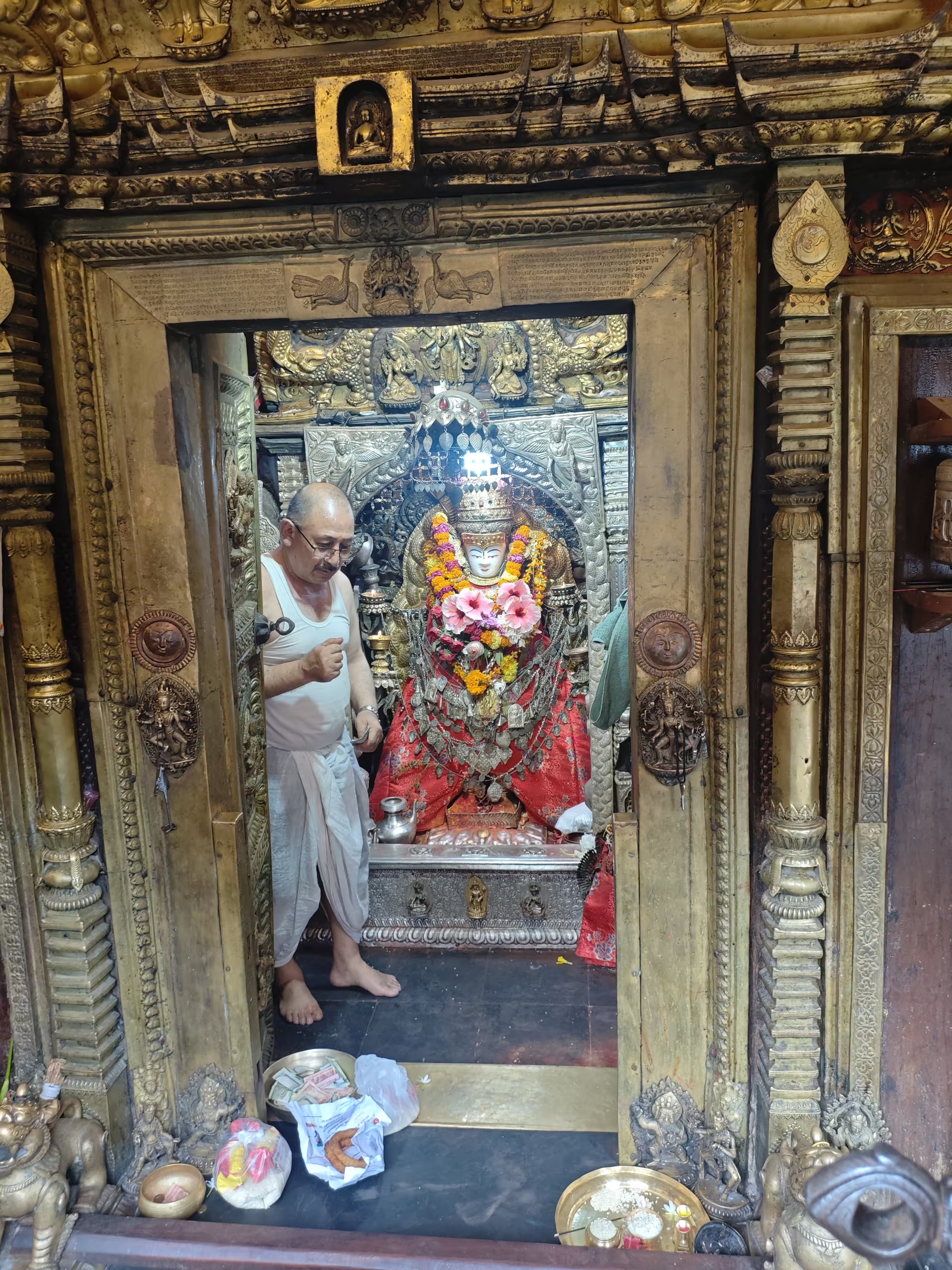
Bahal · Syncretic
Jana Bahal (Seto Machhindranath Temple)
जनबहाल❊जनबहा: द्य:
Avalokiteshvara / Seto Machhindranath·10th century CE (current temple 1502 CE)·Kathmandu
A 10th-century 'living bahal' housing the White Machhindranath, worshipped as Avalokiteshvara by Buddhists and Machhindranath by Hindus — the finest example of Valley syncretism.
Dedicated to
Avalokiteshvara / Seto Machhindranath
Period
10th century CE (current temple 1502 CE)
Hours
5:00 AM – 8:00 PM
Admission
Free
Neighborhood
Keltole, between Asan and Indra Chowk
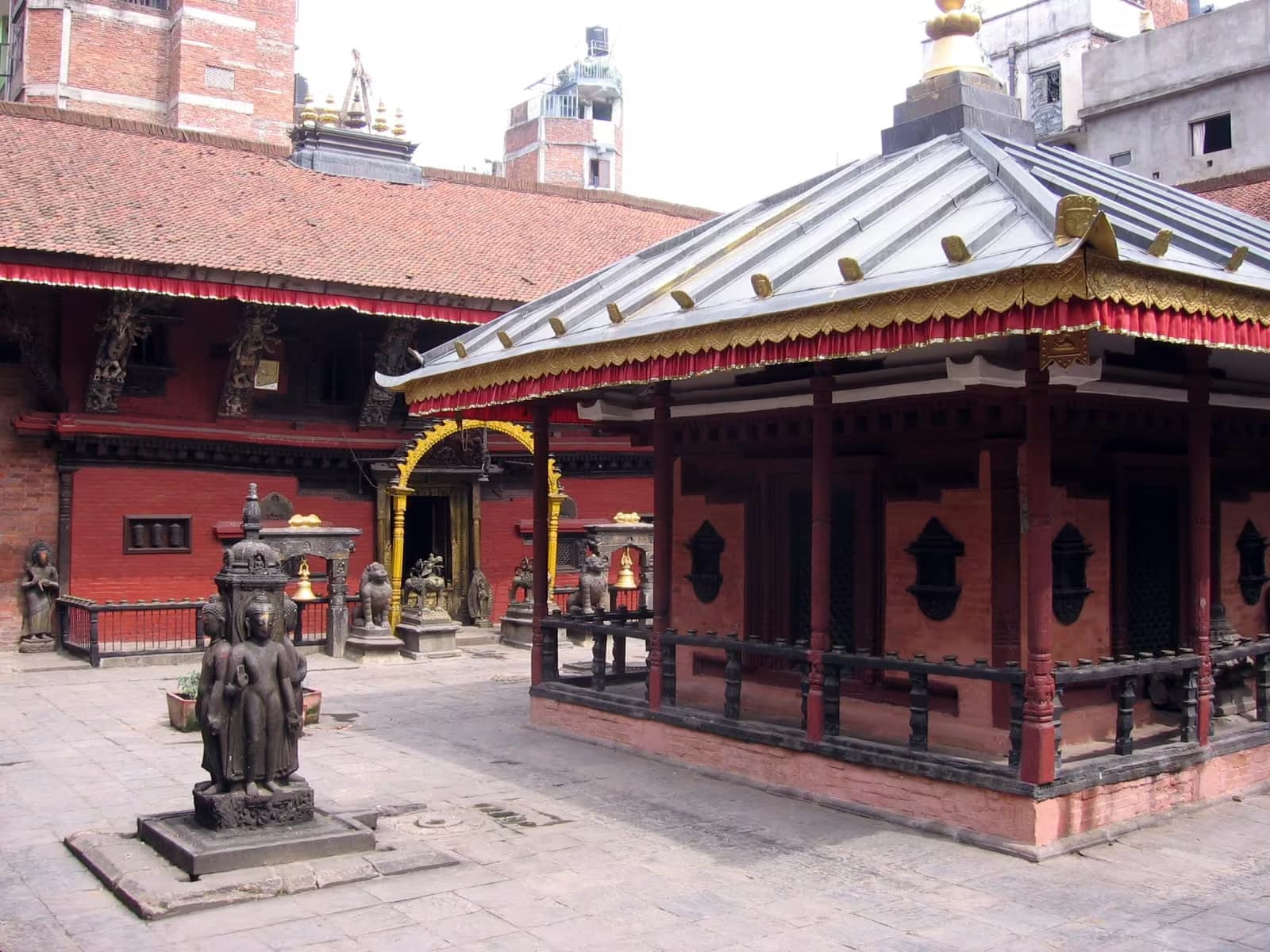
Jana Bahal, home to the Seto Machhindranath Temple, is one of the most important syncretic sacred sites in the Kathmandu Valley. Established around the 10th century with the current temple built by King Yaksha Malla in 1502, it houses the White Machhindranath — worshipped as Avalokiteshvara (Karunamaya) by Buddhists and as Machhindranath by Hindus.
This dual identity makes Jana Bahal perhaps the finest example of the Hindu-Buddhist syncretism that defines the religious culture of the Kathmandu Valley. The courtyard is a functioning marketplace and community space, making it a 'living bahal' where sacred and everyday life intertwine seamlessly.
Every March or April, the annual Seto Machhindranath Jatra sees the deity paraded through the streets of Kathmandu on a massive wooden chariot, drawing thousands of devotees from both Hindu and Buddhist communities in a spectacular display of shared devotion.
The temple features stunning metalwork and woodcarving, and the courtyard contains ancient chaityas alongside the main shrine. Located between Asan and Indra Chowk in the commercial heart of old Kathmandu, Jana Bahal is easily accessible and richly rewarding.
Best visited in autumn.autumn: best, 10°C to 27°C. Festival season brings special pujas. The courtyard is vibrant with offerings and incense. monsoon: possible, 20°C to 30°C. The white-faced deity's temple sees devotees year-round. Covered entrance provides shelter from rain. spring: good, 12°C to 30°C. The Seto Machhindranath temple is busy with devotees. Warm weather for the surrounding old town walk. winter: good, 2°C to 20°C. Morning devotional activity in the cold air is atmospheric. Bundle up for an early visit.
The Almanac
The white-faced deity's temple sees devotees year-round. Covered entrance provides shelter from rain.
Folio III
Nearby Sacred Sites
Places within a short walk that help turn this stop into a small sacred cluster.
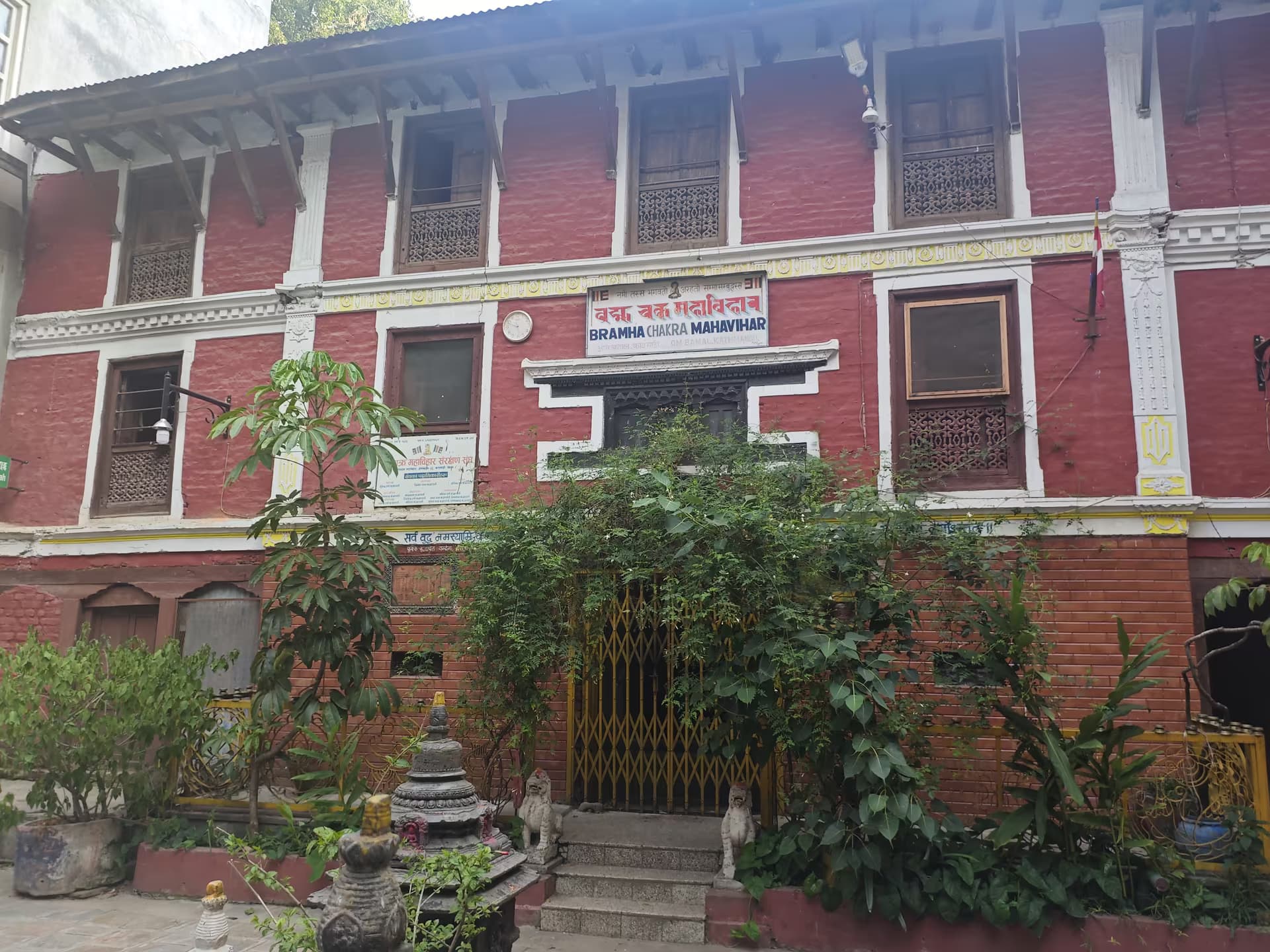
Om Bahal (Brahmachakra Mahavihar)
One of the 18 principal mahavihars of Kathmandu, the 'Wheel of Creation Monastery' lends its name to the surrounding neighborhood.
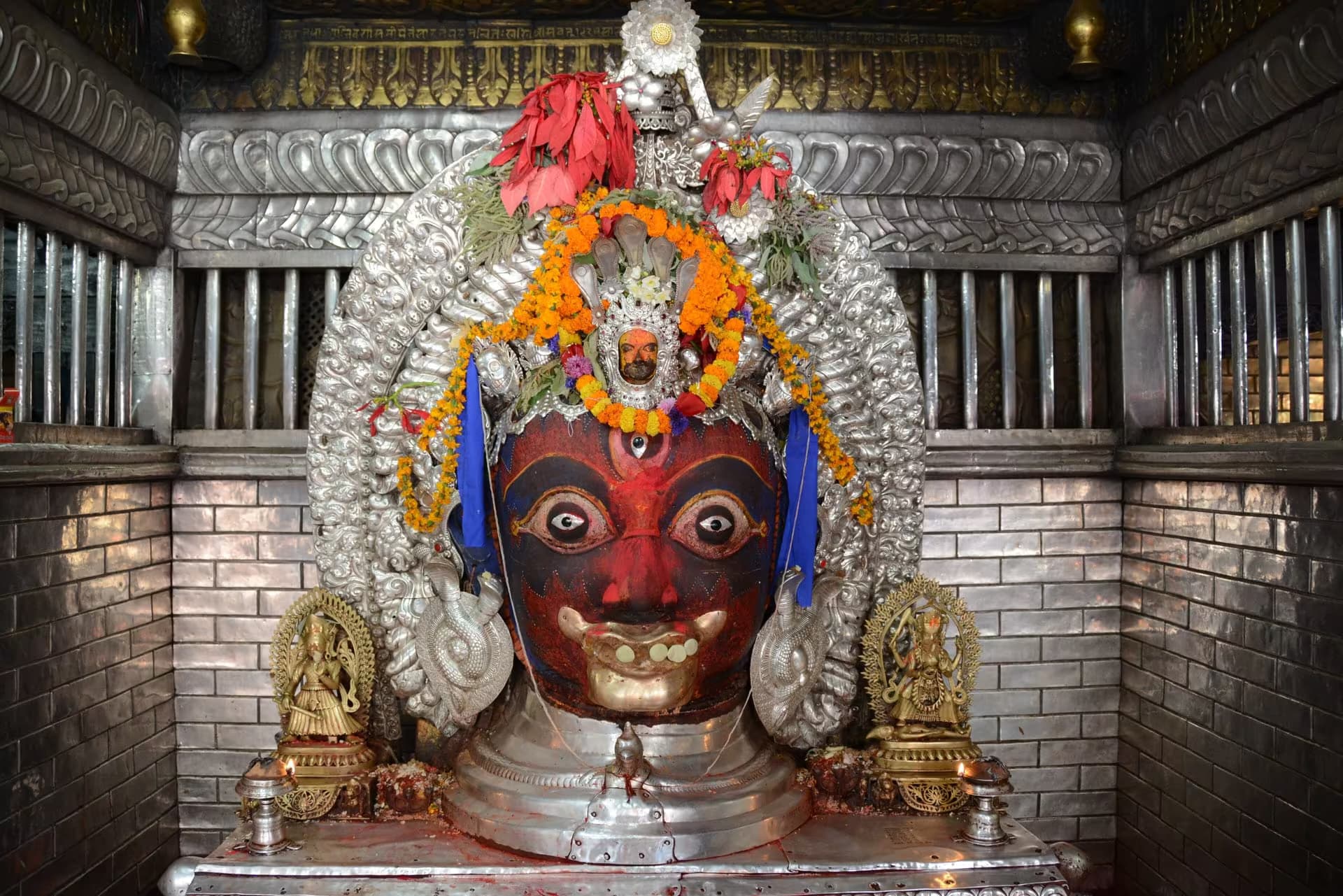
Akash Bhairav Temple
A three-storey temple at Indra Chowk housing the 'Sky Bhairav' — a disembodied silver head worshipped as the Bhairav of the heavens.
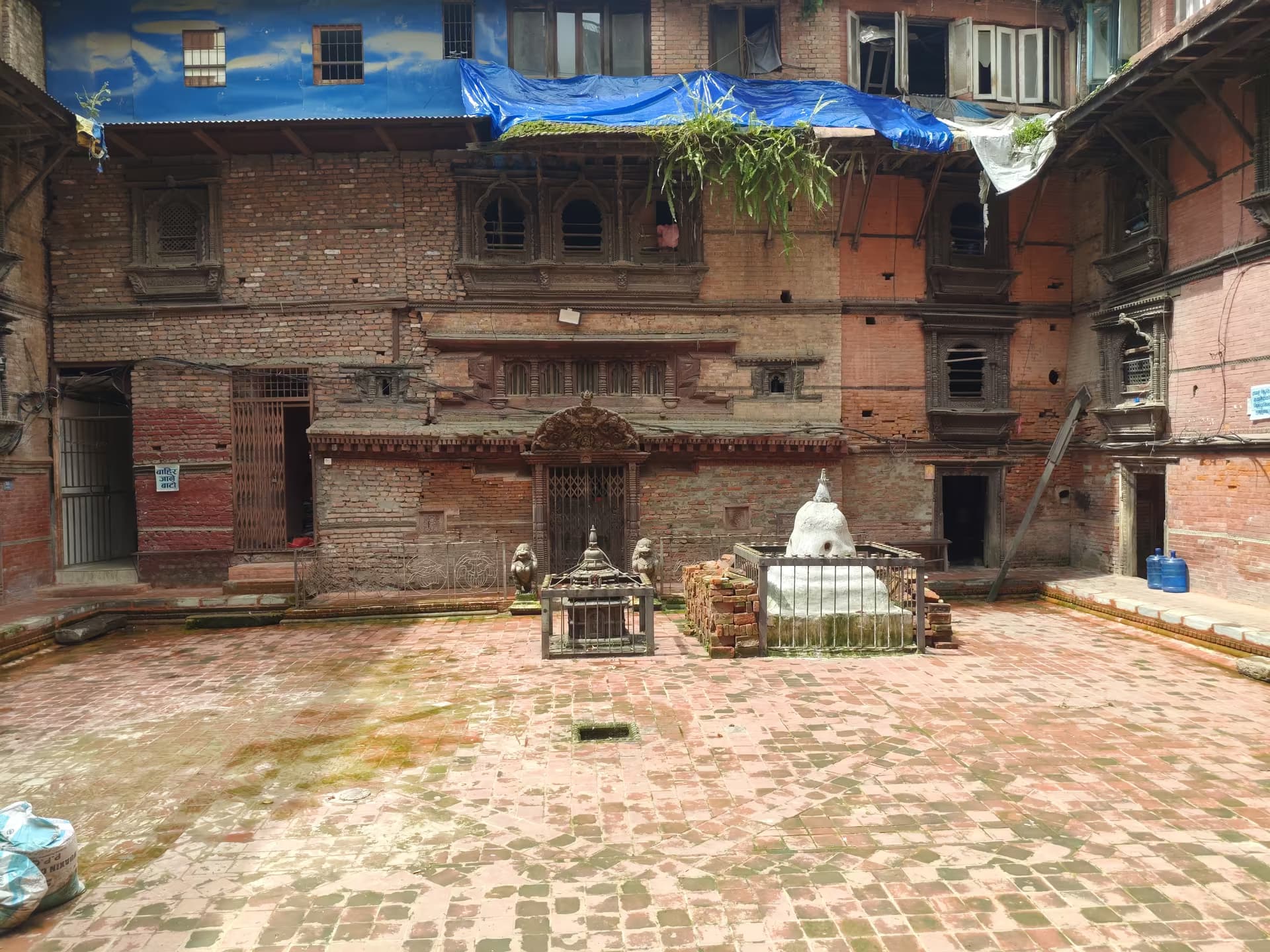
Mu Bahal (Mulashree Mahavihar)
Reckoned the most artistic of Kantipur's 18 great bahals, Mulashree Mahavihar in Watu Tole enshrines Akshobhya Buddha and once held its own line of Kumaris — held to be the valley's strictest — whose seat is still worshipped in the courtyard.
Takse Bahal (Suratshree Mahavihar)
A foundational monastery of the Kathmandu Acharya Guthi system — home to teacher Surat Bajra Bajracharya, from whom many Bhaktapur bahals trace their Buddhist lineage.
Itum Bahal (Keshchandra Mahavihar)
Kathmandu's largest Buddhist monastery complex with hidden courtyards, brass plaques depicting the Gurumapa legend, and a golden window relic.
Coda
Continue the Pilgrimage
Planning this visit? Local operators publishing trips here can arrange it.
Elsewhere in this region
Help us get it right
Know Jana Bahal (Seto Machhindranath Temple) better than we do?
We write from research and reporting, and the ground changes faster than we can keep up. If something here is out of date, or you have been and would tell it differently, we would rather hear it.