Temple · Syncretic
Mahankal Temple
महाकाल मन्दिर
Mahankal Bhairav (Kaal Bhairav)·Founding date undocumented; long-established Bhairav shrine of old Kathmandu·Kathmandu
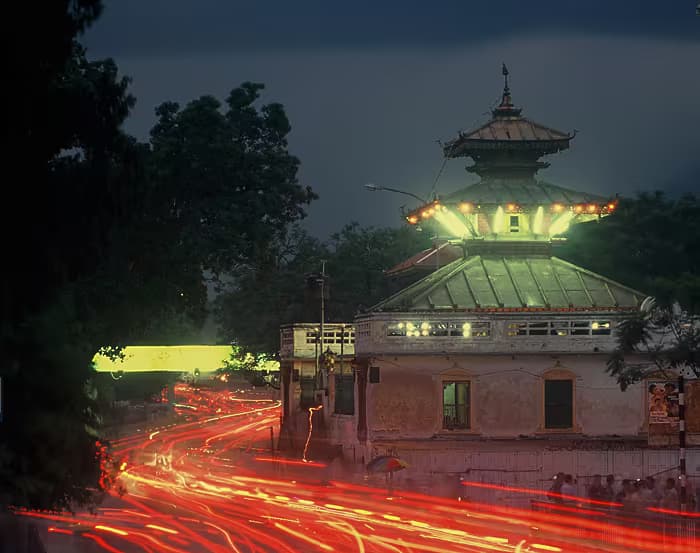
A fierce Bhairav shrine in a three-storey white temple on the western edge of Tundikhel, drawing large Saturday crowds seeking relief from hardship.
Dedicated to
Mahankal Bhairav (Kaal Bhairav)
Period
Founding date undocumented; long-established Bhairav shrine of old Kathmandu
Hours
Dawn to dusk; busiest on Saturdays
Admission
Free
Neighborhood
Kantipath / Tundikhel (west edge)
Mahankal Temple rises in a distinctive three-storey whitewashed building on Kantipath, along the western edge of Tundikhel — the mirror image of the Bhadrakali (Lumadhi Ajima) shrine that guards the ground's eastern edge. Together the two goddess-and-Bhairav sites bracket Kathmandu's great open ceremonial ground.
The temple is dedicated to Mahankal Bhairav, worshipped as Kaal Bhairav — the fierce, time-controlling form of Shiva who wears a garland of skulls and tramples ignorance underfoot. Devotees come especially to Mahankal in times of hardship, illness, or misfortune, and the shrine is regarded as one of the most powerful Bhairav sites in the city.
A well-known legend explains its origin: a tantric priest saw a dark cloud drifting over Tundikhel with a ferocious figure standing upon it, and recognised the god Mahankal himself. When the priest asked the king to build the deity a permanent home, Bhairav declined to reside there full time but promised to visit every Saturday. To this day Saturday is the temple's busiest day, when hundreds of worshippers queue to make offerings. The precise founding date is not documented in reliable sources.
In the Newar tradition the deity is known as Mahānkā Dyah and is revered as a protective guardian, giving the shrine a following that reaches across Kathmandu's Hindu and Newar Buddhist communities alike.
Folio III
Nearby Sacred Sites
Places within a short walk that help turn this stop into a small sacred cluster.
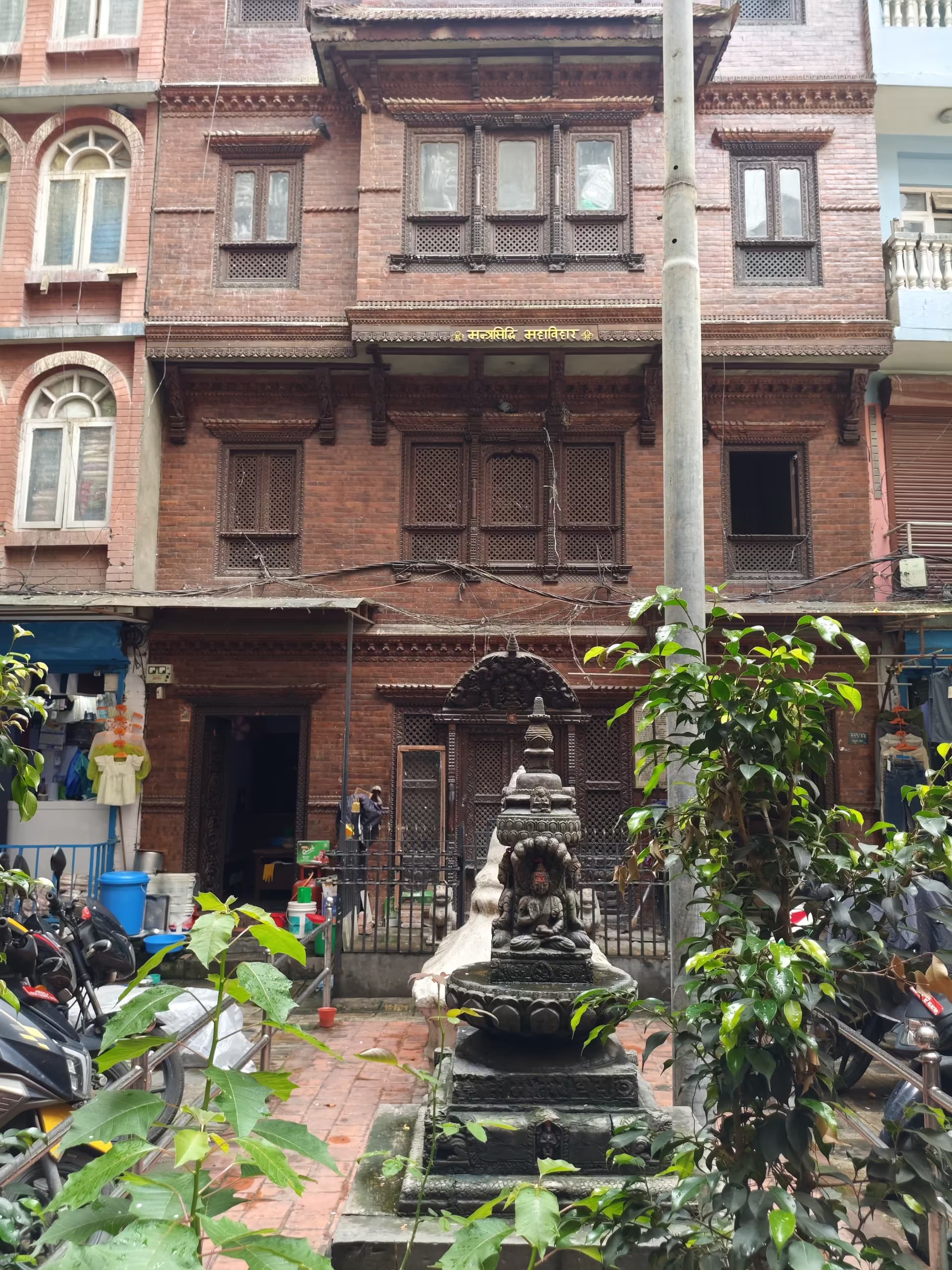
Sabal Bahal (Mantrasiddhi Mahavihar)
One of Kathmandu's eighteen Acharya Guthi bahals, Mantrasiddhi Mahavihar is a Newar Buddhist courtyard monastery near Indra Chowk, a short walk from New Road.
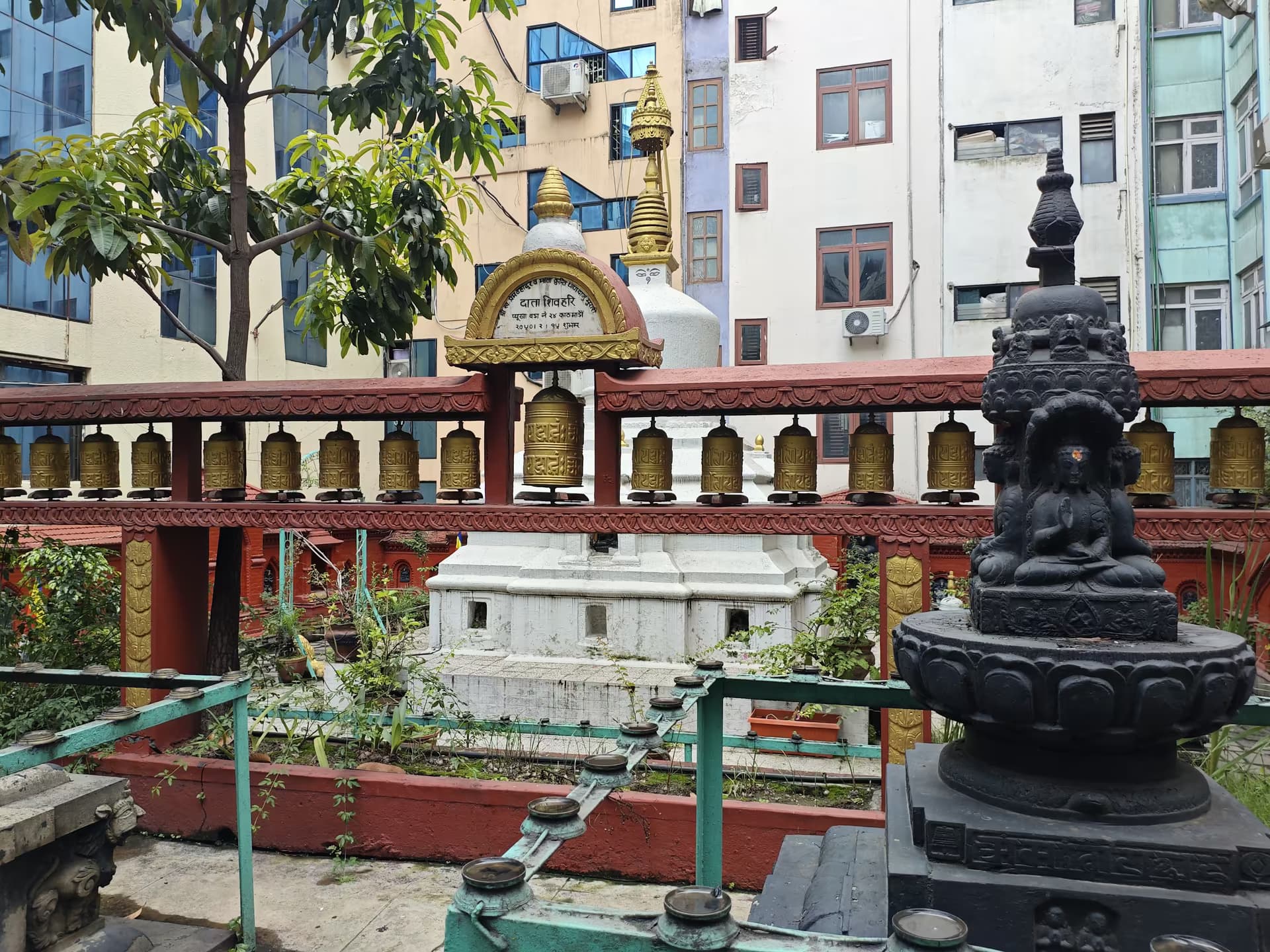
Pyukha Bahal (Dharma Dhatu Mahavihar)
A quiet branch monastery in Pyukha Tole off New Road — formally Shree Dharma Dhatu Mahavihar, also called Ashok Chaitya Vihar — built around a large central chaitya crowned with Swayambhu-style Buddha eyes. A Nepal Sambat 667 (c. 1547 CE) inscription records its founding.
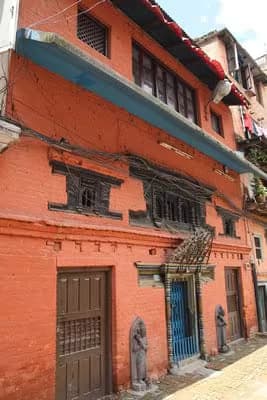
Te Bahal (Rajakirti Mahavihar)
Kathmandu's largest open monastery courtyard, a Licchavi-era complex housing Buddhist shrines alongside Ganesh, Bhairav, and Matrika — a living museum of Valley syncretism.
Takse Bahal (Suratshree Mahavihar)
A foundational monastery of the Kathmandu Acharya Guthi system — home to teacher Surat Bajra Bajracharya, from whom many Bhaktapur bahals trace their Buddhist lineage.
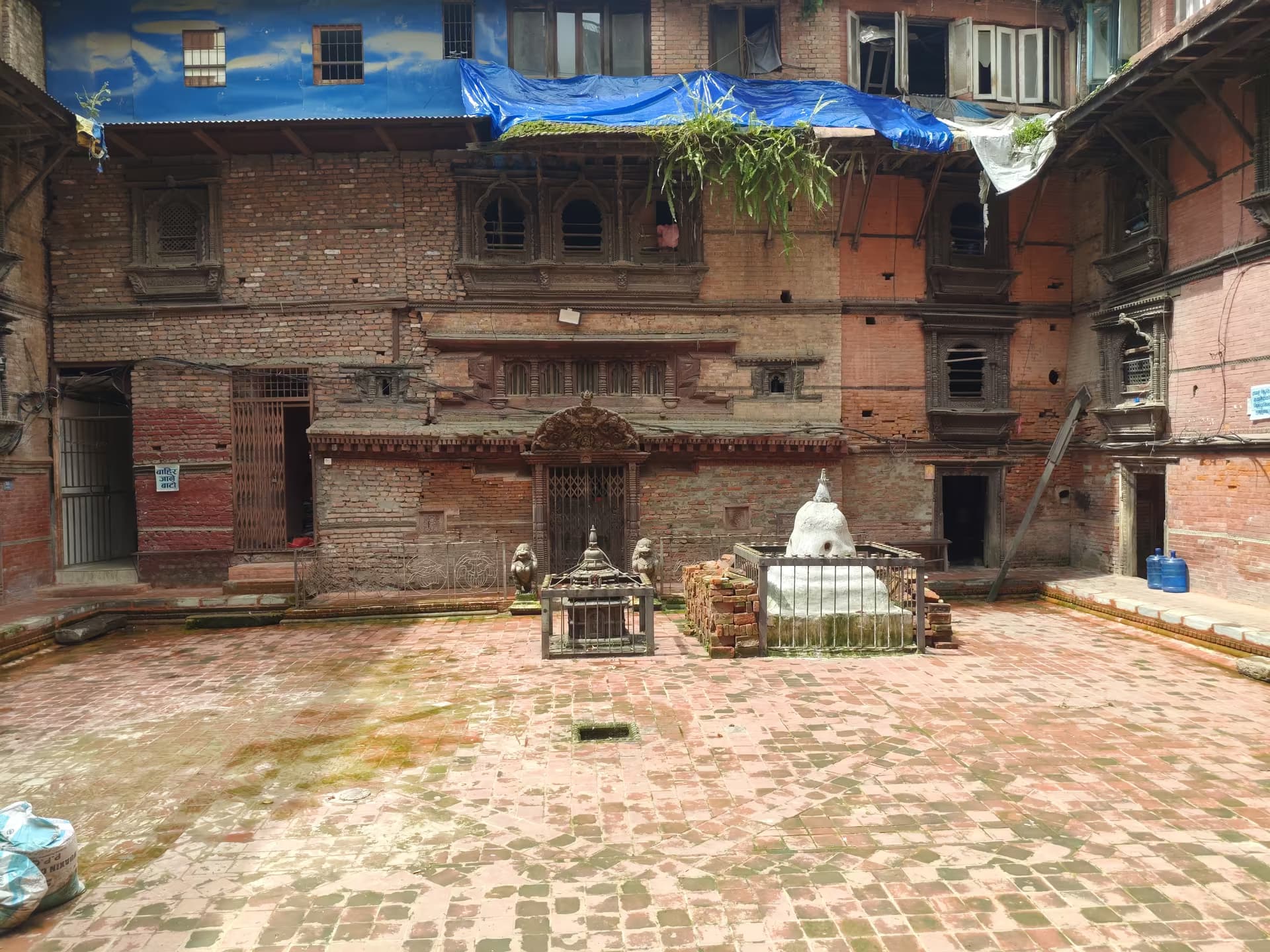
Mu Bahal (Mulashree Mahavihar)
Reckoned the most artistic of Kantipur's 18 great bahals, Mulashree Mahavihar in Watu Tole enshrines Akshobhya Buddha and once held its own line of Kumaris — held to be the valley's strictest — whose seat is still worshipped in the courtyard.
Coda
Continue the Pilgrimage
Planning this visit? Local operators publishing trips here can arrange it.
Help us get it right
Know Mahankal Temple better than we do?
We write from research and reporting, and the ground changes faster than we can keep up. If something here is out of date, or you have been and would tell it differently, we would rather hear it.