Temple · Hindu
Bhairavnath Temple
भैरवनाथ मन्दिर
Akash Bhairav (fierce form of Shiva, guardian deity of Bhaktapur)·Built 1547 AD by Jeev Raj Bhari under King Bishwo Malla; five-tiered expansion by King Bhupatindra Malla; reconstructed after 1934 and 2015 earthquakes·Bhaktapur
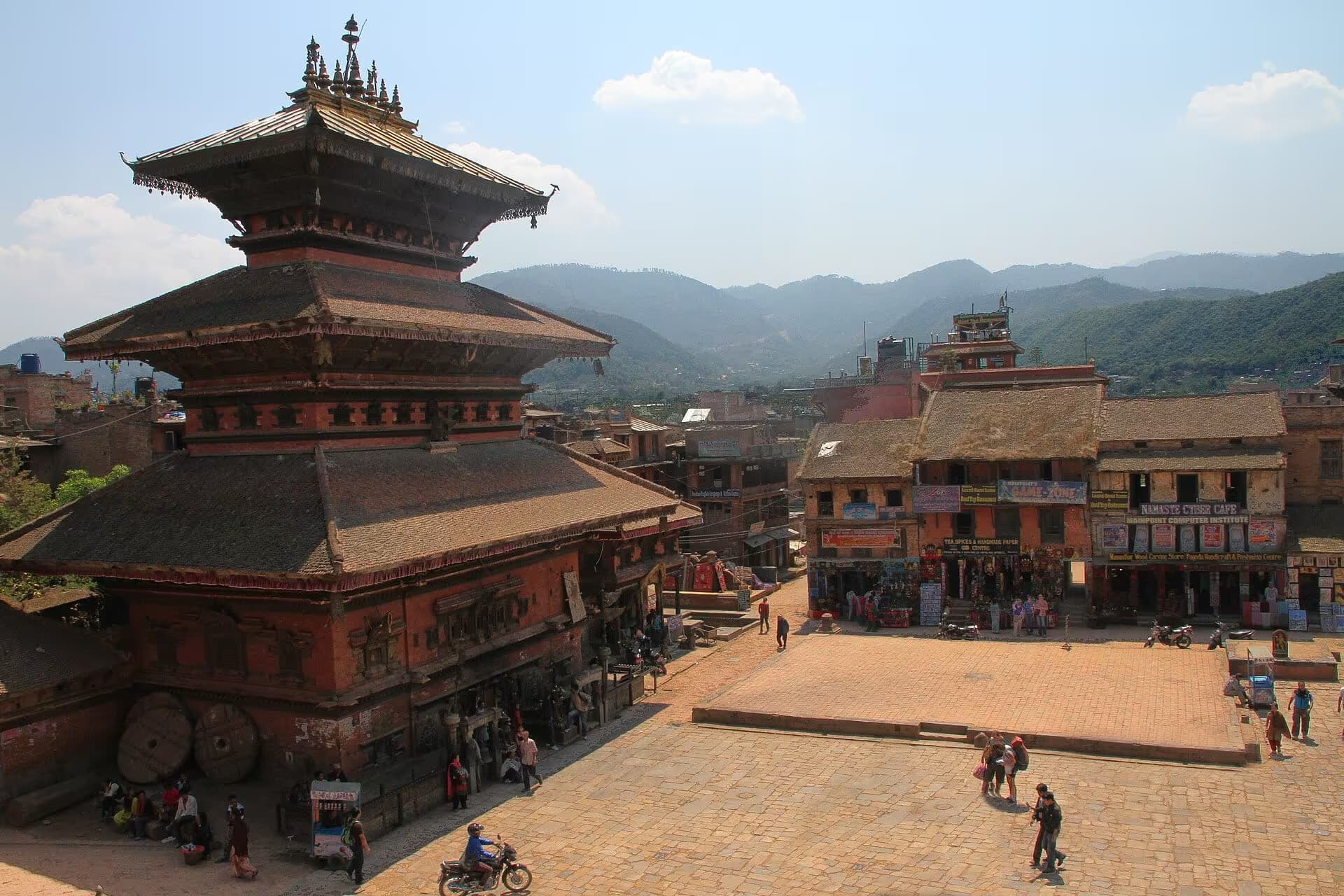
A three-tiered pagoda on the north side of Taumadhi Square — dedicated to **Akash Bhairav**, the fierce form of Shiva — whose chariot opens the nine-day **Bisket Jatra** that ushers in the Nepali New Year each April.
Dedicated to
Akash Bhairav (fierce form of Shiva, guardian deity of Bhaktapur)
Period
Built 1547 AD by Jeev Raj Bhari under King Bishwo Malla; five-tiered expansion by King Bhupatindra Malla; reconstructed after 1934 and 2015 earthquakes
Hours
Exterior accessible during Bhaktapur Durbar Square ticketed hours (approx. 06:00–19:00)
Admission
Local 1800 · USD 18
Neighborhood
Taumadhi Square
Bhairavnath Temple stands on the north side of Taumadhi Square in Bhaktapur, directly facing the much taller Nyatapola across the plaza. Unusually for the valley's major temples it rises on a rectangular rather than a square plinth, and its three tiers of gilded finials, copper torana and densely carved wooden struts mark it out as one of the finest pagodas of the late Malla period.
The temple enshrines Bhairavnath — also invoked here as Akash Bhairav and Kasi Vishwanath — a fierce, sword-wielding form of Shiva who serves as the guardian deity of Bhaktapur. Worship at the site predates the present structure: the deity was originally the kul dyo (clan god) of the Tabathuchhe family, and an early shrine is traditionally attributed to the 13th-century king Ananda Deva. The first full pagoda was built in NS 667 (1547 AD) by Jeev Raj Bhari of Tabathuchhe, under the patronage of King Bishwo Malla, expressly to anchor the Bisket Jatra festival. King Bhupatindra Malla later raised the temple to five storeys, but successive earthquakes — most severely in 1934 and again in 2015 — returned it to its present three-tiered profile.
The temple's greatest day is the start of Bisket Jatra, a nine-day, eight-night festival of Licchavi-era origin that opens four days before Baisakh 1 (the Nepali New Year, mid-April). On the first evening a towering wooden khat (chariot) carrying the idol of Bhairavnath is hauled into Taumadhi Square by hundreds of men, paired with the chariot of the goddess Bhadrakali; the two are dragged in a tug-of-war between Bhaktapur's upper and lower city, then led to Khalla Tole where an enormous lingo pole is raised and pulled down to mark the new year.
Bhairavnath was heavily damaged in the 2015 Gorkha earthquake — top-storey masonry collapsed and the whole upper frame tilted — and has since been reconstructed in the traditional idiom using brick, lime-surkhi, timber and stone, with the wooden frame reinforced for improved seismic performance. The temple sits inside the ticketed Bhaktapur Durbar Square / Taumadhi heritage zone; entry to the sanctum itself is reserved for priests, but the exterior, plinth and bell (the large open-air bronze bell directly in front) are accessible all day. Best visited in mid-April during Bisket Jatra, at sunrise for quiet photography, or in the evening when ritual oil lamps are lit.
- Expanded during the reign of Bhupatindra MallaRaised to five storeys
Rebuilt the Bhairav temple on Taumadhi to its present height — the low shrine facing Nyatapola became a five-storey block under his reign.
Folio III
Nearby Sacred Sites
Places within a short walk that help turn this stop into a small sacred cluster.
Nyatapola Temple
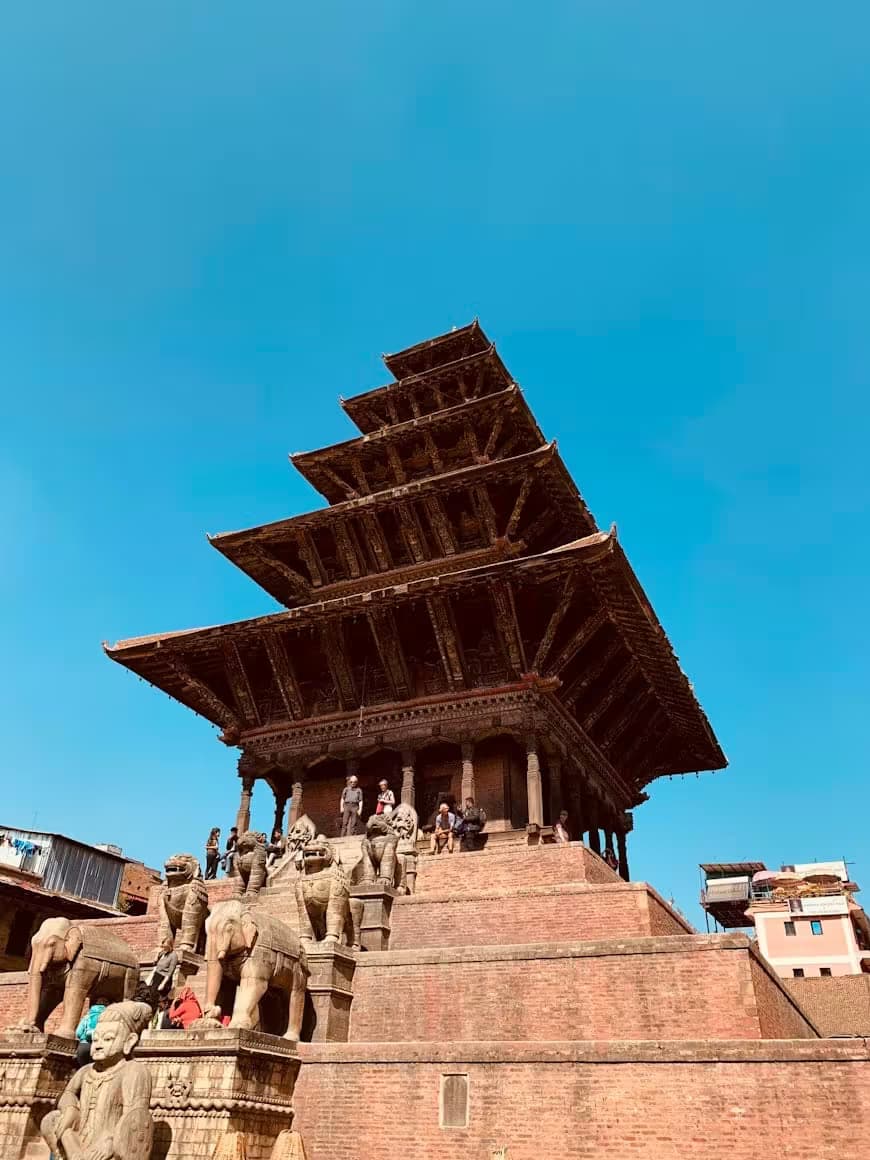
The tallest pagoda-style temple in Nepal, a five-storey masterpiece built in just 214 days by King Bhupatindra Malla in 1702, dominating Taumadhi Square.
Mangal Dharmadweep Mahavihar (Jhaur Bahi)
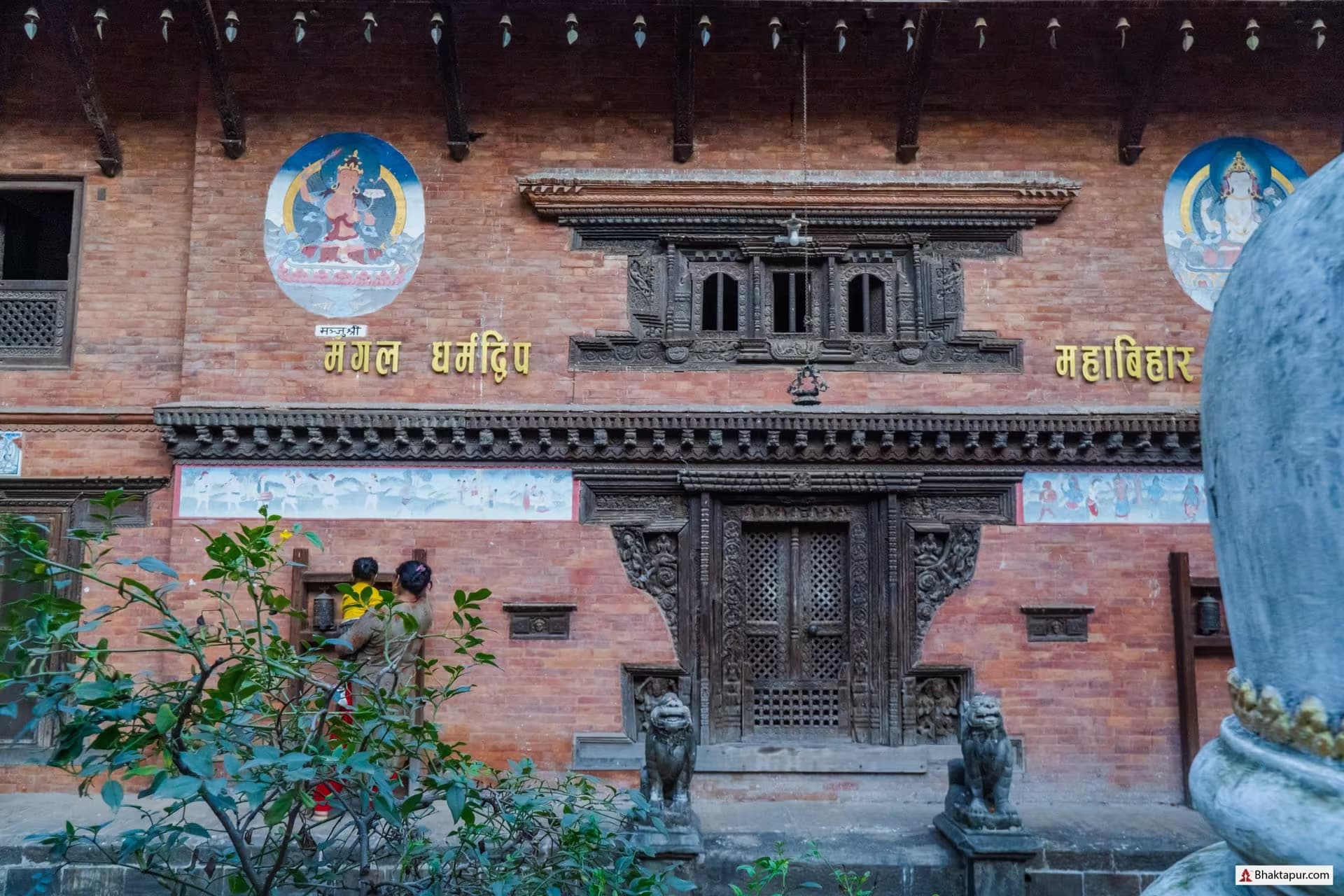
A 13th-century monastery in Bhaktapur's Golmadhi Tole featuring rare wall paintings of various Buddhas and a Dipankar Buddha dressed in distinctive blue garments.
Chatur Varna Mahavihar
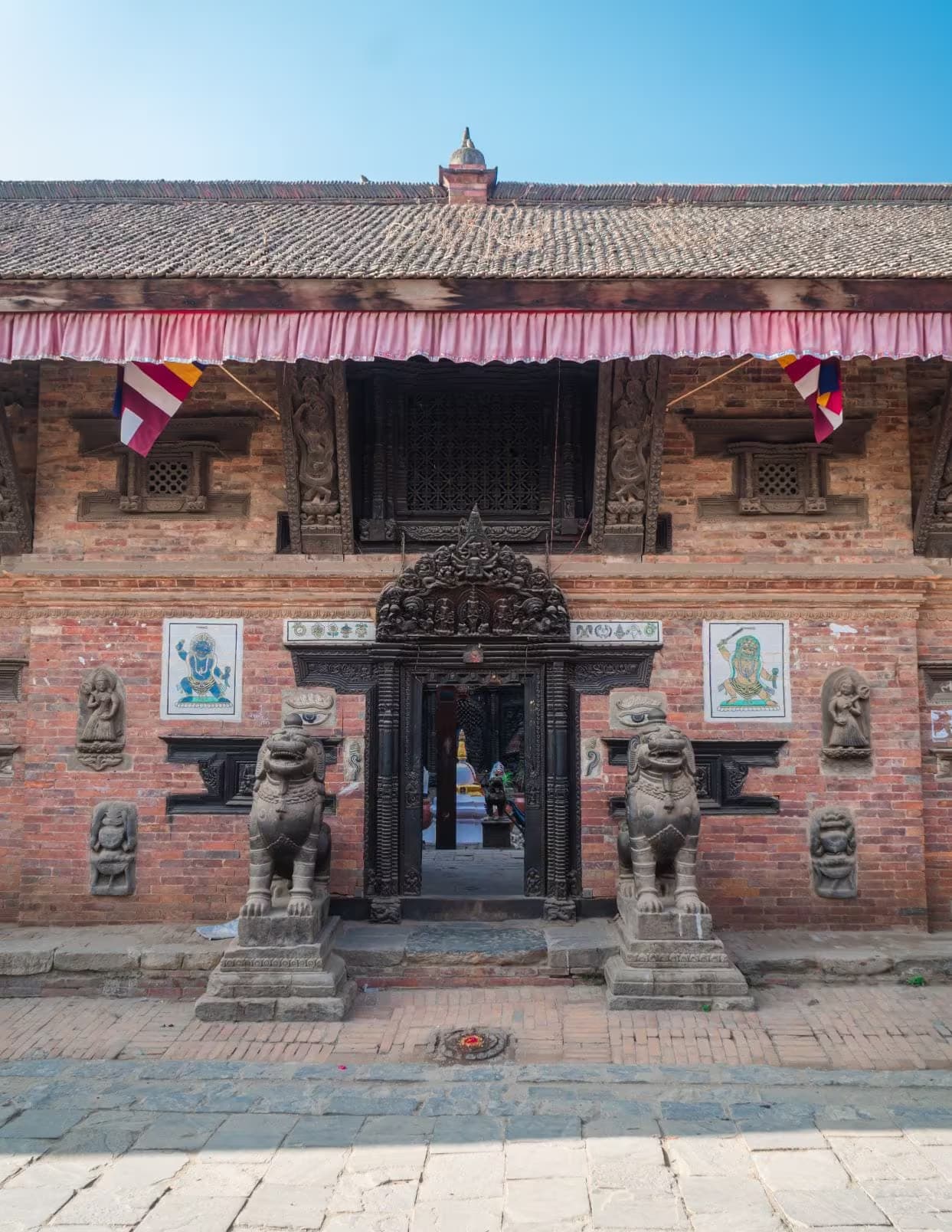
Bhaktapur's most visited mahavihar near Durbar Square, built in 1492 with a fascinating mix of Buddhist and Hindu guardian figures.
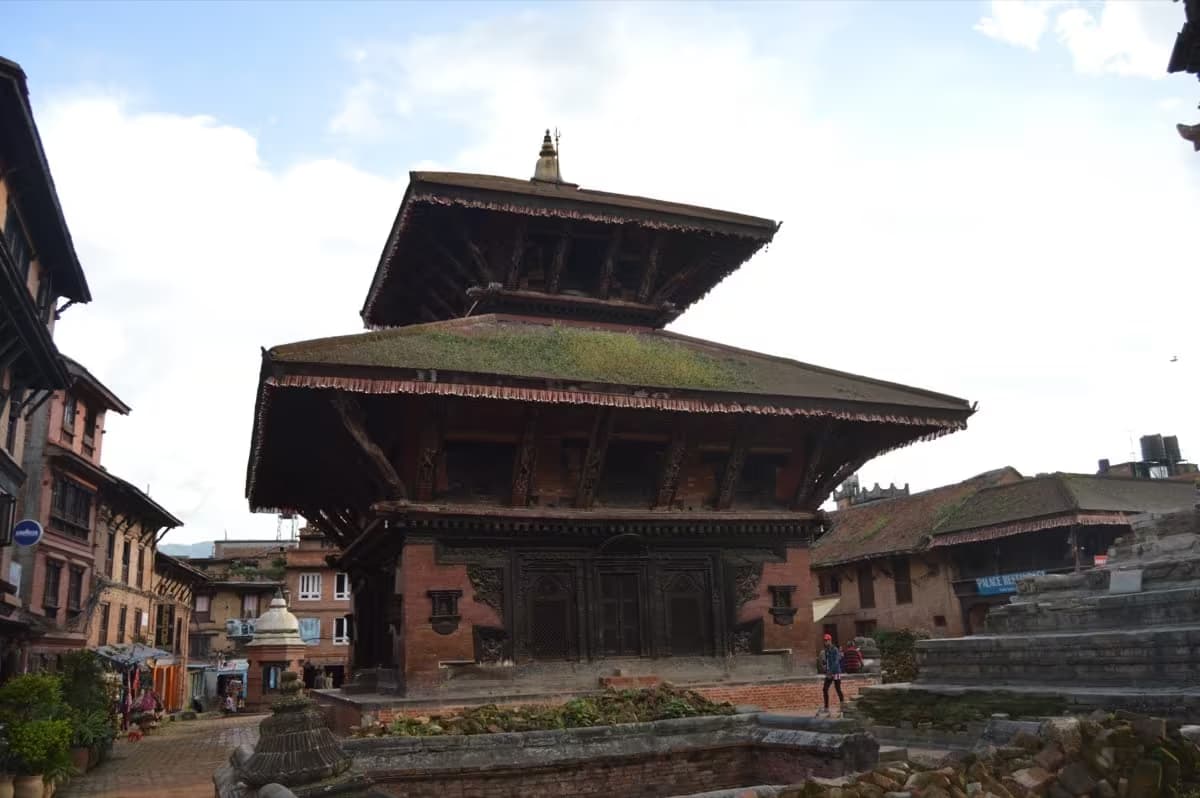
Yaksheshwor Mahadev Temple (Pashupatinath of Bhaktapur)
Bhaktapur's own Pashupatinath — a 15th-century two-tiered pagoda modelled after the famous Kathmandu temple, with erotic carvings and a four-faced Shivalinga.
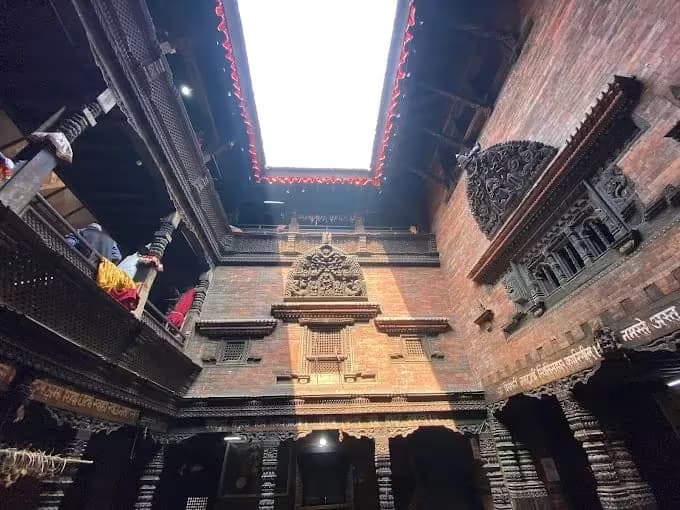
Vatsala Durga Temple
A striking white stone shikhara temple in Bhaktapur Durbar Square, famous for its 'barking bell' that is said to make dogs howl when rung.
Coda
Continue the Pilgrimage
Planning this visit? Local operators publishing trips here can arrange it.
Elsewhere in this region
Help us get it right
Know Bhairavnath Temple better than we do?
We write from research and reporting, and the ground changes faster than we can keep up. If something here is out of date, or you have been and would tell it differently, we would rather hear it.