Temple · Hindu
Ashok Binayak
Ganesh·Traditional old Kathmandu Ganesh shrine·Kathmandu
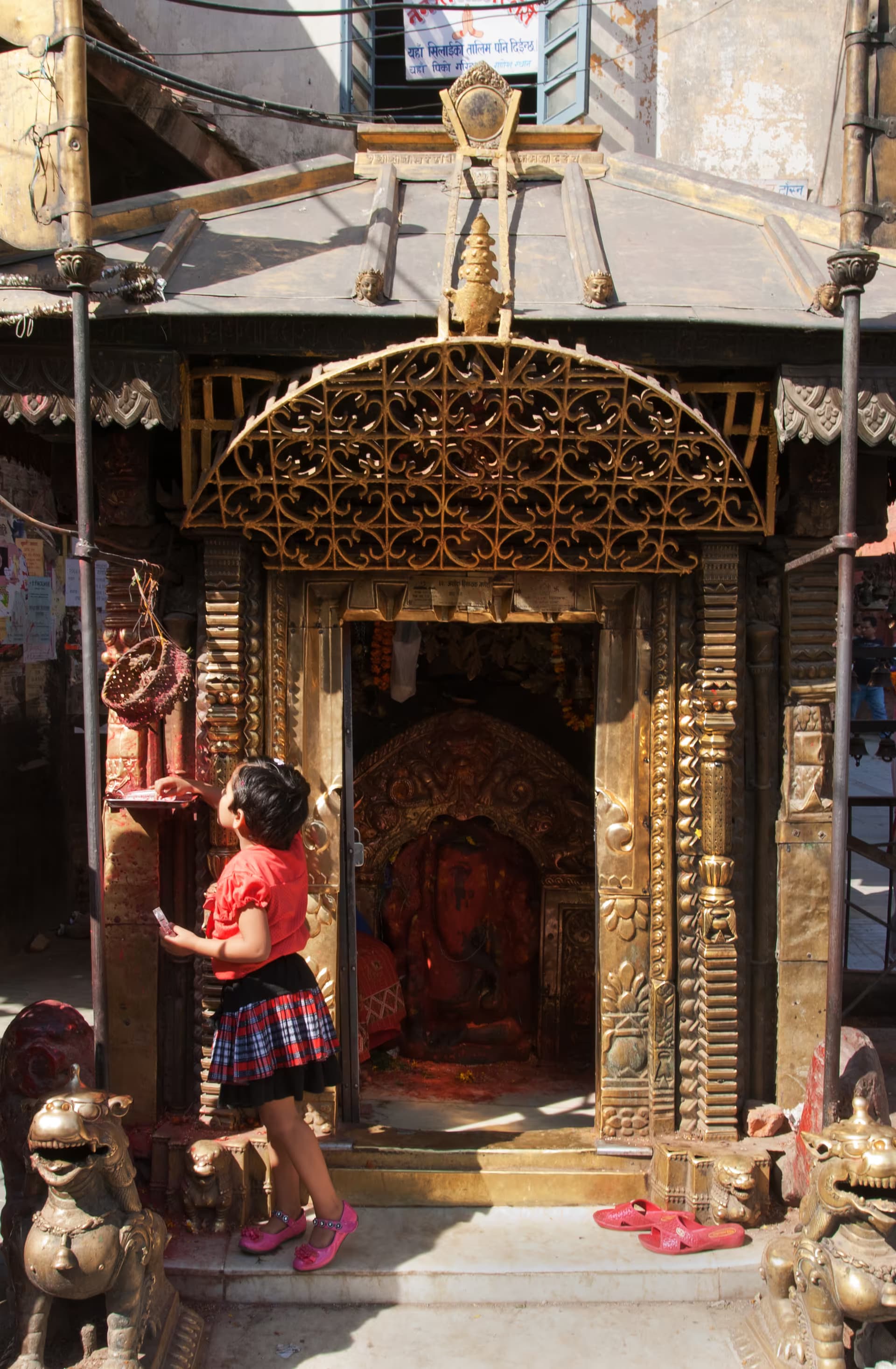
Maru Ganesh shrine near Kathmandu Durbar Square, one of the city's most visited Ganesh temples but not part of the Char Binayak circuit.
Dedicated to
Ganesh
Period
Traditional old Kathmandu Ganesh shrine
Hours
Open daily; busiest in the morning
Admission
Free
Climate
mid_hills
Ashok Binayak, commonly known as Maru Ganesh, is a compact but heavily visited Ganesh shrine at Maru near Kathmandu Durbar Square. It is one of Kathmandu's most familiar daily-worship temples, passed by residents, market-goers, and pilgrims moving through the old city.
The shrine should not be confused with the Char Binayak circuit. It is included here as a high-traffic Ganesh pilgrimage outlier because it anchors old Kathmandu's everyday Ganesh devotion and sits beside major heritage routes through Maru, Kasthamandap, and Hanuman Dhoka.
Visitors should expect a small urban shrine rather than a large temple compound. The devotional intensity comes from daily use, offerings, bells, and constant foot traffic.
Access & Mobility
Located in a dense old-city area with short walking distances but uneven paving, curbs, and crowding near Kathmandu Durbar Square.
- On foot
Best reached on foot while visiting Kathmandu Durbar Square and Maru.
- Vehicle
Vehicle drop-off is nearby only; old-city lanes are walked.
Folio III
Nearby Sacred Sites
Places within a short walk that help turn this stop into a small sacred cluster.
Kal Bhairav
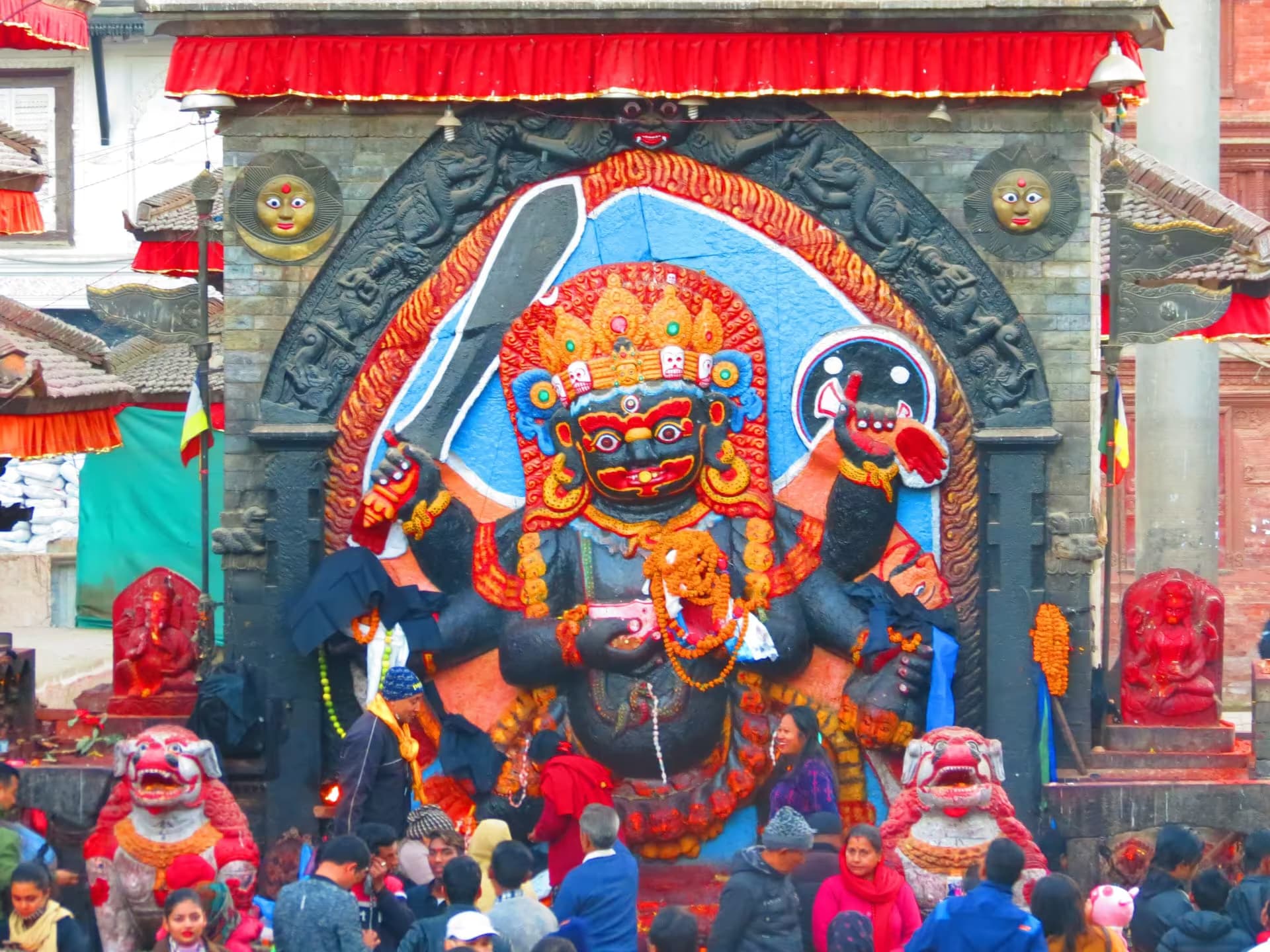
A massive 12th-century stone relief of the fearsome Bhairav — Shiva's terrifying aspect — standing six feet tall in the open court of Kathmandu Durbar Square.
Kumari Ghar
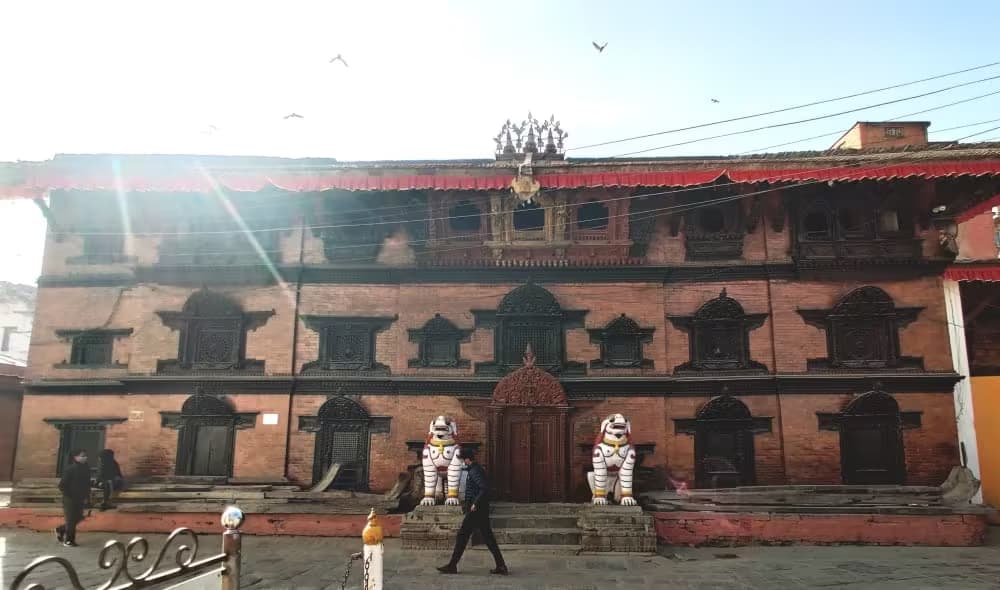
The ornate 18th-century residence of Kathmandu's Royal Kumari — a living prepubescent girl worshipped as the incarnation of goddess Taleju.
Sikhamu Bahal (Shreekhanda Tarumula Mahavihar)
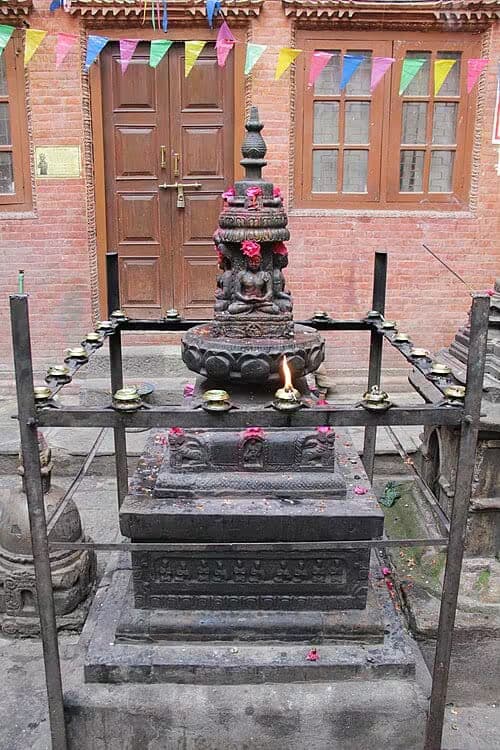
The only bahal in Kathmandu's Durbar Square quarter, associated with the legendary teacher Lila Bajra Bajracharya — one of four masters who shaped Valley Buddhism.
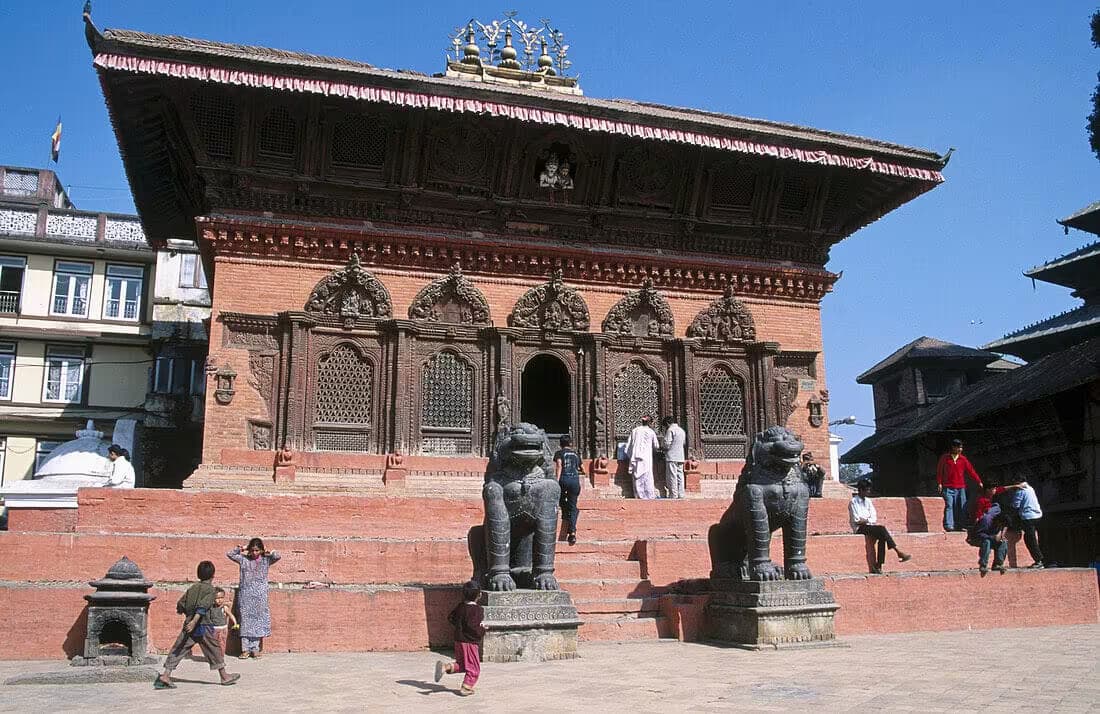
Shiva-Parvati Temple
An 18th-century temple famous for the carved wooden figures of Shiva and Parvati leaning out from the upper window, gazing at the life of Durbar Square below.
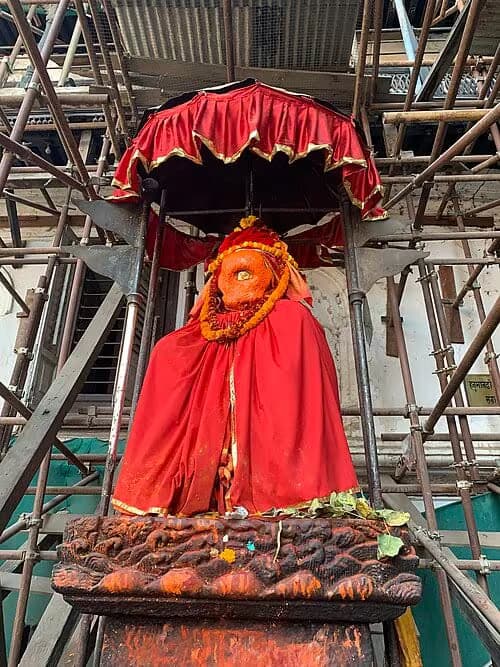
Hanuman Statue (Hanuman Dhoka)
The standing stone figure of Hanuman draped in a red cloak at the entrance to the old royal palace — the image that gave Hanuman Dhoka its name.
Coda
Continue the Pilgrimage
Planning this visit? Local operators publishing trips here can arrange it.
Elsewhere in this region
Help us get it right
Know Ashok Binayak better than we do?
We write from research and reporting, and the ground changes faster than we can keep up. If something here is out of date, or you have been and would tell it differently, we would rather hear it.