The Three-Storey Chariot
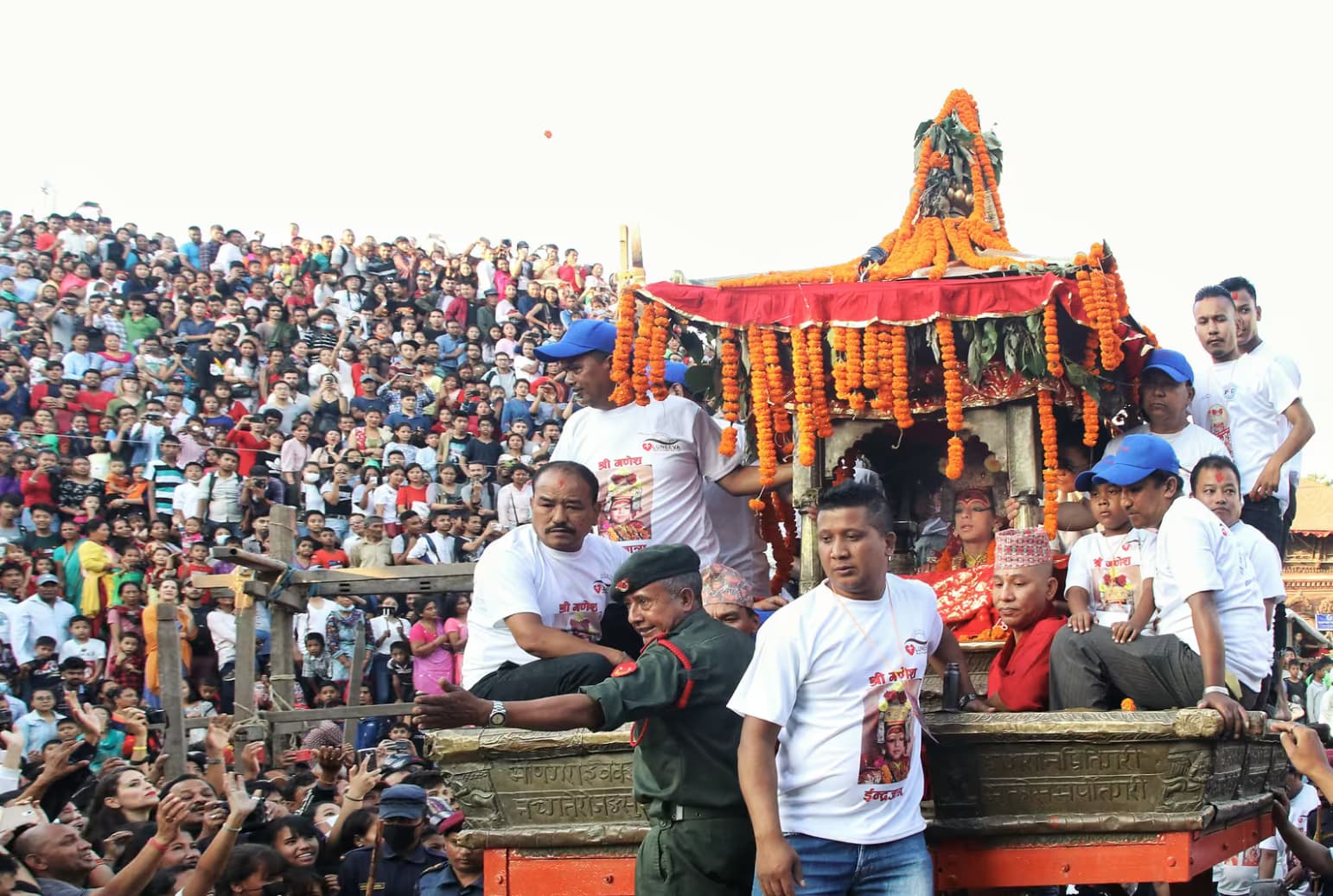
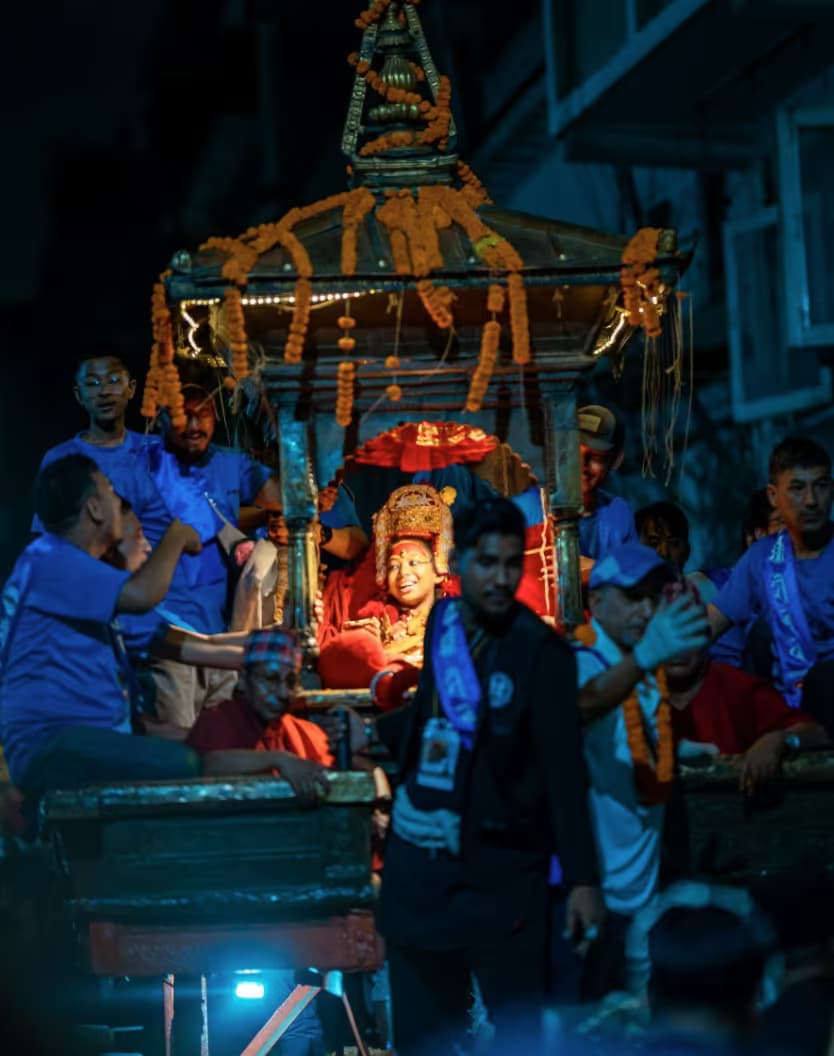
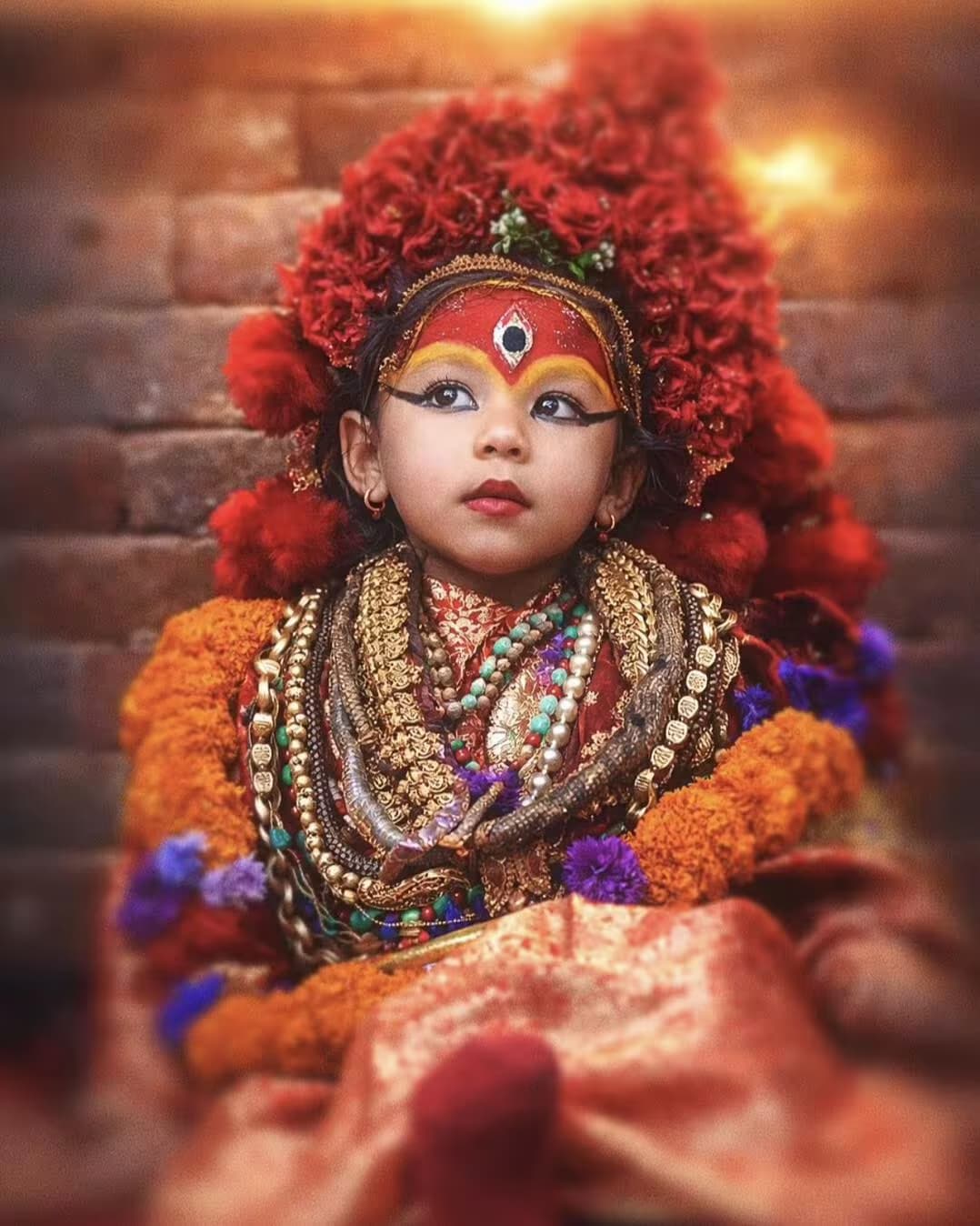
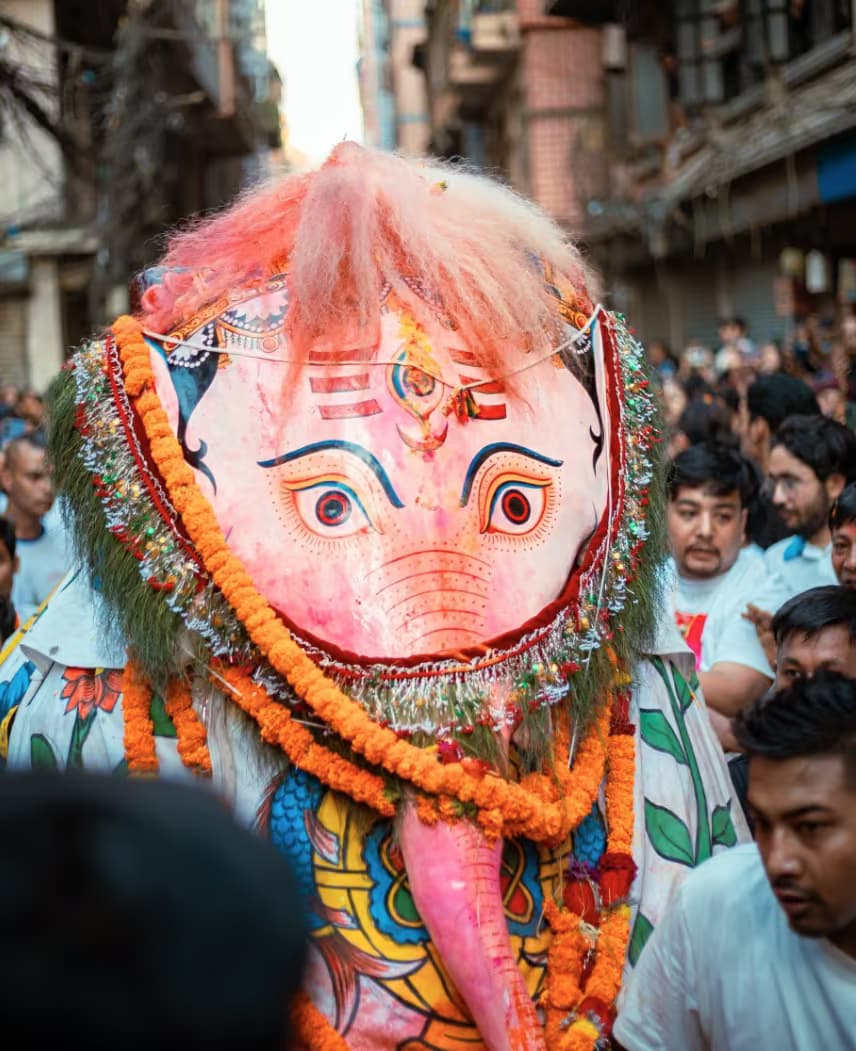
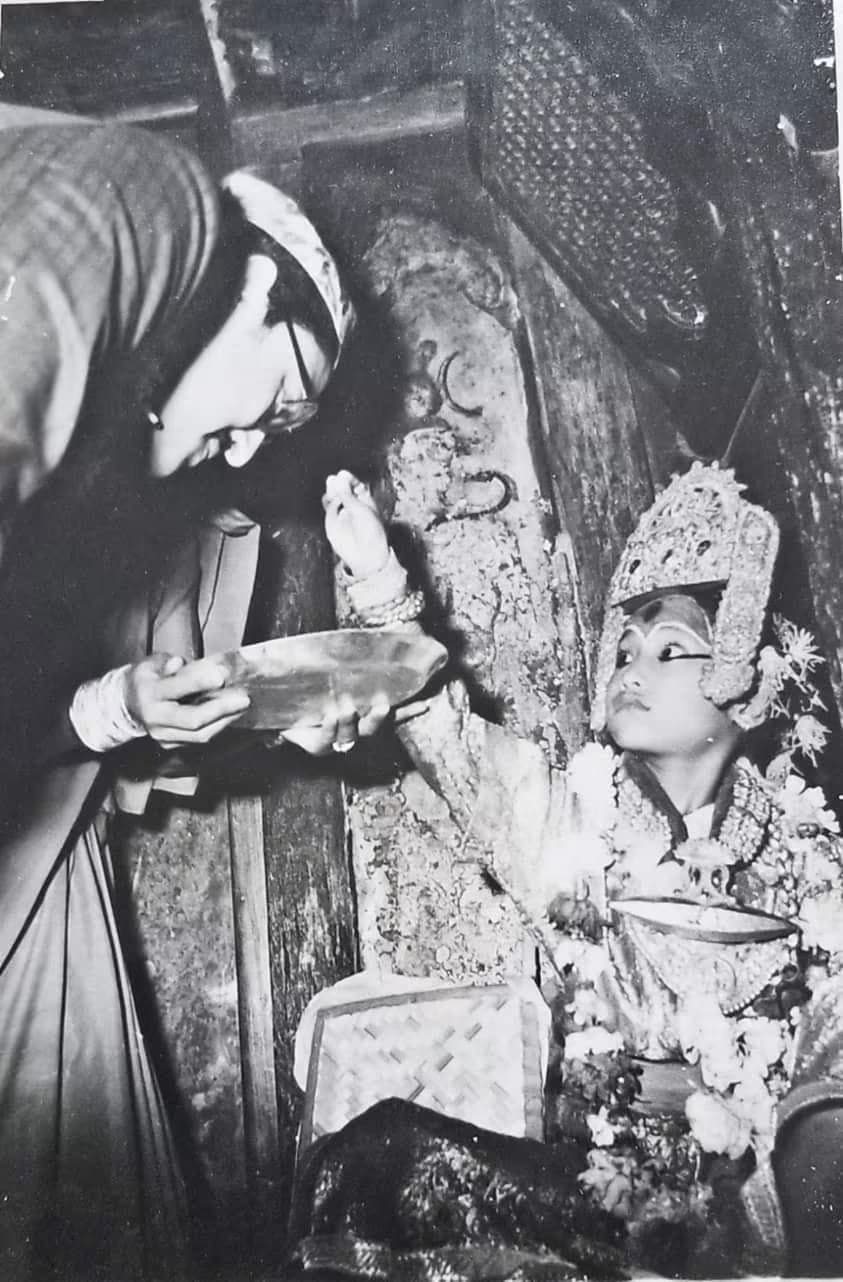
Of the three chariots that roll through Kathmandu during Indra Jatra, the Kumari's is the tallest — a three-storey wooden tower draped in red cloth, gilded woodcarvings, and sacred imagery. It rises some nine to ten metres above the street, its upper chamber housing the Living Goddess herself, shielded by layered canopies and flanked by smaller images of Ganesh and Kumar (Bhairav).
The chariot is not a permanent vehicle. It is built anew each year in the weeks before Indra Jatra in the courtyards around Kumari Ghar, Kathmandu's old royal precinct. The work is done by artisans from the Manandhar community — traditionally oil-pressers and a hereditary caste of Newar craftsmen — who have maintained this responsibility for generations (attested in Nepal Tourism Board sources and ethnographic literature, including Toffin 2010).
Construction
The chariot's wooden framework is assembled from sal and other hardwoods. The elaborate carved lattice panels that screen the upper chamber are often reused across years; the structural timbers and cloth dressings are refreshed. Four massive wheels are hewn from hardwood, each wide enough to span the narrow stone paving of old Kathmandu lanes.
The upper chamber (where Kumari rides) is designed so she can be seen by devotees at street level — a deliberate architectural choice that makes the chariot's height both functional and symbolic: the goddess elevated above the crowd, yet present among them.
The Pull
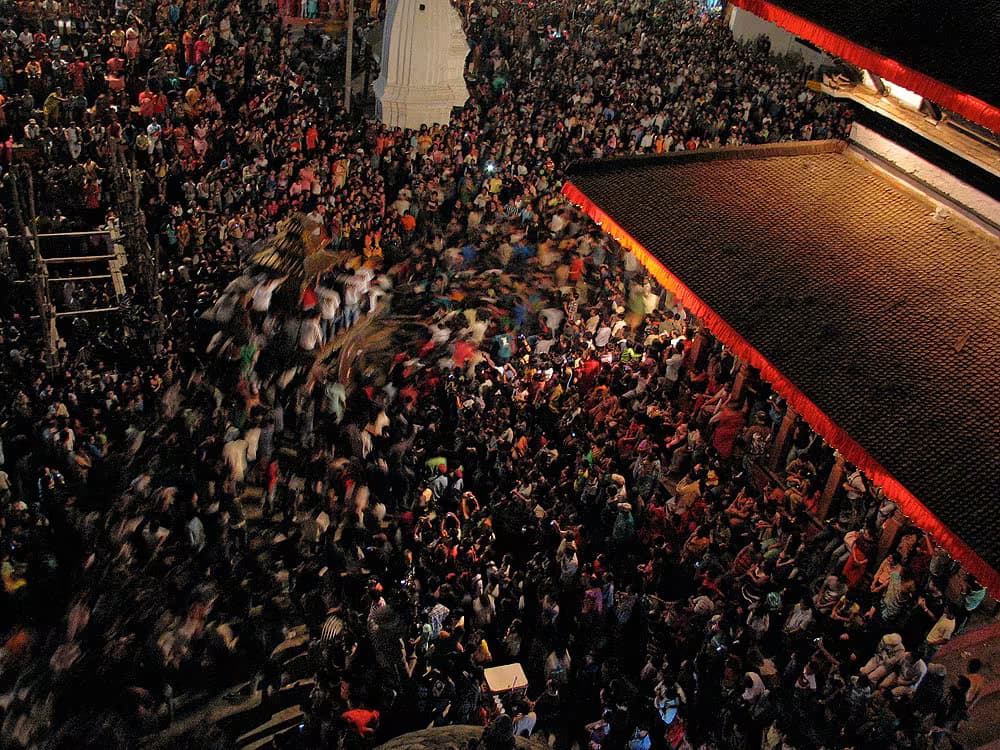
On each of the three chariot days — Kwaneya, Thaneya, and Nanicha — hundreds of devotees haul the Kumari's chariot through the old city using thick rope. The pulling is an act of devotion: to grasp the rope and add one's weight to the procession is to participate directly in the goddess's blessing.
At certain points — most famously the narrow Chikan Mugal lane during Kwaneya — the chariot scrapes building walls on both sides, the wheels riding over uneven stone paving at a visible tilt. Crowds press against shopfronts and lean from windows above. The creaking of the wooden joints, the dhime drums, and the chanting of devotees blend into a dense sensory experience unlike any other in South Asia.
Symbolism
The chariot's three storeys are associated, in Newar tantric cosmology, with the three worlds: the underworld, the human realm, and the celestial realm. Kumari's descent from Kumari Ghar into the chariot marks a temporary extension of divine presence into the city — a mobile temple that brings the goddess to every tole she passes through.
Related
Connected places and entries worth pairing
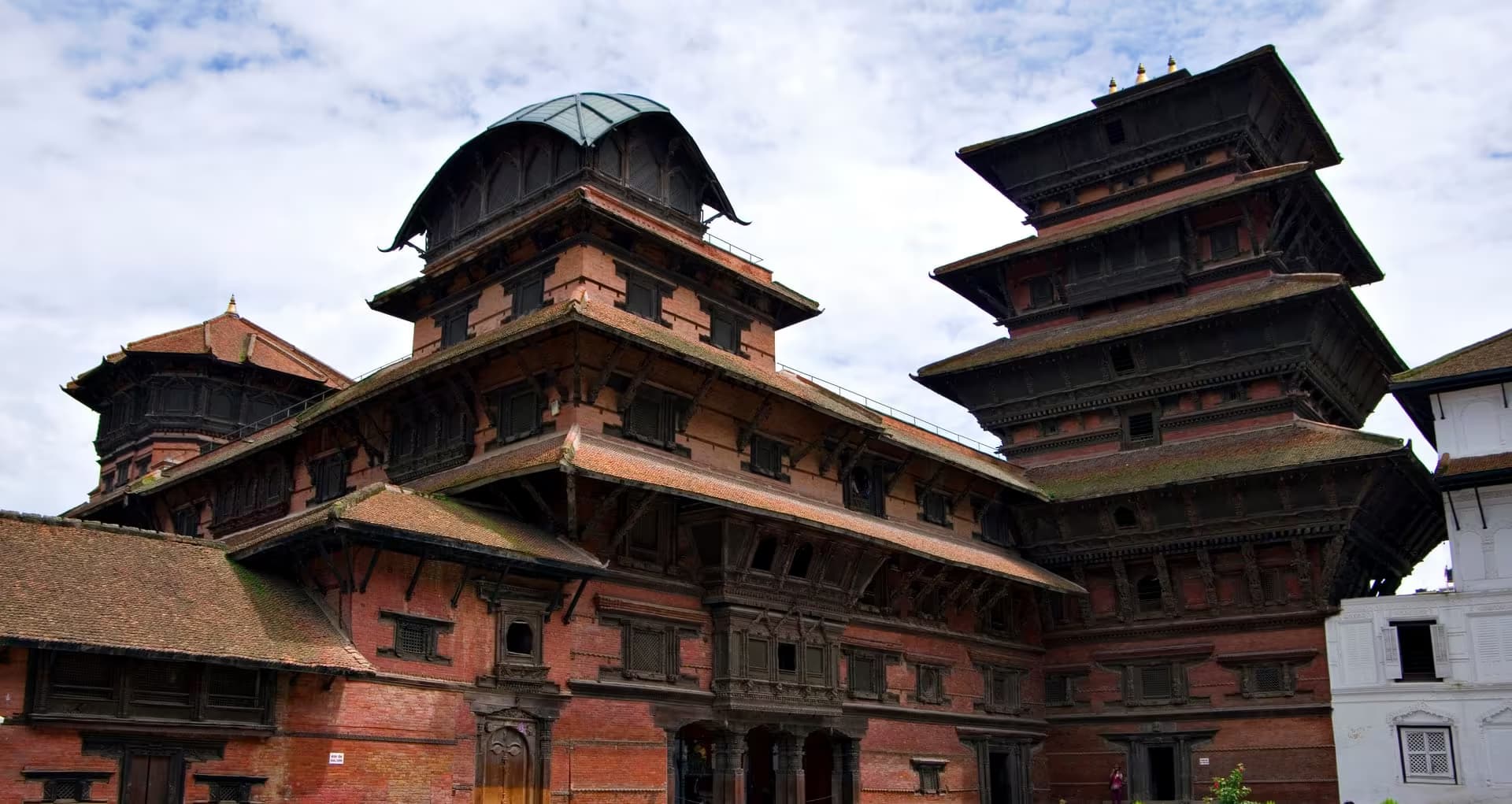
Kathmandu Durbar Square
The eight-day street festival centres on the square and the lanes around Hanuman Dhoka
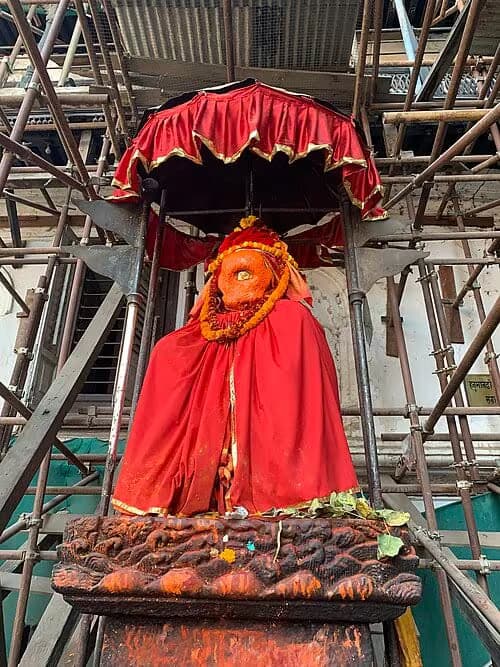
Hanuman Statue (Hanuman Dhoka)
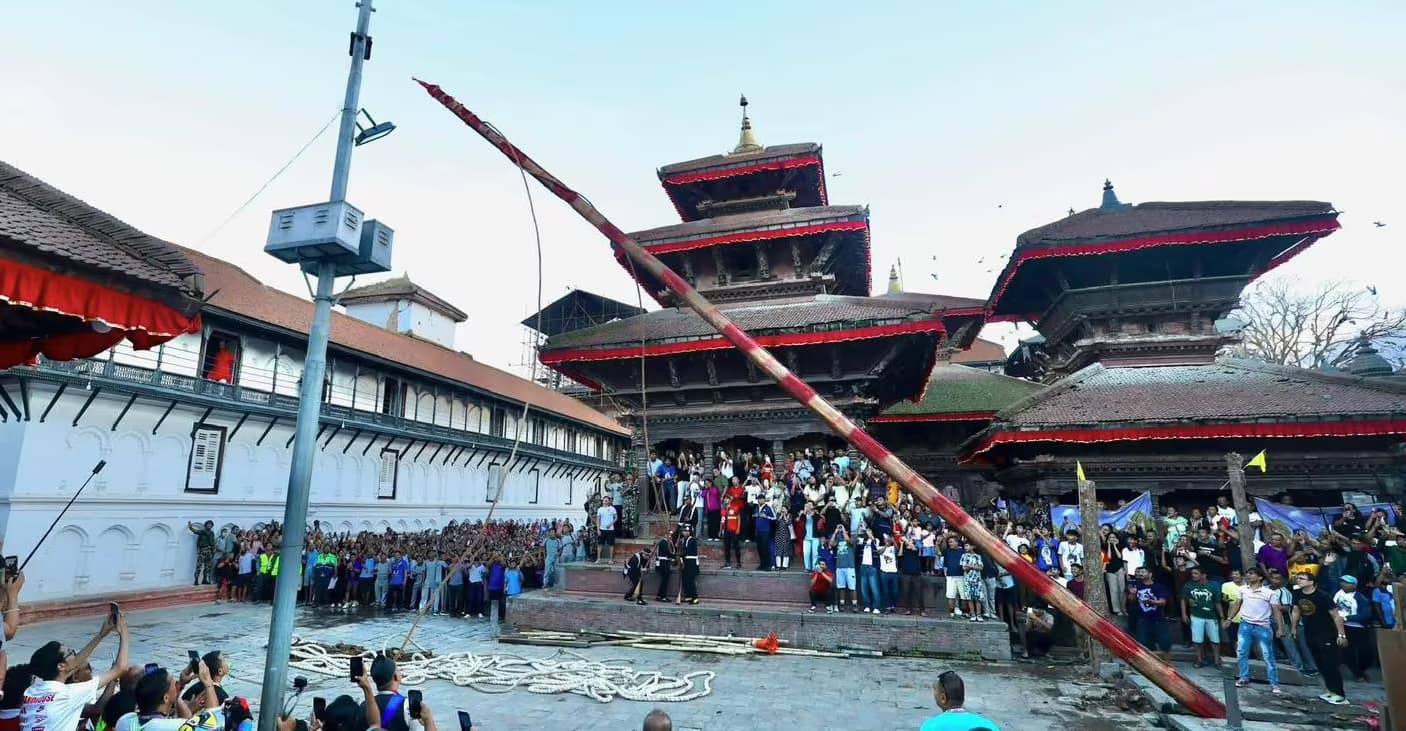
The old royal palace entrance, where the Yosin pole rituals happen
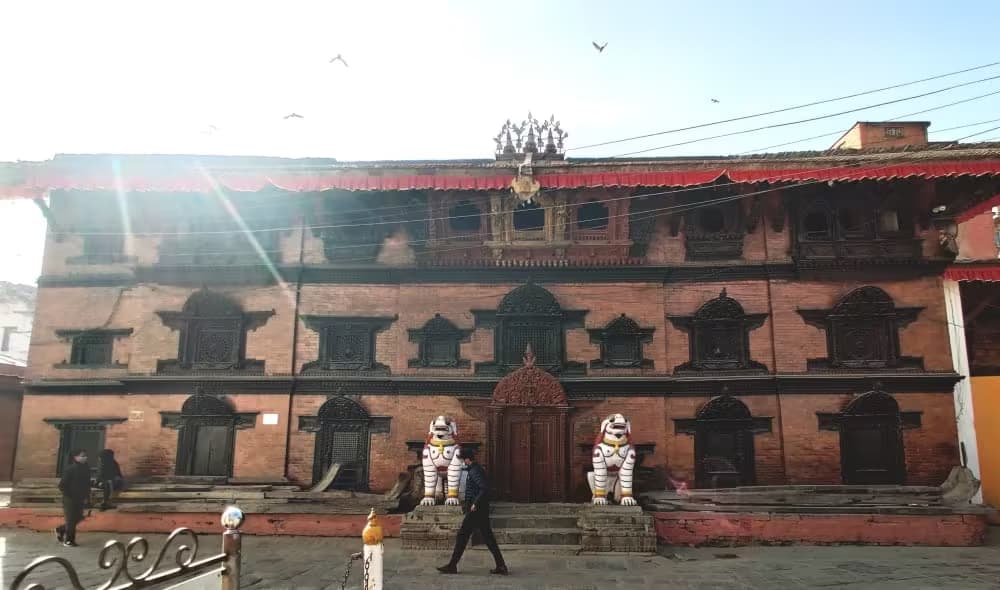
Kumari Ghar
The Kumari's residence, a few steps from where her chariot waits
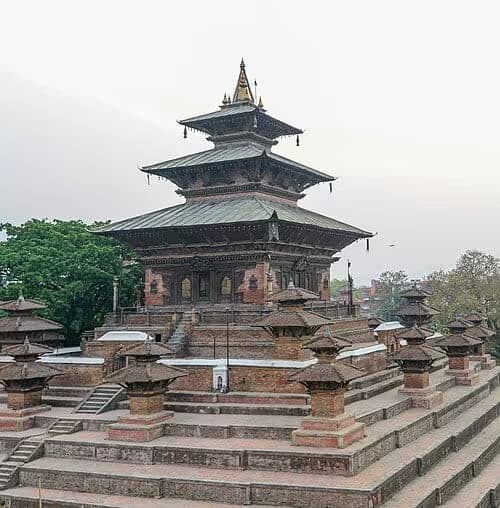
Taleju Temple
The Malla kings' tutelary goddess, whose main gate the Thaneya route passes at Makhan Tole
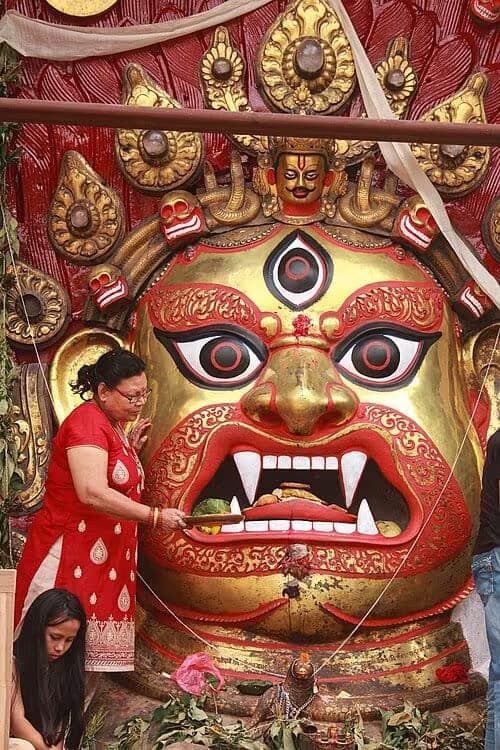
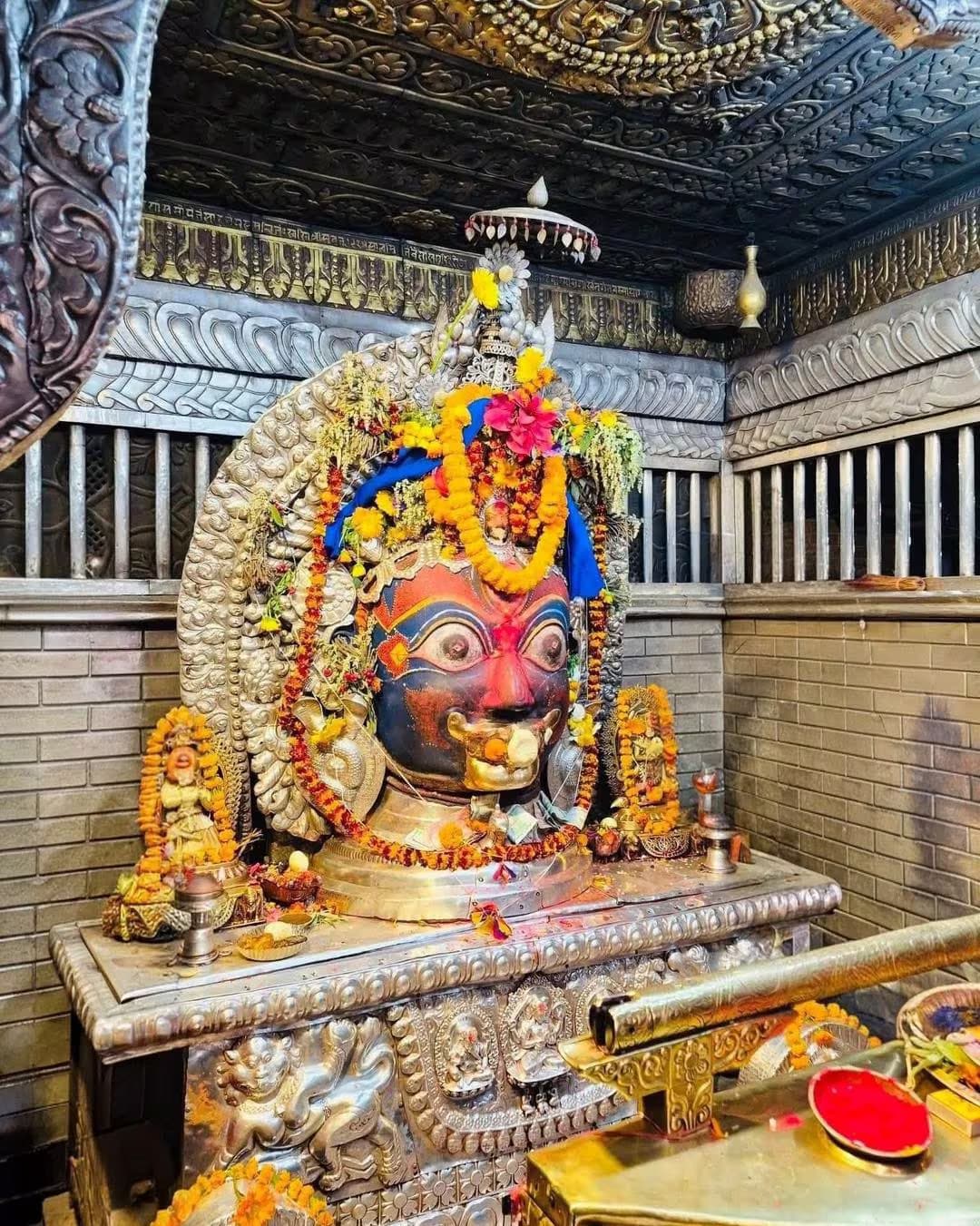
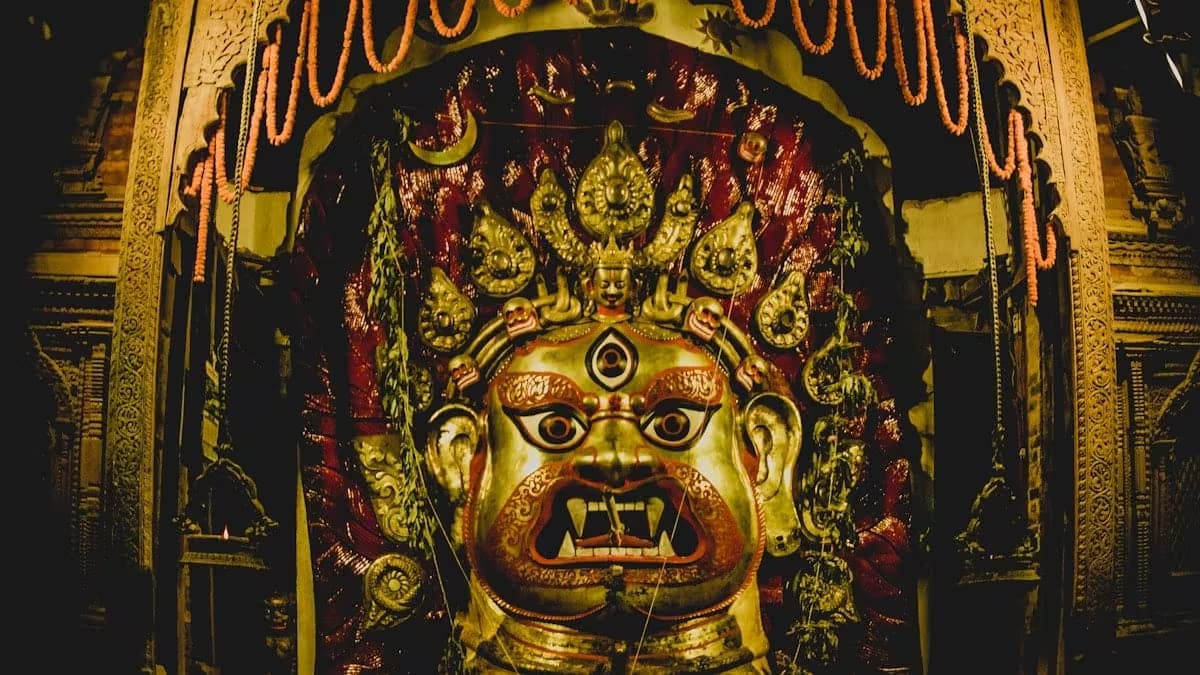
Swet Bhairav
The gilded screen at Makhan Tole, opened for only these eight days of the year
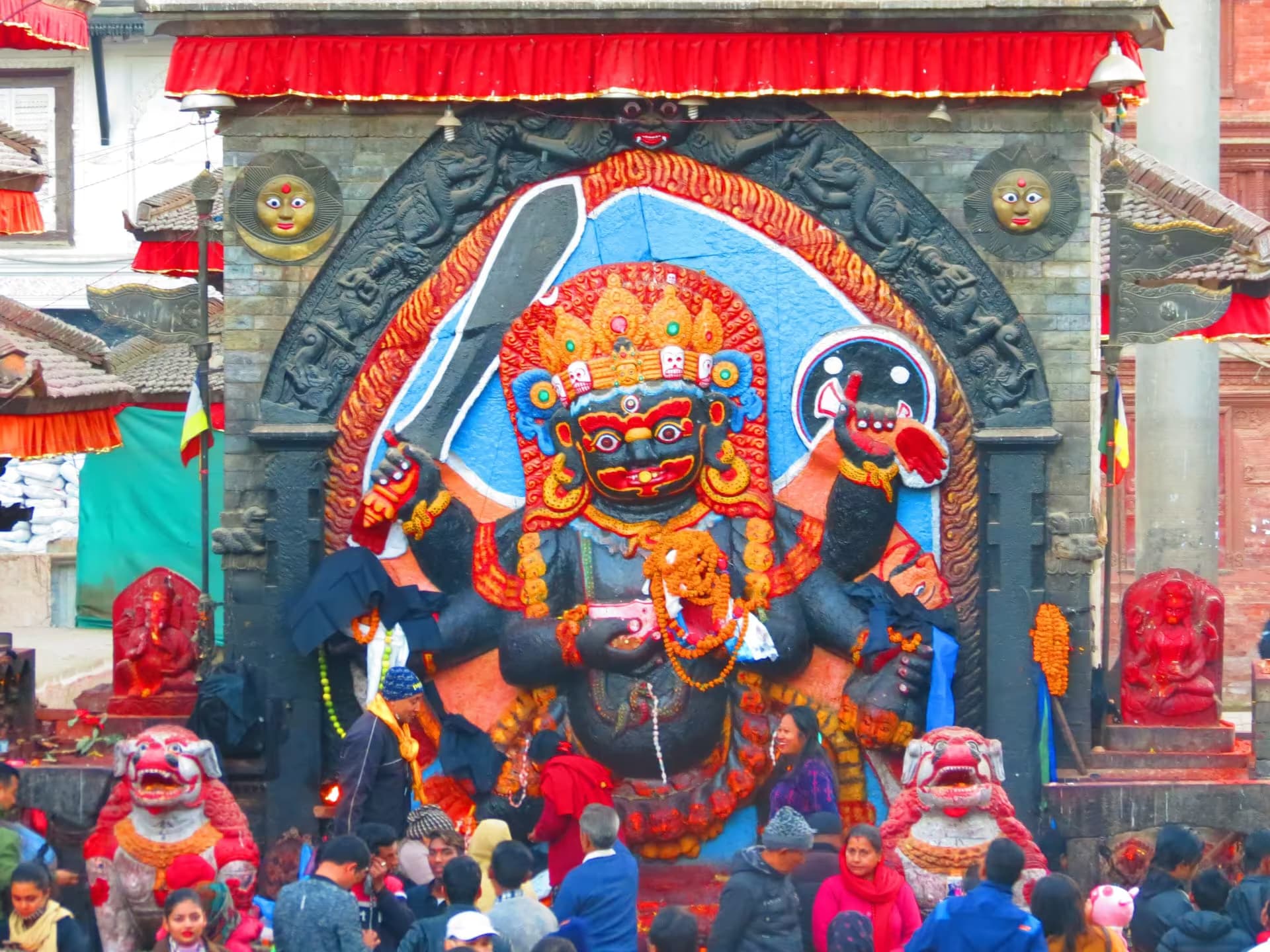
Kal Bhairav
The great stone Bhairav on the square, drawing worship through the festival week
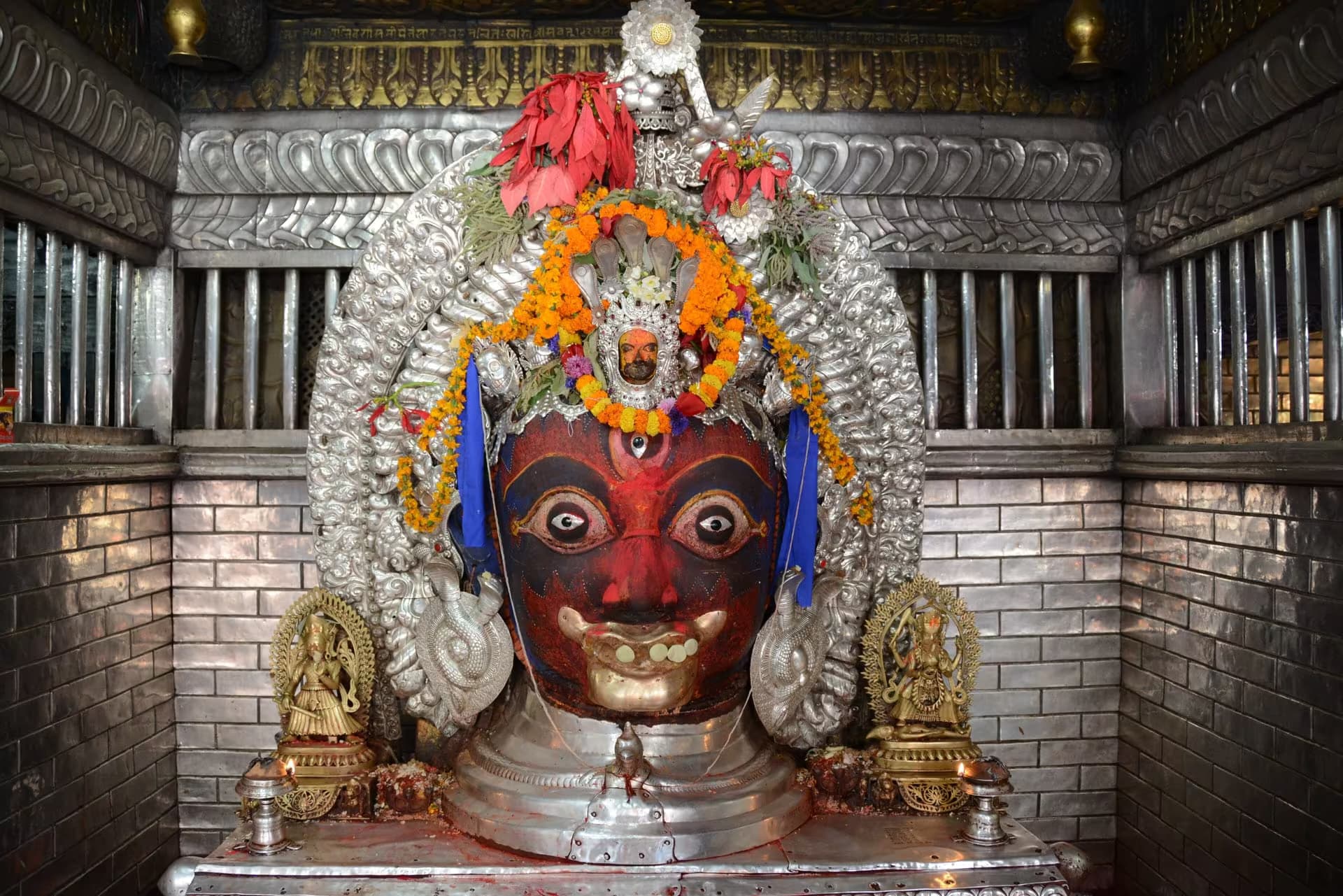
Akash Bhairav Temple
At Indra Chowk on the Thaneya route, where the silver head is brought down to street level
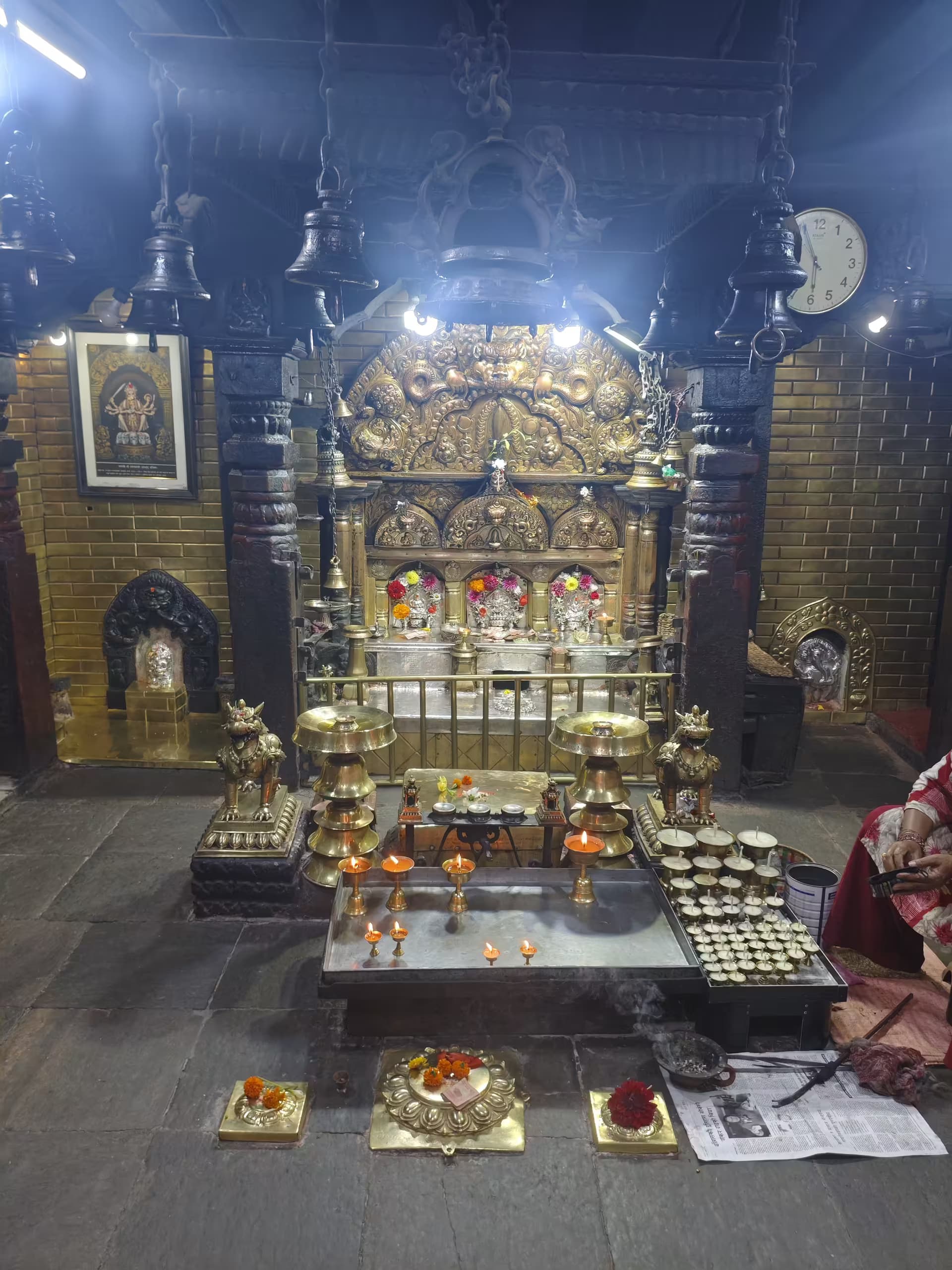
Naradevi Temple
On the inner-lane return leg of the Kwaneya route
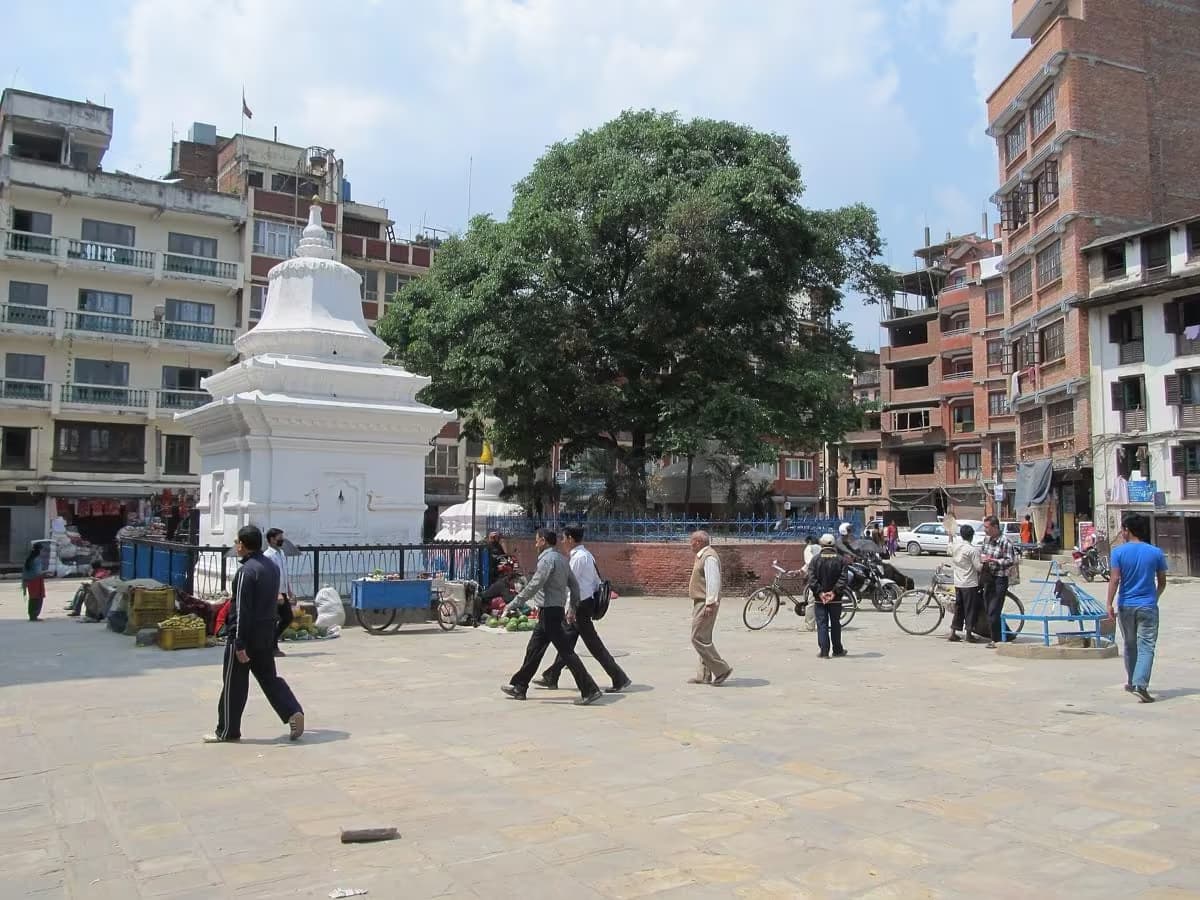
Lagan Bahal (Kirtipunya Mahavihar)
In Lagan Tole, one of the oldest quarters the long southern route threads through
Deities & Presences
Dances
Rituals & Ceremonies
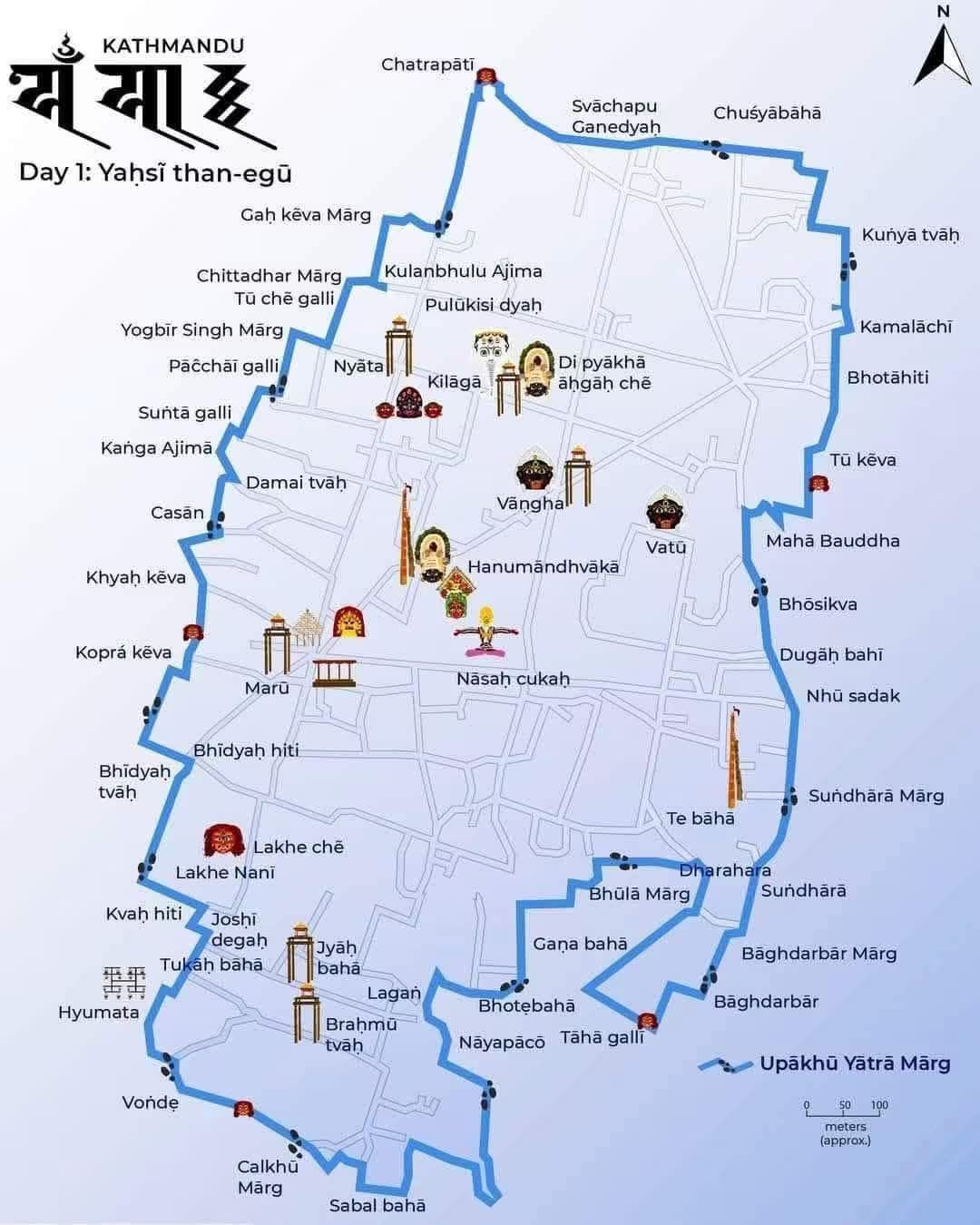
Procession Routes
Part of Indra Jatra