The Most Political Ritual in Kathmandu
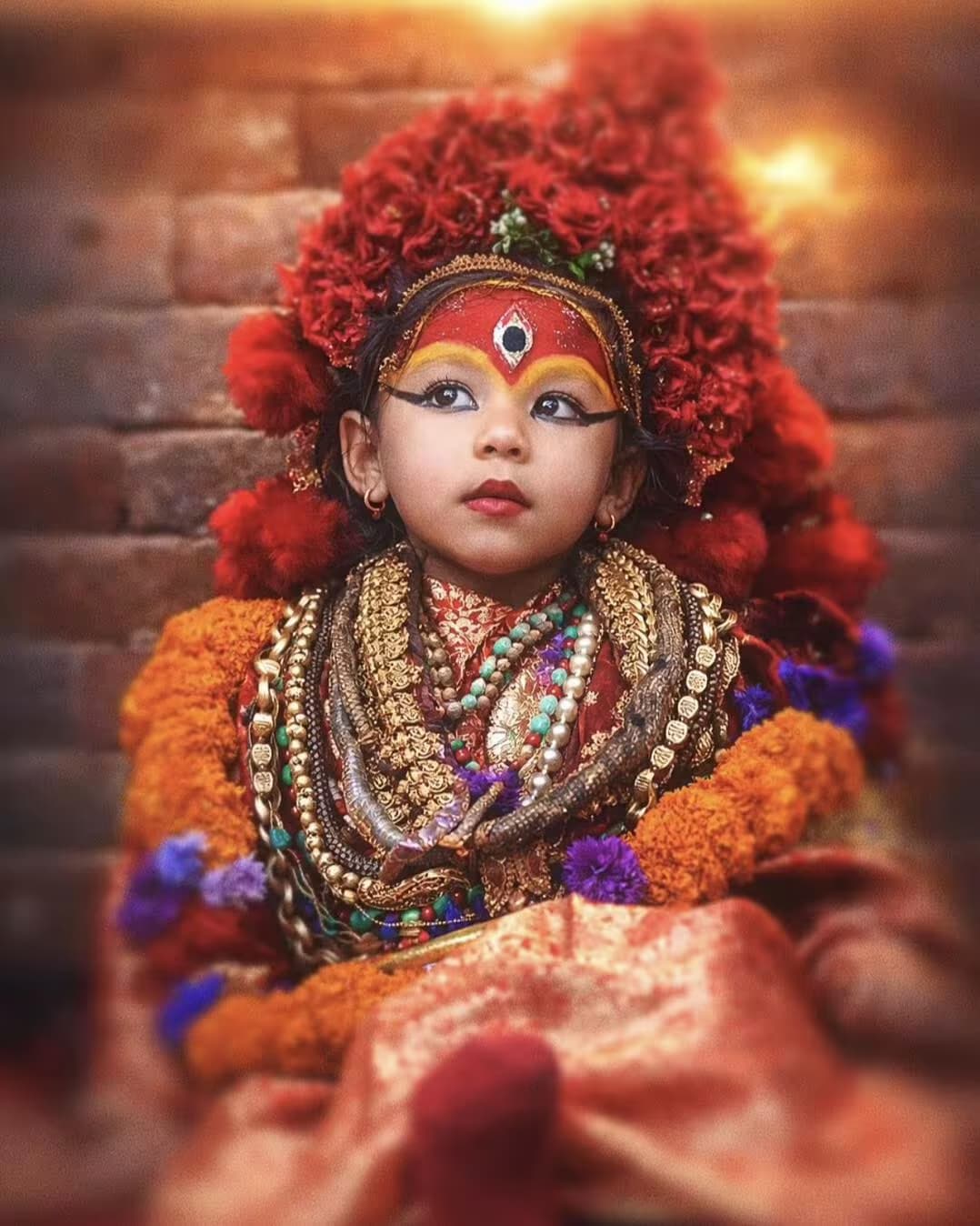
At its heart, Indra Jatra is not a civic event but a tantric-cosmological one. Yet for centuries it has been inseparable from political power. The tika ceremony — in which the Kumari places a red vermillion mark on the forehead of Nepal's ruler — is the moment where divine authority and temporal authority meet, and where each depends on the other for legitimacy.
Historical Significance
The ceremony's origins lie in the Malla period (roughly 12th–18th centuries), when the kings of Kathmandu, Lalitpur, and Bhaktapur competed for the Kumari's blessing as proof of their divine mandate. The story most often told is that of Prithvi Narayan Shah, the Gorkha king who unified Nepal in the 18th century: having displaced the Malla king during Indra Jatra, he received the Kumari's tika — in some accounts she mistakenly gave it to him, in others she withheld it — and the ambiguity of the moment became part of the dynasty's founding mythology.
For the Shah kings who ruled until 2008, the Kumari's annual tika at Basantapur was a ritual of re-legitimisation: the living goddess renewing the king's mandate for another year. The tika was understood not as a personal blessing but as a constitutional act.
After the Republic
When Nepal became a republic in 2008 and the monarchy was abolished, the question of who would receive Kumari's tika became politically fraught. The solution arrived at was pragmatic: the President of Nepal — as the country's new head of state — took the ritual's place. The Kumari's tika now goes to the President rather than the king.
The ceremony proceeds at Basantapur on the first evening of the festival, in the durbar square in front of Hanuman Dhoka. The President and senior officials arrive; priests prepare the ritual space; Kumari is brought from her chariot or Kumari Ghar to administer the tika. The political significance — the goddess consecrating the republic's authority — is undiminished even as the recipient has changed.
The Ceremony
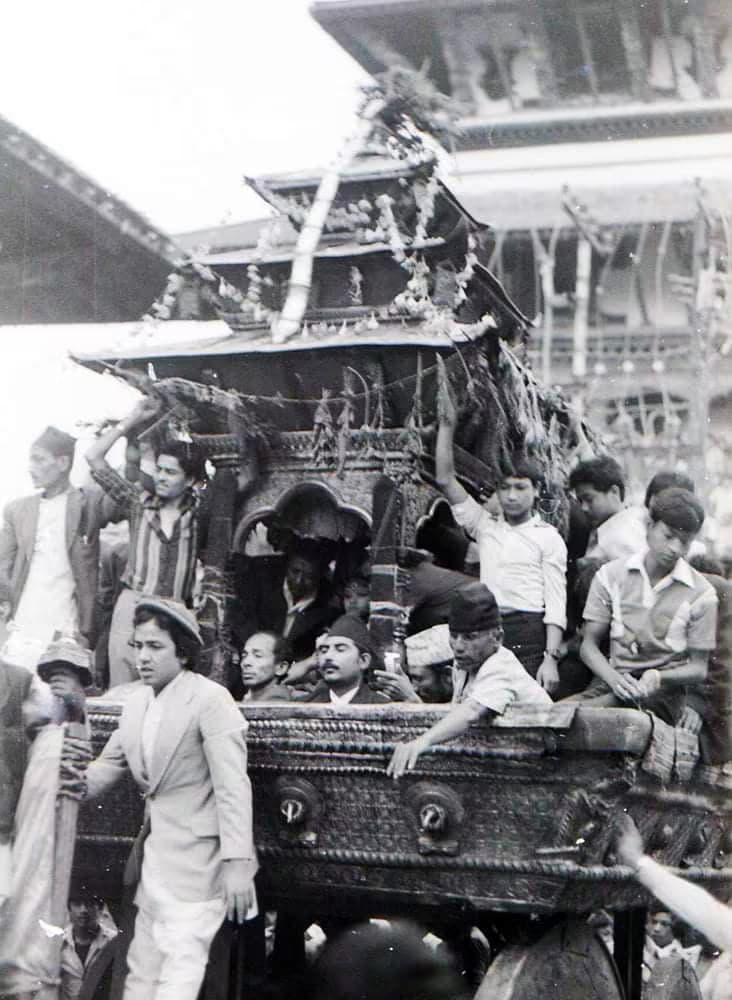
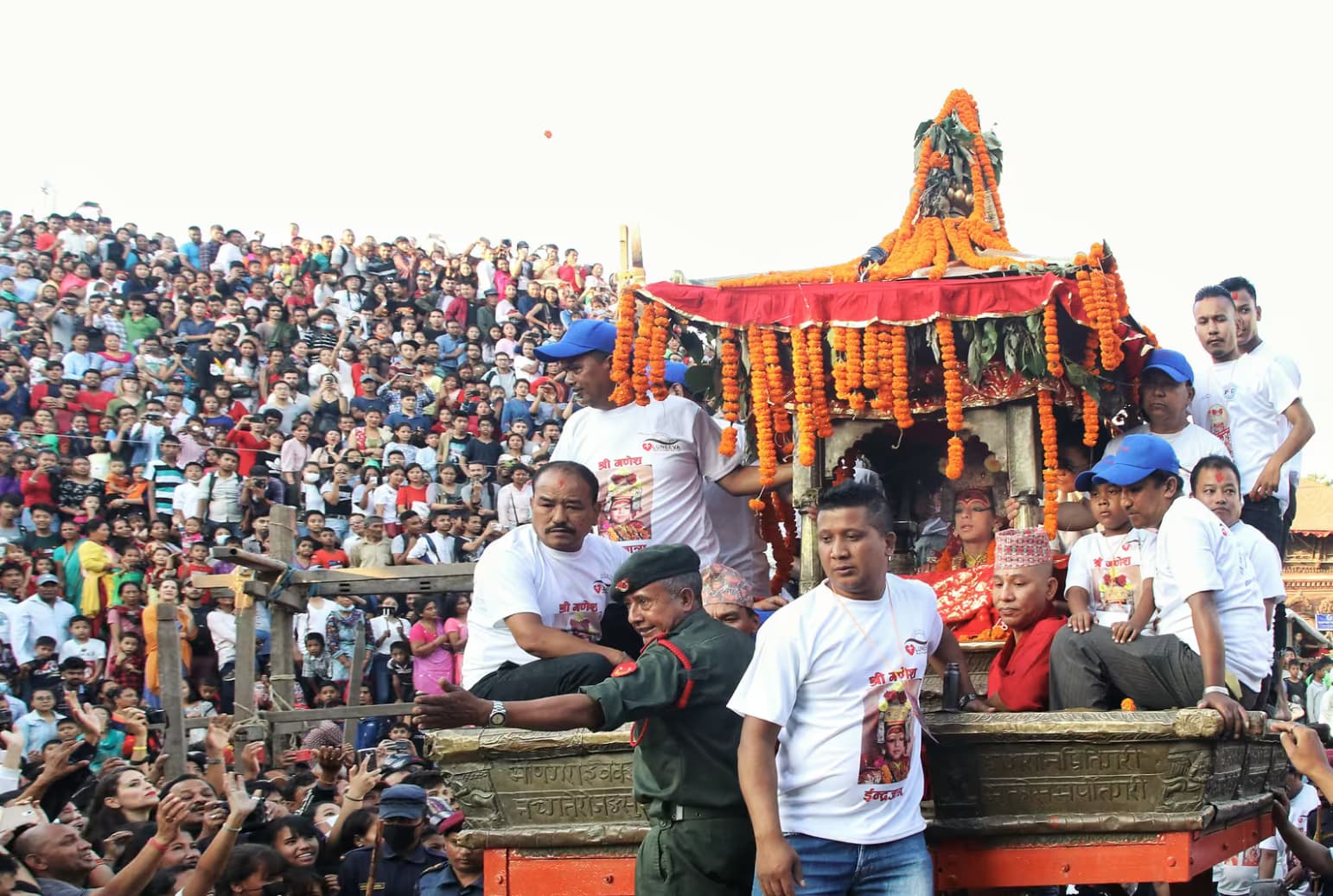
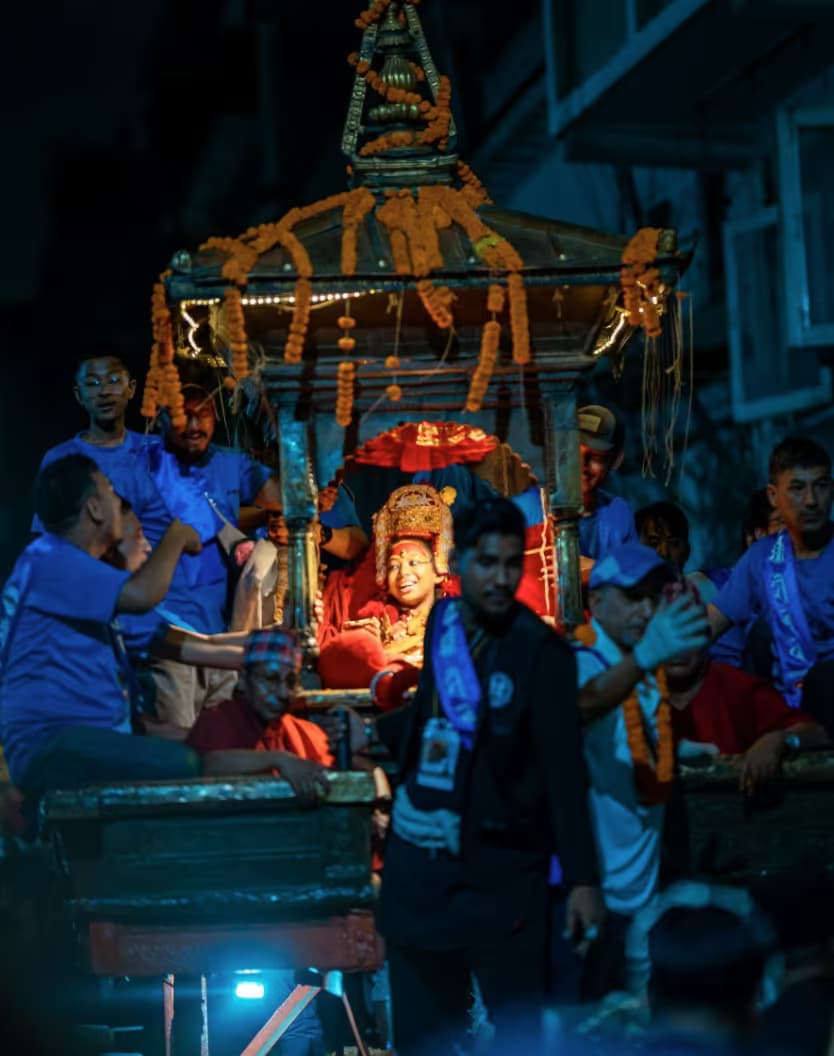
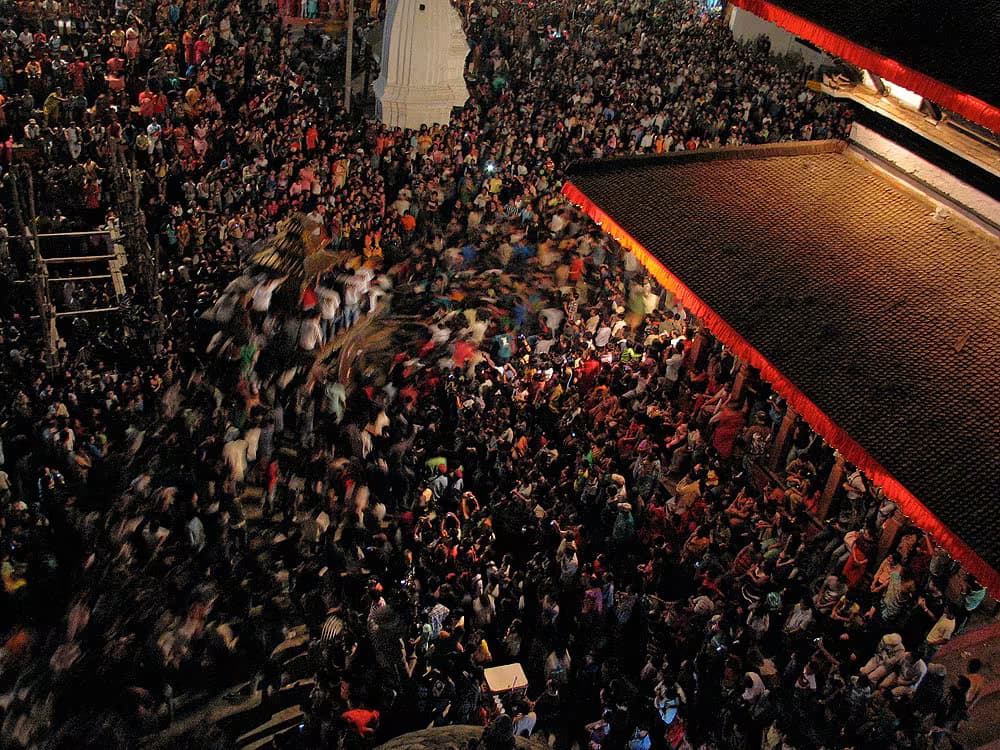
Tika consists of a mixture of vermillion powder (sindur) and rice grains, pressed to the centre of the forehead. From Kumari's hand it carries Taleju's blessing. The moment is brief — a few seconds — but the crowd gathered in Basantapur understands it as the festival's central act. After the tika, the chariot procession begins.
Related Places & Sites
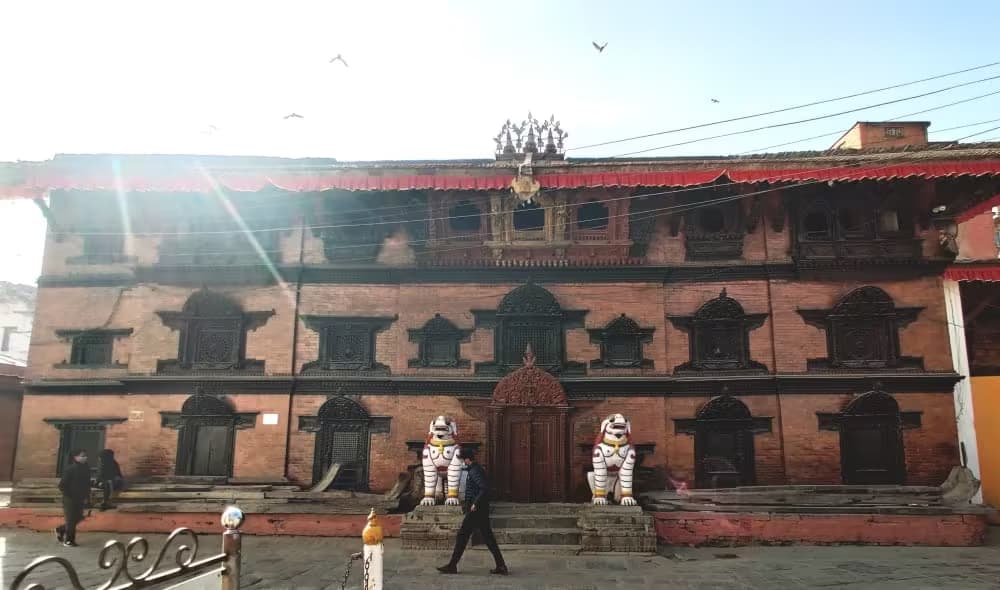
Related
Connected places and entries worth pairing
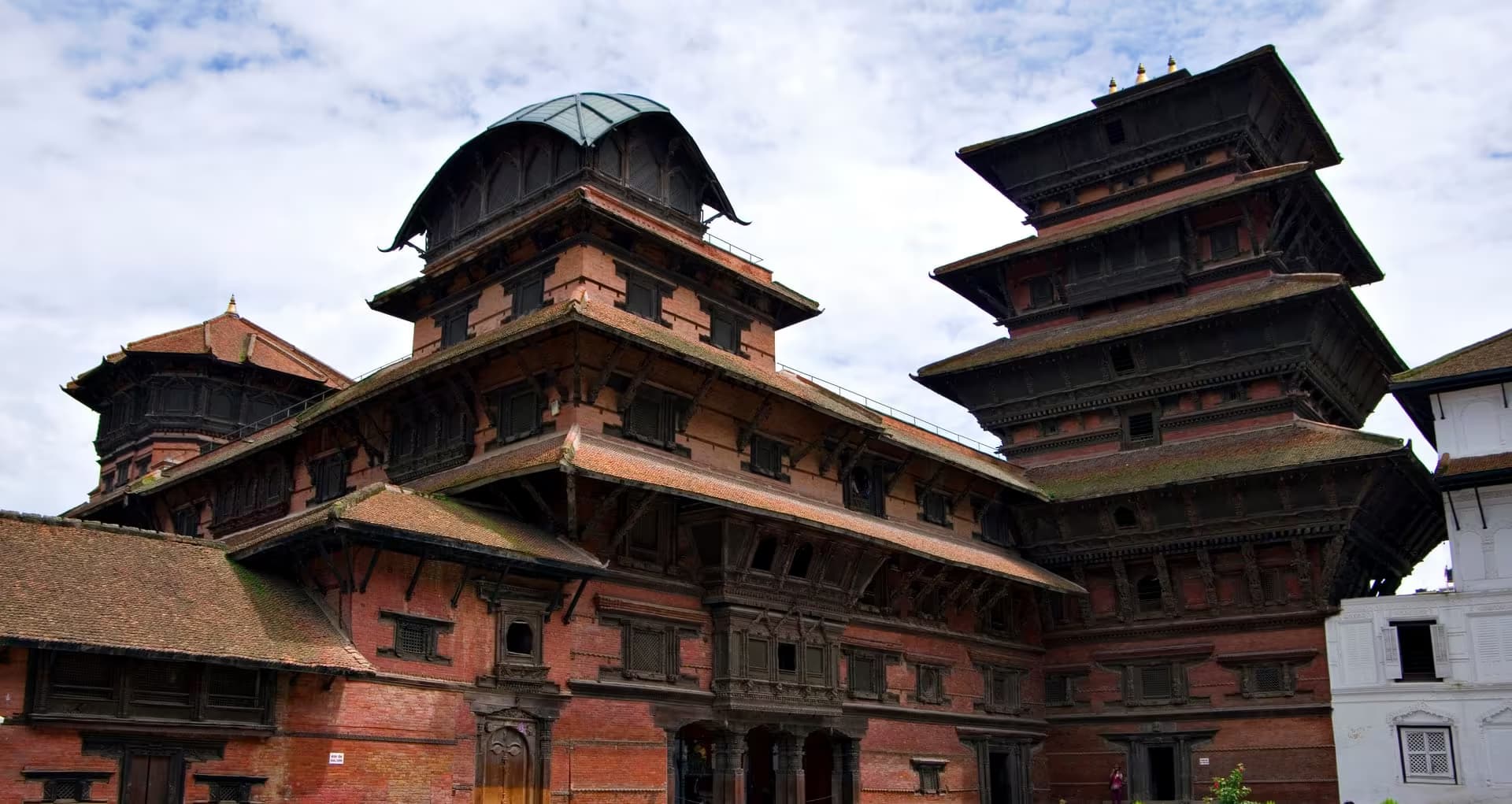
Kathmandu Durbar Square
The eight-day street festival centres on the square and the lanes around Hanuman Dhoka
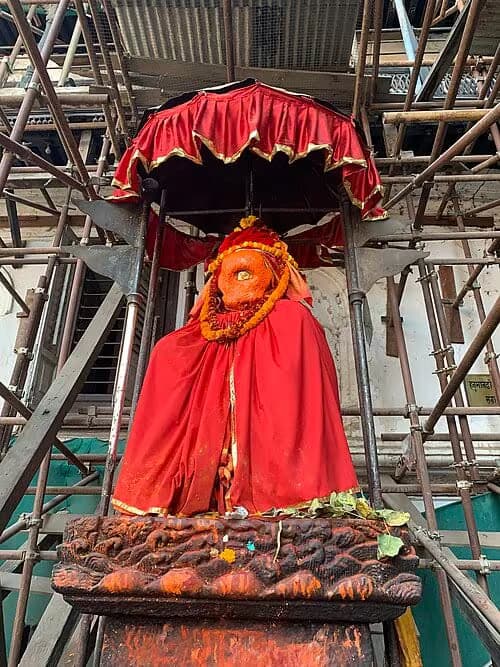
Hanuman Statue (Hanuman Dhoka)
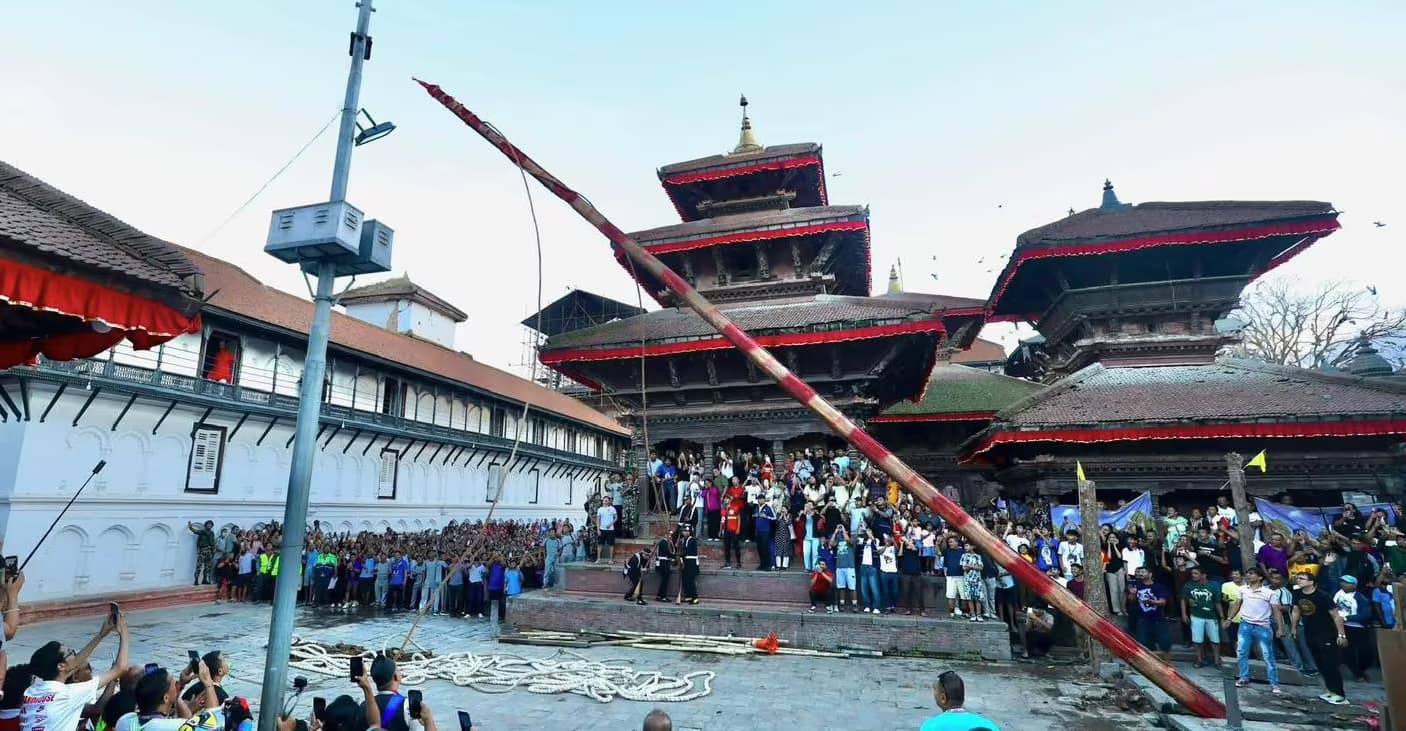
The old royal palace entrance, where the Yosin pole rituals happen
Kumari Ghar
The Kumari's residence, a few steps from where her chariot waits
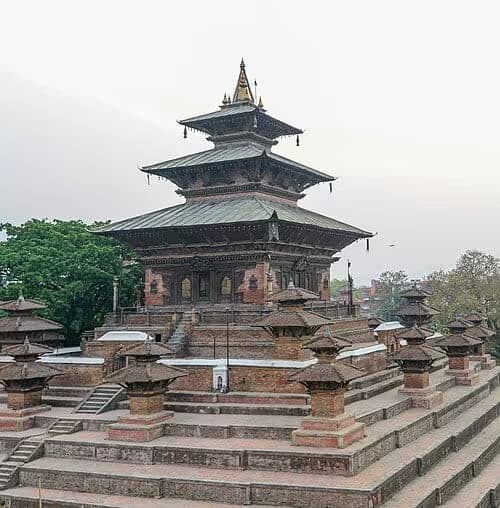
Taleju Temple
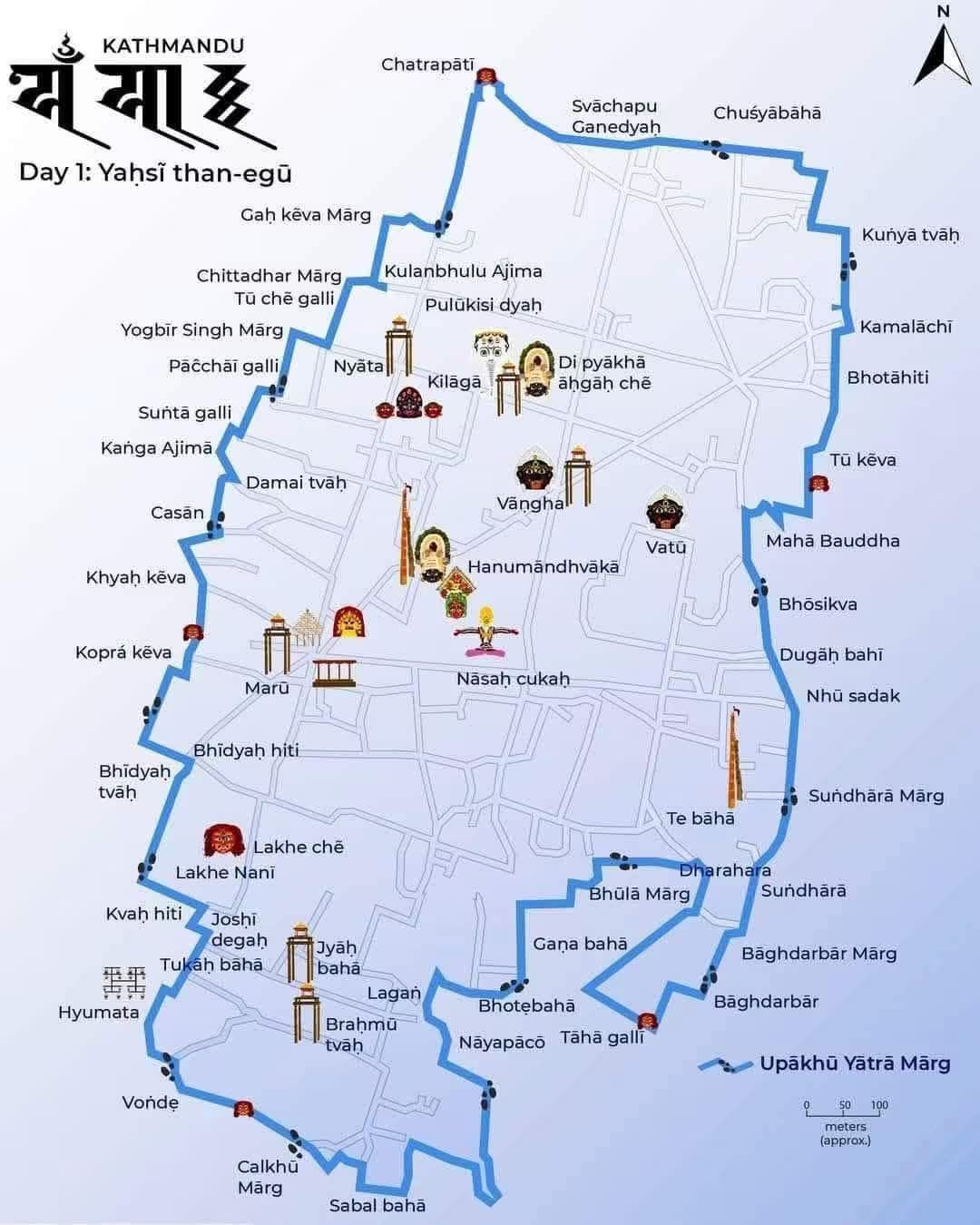
The Malla kings' tutelary goddess, whose main gate the Thaneya route passes at Makhan Tole
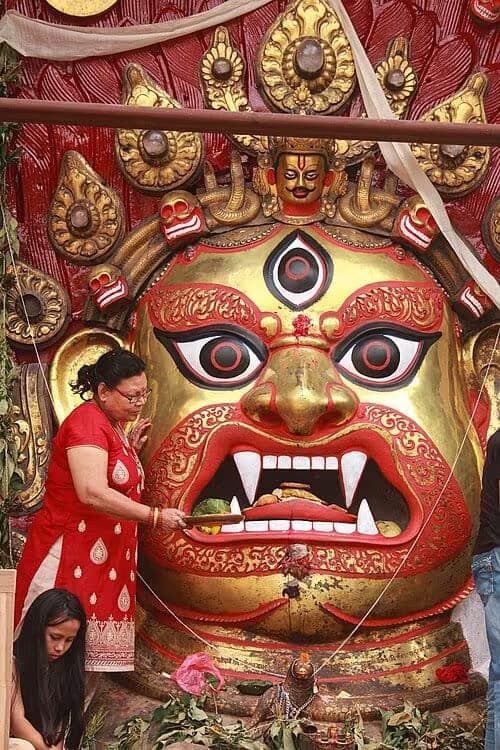
Swet Bhairav
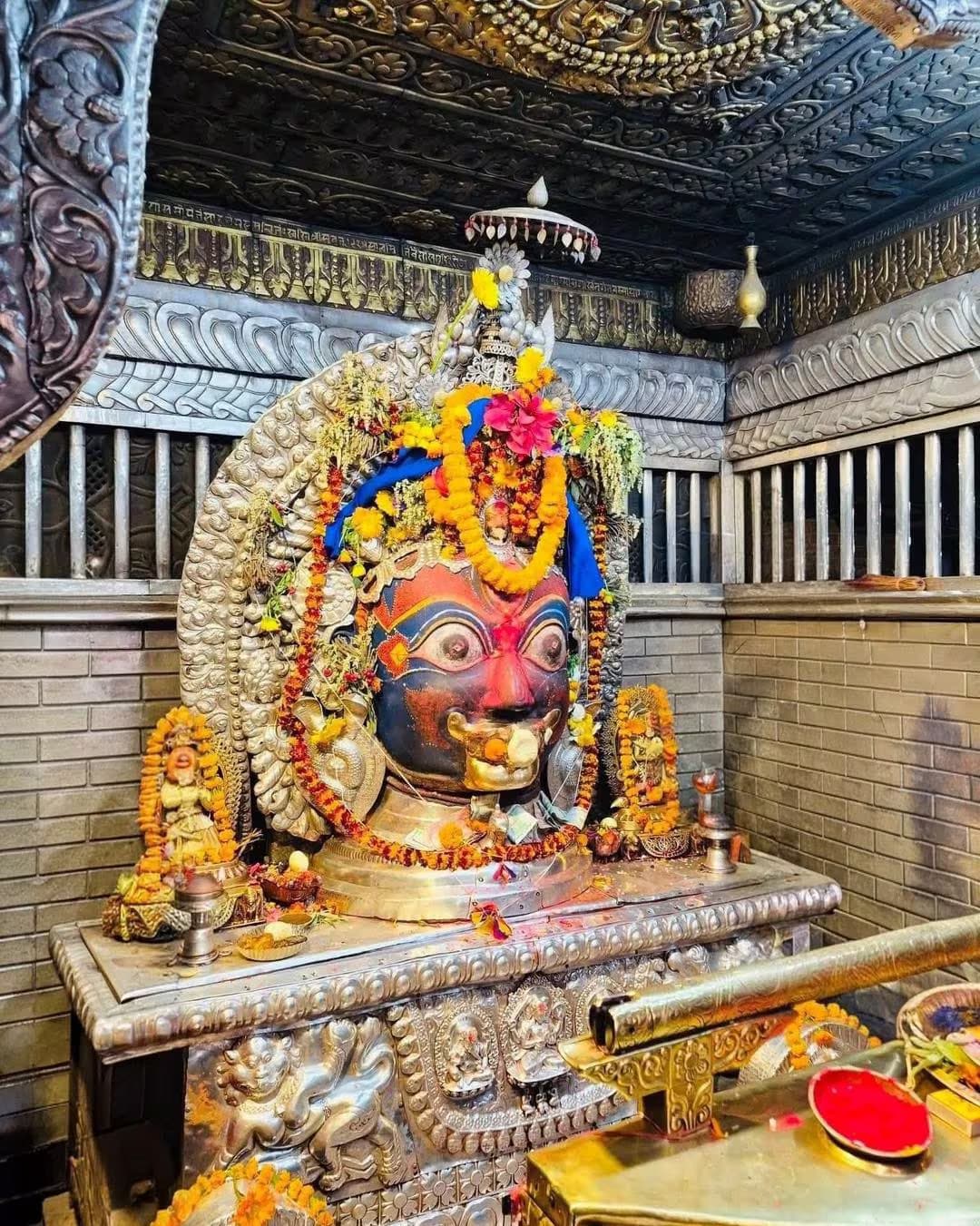
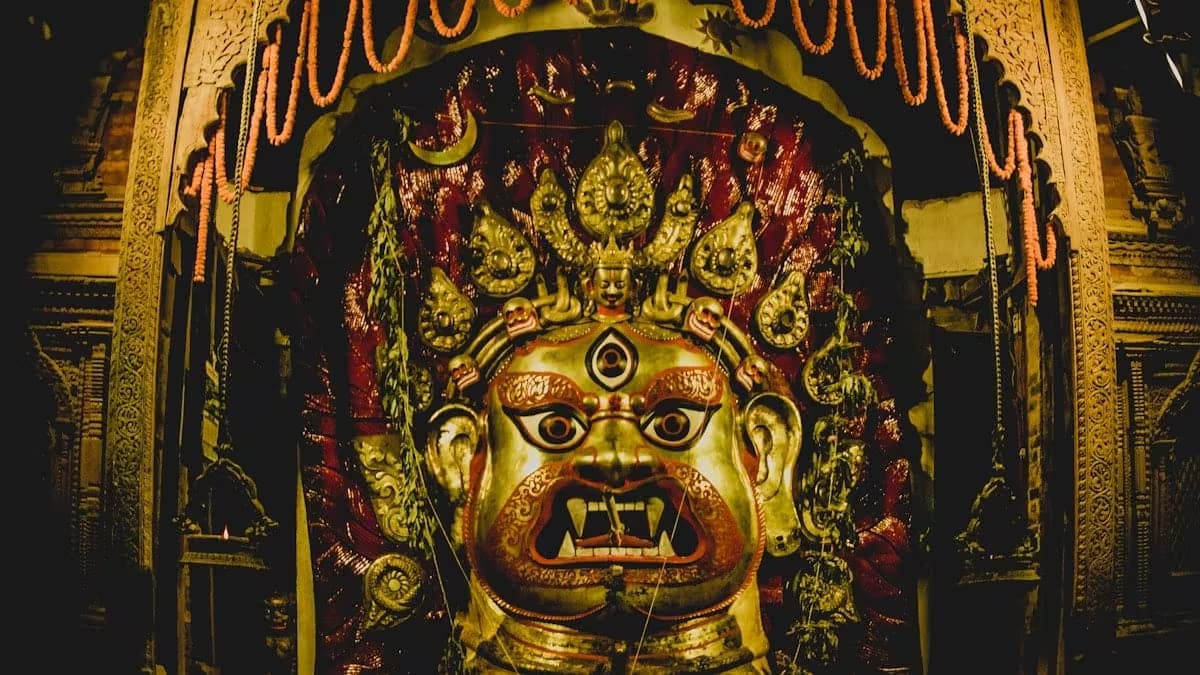
The gilded screen at Makhan Tole, opened for only these eight days of the year
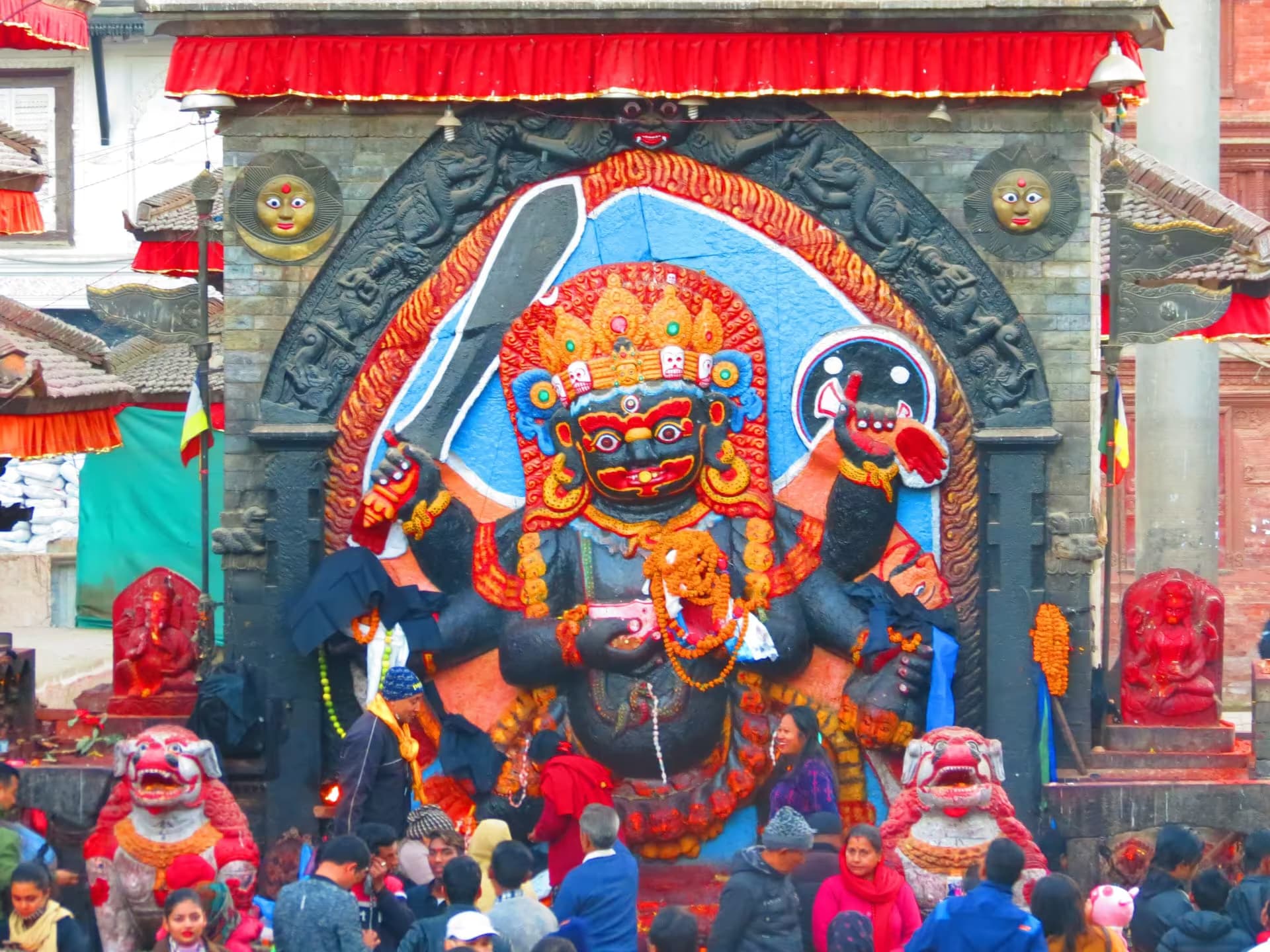
Kal Bhairav
The great stone Bhairav on the square, drawing worship through the festival week
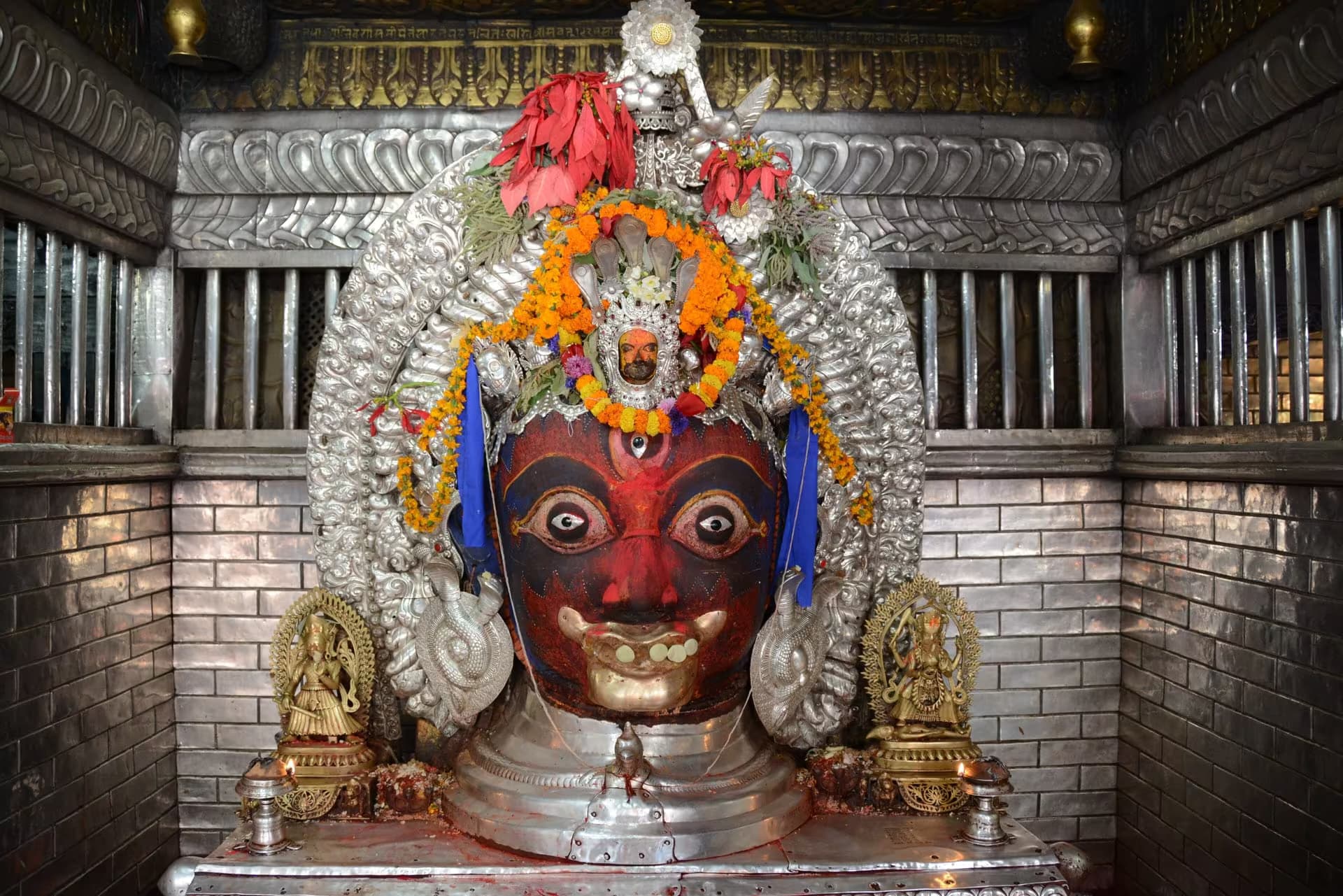
Akash Bhairav Temple
At Indra Chowk on the Thaneya route, where the silver head is brought down to street level
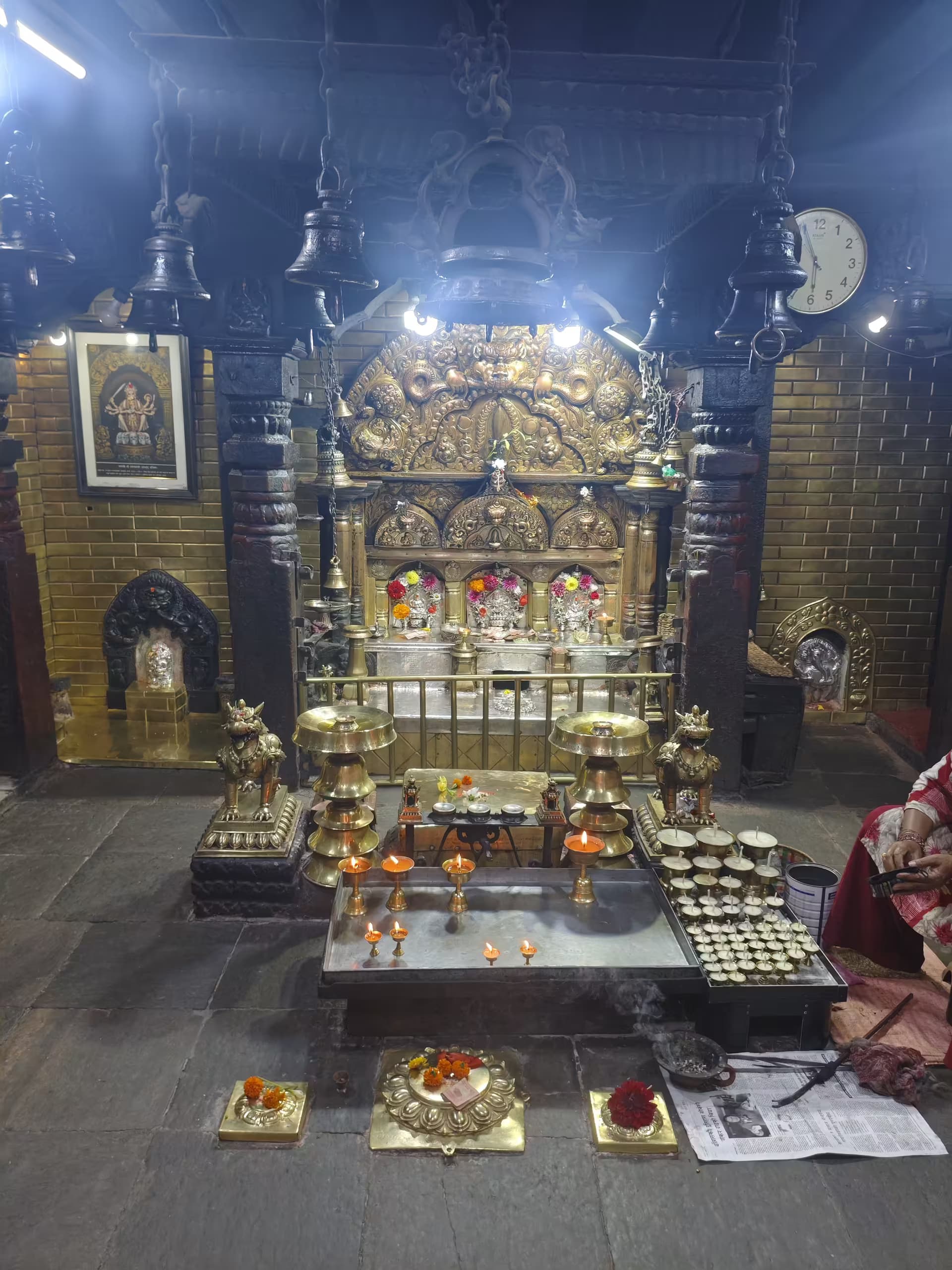
Naradevi Temple
On the inner-lane return leg of the Kwaneya route
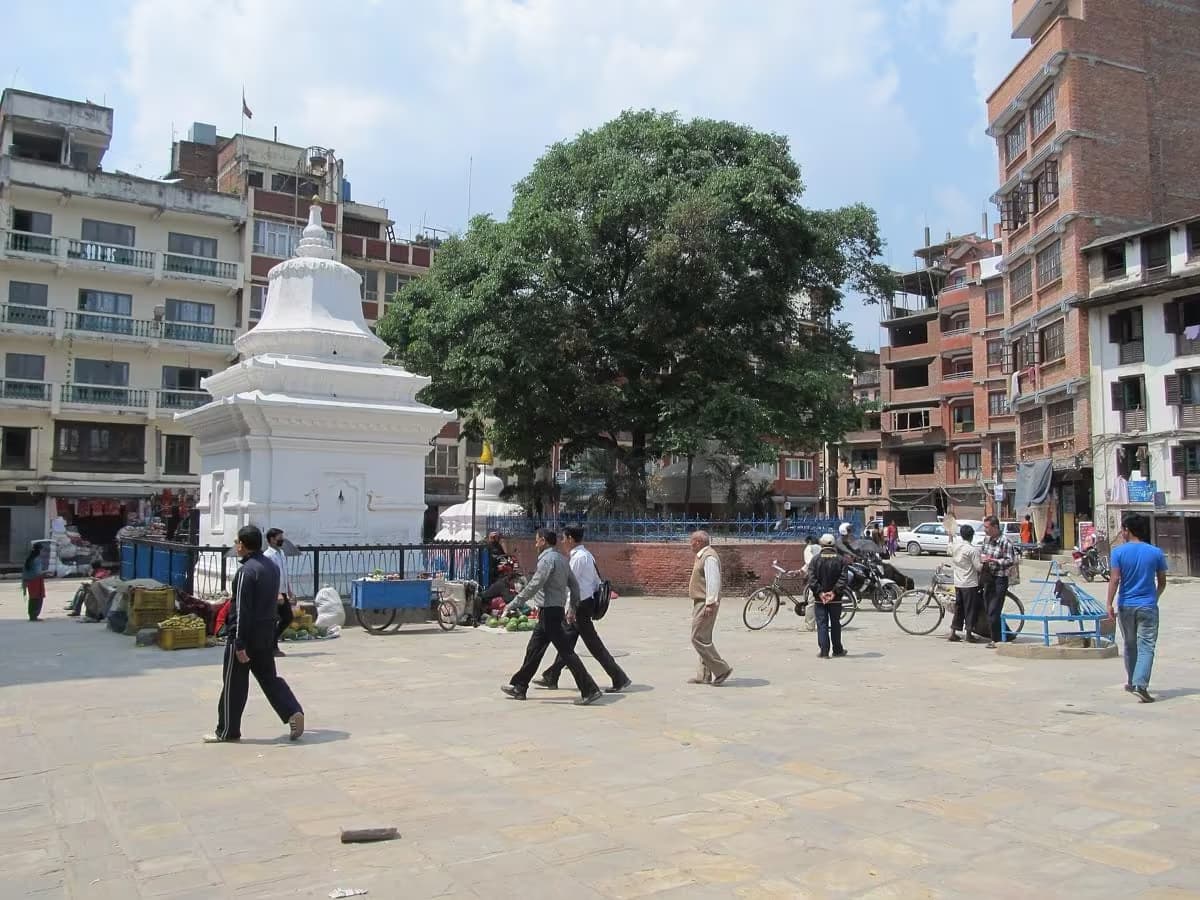
Lagan Bahal (Kirtipunya Mahavihar)
In Lagan Tole, one of the oldest quarters the long southern route threads through
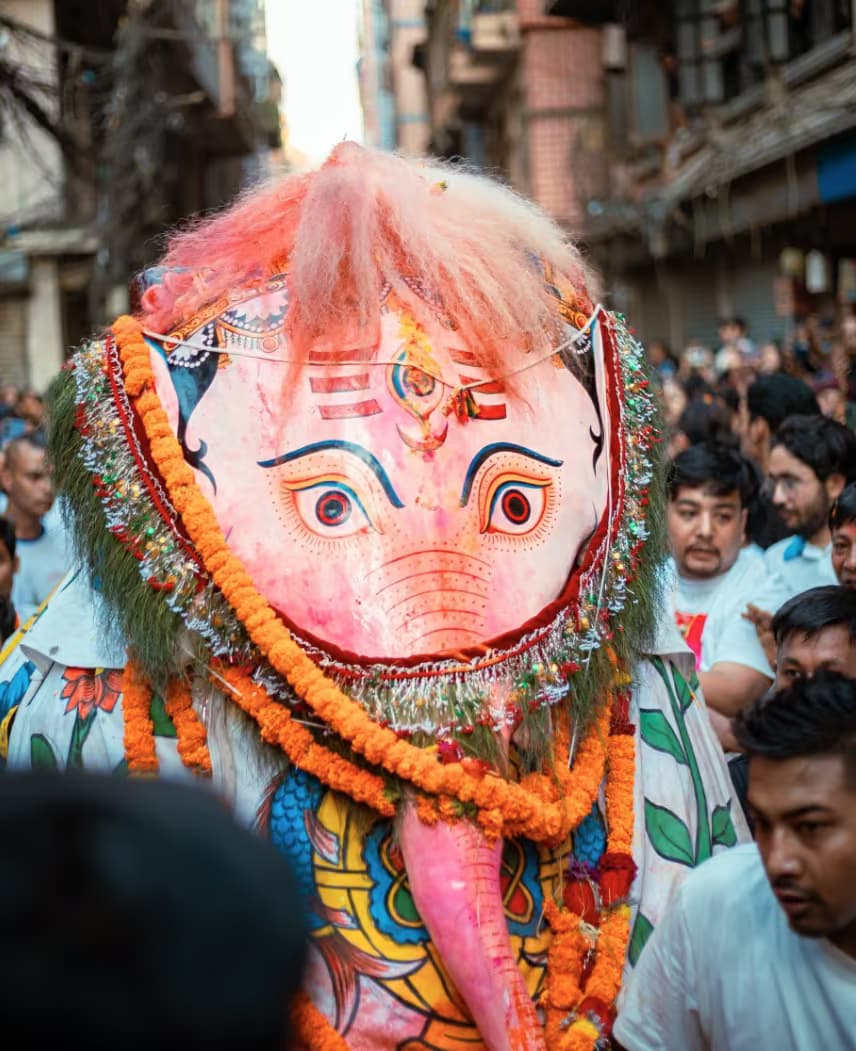
Deities & Presences
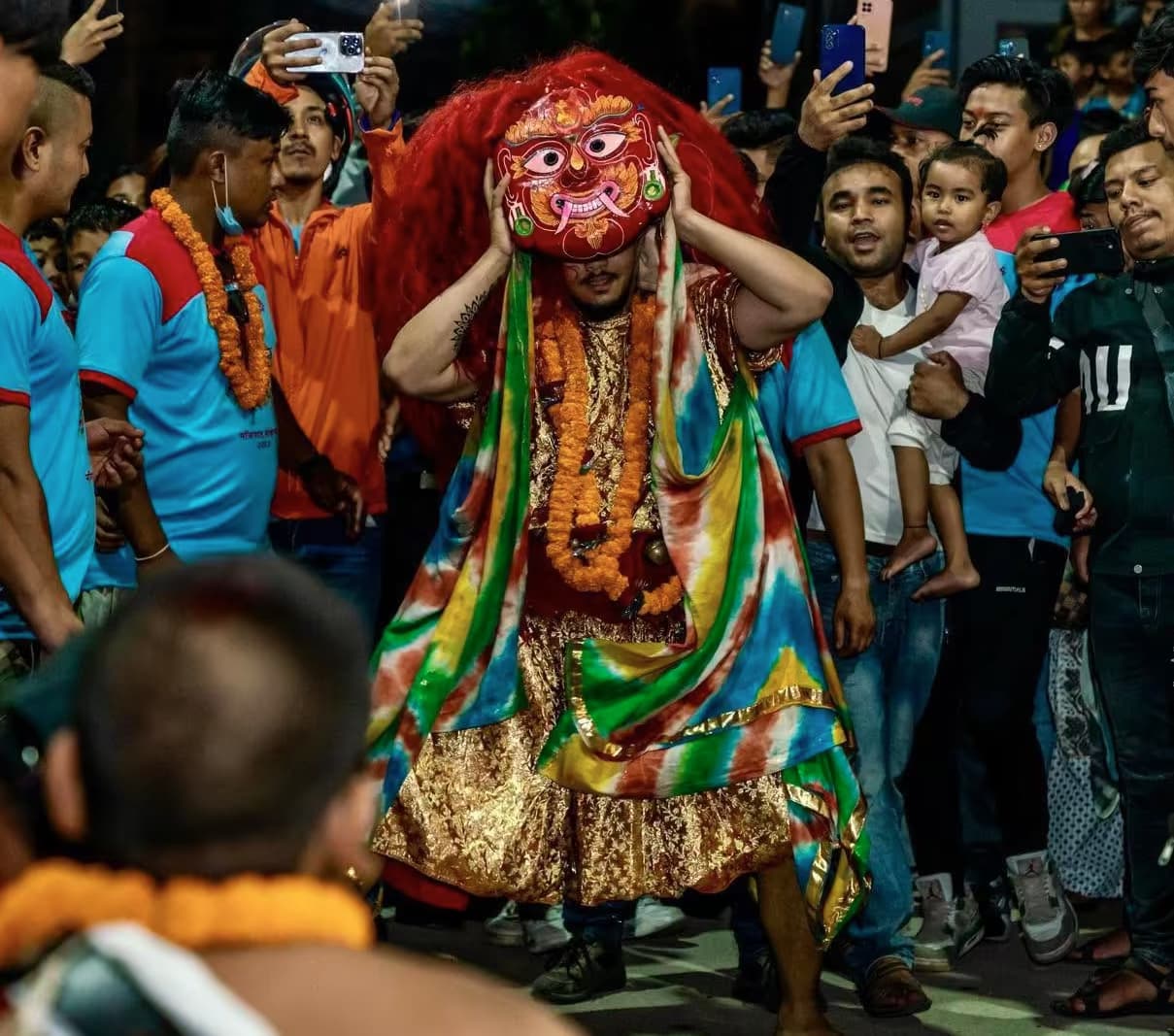
Dances
Rituals & Ceremonies
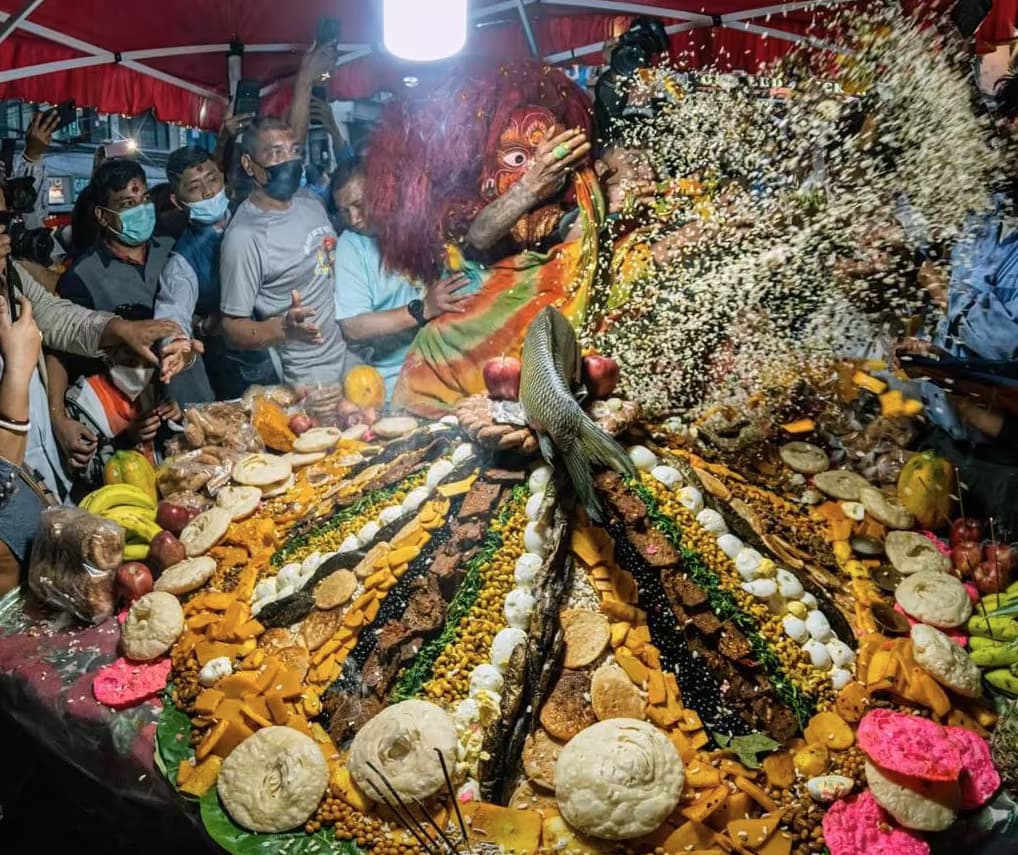
Procession Routes
Part of Indra Jatra