Swet Bhairav
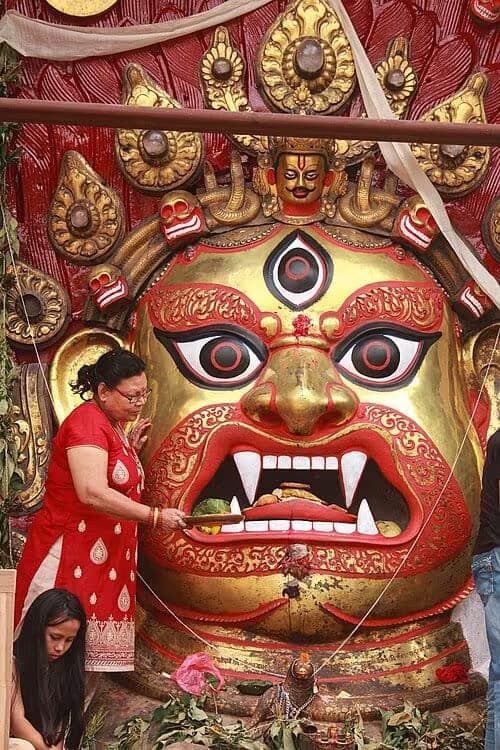
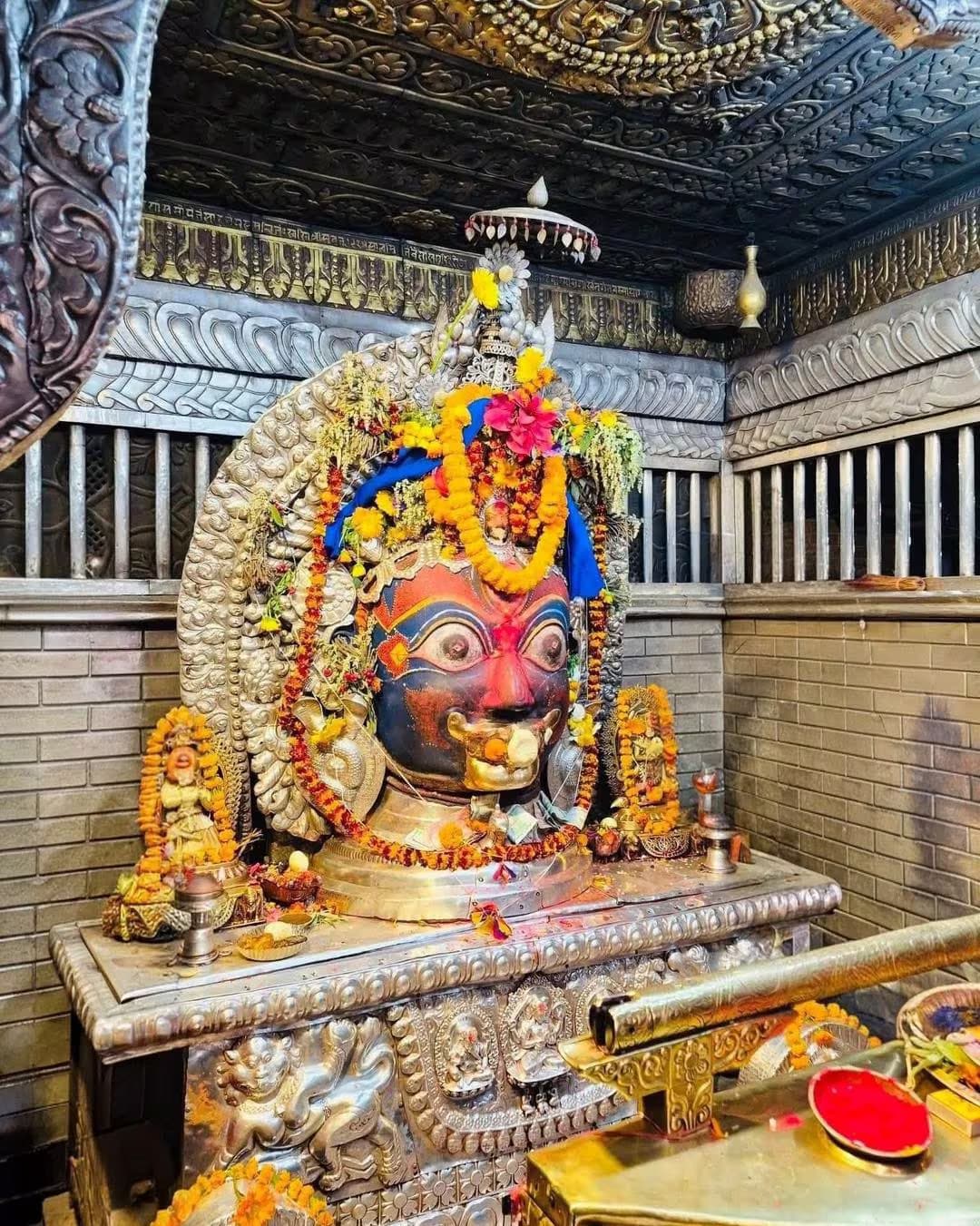
Concealed behind a gilded screen at Makhan Tole for all but eight days a year, Swet Bhairav's great mask is unveiled during Indra Jatra — and through a copper pipe concealed in the mask, sacred rice beer flows from Bhairav's mouth as a tantric blessing for all who catch it.
The Hidden God
At the entrance to Makhan Tole — the lane leading north from Basantapur toward Indra Chowk — a gilded wooden screen faces the street. Behind it sits Swet Bhairav, the white Bhairav: a large mask, perhaps a metre and a half in height, painted white and gold with the typical Bhairav features (bulging eyes, fangs, ornate headdress). For 357 days a year, the screen is closed. The mask is in darkness. Swet Bhairav is present but inaccessible.
For the eight days of Indra Jatra, the screen is pulled open and Swet Bhairav faces the street.
The Mask's History
The mask is attributed by art-historical tradition to the reign of Rana Bahadur Shah, a Shah king who ruled in the late 18th century. (This attribution is found in secondary sources; confirmation against palace archives or the detailed art-historical survey in Slusser 1982 is recommended before stating it as established fact.) If accurate, the mask is roughly 200 years old — a relatively recent creation in a city whose religious imagery goes back over a millennium.
Tantric Prasad: Beer Through the Mask
The most remarkable aspect of Swet Bhairav's festival appearance is the prasad distribution. A copper pipe runs from a hidden reservoir behind the mask through Bhairav's open mouth. During Indra Jatra, rice beer — aila in Nepal Bhasa, a locally distilled spirit central to Newar ritual and social life — flows through the pipe and pours from the mask's mouth.
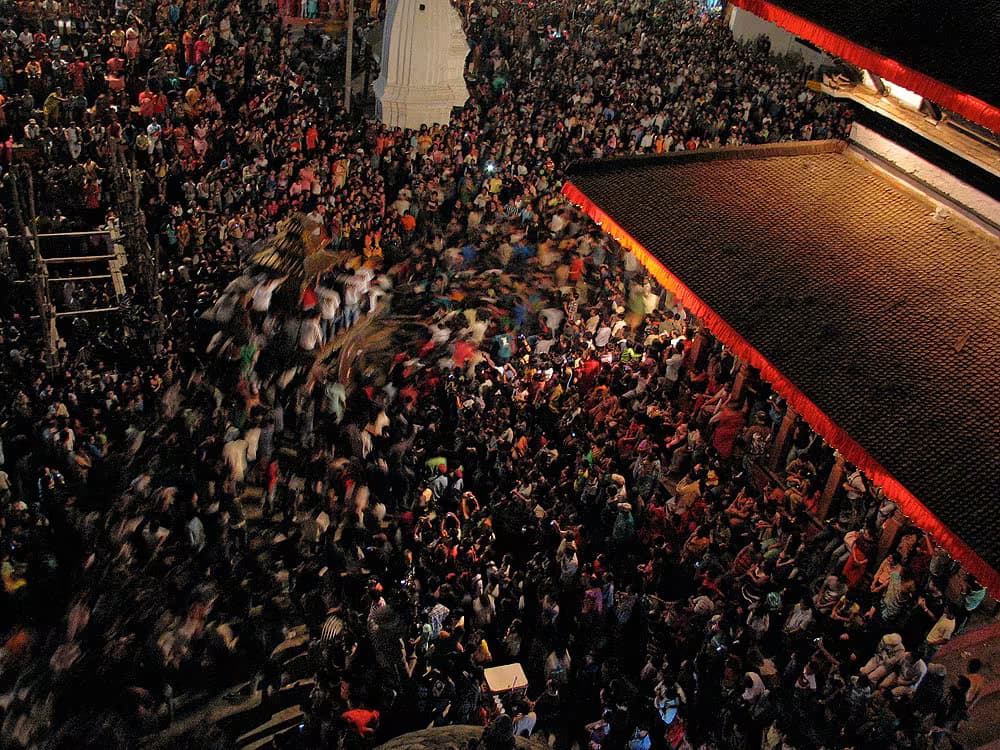
Devotees press forward to catch the flowing beer in their hands or mouths, consuming it as Bhairav's blessing. This is tantric prasad: not symbolic but literally physical, a transmission of divine substance from the deity's body to the devotee's. The crowd around the mask during the flowing period is dense, joyful, and urgent — this is one of the festival's most intensely participatory moments.
Symbolism
The concealment-and-revelation cycle of Swet Bhairav enacts a theological principle: divine power is most transformative when briefly accessible. Year-round concealment builds the charge of the revelation; the eight days of openness discharge that energy into the community. The beer flowing from the mask's mouth extends this logic physically: the deity is not merely visible but alimentary — he feeds the community directly.
Related Places & Sites
Related
Connected places and entries worth pairing
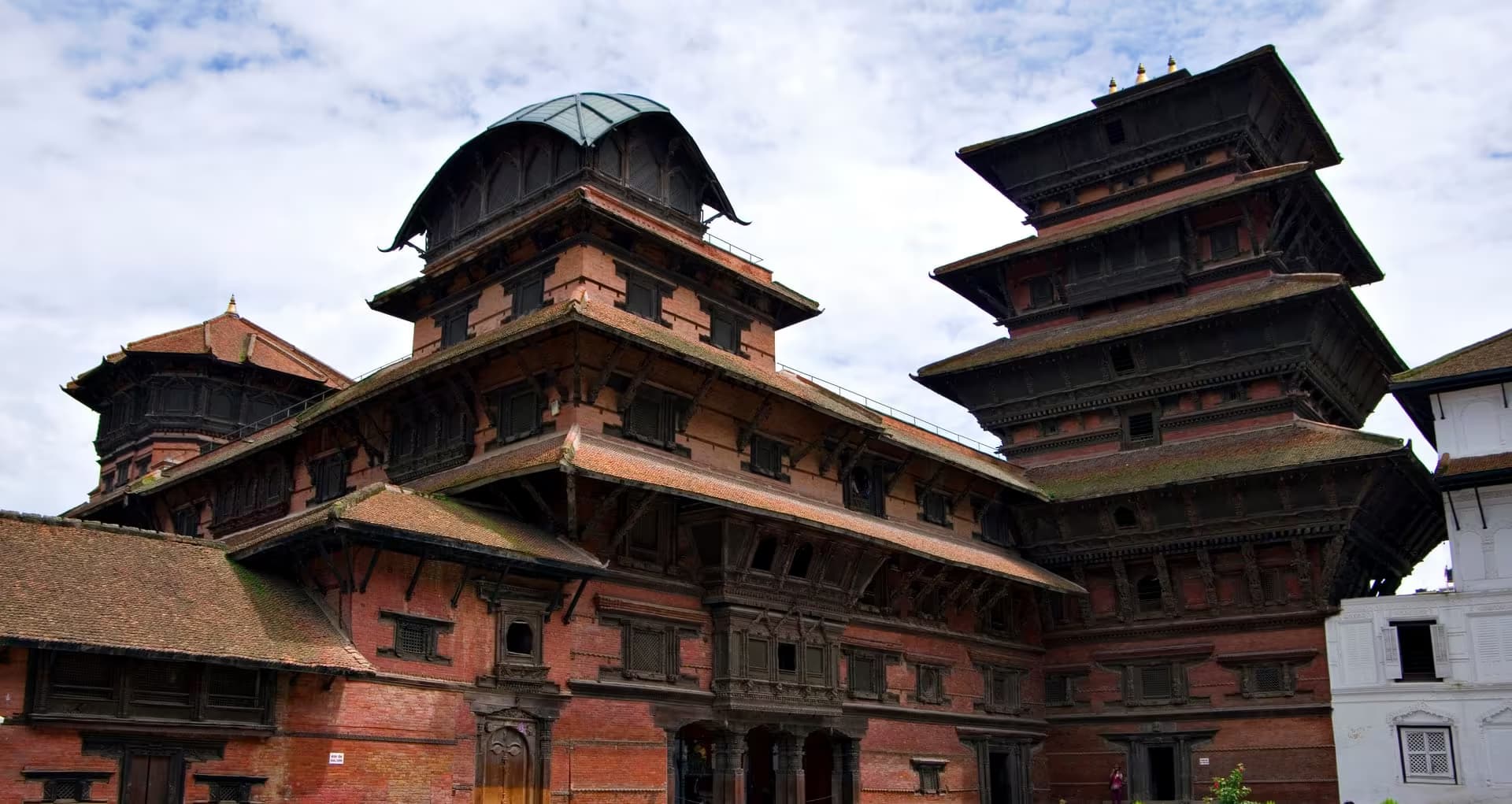
Kathmandu Durbar Square
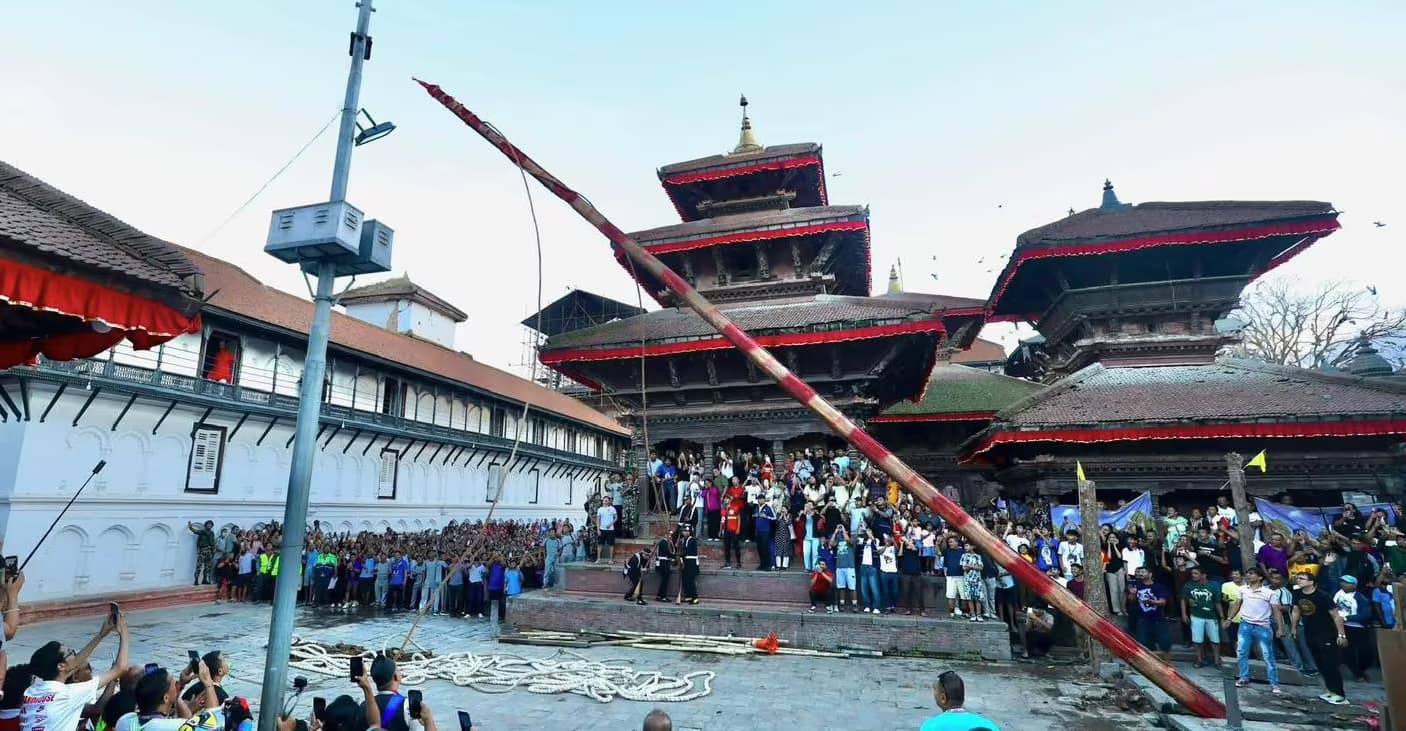
The eight-day street festival centres on the square and the lanes around Hanuman Dhoka
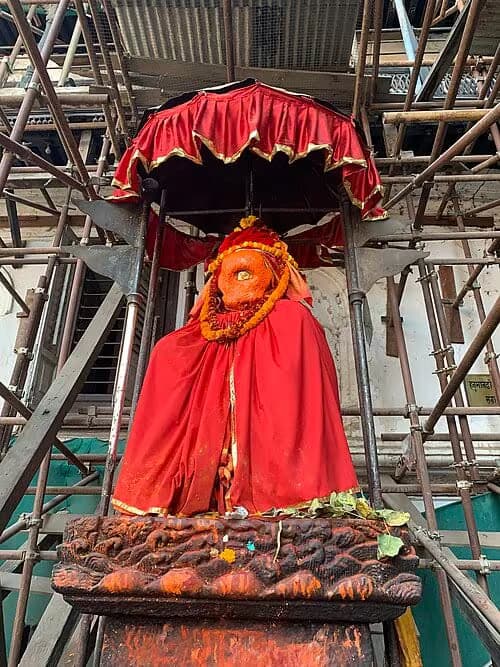
Hanuman Statue (Hanuman Dhoka)
The old royal palace entrance, where the Yosin pole rituals happen
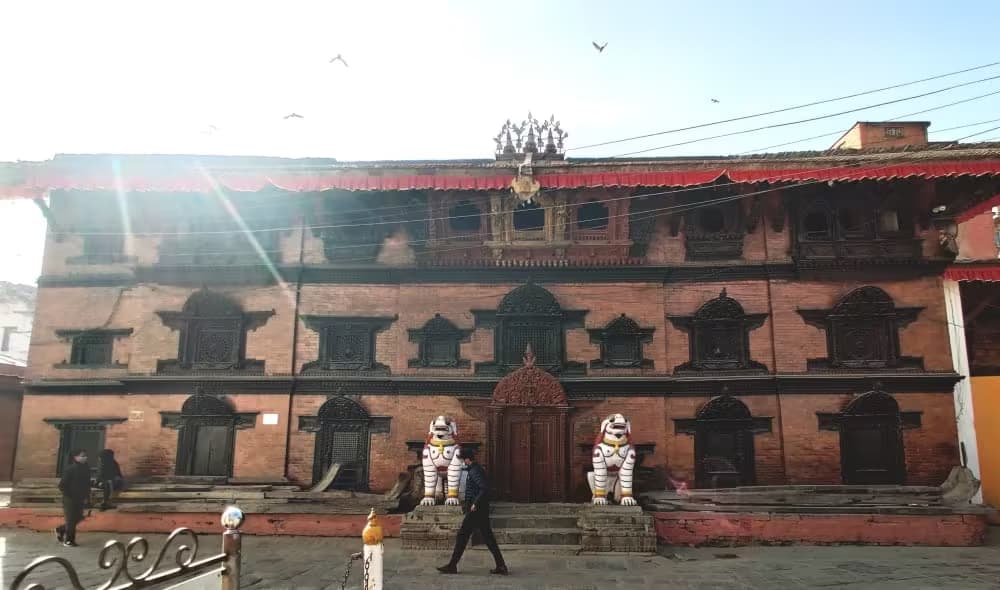
Kumari Ghar
The Kumari's residence, a few steps from where her chariot waits
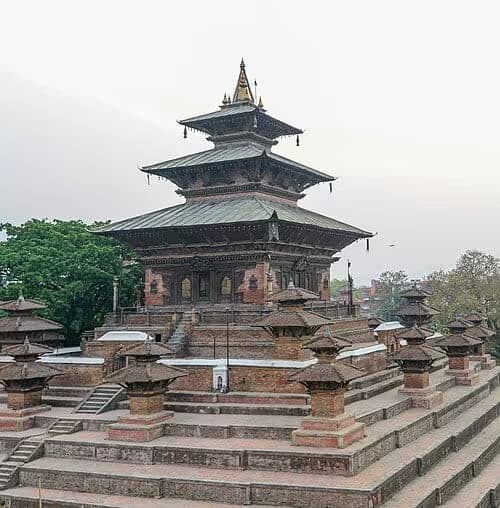
Taleju Temple
The Malla kings' tutelary goddess, whose main gate the Thaneya route passes at Makhan Tole
Swet Bhairav
The gilded screen at Makhan Tole, opened for only these eight days of the year
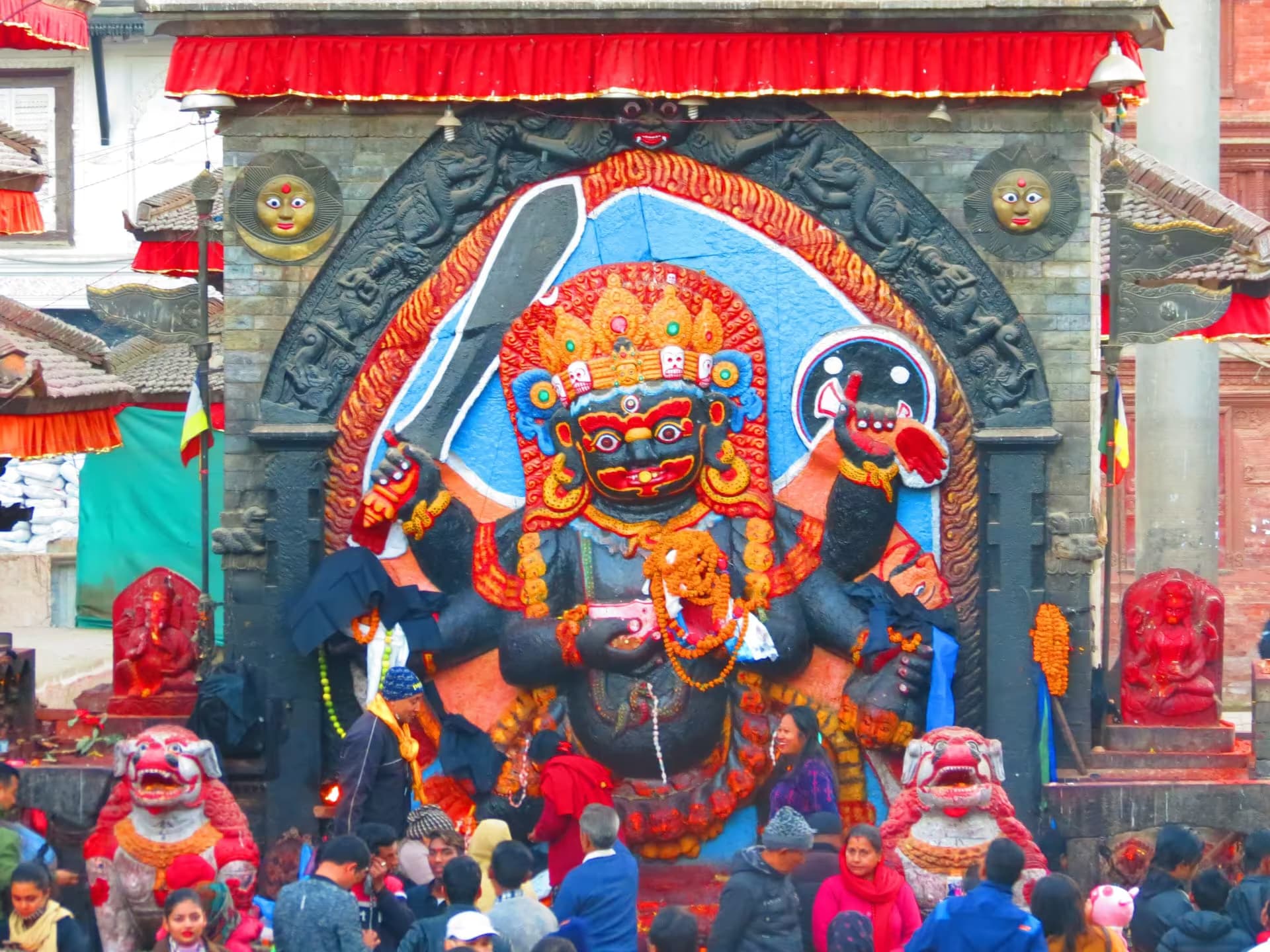
Kal Bhairav
The great stone Bhairav on the square, drawing worship through the festival week
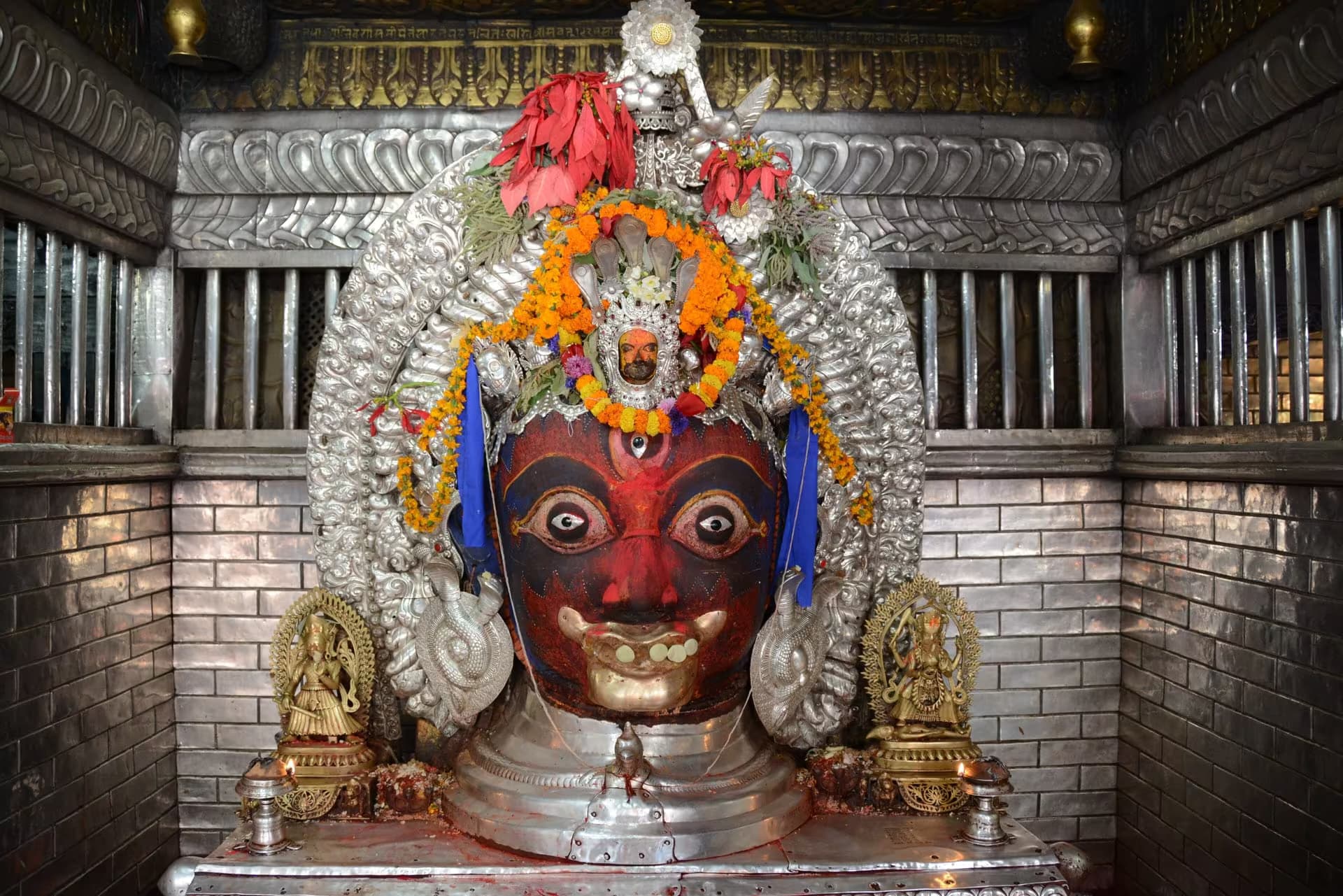
Akash Bhairav Temple
At Indra Chowk on the Thaneya route, where the silver head is brought down to street level
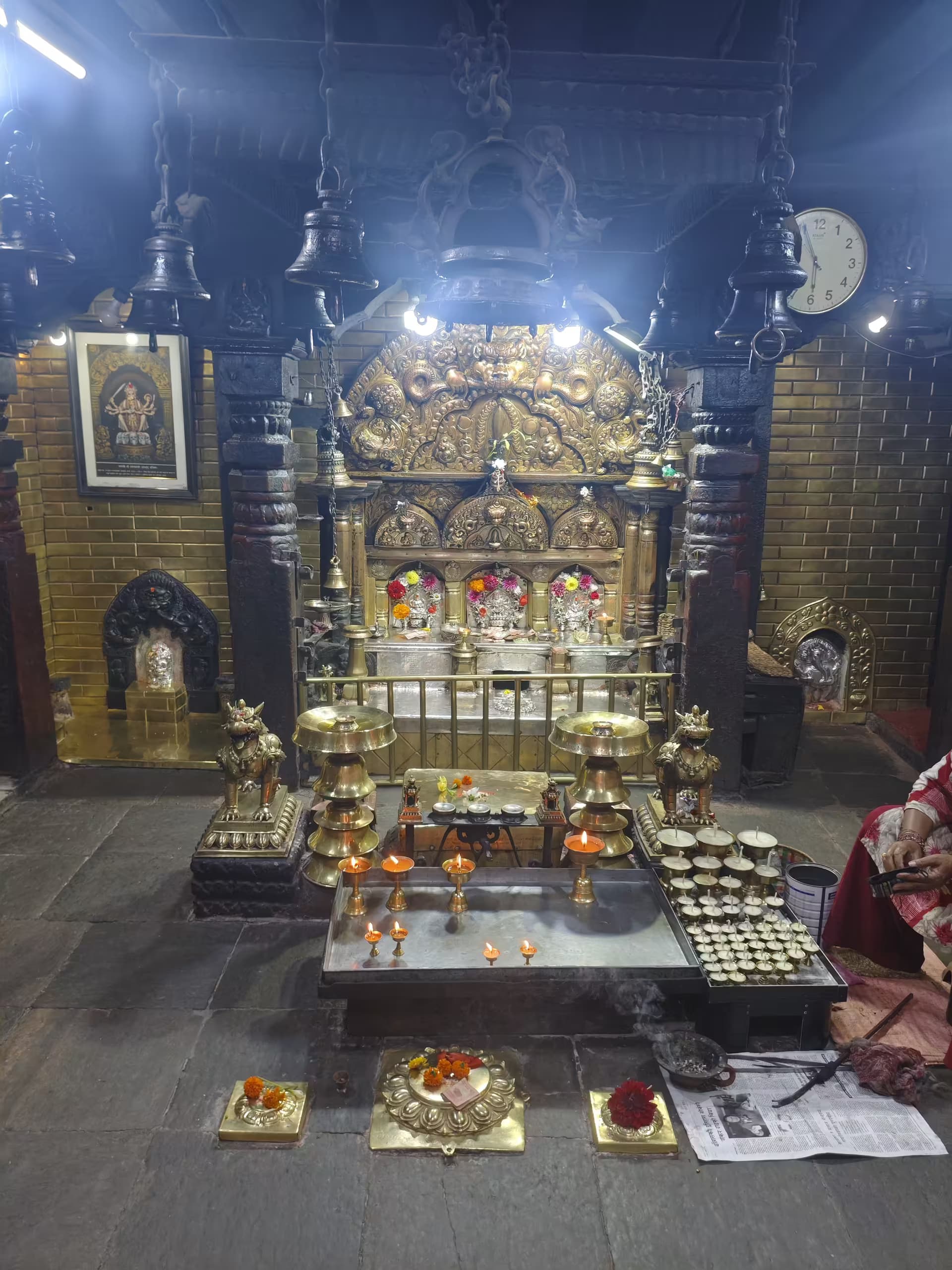
Naradevi Temple
On the inner-lane return leg of the Kwaneya route
Lagan Bahal (Kirtipunya Mahavihar)
In Lagan Tole, one of the oldest quarters the long southern route threads through
Deities & Presences
Dances
Rituals & Ceremonies
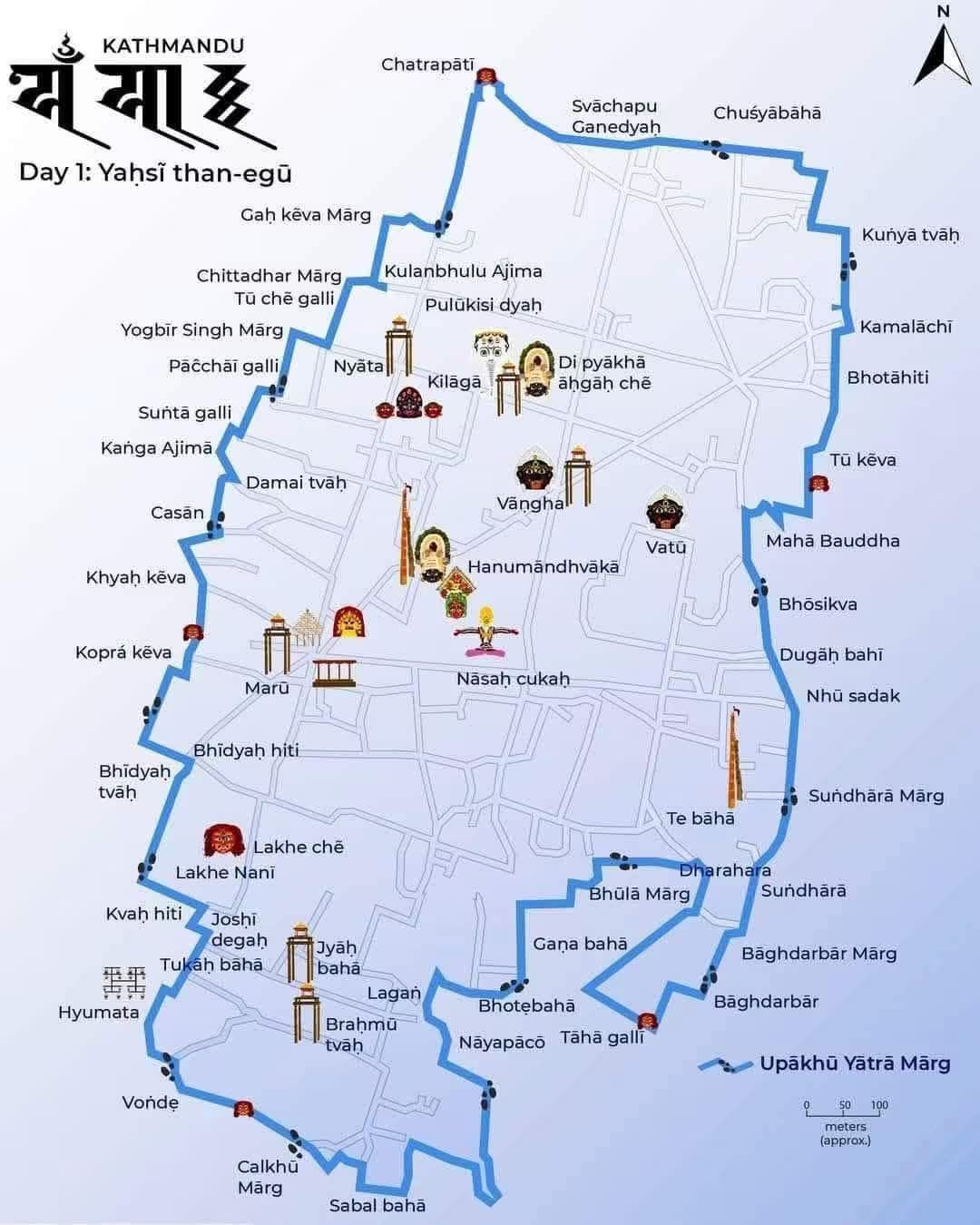
Procession Routes
Part of Indra Jatra