Memorial Processions
Beneath the boisterous spectacle of the chariot pulls, two quiet memorial processions give Indra Jatra its contemplative depth — Upaku, where families who lost a member carry oil lamps to guide the departed soul, and Dagin, Indra's mother searching for her imprisoned son.
Two Processions, Two Griefs
Indra Jatra holds grief and joy simultaneously — a balance that reflects the festival's theological completeness. The chariot processions are public, loud, and collective; the memorial processions are intimate, quiet, and personal. Both are essential.
Upaku: Guiding the Dead
Upaku (sometimes spelled Upakwa) is an evening procession unique to Indra Jatra. Families who have lost a member in the past year — between the previous Indra Jatra and the current one — carry oil lamps through the old city, guiding the departed soul toward its next destination.
The procession moves in silence or near-silence, a river of small flames threading through streets that earlier in the day were thick with chariot-pulling crowds. Participants carry the lamps above their heads; the deceased's name may be invoked; prayers are offered at specific shrines en route. The procession is not a display of grief but a service: the living actively helping the dead navigate the transition.
The specific route and timing of Upaku vary by community and tole. According to Nepal Tourism Board sources and accounts in Republica newspaper, Upaku occurs on the evening of Kwaneya — the first chariot day.
Dagin: A Mother's Search
Dagin is the procession associated with Indra's mother — the goddess who descended to earth to search for her captured son. According to Nepal Tourism Board documentation and ethnographic accounts (Toffin 2010 discusses the mythological framework), when Indra was taken prisoner by the Newars, his mother came looking for him. It is from this searching figure that the Dagin procession takes its character: a group moving through the city in the manner of one searching for the lost.
In practice, Dagin is associated with bereaved families, particularly those who have lost a parent or elder. The connection between Indra's mother's search and the grief of those who have lost family members gives the procession its emotional resonance: to walk Dagin is to join a cosmic grief that has been acknowledged and ritualised for centuries.
Note on terms: Dagin is sometimes confused in popular accounts with the oil-lamp processions of Upaku — they are distinct observances. Dagin is the mother's search; Upaku is the lamp guidance. Both occur during Indra Jatra but on different evenings and with different communities of participants.
The Contemplative Counterpoint
For visitors to Indra Jatra accustomed to the festival's exuberant surface, encountering these processions at dusk can be a profound reorientation. The festival is not only celebration; it is also reckoning — with death, with the year's losses, with the continuity of the community across generations. The memorial processions make this explicit, and their quiet intensity is among the most moving things Indra Jatra offers.
The Upaku circuit
Upaku Wanegu is a circumambulation of the old city's outer edge — the name is from उपाखा उले, "to walk the outer area" — and the stops are the chaityas, hitis and pith shrines that mark it. Bereaved families set out from Maru on the evening the Yosin pole is raised and return to the same spot. The numbers follow the order one Nepali-language account gives for the circuit.
- 1Maru Khya Kyab
- 2Chasadhalocation not mapped
- 3Kanga (Kanga Ajima / Kankeshwari)
- 4Nyata (Naradevi)
- 5Thahiti
- 6Kamaladi
- 7Bhotahiti
- 8Mahabouddha
- 9Sundhara
- 10Ganabahal
- 11Nhughalocation not mapped
- 12Bhimsensthan
Markers are stops, not a route. Only one source we could find names the sequence at all — Wikipedia and the Nepali press describe Upaku as winding "along the periphery of the historic part of the city" without listing stops, and two English travel sites publish the Thaneya and Nanicha chariot routes' tole lists under Upaku's name, which is a different route entirely. Nothing is drawn between these points because the lanes between them are not surveyed here. Positions come from OpenStreetMap; where a stop has no mapped feature of its own the marker sits on the lane that carries its name, and where a name could not be resolved at all it is listed below without a marker rather than guessed at.
Related
Connected places and entries worth pairing
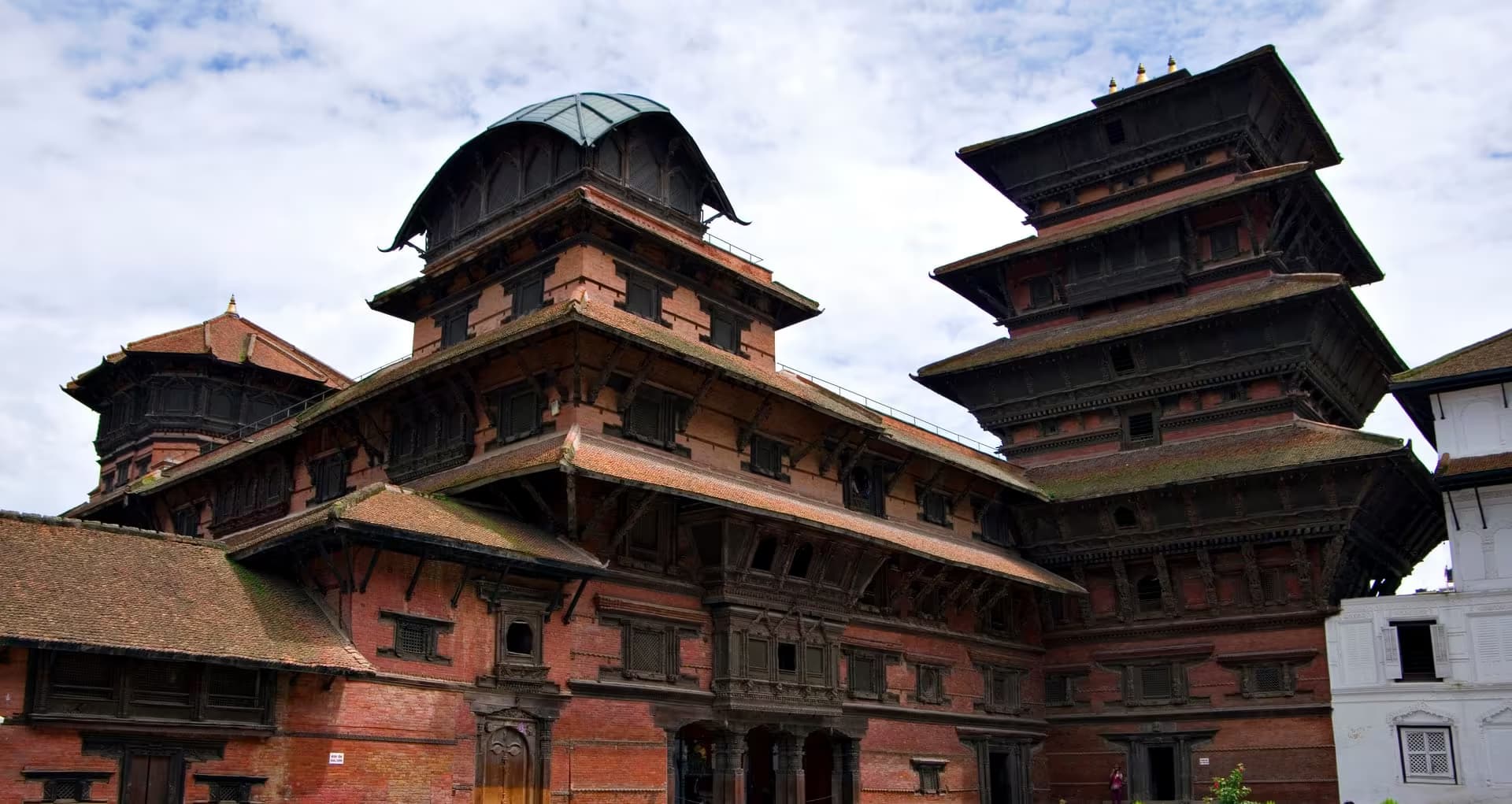
Kathmandu Durbar Square
The eight-day street festival centres on the square and the lanes around Hanuman Dhoka
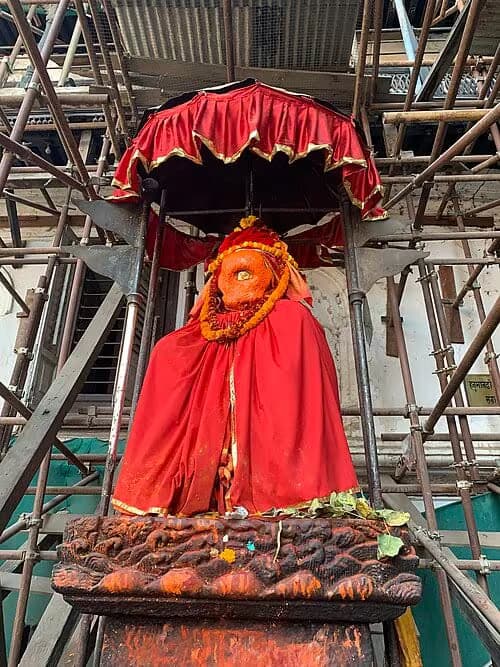
Hanuman Statue (Hanuman Dhoka)
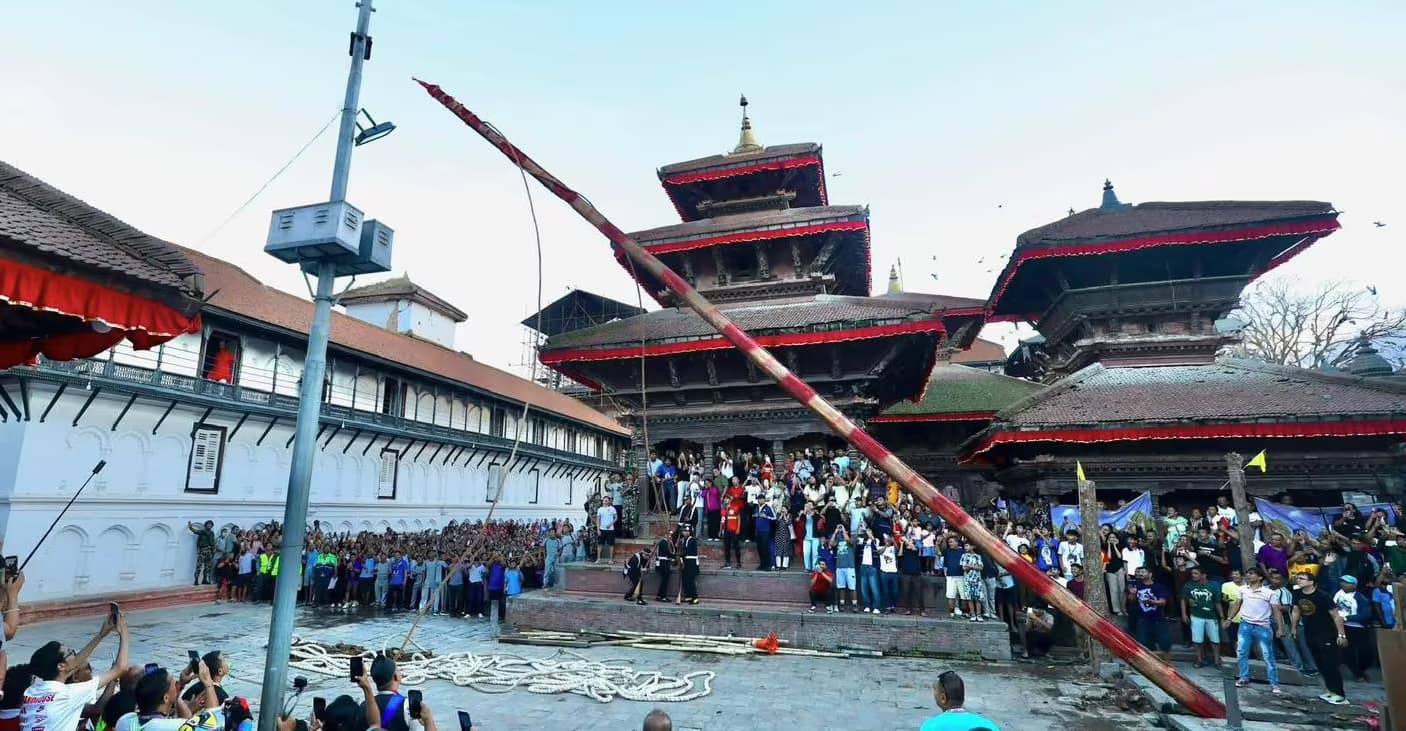
The old royal palace entrance, where the Yosin pole rituals happen
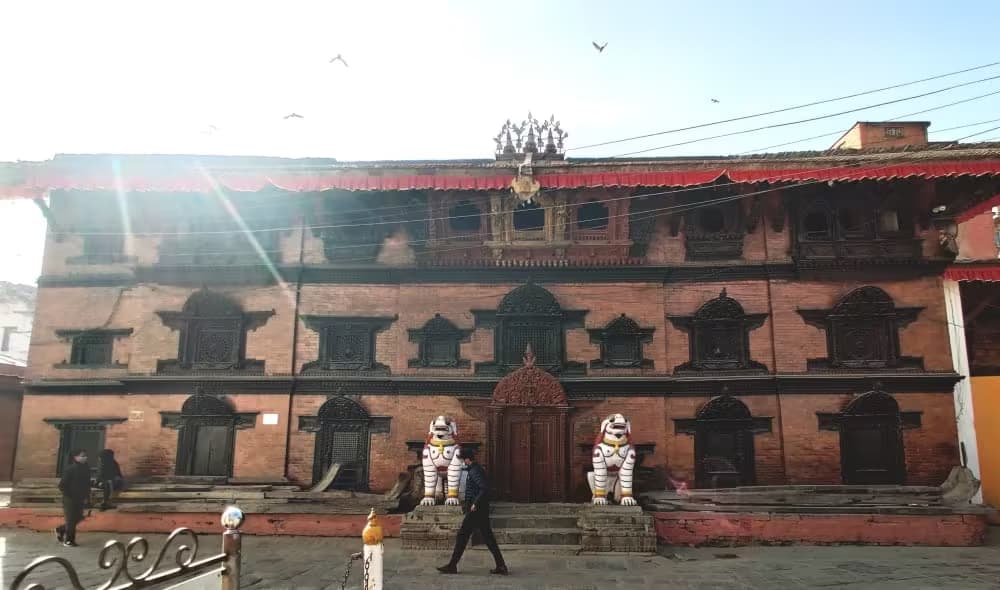
Kumari Ghar
The Kumari's residence, a few steps from where her chariot waits
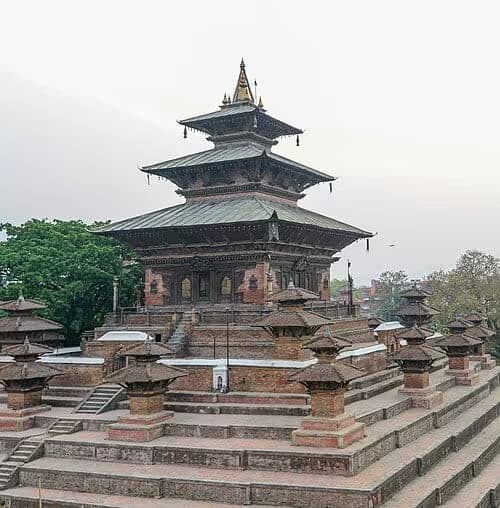
Taleju Temple
The Malla kings' tutelary goddess, whose main gate the Thaneya route passes at Makhan Tole
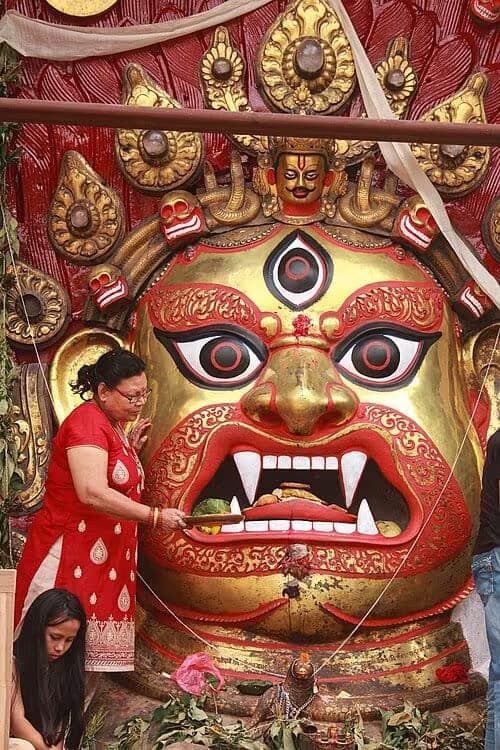
Swet Bhairav
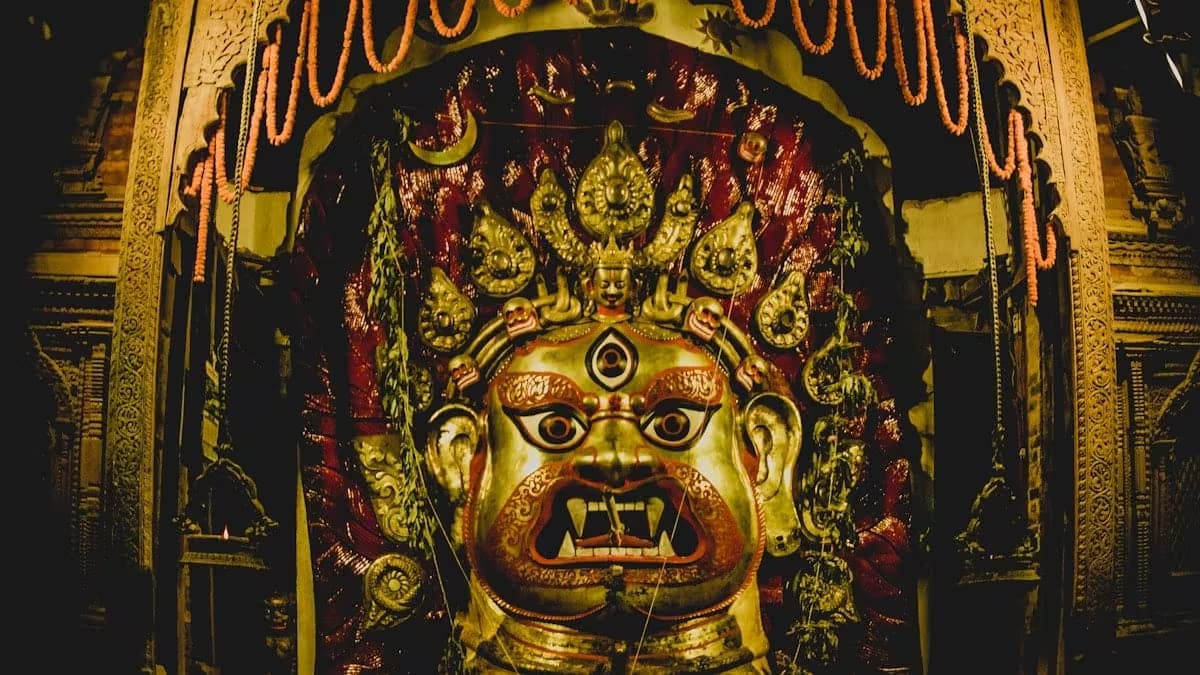
The gilded screen at Makhan Tole, opened for only these eight days of the year
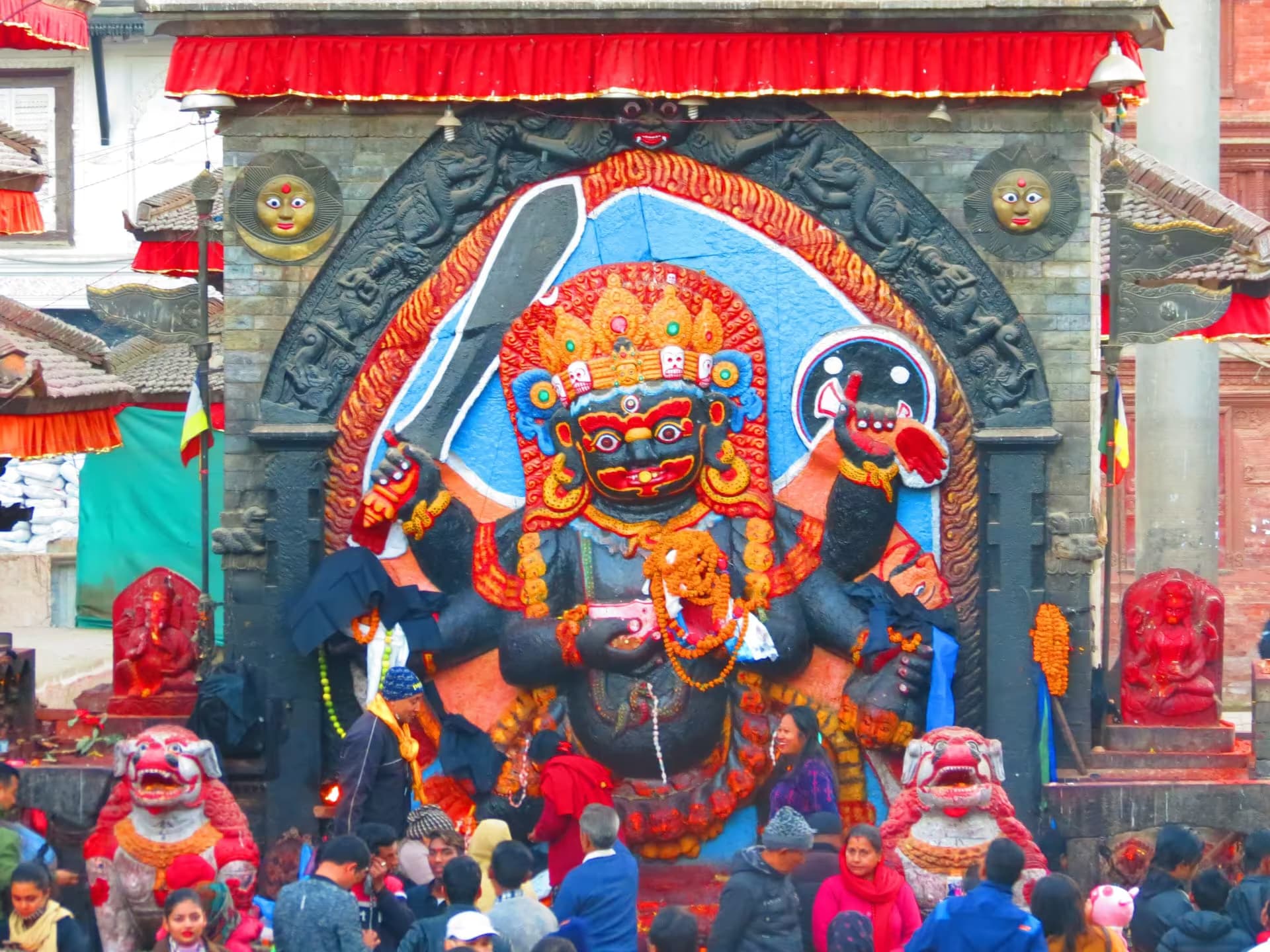
Kal Bhairav
The great stone Bhairav on the square, drawing worship through the festival week
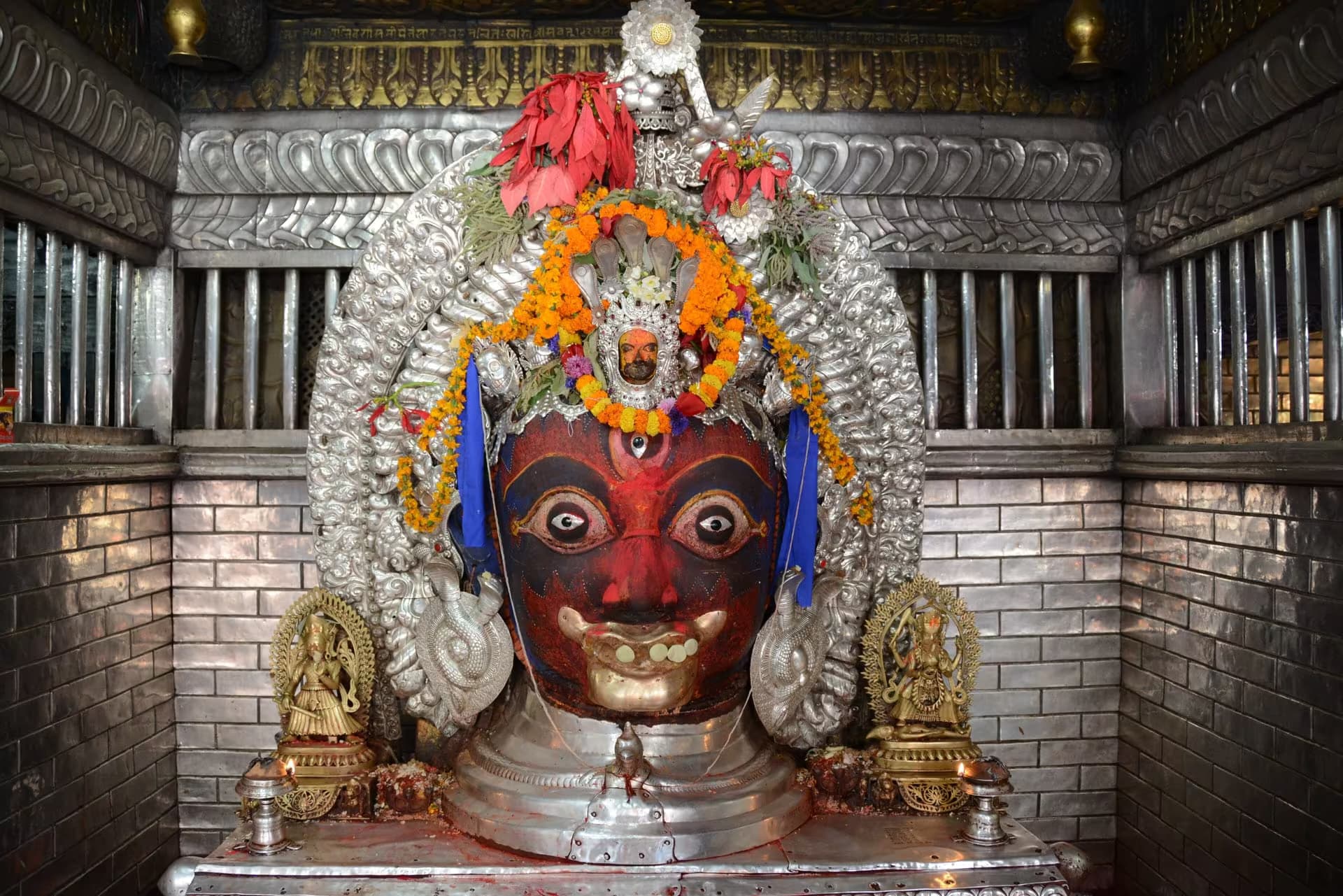
Akash Bhairav Temple
At Indra Chowk on the Thaneya route, where the silver head is brought down to street level
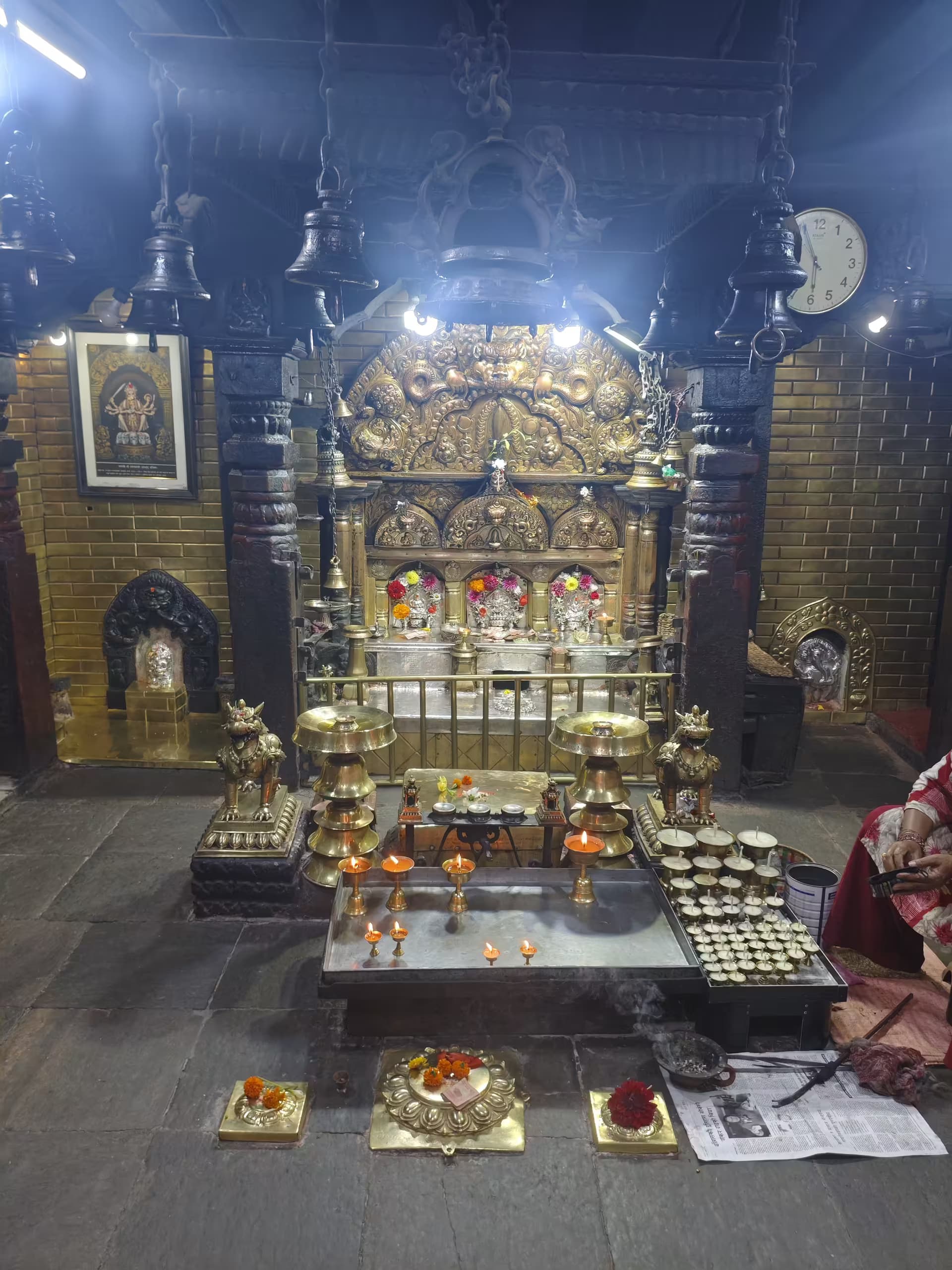
Naradevi Temple
On the inner-lane return leg of the Kwaneya route
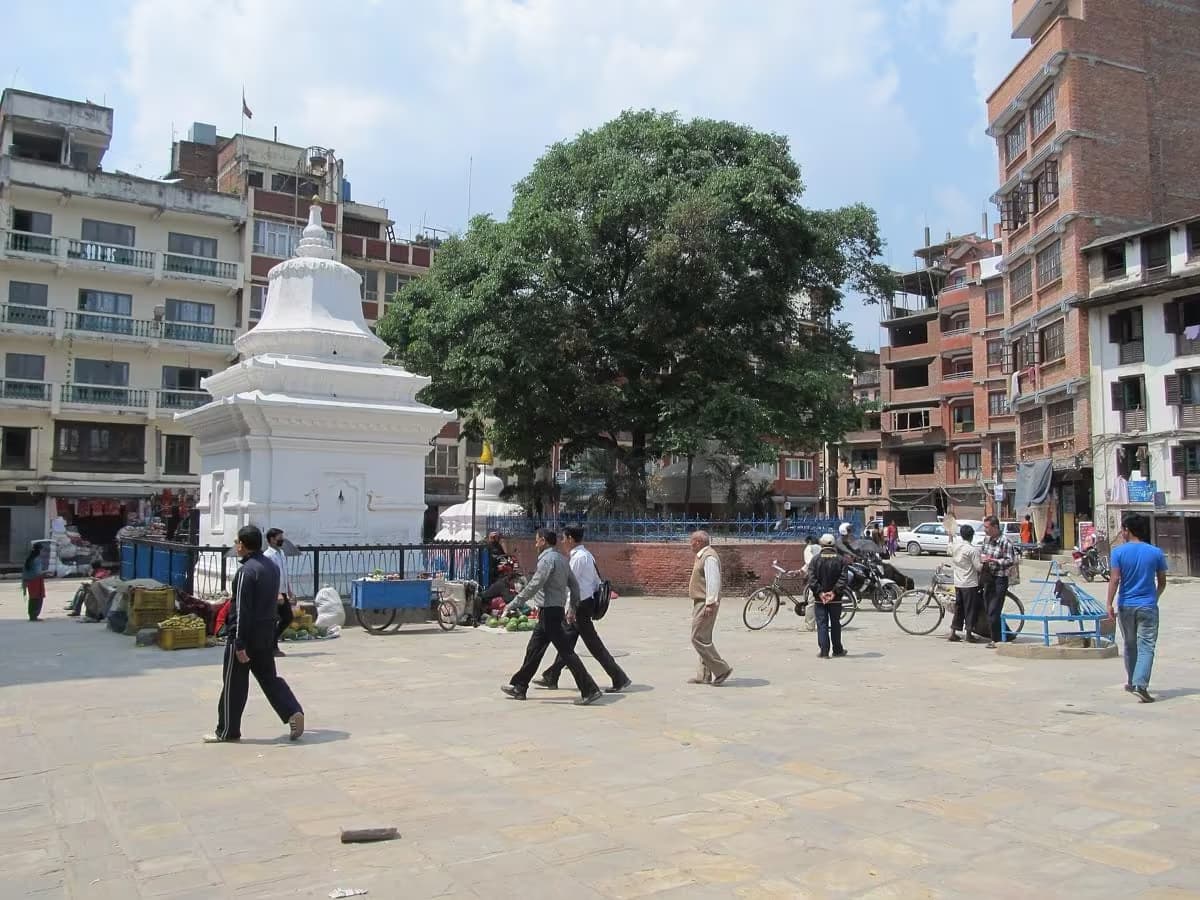
Lagan Bahal (Kirtipunya Mahavihar)
In Lagan Tole, one of the oldest quarters the long southern route threads through
Deities & Presences
Dances
Rituals & Ceremonies
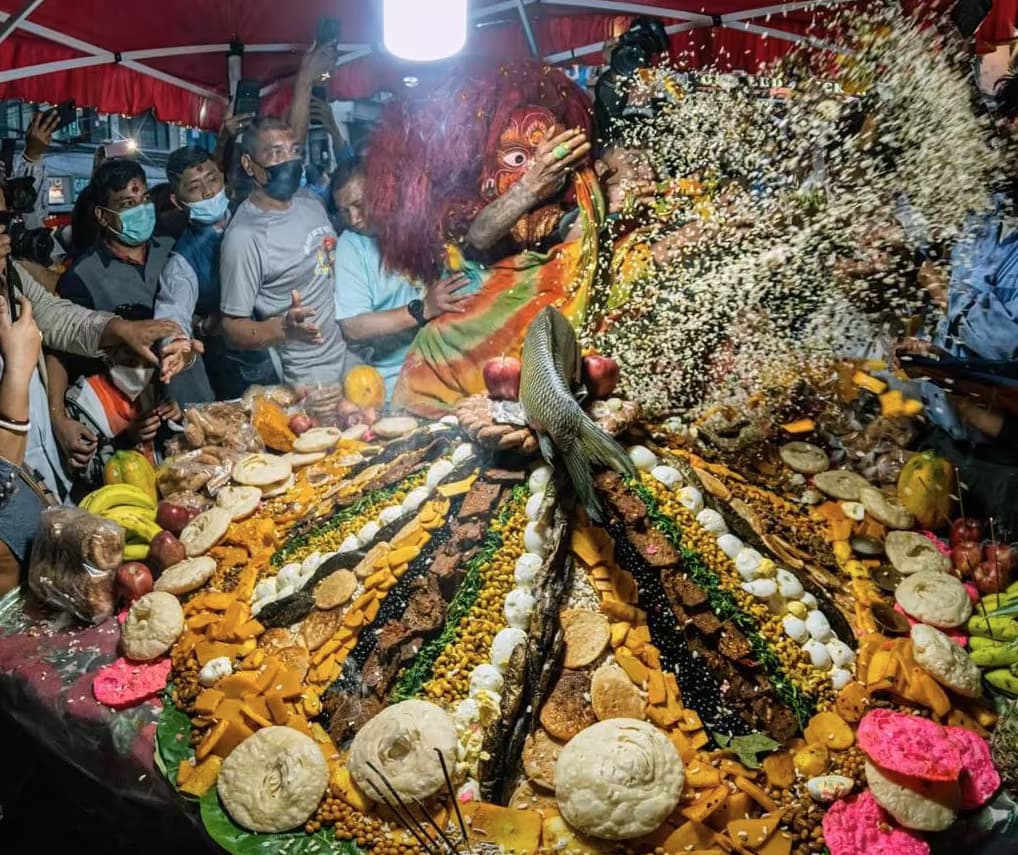
Procession Routes
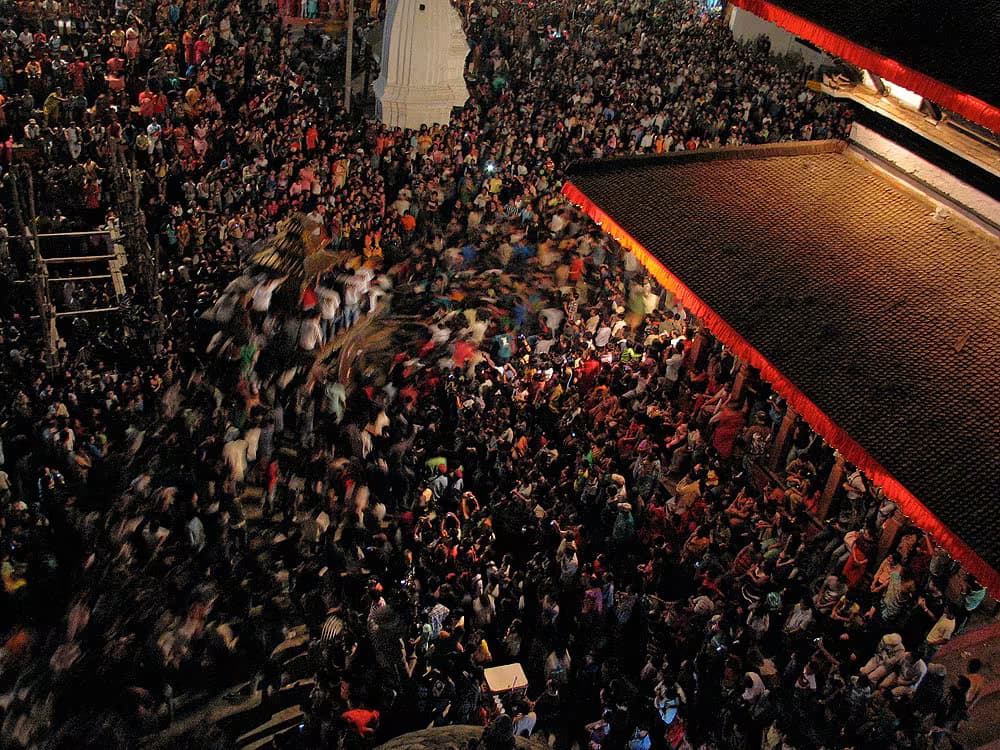
Part of Indra Jatra