Temple · Syncretic
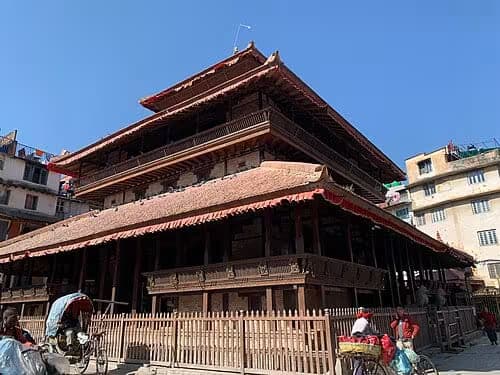
Kasthamandap
काष्ठमण्डप
Gorakhnath (ground floor shrine)·Foundations 7th century CE; superstructure Licchavi-Malla period; rebuilt after 2015·Kathmandu
The legendary three-storey pavilion said to be built from a single sal tree — the structure that gave Kathmandu its name, now being rebuilt after the 2015 earthquake.
Dedicated to
Gorakhnath (ground floor shrine)
Period
Foundations 7th century CE; superstructure Licchavi-Malla period; rebuilt after 2015
Hours
Open at all times (public pavilion)
Admission
Free
Neighborhood
Maru Tole, Kathmandu Durbar Square
Kasthamandap is the legendary structure from which Kathmandu derives its very name — Kastha (wood) Mandap (pavilion). Tradition holds that this three-storey public shelter was built from the wood of a single enormous sal tree during the Licchavi period, making it one of the oldest wooden structures in Nepal.
Historically, Kasthamandap served as a dharmasala (public rest house) for pilgrims and traders at the intersection of major trade routes between India and Tibet. Over the centuries, a shrine to Gorakhnath was installed on the ground floor, and the building became a site of Hindu and Buddhist worship.
The original structure collapsed entirely during the April 2015 earthquake, devastating the people of Kathmandu. Archaeological excavation of the site revealed that the foundations date to the 7th century CE — far older than previously believed — making Kasthamandap potentially one of the oldest wooden buildings in the world.
Reconstruction began in 2019 using traditional Newari techniques and salvaged original timbers where possible. The rebuilding is a national endeavour, combining heritage conservation with community pride. The new Kasthamandap follows the original design: a three-tiered pagoda-style structure with open sides on the ground floor, restored carvings, and the Gorakhnath shrine at its centre.
The site stands at the southern entrance to Durbar Square, at the junction known as Maru Tole — still one of the busiest crossroads in old Kathmandu.
Folio III
Nearby Sacred Sites
Places within a short walk that help turn this stop into a small sacred cluster.
Singha Sattal
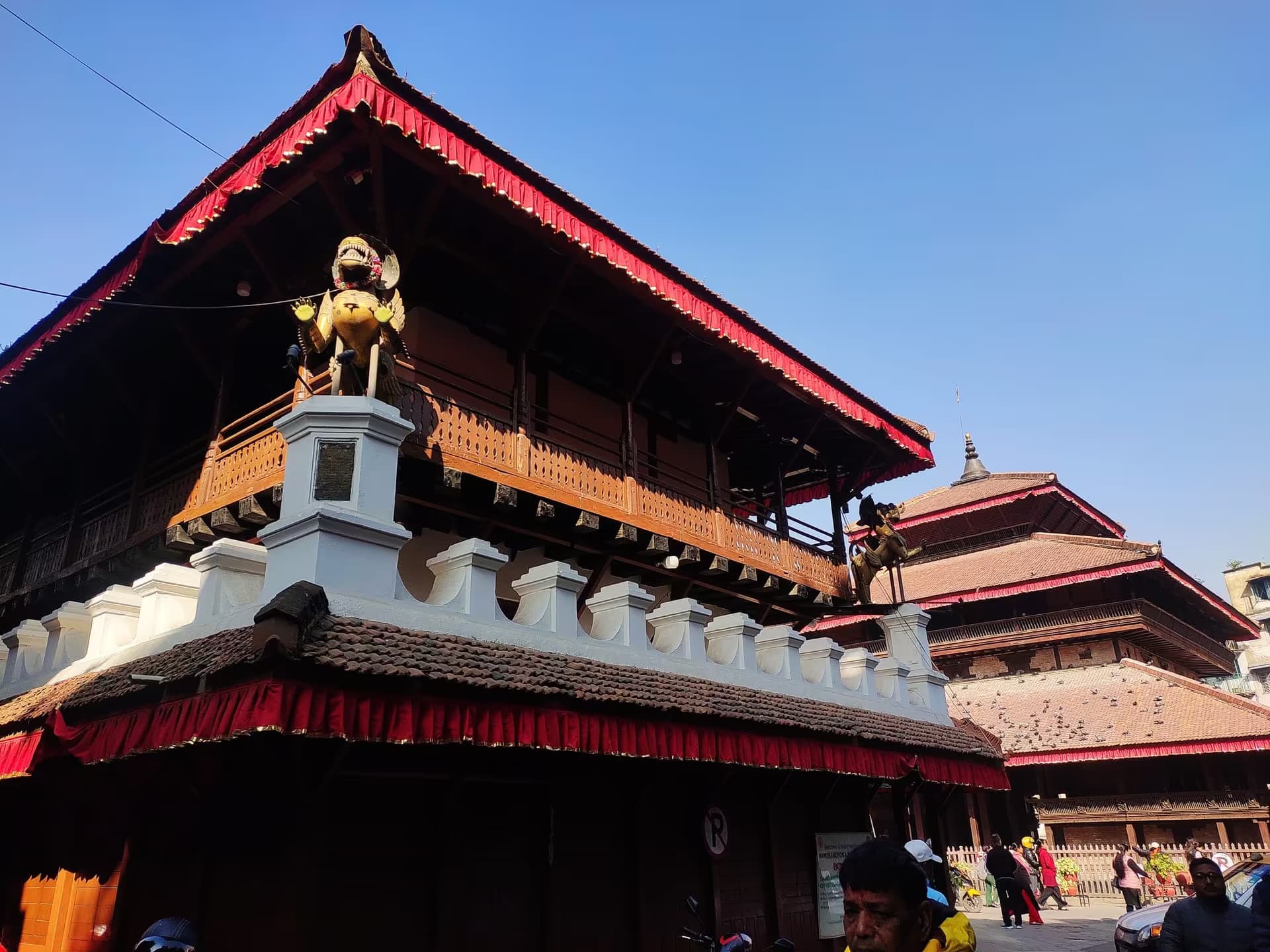
A beautifully carved Newari rest house near Kasthamandap, guarded by stone lions — one of the finest surviving sattal (pilgrim shelters) in the Kathmandu Valley.
Sikhamu Bahal (Shreekhanda Tarumula Mahavihar)
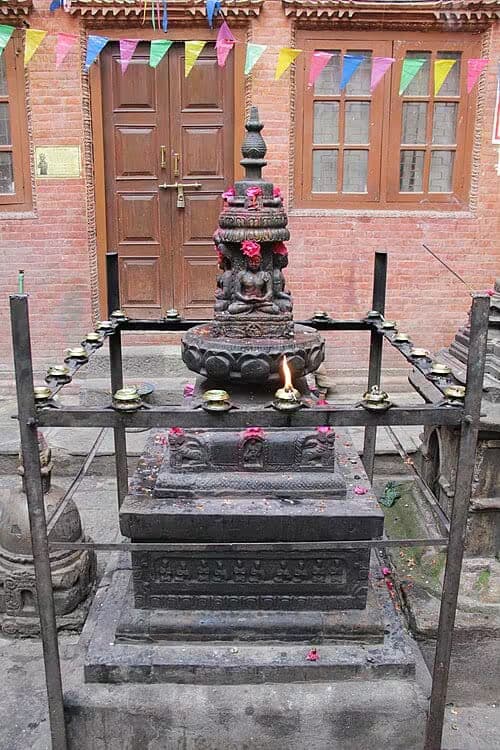
The only bahal in Kathmandu's Durbar Square quarter, associated with the legendary teacher Lila Bajra Bajracharya — one of four masters who shaped Valley Buddhism.
Kumari Ghar
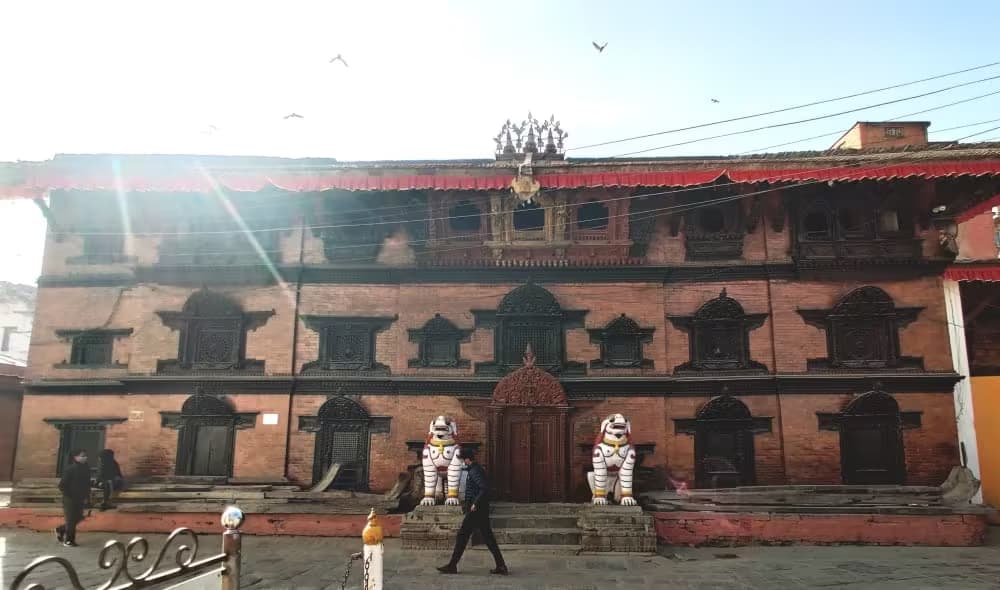
The ornate 18th-century residence of Kathmandu's Royal Kumari — a living prepubescent girl worshipped as the incarnation of goddess Taleju.
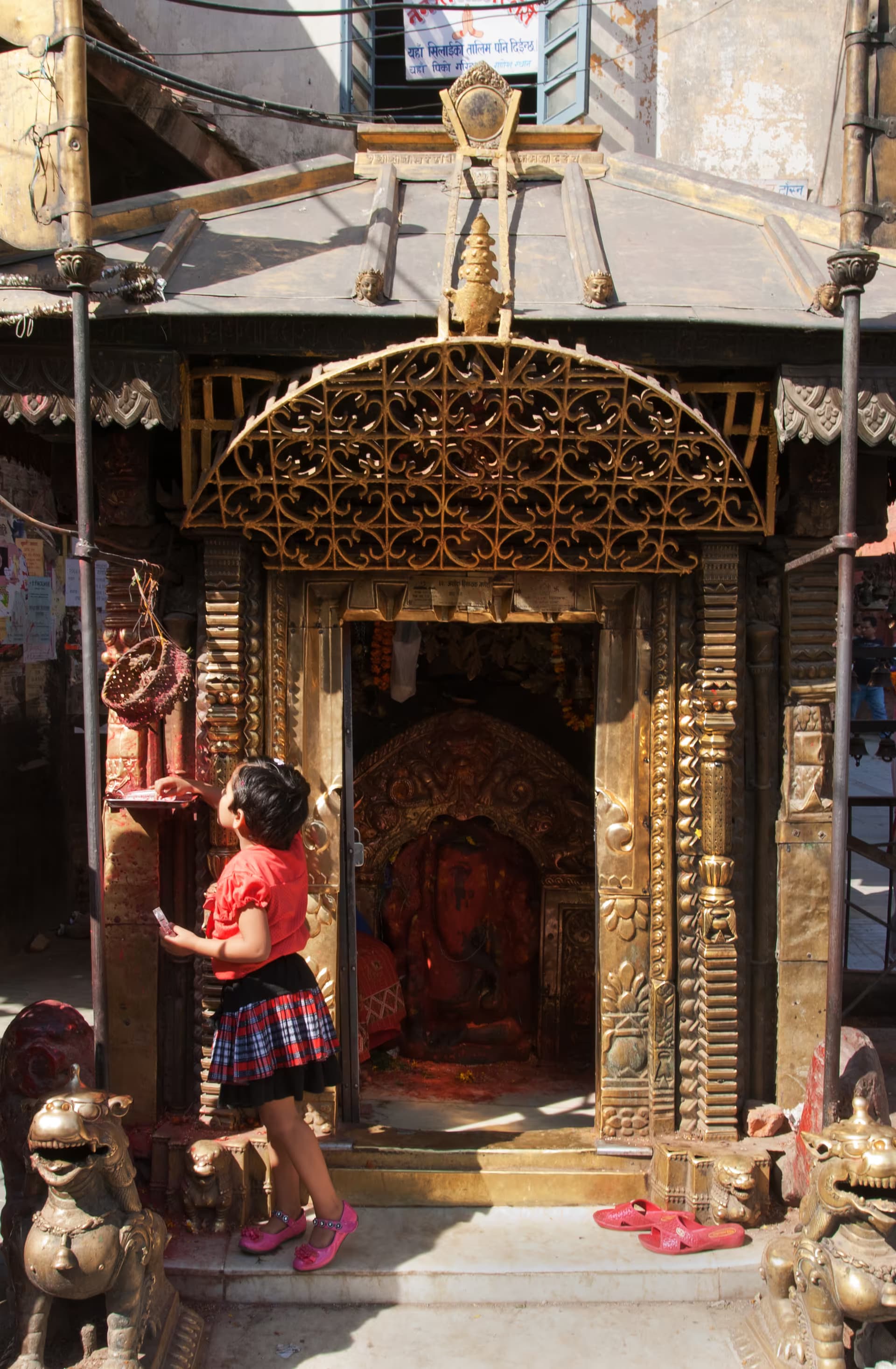
Ashok Binayak
Maru Ganesh shrine near Kathmandu Durbar Square, one of the city's most visited Ganesh temples but not part of the Char Binayak circuit.
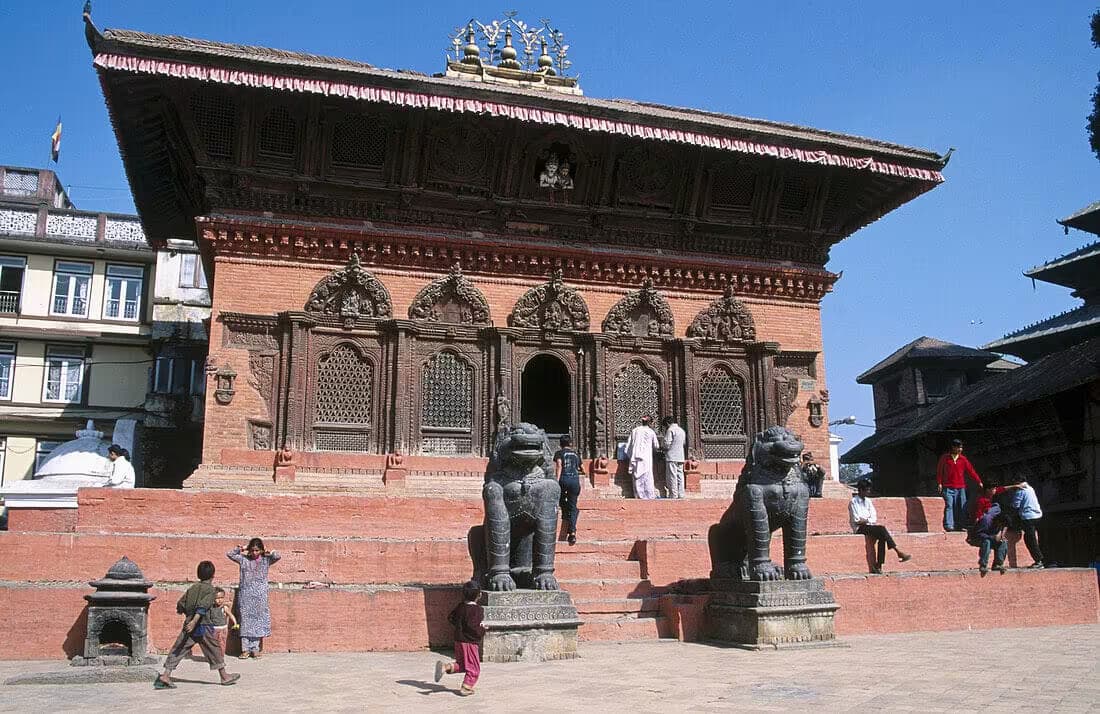
Shiva-Parvati Temple
An 18th-century temple famous for the carved wooden figures of Shiva and Parvati leaning out from the upper window, gazing at the life of Durbar Square below.
Coda
Continue the Pilgrimage
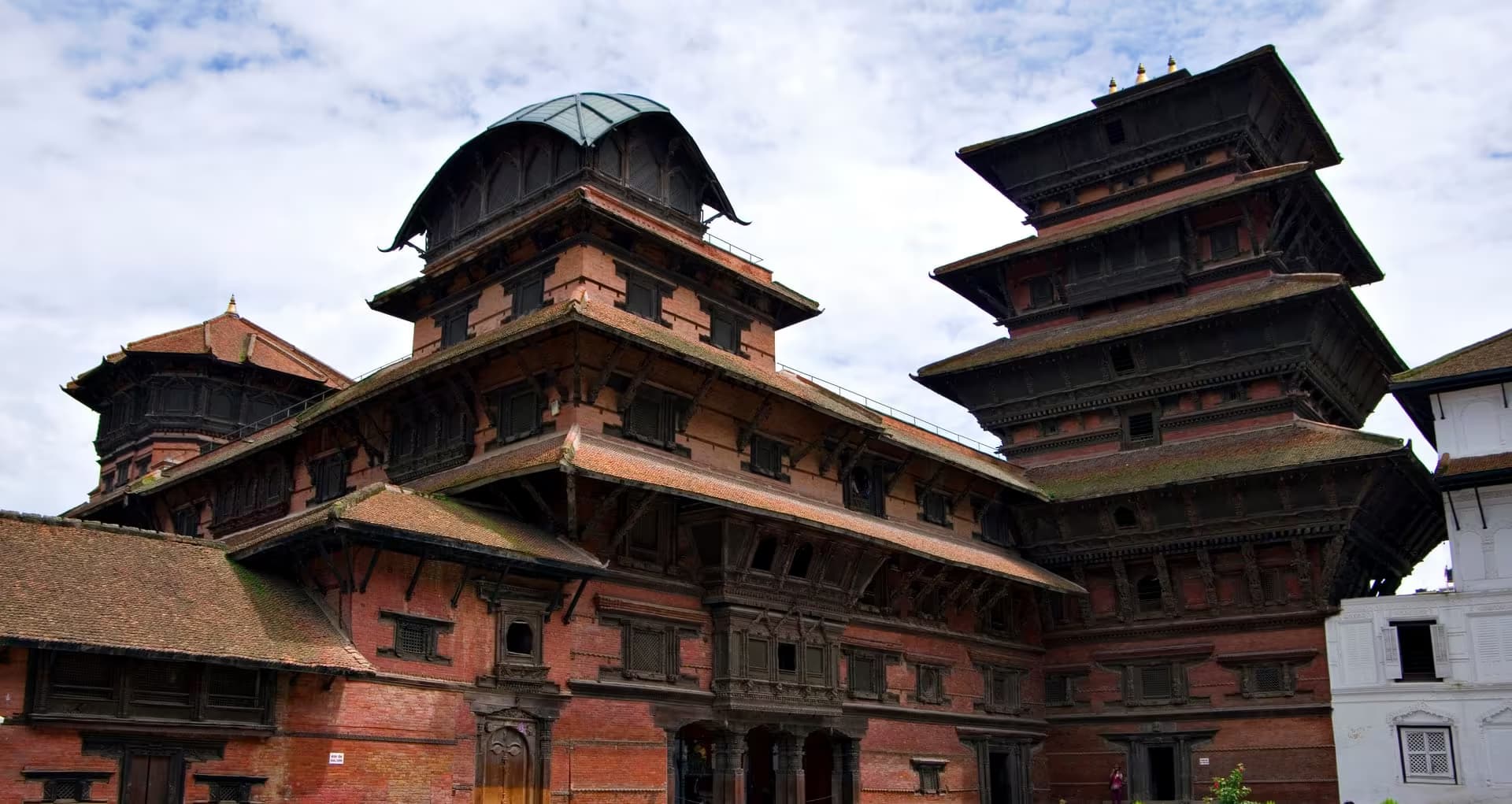
Part of
Kathmandu Durbar Square
Planning this visit? Local operators publishing trips here can arrange it.
Elsewhere in this region
Help us get it right
Know Kasthamandap better than we do?
We write from research and reporting, and the ground changes faster than we can keep up. If something here is out of date, or you have been and would tell it differently, we would rather hear it.