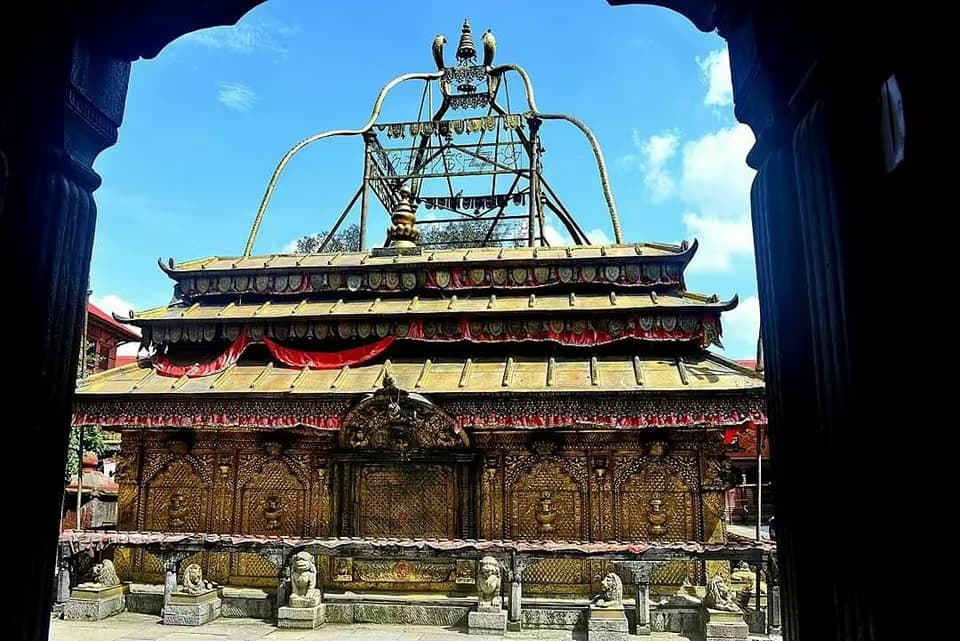
Temple · Syncretic
Guhyeshwari Temple
गुह्येश्वरी मन्दिर
Guhyakali / Guhyeshwari; also revered as Vajrayogini-Vajravarahi in Newar Vajrayana tradition·Ancient Shakti shrine; renovated in the 17th century under King Pratap Malla·Kathmandu
A major Shakti Peeth on the Bagmati where part of Sati fell — Pashupatinath's goddess counterpart, and for Newar Buddhists the root of the Swayambhu lotus.
Dedicated to
Guhyakali / Guhyeshwari; also revered as Vajrayogini-Vajravarahi in Newar Vajrayana tradition
Period
Ancient Shakti shrine; renovated in the 17th century under King Pratap Malla
Hours
Early morning to evening; busiest during Navaratri and major goddess festivals
Admission
Free
Neighborhood
Guhyeshwari, east of Pashupati Kshetra
Guhyeshwari stands on the wooded bank of the Bagmati a kilometre upstream from Pashupatinath, and the two temples are best understood as one sacred landscape: Shiva at Pashupatinath, his Shakti here. For Shakta Hindus this is one of the great Shakti Peeths — among the most important goddess sites in Nepal — and for tantric practitioners of both Hindu and Buddhist traditions it is a place of unusual power.
Where Sati fell
The Shakti Peeths descend from one of Hinduism's most charged myths. When the goddess Sati burned herself alive at her father Daksha's sacrifice, a grief-maddened Shiva carried her body across the world until Vishnu's discus cut it apart, and wherever a piece fell, a seat of the goddess arose — fifty-one in the classical count. The tellings differ on what fell at Guhyeshwari: both knees in some accounts, the goddess's secret part in others — the name itself comes from guhya, "hidden," and keeps the mystery. Fittingly, there is no idol in the sanctum. The goddess is worshipped as a natural water-hole in the earth, sheathed in silver and covered by a silver kalash, from which sacred water seeps — the goddess present as the living ground itself.
Pratap Malla's temple
The shrine is ancient, but the complex you see took shape in the mid-17th century, when the Kathmandu king Pratap Malla — the same restless builder who left his mark on Swayambhunath and the Durbar Square — renovated it in 1654, guided by the tantric master Lambakarna Bhatta. It has remained a working centre of Shakta and tantric ritual ever since: animal sacrifice, esoteric rites, and goddess festivals carry on here in ways most visitors only glimpse. As at Pashupati, the temple courtyard is open to Hindus only; other visitors can take in the complex from the riverside precinct around it, a calm and uncrowded corner of the sacred zone.
The root of the Swayambhu lotus
What makes Guhyeshwari truly singular is its second life in Newar Buddhism. Vajrayana tradition reveres the goddess here as Vajrayogini in the form of Vajravarahi — and holds that this spot is the root of the primordial lotus that once bloomed in the middle of the Valley's ancient lake, the lotus on whose flower the self-arisen light of Swayambhunath appeared. One underground stem, in other words, connects the goddess on this riverbank to the great stupa across the city: two ends of a single sacred plant, honoured by two religions. Pilgrims of the goddess also seek out Vajrayogini Temple above Sankhu, the senior shrine of the Valley's tantric Buddhist goddesses.
Visiting
The best approach is on foot from Pashupatinath: a ten-minute walk upstream past the Kirateshwar Mahadev shrine and the deer-grazed woods of Mrigasthali brings you to the temple gate — the traditional pilgrim's pairing, Shiva first, then the goddess. Mornings are busiest with worshippers; the temple is especially alive during the autumn goddess festivals, when the courtyard fills with devotees and offerings.
- Expanded during the reign of Pratap MallaRenovated, 17th c.
Renovated the Shakti shrine near Pashupatinath during his reign.
Folio III
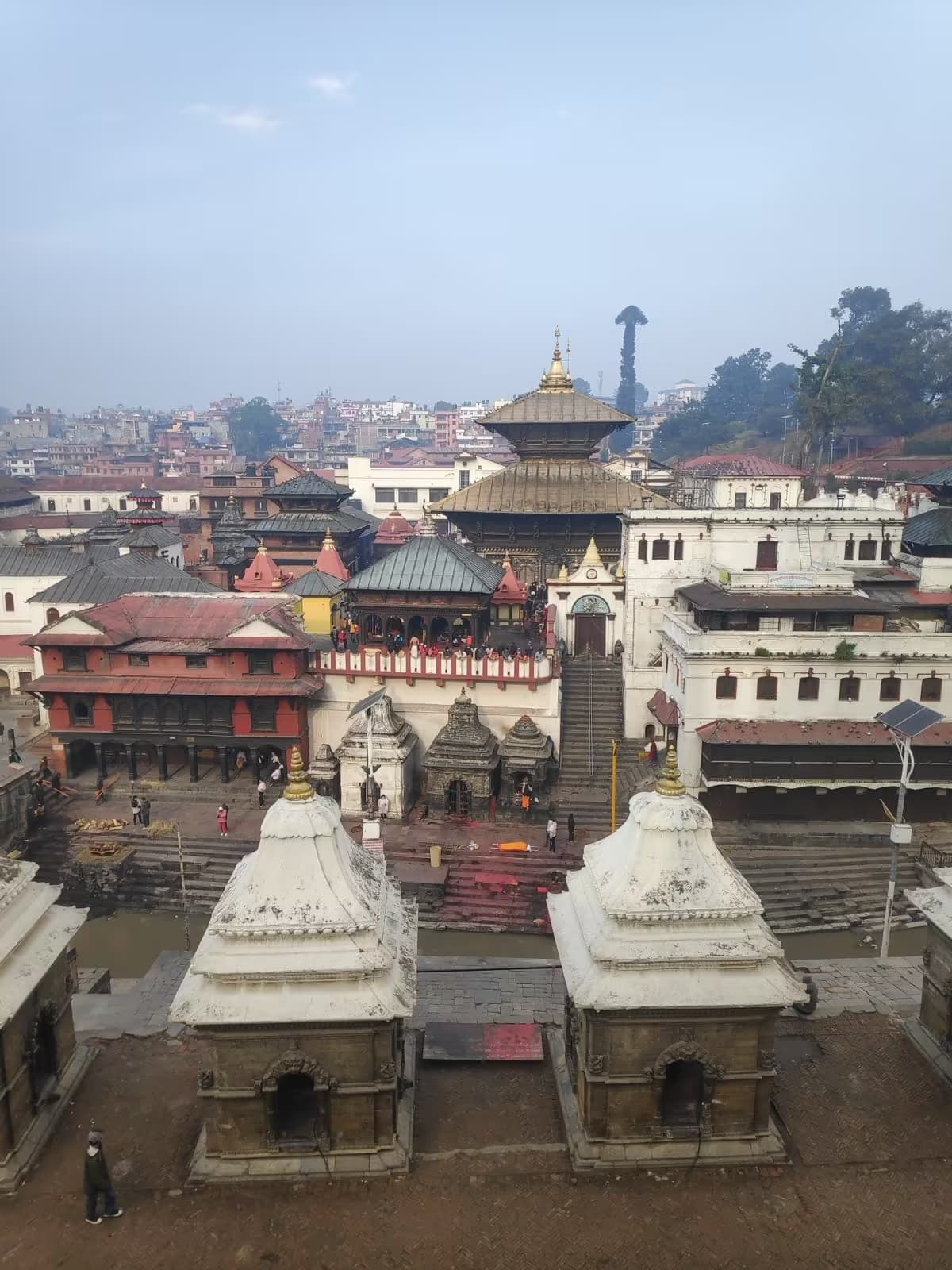
Nearby Sacred Sites
Places within a short walk that help turn this stop into a small sacred cluster.
Coda
Continue the Pilgrimage
Planning this visit? Local operators publishing trips here can arrange it.
Elsewhere in this region
Help us get it right
Know Guhyeshwari Temple better than we do?
We write from research and reporting, and the ground changes faster than we can keep up. If something here is out of date, or you have been and would tell it differently, we would rather hear it.