Temple · Hindu
Pashupatinath Temple
पशुपतिनाथ मन्दिर
Lord Shiva (Pashupati)·5th century CE (current structure 17th century)·Kathmandu·UNESCO World Heritage
Nepal's holiest Hindu temple dedicated to Lord Shiva, a UNESCO World Heritage Site on the banks of the Bagmati River.
Dedicated to
Lord Shiva (Pashupati)
Period
5th century CE (current structure 17th century)
Hours
4:00 AM – 9:00 PM (darshan timings vary)
Admission
Local 1000 · USD 10
Neighborhood
Deopatan, Gaushala
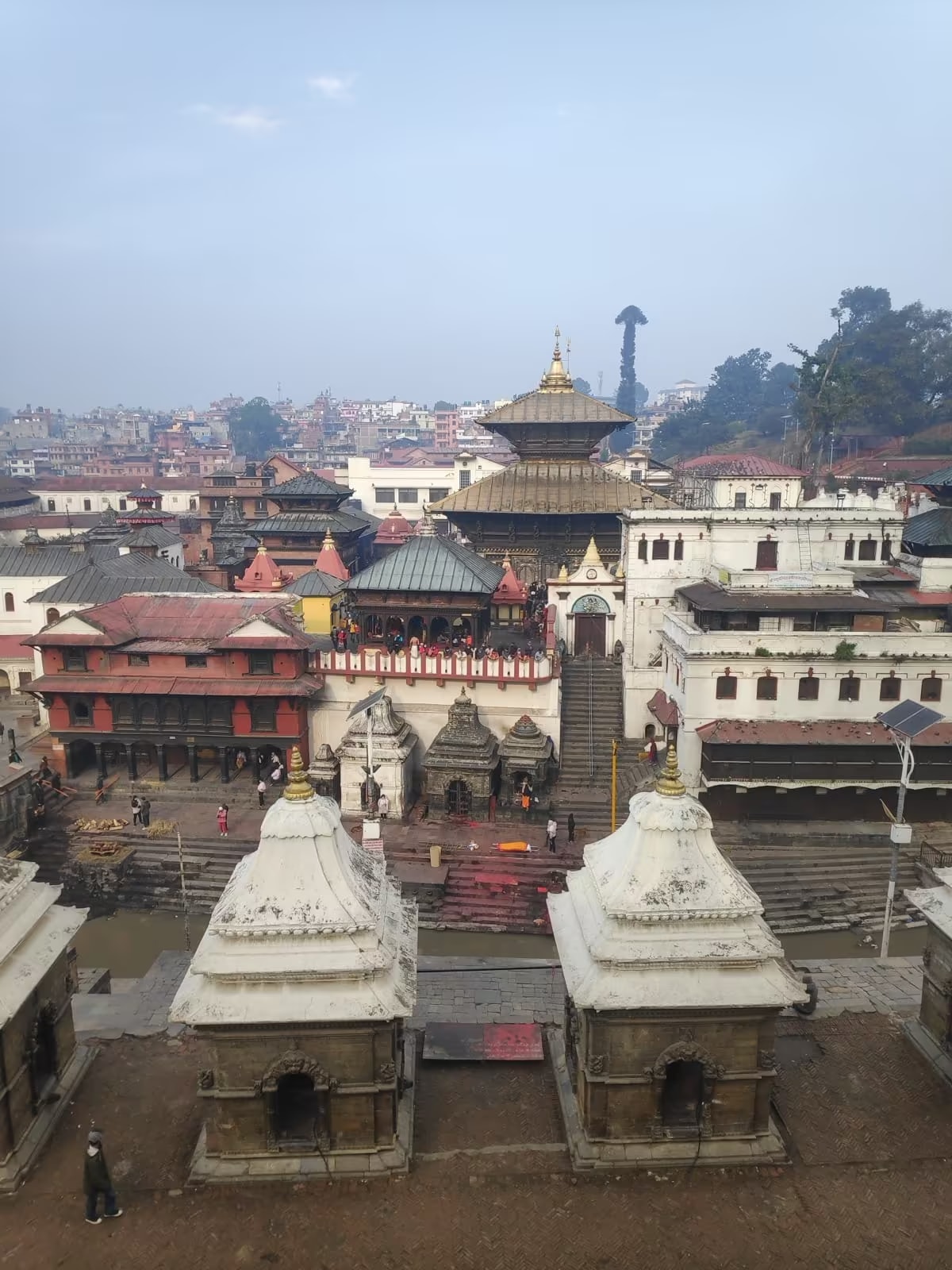
Pashupatinath is the holiest Hindu site in Nepal and one of the great Shiva temples of the world — important enough that Pashupati, the Lord of All Beings, is treated as the guardian deity of the nation itself. The temple rises on the west bank of the sacred Bagmati River in Deopatan, an old Newar temple town northeast of central Kathmandu, at the heart of a 264-hectare UNESCO World Heritage complex of more than five hundred temples, shrines, ashrams, and inscriptions. This is not a monument to visit but a living temple city: a place of morning darshan queues, riverside cremations, wandering sadhus, and festival crowds that have not thinned in fifteen centuries.
The four-faced Lord of Beings
Inside the main sanctum — open to Hindus only — stands the famous mukhalinga: a black stone lingam carved with four faces of Shiva looking out to the cardinal directions, with a formless fifth aspect understood to face the sky. Each face carries its own name and temperament, from the fierce Aghora to the gentle Vamadeva, so the one image holds the whole range of Shiva's nature. The two-tiered gilt pagoda above it, with its four silver-sheathed doors and golden pinnacle, is the image of Nepali temple architecture at its most refined. Non-Hindu visitors cannot enter the inner courtyard, but the classic view from the east bank terraces above the river — the golden roofs over the smoke of the ghats — is itself one of the defining sights of the Kathmandu Valley.
Kirata legend, Licchavi records, Malla gold
Pashupatinath's history runs through every dynasty that shaped the Valley. Legend reaches back before recorded history: in the forest of Slesmantak on the east bank — today's deer-grazed Mrigasthali — Shiva is said to have roamed disguised as a golden deer, and in the Mahabharata tradition he tested the hero Arjuna in the form of a Kirata hunter; the Kirateshwar Mahadev shrine within the complex keeps that oldest, pre-Hindu layer of the site's memory alive. Written history begins with the Licchavis: chronicles credit early kings such as Supushpadeva with raising the first great temple here, and by the 5th century CE Pashupati was already the royal shrine of the Valley. The medieval and Malla centuries added the form we see now — repairs and roofs under kings like Shivadeva and Ananta Malla, and finally a full rebuilding of the pagoda in the 1690s, after termite damage, by Kathmandu's Malla court. The craftsmanship of that rebuild — the repoussé gilt roofs, the silver doors, the carved struts — is the work of Newar artisans.
The temple's daily life is carried by two priesthoods that mirror each other. The main rituals belong to the Bhattas — South Indian Brahmins of the Krishna Yajur Veda tradition, trained in the Sringeri lineage founded by Adi Shankaracharya, whom tradition credits with instituting their service here in the 8th century. Theirs is the rare priesthood that is earned, not inherited: candidates must master Vedic recitation, Pashupata yoga, and the Shaiva Agamas, and only they — led by the chief priest, the Mul Bhatta — may touch the lingam itself. Beside them stand the Rajbhandaris, hereditary Newar caretakers and key-keepers traditionally counted at 108, whose families have held the temple's treasury and stores for generations. One lineage chosen by merit from a thousand miles south, one born to the role on this riverbank — together they make Pashupati both a pan-Hindu shrine and an unmistakably Nepali one.
The last king of Kathmandu
The complex also holds one of Nepali history's most poignant endings. Jaya Prakash Malla, the last Malla king of Kathmandu, lost his city to Prithvi Narayan Shah in 1768; mortally wounded in the fighting at Bhaktapur the following year, he asked to be carried to Pashupati and died beside the Bagmati — choosing the death every devout Shaiva hopes for, at the feet of Pashupati. Dying here, with one's feet touched by Bagmati water, is still believed to bring liberation, which is why the Aryaghat cremation platforms directly below the temple remain the most sought-after funeral ground in Nepal. Scattered across the complex are 108 votive Shiva lingams and shrine-rows like the Pandra Shivalaya, each one a memorial donated across the centuries.
Death, devotion, and the evening aarti
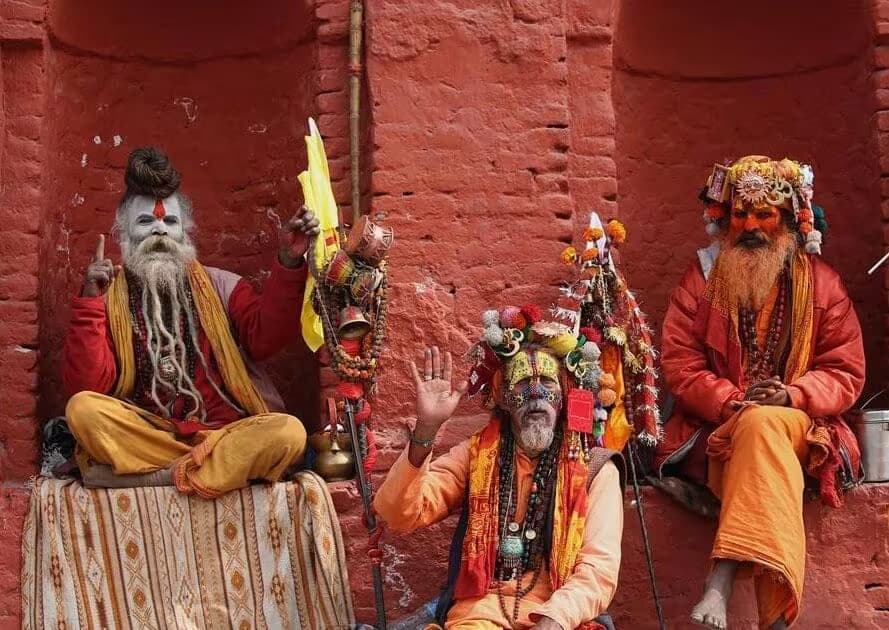
Pashupatinath is one of the few great pilgrimage sites where the full cycle of Hindu life is visible to any visitor. Cremations burn on the ghats through the day; mourning families shave their heads on the river steps; sadhus — some genuinely ascetic, some posing for photographs — hold court on the east bank. Come at dusk for the Bagmati aarti, when butter lamps, bells, and chanting fill the riverbank in a ceremony that has become one of Kathmandu's most moving evening rituals. A short walk upstream, Guhyeshwari Temple — the Shakti counterpart to Pashupati's Shiva — completes the pilgrimage pair.
A year of festivals
Maha Shivaratri is the temple's defining night, when hundreds of thousands of pilgrims and sadhus from across Nepal and India converge on the complex. Teej turns the precinct red with fasting women dancing for Shiva and Parvati. On Bala Chaturdashi, families walk Mrigasthali through the night scattering seven sacred grains for departed relatives. And during the month-long Swasthani Brata Katha in Magh, when devotees keep the great winter fast centred on Salinadi at Sankhu near Vajrayogini Temple, the Bagmati ghats at Pashupati fill with the same cold-water bathing and Shiva devotion — the two riverbanks form one devotional geography for the Valley's hardest month of vows. For the wider tradition, browse the Hindu temples collection; Boudhanath Stupa is only a short ride away for the Valley's Buddhist counterpoint.
Access & Mobility
Road access reaches the wider Pashupatinath area, but the temple precinct includes walking, steps, crowds, and cremation-ghat edges. Non-Hindus cannot enter the main temple sanctum.
- Vehicle
Vehicle drop-off is outside the temple precinct; final movement is on foot through gates and courtyards.
Best visited in autumn.autumn: best, 10°C to 27°C. Perfect weather for exploring the extensive temple complex. Dashain brings special pujas and a festive atmosphere. monsoon: possible, 20°C to 30°C. Bagmati River swells. Cremation ghats are atmospheric in the rain. Carry an umbrella for the temple complex walk. spring: good, 12°C to 30°C. Warm days. Maha Shivaratri (Feb/Mar) draws massive crowds. Outside the festival, comfortable visiting conditions. winter: good, 3°C to 20°C. Cool and clear. Morning aarti ceremonies are magical in the crisp winter air. Dress warmly for early morning visits.
The Almanac
Bagmati River swells. Cremation ghats are atmospheric in the rain. Carry an umbrella for the temple complex walk.
Folio III
Nearby Sacred Sites
Places within a short walk that help turn this stop into a small sacred cluster.
Guhyeshwari Temple
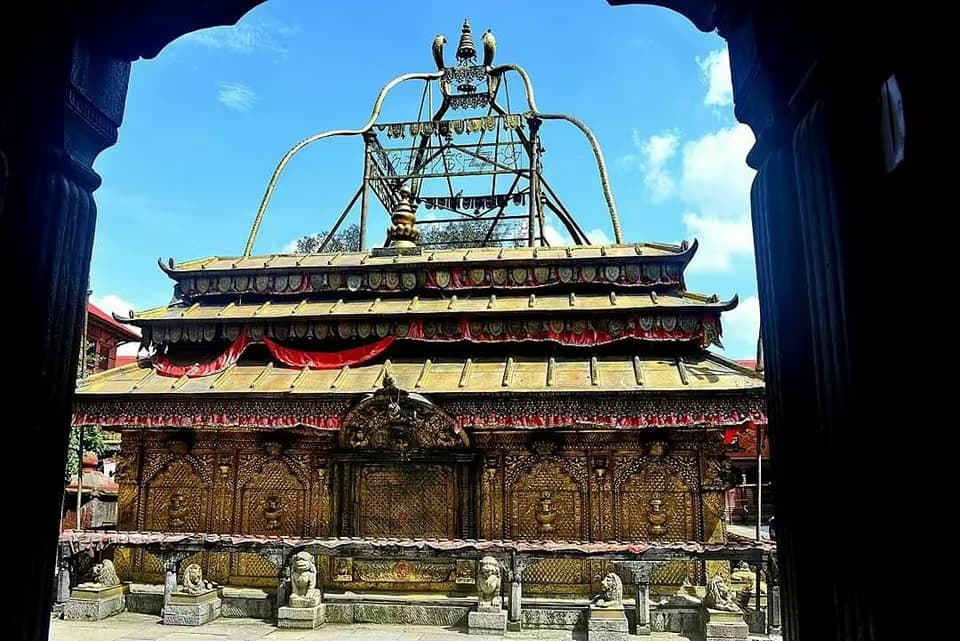
A major Shakti Peeth on the Bagmati where part of Sati fell — Pashupatinath's goddess counterpart, and for Newar Buddhists the root of the Swayambhu lotus.
Chandra Binayak Temple
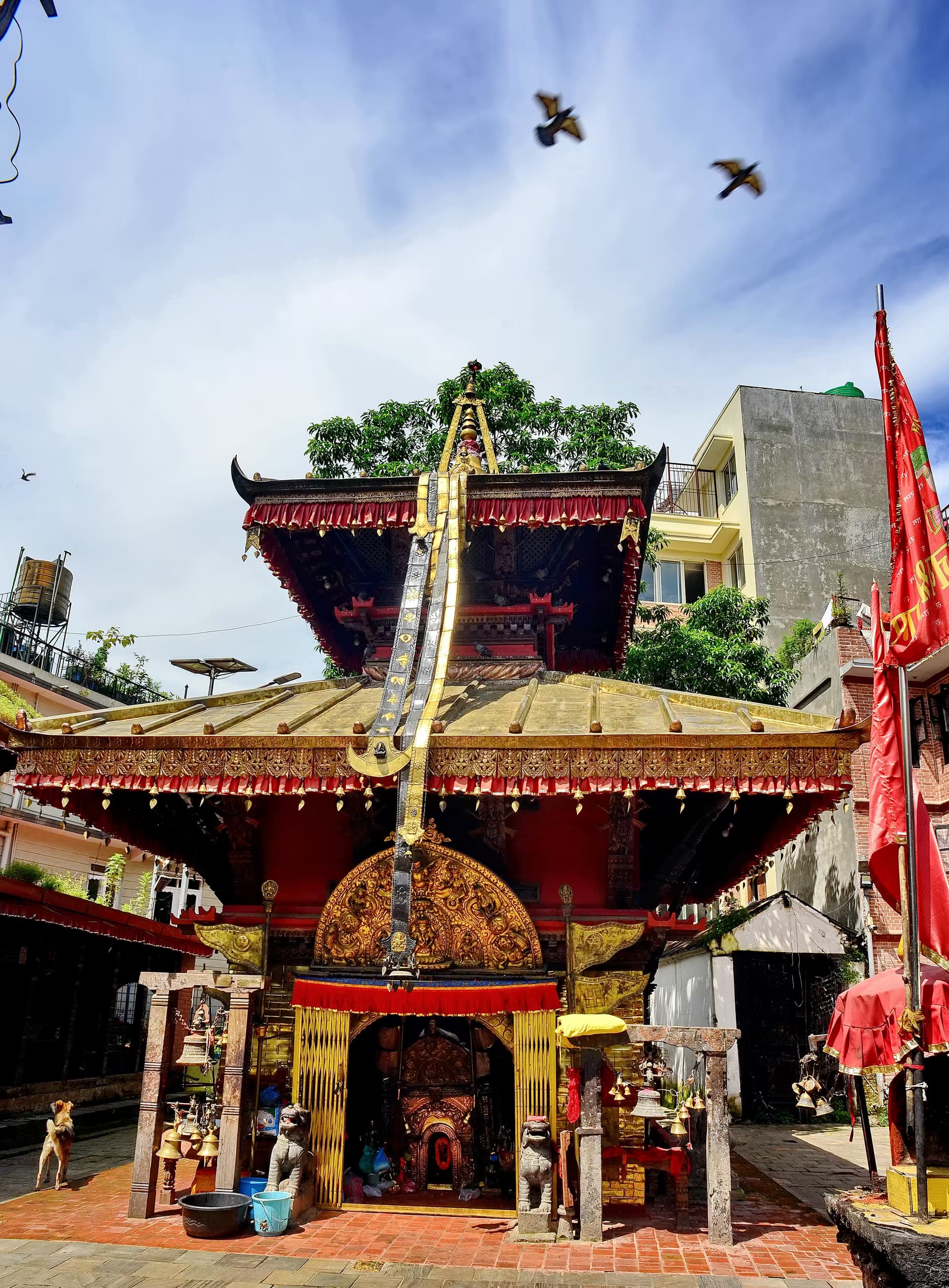
Northern Kathmandu Valley Char Binayak shrine at Chabahil, a busy Ganesh temple in the old pilgrimage corridor.
Coda
Continue the Pilgrimage
Related
Connected places and entries worth pairing
Guides that feature this place
- Itinerary11 min
A Spiritual Journey Through Nepal: Temples, Monasteries & Sacred Landscapes
A guide to Nepal's most powerful spiritual sites — from Hindu temples and Buddhist monasteries to sacred mountains and meditation retreats, with a suggested 2-week pilgrimage route.
- Regional11 min
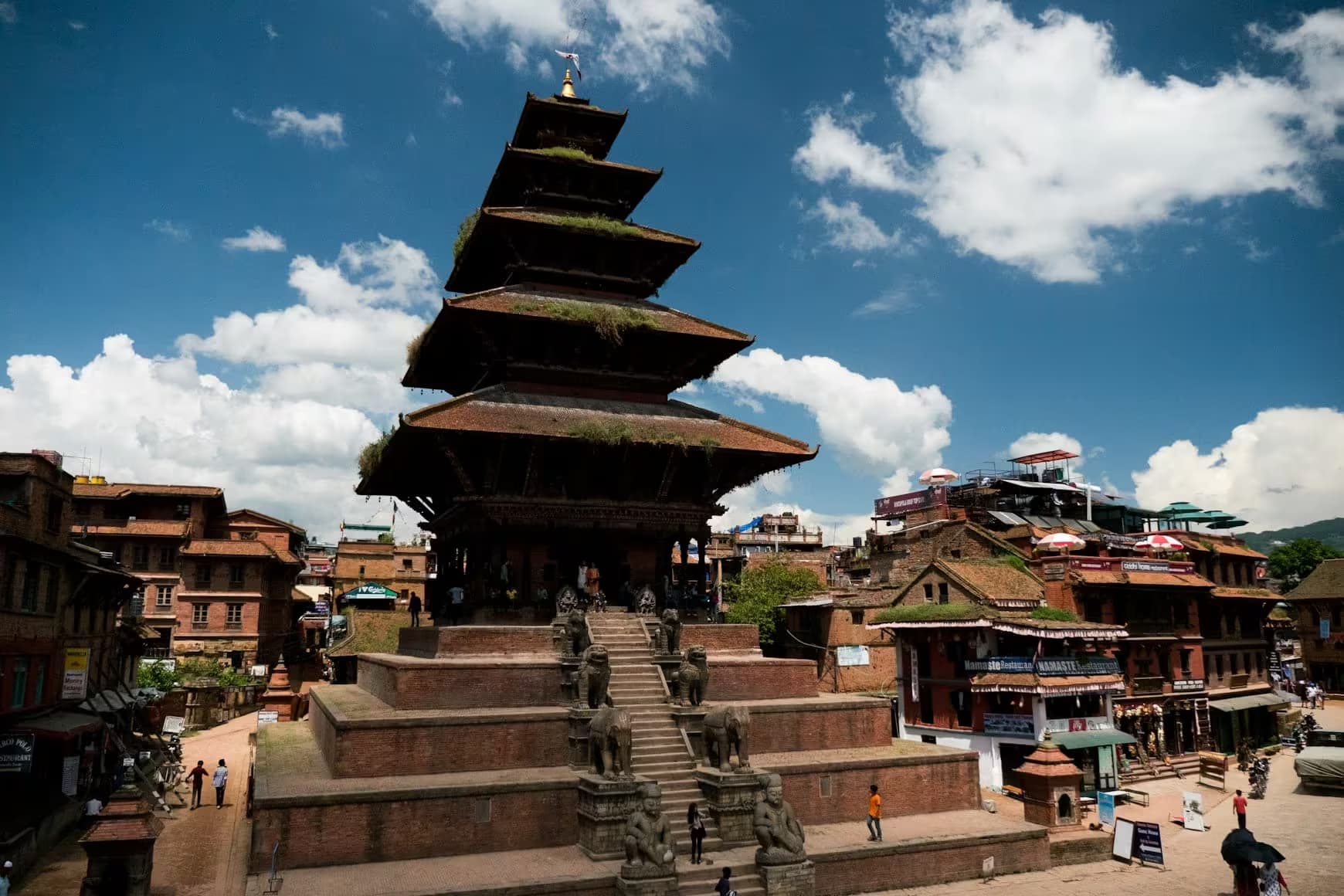
Kathmandu Valley Heritage Walk: Temples, Stupas & Living Culture
A routed three-day walk through the Kathmandu Valley's seven UNESCO monument zones — with the entry fees, opening hours and the lanes, bahals and bazaar streets that connect them.
- Itinerary9 min
Nepal Pilgrimage Itinerary: Pashupatinath, Lumbini, Janakpur & Muktinath
A practical Nepal pilgrimage itinerary linking Pashupatinath, Janaki Mandir, Lumbini, and Muktinath with 3-5 day, 7 day, and 10-14 day route options.
- Regional8 min
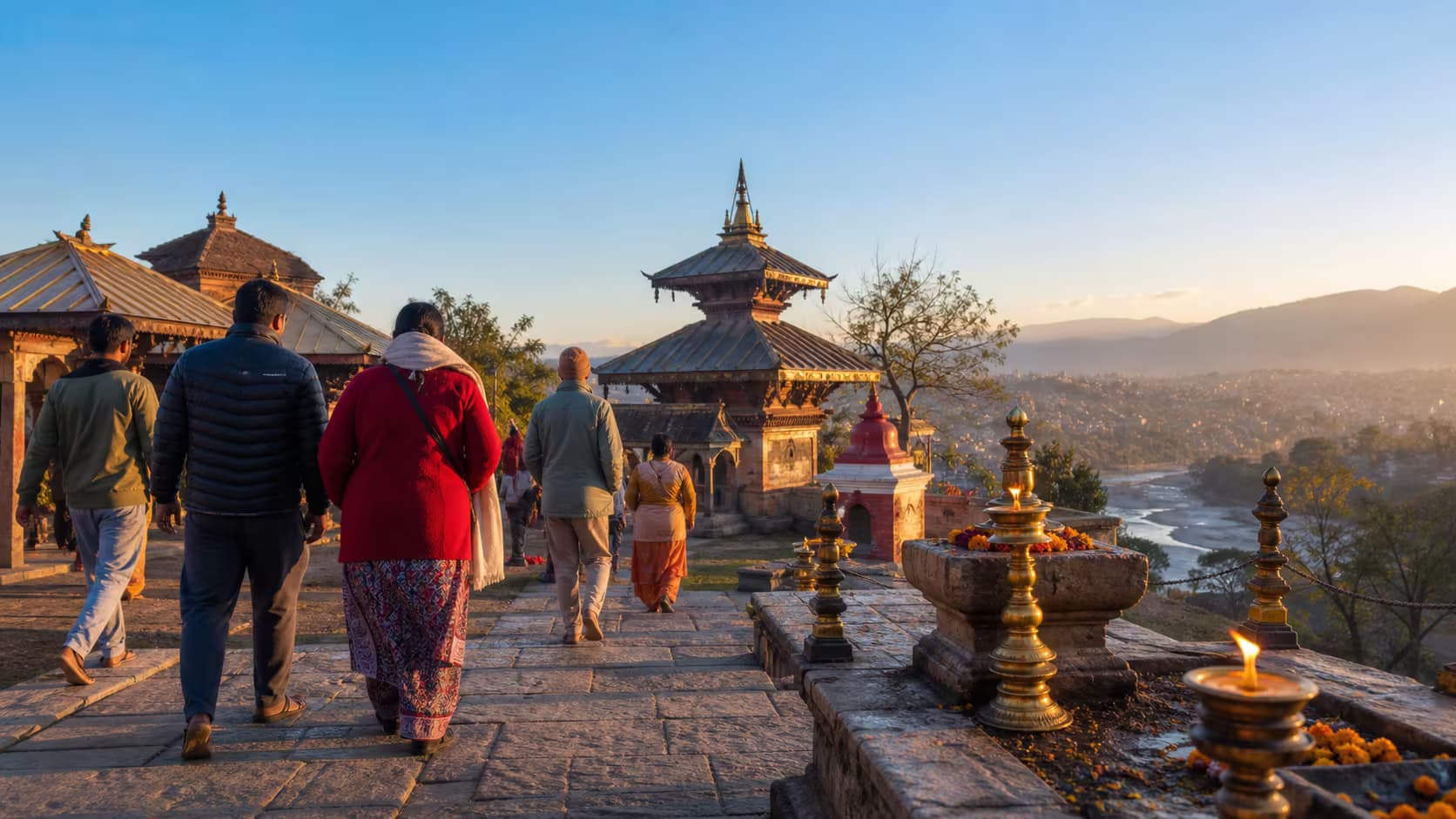
Hindu Pilgrimage Circuit in Nepal: Temples, Routes, Festivals & Etiquette
A Hindu pilgrimage planning guide for Nepal covering Pashupatinath, Muktinath, Janaki Mandir, Manakamana, Pathibhara, Halesi, Baraha Kshetra, Devghat, Doleshwar, and major festival timing.
- Seasonal8 min
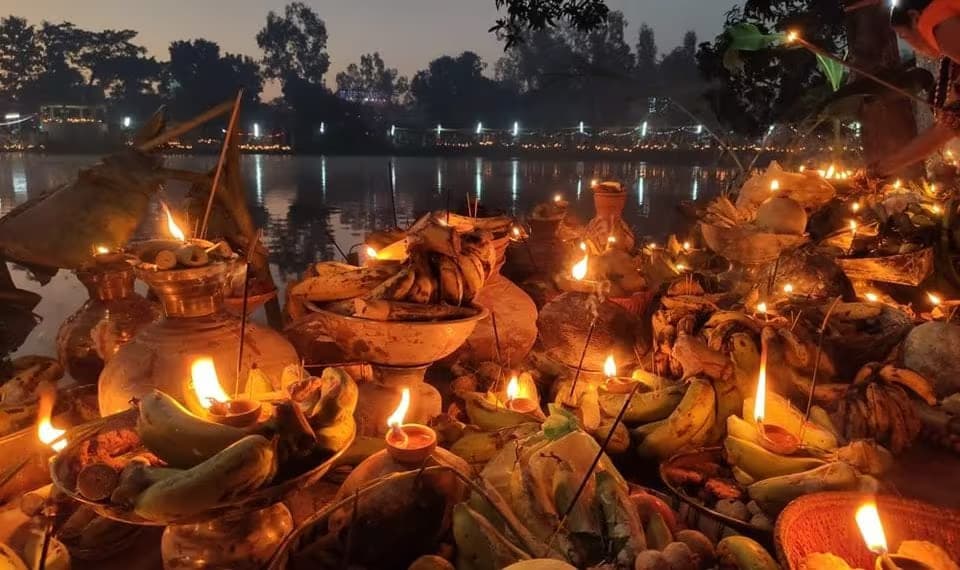
Chhath Puja 2026: Dates, the Four Days, and Where to Watch
Chhath Puja 2026 runs November 12-15, with the evening offering on Saturday, November 14 and the dawn offering on Sunday, November 15. The four-day schedule, the 36-hour fast, the best ghats in Janakpur and Kathmandu, and how to watch respectfully.
Trips that visit here
Elsewhere in this region
 Sacred Site
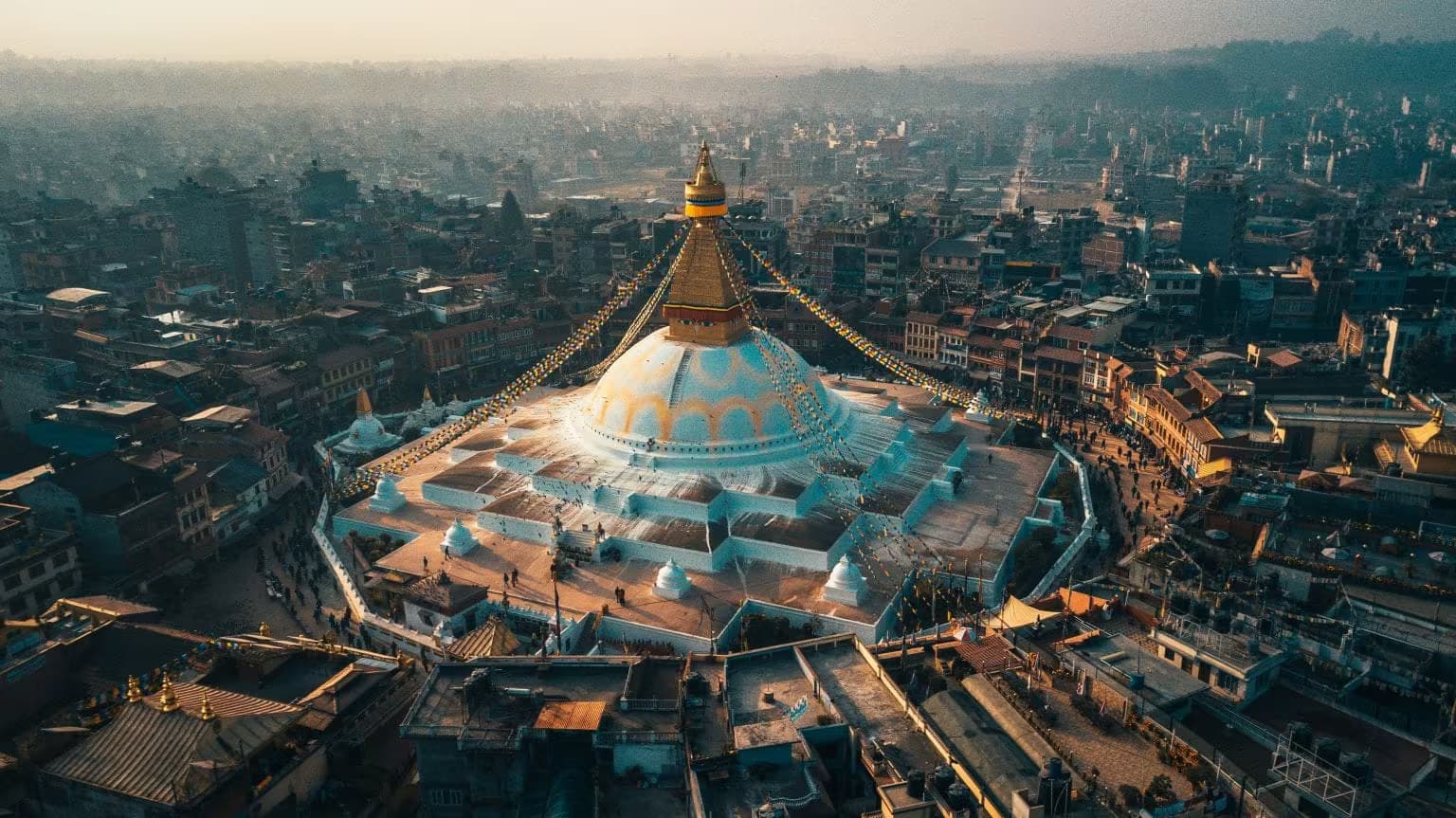
Boudhanath Stupa
 Festival
Maha Shivaratri
- festival_element
Renewing the Janai
 Guide
GuideKathmandu Valley Heritage Walk: Temples, Stupas & Living Culture
 festival_element
Sandhya Arghya
 Guide
GuideNepal Pilgrimage Itinerary: Pashupatinath, Lumbini, Janakpur & Muktinath
 Guide
GuideChhath Puja 2026: Dates, the Four Days, and Where to Watch
 festival_element
Ritual Bathing at Dawn
 festival_element
The All-Night Vigil
 festival_element
Parvati and the Haritalika Vow
 festival_element
Pashupatinath on Teej
 Guide
GuideHindu Pilgrimage Circuit in Nepal: Temples, Routes, Festivals & Etiquette
 festival_element
The Nirjala Fast
 festival_element
The Sadhus of Pashupatinath
 Guide
GuideA Spiritual Journey Through Nepal: Temples, Monasteries & Sacred Landscapes
 festival_element
Shiva as Mahadev
Help us get it right
Know Pashupatinath Temple better than we do?
We write from research and reporting, and the ground changes faster than we can keep up. If something here is out of date, or you have been and would tell it differently, we would rather hear it.