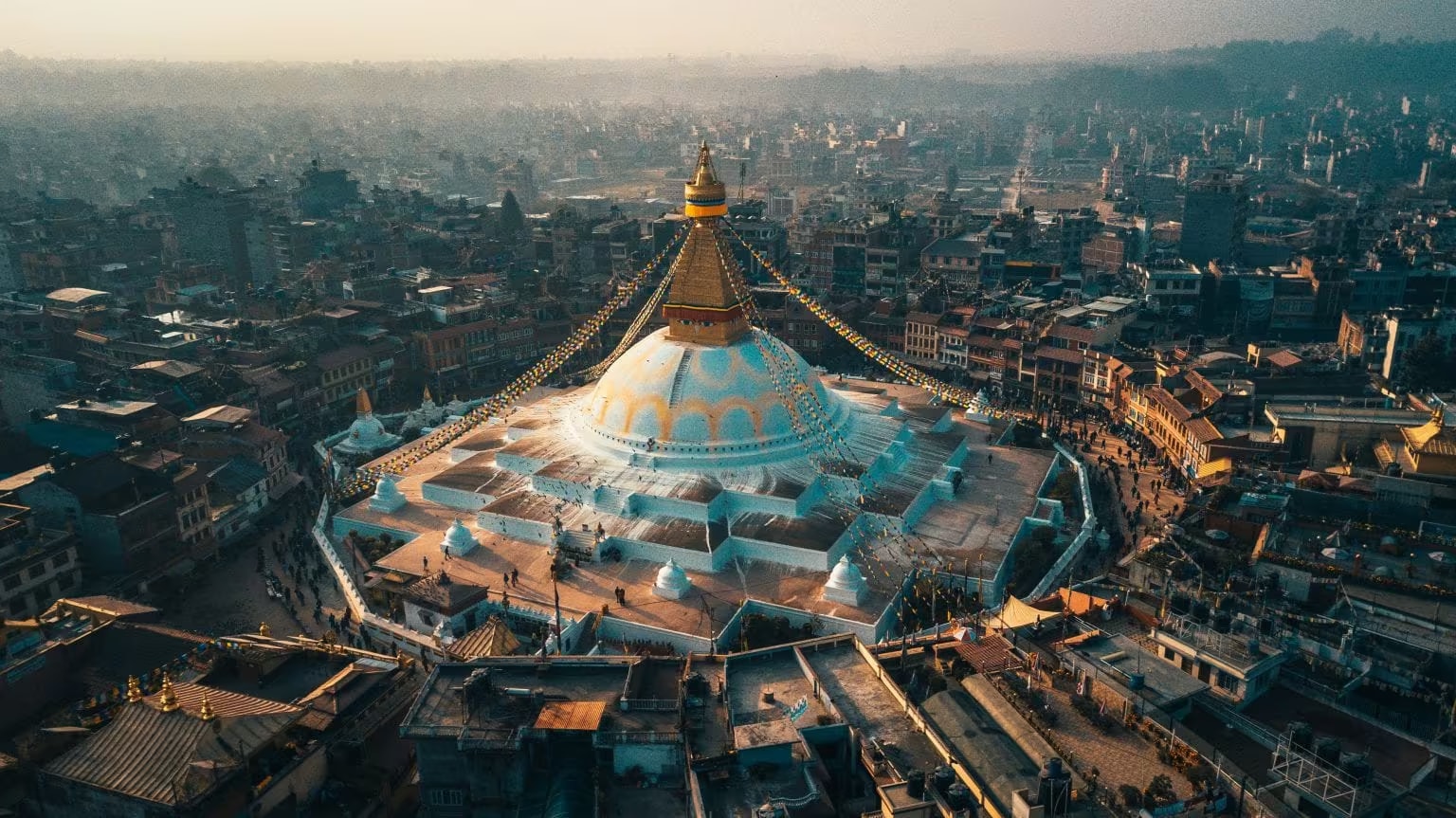
Stupa · Buddhist
Boudhanath Stupa
बौद्धनाथ स्तूप
Amitabha Buddha·5th-6th century CE·Kathmandu·UNESCO World Heritage
One of the world's great stupas and the heart of Tibetan Buddhism in Nepal — raised, legend says, by a poultry-keeper and her sons, and rebuilt after 2015 by its own community.
Dedicated to
Amitabha Buddha
Period
5th-6th century CE
Hours
Open 24 hours (best visited dawn or dusk)
Admission
Local 400 · USD 4
Neighborhood
Boudha
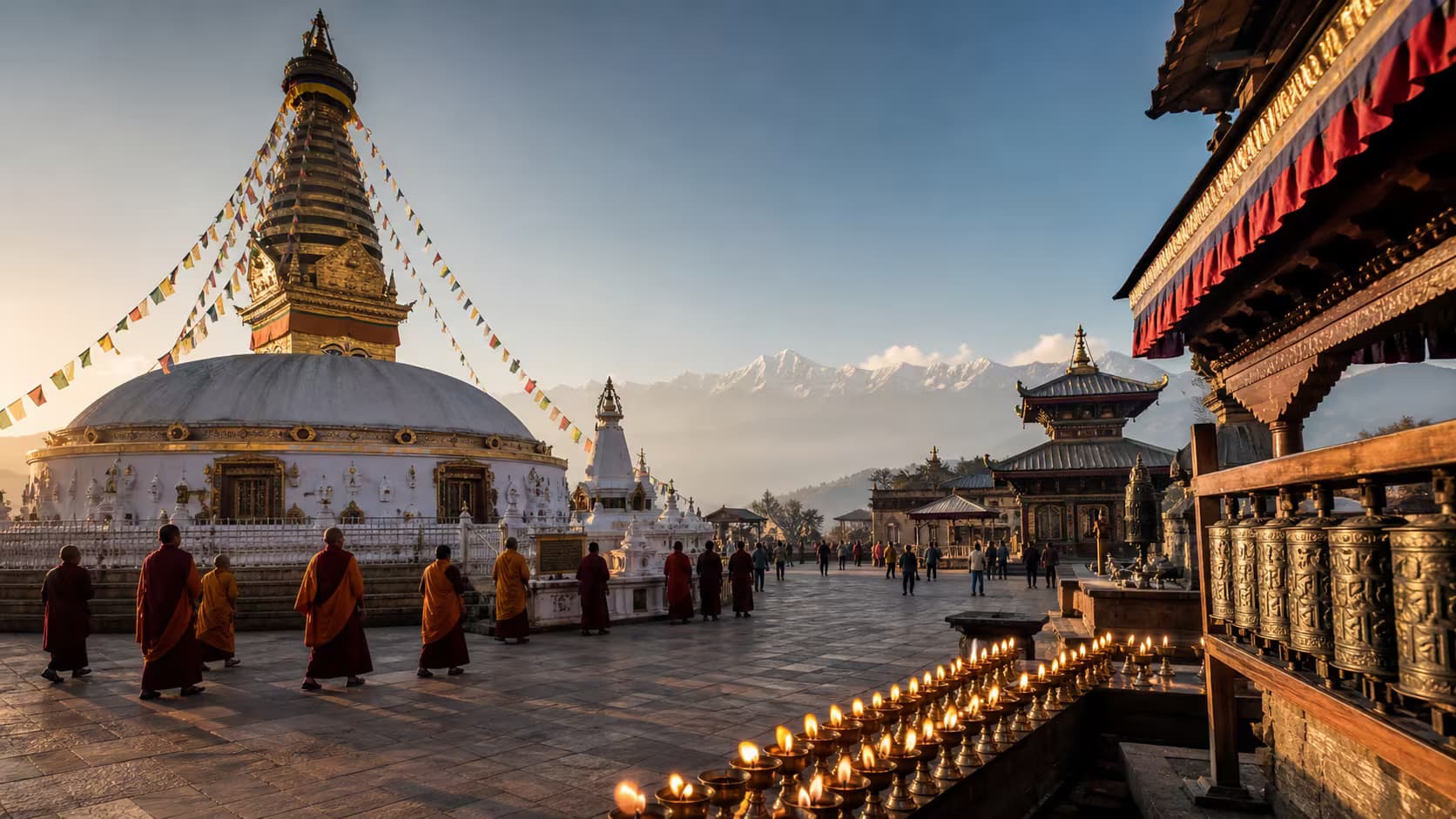
Boudhanath is one of the largest stupas in the world and the holiest Tibetan Buddhist monument outside Tibet — a vast white dome crowned by the all-seeing eyes of the Buddha, rising from a tight ring of houses, gompas, and prayer-wheel arcades northeast of Kathmandu. The whole structure is a walkable mandala: terraced plinths for the earth, the dome for water, the thirteen golden rings of the spire for the stages to enlightenment. It is a UNESCO World Heritage Site, and from before dawn until late evening it is never without circumambulating pilgrims.
The poultry-keeper's stupa
The stupa's founding legends are among the Valley's best. In Newar tradition this is Khasti Chaitya — the dewdrop stupa — built, the story goes, during a great drought, when cloths were spread out at night and wrung of their dew to mix the mortar. Tibetan tradition tells instead of Jadzima, a poultry-keeper who asked the king for as much land as a single buffalo hide would cover and then cut the hide into a long, thin strip, enclosing this whole ground; the king, bound by his word, let the promise stand — in Tibetan the stupa is Jarung Khashor, often glossed as "the permission that slipped out" — and she and her four sons raised the stupa over relics of a Buddha of a former age. Behind the legends sits a real antiquity: the chronicles associate the stupa's founding with the Licchavi king Shivadeva I around 600 CE.
Lhasa's southern gate
For centuries Boudhanath was the last great shrine on the Kathmandu–Lhasa trade road, where Newar and Tibetan merchants prayed for safe crossing of the high passes — and gave thanks on the way back. After 1959, Tibetan refugees settled around the dome, and the quarter became the centre of Tibetan life in exile in Nepal: dozens of monasteries of every school stand within a few minutes' walk, alongside thangka studios, butter-tea kitchens, and shops strung with prayer flags. It remains the best place in Kathmandu to watch living Tibetan Buddhism at street level.
The kora
The stupa's heartbeat is the kora — the clockwise circuit walked while spinning prayer wheels and murmuring om mani padme hum. Join it at dawn, when elderly Tibetans with prayer beads share the circuit with monks and joggers, or at dusk, when thousands of butter lamps are lit and the chanting from the surrounding gompas drifts over the square. No ticket or ritual knowledge is needed; walking clockwise with everyone else is itself the practice. At Losar, the Tibetan New Year, the dome is freshly limewashed and repainted with saffron lotus arcs, and new prayer flags are strung from the spire.
Cracked and rebuilt by its own people
The 2015 earthquake cracked the spire above the dome, and the entire upper structure had to be taken down to the harmika and rebuilt. What followed became a point of pride: the restoration was organised by the local stupa committee and paid for entirely by private donations from Buddhist communities — around US$2.1 million and more than 30 kilograms of gold — with no government money. When the stupa reopened in November 2016, the community that walks the kora had rebuilt its own monument.
Festivals and the wider circuit
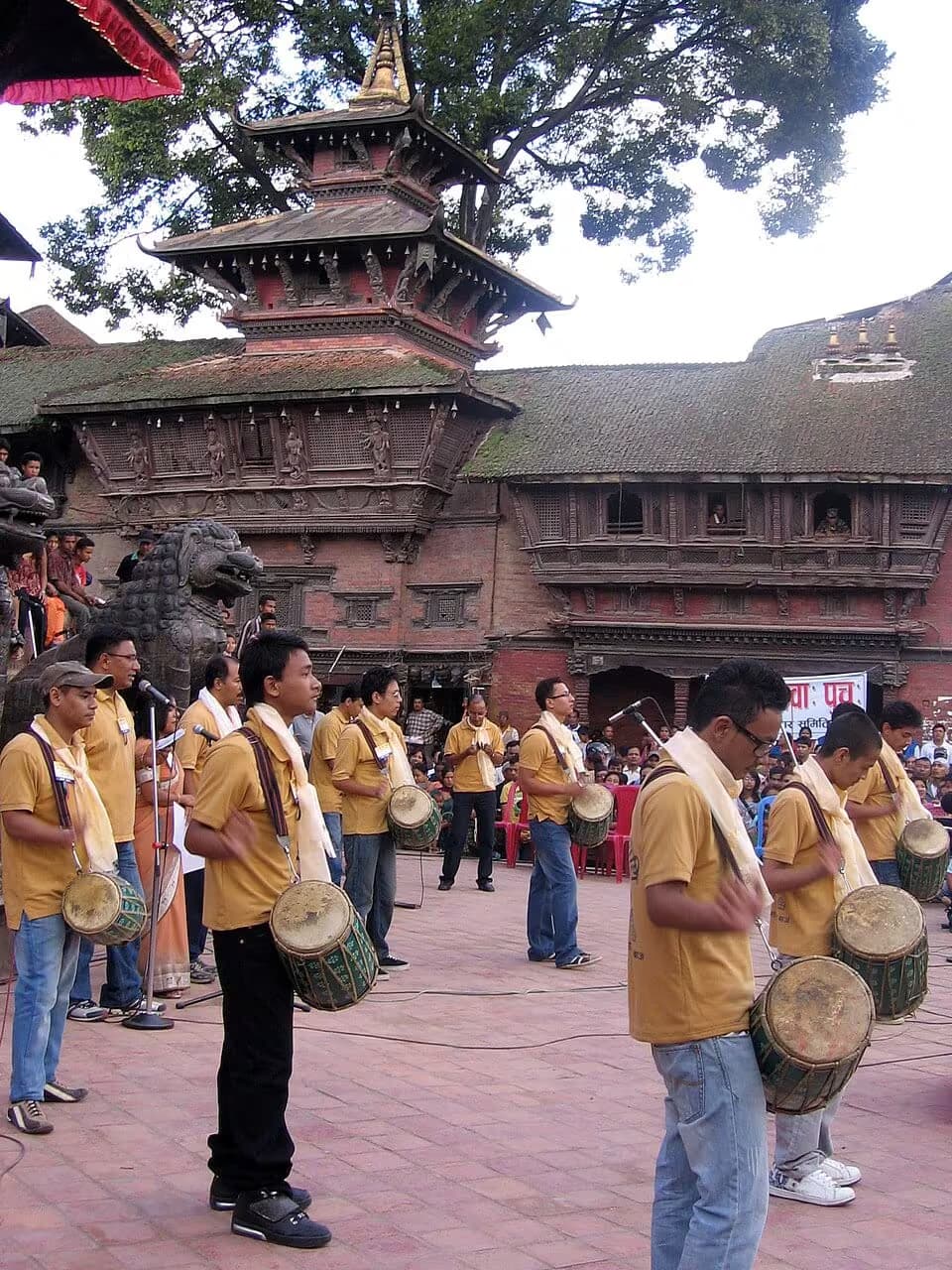
Buddha Jayanti brings the year's largest crowds, when the dome is ringed with lamps for the Buddha's birth, awakening, and passing. During Gunla, the Newar Buddhist holy month, white-clad devotional bands walk out from the old city at dawn, and their music reaches Boudha too. Tradition pairs this stupa with Swayambhunath across the Valley and Namo Buddha on its ridge to the east — the three great stupas pilgrims hope to honour together. Browse the Buddhist circuit collection for the wider trail.
Best visited in autumn.autumn: best, 10°C to 27°C. Clear blue skies make the golden spire glow. Evening butter lamp ceremonies are atmospheric. Perfect walking weather. monsoon: possible, 20°C to 30°C. Rain showers but the stupa is beautiful wet. Rooftop cafes offer sheltered views. Fewer tourists for peaceful kora walks. spring: good, 12°C to 30°C. Warm and pleasant for circumambulation. Tibetan New Year (Losar) celebrations in Feb/Mar are spectacular. winter: good, 3°C to 20°C. Crisp mornings, sunny afternoons. The stupa gleams in winter light. Warm up with Tibetan butter tea in surrounding cafes.
The Almanac
Rain showers but the stupa is beautiful wet. Rooftop cafes offer sheltered views. Fewer tourists for peaceful kora walks.
Coda
Continue the Pilgrimage
Related
Connected places and entries worth pairing
Guides that feature this place
- Regional8 min
Buddhist Pilgrimage in Nepal: Lumbini, Boudhanath, Swayambhunath & Monasteries
A Buddhist pilgrimage guide to Nepal covering Lumbini, Boudhanath, Swayambhunath, Namo Buddha, Tilaurakot, Tibetan monasteries, Newar bahals, etiquette, and festival timing.
- Regional11 min
Kathmandu Valley Heritage Walk: Temples, Stupas & Living Culture
A routed three-day walk through the Kathmandu Valley's seven UNESCO monument zones — with the entry fees, opening hours and the lanes, bahals and bazaar streets that connect them.
Trips that visit here
Elsewhere in this region
Help us get it right
Know Boudhanath Stupa better than we do?
We write from research and reporting, and the ground changes faster than we can keep up. If something here is out of date, or you have been and would tell it differently, we would rather hear it.