Tihar (Deepawali)
तिहार
Also known as: Deepawali, Yamapanchak, Festival of Lights
Nepal's five-day festival of lights honoring crows, dogs, cows, oxen, and siblings — a uniquely Nepali take on Diwali.
Location
Nationwide
Duration
5 days
Month (Local)
Kartik
Month (AD)
October/November
Plan around Tihar (Deepawali)Tihar: Five Nights of LightsShow planHide plan
Tihar: Five Nights of Lights
Tihar's five days honour a crow, a dog, a cow, an ox and a brother — in that order. Unlike Dashain the country stays open, so this is the festival week a visitor can actually walk through.
5 days · 13 stops
Copying makes it yours — change any day, then share the link with whoever you're going with.
Highlights
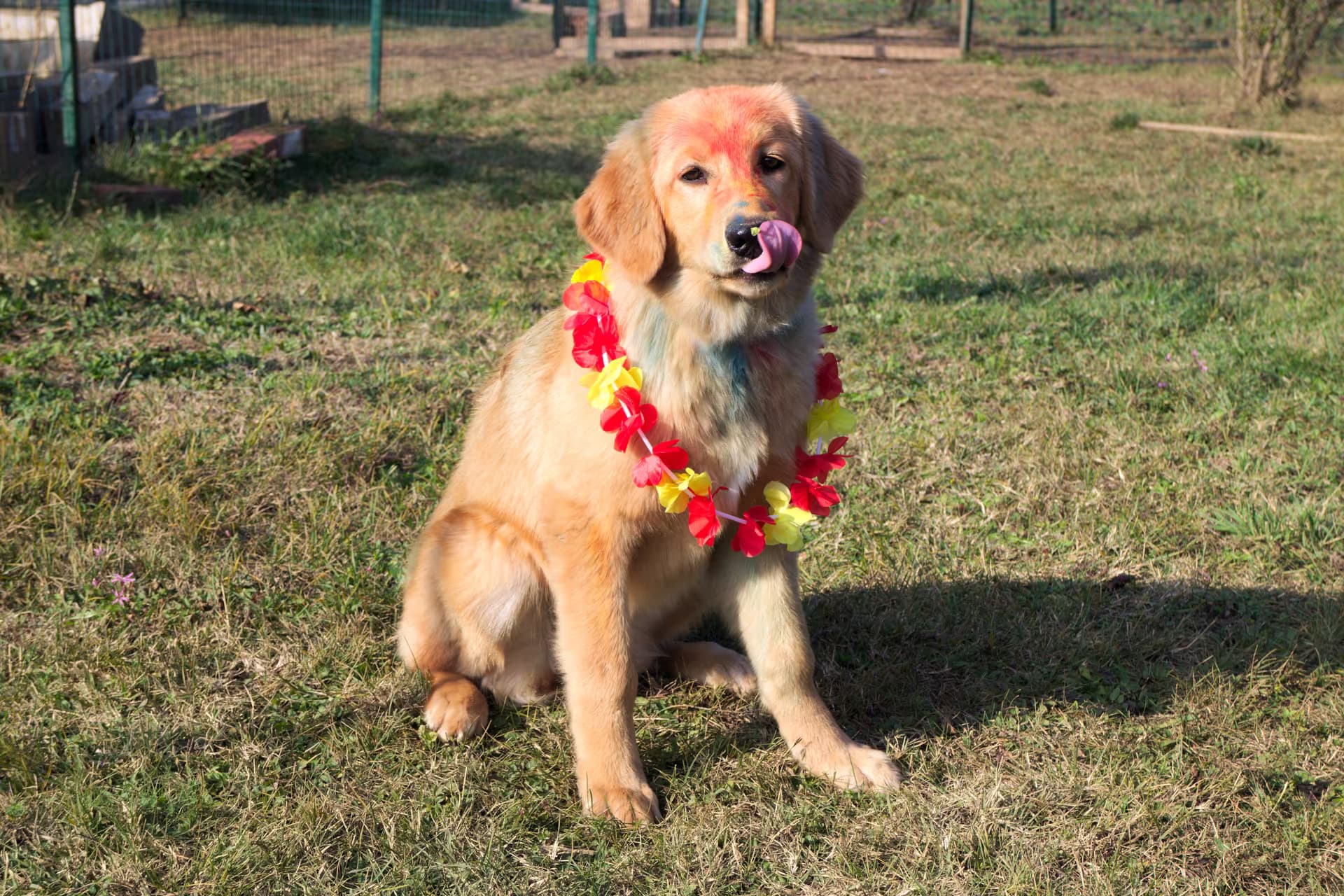
Kukur Tihar — dogs everywhere garlanded and honored. Laxmi Puja night — entire cities illuminated. Deusi-Bhailo singing groups going door to door. Bhai Tika — the bond between brothers and sisters.
Tips for Visitors
Tihar is more tourist-friendly than [Dashain](/festivals/dashain) — many businesses stay open. See the [Tihar 2026 dates and schedule](/guides/tihar-2026-dates-schedule) for the exact date of each of the five days, which shift every year with the lunar calendar. The Laxmi Puja evening is spectacular for photography — be somewhere with a view, a rooftop or a hillside above the valley, from dusk onward. Join a Deusi-Bhailo group if invited. Bhai Tika is a private family ceremony held indoors; do not photograph it uninvited. Sweets are everywhere — try [sel roti](/food/sel-roti), the ring-shaped rice bread, and [samay baji](/food/samay-baji) on Mha Puja day.
Tihar is Nepal's most beautiful festival, a five-day celebration of lights that illuminates the entire country. While it shares roots with India's Diwali, Nepal's Tihar is uniquely its own — and its other name, Yamapanchak, "the five days of Yama", is the key to reading it. This is not simply a festival of lamps. It is a five-day negotiation with mortality, conducted through animals, the goddess of abundance, and the bond between siblings.
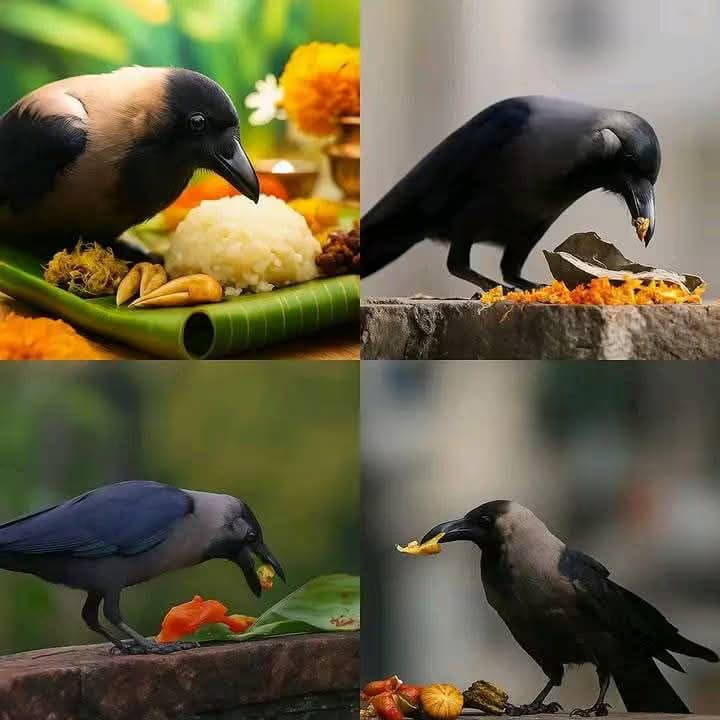
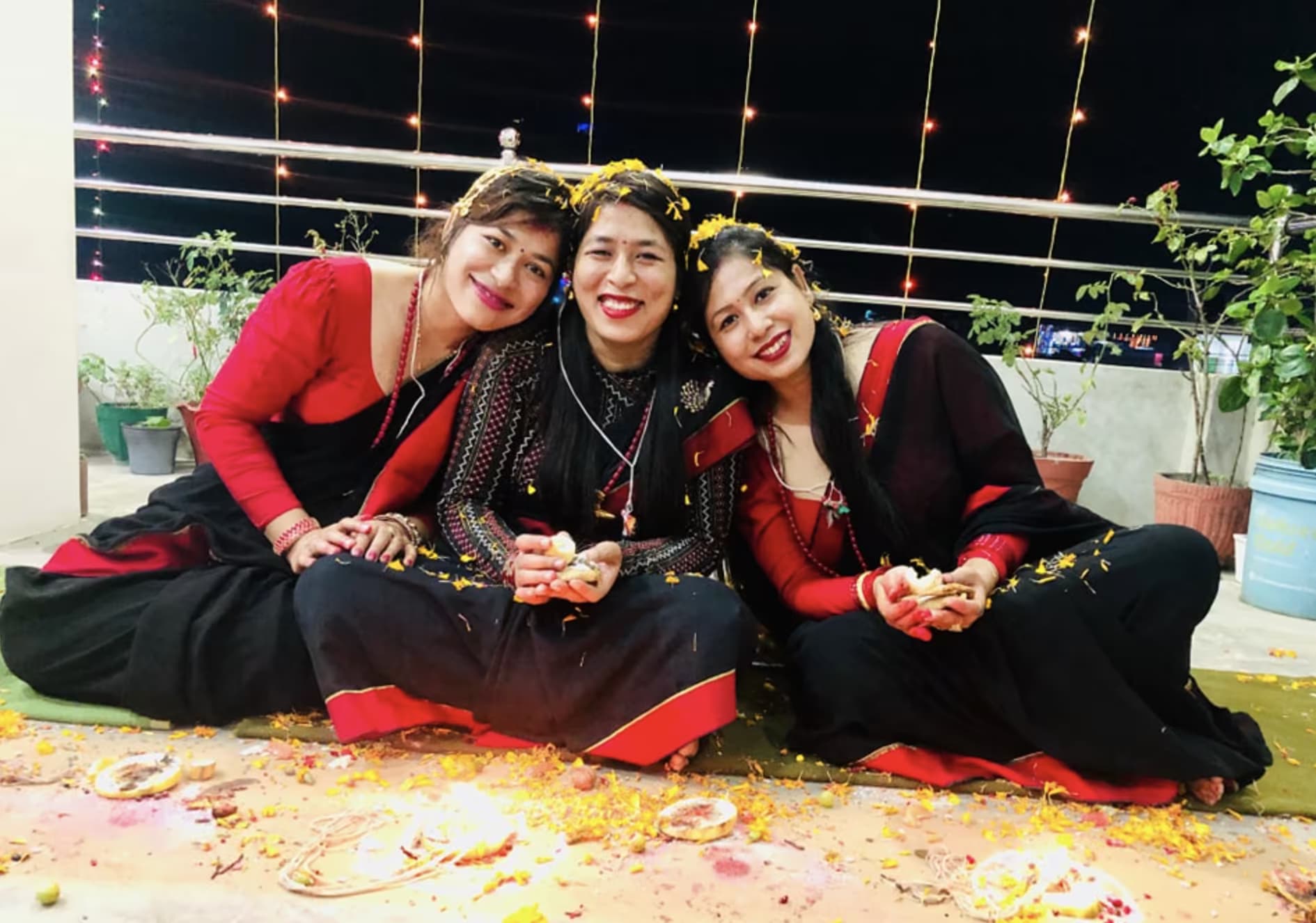
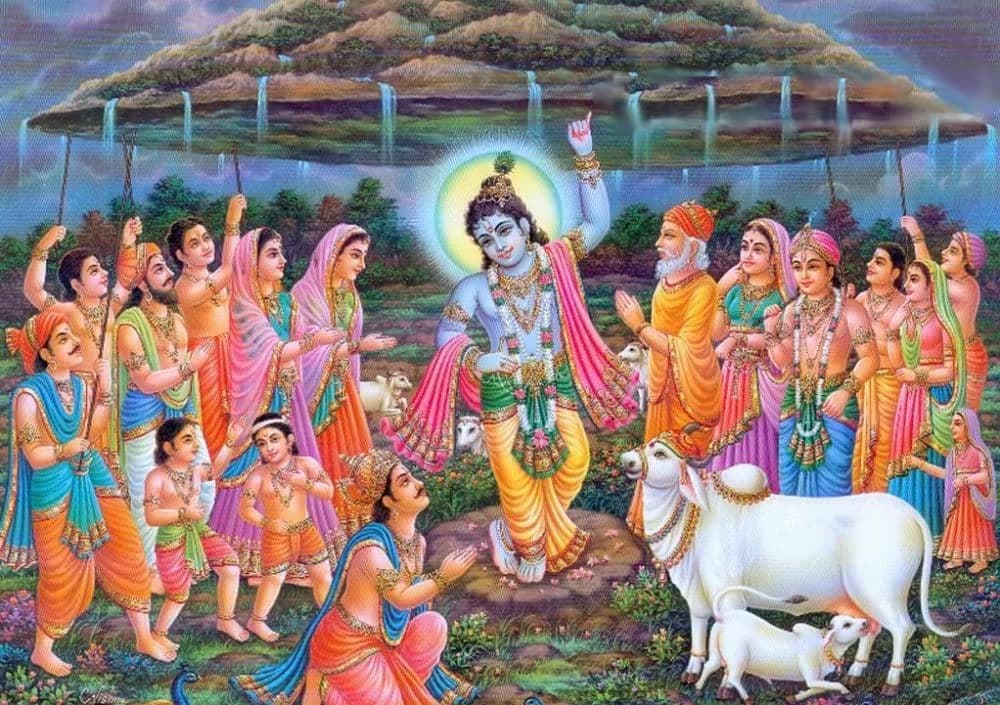
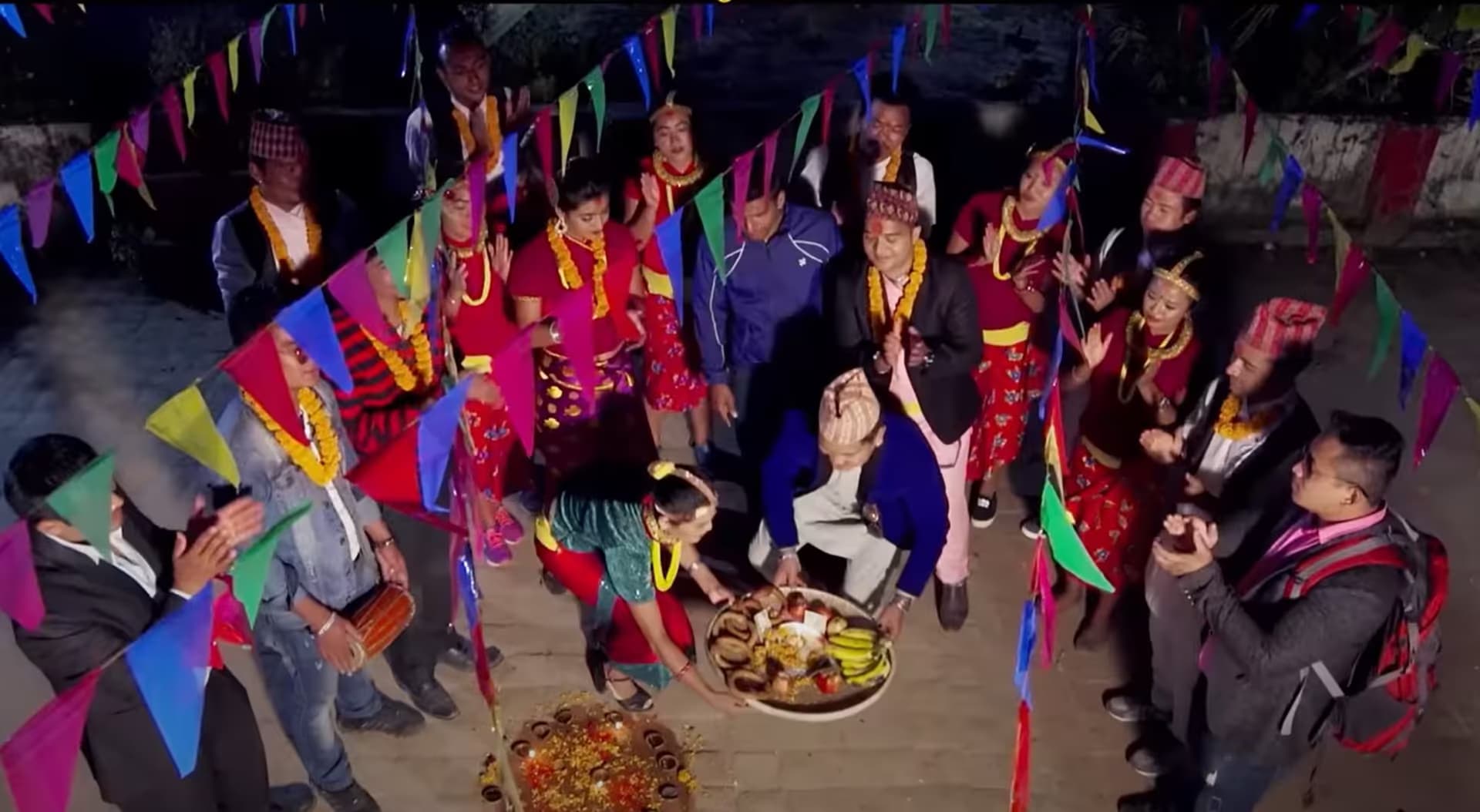
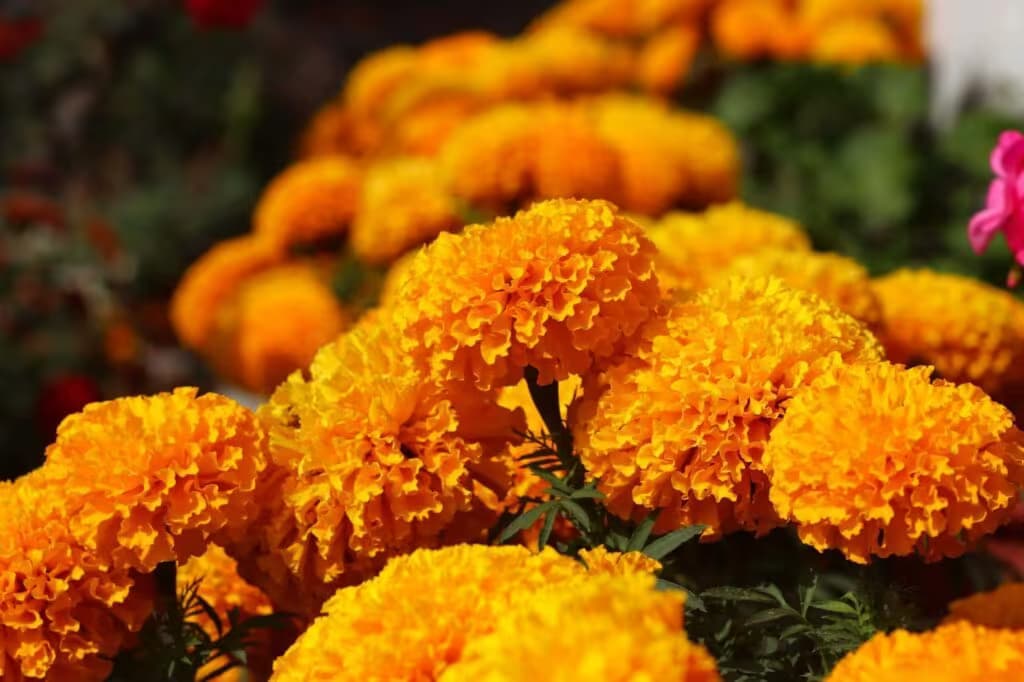
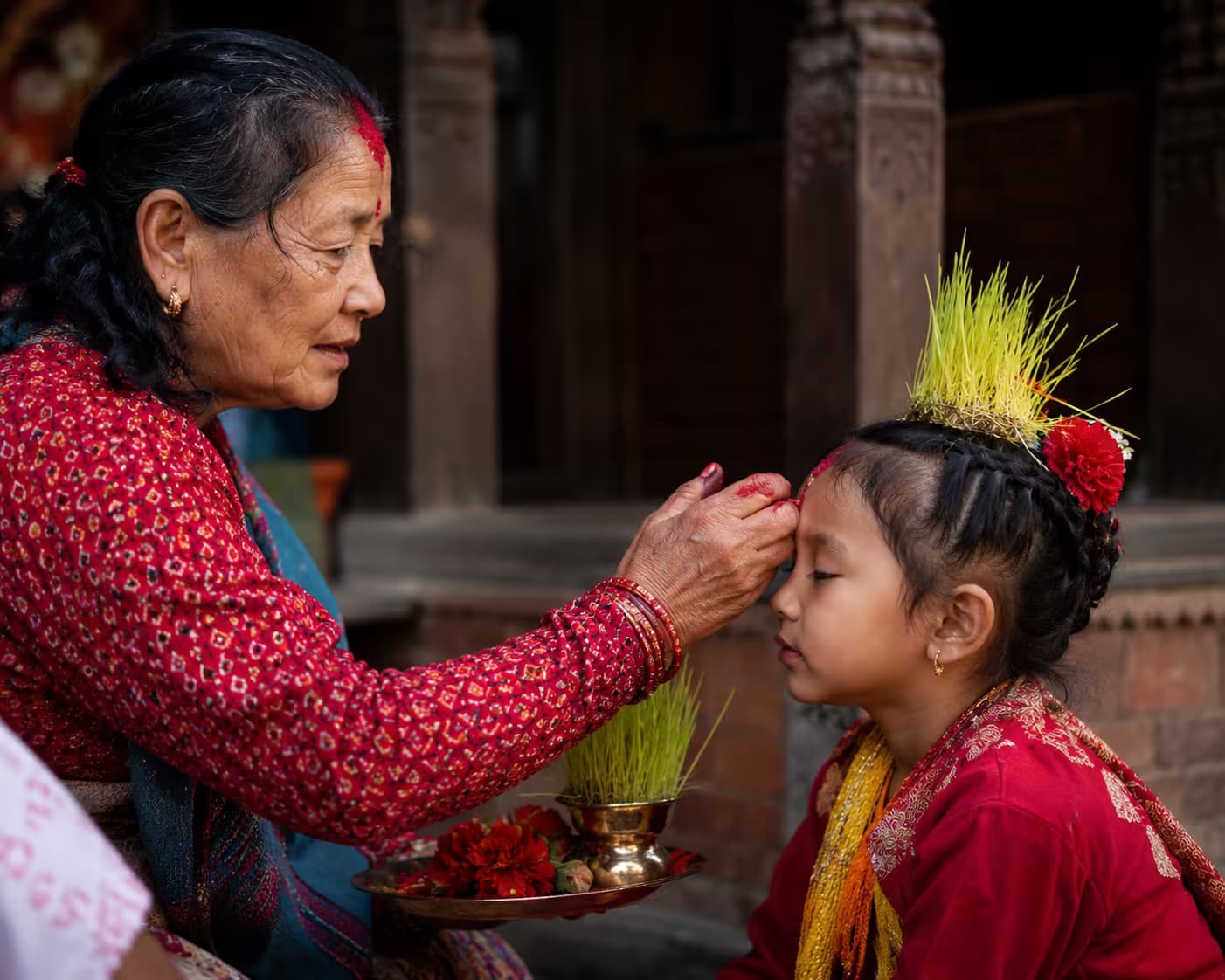
Each day honors a different being. Kaag Tihar honors crows as the messengers of Yama, the god of death, fed on rooftops and doorsteps before the household eats. Kukur Tihar celebrates dogs — every dog in Nepal gets a marigold garland, a red tika, and a plate of meat and sweets, strays included — as the guardians of the path between the living and the dead. Gai Tihar honors cows and, on the same evening in most years, Laxmi Puja welcomes the goddess of wealth into houses that have been cleaned and lit for her. Govardan Puja honors oxen as the power of the plough, and in Newar households the same day carries Mha Puja and the turn of the Newar year. Bhai Tika closes the festival, when sisters place a seven-strand tika of five colours on their brothers as a protection against Yama himself.
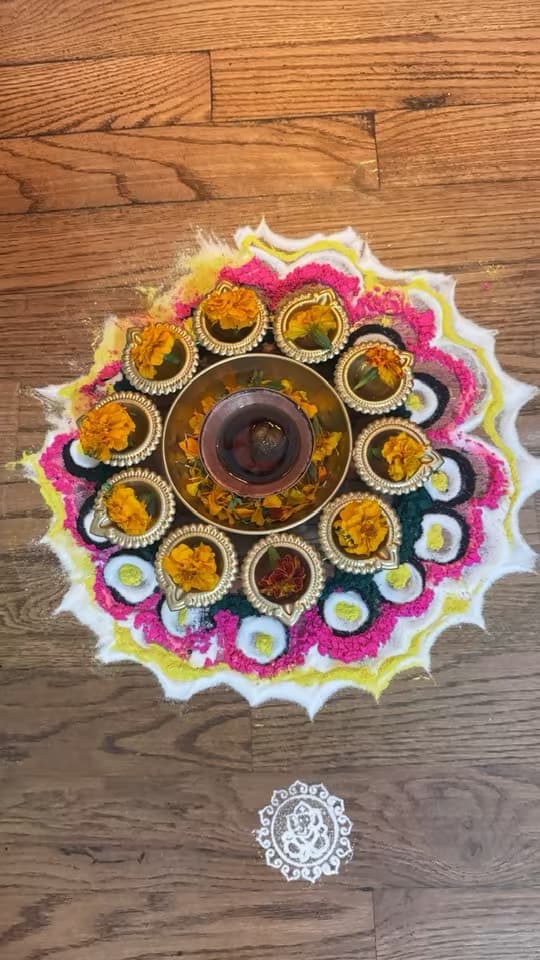
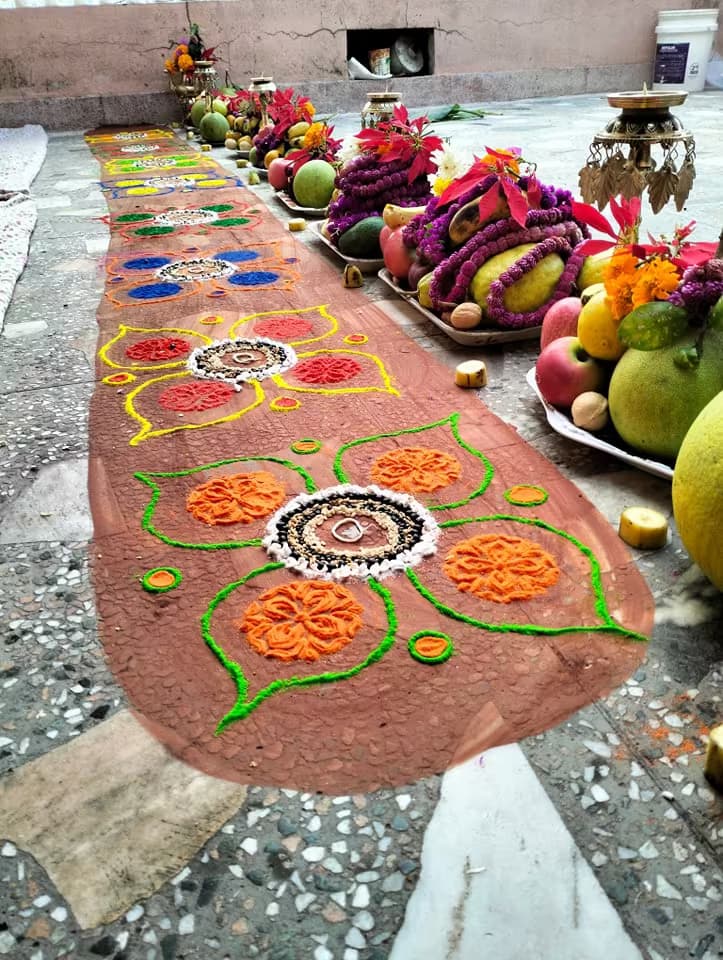
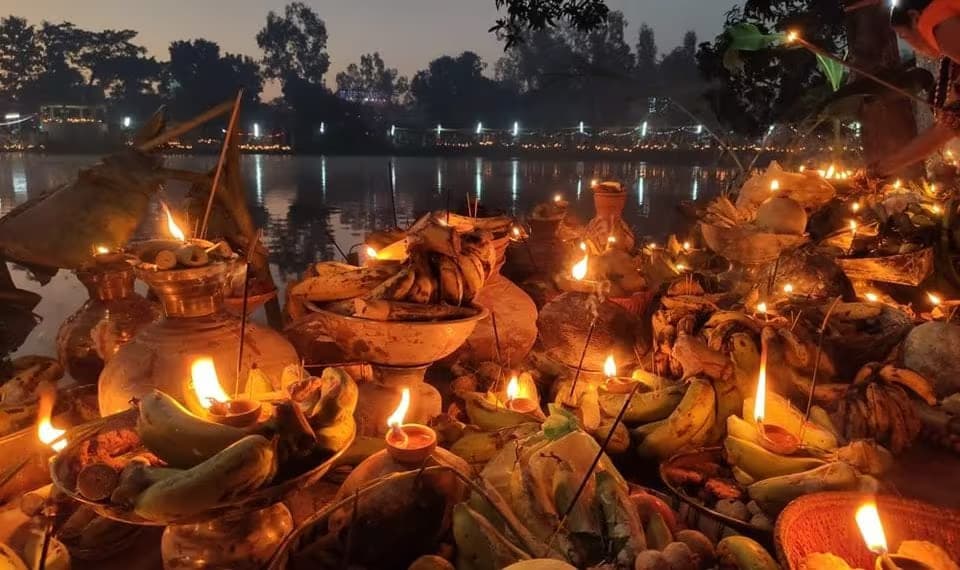
The nights transform Nepal. Every window, rooftop, and doorway glows with oil lamps, candles, and electric lights, and rangoli mandalas are drawn at thresholds in coloured powder, flower petals, or rice flour. Because each household arranges its own lamps, the effect is additive rather than uniform, and from any height above the Kathmandu Valley the towns read as grids of golden light. The old lanes around Kathmandu, Patan, and Bhaktapur Durbar Squares are better for this than the squares themselves.
Running through the last nights is Deusi Bhailo — call-and-response singing groups moving door to door, collecting donations that go back into neighbourhood funds. It is the one part of Tihar that comes to you rather than requiring you to go anywhere.
Day four carries a second festival inside it. While Hindu households across Nepal perform Govardan Puja, Newar families perform Mha Puja, a puja directed not at any deity but at the worshipper's own body: each family member sits at the centre of a mandala drawn on the floor and receives the full sequence of lamp, flowers, fruit, tika, and aila. The logic is tantric rather than self-regarding — the life force in a person is a local expression of the same power worshipped in a temple. The same day is Nepal Sambat New Year, the first day of the Newar calendar, which counts by tradition from 879 CE and is one of the oldest continuously used calendars in the world.
Tihar is markedly easier to travel in than Dashain, which closes shortly before it. Many businesses stay open and the transport crush has passed, which makes it the more practical of the two autumn festivals to plan a visit around.
Guides that feature this place
- Seasonal8 min
Tihar 2026: Dates, All Five Days, and Laxmi Puja Night
Tihar 2026 runs November 7 to 11, with Laxmi Puja on Sunday, November 8. All five days with their dates from the official 2083 BS patro — including why Laxmi Puja falls a day earlier than usual this year — plus Bhai Tika, Mha Puja and Nepal Sambat, and where to see it.
- Seasonal8 min
Chhath Puja 2026: Dates, the Four Days, and Where to Watch
Chhath Puja 2026 runs November 12-15, with the evening offering on Saturday, November 14 and the dawn offering on Sunday, November 15. The four-day schedule, the 36-hour fast, the best ghats in Janakpur and Kathmandu, and how to watch respectfully.
- Seasonal9 min
Dashain 2026: Dates, the Full 15-Day Schedule, and Tika Day
Dashain 2026 runs October 11-25, with Vijaya Dashami tika on Wednesday, October 21. The fifteen-day schedule day by day, when Fulpati and tika fall, which temples open, and how to travel in Nepal's busiest fortnight.
Elsewhere in this region
Help us get it right
Know Tihar (Deepawali) better than we do?
We write from research and reporting, and the ground changes faster than we can keep up. If something here is out of date, or you have been and would tell it differently, we would rather hear it.