Dhido
धिँडो
A thick buckwheat or millet porridge — Nepal's other national dish — eaten with hands alongside gundruk soup and fiery meat curry in the hills.
Region
Hill communities (Gurung, Magar, Tamang)
Type
Main Course
Spice Level
🌶️ (1/5)
Diet
Non-vegetarian
Where to Try
Thakali Bhanchha Ghar in Kathmandu. Gurung restaurants in Pokhara Lakeside. Village homestays in Ghandruk, Ghorepani, and Bandipur. Any teahouse on the Annapurna trail above Tikhedhunga.
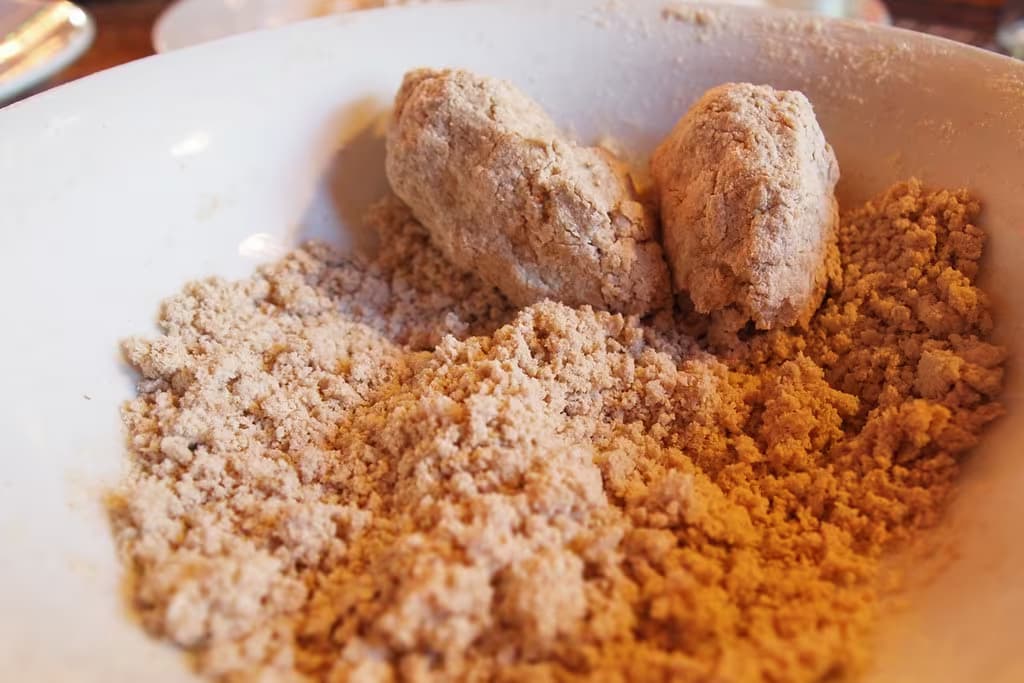
If Dal Bhat is Nepal's king, Dhido is the rugged hill prince who never cared for the throne. This dense, dough-like porridge made from buckwheat flour (fapar ko dhido) or millet flour (kodo ko dhido) has sustained Gurung, Magar, and Tamang communities in the middle hills for centuries. It's as old as the hills themselves.
The preparation looks deceptively simple: flour is slowly stirred into boiling water with a flat wooden stick (dabilo) until it forms a thick, smooth mass. Getting the consistency right — firm enough to hold its shape, soft enough to swallow — takes years of practice. Your grandmother could do it blindfolded. You probably cannot.
Eating dhido is a ritual. You tear off a small lump with your right hand, roll it briefly on the plate to cool it, dip it into gundruk ko jhol (fermented greens soup) or a spicy meat curry, and swallow it without much chewing. First-timers always make the mistake of chewing — regulars will laugh and tell you "nilaunu parcha" (you have to swallow it). A dollop of ghee on top is non-negotiable in any self-respecting hill household.
You don't have to trek to the hills to find dhido anymore. Thakali and Gurung restaurants across Kathmandu serve it, though purists will insist the only real dhido is the one cooked over a wood fire in a blackened brass pot in some village kitchen above 2,000 meters.
Elsewhere in this region
Help us get it right
Know Dhido better than we do?
We write from research and reporting, and the ground changes faster than we can keep up. If something here is out of date, or you have been and would tell it differently, we would rather hear it.