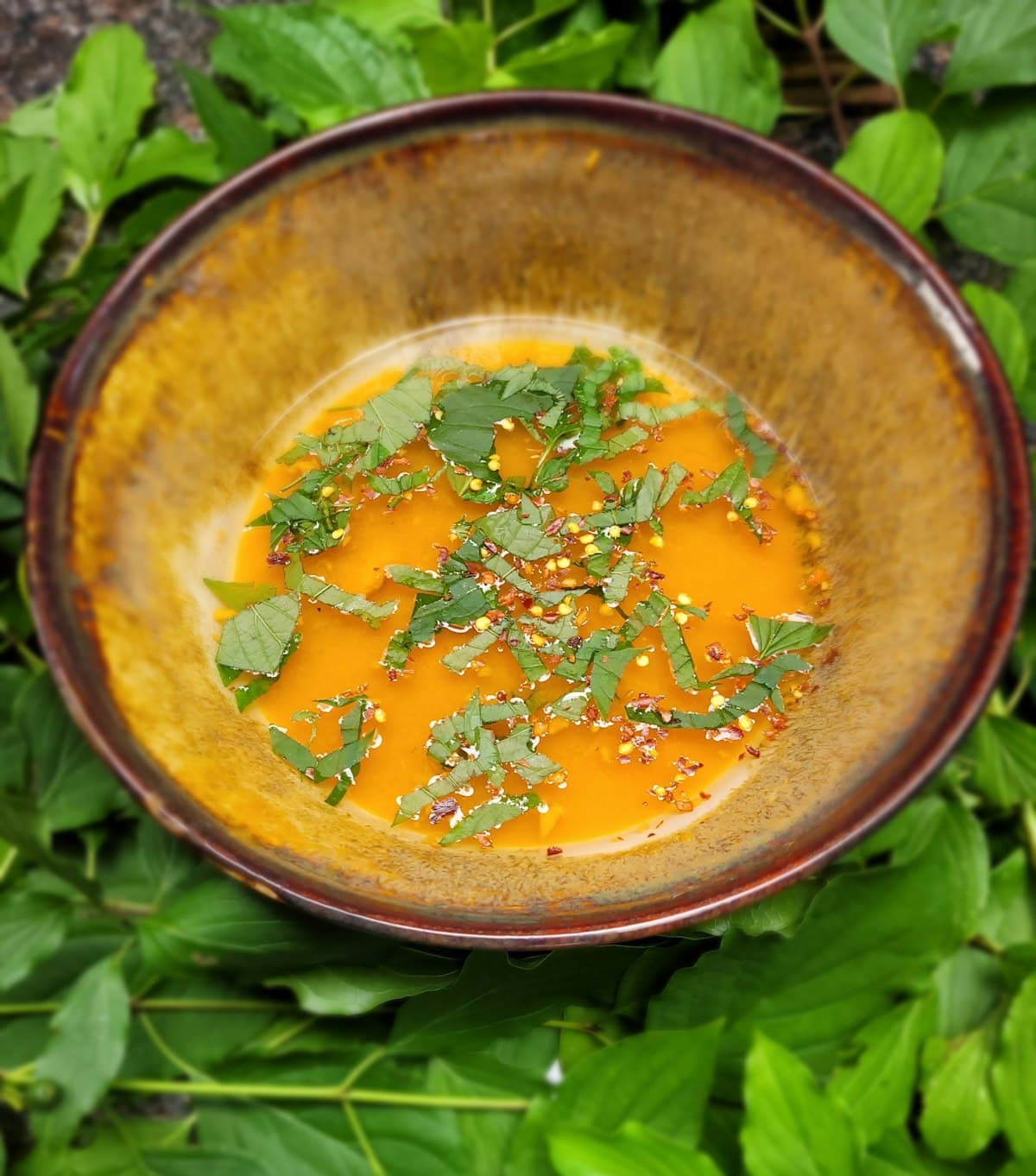
Gundruk ko Jhol
गुन्द्रुक को झोल
A tangy, sour soup made from fermented leafy greens — Nepal's ancient superfood and one of the world's few naturally fermented vegetable traditions.
Region
Nationwide (origin: Hill communities)
Type
Main Course
Spice Level
🌶️🌶️ (2/5)
Diet
Vegetarian
Where to Try
Served alongside Dal Bhat at most traditional Nepali restaurants. Bhojan Griha and Krishnarpan in Kathmandu. Hill teahouses on any trek route. Local markets in Asan and Kalimati sell dried gundruk by the bundle.
Gundruk is Nepal's gift to the world of fermented foods, and the jhol (soup) made from it is a staple that ties together every Dal Bhat plate from the Terai to the high hills. The greens — usually mustard leaves (rayo), radish tops (mula ko saag), or cauliflower leaves — are wilted, packed tightly into an earthen pot or pit, and left to ferment in the sun for about two weeks. What comes out is dry, tangy, and pungent — Nepal's answer to kimchi and sauerkraut, predating both in many families' oral histories.
The dried gundruk keeps for months, which made it essential for hill communities that needed preserved vegetables through harsh winters when nothing grew. You'll see it sold in markets as tightly packed dark bundles — a handful costs almost nothing and transforms a plain dal bhat into something deeply satisfying.
To make the jhol, dried gundruk is soaked, then simmered with tomatoes, green chilies, garlic, and a pinch of turmeric. Some cooks add potatoes or soybeans. The result is a brothy, sour soup with an earthy funk that's completely unique — there's nothing else in the world that tastes quite like it. It hits a spot that no other soup can.
Gundruk ko jhol is the side dish that completes a Nepali meal. It sits next to your dal and tarkari, and you mix spoonfuls of it into your rice. In many households, a meal without gundruk feels incomplete — like something essential is missing from the plate.