Lapsi Achar
लप्सी अचार
Hog plum pickle and candy — sweet, sour, and spicy — made from a fruit so uniquely Nepali that most of the world has never heard of it.
Region
Nationwide (especially Kathmandu Valley)
Type
Pickle
Spice Level
🌶️🌶️ (2/5)
Diet
Vegetarian
Where to Try
Asan market in Kathmandu for fresh lapsi in season (October-November). Packaged lapsi candy available at any grocery shop or supermarket nationwide. Homemade versions at Newari restaurants in Patan and Bhaktapur.
Lapsi — the Nepali hog plum, Choerospondias axillaris if you're being formal — is a small, green, intensely sour fruit that grows in the middle hills and has been part of Nepali food culture since before anyone thought to write things down. The tree is native to Nepal and parts of Southeast Asia, and the fruit has a sour tang unlike any other — sharper than lime, more complex than tamarind, with a resinous depth that lingers.
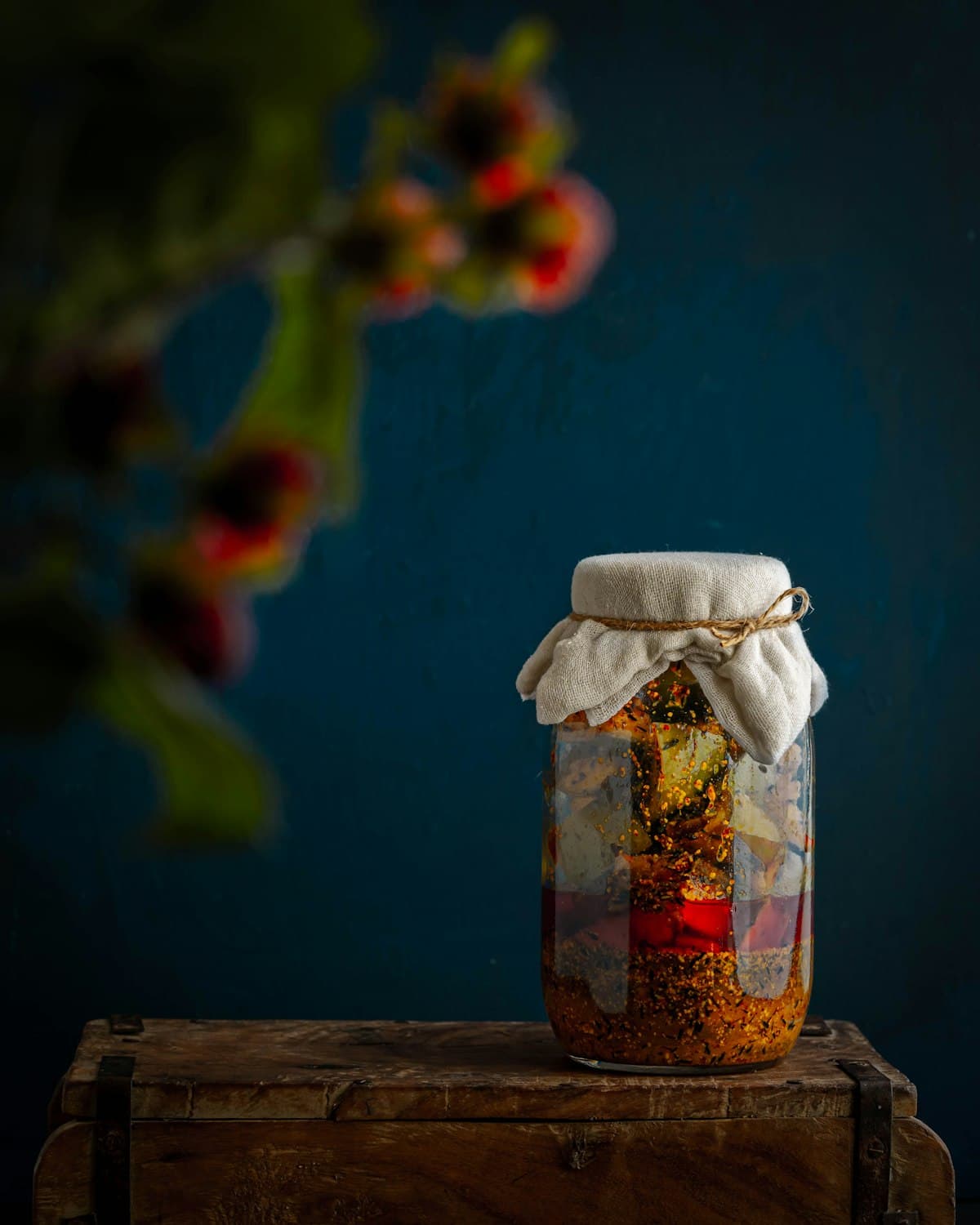
The fresh pickle is autumn food. When lapsi fruits ripen and flood the markets in October and November — right around Tihar — families buy them by the kilo. The fruit is boiled, the flesh separated from the large seed, and mixed with chili powder, salt, timmur, and mustard oil into a thick, chunky, sour-spicy pickle that's addictive in the most literal sense. You eat a spoonful and immediately want another.
But the dried lapsi candy is where the nostalgia lives. Thin, dark, chewy sheets of dried lapsi pulp — sweet, sour, tangy, dusted with chili and salt — are THE childhood snack of Nepal. Every school kid has bought a one-rupee strip of lapsi candy from the shop near the school gate. Every Nepali adult remembers the taste. It's Nepal's answer to fruit leather, except it came first and tastes better.
Lapsi achar and candy are increasingly available in packaged form, exported to Nepali communities worldwide. But the best remains the homemade version, made during lapsi season, stored in glass jars, rationed through the winter.