Sukuti
सुकुटी
Air-dried, fire-cured strips of buff or mutton — Nepal's jerky, chewed slow with raksi or grilled hot with chili and mustard oil.
Region
Hill regions, Newari Kathmandu Valley
Type
Snack
Spice Level
🌶️🌶️🌶️🌶️ (4/5)
Diet
Non-vegetarian
Where to Try
Newa Lahana in Kirtipur. Bhojan Griha for the grilled version. Any rural homestay in Helambu or Ghandruk for fire-cured hill-style sukuti.
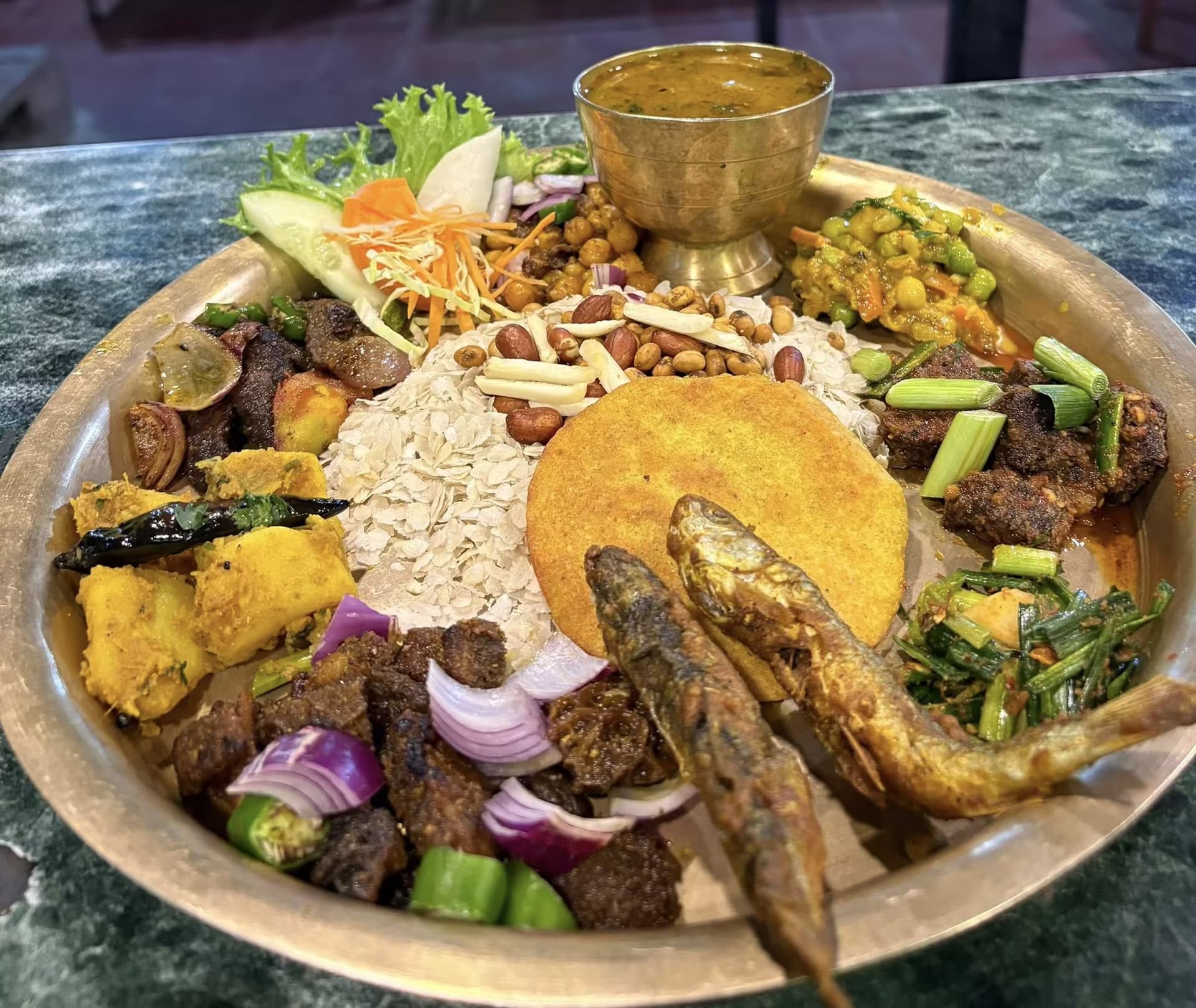
Sukuti is the original Nepali preservation move: thin strips of buff (sometimes mutton or chicken) salted, smeared with turmeric and chili, then hung over the kitchen fire or in the high mountain air until they're hard, dark, and shelf-stable for months. Hill villages have made it for centuries — a way to carry protein on long treks, into winter, across mountain passes where fresh meat couldn't follow.
There are two ways it's eaten. Cold sukuti is torn into shreds, tossed with mustard oil, raw onion, chili, lemon, and timur — eaten dry as a snack with aila or beer. Hot sukuti gets thrown briefly on a charcoal grill until the edges char and the smoke hits the spices, then dressed the same way. The hot version is what Newari bhattis serve as a 'sandheko' alongside choila on the khaja set.
Sukuti rewards slow chewing. The salt and smoke are concentrated; a small handful is enough. The texture is closer to South American charqui than American jerky — drier, harder, more aggressively spiced. First-timers usually need a sip of something between bites.
The best sukuti in Kathmandu comes from Newari butchers in Asan and Indra Chowk who hang strips above their shop for weeks. Outside the valley, Tamang and Gurung villages in the middle hills make excellent versions over open hearths.
Elsewhere in this region
Help us get it right
Know Sukuti better than we do?
We write from research and reporting, and the ground changes faster than we can keep up. If something here is out of date, or you have been and would tell it differently, we would rather hear it.