Bahal · Buddhist
Rudravarna Mahavihar (Okubahal)
रुद्रवर्ण महाविहार❊उकुबहाः
Vajrayana Buddhist shrine·6th century CE·Lalitpur
An ancient 6th-century Newar Buddhist monastery in Patan with three interconnected courtyards, renowned for its exquisite stone and metal sculptures.
Dedicated to
Vajrayana Buddhist shrine
Period
6th century CE
Hours
6:00 AM – 6:00 PM
Admission
Free
Neighborhood
Okubahal, Patan
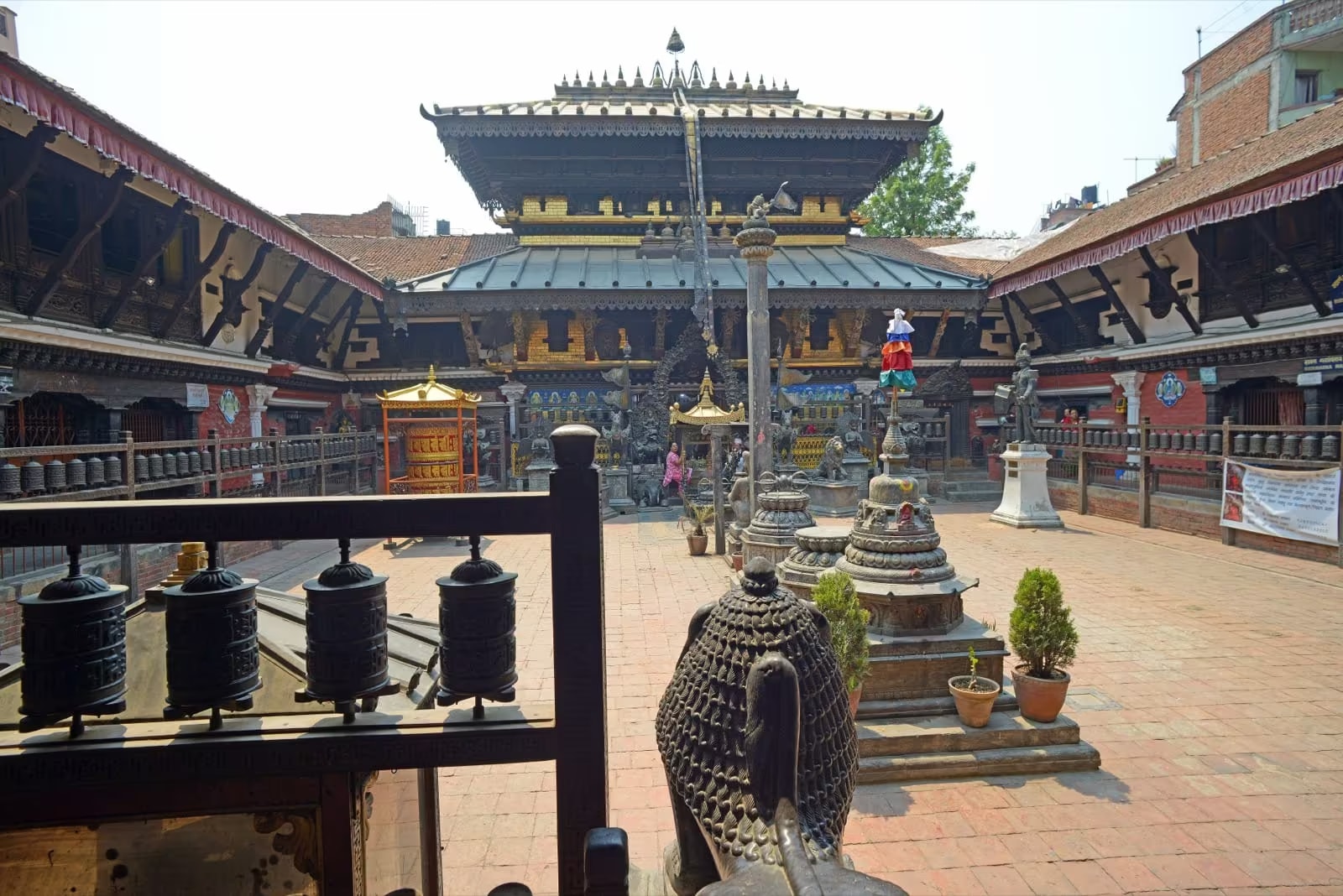
Rudravarna Mahavihar (Okubahal), located in Patan, Nepal, is an ancient Newar Buddhist monastery dating back to the 6th century. Traditionally founded by King Shivadeva and later renovated by King Rudradeva, the Mahavihar is renowned for its architectural and cultural significance.
The monastery comprises three interconnected courtyards, each serving distinct purposes: the main courtyard is the spiritual heart with a central shrine, chaityas, and ritual artifacts; the second courtyard houses living quarters for priestly families and meditation spaces; and the third courtyard contains smaller shrines, ceremonial spaces, and intricate artistic elements, including stone and metal sculptures.
The entrance is marked by 17th-century stone lions, and the site features ornate Garudas, finely carved wooden windows, bells, vajras, and statues donated over centuries.
Historically, Rudravarna Mahavihar is both a religious and civic center, hosting Vajrayana Buddhist rituals, royal ceremonies, and community gatherings. Today, it remains an active monastery, preserving centuries-old Newar craftsmanship, spiritual practices, and a serene, authentic atmosphere for visitors.
Best visited in autumn.autumn: best, 10°C to 27°C. Best light for the intricate carved struts and metal statuary. Pleasant walking between Patan's heritage sites. monsoon: possible, 20°C to 30°C. The courtyard can be wet but the ornate woodwork and statues are sheltered. Authentic local atmosphere. spring: good, 12°C to 30°C. Comfortable for exploring Patan's oldest monastery. Combine with a walking tour of surrounding bahals. winter: good, 2°C to 20°C. Cool and peaceful. The ancient courtyard is quiet and contemplative. Great photography light on the metalwork.
The Almanac
The courtyard can be wet but the ornate woodwork and statues are sheltered. Authentic local atmosphere.
Folio III
Nearby Sacred Sites
Places within a short walk that help turn this stop into a small sacred cluster.
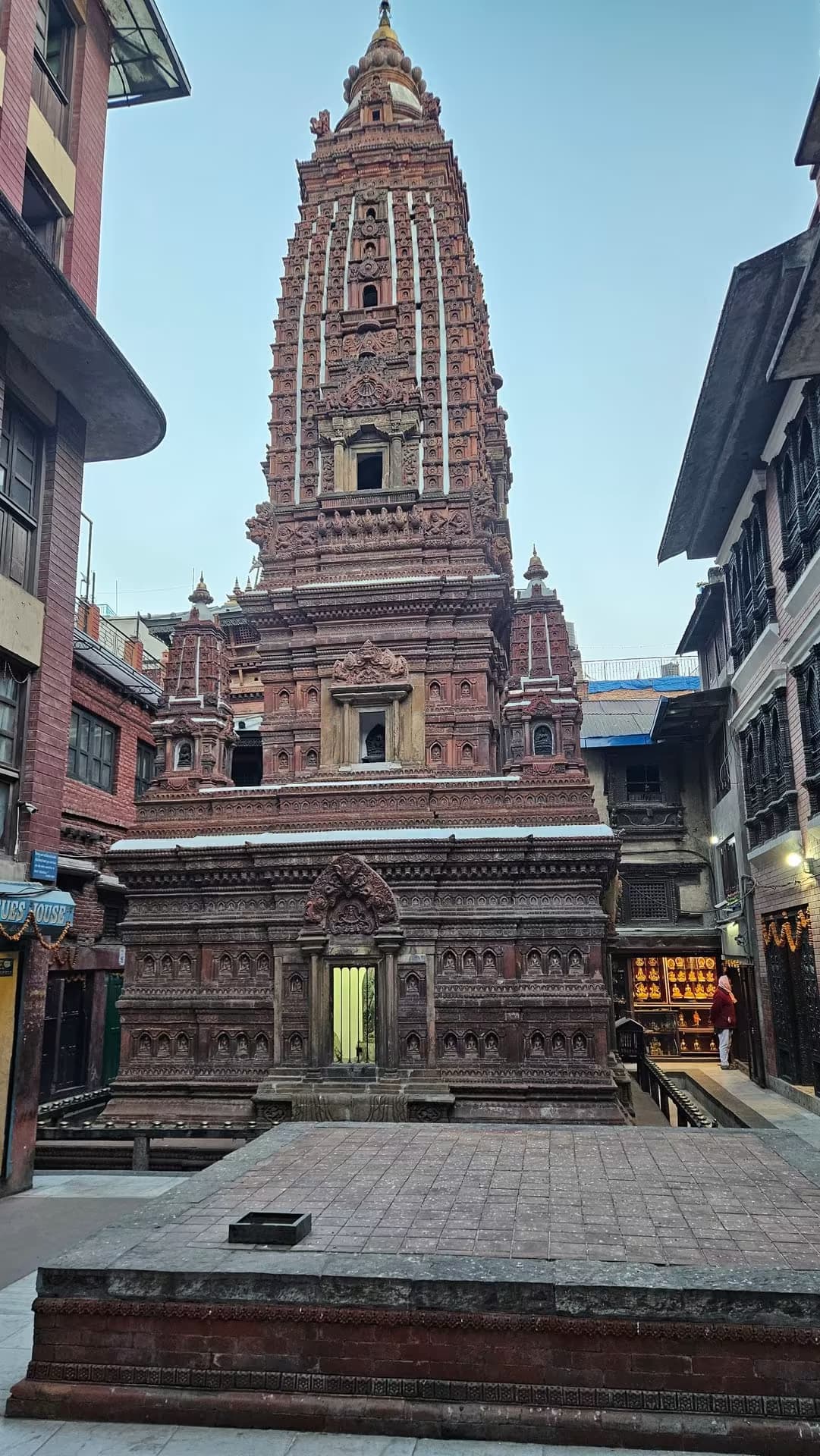
Mahabouddha Temple (Temple of a Thousand Buddhas)
A unique shikhara-style tower entirely covered in terracotta tiles, each bearing a hand-carved image of Buddha, modeled after the Mahabodhi Temple in Bodh Gaya.
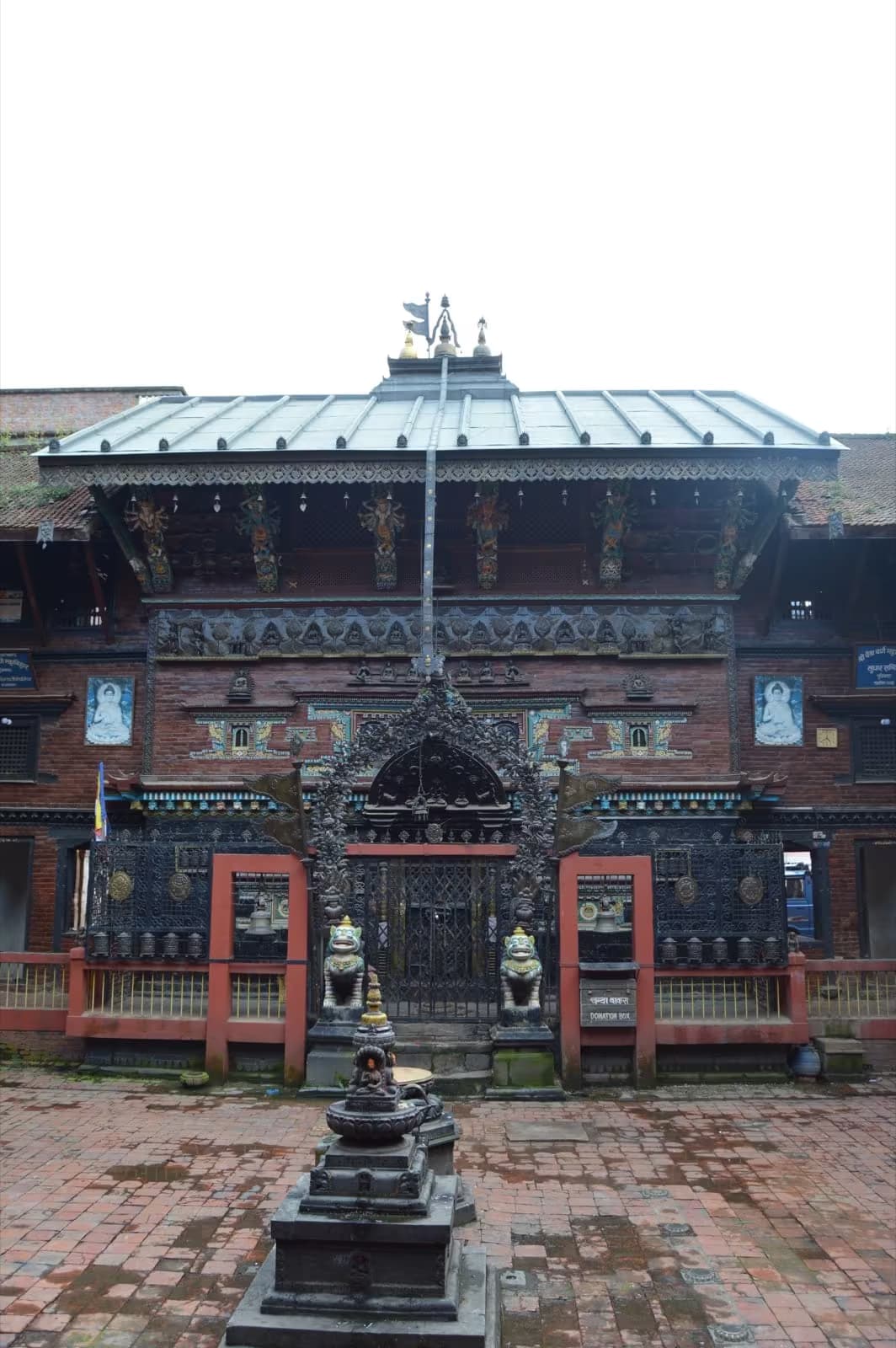
Guji Bahal (Vaishravarna Mahavihar)
One of the 18 principal mahavihars of Patan, named after Vaishravana (Kubera), the Buddhist guardian king of the north and deity of wealth.
Yachu Bahal (Baladhara Gupta Mahavihar)
Baladhara Gupta Mahavihar (Yachu Bahal) is one of the 18 traditional bahals of Patan, a quiet Buddhist monastery courtyard in the old city.
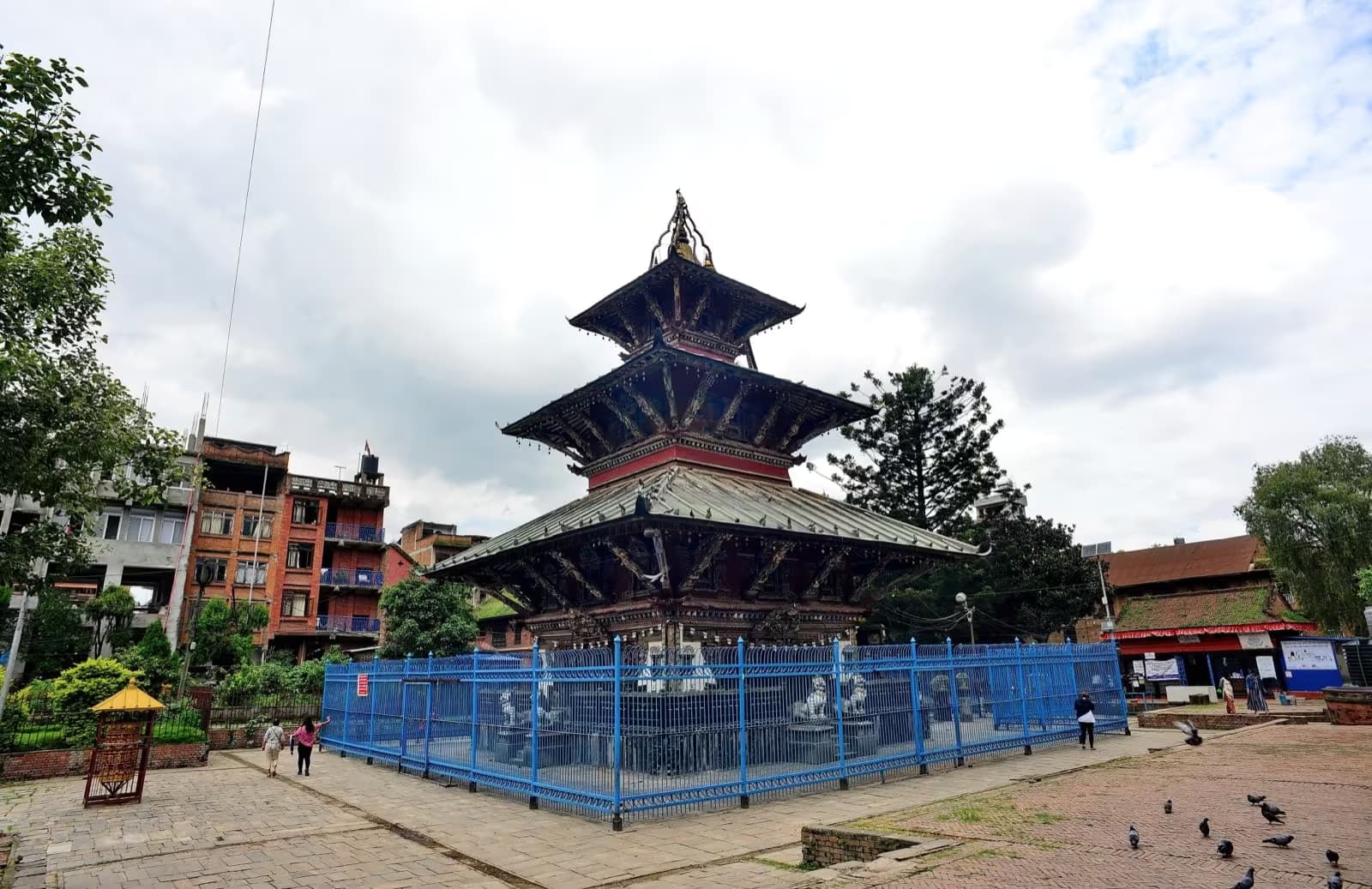
Tanga Bahal (Jestha Varna Mahavihar)
One of Patan's oldest and most principal vihars, located opposite the Rato Machhindranath Temple's monastery near Mangal Bazaar.
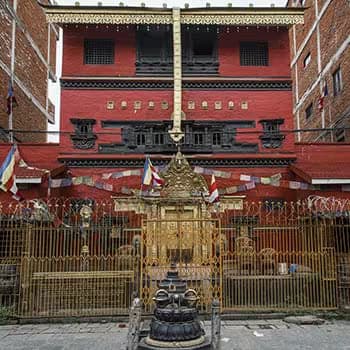
Ta Bahal (Dharma Kirti Mahavihar)
Dharma Kirti Mahavihar (Ta Bahal) is one of Patan's 18 principal bahals — the 'Monastery of Dharma's Glory', preserving Newar Buddhist traditions.
Coda
Continue the Pilgrimage
Planning this visit? Local operators publishing trips here can arrange it.
Elsewhere in this region

Help us get it right
Know Rudravarna Mahavihar (Okubahal) better than we do?
We write from research and reporting, and the ground changes faster than we can keep up. If something here is out of date, or you have been and would tell it differently, we would rather hear it.