Nhu Pukhu (Rani Pokhari of Bhaktapur)
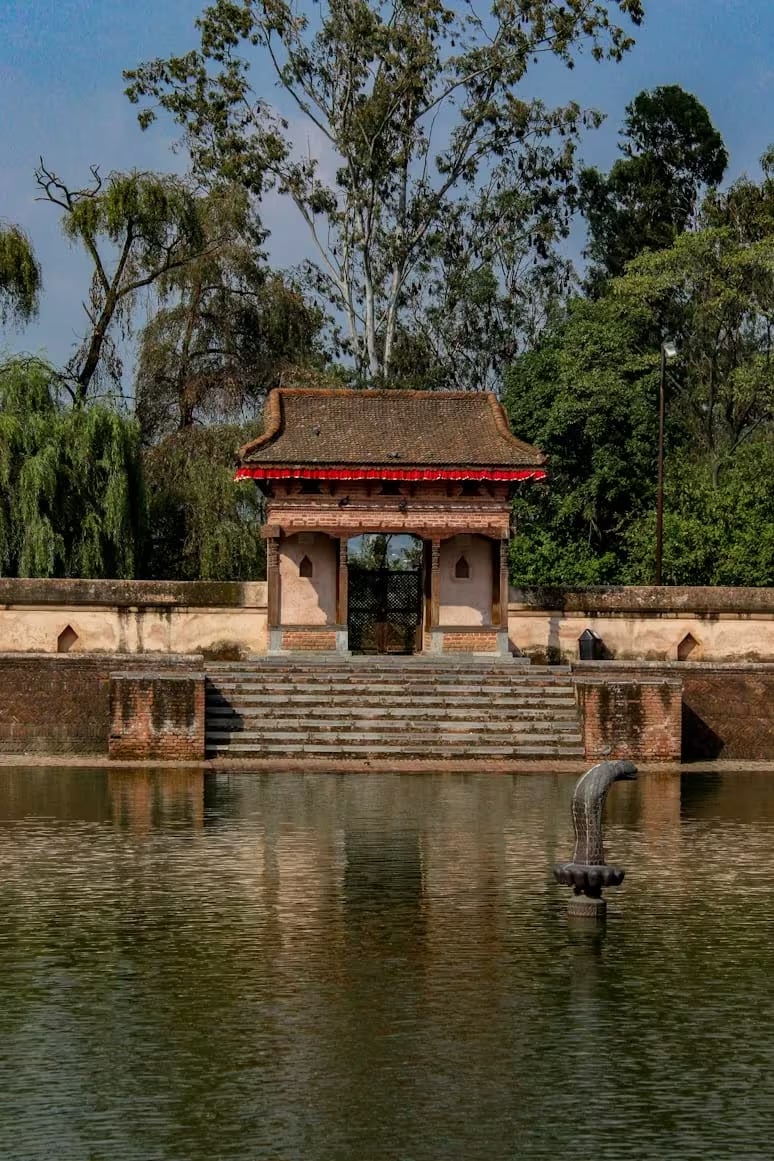
Bhaktapur's own 'Rani Pokhari' at Sallaghari — begun by King Jagajyoti Malla around 1630 AD in memory of his queen, predating Kathmandu's more famous version by four decades and still sheltering a brass Nagaraja image and lineage deities.
- Altitude
- 1,401 m
- Coordinates
- 27.673°, 85.423°
Current Weather
Locally called Nhu Pukhu ('new pond', the name it carried when freshly dug), this is the Rani Pokhari that Bhaktapur residents are quick to point out came first. King Jagajyoti Malla decreed its construction in 750 Nepal Sambat (1630 AD), in memory of his queen Rajlaxmi, and it was completed decades later under King Jeetamitra Malla in 798 NS — four decades before Pratap Malla built the better-known Rani Pokhari in Kathmandu.
At the centre of the pond stands a brass image of Nagaraja, the serpent king traditionally invoked as the guardian of water bodies, and a stone Gaurishankar Shivalinga. The pond also houses the degu dyo (ancestral lineage deities) of several Bhaktapur communities, which means it is tied into the ritual calendar of more than one neighbourhood rather than belonging to a single temple.
The site sits at the western end of Bhaktapur in the Sallaghari area — reached most easily on foot from either Siddha Pokhari (to the west) or the military cantonment (to the east). Long patronised and maintained by the Nepal Army, conservation responsibility has since passed to Bhaktapur Municipality, which has undertaken reconstruction studies to restore the full Malla-era footprint. Entry is free, and a visit pairs well with Siddha Pokhari just a short walk away.
Location
Planning this trip? Local operators publishing trips here can arrange it.
Help us get it right
Know Nhu Pukhu (Rani Pokhari of Bhaktapur) better than we do?
We write from research and reporting, and the ground changes faster than we can keep up. If something here is out of date, or you have been and would tell it differently, we would rather hear it.