Temple · Hindu
Bagh Bhairav Temple
बाघ भैरव मन्दिर❊बाघ भैलः
Bhairav (tiger form)·Medieval period·Kathmandu
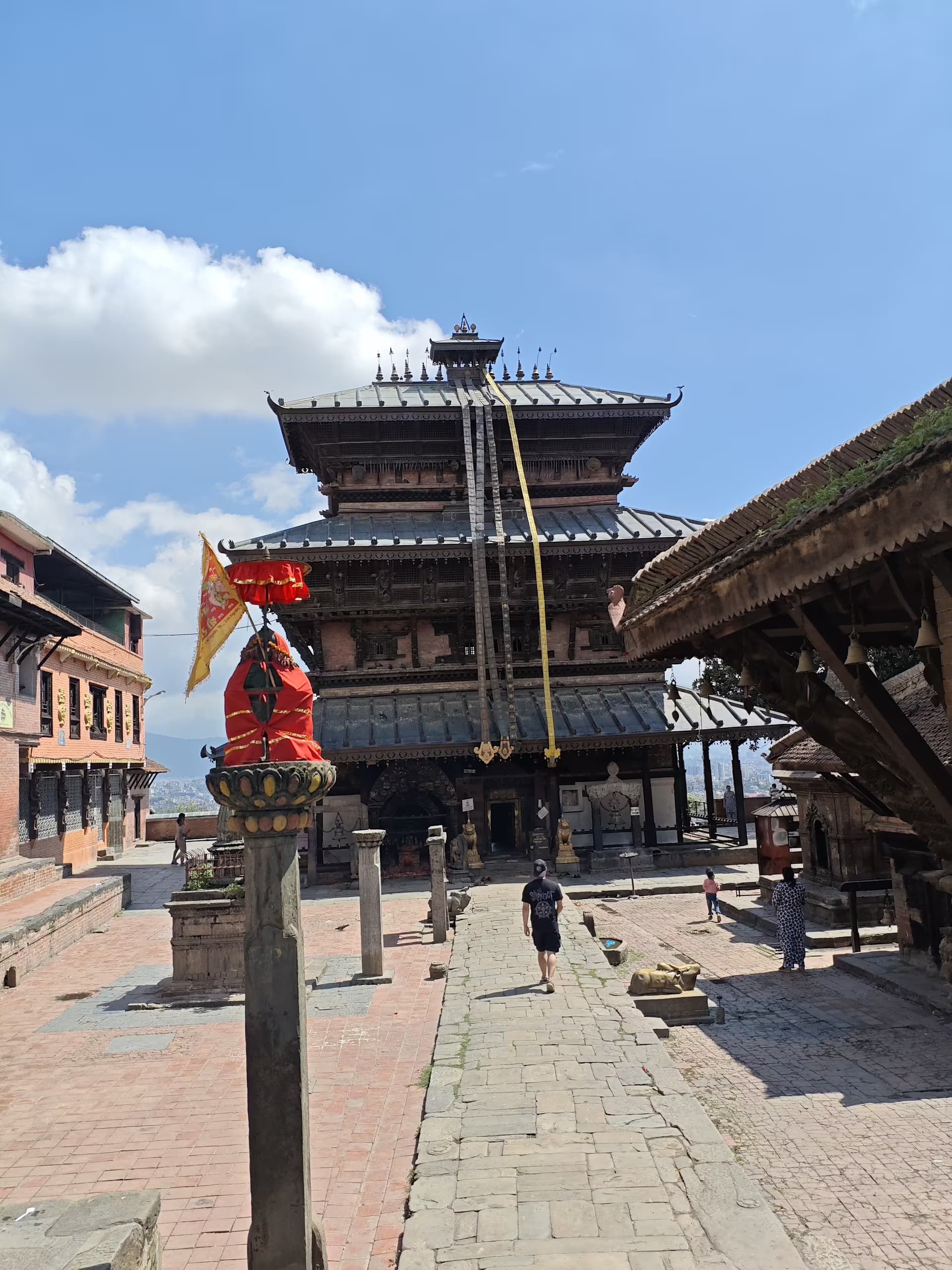
A hilltop temple of the Tiger Bhairav in Kirtipur, whose walls still bear the shields and swords from the historic battle against Prithvi Narayan Shah's army, with panoramic views of the Kathmandu Valley.
Dedicated to
Bhairav (tiger form)
Period
Medieval period
Hours
Open dawn to dusk
Admission
Free
Climate
mid_hills
Bagh Bhairav Temple crowns a hilltop in Kirtipur, the fiercely independent Newar town that held out longest against Prithvi Narayan Shah's conquest of the Kathmandu Valley in the 18th century. The temple is dedicated to Bhairav in his tiger (bagh) form — a wrathful protector deity — and its walls are hung with old shields and khukuri knives said to have been used in the battles against Shah's Gorkhali forces. The weapons are a point of civic pride for Kirtipur's residents.
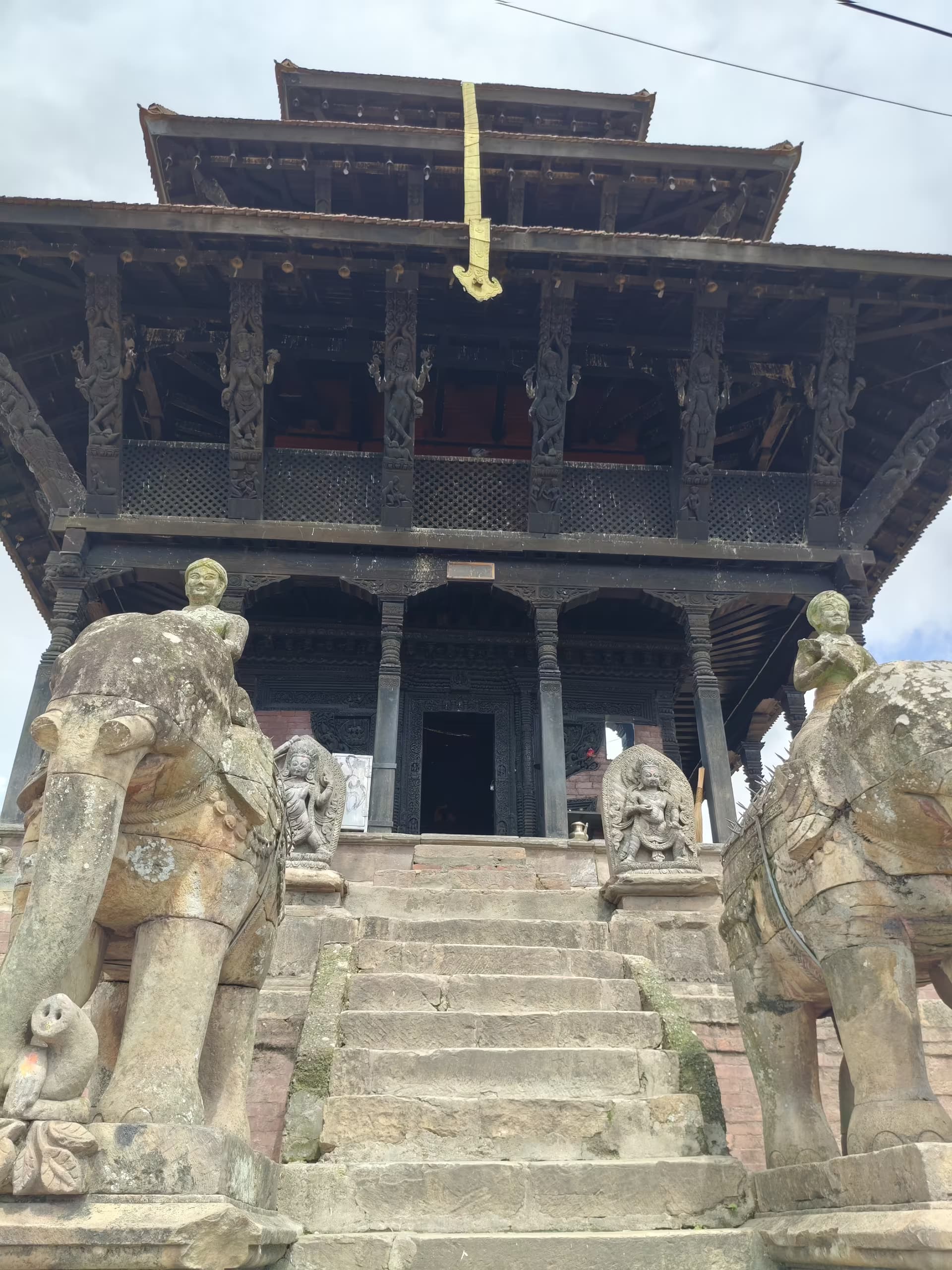
The temple itself is a simple but atmospheric structure, its brickwork darkened with age and its wooden struts carved with figures of deities and mythical beasts. The image of Bagh Bhairav is a painted stone slab depicting the tiger-faced god, kept behind a metal grille and venerated daily with vermilion, rice, and marigolds.
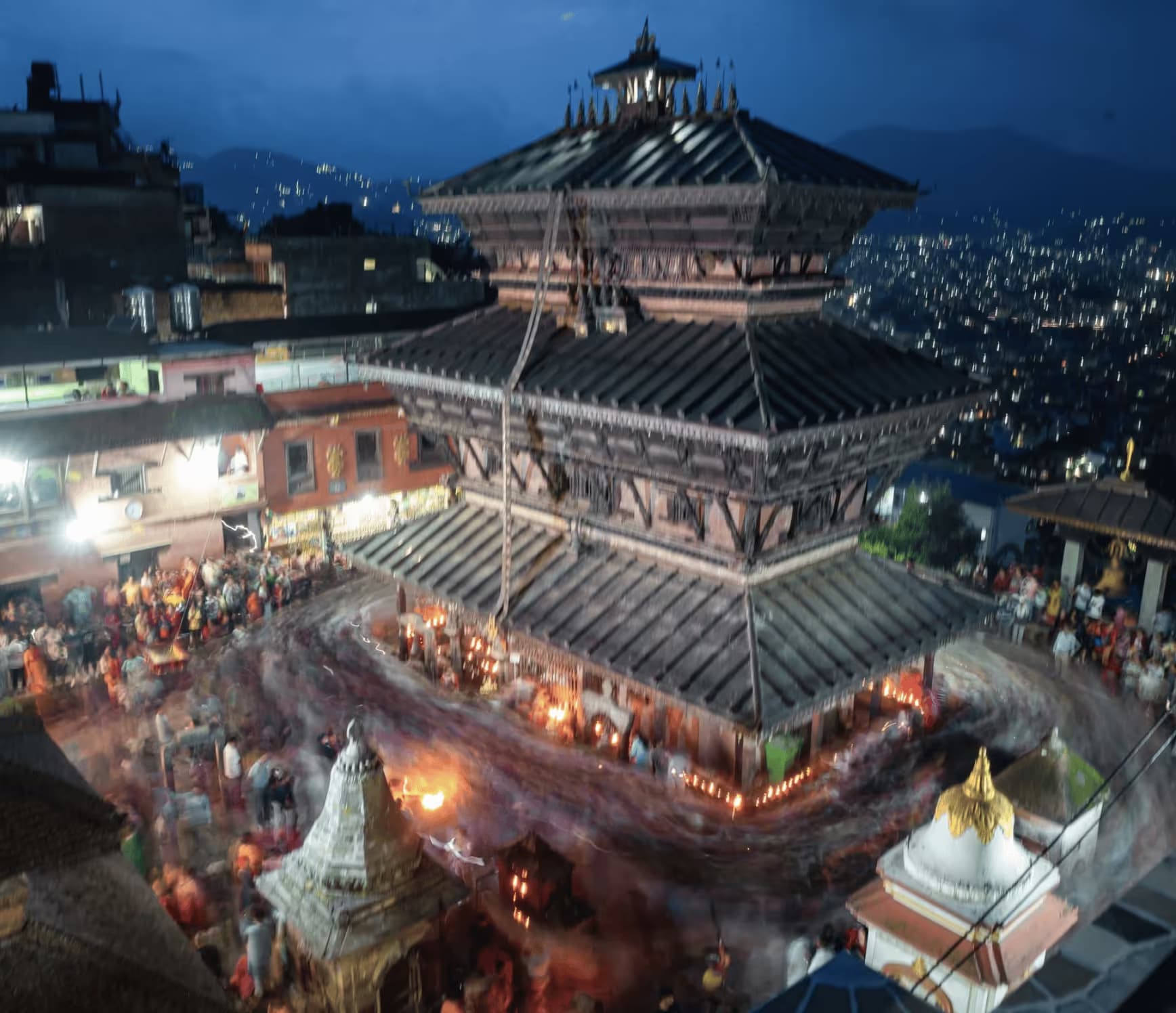
Once a year the temple is the centre of the town rather than a quiet viewpoint. On the first day of Bhadra — Singha Sankranti, in mid-August — Kirtipur keeps Bagh Bhairav Jatra: an image of the god made for the occasion is bathed in the kunda north of the temple, worshipped, and carried through the town with traditional bands, bhajans and Lakhe dance, while devotees circumambulate the temple, 108 times if they can.
What makes a visit memorable beyond the temple is the hilltop setting. Kirtipur occupies one of the highest points on the valley floor, and from the Bagh Bhairav compound the views stretch in every direction — the Himalayan range to the north on clear days, the Kathmandu skyline to the east, and the Chandragiri hills to the south. At sunset the panorama is outstanding.
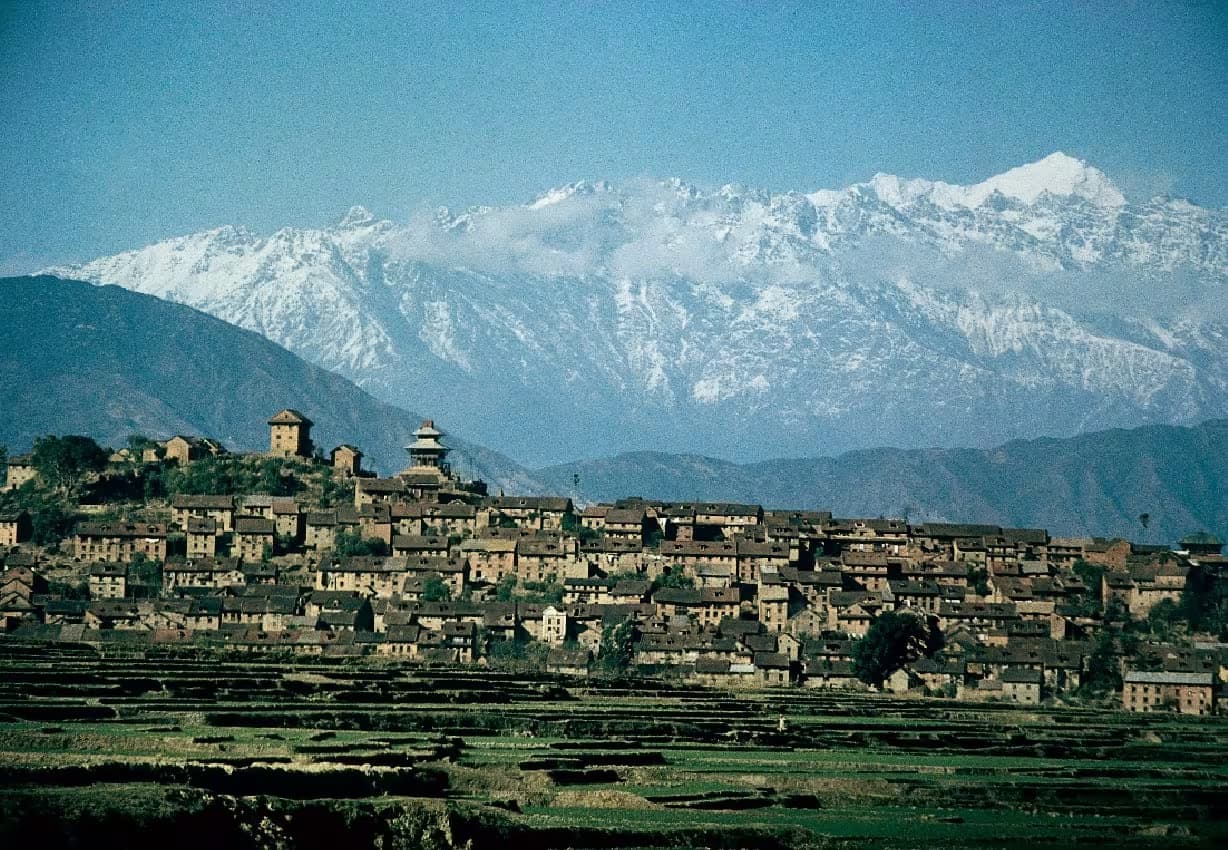
Kirtipur itself is a living museum of Newar urban life: narrow brick lanes, carved wooden windows, community water spouts, and a pace of life largely untouched by the tourism that saturates the Durbar Squares. A visit to Bagh Bhairav pairs well with a walk through the town's lanes and a meal at one of the local Newari restaurants that have opened in recent years.
Access & Mobility
Kirtipur's old town is stepped and steeply sloping, and the temple square is reached by stairs from every direction, so wheeled access is not practical. The square itself is level and open once you are on it.
- Vehicle
Vehicles reach Kirtipur and park below the old town; the last stretch to the temple square is on foot through brick lanes.
- On foot
The temple square sits at the top of the town — stone stairways and sloping lanes from every approach.
Best visited in autumn and winter (Mid-Hills region).autumn: best, 12°C to 26°C. The clearest months, when the northern horizon from the hilltop opens onto the Himalaya. monsoon: possible, 20°C to 29°C. Brick lanes and stone stairways are slippery and the valley panorama is usually lost to cloud. Bagh Bhairav Jatra falls on the first day of Bhadra, in the tail of the monsoon. spring: good, 12°C to 28°C. Warm, clear enough for the hilltop views. Kirtipur sees few visitors at any time of year. winter: best, 3°C to 19°C. Cold mornings but the sharpest mountain views of the year. The square is exposed and windy.
The Almanac
Climate · Mid-Hills
The clearest months, when the northern horizon from the hilltop opens onto the Himalaya.
Folio III
Nearby Sacred Sites
Places within a short walk that help turn this stop into a small sacred cluster.
Coda
Continue the Pilgrimage
Part of
Kirtipur
Related
Connected places and entries worth pairing
Planning this visit? Local operators publishing trips here can arrange it.
Elsewhere in this region
Help us get it right
Know Bagh Bhairav Temple better than we do?
We write from research and reporting, and the ground changes faster than we can keep up. If something here is out of date, or you have been and would tell it differently, we would rather hear it.