Marpha
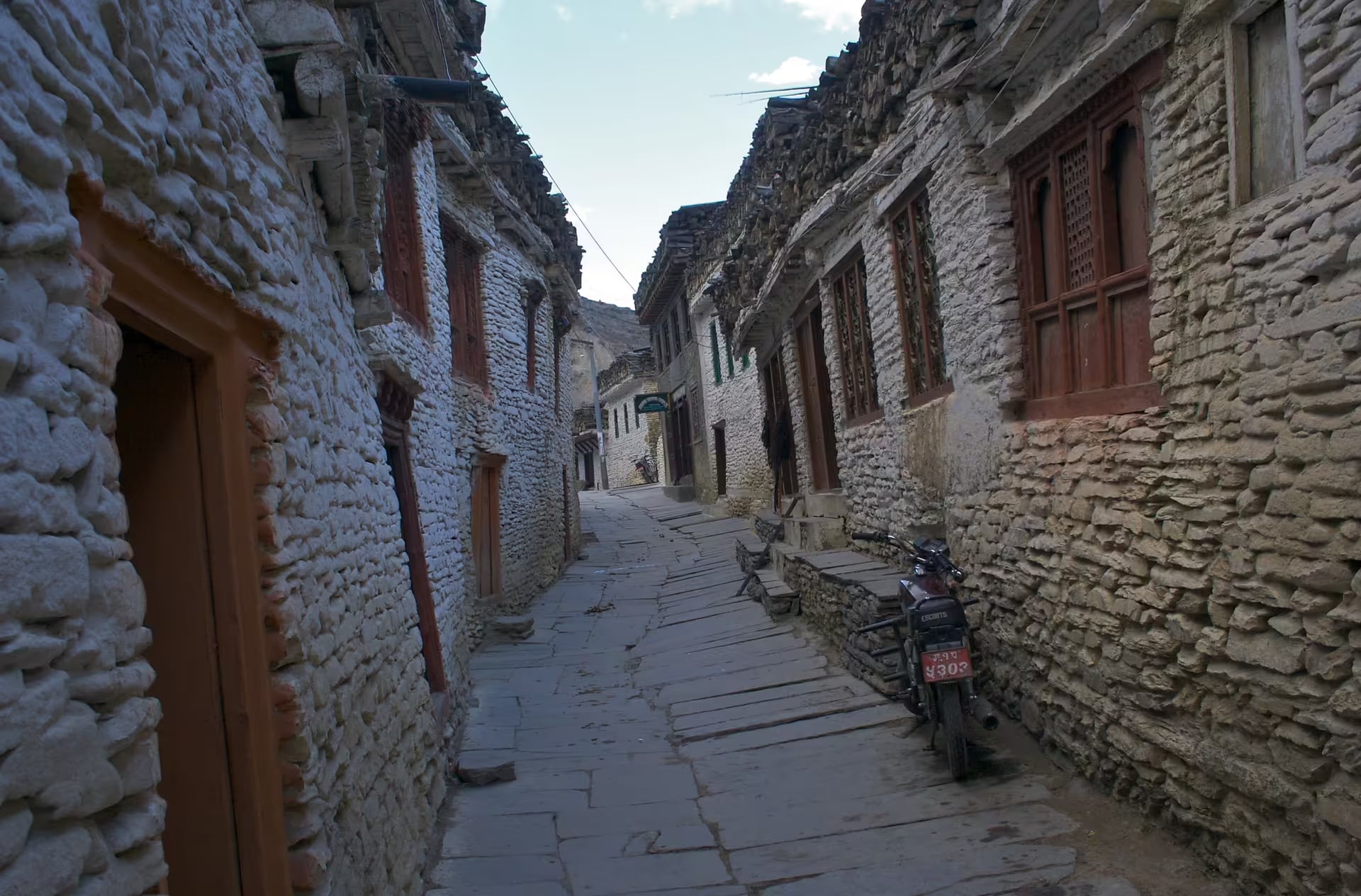
A whitewashed Thakali village in the Kali Gandaki valley, famous for apple orchards, apple brandy, refined Thakali cuisine, and flat-roofed flagstone streets.
- Altitude
- 2,670 m
- Coordinates
- 28.753°, 83.692°
Current Weather
Marpha is the cultural heart of the Thakali people, sitting at 2,670m in the Kali Gandaki valley a short walk south of Jomsom. The village is built from whitewashed stone with flat roofs used for drying grain, firewood, and apples — a layout adapted to the dry trans-Himalayan climate of the rain-shadow valley.
Marpha is best known for its apple orchards, planted from cuttings brought to Nepal in the 1960s by the agricultural pioneer Pasang Sherpa. Today the village produces apple cider, brandy, dried apple slices, and jams that are sold the length of the Kali Gandaki. The Thakali thali — a refined regional version of dal bhat featuring buckwheat, mustard greens, and locally cured meat — is widely considered the finest dal bhat tradition in Nepal, and Marpha is the place to eat it.
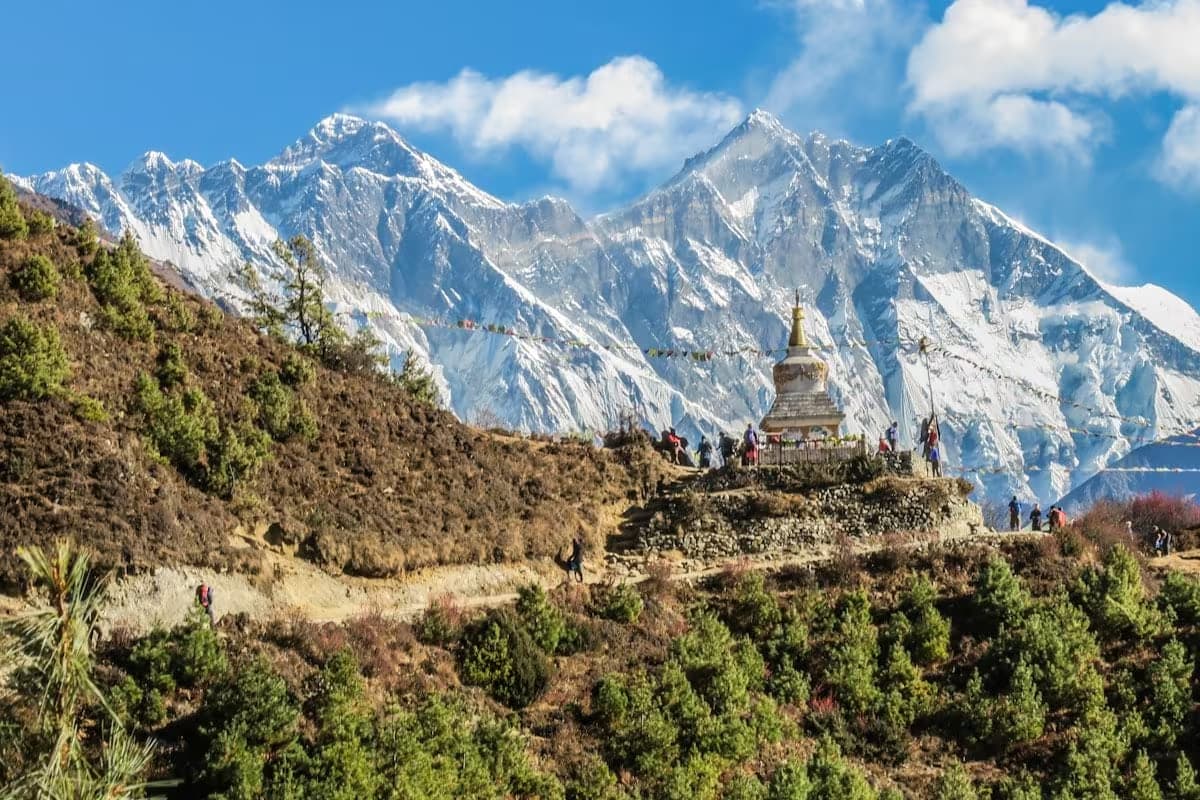
The village's main lane runs between two-storey traditional houses to the Nyingma monastery perched on the rock above town, with prayer flags and a small cave shrine. The Thakali community combines Tibetan Buddhist and Bön influences with a distinctive trader-merchant culture that built fortunes on the historic Tibet salt trade through the Kali Gandaki.
Location & What's Inside
Connects to
Routes and trails that link here
Planning this trip? Local operators publishing trips here can arrange it.
Elsewhere in this region
Help us get it right
Know Marpha better than we do?
We write from research and reporting, and the ground changes faster than we can keep up. If something here is out of date, or you have been and would tell it differently, we would rather hear it.