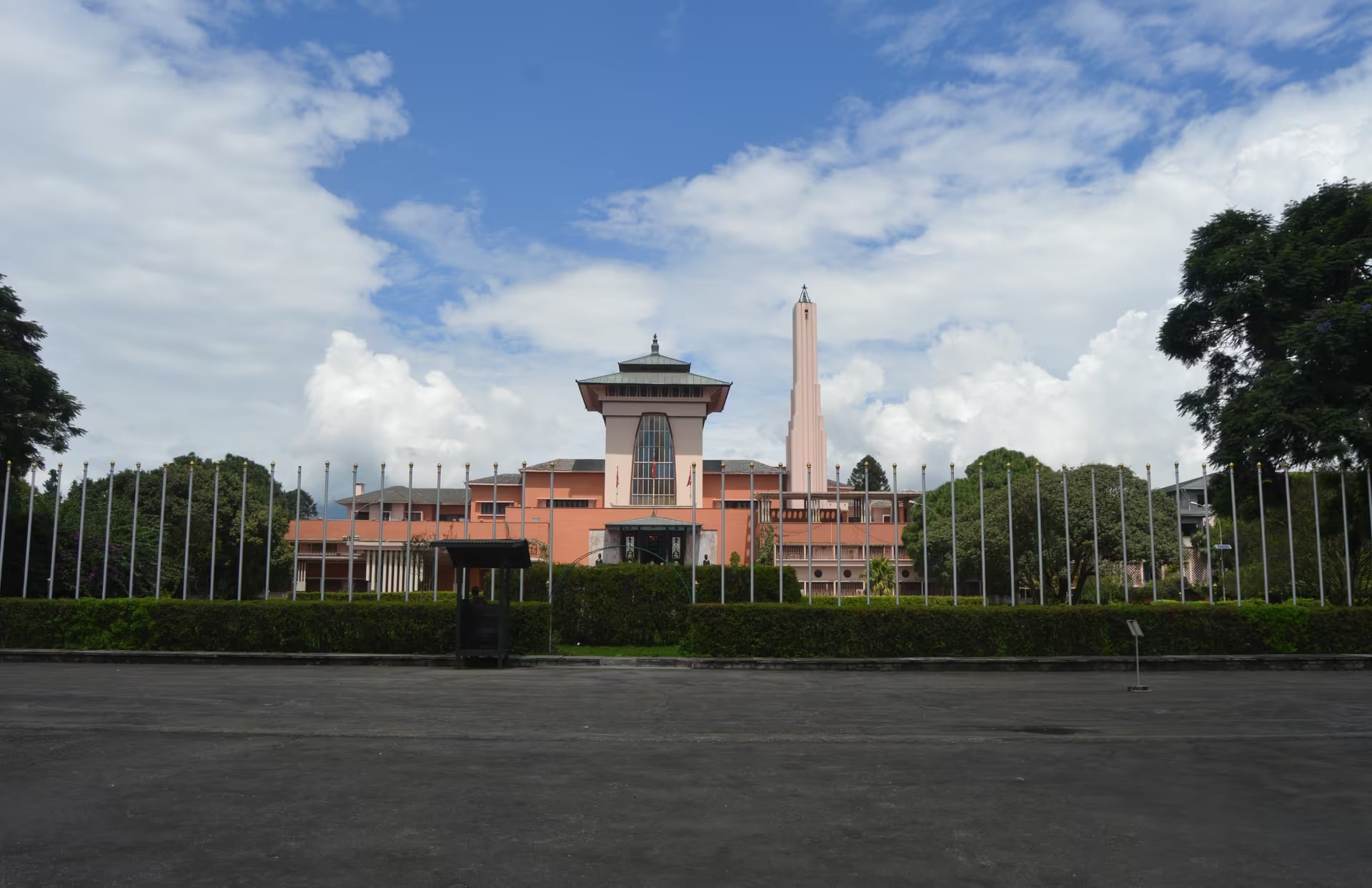
Narayanhiti Palace
The Shah kings' palace on Durbar Marg — built for King Mahendra in the 1960s to Benjamin Polk's design, site of the 2001 royal massacre, and a public museum since 2009. Shah-era rather than Rana, and deliberately so.
- Altitude
- 1,330 m
- Coordinates
- 27.715°, 85.317°
Current Weather
Narayanhiti was the royal palace of the Shah kings from the 1960s until the monarchy was abolished in 2008, and it has been a public museum since 2009. It takes its name from the Narayan (Vishnu) temple and the hiti — the traditional Newar stone water spout — that stand opposite the gates on Durbar Marg.
A royal residence stood on this site through the nineteenth century, but the building you visit is not a Rana one. It was commissioned by King Mahendra and built through the 1960s, designed by the American architect Benjamin Polk, and completed for the 1970 wedding of Crown Prince Birendra. Its pink-and-white tower, a modernist abstraction of a pagoda roof, is a deliberate mid-century attempt at a national style — Shah-era self-presentation, and a conscious break from the borrowed European classicism that Chandra Shumsher had built at Singha Durbar two generations earlier. It is included alongside the Rana palaces here because the three buildings read as one argument about how Nepali rulers chose to look, and because the contrast is the point.
The palace is inseparable from 1 June 2001, when ten members of the royal family, including King Birendra and Queen Aishwarya, were shot dead inside the grounds. The museum does not hide this: the Tribhuvan Sadan wing where the killings took place was demolished, and its footprint is marked and interpreted on the tour route.
Nepal became a republic on 28 May 2008; King Gyanendra vacated the palace that June, and it opened as the Narayanhiti Palace Museum in February 2009. The visit is a fixed one-way route through around a dozen state rooms — throne room, banquet hall, audience chambers, guest suites — left largely as they were, with 1970s furnishings, taxidermy and diplomatic gifts intact. Opening days and the museum's rules on cameras and bags are posted at the ticket gate — check them on the day rather than planning a tight schedule around them.
It pairs naturally with the Garden of Dreams, a five-minute walk across the road, for a compact hour on how Nepal's rulers built for themselves in the twentieth century.
Location & What's Inside
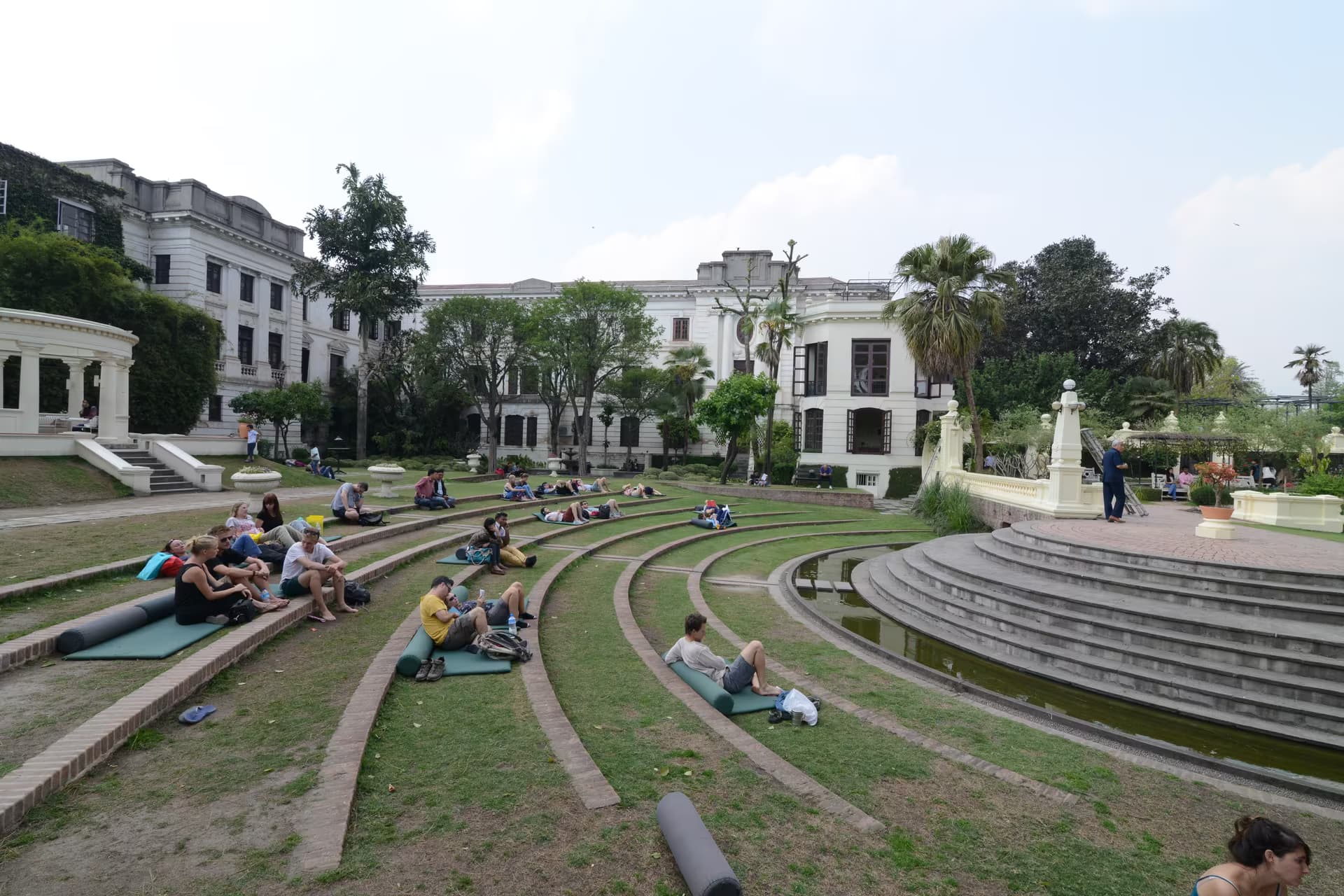
Related
Connected places and entries worth pairing
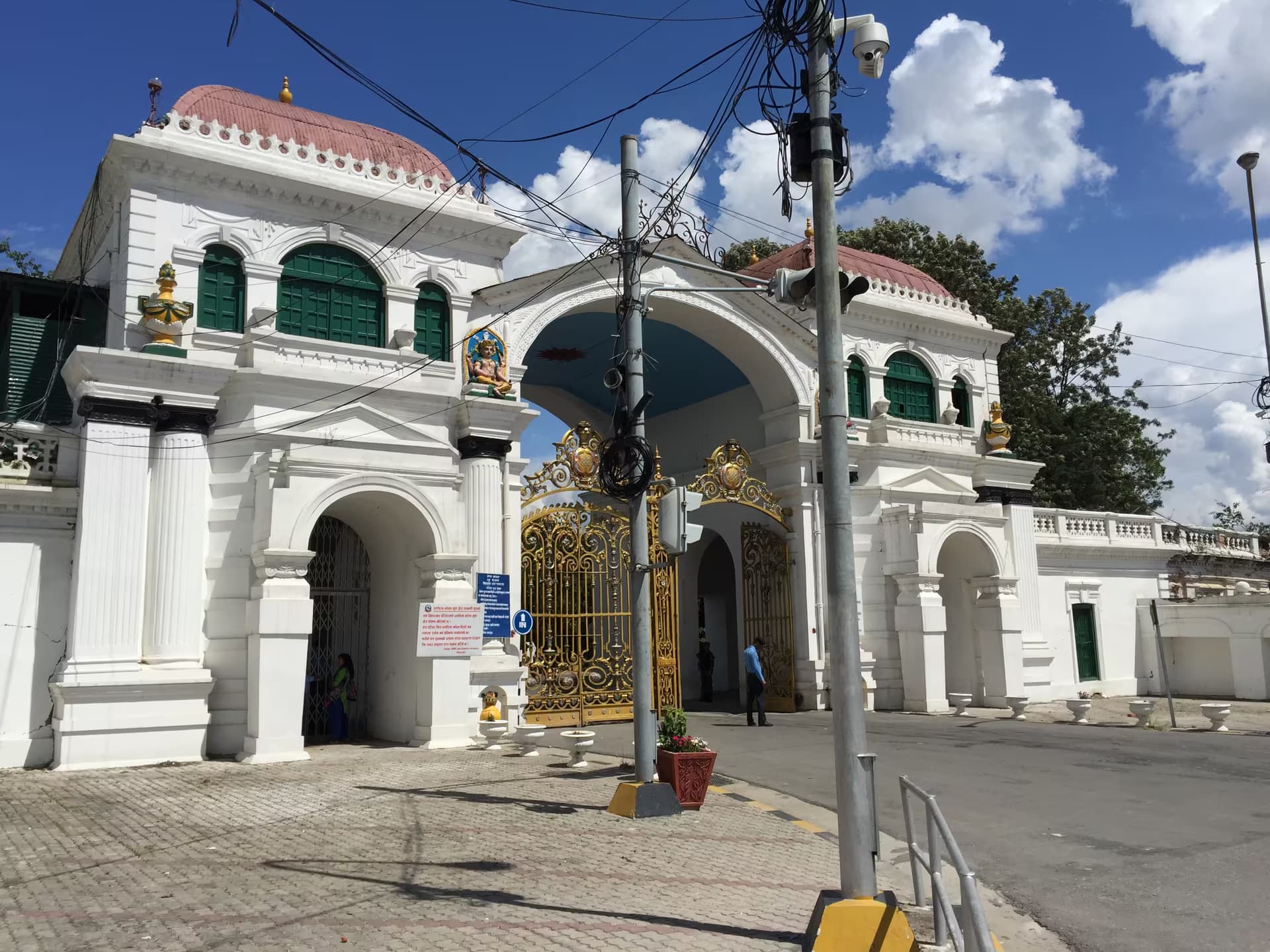
Planning this trip? Local operators publishing trips here can arrange it.
Elsewhere in this region
Help us get it right
Know Narayanhiti Palace better than we do?
We write from research and reporting, and the ground changes faster than we can keep up. If something here is out of date, or you have been and would tell it differently, we would rather hear it.